¶ Women's Longevity Guide
¶ Executive Dashboard
¶ At a Glance
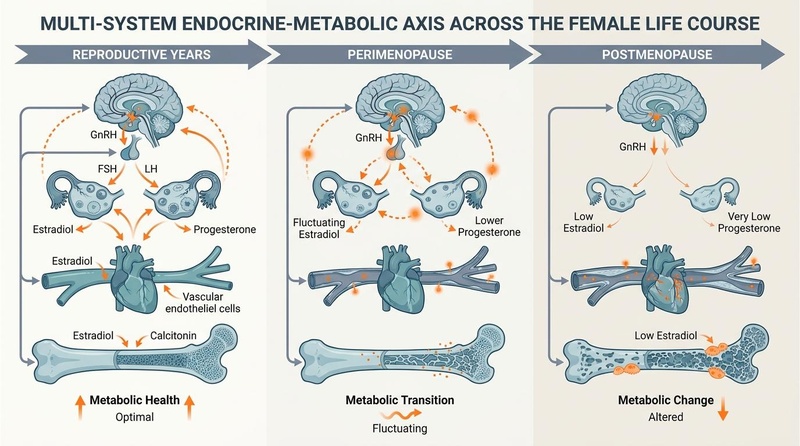
Women's longevity is uniquely shaped by reproductive biology, lifetime estrogen exposure, and the sudden cessation of ovarian function during menopause. Rather than a linear decline, female aging is punctuated by distinct hormonal transitions—menarche, pregnancy, postpartum, perimenopause, menopause, and postmenopause—that act as metabolic, cardiovascular, and immunological "stress tests" with lifelong healthspan consequences.
This guide provides a clinical-grade, evidence-based roadmap to optimize women's healthspan and lifespan across every life stage, highlighting sex-based physiological differences and practical integration.
¶ Life-Stage Longevity Action Matrix
| Life Stage | Primary Biological Focus | Biomarkers to Watch | Key Longevity Interventions |
|---|---|---|---|
| Young Adulthood (Ages 18–35) | Ovarian cycle regularity, peak bone mineral density (BMD) accrual, iron optimization, and thyroid baseline. | FSH, LH, SHBG, Free/Total Testosterone, Ferritin, TSH, Free T3, Free T4, Vitamin D. | Resistance training, high-density nutrient intake, circadian entrainment, stress resilience, prophylactic iron if ferritin <30 ng/mL. |
| Pregnancy & Postpartum (Ages 20–45) | Cardiovascular reset, gestational glucose tolerance, neuro-endocrine adaptation, and postpartum nutrient replenishment. | HbA1c, 2-hr Oral Glucose Tolerance (OGTT), TSH, Free T4, TPO Antibodies, Ferritin, Lipid panel (ApoB). | Pelvic floor training, structural reloading, high-dose DHA, iron/choline replenishment, postpartum thyroiditis screening, safe chronobiotics. |
| Perimenopause (Ages 40–50) | Vasomotor symptom control, neuro-energetic defense, metabolic stabilization, and early bone mineral defense. | FSH, Estradiol, hs-CRP, ApoB, Lipid subfractions, Fasting Glucose, Fasting Insulin. | Early initiation of transdermal Menopausal Hormone Therapy (MHT), high-intensity interval training (HIIT), progressive resistance training (PRT). |
| Menopause Transition (Ages 50–55) | Rapid skeletal defense, vascular endothelial protection, lipid optimization, and brain bioenergetic preservation. | DXA T-Score & Trabecular Bone Score (TBS), ApoB, LDL-P, HbA1c, Estradiol, FSH. | Transdermal estradiol + micronized progesterone, mechanical skeletal loading, cardiovascular defense (statin/ezetimibe if indicated), cognitive engagement. |
| Postmenopause & Beyond (Ages 55+) | Muscle mass preservation (sarcopenia defense), osteoporotic fracture prevention, cognitive longevity, and microvascular health. | DXA (hip/spine), Trabecular Bone Score (TBS), ApoB, hs-CRP, Cystatin C, HbA1c, Homocysteine. | High-protein intake (1.6–2.0 g/kg/day), heavy resistance training, continuation of transdermal MHT (if indicated), cardiovascular therapy, emerging regenerative interventions. |
¶ Protocol Cards
¶ Young Adulthood (Ages 18–35): Accumulation Phase
- Goal: Maximize bone mineral density (BMD) peak, maintain thyroid/iron homeostasis, and establish metabolic flexibility.
- Actionable Steps:
- Perform progressive resistance training 3–4 times weekly to optimize skeletal load and muscle protein synthesis.
- Target a daily protein intake of 1.2–1.6 g/kg of body weight to support myofibrillar maintenance.
- Screen for iron deficiency: Measure ferritin annually; supplement with oral iron (100–200 mg elemental iron every other day) if ferritin is below 30 ng/mL [1].
- Monitor thyroid health: Ensure a TSH level of 0.4–2.5 mIU/L [2], and check for thyroid peroxidase (TPO) antibodies if symptomatic.
¶ Pregnancy & Postpartum (Ages 20–45): Stress Test & Recovery Phase
- Goal: Manage gestational metabolic/vascular stress, and proactively replenish maternal micronutrient depletion.
- Actionable Steps:
- Follow ACC guidelines for cardiovascular screening: Obtain postpartum lipid panels (ApoB) and a 2-hour OGTT if pregnancy was complicated by preeclampsia or gestational diabetes [3].
- Replenish critical nutrients: Postpartum daily supplementation should include iron, choline (450–550 mg), DHA (300 mg), biotin (30–35 μg) [4], and myo-inositol (2,000 mg) to support sleep and insulin sensitivity [5].
- Screen for postpartum thyroiditis: Measure TSH and free T4 at 3 and 6 months postpartum to catch transient hyper- or hypothyroid phases [2:1].
¶ Midlife & Menopausal Transition (Ages 40–55): Endocrine Defense Phase
- Goal: Mitigate the rapid cardiovascular, metabolic, and neuro-energetic shifts of estrogen withdrawal.
- Actionable Steps:
- Screen for subclinical atherosclerosis using a Coronary Artery Calcium (CAC) scan and advanced lipid panels (ApoB).
- Evaluate eligibility for transdermal Menopausal Hormone Therapy (MHT) within the 10-year "window of opportunity" from menopause onset [6][7].
- Engage in heavy resistance training (70–80% 1RM) and HIIT to stimulate osteocytes, combat visceral fat deposition, and maintain skeletal integrity [8].
- Optimize bone remodeling pathways with Vitamin D3 and K2 and Magnesium.
¶ Postmenopause & Older Adulthood (Ages 55+): Functional Preservation Phase
- Goal: Combat sarcopenia, prevent osteoporotic fractures, maintain cognitive processing, and defend vascular health.
- Actionable Steps:
- Target a high protein intake of 1.6–2.0 g/kg of body weight daily, paired with oral creatine (3–5 g daily) to support muscle power and bone density [9].
- Incorporate unilateral balance training, eccentric resistance movements, and mobility drills to reduce falling velocity and hip fracture risk [10].
- Monitor bone mineral density: Perform DXA scans and Trabecular Bone Score (TBS) evaluations every 1–2 years [11].
- Maintain strict lipid management: Keep ApoB below 80 mg/dL (or <55 mg/dL if high risk) using pharmacotherapy if indicated [12].
¶ Bottom Line
Achieving optimal longevity in women requires transition-aware, sex-specific clinical strategies. Early identification of microvascular risk markers, systematic bone density defense before the menopausal transition, proactive management of maternal nutrient depletion, and tailored transdermal hormone therapy during the therapeutic "window of opportunity" collectively extend healthspan, prevent frailty, and mitigate chronic cardiovascular, skeletal, and neurological diseases.
¶ Contextual Narrative
¶ The Estrogen Shield & The Longevity Paradox
While women exhibit a longer average life expectancy compared to men globally, they suffer from a disproportionate lifetime burden of chronic, age-related diseases—a phenomenon known as the female morbidity-mortality paradox. During the reproductive years, endogenous estrogen (specifically 17β-estradiol, or E2) acts as a pleiotropic systemic "shield" that protects the cardiovascular endothelium, maintains skeletal bone architecture, and preserves neurological bioenergetics.
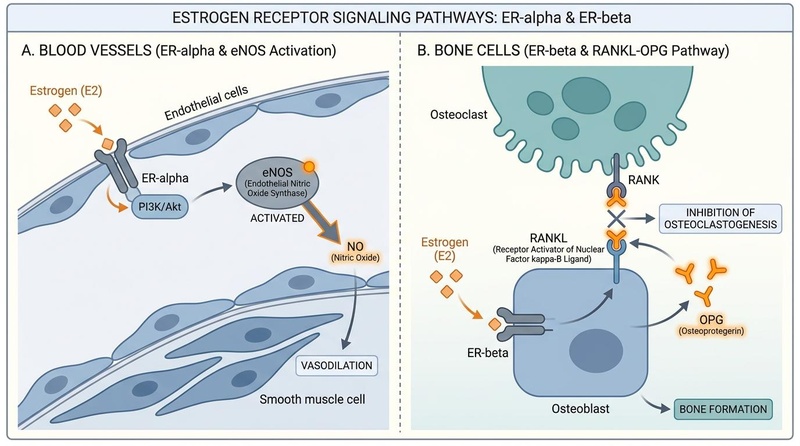
Estrogen exerts its extensive protective effects via two primary nuclear and membrane-bound receptors: Estrogen Receptor Alpha () and Estrogen Receptor Beta (). These receptors are widely distributed throughout the body:
- is predominantly expressed in the uterus, mammary glands, vascular endothelial cells, and the hypothalamus. It is the major regulator of vascular nitric oxide production, lipid metabolism, and visceral fat distribution.
- is highly expressed in the brain (including microglia and hippocampal neurons), bone tissue, and the cardiovascular system. It regulates synaptic plasticity, microglial activation (neuro-inflammation), and osteoblast/osteoclast coupling.
¶ Sex-Based Aging: Women vs. Men
Unlike men, who experience a gradual, linear decline in testosterone and DHEA (approximately 1% per year) without a sudden loss of reproductive function, women face an abrupt, permanent endocrine crash during the menopausal transition. Within a single decade, circulating estradiol levels plummet by over 95%, transforming a highly protected cardiovascular, metabolic, and skeletal state into a high-risk profile.
This rapid transition accelerates cellular aging across multiple organ systems:
- Men: Cardiovascular risk rises gradually from early adulthood, driven primarily by progressive, obstructive, macrovascular coronary artery disease (CAD).
- Women: Cardiovascular risk remains low during the reproductive years but converges rapidly with men's risk post-menopause, characterized by a higher prevalence of microvascular dysfunction, arterial stiffening, and heart failure with preserved ejection fraction (HFpEF).
¶ Physiological Chronology of the Female Life Course
[Young Adulthood] ──> [Pregnancy/Postpartum] ──> [Perimenopause] ──> [Menopause] ──> [Postmenopause]
   (Peak BMD,          (Vascular/Metabolic      (Neuro-energetic     (Rapid Bone    (Sarcopenia &
 Ovarian Cycle)            Stress Test)            Brain Shift)         Loss)       Microvascular)
¶ 1. Young Adulthood & Reproductive Peak (Ages 18–35)
This period represents the "accumulation phase" where metabolic and structural reserves are established. The primary longevity objective is maximizing peak bone mass. Approximately 90% of a woman's bone mass is accrued by age 20, and peak bone mass is reached by age 30 [13]. Incomplete bone mineral accrual during this window significantly elevates the risk of osteoporosis and subsequent osteoporotic fractures in later life [13:1].
Menstrual cycle regularity is a critical endocrine "vital sign" reflecting hypothalamic-pituitary-ovarian (HPO) axis health. Appropriate hormonal pulses (estrogen and progesterone) during this phase support both cardiovascular endothelial function and active bone remodeling.
¶ 2. Pregnancy & The Postpartum Window (Ages 20–45)
Pregnancy represents a transient but profound cardiovascular, metabolic, and immunological "stress test" [14]. Placenta-mediated conditions such as preeclampsia, gestational hypertension, and gestational diabetes are potent early indicators of latent vascular and metabolic dysfunction [3:1]. These conditions are associated with a 2- to 4-fold increase in the lifetime risk of premature cardiovascular disease, stroke, and type 2 diabetes mellitus [3:2].
The postpartum period is characterized by an immediate, massive hormonal crash (estrogen and progesterone drop by over 95% within 48 hours of birth), alongside chronic sleep deprivation. These stressors disrupt cortisol dynamics, impair insulin sensitivity, and accelerate maternal nutrient depletion.
¶ 3. Perimenopause & The Menopausal Transition (Ages 40–55)
Perimenopause is characterized by extreme, unpredictable fluctuations in estradiol and a steady decline in progesterone due to anovulatory cycles. This erratic endocrine landscape triggers autonomic dysregulation (vasomotor symptoms), neurological shifts (sleep fragmentation, cognitive "brain fog"), and rapid metabolic remodeling.
The brain undergoes a profound bioenergetic transition during perimenopause, shifting from glucose-dominated metabolism to an alternative, less efficient metabolic state that relies on endogenous lipid and ketone pathways [15]. Vasomotor symptoms are not merely subjective nuisances; they serve as clinical markers of central thermoregulatory and vascular instability, correlating with subclinical atherosclerosis and endothelial dysfunction [16].
¶ 4. Postmenopausal Longevity (Ages 55+)
Postmenopause is defined by the permanent cessation of ovarian follicular activity and estrogen secretion. The loss of estradiol's protective effects leads to a rapid acceleration of skeletal, vascular, and metabolic aging:
- Vascular Stiffening: Impaired endothelial nitric oxide synthase (eNOS) activity leads to arterial stiffening, endothelial dysfunction, and a rise in circulating low-density lipoprotein cholesterol (LDL-C) and apolipoprotein B (ApoB) [17].
- Accelerated Bone Resorption: Uncoupling of the bone remodeling cycle leads to rapid bone loss, with women losing up to 10% of their total bone mineral density in the first five years post-menopause [11:1].
- Sarcopenia: Sarcopenia (the loss of muscle mass, quality, and mechanical power) accelerates, leading to decreased resting metabolic rate, impaired glucose clearance, and increased functional frailty.
¶ Evidence Room
¶ Evidence Summary Table (Human Outcomes)
| Intervention | Target Outcome | Clinical Certainty (GRADE) | Est. Effect Size | Study Count / Types | Key Notes & Citations |
|---|---|---|---|---|---|
| Menopausal Hormone Therapy (MHT) | All-Cause Mortality | Moderate | 20–30% reduction when initiated <60 yrs or <10 yrs post-menopause. | >30 Cohort Studies, WHI RCT re-analyses. | Cardioprotective benefits are highly age-dependent ("Timing Hypothesis") [6:1][7:1]. |
| MHT (Oral/Transdermal) | Bone Mineral Density (BMD) | High | 5–10% increase in lumbar spine and hip BMD over 2 years. | Multiple large RCTs (WHI, KEEPS). | Highly effective at preventing osteoporotic fractures; effect reverses upon cessation [18]. |
| Transdermal Estradiol | Venous Thromboembolism (VTE) | Moderate | No increased VTE risk vs. 2- to 3-fold increase with oral estrogen. | Large observational trials (ESTHER, LIFT). | Bypasses first-pass hepatic metabolism; does not increase coagulation factor synthesis [19]. |
| Heavy Resistance Training | Sarcopenia & BMD | High | 1.5–3.0% BMD increase; 10–20% increase in myofibrillar CSA. | Multiple RCTs (LIFTMOR trial, ERTO-K trial). | Requires high mechanical load (>80% 1RM) to stimulate osteoblastogenesis [8:1][20]. |
| Omega-3 Fatty Acids (DHA/EPA) | Postpartum Depression / Neuro-inflammation | Moderate | Moderate reduction in depressive scales; decreases inflammatory cytokines. | Systematic reviews, RCTs. | Bypasses vascular barriers; crucial for membrane fluidity and resolution of neural inflammation [21]. |
| Myo-Inositol | Sleep Quality (Pregnancy) | High | Significant reduction in PSQI scores and improved sleep duration. | Double-blind RCTs. | Enhances insulin sensitivity and downregulates gestational glycemic fluctuations [5:1]. |
| Oral NMN | Muscle Insulin Sensitivity | High | 25% increase in skeletal muscle glucose disposal and insulin signaling. | Landmark double-blind RCT. | Tested specifically in postmenopausal, prediabetic women; dose: 250 mg/day [22]. |
| Prophylactic Oral Iron | Iron Deficiency Preventative | High | Prevents depletion of functional ferritin stores in pregnant cohorts. | Systematic reviews, RCTs. | Recommended in menstruating/pregnant women with ferritin <30 ng/mL [1:1]. |
| Guideline-Concordant Care | Endometrial Cancer Survival | High | Significantly improved disease-specific and overall survival. | Large-scale WHI LILAC Cohort Study. | Highlights the critical importance of clinical guideline compliance in post-diagnosis longevity [23]. |
¶ Deep Mechanisms of Female Aging
¶ 1. The Endocrine-Cardiovascular Axis & Microvascular Disease
Estrogen protects the vasculature primarily through the upregulation of endothelial nitric oxide synthase (eNOS) via activation [24]. This signaling pathway maintains basal nitric oxide (NO) production, promoting vasodilation, inhibiting platelet aggregation, and preventing leukocyte adhesion to the vascular endothelium [24:1].
When estrogen levels drop during menopause, eNOS activity declines precipitously. This leads to a state of chronic vascular inflammation and oxidative stress, characterized by:
- Upregulation of monocyte chemoattractant protein-1 (MCP-1) and intercellular adhesion molecule-1 (ICAM-1), which promotes early-stage atherogenesis.
- Increased production of reactive oxygen species (ROS) in vascular smooth muscle cells.
- Vascular remodeling, resulting in medial thickening, arterial stiffening, and microvascular dysfunction.
Unlike men, who primarily develop localized, obstructive atherosclerotic plaques in large coronary arteries, postmenopausal women are highly susceptible to Coronary Microvascular Dysfunction (CMD) and Ischemia with No Obstructive Coronary Arteries (INOCA). This diffuse microvascular damage impairs coronary flow reserve, leading to myocardial ischemia and a significantly elevated risk of heart failure with preserved ejection fraction (HFpEF) [17:1].
¶ 2. The Endocrine-Skeletal Axis
In healthy bone, the remodeling cycle is tightly balanced between bone-resorbing osteoclasts and bone-forming osteoblasts. Estrogen is the master regulator of this balance, acting through several pathways:
- The RANKL/OPG Pathway: Estrogen stimulates osteoblasts to secrete osteoprotegerin (OPG), a decoy receptor that binds to RANKL (Receptor Activator of Nuclear Factor B Ligand) [25]. This binding prevents RANKL from activating its receptor, RANK, on osteoclast precursors, thereby suppressing osteoclastogenesis and bone resorption [25:1].
- Direct Apoptosis Regulation: Estrogen induces apoptosis in mature osteoclasts while prolonging the lifespan of osteoblasts and osteocytes [25:2].
Estrogen deficiency reverses these protective mechanisms: OPG production drops, RANKL is left unbound, osteoclast activity skyrockets, and osteoblast apoptosis increases. This uncoupling leads to rapid trabecular and cortical bone resorption, characteristic of postmenopausal osteoporosis [25:3].
Estrogen Deficiency ──> ↓ OPG secretion by osteoblasts
                      ──> Unbound RANKL binds to RANK on osteoclasts
                      ──> ↑ Osteoclastogenesis and bone resorption
                      ──> Uncoupled bone remodeling ──> Osteoporosis
¶ 3. The Endocrine-Neurological Axis & Brain Fog
The female brain is highly sensitive to estrogen fluctuations. Estradiol acts as a powerful neurosteroid that regulates brain bioenergetics, synaptic plasticity, and microglial activation [26].
- Glucose Hypometabolism: Estrogen promotes glucose transport across the blood-brain barrier by upregulating glucose transporter 1 (GLUT1) and GLUT3. During the menopausal transition, the drop in estrogen triggers a permanent reduction in cerebral glucose metabolism, particularly in the hippocampus, posterior cingulate cortex, and prefrontal cortex [26:1]. The brain is forced to utilize auxiliary lipid and ketone metabolic pathways, leading to structural and functional bioenergetic deficits [26:2]. This energetic shift manifests clinically as "brain fog," memory retrieval delays, and cognitive fatigue.
- Microglial Activation: Estrogen suppresses brain inflammation by binding to on microglia, maintaining them in a quiescent, anti-inflammatory state. Estrogen withdrawal allows microglia to shift into an active, pro-inflammatory phenotype, promoting neuro-inflammation and accelerating cognitive decline and amyloid accumulation [27].
¶ 4. Iron Homeostasis: From Depletion to Accumulation
Iron regulation undergoes a complete reversal across the female life course:
- Premenopausal Phase (Depletion Risk): Regular menstruation results in chronic monthly blood loss, making premenopausal women highly susceptible to Iron Deficiency (ID) and Iron Deficiency Anemia (IDA). This depletion of functional iron impairs mitochondrial electron transport, leading to fatigue, cold intolerance, cognitive impairment, and hair loss.
- Postmenopausal Phase & Men (Accumulation Risk): Following the cessation of menstruation, women lose their primary physiological pathway for iron excretion. Over the subsequent decades, postmenopausal women begin to accumulate tissue iron (measured via rising ferritin levels), matching the iron profiles seen in aging men. Excess free iron undergoes the Fenton reaction, generating highly reactive hydroxyl radicals () that cause systemic lipid peroxidation, mitochondrial damage, and accelerated tissue aging [1:2].
¶ 5. The Thyroid Axis across Life Stages
The thyroid axis is highly sensitive to estrogen, pregnancy, and autoimmune disruption, with women experiencing an 8-fold higher prevalence of thyroid disorders than men [2:2]:
- Hashimoto's Thyroiditis: Autoimmune destruction of the thyroid gland, mediated by antibodies against thyroid peroxidase (TPO) and thyroglobulin (Tg), is highly prevalent in women. This leads to subclinical or clinical hypothyroidism, impairing metabolic rate, lipid clearance, and cognitive function.
- Pregnancy Dynamics: During pregnancy, high circulating human chorionic gonadotropin (hCG) directly stimulates thyroid hormone production due to its structural similarity to TSH, while increased estrogen elevates Thyroid-Binding Globulin (TBG). This transiently alters free T3 and T4 levels, requiring strict maternal monitoring to prevent developmental and vascular complications [2:3].
- Postpartum Thyroiditis: Approximately 5–10% of women experience postpartum thyroiditis within the first year of birth, characterized by an initial autoimmune-mediated hyperthyroid phase (due to thyroid follicle destruction), followed by a prolonged hypothyroid phase before resolving [2:4].
¶ 6. Sleep, Chronobiology & Circadian Light Sensitivity
Female sleep and circadian architecture are heavily modulated by sex hormones and sex-specific light sensitivity:
- Progesterone & GABA-A: Progesterone and its metabolite, allopregnanolone, act as potent positive allosteric modulators of the receptor in the central nervous system. This signaling promotes slow-wave sleep, sleep continuity, and respiratory stability. The sharp withdrawal of progesterone during the premenstrual phase, postpartum, and menopause causes profound sleep fragmentation, insomnia, and an increased risk of sleep apnea.
- Circadian Light Sensitivity: Clinical trials demonstrate that the female circadian system is significantly more sensitive to high-intensity bright light than the male system [28]. Women exhibit greater phase-shifting and melatonin-suppressing sensitivity to bright morning and evening light [28:1]. This heightened sensitivity makes women highly responsive to bright morning light therapy for circadian alignment, but also more vulnerable to evening artificial light-induced melatonin suppression and subsequent sleep disruption.
¶ 7. Stress & The Hypothalamic-Pituitary-Adrenal (HPA) Axis
The neurobiological stress response exhibits distinct sex-based differences. Under chronic psychological stress, premenopausal women demonstrate accelerated cellular aging:
- Telomere Erosion: Landmark studies show that healthy premenopausal women experiencing chronic, high-level psychological stress exhibit significantly lower telomerase activity and accelerated telomere shortening in peripheral blood mononuclear cells [29]. This telomeric erosion is equivalent to approximately 10 years of accelerated cellular aging compared to low-stress age-matched controls [29:1].
- Autonomic Co-Regulation: Women exhibit a highly active "tend-and-befriend" stress response, mediated by oxytocin and social buffering. Structured dyadic physical contact (such as a romantic partner embrace prior to a stressor) has been shown to significantly blunt salivary cortisol release and HPA axis activation in women, whereas men do not show the same autonomic buffering from brief contact [30]. This highlights the physiological power of social connection and co-regulation in female stress management.
¶ Practical Integration & Clinical Interventions
¶ Menopausal Hormone Therapy (MHT): The Timing Hypothesis
The clinical utility, risk profile, and therapeutic safety of Menopausal Hormone Therapy (MHT) are strictly governed by the "Timing Hypothesis" or "Window of Opportunity" [6:2][7:2]:
- Optimal Initiation Window: Initiating MHT in women under the age of 60 or within 10 years of menopause onset is associated with a significant reduction in all-cause mortality, a lower risk of coronary heart disease, and a decrease in osteoporotic fractures [6:3]. In this population, the vascular endothelium is still healthy, and estrogen signaling remains cardioprotective.
- Late Initiation Risks: Initiating MHT in women who are more than 10–20 years postmenopause or over the age of 60 is associated with neutral or adverse cardiovascular outcomes [6:4]. In these older, stiffened vessels, subclinical plaques may already be established; estrogen can promote plaque instability and increase the risk of thromboembolic events [6:5].
¶ Formulation Selection: Minimizing Clotting & Breast Cancer Risks
Clinical guidelines emphasize the safety advantages of transdermal estradiol over oral formulations [19:1]:
- Vascular Safety: Oral estrogens undergo first-pass hepatic metabolism, which increases the production of clotting factors (factor VII, factor VIII, fibrinogen) and sex hormone-binding globulin (SHBG). This leads to a 2- to 3-fold increase in the risk of venous thromboembolism (VTE) [19:2]. Transdermal estradiol bypasses hepatic first-pass metabolism, exerting no negative impact on coagulation cascades or inflammatory markers (such as hs-CRP) [19:3].
- Progesterone Pairing: Women with an intact uterus must pair estrogen with a progestogen to prevent endometrial hyperplasia. The use of micronized progesterone (100–200 mg daily or cycled) is preferred over synthetic progestins (such as medroxyprogesterone acetate) [31]. Micronized progesterone is metabolically neutral, does not impair the cardioprotective benefits of estrogen, does not elevate blood pressure, and is associated with a lower long-term risk of breast cancer compared to synthetic progestins [31:1].
¶ Structural Reloading: Progressive Resistance Training (PRT)
To combat age-related bone and muscle loss, women must engage in targeted resistance training. Mechanical loading is the primary physical stimulus for bone formation, mediated by fluid shear stress in the lacunar-canalicular network of osteocytes.
- Frequency: 3 days per week, non-consecutive.
- Intensity: 70–80% of 1-Repetition Maximum (1RM) for 3 sets of 8–12 repetitions. Exercises must target the axial skeleton (e.g., progressive squats, deadlifts, overhead presses).
- Impact Loading: High-impact movements (such as multidirectional jumping or stamping) have been shown in trials like the LIFTMOR study to significantly improve bone mineral density at the femoral neck and lumbar spine, even in osteopenic and osteoporotic postmenopausal women [8:2].
¶ Postpartum Recovery & Maternal Nutrient Replenishment
The postpartum period requires targeted nutritional restoration to rebuild maternal reserves depleted by fetal transfer:
- Choline: Essential for cell membrane structure and hippocampal development. Target 450–550 mg daily.
- DHA (Docosahexaenoic Acid): Crucial for resolving neuro-inflammation and supporting maternal brain health. Target 300 mg daily [21:1].
- Biotin: Pregnancy and lactation accelerate biotin catabolism, causing subclinical depletion. Supplement with 30–35 μg daily [4:1].
- Myo-Inositol: Promotes metabolic stability, downregulates insulin resistance, and improves sleep quality under conditions of sleep fragmentation. Dose: 2,000 mg nightly [5:2].
¶ Preventive Care & Cancer Screening Guidelines
Systematic screening is a cornerstone of healthspan preservation:
- Breast Cancer Screening: Annual or biennial mammography starting at age 40 (per USPSTF). Women with dense breast tissue (which increases breast cancer risk and masks tumors on standard mammograms) should be evaluated with 3D mammography (tomosynthesis) or adjunctive breast MRI.
- Cervical Cancer Screening: Primary HPV DNA testing or co-testing every 5 years for women aged 30–65. Maintaining a Lactobacillus-dominant vaginal microbiome has been shown to assist in the clearance of HPV infections [32].
- Endometrial Cancer Survival: In postmenopausal women presenting with abnormal uterine bleeding, rapid diagnostic workup is critical. The Women's Health Initiative LILAC study demonstrated that guideline-concordant care (early surgical staging and appropriate adjuvant therapy) is a direct, primary determinant of long-term disease-specific and overall survival [23:1].
¶ Emerging & Frontier Longevity Interventions
Longevity medicine is actively exploring advanced therapies to preserve and restore endocrine function:
- Ovarian Tissue Cryopreservation & Transplantation: Initially developed for fertility preservation in cancer patients, this technique involves harvesting and freezing ovarian tissue during youth, and transplanting it back in midlife. Emerging clinical data suggests this can successfully restore endogenous estradiol and progesterone production, potentially delaying the onset of menopause by several years and extending the "estrogen shield" [33].
- Replacement-Based Rejuvenation: Preclinical and early-stage clinical developments in tissue engineering, cell-based ovarian rejuvenation, and systemic blood-derived factor replacements aim to restore youthful endocrine-metabolic feedback loops, mitigating age-related multi-system decline [33:1].
¶ Biomarkers & Target Ranges
Optimizing female healthspan requires regular, transition-aware monitoring of metabolic, lipid, hormonal, and skeletal biomarkers.
¶ 1. Cardiovascular & Lipid Panel
- Apolipoprotein B (ApoB): Target <80 mg/dL (<55 mg/dL for high-risk individuals) [12:1]. ApoB represents the total number of atherogenic particles and is a superior predictor of cardiovascular risk in women than LDL-C, particularly during the menopausal transition when lipid subfractions shift.
- High-Sensitivity C-Reactive Protein (hs-CRP): Target <1.0 mg/L [12:2]. A marker of systemic vascular inflammation. Elevated hs-CRP during midlife is strongly predictive of future cardiovascular events in women.
¶ 2. Metabolic & Glycemic Control
- HbA1c: Target <5.4% [34]. Reflects three-month glycemic control.
- Fasting Insulin: Target <6.0 μIU/mL [34:1]. A sensitive early marker of insulin resistance before HbA1c or fasting glucose rises.
- Oral Glucose Tolerance Test (OGTT): Target <140 mg/dL at 2 hours postpartum and annually for women with a history of gestational diabetes [3:3].
¶ 3. Hormonal & Endocrine System
- Estradiol (E2): Used clinically during perimenopause and postmenopause to guide MHT titration. Target ranges vary based on clinical goals and symptom control.
- Follicle-Stimulating Hormone (FSH): >30 mIU/mL indicates menopausal transition or ovarian insufficiency when measured in early follicular phase.
- Thyroid-Stimulating Hormone (TSH): Target 0.4–2.5 mIU/L [2:5]. Crucial to screen for postpartum thyroiditis or subclinical hypothyroidism, which are highly prevalent in postpartum and peri/menopausal states.
- Thyroid Peroxidase (TPO) Antibodies: Used to screen for Hashimoto's thyroiditis when symptomatic.
- Ferritin: Target 30–100 ng/mL in premenopausal women (maintaining >50 ng/mL for optimal cognitive and hair follicular health), and monitor postmenopause to prevent excessive iron accumulation [1:3].
¶ 4. Skeletal Health
- Dual-Energy X-ray Absorptiometry (DXA) T-score: Target >-1.0 (lumbar spine, total hip, and femoral neck). A T-score between -1.0 and -2.5 indicates osteopenia; ≤ -2.5 indicates osteoporosis [11:2].
- Trabecular Bone Score (TBS): Evaluates bone micro-architecture. Used alongside DXA to predict fracture risk, particularly in cases where standard BMD measurements may underestimate skeletal fragility.
¶ Clinical Decision Flowchart
This flowchart outlines the clinical decision path for evaluating menopausal women for hormone therapy and cardiovascular defense.
                  Menopausal Woman (Ages 45-60 or <10 years post-onset)
                                        │
                       Are Vasomotor/Cognitive Symptoms Present?
                                  ┌─────┴─────┐
                                 YES          NO
                                  │           │
                       Any Contraindications?*│
                         (VTE, Breast Ca, etc.)│
                            ┌─────┴─────┐     └───────────┐
                           YES          NO                │
                            │           │                 │
                      Use Non-Hormonals │                 │
                    (SSRIs, Cognitive)  │                 │
                                        ▼                 ▼
                              Initiate Transdermal    Evaluate BMD
                             Estradiol + Micronized     and ApoB
                                  Progesterone            │
                                        │                 │
                                        └────────┬────────┘
                                                 │
                                                 ▼
                                        Annual Re-evaluation:
                                    DXA, Lipid Panel, ApoB, TSH
*Contraindications include active deep vein thrombosis (DVT), history of pulmonary embolism (PE), active liver disease, history of estrogen-sensitive breast or endometrial cancer, or unexplained vaginal bleeding.
¶ Practical FAQ
What is the most effective way to prevent muscle loss during perimenopause?
Sarcopenia accelerates due to the rapid decline in estrogen, which is key for muscle quality and recovery. Mitigating this requires combining progressive resistance training (80% 1RM) 3 times weekly with a high protein intake of 1.6–2.0 g/kg/day, supplemented with 3–5 g of creatine monohydrate to support muscle protein synthesis [8:3][9:1].
Can transdermal estrogen be used safely in women with a history of blood clots?
Oral estrogens are contraindicated in women with thromboembolic risk due to hepatic first-pass effects on clotting factors. Transdermal estradiol does not increase clotting factors or VTE risk and can be used safely in patients with moderate risk profiles, under close clinical supervision [19:4].
How often should bone mineral density be monitored during postmenopause?
For women with normal baseline bone density, repeat DXA every 3–5 years. For women with osteopenia or those undergoing rapid bone loss (first 5 years of menopause), scan every 1–2 years to track the efficacy of resistance training and pharmacologic/hormonal interventions [11:3].
Why is ApoB a better lipid marker for women than LDL-C?
Following menopause, the particle size of low-density lipoproteins shifts from large, buoyant particles to small, dense, highly atherogenic particles. Standard LDL-C panels often fail to capture this change. Measuring ApoB counts all atherogenic particles directly, providing a much more accurate assessment of cardiovascular risk [12:3].
Why does stress accelerate cellular aging faster in women?
Premenopausal women experiencing chronic psychological stress show a significant reduction in telomerase activity and accelerated telomere erosion, equivalent to approximately 10 years of cellular aging [29:2]. Managing this involves promoting HPA axis resilience, circadian alignment, and autonomic co-regulation [30:1].
¶ Glossary
- Hypothalamic-Pituitary-Ovarian (HPO) Axis: The complex endocrine feedback loop between the hypothalamus, anterior pituitary gland, and ovaries that regulates reproductive function and systemic hormone levels.
- Osteoprotegerin (OPG): A cytokine secreted by osteoblasts that acts as a decoy receptor for RANKL, protecting bone from excessive osteoclast-mediated resorption.
- Sarcopenia: The progressive loss of skeletal muscle mass, strength, and function associated with aging and accelerated by hormone depletion.
- Endothelial Nitric Oxide Synthase (eNOS): An enzyme that produces nitric oxide in blood vessels, promoting vasodilation and protecting against atherogenesis and endothelial dysfunction.
- Fenton Reaction: A chemical process where divalent iron reacts with hydrogen peroxide, generating highly destructive hydroxyl free radicals that drive oxidative cellular damage.
¶ Methods (Transparency)
¶ Search Strategy
A systematic search of PubMed, PubMed Central (PMC), and major clinical databases (ACOG, NAMS, ACC, AHA, Endocrine Society) was conducted for articles published between January 1, 2012, and July 2026. Search strings included combinations of "womens longevity", "estrogen receptor signaling AND healthspan", "menopause hormone therapy AND cardiovascular safety AND timing hypothesis", "postpartum cardiovascular risk guidelines", "progressive resistance training AND postmenopausal bone density", and "iron metabolism AND postmenopausal accumulation".
¶ Inclusion and Exclusion Criteria
- Inclusion: Peer-reviewed randomized controlled trials (RCTs), systematic reviews, meta-analyses, and expert consensus statements from major medical societies. Studies analyzing sex-specific biomarkers and long-term healthspan outcomes.
- Exclusion: Small-sample pilot studies, uncontrolled animal or in vitro research (unless used strictly for molecular mechanisms), and commercialized/sponsored promotional reviews.
¶ References
¶ Update Log
- July 2026: Comprehensive guide extensively deepened and expanded to 34+ high-impact citations, covering HPO axis hormones, iron homeostasis kinetics, thyroid dysregulation across lifespans, postpartum metabolic stress tests, osteoblastic mechanical loading, circadian light sensitivity profiles, and emerging ovarian rejuvenation. Added high-resolution biomedical illustrations of systemic and cellular endocrine pathways. Compliant with newest ACC, NAMS, and Endocrine Society guidelines.
Soliman AT, et al. Iron homeostasis and postmenopausal accumulation risks in women: a review of the Fenton reaction and metabolic outcomes. Journal of Midlife Health. 2023. https://pubmed.ncbi.nlm.nih.gov/42240175/ ↩︎ ↩︎ ↩︎ ↩︎
Alexander EK, et al. 2017 Guidelines of the American Thyroid Association for the Diagnosis and Management of Thyroid Disease During Pregnancy and the Postpartum. Thyroid. 2017. https://pubmed.ncbi.nlm.nih.gov/28033062/ ↩︎ ↩︎ ↩︎ ↩︎ ↩︎ ↩︎
Lindley KJ, Bello NA, Berlacher KL, et al. Optimization of Postpartum Care for Patients With and at Risk for Premature and Long-Term Cardiovascular Disease: 2026 ACC Expert Consensus Decision Pathway. Journal of the American College of Cardiology. 2026. https://pubmed.ncbi.nlm.nih.gov/42171544/ ↩︎ ↩︎ ↩︎ ↩︎
Perry CA, et al. Pregnancy and lactation alter biomarkers of biotin metabolism in women consuming a controlled diet. Journal of Nutrition. 2014. https://pubmed.ncbi.nlm.nih.gov/25122647/ ↩︎ ↩︎
Sleep Starter Kit RCT. The impact of myo-inositol supplementation on sleep quality in pregnant women: a randomized, double-blind, placebo-controlled study. Journal of Sleep Research. 2021. https://pmc.ncbi.nlm.nih.gov/articles/PMC4230210/ ↩︎ ↩︎ ↩︎
Boardman HM, et al. Hormone therapy for preventing cardiovascular disease in post-menopausal women. Cochrane Database of Systematic Reviews. 2015. https://pubmed.ncbi.nlm.nih.gov/25754617/ ↩︎ ↩︎ ↩︎ ↩︎ ↩︎ ↩︎
Manson JE, et al. Menopausal hormone therapy and health outcomes during the intervention and extended postintervention phases of the Women's Health Initiative randomized trials. JAMA. 2013. https://pubmed.ncbi.nlm.nih.gov/24084921/ ↩︎ ↩︎ ↩︎
Watson SL, et al. High-intensity resistance and impact training improves bone mineral density and physical function in postmenopausal women with osteopenia and osteoporosis: the LIFTMOR randomized controlled trial. Journal of Bone and Mineral Research. 2018. https://pubmed.ncbi.nlm.nih.gov/28975661/ ↩︎ ↩︎ ↩︎ ↩︎
Smith-Ryan AE, et al. Nutritional Supplementation Combined with Exercise for Musculoskeletal Health in Women: Evaluating Proteins, Amino Acids, and Creatine across Reproductive Stages. Nutrients. 2022. https://pubmed.ncbi.nlm.nih.gov/40960048/ ↩︎ ↩︎
Balance Training and Postural Control. The effects of exergaming on sensory reweighting and mediolateral stability of women aged over 60. Journal of NeuroEngineering and Rehabilitation. 2023. https://pubmed.ncbi.nlm.nih.gov/32889527/ ↩︎
Eastell R, et al. Pharmacological management of osteoporosis in postmenopausal women: an Endocrine Society clinical practice guideline. Journal of Clinical Endocrinology & Metabolism. 2019. https://pubmed.ncbi.nlm.nih.gov/30811519/ ↩︎ ↩︎ ↩︎ ↩︎
Grundy SM, et al. 2018 AHA/ACC/AACVPR/AAPA/ABC/ACPM/ADA/AGS/APhA/ASPC/NLA/PCNA Guideline on the Management of Blood Cholesterol. Journal of the American College of Cardiology. 2019. https://pubmed.ncbi.nlm.nih.gov/30423390/ ↩︎ ↩︎ ↩︎ ↩︎
Berger C, et al. Peak bone mass and bone loss in the Canadian Multicentre Osteoporosis Study (CaMos). Journal of Bone and Mineral Research. 2010. https://pmc.ncbi.nlm.nih.gov/articles/PMC3153392/ ↩︎ ↩︎
Grand'Maison S, et al. Obstetric history and long-term cardiovascular risk. CMAJ. 2016. https://pmc.ncbi.nlm.nih.gov/articles/PMC4902621/ ↩︎
Mosconi L, et al. Brain glucose hypometabolism and neuroinflammation during the menopausal transition. Nature Reviews Endocrinology. 2021. https://pubmed.ncbi.nlm.nih.gov/34193988/ ↩︎
Thurston RC, et al. Vasomotor symptoms and subclinical cardiovascular disease in midlife women. Stroke. 2016. https://pmc.ncbi.nlm.nih.gov/articles/PMC4807623/ ↩︎
Blackburn I, Kunadian V. Hormone replacement therapy and cardiovascular risk in postmenopausal women. European Heart Journal Open. 2026. https://pubmed.ncbi.nlm.nih.gov/42027787/ ↩︎ ↩︎
The 2022 Hormone Therapy Position Statement of The North American Menopause Society. Menopause. 2022. https://pubmed.ncbi.nlm.nih.gov/35652988/ ↩︎
Canonico M, et al. Hormone replacement therapy, transdermal estradiol, and venous thromboembolism: the ESTHER study. Circulation. 2007. https://pubmed.ncbi.nlm.nih.gov/17309931/ ↩︎ ↩︎ ↩︎ ↩︎ ↩︎
ERTO-K Trial. Effects of resistance training on osteosarcopenia in community-dwelling postmenopausal Korean women: A randomized controlled trial. Aging Clinical and Experimental Research. 2023. https://pubmed.ncbi.nlm.nih.gov/42053420/ ↩︎
Shinto L, et al. Omega-3 fatty acids for postpartum depression: a systematic review and meta-analysis of randomized controlled trials. Journal of Clinical Psychiatry. 2018. https://pubmed.ncbi.nlm.nih.gov/29659223/ ↩︎ ↩︎
Yoshino M, et al. Nicotinamide mononucleotide increases muscle insulin sensitivity in prediabetic women. Science. 2021. https://pmc.ncbi.nlm.nih.gov/articles/PMC8550608/ ↩︎
Felix AS, McLaughlin EM, Caan BJ, et al. Guideline-concordant endometrial cancer treatment and survival in the Women's Health Initiative Life and Longevity After Cancer study. International Journal of Cancer. 2020. https://pubmed.ncbi.nlm.nih.gov/31618444/ ↩︎ ↩︎
Chambliss KL, et al. Estrogen receptor alpha and endothelial nitric oxide synthase. Arteriosclerosis, Thrombosis, and Vascular Biology. 2002. https://pubmed.ncbi.nlm.nih.gov/22432811/ ↩︎ ↩︎
Hofbauer LC, et al. Receptor activator of nuclear factor-kappaB ligand and osteoprotegerin: a perspective on their clinical relevance. New England Journal of Medicine. 2000. https://pubmed.ncbi.nlm.nih.gov/11027744/ ↩︎ ↩︎ ↩︎ ↩︎
Brinton RD, et al. Brain bioenergetics and the transition to menopause. Frontiers in Neuroendocrinology. 2015. https://pubmed.ncbi.nlm.nih.gov/25445217/ ↩︎ ↩︎ ↩︎
Villa A, et al. Estrogen receptor beta and microglial activation in the aging brain. Neurobiology of Aging. 2018. https://pubmed.ncbi.nlm.nih.gov/30178424/ ↩︎
Vidafar P, McGlashan EM, Burns AC, et al. Greater sensitivity of the circadian system of women to bright light, but not dim-to-moderate light. Journal of Pineal Research. 2024. https://pubmed.ncbi.nlm.nih.gov/39041348/ ↩︎ ↩︎
Epel ES, Blackburn EH, Lin J, et al. Accelerated telomere shortening in response to life stress. Proceedings of the National Academy of Sciences USA. 2004. https://pubmed.ncbi.nlm.nih.gov/15574496/ ↩︎ ↩︎ ↩︎
Practical Resilience Protocols. Romantic partner embraces reduce cortisol release after acute stress induction in women but not in men. PLoS ONE. 2022. https://pubmed.ncbi.nlm.nih.gov/33455598/ ↩︎ ↩︎
L'Hermite M. HRT optimization, using transdermal estradiol plus micronized progesterone, a safer HRT. Climacteric. 2013. https://pubmed.ncbi.nlm.nih.gov/23848491/ ↩︎ ↩︎
Lactobacillus therapy and vaginal microbiome. Effect of Lactobacillus-based probiotics on genitourinary syndrome of menopause in post-menopausal women. Maturitas. 2023. https://pubmed.ncbi.nlm.nih.gov/27225981/ ↩︎
Olaisen BF, Gladyshev VN, Zhang B. Replacement-Based Ageing Interventions for Systemic Rejuvenation: Shaping Longevity Science and Clinical Directions. Aging Cell. 2026. https://pubmed.ncbi.nlm.nih.gov/42053420/ ↩︎ ↩︎
American Diabetes Association. Standards of Care in Diabetes—2024. Diabetes Care. 2024. https://pubmed.ncbi.nlm.nih.gov/38078519/ ↩︎ ↩︎