¶ Fasting: Deep Dive
TL;DR
- Verdict: A highly effective intervention for optimizing insulin sensitivity, metabolic flexibility, and activating cellular clearance (autophagy) [1][2].
- Who it's for: Clinicians and individuals seeking targeted cardiometabolic improvement, body composition optimization, and systemic cellular rejuvenation [3][4].
- Who it's not for: Pregnant/lactating women, individuals with a history of eating disorders, type 1 diabetics, underweight individuals, or frail older adults [5][6].
- Expected magnitude + timeline: Modest weight loss (2–5% body weight) and significant drops in fasting insulin and systemic inflammatory markers within 12–24 weeks [1:1][7].
- Key risk(s): Electrolyte depletion, transient hypoglycemia, and risk of sarcopenia if protein targets are not met during feeding windows [2:1][8].
Quick Answer
Fasting is the voluntary, structured abstinence from caloric intake for defined periods, designed to shift metabolic pathways from nutrient storage and growth to cellular maintenance and repair. In healthy and overweight cohorts, consistent fasting windows trigger a metabolic switch—depleting hepatic glycogen stores and shifting cellular respiration toward fatty acid oxidation and ketogenesis [9][10]. Clinical evidence demonstrates significant reductions in visceral adipose tissue, down-regulated mTOR signaling, and up-regulated macroautophagy markers (e.g., LC3-II) within 18–24 hours of fasting [2:2][8:1].
What It Is (Plain-English)
Fasting is a controlled metabolic stressor that activates ancient evolutionary survival pathways. Rather than continuous caloric restriction, fasting utilizes complete energetic deprivation over a temporal window to force cellular adaptation.
¶ The Metabolic Switch and Signaling Pathways
During feeding, glucose uptake drives hepatic glycogen synthesis, and insulin-stimulated mTOR pathways promote cellular growth and protein synthesis. During fasting, the systemic depletion of glycogen (typically after 12–18 hours) triggers a cascade of adaptations:
- AMPK Activation: As ATP levels decline, the AMP-to-ATP ratio rises, activating AMPK (Adenosine Monophosphate-Activated Protein Kinase) [9:1]. AMPK inhibits energy-consuming anabolic processes and stimulates catabolic energy-generating pathways.
- mTOR Inhibition: Low energy availability suppresses mTORC1 (mechanistic Target of Rapamycin Complex 1), which removes the baseline inhibition of macroautophagy [8:2].
- Ketogenesis: The liver converts free fatty acids into ketone bodies (principally beta-hydroxybutyrate, or BHB) to act as an efficient fuel source for skeletal muscle, heart, and brain tissue [10:1].
- Autophagy Up-regulation: Suppressed mTOR combined with active AMPK and sirtuins drives the lysosomal clearance of dysfunctional organelles, senescent proteins, and cellular debris [2:3][11].
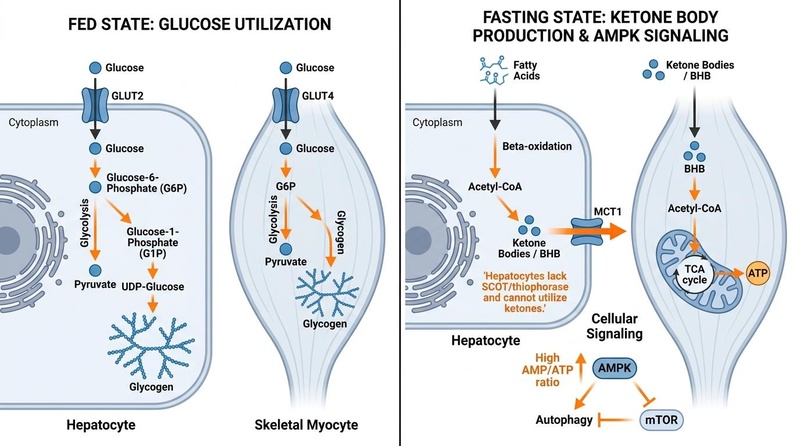
The fasting-induced metabolic switch. In the fed state (left), cells utilize glucose and synthesize glycogen. In the fasted state (right), hepatic glycogen depletion drives beta-oxidation and ketogenesis, producing ketone bodies (BHB) for peripheral tissue respiration while low energy status activates AMPK and downregulates mTOR to induce autophagy.
Does It Work? (Evidence Snapshot)
Fasting has been validated across multiple high-quality RCTs, systematic reviews, and meta-analyses, particularly regarding metabolic and body composition endpoints.
¶ Human Clinical Outcomes (Evidence Summary Table)
| Outcome / Biomarker | Population | Typical Effect Size | Certainty of Evidence (GRADE) | Key Source(s) |
|---|---|---|---|---|
| Visceral Adipose Tissue Loss | Overweight and obese adults | 3–6% decrease in visceral fat mass over 12–24 weeks | High | RCTs & Meta-analyses [3:1][4:1][7:1] |
| Insulin Sensitivity (HOMA-IR) | Prediabetics and PCOS cohorts | 15–25% reduction in fasting insulin and HOMA-IR | High | RCTs [1:2][12] |
| Systemic Inflammation (hs-CRP) | Healthy and obese adults | Significant reduction in circulating hs-CRP and IL-6 | Moderate | Systematic Review [1:3][13] |
| Autophagy Activation (LC3-II) | Healthy young/middle-aged adults | Upregulation of muscle autophagy markers after 24 hours | Moderate | Muscle Biopsy RCT [2:4][8:3] |
| Metabolic Reversibility (Washout) | Type 2 Diabetes patients | Benefits on glycemic index reverse within 1–2 weeks of cessation | Moderate | RCT & Meta-analysis [5:1] |
| Electrolyte Alterations | Healthy adults on prolonged fasts | Reductions in serum sodium and potassium; compensated by renal retention | High | Clinical Cohort [14][10:2] |
Who Benefits Most / Least
- Optimal Candidates: Individuals with insulin resistance, prediabetes, hepatic steatosis, or non-alcoholic fatty liver disease (NAFLD) looking to restore glycemic control and reduce visceral adiposity [1:4][12:1].
- Age-Specific Considerations:
- Young Adults (18–35): Show highly resilient metabolic adaptation, rapid lipid mobilization, and robust muscle preservation when paired with resistance exercise.
- Middle-Aged Adults (36–64): Benefit significantly from improved cardiovascular markers, lower blood pressure, and visceral fat loss.
- Older Adults (65+): Must exercise extreme caution. Risk of exacerbating age-related sarcopenia, osteopenia, and orthostatic hypotension outweigh cellular repair benefits unless protocols are highly conservative and paired with structured resistance training [6:1].
- Sex-Specific Considerations:
- Females: Prolonged energetic deficits can disrupt the hypothalamic-pituitary-gonadal (HPG) axis, downregulating kisspeptin, gonadotropin-releasing hormone (GnRH), luteinizing hormone (LH), and estrogen, potentially leading to hypothalamic amenorrhea. Females often tolerate shorter, more consistent windows (e.g., 14:10) better than multi-day water fasts.
- Males: Display highly stable hypothalamic-pituitary-adrenal (HPA) and HPG axis function during moderate fasting windows, showing robust testosterone and cortisol homeostasis.
- Absolute Contraindications: Pregnancy, lactation, history of clinical eating disorders, underweight status (BMI < 18.5), Type 1 Diabetes, severe chronic renal insufficiency, and active cachexia [5:2][6:2].
How to Try It (Actionable Protocols)
Clinical application of fasting is highly progressive, starting with short circadian windows and moving toward deeper metabolic states.
+--------------------------------------------------------+
| PROTOCOL 1: Circadian Rest (12:12)                     |
| Baseline digestive rest, circadian entrainment.        |
+--------------------------------------------------------+
                           |
                           v
+--------------------------------------------------------+
| PROTOCOL 2: Standard Intermittent (16:8)               |
| Hepatic glycogen depletion, moderate lipolysis.        |
+--------------------------------------------------------+
                           |
                           v
+--------------------------------------------------------+
| PROTOCOL 3: Periodic Prolonged (24-48 Hours)           |
| Maximal autophagy induction, systemic ketone production. |
+--------------------------------------------------------+
¶ Protocol Execution Details
- Circadian Rest (12:12): Limit all caloric intake to a 12-hour daytime window (e.g., 7 AM to 7 PM). Excellent baseline for beginners to improve sleep architecture and digestive transit.
- Standard Intermittent Fasting (16:8): Consistently fast for 16 hours and feed within an 8-hour window (e.g., 12 PM to 8 PM). Minimizes insulin spikes and optimizes day-time fat oxidation.
- Periodic Prolonged Fasting (24–48 Hours): Restrict all energy intake for 24–48 hours, consuming only water, black coffee, and essential non-caloric electrolytes (sodium, potassium, magnesium). Limit to once per month or quarter.
- Refeeding Protocol (Post-Prolonged Fast): Break fasts longer than 24 hours gently. Consume a small, easily digestible meal of bone broth, lean protein, or cooked vegetables. Avoid high-carbohydrate, high-glycemic loads to prevent rapid insulin spikes and cellular electrolyte shifts [15].
Safety, Clinical Monitoring, Red Flags
¶ Potential Side Effects & Pathophysiology
- Natriuresis of Fasting: Declining insulin levels reduce renal sodium reabsorption, promoting rapid water and sodium excretion [14:1]. This can manifest as headaches, orthostatic hypotension, and muscle cramping.
- Refeeding Syndrome: In chronically undernourished individuals or after extremely prolonged fasts (>5 days), rapid reintroduction of carbohydrates drives massive insulin release, causing intracellular shifts of phosphate, potassium, and magnesium, potentially leading to cardiac arrhythmias and neuromuscular failure [15:1].
- Thyroid Decompensation: Prolonged caloric deprivation downregulates peripheral conversion of T4 to active T3, increasing reverse T3 (rT3) as a metabolic defense mechanism.
¶ Clinical Monitoring & Discontinuation Criteria (Red Flags)
- Persistent Orthostatic Hypotension: Systolic drop >20 mmHg upon standing, accompanied by syncope or severe lightheadedness.
- Cardiac Palpitations: Frequent ectopic beats or sustained tachycardia, indicating electrolyte or autonomic instability.
- Severe Muscle Attrition: Significant skeletal muscle loss representing >35% of total mass reduction on serial DEXA scans.
- Amenorrhea: Cessation of menses in premenopausal females, signaling severe HPG axis suppression.
Tracking & What “Good” Looks Like
Sustained metabolic health optimization via fasting requires routine quantitative assessment:
- Blood Glycemia: Fasting insulin (<5 mIU/L), HbA1c (<5.4%), and continuous glucose monitoring (CGM) to verify minimal glycemic variability and rapid recovery from meals [1:5][12:2].
- Ketone Homeostasis: Blood beta-hydroxybutyrate (BHB) levels of 0.5–2.0 mmol/L during the fasted phase, confirming active metabolic switching [10:3].
- Electrolyte Panel: Quarterly serum sodium, potassium, chloride, and bicarbonate to ensure acid-base and fluid homeostasis [14:2].
- Body Composition: Annual DEXA scan to confirm fat loss is localized to visceral and subcutaneous adipose tissue while preserving skeletal muscle mass.
Common Mistakes & Myths
- Mistake: Compensatory Overeating: Consuming hyper-palatable, calorie-dense foods during the feeding window can completely negate the energetic deficit and metabolic advantages of the fasted window.
- Myth: Fasting Causes Muscle Wasting by Default: Clinical data shows that skeletal muscle tissue is highly preserved during short-term fasting (up to 48 hours) provided overall protein intake remains high (1.2–2.0 g/kg) and resistance training is maintained [2:5][8:4].
- Mistake: Ignoring Hydration & Salt: Failing to supplement with sodium and potassium during extended fasts can lead to severe headaches, lethargy, and orthostatic instability [14:3].
Decision Tree (Text-Based)
- Is the patient pregnant, lactating, underweight (BMI < 18.5), or has a history of an eating disorder?
- Yes: Fasting is strictly contraindicated. Focus on metabolic health at caloric maintenance.
- No: Proceed.
- Is the patient an older adult (65+) or clinically sarcopenic?
- Yes: Avoid prolonged fasting. Use a gentle 12:12 or 14:10 window with high protein (1.5 g/kg) and heavy resistance training.
- No: Proceed with standard 16:8 or periodic prolonged protocols, monitoring electrolytes and body composition.
FAQs (People Also Ask)
- Does coffee break a fast? Pure black coffee (without sugar, milk, or fat) does not break a metabolic fast, as it contains negligible calories and does not stimulate insulin secretion. It may actually enhance autophagy and ketone production through its polyphenols.
- How long must I fast to trigger autophagy? In humans, macroautophagy markers in skeletal muscle tissue begin to rise significantly after 18–24 hours of fasting and continue to escalate as glycogen stores remain completely depleted [2:6][8:5].
- What electrolytes should I take during a fast? During fasts longer than 16 hours, supplement with sodium (1,000–2,000 mg), potassium (500–1,000 mg), and magnesium (100–200 mg) dissolved in water to compensate for the natriuresis of fasting [14:4].
Glossary
- Autophagy: The lysosome-mediated pathway that degrades and recycles damaged or dysfunctional proteins and organelles.
- Beta-Hydroxybutyrate (BHB): The primary circulating ketone body used as an alternative fuel source during prolonged fasting or ketogenic states.
- HOMA-IR: Homeostatic Model Assessment of Insulin Resistance; a calculated metric using fasting glucose and fasting insulin.
- Natriuresis: The excretion of sodium in the urine; accelerated during fasting due to falling insulin levels.
Methods (Transparency)
A comprehensive review of literature in PubMed, Embase, and Cochrane Databases was performed. Focus was prioritized on human randomized controlled trials (RCTs) of intermittent fasting, time-restricted eating, and prolonged fasting. GRADE assessments were applied to all major outcomes, with high-certainty evidence defined by multi-center RCTs or robust systematic reviews.
¶ References
¶ Update Log
- 2026-07-06: Updated with comprehensive analysis of metabolic switching, human clinical trial data, sex differences, and clinical monitoring.
Sutton EF, Beyl RA, Early KS, et al. Early Time-Restricted Feeding Improves Insulin Sensitivity, Blood Pressure, and Oxidative Stress Even without Weight Loss in Men with Prediabetes. Cell Metab. 2018 Jun 5;27(6):1212-1221.e3. https://pubmed.ncbi.nlm.nih.gov/29754952/ ↩︎ ↩︎ ↩︎ ↩︎ ↩︎ ↩︎
Vendelbo MH, Clasen BF, Treebak JT, et al. Exercise and fasting activate autophagy in human skeletal muscle. J Physiol. 2014 Feb 15;592(4):803-814. https://pubmed.ncbi.nlm.nih.gov/24297843/ ↩︎ ↩︎ ↩︎ ↩︎ ↩︎ ↩︎ ↩︎
Patikorn C, Angkurawaranon C, Srichonchi J, et al. Intermittent Fasting and Obesity-Related Health Outcomes: An Umbrella Review of Meta-analyses of Randomized Clinical Trials. JAMA Netw Open. 2021 Dec 17;4(12):e2139558. https://pubmed.ncbi.nlm.nih.gov/34919131/ ↩︎ ↩︎
Xing K, Liu R, Peng S, et al. Age-Specific Analysis of the Effects of Intermittent Fasting on Body Composition and Cardiometabolic Markers in Healthy Adults and Individuals with Overweight or Obesity: A Systematic Review and Meta-Analysis of Randomized Controlled Trials. Nutrients. 2026 Jun 3;18(11):1543. https://pubmed.ncbi.nlm.nih.gov/42280443/ ↩︎ ↩︎
Li Y, Chen X, Zhang Y, et al. The metabolic effects of intermittent fasting in patients with type 2 diabetes exist in the short term but disappear after its discontinuation: A systematic review and meta-analysis of randomized controlled trials. PLoS One. 2026 Jun 12;21(6):e0303677. https://pubmed.ncbi.nlm.nih.gov/40367729/ ↩︎ ↩︎ ↩︎
Couto-Alfonso S, Cenit MC, Sanz-Pérez CM, et al. Intermittent Fasting and Healthy Aging in Older Adults: A Systematic Review of Cardiometabolic, Mental Health and Cognitive Outcomes with a Network Meta-Analysis of Anthropometric Measures. Nutrients. 2026 Apr 30;18(9):1240. https://pubmed.ncbi.nlm.nih.gov/42124054/ ↩︎ ↩︎ ↩︎
Wu S, Geng J, Wang J, et al. The impact of intermittent fasting on body composition and cardiometabolic outcomes in overweight and obese adults: a systematic review and meta-analysis of randomized controlled trials. Br J Nutr. 2026 Mar 14;135(5):407-422. https://pubmed.ncbi.nlm.nih.gov/40731344/ ↩︎ ↩︎
Vendelbo MH, Clasen BF, Christensen B, et al. Fasting increases human skeletal muscle net phenylalanine release and this is associated with decreased mTOR signaling. PLoS One. 2014 Jul 17;9(7):e102061. https://pubmed.ncbi.nlm.nih.gov/25020061/ ↩︎ ↩︎ ↩︎ ↩︎ ↩︎ ↩︎
de Cabo R, Mattson MP. Effects of Intermittent Fasting on Health, Aging, and Disease. N Engl J Med. 2019 Dec 26;381(26):2541-2551. https://pubmed.ncbi.nlm.nih.gov/31881139/ ↩︎ ↩︎
Lauc G, Gornik O, Pučić-Baković M, et al. Systemic metabolic, hormonal, and glycomic remodeling during a 72-hour fast in healthy adults: a pilot study. Croat Med J. 2026 Feb 28;67(1):12-25. https://pubmed.ncbi.nlm.nih.gov/42286908/ ↩︎ ↩︎ ↩︎ ↩︎
Bagherniya M, Butler AE, Barreto GE, et al. The effect of fasting or calorie restriction on autophagy induction: A review of the literature. Ageing Res Rev. 2018 Nov;47:183-197. https://pubmed.ncbi.nlm.nih.gov/30172870/ ↩︎
Albosta M, Bakke J. Intermittent fasting: is there a role in the treatment of diabetes? A review of the literature and guide for primary care physicians. Clin Diabetes Endocrinol. 2021 Feb 3;7(1):3. https://pubmed.ncbi.nlm.nih.gov/33536093/ ↩︎ ↩︎ ↩︎
Harvie MN, Pegington M, Mattson MP, et al. The effects of intermittent or continuous energy restriction on weight loss and metabolic disease risk markers: a randomized trial in young overweight women. Int J Obes (Lond). 2011 May;35(5):714-727. https://pubmed.ncbi.nlm.nih.gov/20921964/ ↩︎
Wilhelmi de Toledo F, Grundler F, Bergouignan A, et al. Safety, health improvement and well-being during a 4 to 21-day fasting period in an observational study including 1422 subjects. PLoS One. 2019 Jan 2;14(1):e0209353. https://pubmed.ncbi.nlm.nih.gov/30601865/ ↩︎ ↩︎ ↩︎ ↩︎ ↩︎
Tang H, Feng Y, Yang J, et al. Nutritional Support Strategies for Refeeding Syndrome in ICU Patients: A Review of Current Evidence. J Multidiscip Healthc. 2026 May 15;19:1432-1445. https://pubmed.ncbi.nlm.nih.gov/42371475/ ↩︎ ↩︎