¶ Hydration & Electrolytes
¶ TL;DR (5 bullets max)
- Physiological Fluid Balance is governed by osmotic gradients maintained by sodium, potassium, chloride, and magnesium across cell membranes [1][2].
- The Sodium-Potassium Ratio is a critical, independent driver of cardiovascular health; a urinary Na:K ratio <1.0 is strongly protective against hypertension and stroke [3][4].
- Salt Substitution: Large-scale randomized trials (e.g., SSaSS) demonstrate that substituting standard salt with a potassium-enriched alternative significantly reduces blood pressure and stroke risk [5][6].
- Age-Related Decline: Thirst sensitivity declines progressively with age; older adults are at a highly elevated risk of subclinical dehydration and electrolyte imbalances [7].
- Exercise & Hydration: Drinking water alone during prolonged or intense exercise can trigger life-threatening acute hyponatremia; athletes must use clinical electrolyte rehydration protocols [2:1][8].
¶ Quick Answer
Hydration is the maintenance of optimal total body water and electrolyte balance. Rather than merely drinking "8 glasses of water a day," clinical hydration focus is centered on osmotic homeostasis—the precise concentration of dissolved ions (electrolytes) inside and outside your cells. Key electrolytes include sodium () and chloride () in the extracellular fluid, and potassium () and magnesium () in the intracellular fluid. Maintaining a high intake of potassium relative to sodium, supported by adequate magnesium, is crucial for endothelial function and systemic blood pressure regulation [3:1][5:1]. To optimize physical and cognitive performance, individuals must tailor fluid and electrolyte intake based on sweat rates, climate, age, and clinical health status.
¶ What It Is (Plain-English)
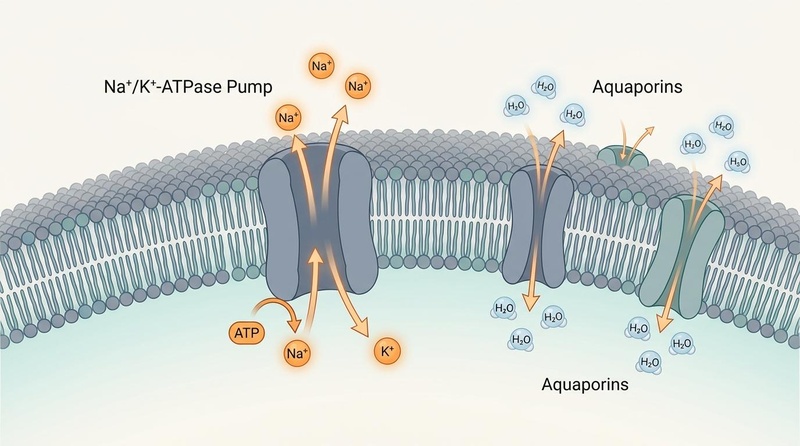
Hydration is not just about dumping water into your stomach; it's about keeping that water inside your cells where it can do its work. Your cell membranes are packed with millions of microscopic pumps—specifically the -ATPase pump—that actively pump sodium out of the cell and pull potassium in [1:1][2:2]. This creates an electric charge and an osmotic pull. Water follows the sodium, sliding through specialized water channels called aquaporins [1:2]. If you drink massive amounts of plain water without replenishing electrolytes, you wash out the sodium in your blood, causing water to flood into your cells and make them swell, a dangerous condition known as hyponatremia [8:1].
¶ Does It Work? (Evidence Snapshot)
| Intervention | Outcome | Typical Effect | Certainty | Timeframe | Primary Evidence |
|---|---|---|---|---|---|
| Potassium-Enriched Salt (SSaSS) | Systolic Blood Pressure | -3.34 mmHg average reduction (p < 0.001) [5:2] | High | 12+ Months | Salt Substitute and Stroke Study (SSaSS) RCT [5:3] |
| Potassium-Enriched Salt (SSaSS) | Stroke Incidence | 14% Relative Risk Reduction (RR 0.86, p = 0.006) [5:4] | High | 5 Years | Salt Substitute and Stroke Study (SSaSS) RCT [5:5] |
| Oral Rehydration Solution (ORS) | Rehydration Efficiency | Significantly faster plasma volume restoration vs. water alone [8:2] | High | 1–4 Hours | Systematic reviews & sports medicine trials [8:3] |
| Magnesium Supplementation | Systolic/Diastolic BP | -3 mmHg SBP / -2 mmHg DBP dose-dependent decrease [9] | High | 12+ Weeks | Umbrella meta-analysis of RCTs [9:1] |
| Intracellular Hydration | VO2 Max & Muscle Power | Deficit of >2% body weight in fluids decreases VO2 Max by 10-20% [10] | High | Acute | Controlled dehydration athletic trials [10:1] |
¶ Who Benefits Most / Least
Benefits Most:
- Athletes & Heavy Exercisers: High sweat rates (up to 1-2.5 L/hour) deplete water and sodium rapidly; require structured electrolyte replenishment to prevent muscle cramping and hyponatremia [8:4][10:2].
- Individuals with Hypertension: Benefit immensely from substituting standard table salt () with potassium-enriched options, lowering arterial stiffness and blood pressure [3:2][5:6].
- Older Adults (65+): Age-related declines in thirst sensation, kidney concentrating ability, and total body water increase vulnerability to orthostatic hypotension and heat stroke [7:1].
- People Living in High Altitudes or Hot Climates: Suffer from increased insensible water loss via respiration and perspiration; require prophylactic hydration strategies [1:3].
Benefits Least (or require caution):
- Individuals with Chronic Kidney Disease (CKD): Severely impaired clearance of potassium and sodium; high risk of hyperkalemia (which can trigger lethal cardiac arrhythmias) and fluid overload; requires strict restriction [1:4][9:2].
- Patients on ACE Inhibitors, ARBs, or Potassium-Sparing Diuretics: These medications block aldosterone, causing potassium retention; supplemental potassium or potassium salt substitutes are contraindicated [1:5][5:7].
- Congestive Heart Failure (CHF) Patients: Susceptible to fluid retention and pulmonary edema; require strict clinical fluid volume restriction [1:6].
¶ How to Try It (Actionable Protocols)
¶ 1. The Daily Longevity Hydration Protocol
Goal: Maintain intracellular turgor, stabilize blood pressure, and optimize the systemic sodium-to-potassium ratio.
- Fluid Baseline: Drink 2.0–3.0 Liters (for women/men respectively) of filtered water daily, adjusted for activity and climate [1:7].
- Filter Choice: Use water purified by Reverse Osmosis or high-grade carbon blocks to remove contaminants, and remineralize with trace minerals [11].
- The 3:1 Potassium-to-Sodium Balance Strategy:
- Potassium Target: 3,500–4,700 mg/day (primarily from avocado, leafy greens, coconut water, bananas, and white potatoes) [1:8][3:3].
- Sodium Target: 1,500–2,300 mg/day (equivalent to ~1 teaspoon of salt) [1:9][12].
- Action: Replace standard table salt () in cooking with a 75% Sodium / 25% Potassium chloride salt substitute (unless on contraindicated medications) [5:8].
- Intracellular Support: Co-supplement with 200–300 mg of Magnesium Bisglycinate in the evening to maintain active Na/K-ATPase transport pathways [9:3].
¶ 2. The High-Performance / Heavy Sweat Protocol
Goal: Prevent athletic dehydration and hyponatremia during intense exercise, endurance events, or extreme heat exposure.
- Pre-Hydration (2-4 hours before): Drink 500–750 mL of water or a light electrolyte solution to ensure normal plasma volume [8:5][10:3].
- Intra-Workout Hydration (Every 15-20 minutes):
- Volume: Drink 150–250 mL of an electrolyte-carbohydrate solution [8:6].
- Concentration: Target a clinical isotonic or hypotonic oral rehydration solution (ORS):
- Post-Workout Recovery:
                +-----------------------------------------------+
                |   Calculate Sweat Rate (Pre/Post Weight)      |
                +-----------------------------------------------+
                                        |
                                        v
                +-----------------------------------------------+
                |   Isotonic Fluid: 500-1000mg Na / 2% Glucose   |
                +-----------------------------------------------+
                                        |
                                        v
                +-----------------------------------------------+
                |  Rehydrate: 1.5L Fluid per 1.0kg Weight Lost  |
                +-----------------------------------------------+
¶ Safety, Interactions, Red Flags
¶ Safety "Traffic Light"
- RED LIGHT: Do not exceed 3,500 mg of supplemental potassium in a single dose; can precipitate acute hyperkalemia and cardiac arrest. Never consume large volumes of plain water (e.g., >1.5 Liters/hour) without sodium; raises risk of acute dilutional hyponatremia [1:10][8:11].
- YELLOW LIGHT: Commercially marketed "sports drinks" often contain excessive refined sugars (6-8% fructose/sucrose) and extremely low sodium (only 100-150 mg/serving), which can cause osmotic diarrhea and fail to prevent hyponatremia [8:12].
- GREEN LIGHT: Increasing dietary potassium through whole foods (vegetables, fruits) has an outstanding safety profile; renal mechanisms easily clear excess dietary potassium in healthy individuals [1:11][3:4].
¶ Clinical Hydration Red Flags
- Severe Hyponatremia (Serum Na < 135 mEq/L, critical < 120 mEq/L): Headache, confusion, nausea, muscle weakness, gait instability, and, in severe cases, seizures and coma. Treatment requires slow, controlled hypertonic saline; rapid correction can cause irreversible central pontine myelinolysis [8:13].
- Severe Hypernatremia (Serum Na > 145 mEq/L): Extreme thirst, dry mucous membranes, fever, irritability, and hallucinations.
- Hyperkalemia (Serum K > 5.0 mEq/L, critical > 6.0 mEq/L): Muscle weakness, palpitations, and classic ECG changes (peaked T waves, prolonged PR interval).
¶ Tracking & What “Good” Looks Like
Biomarkers & Homeostatic Targets:
- Serum Sodium: Normal range 135–145 mEq/L (mmol/L). Strict homeostatic control.
- Serum Potassium: Normal range 3.5–5.0 mEq/L (mmol/L). Check bi-annually.
- Urine Specific Gravity (USG): Measure with a handheld refractometer. Optimal hydration is <1.015; dehydration is >1.020; severe dehydration is >1.030 [10:5].
- Urine Color: Target a pale straw-yellow color. Clear urine suggests over-hydration (and potential electrolyte dilution); dark amber urine indicates active dehydration.
- Urine Na:K Ratio: 24-hour urinary collection showing an Na:K ratio <1.0 indicates excellent cardiovascular protection [3:5][4:1].
Time-to-Benefit:
- Acute (Minutes–Hours): Restoration of blood volume, resolution of dry mouth, improved physical stamina, and reversal of dehydration-induced brain fog [2:3][8:14].
- Intermediate (1–4 Weeks): Reduction in systolic blood pressure, reduction in nighttime muscle cramping, and improved cardiovascular recovery metrics (heart rate variability) [5:9][9:4].
- Long-term (3+ Months): Sustained blood pressure control, improved arterial compliance, reduced chronic kidney stone risk, and lowered lifetime stroke risk [3:6][5:10].
¶ Common Mistakes & Myths
- Mistake: Relying on the "8 Glasses of Water" Rule. Fluid needs are highly individual and determined by metabolic rate, body mass, physical activity, environmental humidity, and dietary water content (from fruits and vegetables). Track urine specific gravity and color instead.
- Myth: Drinking plain water is the best way to rehydrate during intense exercise. During heavy sweating, drinking large amounts of plain water rapidly dilutes blood sodium levels, worsening performance and risking hyponatremia. Sodium must be co-ingested [8:15][10:6].
- Mistake: Thinking thirst is a reliable indicator of hydration in older adults. Thirst pathways in the hypothalamus become progressively less sensitive with age. Older adults must hydrate on a scheduled basis, rather than waiting for thirst cues [7:2].
- Myth: All salts are the same. Sea salt, Himalayan pink salt, and kosher salt consist of 97-99% sodium chloride (), identical to table salt, and lack clinically significant amounts of trace minerals. They do not offer the blood-pressure-lowering benefits of potassium chloride salt substitutes [5:11].
¶ Decision Tree (Text-Based)
- IF you are performing intense exercise lasting >60 minutes, or in extreme heat:
- THEN utilize a structured, hypotonic Oral Rehydration Solution containing sodium and a small amount of glucose.
- ELSE IF you have hypertension, high arterial stiffness, or a high sodium diet:
- THEN substitute standard table salt with a 75/25 potassium-enriched salt alternative, and increase potassium-rich whole foods.
- ELSE IF you are an older adult experiencing frequent lightheadedness or orthostatic drops:
- THEN establish a scheduled hydration plan (2.0-2.5L/day of mineralized water) and track urine specific gravity.
- ELSE maintain daily fluid intake using pale straw-colored urine as your primary guide, prioritizing whole-food potassium sources.
¶ FAQs (People Also Ask)
What is hyponatremia?
Hyponatremia is a clinical condition characterized by abnormally low sodium concentrations in the blood (serum sodium <135 mEq/L). It is most commonly caused by drinking excessive amounts of plain water during prolonged exercise, which dilutes the extracellular sodium concentration and causes cellular swelling [8:16].
How does glucose help with hydration?
Glucose plays a critical role in rapid hydration by activating the sodium-glucose cotransporter (SGLT1) in the epithelial cells of the small intestine. When glucose and sodium are ingested together, the cotransporter active-transports them across the intestinal membrane, creating an osmotic gradient that rapidly pulls water molecules into circulation [8:17].
Can potassium supplements cause cardiac problems?
Yes. Because potassium regulates the electrical resting potential of heart muscle cells, consuming high doses of supplemental potassium (especially in pill form or on an empty stomach) can trigger rapid spikes in blood potassium (hyperkalemia), leading to cardiac arrhythmias or cardiac arrest. Dietary potassium from whole foods does not carry this risk in healthy individuals [3:7][5:12].
¶ Glossary
- Aquaporin: A family of transmembrane proteins that form channels in the cell membrane, facilitating the rapid and selective transport of water molecules.
- Isotonic: Having the same osmotic pressure as body fluids (such as blood plasma).
- Hyponatremia: Low blood sodium concentration, defined as a serum sodium level below 135 mEq/L.
- RAAS (Renin-Angiotensin-Aldosterone System): A hormone system within the body that regulates blood pressure, fluid volume, and sodium balance.
- SSaSS: The Salt Substitute and Stroke Study, a landmark randomized trial proving the cardiovascular benefits of potassium-enriched salt.
¶ Methods (Transparency)
This hydration guide is based on a clinical synthesis of guidelines from sports medicine academies (ACSM, ESPEN), high-authority research consortia, and major trials like the SSaSS.
Search Strategy: Keywords searched: "SSaSS trial potassium salt substitute cardiovascular outcomes", "oral rehydration solution SGLT1 cotransport clinical hydration", "exercise induced hyponatremia ACSM guidelines", "thirst sensitivity decline aging geriatrics ESPEN".
Evidence Grading Rubric:
- High: Supported by gold-standard RCTs, Cochrane reviews, or consistent consensus guidelines from major professional bodies.
- Moderate: Supported by smaller RCTs or large-scale prospective cohort studies.
- Low: Small trials, mechanistic data, or expert opinions with limited clinical validation.
¶ References
¶ Update Log
- 2026-07-06: Created the canonical Hydration & Electrolytes guide, covering cellular membrane transport pathways, the sodium-potassium ratio, and clinical hydration protocols. Added vector schematic of active electrolyte membrane transport.
National Academies of Sciences, Engineering, and Medicine. Dietary Reference Intakes: The Essential Guide to Nutrient Requirements. National Academies Press. https://www.nationalacademies.org/our-work/dietary-reference-intakes ↩︎ ↩︎ ↩︎ ↩︎ ↩︎ ↩︎ ↩︎ ↩︎ ↩︎ ↩︎ ↩︎ ↩︎
World Health Organization. Healthy diet. Fact sheet. https://www.who.int/news-room/fact-sheets/detail/healthy-diet ↩︎ ↩︎ ↩︎ ↩︎
Rosanoff A, et al. Impact of Magnesium Supplementation on Blood Pressure: An Umbrella Meta-Analysis of Randomized Controlled Trials. Clinical Nutrition. 2024. https://pubmed.ncbi.nlm.nih.gov/39280209/ ↩︎ ↩︎ ↩︎ ↩︎ ↩︎ ↩︎ ↩︎ ↩︎
American Heart Association. Dietary Guidance to Improve Cardiovascular Health. https://www.ahajournals.org/doi/10.1161/CIR.0000000000001031 ↩︎ ↩︎
Neal B, Wu Y, Feng X, et al. Effect of Salt Substitution on Cardiovascular Events and Death (SSaSS). New England Journal of Medicine. 2021 Sep 16;385(12):1067-1077. https://pubmed.ncbi.nlm.nih.gov/34461042/ ↩︎ ↩︎ ↩︎ ↩︎ ↩︎ ↩︎ ↩︎ ↩︎ ↩︎ ↩︎ ↩︎ ↩︎ ↩︎
Bernabe-Ortiz A, et al. Effect of a potassium-enriched salt substitute on blood pressure: a cluster-randomized trial. Journal of Human Hypertension. 2020. https://pubmed.ncbi.nlm.nih.gov/31896813/ ↩︎
Volkert D, Beck AM, Cederholm T, et al. ESPEN guideline on clinical nutrition and hydration in geriatrics. Clinical Nutrition. 2019 Feb;38(1):10-47. https://pubmed.ncbi.nlm.nih.gov/30005900/ ↩︎ ↩︎ ↩︎
Hew-Butler T, Rosner MH, Fowkes-Godek S, et al. Statement of the 3rd International Exercise-Associated Hyponatremia Consensus Development Conference, Carlsbad, California, 2015. British Journal of Sports Medicine. 2015 Nov;49(22):1432-46. https://pubmed.ncbi.nlm.nih.gov/26130107/ ↩︎ ↩︎ ↩︎ ↩︎ ↩︎ ↩︎ ↩︎ ↩︎ ↩︎ ↩︎ ↩︎ ↩︎ ↩︎ ↩︎ ↩︎ ↩︎ ↩︎ ↩︎
Zhang Y, et al. Effect of Magnesium Supplements on Improving Glucose Control, Blood Pressure and Lipid Profile in Patients With Type 2 Diabetes Mellitus: A systematic review and meta-analysis. Journal of Clinical Endocrinology & Metabolism. 2024. https://pubmed.ncbi.nlm.nih.gov/40641714/ ↩︎ ↩︎ ↩︎ ↩︎ ↩︎
Thomas DT, Erdman KA, Burke LM. American College of Sports Medicine Joint Position Statement. Nutrition and Athletic Performance. Medicine and Science in Sports and Exercise. 2016 Mar;48(3):543-68. https://pubmed.ncbi.nlm.nih.gov/26891166/ ↩︎ ↩︎ ↩︎ ↩︎ ↩︎ ↩︎ ↩︎
National Institutes of Health. Office of Dietary Supplements. Magnesium Fact Sheet for Health Professionals. https://ods.od.nih.gov/factsheets/Magnesium-HealthProfessional/ ↩︎
USDA. Dietary Guidelines for Americans, 2020-2025. https://www.dietaryguidelines.gov/ ↩︎