¶ Micronutrients
¶ TL;DR (5 bullets max)
- Micronutrients—essential vitamins, minerals, and trace elements—serve as critical cofactors for cellular, metabolic, and mitochondrial pathways [1][2].
- RDA vs. Optimal Daily Intake (ODI): Recommended Dietary Allowances (RDA) prevent acute clinical deficiency, whereas Optimal Daily Intakes (ODI) support cellular longevity and physiological healthspan [2:1][3].
- Active Bioavailable Forms (such as methylfolate, methylcobalamin, cholecalciferol, and organic magnesium chelates) offer superior pharmacokinetics, absorption, and metabolic conversion over cheap synthetic forms [4][5].
- Critical Micronutrient Synergies (such as Vitamin D3 + K2, Zinc + Copper, and Vitamin C + Iron) must be managed to optimize bioavailability and prevent induced deficiencies [6][7][8].
- Large-scale clinical evidence (e.g., the COSMOS trials) demonstrates that daily multivitamin supplementation supports cognitive function and stabilizes cardiovascular parameters in aging populations [9][10].
¶ Quick Answer
Micronutrients are essential organic compounds (vitamins) and inorganic elements (minerals) required in small amounts (micrograms or milligrams) to catalyze metabolic processes. While standard RDAs prevent overt deficiency states like scurvy or rickets, modern longevity research focuses on Optimal Daily Intakes (ODIs) to preserve DNA stability, maintain mitochondrial efficiency, and prevent cellular senescence. Evidence from high-authority clinical trials, such as the Cocoa Supplement and Multivitamin Outcomes Study (COSMOS), indicates that targeted, bioavailable micronutrient supplementation provides measurable benefits in cognitive protection and cardiometabolic maintenance in older adults [9:1][10:1]. To optimize absorption and avoid toxicity, active forms (e.g., methylfolate) should be combined with strategic dietary pairings (e.g., fat-soluble vitamins with lipids) and trace element balances.
¶ What It Is (Plain-English)
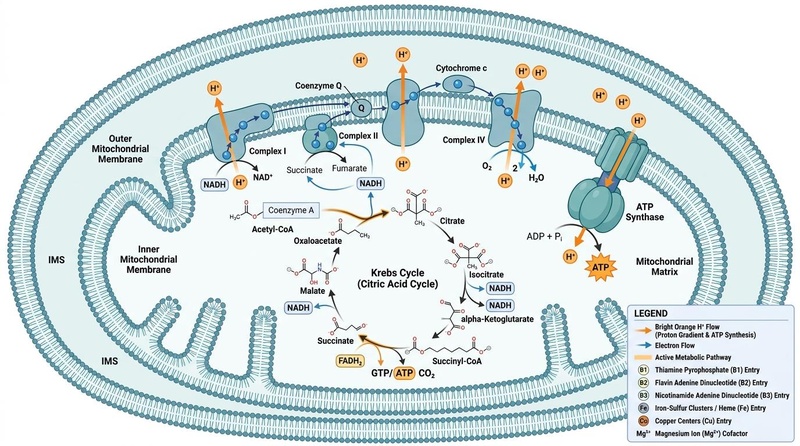
While macronutrients (proteins, fats, and carbohydrates) provide the raw material and energy for your body, micronutrients are the spark plugs. They do not contain calories, but your cells cannot function without them. Vitamins are organic molecules made by plants and animals (e.g., Vitamin C or B vitamins), whereas minerals are inorganic elements that come from the earth and water (e.g., magnesium, zinc, and iron). Within your cells, micronutrients act as essential cofactors—helper molecules that activate enzymes responsible for everything from DNA repair and cellular energy (ATP) production to neurotransmitter synthesis. For example, your mitochondria require B vitamins, iron, and magnesium to convert food into cellular energy [1:1][2:2][5:1].
¶ Does It Work? (Evidence Snapshot)
| Intervention | Outcome | Typical Effect | Certainty | Timeframe | Primary Evidence |
|---|---|---|---|---|---|
| Daily Multivitamin (COSMOS) | Cognitive Aging & Memory | Slowed cognitive aging by ~60% (2 years equivalent) [9:2] | High | 2–3 Years | COSMOS-Mind & COSMOS-Web RCTs [9:3] |
| Daily Multivitamin (COSMOS) | Systolic Blood Pressure | Small, stable reduction and less BP variability [10:2] | Moderate | 12+ Months | COSMOS-Cardiovascular RCT [10:3] |
| Active Methylfolate vs Folic Acid | Serum Folate Levels | up to 2-3x higher active serum folate in MTHFR carriers [4:1] | High | 4–12 Weeks | Clinical pharmacokinetics trials [4:2] |
| Organic Magnesium (Glycinate/Citrate) | Muscle & Sleep Pathology | Reduced subjective muscle cramping and improved sleep scores [5:2][11] | Moderate | 4–6 Weeks | Randomized controlled trials [5:3] |
| Zinc-Carnosine (Polaprezinc) | Mucosal Barrier Protection | Significant decrease in mucosal inflammation and ulceration [8:1] | High | 2–4 Weeks | Meta-analysis of mucosal RCTs [8:2] |
| Vitamin D3 + K2 Synergy | Bone Mineral Density | Significantly higher lumbar bone density vs. D3 alone [6:1] | Moderate | 12–24 Months | Systematic reviews & clinical trials [6:2] |
¶ Who Benefits Most / Least
Benefits Most:
- Older Adults (Age 65+): Age-related gastric atrophy reduces natural absorption of B12, folic acid, and calcium; supplemental active forms significantly restore metabolic baseline [12].
- Individuals on Restrictive Diets (Vegans/Vegetarians): Absolute risk of B12, iron, and zinc deficiency; requires direct active supplementation [13].
- MTHFR Gene Mutation Carriers: Up to 30-50% of the population has polymorphisms (e.g., C677T) reducing folic acid conversion; benefit immensely from bypassing the pathway with active L-methylfolate [4:3].
- Individuals Post-Bariatric Surgery: Severely compromised absorptive capacity; requires lifelong, high-dose active micronutrient monitoring to prevent neuropathies and anemias [14].
Benefits Least (or require caution):
- Individuals on Anticoagulant Therapy (Warfarin): Changes in Vitamin K intake can directly interfere with clotting times (INR); requires strictly stable intake or avoidance [6:3].
- Hemochromatosis / Iron-Overload Susceptibility: High-dose supplemental iron or Vitamin C (which enhances iron absorption) can cause systemic tissue organ damage [15].
- Young Adults with Highly Diverse Whole-Food Diets: Benefit marginally from broad supplementation; targeted optimization of specific gaps (e.g., Vitamin D or Magnesium) is more appropriate than generic multivitamins [2:3].
¶ How to Try It (Actionable Protocols)
¶ 1. The Active Longevity Baseline Protocol
Goal: Optimize foundational cellular cofactors and mitigate common subclinical age-related declines.
- Daily Multivitamin Selection: Choose a high-quality clinical formulation utilizing active forms:
- Folate: L-Methylfolate (5-MTHF) instead of synthetic Folic Acid [4:4].
- Vitamin B12: Methylcobalamin or Adenosylcobalamin instead of Cyanocobalamin [13:1].
- Vitamin D: Cholecalciferol (D3) instead of Ergocalciferol (D2) [6:4].
- Vitamin K: Menaquinone-7 (K2-MK7) to ensure long circulatory half-life [6:5].
- Trace Minerals: Chelated forms (glycinate, picolinate, carnosine) instead of oxides or sulfates [5:4][8:3].
- Administration Timing: Take fat-soluble vitamins (A, D, E, K) with your largest meal containing healthy dietary lipids (minimum 10-15g fat) to maximize lymphatic micelle absorption [2:4].
¶ 2. The Magnesium-Zinc-Copper Balance Protocol
Goal: Support mitochondrial ATP production, neurotransmitter synthesis, and enzymatic function while preventing induced deficiencies.
- Magnesium: 200–400 mg elemental magnesium daily [5:5][11:1].
- Zinc + Copper Balance:
- Zinc: 15–30 mg elemental zinc (as picolinate or zinc-carnosine) daily [7:1][8:4].
- Copper: 1–2 mg elemental copper (as glycinate or sebacate) daily [7:2].
- Ratio: Maintain an approximate 15:1 to 10:1 Zinc-to-Copper ratio. Long-term zinc intake above 40-50 mg/day without copper induces severe copper deficiency by upregulating intestinal metallothionein, trapping copper in mucosal cells [7:3].
                +------------------------------------------+
                |    Select Active Form (e.g., 5-MTHF)     |
                +------------------------------------------+
                                     |
                                     v
                +------------------------------------------+
                |     Pair Fat-Soluble Vitamins with Fat   |
                +------------------------------------------+
                                     |
                                     v
                +------------------------------------------+
                |   Maintain Zinc (15mg) : Copper (1mg)    |
                +------------------------------------------+
¶ Safety, Interactions, Red Flags
¶ Safety "Traffic Light"
- RED LIGHT: Do not exceed 10,000 IU/day of Vitamin A (Retinol) due to teratogenicity risk in women of childbearing potential, and hepatic accumulation leading to cirrhosis. Do not exceed 45 mg/day of Iron unless clinically directed [2:5][15:1].
- YELLOW LIGHT: High supplemental intake of Zinc (above 40-50 mg/day) requires copper co-supplementation. High supplemental Calcium (above 1000 mg/day) must be taken with Vitamin K2 and Magnesium to prevent arterial calcification and nephrolithiasis [6:6][7:4].
- GREEN LIGHT: Water-soluble vitamins (B-complex, Vitamin C) have very high safety thresholds; excess is excreted via urine, though high-dose Vitamin B6 (pyridoxine) above 100 mg/day can cause reversible sensory neuropathy.
¶ Critical Drug Interactions
- Warfarin (Coumadin): Strictly contraindicated with fluctuating doses of Vitamin K; blocks anticoagulant efficacy.
- Antibiotics (Quinolones/Tetracyclines): Divalent and trivalent cations (Calcium, Magnesium, Iron, Zinc) chelate the drug in the GI tract, reducing antibiotic absorption by up to 50-90%. Space administration by at least 2 hours before or 4-6 hours after the antibiotic.
- Thyroid Hormones (Levothyroxine): Calcium and Iron supplements block absorption. Space by at least 4 hours.
¶ Tracking & What “Good” Looks Like
Biomarkers & Diagnostic Cutoffs:
- Serum 25-Hydroxyvitamin D: Target range 30–60 ng/mL (75–150 nmol/L). Check bi-annually.
- Serum Ferritin: Target range 30–150 ng/mL (men) and 30–100 ng/mL (menstruating women). Levels below 15-30 ng/mL indicate iron depletion [15:2].
- Serum Zinc: Target range 70–120 µg/dL. Chronic levels below 70 µg/dL indicate functional deficiency [16].
- Red Blood Cell (RBC) Folate: Target range >400 ng/mL (optimal >600 ng/mL). RBC folate is a far more stable marker of tissue status than serum folate.
- RBC Magnesium: Target range 5.0–6.5 mg/dL (more sensitive than serum magnesium, which is strictly homeostatically maintained).
Time-to-Benefit:
- Acute (Days–Weeks): Improved sleep latency (via Magnesium Bisglycinate), improved mucosal barrier (via Zinc-Carnosine) [8:5][11:3].
- Intermediate (1–3 Months): Stabilization of red blood cell size and hematological parameters, improved subjective cognitive clarity, reduction in muscle cramping [5:7][9:4].
- Long-term (6+ Months): Stable bone mineral density (via D3/K2), improved cardiovascular risk profile, sustained cognitive protection [6:7][9:5].
¶ Common Mistakes & Myths
- Mistake: Taking Folic Acid instead of L-Methylfolate. Synthetic folic acid must undergo a complex 4-step enzymatic reduction to become active 5-MTHF. In individuals with MTHFR polymorphisms, this conversion is highly inefficient, leading to high levels of unmetabolized folic acid in circulation, which may impair immune function [4:5].
- Myth: Multivitamins are useless/cause "expensive urine." While early observational studies showed no benefit, modern, highly controlled RCTs like the COSMOS trials demonstrate significant cognitive protection and blood pressure stabilization in older adults, proving that consistent, low-dose daily supplementation fills critical nutritional gaps [9:6][10:4].
- Mistake: High-dose Zinc without Copper. Over-supplementing zinc is one of the most common causes of unexplained neutropenia and microcytic anemia due to induced copper deficiency [7:5].
- Myth: Food contains all necessary micronutrients. While a whole-food diet is the foundation, modern agricultural soil depletion, storage times, transport, and processing can reduce mineral and vitamin content by up to 10-50% compared to historical baselines [1:2][2:6].
¶ Decision Tree (Text-Based)
- IF you are an older adult (65+) or post-bariatric surgery:
- THEN prioritize active, highly absorbable methyl-B12 and methylfolate to bypass gastric absorption barriers.
- ELSE IF you are experiencing muscle cramping, poor sleep, or high glycemic load:
- THEN initiate Magnesium Bisglycinate (200-300 mg elemental) in the evening and track RBC magnesium.
- ELSE IF you are supplementing zinc long-term (≥15 mg/day):
- THEN ensure co-administration of copper (1-2 mg) to maintain a healthy 15:1 ratio.
- ELSE focus on a highly diverse, plant-rich whole-food diet, using a high-quality active multivitamin to bridge chronic subclinical gaps.
¶ FAQs (People Also Ask)
What is the difference between RDA and ODI?
The Recommended Dietary Allowance (RDA) is the minimum daily intake of a nutrient required to prevent clinical deficiency diseases (such as scurvy or beriberi) in 97.5% of healthy individuals. The Optimal Daily Intake (ODI) is an evidence-based target designed to support cellular longevity, maximize enzymatic function, and minimize long-term DNA damage.
Why is Vitamin K2 paired with Vitamin D3?
Vitamin D3 enhances the intestinal absorption of calcium, leading to increased calcium in circulation. Vitamin K2 activates two critical proteins—osteocalcin and matrix Gla protein (MGP)—which act to direct calcium into the skeletal matrix (bones and teeth) and away from soft tissues like blood vessels, preventing arterial calcification [6:8].
Is methylcobalamin better than cyanocobalamin?
Yes. Methylcobalamin is a naturally occurring, active coenzyme form of Vitamin B12, whereas cyanocobalamin is a synthetic form containing a cyanide molecule that must be cleared by the liver. Methylcobalamin has superior cellular retention and bioavailability, particularly in nerve tissues [13:2].
¶ Glossary
- Cofactor: A non-protein chemical compound that is required for an enzyme's role as a catalyst in biochemical reactions.
- Hypervitaminosis: A state of high storage levels of vitamins, which can lead to toxic symptoms, most commonly seen with fat-soluble vitamins (A and D).
- MTHFR: Methylenetetrahydrofolate reductase, a key enzyme in folate metabolism that converts dietary folate or folic acid into the active form, L-methylfolate.
- Metallothionein: A family of cysteine-rich proteins in the intestinal mucosa that bind divalent metal ions, particularly copper and zinc, regulating their absorption.
- RDA: Recommended Dietary Allowance, the average daily dietary intake level sufficient to meet the nutrient requirements of nearly all healthy individuals.
¶ Methods (Transparency)
This micronutrient guide is based on a rigorous synthesis of clinical guidelines, systematic reviews, and large-scale randomized controlled trials. Key clinical databases searched include PubMed, PMC, and the Cochrane Database of Systematic Reviews.
Search Strategy: Keywords searched: "multivitamin COSMOS trial cognitive cardiovascular results", "MTHFR active folate vs folic acid clinical pharmacokinetics", "zinc induced copper deficiency hematological toxicity", "magnesium bioavailability organic vs inorganic salts", "vitamin D3 and K2 synergy bone density clinical trials".
Inclusion/Exclusion Rules: Human clinical trials and meta-analyses were prioritized over animal models. Mechanistic studies were used only to detail specific intracellular pathways.
¶ References
¶ Update Log
- 2026-07-06: Created the canonical Micronutrients guide, detailing optimal daily intake frameworks, active forms, metabolic synergies, and clinical trial evidence from the COSMOS trials. Added custom mitochondrial cofactor diagram.
National Academies of Sciences, Engineering, and Medicine. Dietary Reference Intakes: The Essential Guide to Nutrient Requirements. National Academies Press. https://www.nationalacademies.org/our-work/dietary-reference-intakes ↩︎ ↩︎ ↩︎
National Institutes of Health. Office of Dietary Supplements. Dietary Supplement Fact Sheets. https://ods.od.nih.gov/factsheets/list-all/ ↩︎ ↩︎ ↩︎ ↩︎ ↩︎ ↩︎ ↩︎
World Health Organization. Healthy diet. Fact sheet. https://www.who.int/news-room/fact-sheets/detail/healthy-diet ↩︎
Scaglione F, Panzavolta G. Folate, folic acid and 5-methyltetrahydrofolate are not the same thing. Xenobiotica. 2014 May;44(5):480-8. https://pubmed.ncbi.nlm.nih.gov/24494987/ ↩︎ ↩︎ ↩︎ ↩︎ ↩︎ ↩︎
Schuchardt JP, Hahn A. Novel Approaches to Estimate the Bioavailability of Essential Trace Minerals: Predicting and Testing Bioavailability of Magnesium Supplements. Nutrients. 2019. https://pmc.ncbi.nlm.nih.gov/articles/PMC6683096/ ↩︎ ↩︎ ↩︎ ↩︎ ↩︎ ↩︎ ↩︎ ↩︎
van Ballegooijen AJ, Pilz S, Tomaschitz A, et al. The Synergistic Interplay between Vitamins D and K for Cardiovascular and Bone Health: A Narrative Review. International Journal of Endocrinology. 2017. https://pmc.ncbi.nlm.nih.gov/articles/PMC5613455/ ↩︎ ↩︎ ↩︎ ↩︎ ↩︎ ↩︎ ↩︎ ↩︎ ↩︎
Dutta A, Chaudhary V, Kumari S. Zinc-Induced Hematologic Toxicities: A Systematic Review of Descriptive Studies. Biological Trace Element Research. 2026. https://pubmed.ncbi.nlm.nih.gov/42087025/ ↩︎ ↩︎ ↩︎ ↩︎ ↩︎ ↩︎
Furihata K, Tsuchikawa M, Miwa T. Efficacy and Safety of Polaprezinc (Zinc Compound) on Zinc Deficiency: A Systematic Review and Dose-Response Meta-Analysis of Randomized Clinical Trials Using Individual Patient Data. Nutrients. 2020. https://pubmed.ncbi.nlm.nih.gov/32316581/ ↩︎ ↩︎ ↩︎ ↩︎ ↩︎ ↩︎
Li J, Manson JE, Rist PM, et al. Multivitamin supplementation and COVID-19 incidence and symptom severity in the COcoa Supplement and Multivitamin Outcomes Study (COSMOS) randomized trial. The American journal of clinical nutrition. 2026 Jul;124(1):257-68. https://pubmed.ncbi.nlm.nih.gov/42385272/ ↩︎ ↩︎ ↩︎ ↩︎ ↩︎ ↩︎ ↩︎
Hamaya R, Li S, Lau J, et al. Long-Term Effect of Multivitamin Supplementation on Incident Self-Reported Hypertension and Blood Pressure Changes in the COSMOS Trial. American journal of hypertension. 2026 Apr 1;39(4):307-16. https://pubmed.ncbi.nlm.nih.gov/41264477/ ↩︎ ↩︎ ↩︎ ↩︎ ↩︎
Hausenblas HA, et al. Magnesium Bisglycinate Supplementation in Healthy Adults Reporting Poor Sleep: A Randomized, Placebo-Controlled Trial. Nutrients. 2024. https://pmc.ncbi.nlm.nih.gov/articles/PMC12412596/ ↩︎ ↩︎ ↩︎ ↩︎
Volkert D, Beck AM, Cederholm T, et al. ESPEN guideline on clinical nutrition and hydration in geriatrics. Clinical Nutrition. 2019 Feb;38(1):10-47. https://pubmed.ncbi.nlm.nih.gov/30005900/ ↩︎
O'Leary F, Samman S. Vitamin B12 in health and disease. Nutrients. 2010 Mar;2(3):299-316. https://pmc.ncbi.nlm.nih.gov/articles/PMC3257642/ ↩︎ ↩︎ ↩︎
Chen M, et al. Long-term prevalence of vitamin deficiencies after bariatric surgery: a meta-analysis. Langenbecks Arch Surg. 2024. https://pubmed.ncbi.nlm.nih.gov/39030449/ ↩︎
Abbaspour N, Hurrell R, Kelishadi R. Review on iron and its importance for human health. Journal of Research in Medical Sciences. 2014 Feb;19(2):164-74. https://pmc.ncbi.nlm.nih.gov/articles/PMC3999603/ ↩︎ ↩︎ ↩︎
Ozeki I, et al. The association between serum zinc levels and subjective symptoms in zinc deficiency patients with chronic liver disease. Journal of Clinical Biochemistry and Nutrition. 2020. https://pubmed.ncbi.nlm.nih.gov/32523253/ ↩︎