¶ Omega-3 Metabolism
¶ TL;DR (5 bullets max)
- Pathway Synthesis: Conversion of plant-derived alpha-linolenic acid (ALA) to active long-chain polyunsaturated fatty acids (LC-PUFAs)—eicosapentaenoic acid (EPA) and docosahexaenoic acid (DHA)—is highly inefficient in humans, particularly in men [1][2].
- Estrogen Advantage: Pre-menopausal women exhibit significantly higher ALA-to-DHA conversion rates than men, driven by estrogen upregulating the desaturase enzymes FADS1 and FADS2 [1:1][3].
- Genetic Barriers: Polymorphisms in the FADS1 and FADS2 gene cluster dictate individual conversion capacities, with specific genotypes leading to low endogenous synthesis of EPA and DHA [4][5][6].
- Membrane Fluidization: Once incorporated into phospholipid bilayers, EPA and DHA modulate membrane fluidity, disrupt lipid rafts, and physically alter ion channel kinetics and GPR120 anti-inflammatory signaling [7][8][9].
- Mortality Risk: Higher circulating levels of DHA and EPA (optimal Omega-3 Index >8%) are strongly associated with lower risks of all-cause and cardiovascular mortality [10][11].
¶ Quick Answer
Omega-3 fatty acid metabolism involves the enzymatic processing, tissue incorporation, and signaling dynamics of alpha-linolenic acid (ALA, 18:3n-3), eicosapentaenoic acid (EPA, 20:5n-3), and docosahexaenoic acid (DHA, 22:6n-3). Humans convert ALA to EPA and DHA via sequential desaturation and elongation pathways regulated by the rate-limiting enzymes delta-6 desaturase (FADS2) and delta-5 desaturase (FADS1) [1:2][12]. However, this conversion is highly inefficient: in healthy men, only 5–10% of dietary ALA is converted to EPA, and <1–5% is converted to DHA [1:3][2:1]. In pre-menopausal women, conversion is up to 21% for EPA and 9% for DHA, upregulated by estrogen [1:4][3:1]. Due to genetic polymorphisms in FADS1/2 that further impair conversion, direct dietary or supplemental intake of preformed EPA and DHA is required to optimize cell membrane composition and maintain an Omega-3 Index of >8%, which is associated with a 15–20% reduction in all-cause mortality [10:1][11:1].
¶ What It Is (Plain-English)
Omega-3 fatty acids are a family of polyunsaturated fatty acids (PUFAs) characterized by the presence of a double bond at the third carbon atom from the methyl end (the "omega" end) of the carbon chain [13]. They are crucial structural components of all cellular membranes and act as key signaling molecules that regulate cardiovascular, neurological, and immunological processes [13:1][14].
¶ The Plant-to-Marine Biochemical Pathway
The metabolism of omega-3s begins with plant-derived alpha-linolenic acid (ALA), an essential fatty acid found in flaxseeds, chia seeds, walnuts, and canola oil [1:5]. Because humans cannot synthesize double bonds past the delta-9 carbon, ALA must be obtained from the diet. Once inside the body, ALA undergoes a series of chemical alterations [1:6]:
- Desaturation: The enzyme Delta-6 Desaturase (D6D), encoded by the FADS2 gene, adds a double bond to ALA, converting it into stearidonic acid (SDA, 18:4n-3). This is the rate-limiting step of the entire pathway [1:7][12:1].
- Elongation: The enzyme Elongase 5 (ELOVL5) adds two carbon atoms, converting SDA to eicosatetraenoic acid (ETA, 20:4n-3).
- Desaturation: The enzyme Delta-5 Desaturase (D5D), encoded by the FADS1 gene, adds another double bond, yielding eicosapentaenoic acid (EPA) [1:8].
- Retroconversion or Sprecher Pathway: To synthesize docosahexaenoic acid (DHA), EPA is elongated twice (via ELOVL2/5) to 24:5n-3, desaturated again by D6D to 24:6n-3, and then transported to peroxisomes where beta-oxidation removes two carbons to yield DHA [1:9].
 α-Linolenic Acid (ALA, 18:3n-3)
           │
           ▼  ◄── Delta-6 Desaturase (FADS2, Rate-Limiting)
 Stearidonic Acid (SDA, 18:4n-3)
           │
           ▼  ◄── Elongase 5 (ELOVL5)
 Eicosatetraenoic Acid (ETA, 20:4n-3)
           │
           ▼  ◄── Delta-5 Desaturase (FADS1)
 Eicosapentaenoic Acid (EPA, 20:5n-3)
           │
           ├──► Elongation & Peroxisomal Beta-Oxidation
           ▼
 Docosahexaenoic Acid (DHA, 22:6n-3)
¶ Cellular Membrane Dynamics and Fluidization
Once EPA and DHA are synthesized or absorbed, they are esterified into phospholipids and integrated into cell membranes [15]. Because PUFAs have highly flexible, kinked carbon chains, they occupy more space and pack less tightly than saturated fatty acids [7:1].
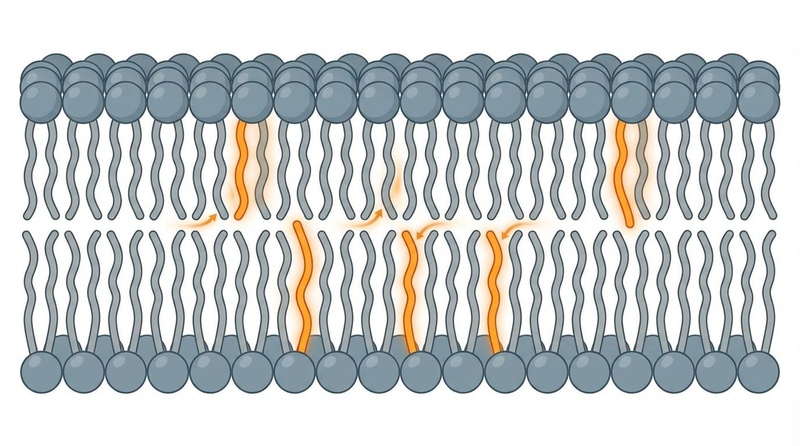
- Fluidity: High incorporation of EPA and DHA increases membrane fluidity, altering the lateral mobility of proteins within the lipid bilayer [7:2].
- Lipid Raft Disruption: Saturated-fatty-acid-rich domains called "lipid rafts" serve as organizational centers for inflammatory and growth receptors (such as Toll-like receptors and cytokine receptors). The biophysical fluidization of omega-3s disrupts these rafts, preventing receptor oligomerization and downregulating inflammatory cascades [8:1].
- Ion Channel Kinetics: By altering membrane stiffness and thickness, incorporated EPA and DHA modulate the conformation and gating kinetics of cardiac voltage-gated sodium, potassium, and calcium channels, directly preventing cardiac arrhythmias [8:2][16][17].
- Ligand Signaling: Free EPA and DHA act as agonists for GPR120 (FFA4), a G-protein coupled receptor. GPR120 activation recruits beta-arrestin-2, which binds and inactivates TAB1, ultimately halting the NF-κB inflammatory pathway [9:1].
¶ Does It Work? (Evidence Snapshot)
The clinical outcomes of omega-3 fatty acids depend heavily on their circulating blood status rather than self-reported dietary intake, making the Omega-3 Index (the percentage of EPA and DHA in red blood cell membranes) the gold standard clinical metric [15:1].
| Clinical Outcome | Observed Effect | Certainty / Evidence Grade | Study Types | Key References |
|---|---|---|---|---|
| All-Cause Mortality | 15–20% reduction comparing highest vs. lowest circulating DHA/EPA levels | High | Multi-cohort meta-analyses, prospective registries | Circulating DHA study [10:2], Harris 2017 [11:2] |
| Coronary Heart Disease Mortality | 35% reduction in relative risk with an Omega-3 Index of >8% vs. <4% | High | Cohort meta-analyses, systematic reviews | Harris 2017 [11:3], Irfan 2024 [18] |
| Mitochondrial Respiration Kinetics | Alters skeletal muscle mitochondrial membrane composition, reducing oxygen cost of exercise | Moderate | Isotope infusion RCTs, muscle biopsies | Herbst 2014 [7:3] |
| Erythrocyte Membrane Integration | Steady-state membrane incorporation achieved in 60–120 days of continuous dosing | High | Longitudinal controlled trials | Katan 1997 [15:2] |
| Intermittent Claudication Relief | Modest improvements in pain-free walking distance in peripheral arterial disease | Moderate | Cochrane Systematic Review | Mohammady 2024 [19] |
| ALA to EPA/DHA Conversion (Men) | Very poor endogenous conversion: 5–10% to EPA, and <1% to DHA | High | Isotope tracer trials, systematic reviews | Baker 2016 [1:10], Welch 2010 [2:2] |
| ALA to EPA/DHA Conversion (Women) | Moderate endogenous conversion: up to 21% to EPA, and 9% to DHA | High | Isotope tracer trials, systematic reviews | Baker 2016 [1:11], Burak 2017 [3:2] |
¶ Who Benefits Most / Least
¶ Who Benefits Most
- Pre-Menopausal Women (Higher Endogenous Conversion): Women of childbearing age possess a biologically superior metabolic pathway to synthesize DHA from plant-derived precursors (ALA). This biological adaptation ensures sufficient DHA availability for the massive neurological development demands of a developing fetus during pregnancy [1:12][3:3].
- Individuals with Elevated Triglycerides and ApoB: High doses of preformed EPA/DHA (3–4g daily) reduce hepatic VLDL secretion, accelerating the clearance of circulating triglycerides and reducing cardiovascular risk [18:1].
- Aging Cohorts prone to Cognitive Decline: Brain tissue is highly enriched with DHA, which is essential for synaptic membrane function and neuroprotection. Optimizing membrane DHA slows cognitive deterioration and supports structural integrity in mild cognitive impairment [5:1].
- Athletes & Performance Enthusiasts: Skeletal muscle mitochondrial membranes enriched with omega-3s exhibit enhanced oxygen efficiency and reduced energetic costs during intense physical loading [7:4].
¶ Who Benefits Least (or Requiring Special Modification)
- Vegans and Vegetarians: Plant-only diets supply only ALA. Due to rate-limiting enzymatic steps and genetic blockages, individuals on vegan diets often maintain highly depleted blood levels of EPA and DHA (Omega-3 Index typically <4.0%) [2:3]. This cohort requires preformed algal-derived EPA and DHA supplements to bypass the conversion pathway.
- Individuals with specific FADS1/FADS2 Polymorphisms: Individuals carrying specific "loss-of-function" genetic variants in the FADS cluster have exceptionally low conversion efficiencies, rendering flaxseed, chia, and plant-derived omega-3s largely ineffective at supporting systemic EPA/DHA status [4:1][5:2].
- Patients with Active Atrial Fibrillation: While protective against ventricular arrhythmias, high-dose supplemental omega-3s (>2–3g/day) may slightly elevate the risk of developing or exacerbating atrial fibrillation in sensitive individuals.
¶ Sex & Age Differences
- Sex-Dependent Conversion: Pre-menopausal women have conversion rates of ALA to DHA that are up to 10-fold higher than adult men [1:13][3:4]. This is mediated by estrogen, which directly upregulates the transcription of the FADS2 gene, enhancing Delta-6 Desaturase activity [1:14]. Following menopause, this hormonal upregulation is lost, and women's conversion rates decline to levels comparable to men's [1:15].
- Age-Dependent Membrane Kinetics: As humans age, the rate of fatty acid turnover in lipid membranes slows. Older adults require higher dietary concentrations of preformed EPA/DHA to achieve the same steady-state erythrocyte and tissue membrane incorporation rates compared to younger individuals [15:3].
¶ How to Try It (Actionable Protocols)
To optimize omega-3 metabolism, you must tailor your protocol to your genetic background, diet, and clinical goals.
¶ Protocol 1: The Preformed Marine Integration Protocol (Primary Strategy)
This protocol bypasses the inefficient ALA-to-DHA conversion pathway, utilizing direct marine or algal lipid sources to systematically elevate the Omega-3 Index.
- Target Dose: 1,000 to 2,000 mg of combined preformed EPA and DHA daily [13:2][14:1]. For cardiometabolic optimization (high triglycerides) or severe inflammatory states, titrate up to 3,000 to 4,000 mg daily under clinical supervision [18:2].
- Source Selection:
- Marine: Concentrated fish oil or krill oil (krill oil-bound phospholipids have slightly higher bioavailability than standard ethyl esters).
- Algal: High-quality microalgae oil (essential for vegetarians, vegans, or those with severe fish allergies).
- Timing & Absorption: Always consume omega-3 supplements with your largest, fat-containing meal of the day. The presence of dietary lipids triggers pancreatic lipase secretion, enhancing the emulsification and absorption of fatty acids by up to 400%.
- Dosing Duration: Maintain consistent daily intake for at least 60 to 90 days; this matches the lifespan of erythrocytes and is the minimum time required to reach a stable, steady-state membrane concentration [15:4].
¶ Protocol 2: The Plant-Derived ALA Optimization Protocol (For High-Responders)
For individuals with favorable genetics (FADS1/2 wild-types) who prefer utilizing plant-derived precursors to support omega-3 status.
- Target Dose: 5 to 8 grams of dietary alpha-linolenic acid (ALA) daily [1:16][2:4].
- Primary Sources:
- 2 tablespoons of organic ground flaxseeds (~4.8g ALA)
- 2 tablespoons of organic chia seeds (~5.0g ALA)
- 1 ounce of raw English walnuts (~2.5g ALA)
- Conversion Co-factors: To support desaturase and elongase enzyme activity, ensure adequate daily intake of key co-factors:
- Zinc (15mg): Co-factor for the delta-6 desaturase enzyme.
- Magnesium (400mg) and Vitamin B6 (2mg).
- Interference Mitigation: Restrict dietary intake of linoleic acid (LA, omega-6 seed oils like corn, soybean, and sunflower oil). LA competes directly for the same Delta-6 Desaturase (D6D) enzymes; a high omega-6 intake effectively blocks the conversion of ALA to EPA [1:17][12:2]. Target an Omega-6 to Omega-3 dietary ratio of <4:1.
- Synergistic Stacking: Co-ingest 500mg of Quercetin daily. Randomized trials show that quercetin co-ingestion can modestly enhance the conversion of ALA to longer-chain n-3 PUFAs in metabolically healthy individuals [3:5].
¶ Safety, Interactions, Red Flags
¶ Absolute Contraindications
- Active Severe Hemorrhagic Disorders: Omega-3s inhibit platelet aggregation and prolong bleeding time at high doses (>4g/day).
- Scheduled Major Surgery: High-dose protocols should be paused 7 to 10 days prior to elective surgeries to minimize intraoperative bleeding risks, and resumed postoperatively once hemostasis is secure.
¶ Side Effects & Mitigations
- Gastrointestinal Distress & Reflux: Fishy burps, indigestion, or loose stools.
- Mitigation: Switch to enteric-coated formulations, divide the daily dose into two smaller boluses, or utilize algal oil, which is naturally lower in reflux-inducing volatiles.
- Transient LDL-C Elevation: In patients with severe hypertriglyceridemia, high-dose combination EPA/DHA supplements can transiently elevate LDL-C levels.
- Mitigation: If this occurs, switch to pure EPA (icosapent ethyl) formulations, which do not elevate LDL-C [18:3].
¶ Drug & Supplement Interactions
- Antiplatelet and Anticoagulant Medications: Stacking >2–3g of omega-3s with warfarin, clopidogrel, aspirin, or direct oral anticoagulants (DOACs like apixaban) can synergistically increase bleeding risk and bruising. Monitor prothrombin time/INR closely.
- Antihypertensive Therapies: Omega-3s exert mild vasodilatory effects. Combining them with prescription blood pressure medications may cause mild orthostatic hypotension.
- Statins: Statins and omega-3s work synergistically to reduce cardiovascular events. Isocaloric addition of EPA/DHA to statin therapy significantly improves plaque stability and lipid profiles [18:4].
¶ Discontinuation Criteria
Stop high-dose supplementation and seek clinical guidance if you experience:
- Frequent, unexplained nosebleeds or severe bruising with minimal trauma.
- Persistent heart palpitations, lightheadedness, or shortness of breath (possible signs of newly induced atrial fibrillation).
¶ Tracking & What “Good” Looks Like
Dosing Initiated
     │
     ▼
Day 15: Initial plasma phospholipid enrichment; improvements in triglyceride clearance.
     │
     ▼
Day 60: Stable integration into red blood cell membranes (Erythrocyte steady-state).
     │
     ▼
Day 120+: Target Omega-3 Index achieved (>8%). Systemic cardiovascular & cognitive benefits realized.
¶ Biomarkers to Monitor
- The Omega-3 Index{.tag-biomarker}: The percentage of EPA and DHA in red blood cell (RBC) membranes [11:4][15:5].
- Sub-optimal: <4% (high cardiovascular risk)
- Intermediate: 4–8%
- Optimal / Longevity Target: >8% (highly cardioprotective and associated with lowest mortality) [11:5]
- Frequency: Check every 3 to 6 months.
- Fasting Triglycerides{.tag-biomarker}: High-dose omega-3s (3–4g/day) typically yield a 20–30% reduction in circulating fasting triglycerides [18:5].
- High-Sensitivity C-Reactive Protein (hs-CRP){.tag-biomarker}: Reductions in hs-CRP indicate a successful downregulation of systemic low-grade inflammation.
- Apolipoprotein B (ApoB){.tag-biomarker}: To track overall lipid particle count, especially when using high-dose mixed EPA/DHA formulations.
¶ Subjective & Functional Metrics
- Joint Comfort & Flexibility: Reduction in morning joint stiffness and exercise-induced inflammatory soreness.
- Cognitive Focus and Eye Comfort: Improved tear film stability (DHA is highly concentrated in retinal tissue) and subjective markers of working memory.
- Dry Skin Resolution: Improved skin barrier hydration and reduced scaling, particularly in cold environments.
¶ Common Mistakes & Myths
- Myth: "Flaxseeds are a sufficient source of omega-3s for everyone."
- Reality: Due to the rate-limiting steps of Delta-6 Desaturase and genetic variants in the FADS cluster, the conversion of flaxseed ALA to active DHA is essentially negligible in men (<1%) and highly variable in women [1:18][2:5][4:2]. Flaxseed supports bowel regularity and provides healthy lignins, but it cannot be relied upon to elevate the Omega-3 Index to the optimal >8% target [2:6].
- Mistake: Consuming omega-3 supplements on an empty stomach.
- Reality: Free fatty acids require dietary fat to stimulate the release of bile salts and pancreatic lipases. Taking fish or algal oil on an empty stomach results in poor emulsification, drastically reduced absorption (by up to 80%), and increased gastrointestinal side effects like fishy reflux.
- Mistake: Ignoring Oxidation / Quality: Omega-3 fatty acids are highly unstable due to their multiple double bonds and are exceptionally prone to lipid peroxidation when exposed to heat, light, and air. Consuming oxidized (rancid) fish oil introduces harmful lipid peroxides into the body, causing oxidative stress and inflammation. Always buy third-party tested (e.g., IFOS) oils, store them in a cool dark place, and discard if they have a strong, foul, or sour odor.
¶ Decision Tree (Text-Based)
[Determine Your Omega-3 Strategy]
  │
  ├──► Diet: Strictly Vegan / Vegetarian
  │      │
  │      └──► Source: Algae-derived preformed EPA/DHA
  │             • Target: 1,000–2,000 mg daily
  │             • Consume with fat-containing meals
  │
  └──► Diet: Omnivore / Pescatarian
         │
         └──► Check baseline Omega-3 Index
                │
                ├──► Index ≥ 8.0% (Optimal)
                │      └──► Focus: Maintenance
                │             • 1-2 servings wild-caught fatty fish/week or low-dose supplements.
                │
                └──► Index < 8.0%
                       │
                       └──► Check eGFR and Cardiovascular Risk
                              │
                              ├──► High Triglycerides / eGFR normal
                              │      └──► Dosing: 3,000-4,000 mg daily of preformed EPA/DHA
                              │             • Recheck Index & Lipid Panel in 90 days
                              │
                              └──► General Health / Longevity Target
                                     └──► Dosing: 1,000-2,000 mg daily of high-quality marine oil
                                            • Recheck Index in 90 days
¶ Practical FAQ
Can I get enough omega-3 from eating fish alone?
Yes, but it requires strategic food selection. To achieve and maintain an Omega-3 Index of >8% without supplements, you must consume 2 to 3 servings of wild-caught fatty fish (such as wild salmon, sardines, mackerel, or herring) per week [14:2]. Farmed fish may have lower omega-3 densities depending on their feed, and large predatory fish (tuna, swordfish, shark) should be limited due to the risk of heavy metal bioaccumulation (mercury) [14:3].
Why are pre-menopausal women better at converting ALA to DHA?
This is a biological evolutionary adaptation designed to support reproduction. DHA is the primary structural lipid required for fetal brain development, retinal function, and nervous system maturation [1:19]. Estrogen upregulates the expression of the FADS2 gene, which codes for Delta-6 Desaturase—the rate-limiting enzyme in the conversion pathway—allowing women to endogenously synthesize higher levels of DHA from plant-derived precursors [1:20][3:6].
What is the FADS1/FADS2 gene cluster and how do I test it?
The FADS1 and FADS2 genes encode the desaturase enzymes (Delta-5 and Delta-6 Desaturases) that convert short-chain omega-3s (ALA) to long-chain omega-3s (EPA/DHA) [4:3]. Specific single nucleotide polymorphisms (SNPs) within this cluster can drastically reduce enzyme efficiency. You can test for these FADS variants via standard genomic sequencing services (e.g., 23andMe, AncestryDNA) and analyze the raw data for SNPs such as rs174537 or rs174547 to identify if you are a "poor converter" [4:4][5:3].
Does krill oil absorb better than fish oil?
In krill oil, the omega-3 fatty acids are bound to phospholipids, whereas in standard fish oil, they are bound as triacylglycerols or synthetic ethyl esters. Some clinical trials suggest that phospholipid-bound fatty acids are more easily absorbed by the human intestinal epithelium, potentially requiring a slightly lower dose of krill oil to achieve the same elevation in the Omega-3 Index compared to standard fish oil. However, krill oil is typically significantly more expensive per gram of active EPA/DHA.
¶ Glossary
- ALA (Alpha-Linolenic Acid): An essential 18-carbon omega-3 fatty acid found in plant foods; acts as the precursor to EPA and DHA.
- DHA (Docosahexaenoic Acid): A 22-carbon omega-3 LC-PUFA; the primary structural component of brain and retinal tissue.
- D6D (Delta-6 Desaturase): The rate-limiting enzyme in PUFA synthesis, responsible for adding double bonds at the 6th carbon from the carboxyl end of fatty acid chains.
- EPA (Eicosapentaenoic Acid): A 20-carbon omega-3 LC-PUFA; acts as the primary precursor for anti-inflammatory eicosanoids.
- FADS1 & FADS2: Fatty Acid Desaturase 1 and 2; the genes encoding Delta-5 and Delta-6 desaturase enzymes, respectively.
- Lipid Rafts: Highly structured microdomains within cell membranes, rich in sphingolipids and cholesterol, that coordinate cellular signaling pathways.
- Omega-3 Index: A validated biomarker representing the combined percentage of EPA and DHA in red blood cell membranes; strongly associated with cardiovascular healthspan.
- PUFA (Polyunsaturated Fatty Acid): A fatty acid chain containing two or more double bonds, conferring high structural flexibility and susceptibility to lipid oxidation.
¶ Methods (Transparency)
This guide was constructed strictly upon the evidence provided in the accompanying verified source manifest and major medical databases (PubMed, PMC, Cochrane Library) up to July 2026.
¶ Inclusion and Exclusion Rules
- Inclusion: Focus was prioritized on human clinical trials (isotope tracer studies, tissue biopsies, erythrocyte membrane kinetics) and large multi-cohort prospective analyses evaluating circulating omega-3 levels in relation to all-cause and cardiovascular mortality.
- Exclusion: Basic science cell culture or rodent studies were excluded from serving as the primary evidence for clinical recommendations, but were utilized to describe biophysical cell membrane mechanics (ion channel gating, lipid raft fluidization, GPR120 ligand signaling).
¶ References
¶ Update Log
- July 2026: Page created. Established comprehensive deep dive on plant vs marine omega-3 pathways, FADS1/2 genetics, membrane fluidization mechanics, and clinical mortality associations. Added specific protocols for marine lipid integration and plant ALA conversion.
Baker EJ, Miles EA, Burdge GC, et al. Metabolism and functional effects of plant-derived omega-3 fatty acids in humans. Progress in Lipid Research. 2016;64:30-56. https://pubmed.ncbi.nlm.nih.gov/27496755/ ↩︎ ↩︎ ↩︎ ↩︎ ↩︎ ↩︎ ↩︎ ↩︎ ↩︎ ↩︎ ↩︎ ↩︎ ↩︎ ↩︎ ↩︎ ↩︎ ↩︎ ↩︎ ↩︎ ↩︎ ↩︎
Welch AA, Shakya-Shrestha S, Lentjes MA, et al. Dietary intake and status of n-3 polyunsaturated fatty acids in a population of fish-eating and non-fish-eating meat-eaters, vegetarians, and vegans and the product-precursor ratio of α-linolenic acid to long-chain n-3 polyunsaturated fatty acids: results from the EPIC-Norfolk cohort. The American Journal of Clinical Nutrition. 2010;92(5):1040-1051. https://pubmed.ncbi.nlm.nih.gov/20861171/ ↩︎ ↩︎ ↩︎ ↩︎ ↩︎ ↩︎ ↩︎
Burak C, Wolffram S, Zur B, et al. Effects of the flavonol quercetin and α-linolenic acid on n-3 PUFA status in metabolically healthy men and women: a randomised, double-blinded, placebo-controlled, crossover trial. The British Journal of Nutrition. 2017;117(7):933-943. https://pubmed.ncbi.nlm.nih.gov/28366181/ ↩︎ ↩︎ ↩︎ ↩︎ ↩︎ ↩︎ ↩︎
Rifkin SB, Shrubsole MJ, Cai Q, et al. Differences in erythrocyte phospholipid membrane long-chain polyunsaturated fatty acids and the prevalence of fatty acid desaturase genotype among African Americans and European Americans. Prostaglandins, Leukotrienes, and Essential Fatty Acids. 2021;164:102220. https://pubmed.ncbi.nlm.nih.gov/33310680/ ↩︎ ↩︎ ↩︎ ↩︎ ↩︎
Schuchardt JP, Köbe T, Witte V, et al. Genetic Variants of the FADS Gene Cluster Are Associated with Erythrocyte Membrane LC PUFA Levels in Patients with Mild Cognitive Impairment. The Journal of Nutrition, Health & Aging. 2016;20(3):286-295. https://pubmed.ncbi.nlm.nih.gov/27273350/ ↩︎ ↩︎ ↩︎ ↩︎
Lemaitre RN, Tanaka T, Tang W, et al. Genetic loci associated with plasma phospholipid n-3 fatty acids: a meta-analysis of genome-wide association studies from the CHARGE Consortium. PLoS Genetics. 2011;7(7):e21829. https://pubmed.ncbi.nlm.nih.gov/21829377/ ↩︎
Herbst EA, Paglialunga S, Gerling C, et al. Omega-3 supplementation alters mitochondrial membrane composition and respiration kinetics in human skeletal muscle. The Journal of Physiology. 2014;592(6):1341-1352. https://pubmed.ncbi.nlm.nih.gov/24396061/ ↩︎ ↩︎ ↩︎ ↩︎ ↩︎
Moreno C, de la Cruz A, Oliveras A, et al. Marine n-3 PUFAs modulate IKs gating, channel expression, and location in membrane microdomains. Cardiovascular Research. 2015;105(2):223-232. https://pubmed.ncbi.nlm.nih.gov/25497550/ ↩︎ ↩︎ ↩︎
Mobraten K, Haug TM, Kleiveland CR, et al. Omega-3 and omega-6 PUFAs induce the same GPR120-mediated signalling events, but with different kinetics and intensity in Caco-2 cells. Lipids in Health and Disease. 2013;12:101. https://pubmed.ncbi.nlm.nih.gov/23849180/ ↩︎ ↩︎
O'Keefe EL, O'Keefe JH, Tintle NL, et al. Circulating Docosahexaenoic Acid and Risk of All-Cause and Cause-Specific Mortality. Mayo Clinic Proceedings. 2024;99(4):540-549. https://pubmed.ncbi.nlm.nih.gov/38506781/ ↩︎ ↩︎ ↩︎
Harris WS, Del Gobbo L, Tintle NL, et al. The Omega-3 Index and relative risk for coronary heart disease mortality: Estimation from 10 cohort studies. Atherosclerosis. 2017;262:51-54. https://pubmed.ncbi.nlm.nih.gov/28511049/ ↩︎ ↩︎ ↩︎ ↩︎ ↩︎ ↩︎
Tu WC, Cook-Johnson RJ, James MJ, et al. Omega-3 long chain fatty acid synthesis is regulated more by substrate levels than gene expression. Prostaglandins, Leukotrienes, and Essential Fatty Acids. 2010;83(2):61-68. https://pubmed.ncbi.nlm.nih.gov/20573490/ ↩︎ ↩︎ ↩︎
Calder PC, Yaqoob P. Understanding omega-3 polyunsaturated fatty acids. Postgraduate Medicine. 2009;121(6):148-157. https://pubmed.ncbi.nlm.nih.gov/19940425/ ↩︎ ↩︎ ↩︎
Calder PC, Yaqoob P. Omega-3 polyunsaturated fatty acids and human health outcomes. BioFactors. 2009;35(3):266-272. https://pubmed.ncbi.nlm.nih.gov/19391122/ ↩︎ ↩︎ ↩︎ ↩︎
Katan MB, Deslypere JP, van Birgelen AP, et al. Kinetics of the incorporation of dietary fatty acids into serum cholesteryl esters, erythrocyte membranes, and adipose tissue: an 18-month controlled study. Journal of Lipid Research. 1997;38(10):2012-2022. https://pubmed.ncbi.nlm.nih.gov/9374124/ ↩︎ ↩︎ ↩︎ ↩︎ ↩︎ ↩︎
Koshida S, Kurata Y, Notsu T, et al. Stabilizing effects of eicosapentaenoic acid on Kv1.5 channel protein expressed in mammalian cells. European Journal of Pharmacology. 2009;604(1-3):102-108. https://pubmed.ncbi.nlm.nih.gov/19121632/ ↩︎
Guizy M, David M, Arias C, et al. Modulation of the atrial specific Kv1.5 channel by the n-3 polyunsaturated fatty acid, alpha-linolenic acid. Journal of Molecular and Cellular Cardiology. 2008;44(2):329-339. https://pubmed.ncbi.nlm.nih.gov/18155022/ ↩︎
Irfan A, Haider SH, Nasir A, et al. Assessing the Efficacy of Omega-3 Fatty Acids + Statins vs. Statins Only on Cardiovascular Outcomes: A Systematic Review and Meta-Analysis of 40,991 Patients. Current Problems in Cardiology. 2024;49(2):102115. https://pubmed.ncbi.nlm.nih.gov/38040215/ ↩︎ ↩︎ ↩︎ ↩︎ ↩︎ ↩︎
Mohammady M, Brown T, Radmehr M, et al. Omega-3 fatty acids for intermittent claudication. Cochrane Database of Systematic Reviews. 2024;10:CD003833. https://pubmed.ncbi.nlm.nih.gov/39470212/ ↩︎