¶ TL;DR
- Pathophysiological Core: Acne vulgaris is a chronic inflammatory disorder of the pilosebaceous unit driven by four key factors: sebum hypersecretion, follicular hyperkeratinization, Cutibacterium acnes proliferation, and innate immune cascade activation [1][2].
- Baseline Routine: First-line management begins with a starter protocol consisting of a gentle cleanser, active treatments (salicylic acid/BHA or benzoyl peroxide), non-comedogenic hydration, and broad-spectrum daily photoprotection [1:1][3][4].
- Targeted Escalations: Moderate-to-severe acne can be addressed by adding stronger agents such as topical retinoids (adapalene/tretinoin), azelaic acid, or oral zinc to resolve deep follicular plugging and post-inflammatory hyperpigmentation [5][6][7].
- Systemic Interventions: Persistent, nodulocystic, or severe cases require clinical management, incorporating systemic treatments like oral antibiotics, spironolactone, or oral isotretinoin alongside in-office chemical peels or light therapies [1:2][8][9].
- Therapeutic Success: Long-term management relies on consistent full-field application rather than isolated spot treatments, maintaining skin barrier integrity to prevent purging-related irritation, and systematic tracking of lesion counts and oiliness [1:3][7:1].
¶ Quick Answer
Managing active acne effectively requires a multi-faceted approach, often combining topical and systemic treatments. For mild cases, topical retinoids (like adapalene) and benzoyl peroxide are highly effective, reducing both inflammatory and non-inflammatory lesions while targeting C. acnes bacteria [1:4][10]. For moderate acne, combining these topicals with a topical antibiotic can enhance efficacy [1:5]. Severe or resistant acne frequently necessitates oral treatments such as isotretinoin, which targets all major pathophysiological factors of acne, or oral antibiotics combined with topicals to prevent resistance [1:6][10:1]. Adjunctive therapies like azelaic acid or salicylic acid can also address specific concerns like hyperpigmentation and clogged pores [5:1][11].
¶ Type-Identification Table
Accurate identification of acne lesion types and presentations is crucial for guiding clinical treatment.
| Presentation / Lesion Type | Description | Appearance | Primary Cause |
|---|---|---|---|
| Comedone | Non-inflammatory blockage of hair follicle | ||
| Whitehead (Closed Comedo) | Follicle completely blocked by sebum and keratin | Small, flesh-colored or whitish bump | Sebum and keratin accumulation under skin |
| Blackhead (Open Comedo) | Follicle partially blocked, exposed to air | Small, dark dot or blackish pore | Oxidized melanin and sebum in follicle opening |
| Inflammatory Lesions | Result from rupture of follicular wall or immune response | ||
| Papule | Small, red, tender bump | Small, solid, red bump; no pus | Inflammation around ruptured follicle |
| Pustule | Small, red, tender bump with pus | Red bump with a white or yellow center | Inflammation with pus formation |
| Nodule | Large, painful, solid lesion deeper in skin | Large, firm, painful lump; can last months | Deep inflammation, follicular wall rupture |
| Cyst | Large, painful, pus-filled lesion; can cause scarring | Large, soft, painful, fluid-filled lump | Deep inflammation, extensive follicular damage |
| Clinical Subtypes | Complex, multi-factorial clinical presentations | ||
| Nodulocystic Acne | Severe inflammatory variant characterized by extensive nodules and cysts [1:7] | Multiple large, deep, painful, interconnected nodules and cysts | Widespread follicular rupture and severe dermal inflammatory response |
| Hormonal Flare | Acne driven primarily by endocrine fluctuations (typically in adult women) [1:8] | Inflammatory papules and pustules concentrated on the jawline, chin, and neck | Increased androgenic stimulation of sebaceous glands leading to excessive sebum |
¶ Evidence Snapshot Table
¶ Evidence Summary Table (Human Outcomes)
| Outcome | Effect | Quality | Consistency | Trials | Notes |
|---|---|---|---|---|---|
| Reduction in Inflammatory Lesions (Topical Retinoids) | High | High | Multiple RCTs, SRs, Guidelines | Superior to placebo; comparable to topical antibiotics when combined with BPO [1:9][10:2][12][7:2][13] | |
| Reduction in Non-inflammatory Lesions (Topical Retinoids) | High | High | Multiple RCTs, SRs, Guidelines | Directly targets comedone formation [1:10][10:3] | |
| Reduction in Inflammatory Lesions (Benzoyl Peroxide) | High | High | Multiple RCTs, SRs, Guidelines | Highly effective; 2.5% as effective as 5-10% with less irritation [1:11][10:4][3:1][14] | |
| Reduction in Inflammatory Lesions (Topical Antibiotics) | Moderate | High | Multiple RCTs, SRs, Guidelines | Effective, but should be combined with BPO to prevent resistance [1:12][10:5] | |
| Reduction in Inflammatory & Non-inflammatory Lesions (Azelaic Acid) | Moderate | High | SRs, RCTs | Effective, particularly for post-inflammatory hyperpigmentation [5:2] | |
| Reduction in Inflammatory & Non-inflammatory Lesions (Salicylic Acid) | Moderate | High | SRs, RCTs | Lipophilic, targets clogged pores, anti-inflammatory [4:1][11:1][15][16][17] | |
| Reduction in Inflammatory Lesions (Oral Isotretinoin) | High | High | Multiple RCTs, Guidelines | Most effective treatment for severe/resistant acne; targets all pathophysiological factors [1:13][10:6][9:1][18][8:1] | |
| Reduction in Inflammatory Lesions (Oral Zinc) | Low | Moderate | Meta-analysis, RCTs | Effective in patients with lower serum zinc levels; comparable to oral antibiotics in some studies [6:1][19][20][21] | |
| Reduction in Inflammatory Lesions (Tea Tree Oil) | Low | Moderate | SRs, RCTs | Effective for mild-to-moderate acne, with fewer side effects than BPO but slower onset [22][23][24] | |
| Reduction in Inflammatory Lesions (Blue Light Therapy) | Low | Mixed | SRs, Meta-analysis | Short-term efficacy noted, but long-term data limited [25][26] | |
| Reduction in Inflammatory Lesions (Photodynamic Therapy) | Moderate | Mixed | SRs | Significant reduction in inflammatory lesions, but long-term comparative data needed [27] | |
| Reduction in Inflammatory Lesions & Microcomedones (Topical SIG1273) | Moderate | High | RCT, In vitro | Dual-action cosmetic functional ingredient; significantly reduces inflammatory lesions, microcomedones, and C. acnes counts with excellent tolerability [28] | |
| Reduction in Inflammatory Cytokines & Tyrosinase (Topical Palmarosa Oil) | Low | Moderate | In vitro, preclinical | Geraniol (primary constituent) is antimicrobial against C. acnes (MIC 16 μl/ml) and suppresses TNF-α, IL-12, and IL-8 cytokines [29] |
¶ Causes Tied to Biology & Anatomy
Acne develops from a complex interplay of four primary biological factors within the pilosebaceous unit (hair follicle and sebaceous gland):
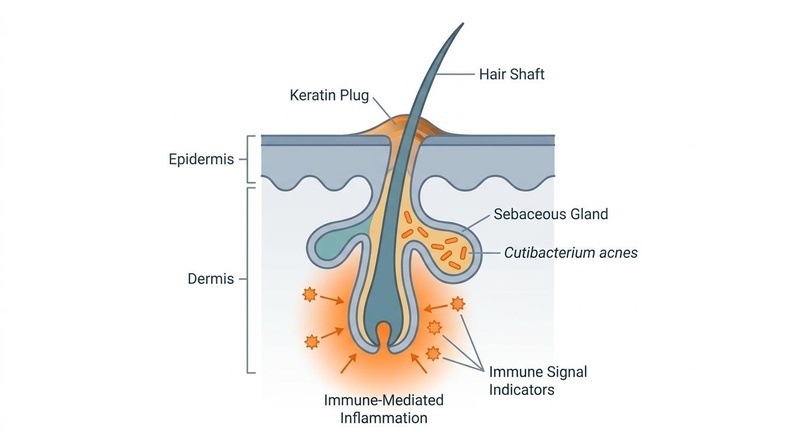
- Increased Sebum Production: Androgen hormones stimulate sebaceous glands to produce more sebum (oil). Excessive sebum creates an oily environment conducive to bacterial growth and follicle blockage.
- Follicular Hyperkeratinization: Abnormal shedding of dead skin cells (keratinocytes) within the hair follicle leads to a buildup of keratin and sebum, forming a plug. This blockage is the initial step in comedone formation.
- Cutibacterium acnes (formerly Propionibacterium acnes) Proliferation: C. acnes, a bacterium naturally present on the skin, thrives in the oxygen-deprived, lipid-rich environment of blocked follicles. Its proliferation triggers inflammatory responses [2:1].
- Innate Immune Activation (TLR-2 Signaling Pathway): The immune system's response to C. acnes and ruptured follicular walls leads to inflammation, manifest as papules, pustules, nodules, and cysts. C. acnes activates Toll-Like Receptor 2 (TLR2) on monocytes, initiating an inflammatory cascade and cytokine release [2:2]. Systemic isotretinoin therapy normalizes these exaggerated TLR2-mediated responses [8:2].
Other contributing factors include genetics, hormonal fluctuations (e.g., polycystic ovary syndrome), dietary factors (high glycemic load, dairy), stress, and mechanical irritation.
¶ Starter Protocol
For individuals dealing with active acne and blemishes, establishing a baseline daily routine is essential to support the skin barrier, reduce inflammation, and prevent new lesions without causing excessive irritation.
STARTER ROUTINE AT-A-GLANCE
- Morning: Gentle Cleanser → Salicylic Acid (or Benzoyl Peroxide) → Non-comedogenic Hydrator → Photoprotection (SPF 30+)
- Evening: Gentle Cleanser → Salicylic Acid (or Benzoyl Peroxide) → Non-comedogenic Hydrator
The starter protocol consists of four fundamental pillars:
-
Gentle Cleanser
- Purpose: Removes excess sebum, dirt, and pollution without stripping the skin's protective lipid barrier. Avoids harsh, foaming surfactants like sodium lauryl sulfate.
- Protocol: Wash the face twice daily (morning and evening) with lukewarm water and a mild, non-foaming, pH-balanced cleanser. Pat dry gently with a clean towel; never scrub.
-
Active Blemish Treatment (Salicylic Acid / BHA or Benzoyl Peroxide)
- Salicylic Acid (BHA) 2%: A lipophilic beta-hydroxy acid that penetrates deep into sebum-filled follicles to exfoliate the lining, dissolve cellular debris, and reduce comedones [4:2][11:2].
- Protocol: Apply a thin layer of 2% salicylic acid solution or toner after cleansing once daily (or every other day initially).
- Benzoyl Peroxide (BPO) 2.5%: A potent antimicrobial agent that introduces oxygen into the hair follicle, killing anaerobic C. acnes bacteria while exerting mild keratolytic properties [1:14][3:2].
- Salicylic Acid (BHA) 2%: A lipophilic beta-hydroxy acid that penetrates deep into sebum-filled follicles to exfoliate the lining, dissolve cellular debris, and reduce comedones [4:2][11:2].
-
Non-Comedogenic Hydration
- Purpose: Active treatments can compromise the stratum corneum, causing trenespidermal water loss (TEWL) and compensatory hyperseborrhea (rebound oiliness). A lightweight, non-comedogenic moisturizer preserves barrier function.
- Protocol: Apply a gel-based or lightweight lotion containing water-binding humectants (e.g., hyaluronic acid, glycerin) and barrier-repairing lipids (e.g., ceramides) immediately after active treatments, both morning and night. Look for products labeled "non-comedogenic" (won't clog pores).
-
Photoprotection (Sunscreen)
- Purpose: Active lesions and treatments (especially chemical exfoliants) increase sun sensitivity. UV exposure exacerbates post-inflammatory hyperpigmentation (PIH) and causes thermal/oxidative stress that can worsen acne.
- Protocol: Apply a broad-spectrum, non-comedogenic SPF 30+ sunscreen daily as the final step of the morning routine, regardless of weather. Mineral formulations (zinc oxide or titanium dioxide) are often less irritating for sensitive, acne-prone skin.
¶ Stronger Add-On Path
If the starter routine does not achieve satisfactory clearance after 6–8 weeks, targeted add-on therapies should be introduced to address deep follicular blockage, persistent post-inflammatory hyperpigmentation (PIH), or systemic inflammation.
-
Topical Retinoids (e.g., Adapalene 0.1%, Tretinoin 0.025%–0.05%)
- Mechanism: Retinoids bind to retinoic acid receptors (RARs) in the skin, normalizing follicular keratinization (preventing cell stickiness that plugs pores), increasing cellular turnover, and inhibiting key inflammatory pathways [1:15][7:3].
- Protocol: Apply a pea-sized amount to the entire dry face in the evening after cleansing. Start by applying 2–3 times per week, gradually scaling up to nightly application as tolerance increases.
- Notes: Expect a transient adjustment phase. Adapalene is historically better tolerated than tretinoin with comparable efficacy in trials [7:4][13:1].
-
Azelaic Acid (15%–20%)
- Mechanism: A dicarboxylic acid with mild comedolytic, anti-inflammatory, and antimicrobial properties. Crucially, it acts as a selective tyrosinase inhibitor, which prevents and fades the brown or red marks left by healed acne (post-inflammatory hyperpigmentation or PIH) [5:3].
- Protocol: Apply thinly to affected areas once or twice daily. Can be layered under moisturizer.
- Notes: Excellent option for sensitive skin or those experiencing hyperpigmentation. It is also safe during pregnancy, unlike retinoids.
-
Oral Zinc Supplementation
- Mechanism: Oral zinc exerts anti-inflammatory effects by inhibiting inflammatory cytokines, suppressing sebum production via mild 5-alpha-reductase inhibition, and demonstrating direct antibacterial activity against C. acnes [6:2].
- Protocol: 30–45 mg of elemental zinc (typically from zinc gluconate, picolinate, or sulfate) daily [6:3][19:1][20:1].
- Notes: Best taken with food to prevent transient nausea, which is the most common side effect. High-dose zinc should not be taken long-term without copper monitoring.
-
Tea Tree Oil (5% Topical Gel)
- Mechanism: Natural antimicrobial and anti-inflammatory agent that serves as an alternative to benzoyl peroxide.
- Protocol: Apply twice daily to acne-prone areas.
- Notes: Effective for mild-to-moderate inflammatory acne, although it has a slower onset of action than synthetic options [22:1][23:1][24:1].
-
Palmarosa Oil (Cymbopogan martinii Essential Oil)
- Mechanism: Rich in the bioactive phytoconstituent geraniol, palmarosa oil displays anti-inflammatory and antimicrobial properties. Preclinical and in vitro studies demonstrate it has a minimum inhibitory concentration (MIC) and minimum bactericidal concentration (MBC) of 16 μl/ml against Cutibacterium acnes, significantly reduces the production of pro-inflammatory cytokines (including TNF-α, IL-12, and IL-8), and inhibits tyrosinase activity to potentially reduce hyperpigmentation [29:1].
- Protocol: Applied topically after dilution in a non-comedogenic carrier oil (e.g., jojoba oil or squalane) or incorporated into a topical skincare formulation.
- Notes: Biocompatibility and cell viability assessments show that palmarosa oil is safe and well-tolerated for topical use on human skin cells [29:2].
-
SIG1273 (Isoprenylcysteine Functional Ingredient)
- Mechanism: A patented isoprenylcysteine small molecule designed to reduce inflammation and target acne bacteria. It acts as a dual-modulating cosmetic functional ingredient, directly killing C. acnes (evidenced by a ~1.0 Log10 colony reduction in facial scrubs over 6 weeks) and blocking C. acnes-induced IL-8 release in human keratinocytes by modulating toll-like receptor (TLR2 and TLR4) inflammatory signaling pathways [28:1].
- Protocol: Applied topically as a 3% gel formulation once or twice daily.
- Notes: Clinically demonstrated to be highly tolerable, causing no stinging, redness, or itching. In a 6-week randomized, double-blind clinical trial of 30 subjects, a 3% SIG1273 gel significantly improved inflammatory lesions, microcomedone counts, and sebum levels (Sebutape scores) compared to vehicle, though no significant effects were seen on non-inflammatory lesions [28:2].
¶ Clinical/Procedure Path
For persistent, moderate-to-severe, nodulocystic, or highly inflammatory acne that fails to respond to topicals and OTC supplements, prescription systemic medical treatments and clinical office-based procedures are indicated.
¶ Systemic Medical Treatments
-
Oral Isotretinoin (formerly Accutane)
- Mechanism: A powerful synthetic retinoid that targets all four primary pathophysiological factors of acne. It drastically reduces sebaceous gland size and sebum output (by up to 90%), normalizes follicular keratinization, decreases C. acnes colonization, and suppresses dermal inflammation [1:16][8:3].
- Protocol: Prescribed at 0.5–1.0 mg/kg daily over a course of 4–6 months, aiming for a cumulative dose of 120–150 mg/kg to minimize long-term relapse rates [9:2][18:1].
- Notes: Requires strict clinical monitoring, including monthly liver function tests and lipid panels. Highly teratogenic; female patients must participate in risk-management programs (e.g., iPLEDGE in the US).
-
Oral Antibiotics (e.g., Doxycycline, Minocycline, Lymecycline)
- Mechanism: Reduces C. acnes populations and provides direct, strong systemic anti-inflammatory effects by inhibiting matrix metalloproteinases and neutrophil chemotaxis.
- Protocol: Typically Doxycycline 50–100 mg twice daily, or Lymecycline 408 mg once daily. Must always be paired with benzoyl peroxide and a topical retinoid to prevent the rapid development of antibiotic resistance and to allow successful tapering [1:17][10:7][21:1].
- Notes: Limit use to 3 months to avoid systemic microbiome disruption. Common side effects include photosensitivity (increased sunburn risk) and gastrointestinal distress.
-
Hormonal Therapies (Spironolactone & Oral Contraceptive Pills)
- Mechanism: Spironolactone acts as an aldosterone antagonist with anti-androgenic effects, directly blocking androgen receptors and inhibiting 5-alpha-reductase to decrease sebum production. Combined oral contraceptives (COCs) increase sex hormone-binding globulin (SHBG), lowering free circulating androgens.
- Protocol: Spironolactone is typically dosed at 50–100 mg daily for women with hormonal flare patterns or adult acne. Combined oral contraceptives are taken cyclically.
- Notes: Used exclusively in female patients. Spironolactone requires monitoring of blood pressure and potassium levels (though hyperkalemia is rare in young, healthy women). It is contraindicated in pregnancy due to the risk of feminization of a male fetus.
¶ Clinical Procedures
-
Chemical Peels (e.g., Salicylic Acid, Glycolic Acid)
- Mechanism: Induces rapid, controlled desquamation of the stratum corneum, clearing impacted follicles and accelerating skin regeneration. Salicylic acid peels are highly lipophilic, enabling them to penetrate directly into the lipid-rich sebaceous glands [4:3][11:3].
- Protocol: Typically performed in-office every 2–4 weeks for a series of 3–6 sessions.
- Notes: Highly effective for both inflammatory and non-inflammatory lesions, and improves post-inflammatory erythema/hyperpigmentation.
-
Light and Laser Therapies
- Blue Light Therapy (405–420 nm): Excites endogenous porphyrins within C. acnes, producing reactive oxygen species that selectively destroy the bacteria [26:1].
- Red Light Therapy (630–660 nm): Penetrates deeper into the dermis to reduce inflammatory cytokines, accelerate wound healing, and soothe irritation [25:1].
- Photodynamic Therapy (PDT): Combines a topical photosensitizer (e.g., 5-aminolevulinic acid) with light exposure. This temporarily damages sebaceous glands and destroys bacterial colonies, providing a long-term reduction in inflammatory acne [27:1].
¶ What Fails
Several common practices fail to resolve acne or can even worsen it:
- Using Heavy Occlusives ("Slugging"): Applying thick, petrolatum-based ointments or heavy oils (e.g., coconut oil, shea butter) to acne-prone skin traps sebum, dead keratinocytes, and bacteria inside the follicle, directly promoting the formation of comedones and inflammatory breakouts.
- Spot-Treating Deep Cystic Lesions: Attempting to treat deep, painful nodules or cysts solely with over-the-counter topical spot treatments (such as 2% salicylic acid or drying lotions) fails because these topical agents cannot penetrate deep enough into the dermis where the severe inflammatory process resides. Relying on spot treatments for deep lesions delays appropriate systemic therapy, worsening scarring [1:18].
- Picking or Squeezing Blemishes: This exacerbates inflammation, forces bacteria and keratin deeper into the dermis, and significantly increases the risk of post-inflammatory hyperpigmentation (PIH) and permanent atrophic or hypertrophic scarring.
- Using Harsh Scrubs or Astringents: Over-drying or aggressively exfoliating the skin can disrupt the skin barrier, leading to irritation, increased sebum production (rebound oiliness), and worsening breakouts. Gentle cleansing is key.
- Inconsistent Treatment Application: Acne treatments require consistent, long-term use to see results. Skipping applications or stopping too soon often leads to relapse, as it takes 4–8 weeks for microcomedones to mature and surface.
- Over-reliance on Spot Treatments for Prevention: While useful for individual active lesions, spot treatments do not address the underlying causes of acne across the entire affected area. Full-field application of preventative treatments (like retinoids) is necessary to clear microscopic microcomedones before they become visible blemishes.
- Ignoring Contributing Lifestyle Factors: While not primary causes, high glycemic load diets, certain dairy products, and chronic stress can exacerbate acne in susceptible individuals by increasing IGF-1 and cortisol levels, which stimulate sebum production.
¶ Tracking Plan
To monitor the effectiveness of acne treatments, a systematic tracking plan is beneficial:
-
Weekly Assessment:
- Count Lesions: Count the number of inflammatory lesions (papules, pustules, nodules, cysts) and non-inflammatory lesions (blackheads, whiteheads) in specific, consistent areas (e.g., forehead, cheeks, chin).
- Subjective Oiliness: Record the daily or weekly degree of skin oiliness (e.g., dry, balanced, moderately oily, or extremely oily requiring frequent blotting) to track changes in sebum production over time. This is particularly useful when assessing the impact of therapies like zinc, spironolactone, or isotretinoin.
- Severity Rating: Use a simple scale (e.g., 1-5) to rate overall acne severity and inflammation.
- Side Effects: Note any dryness, redness, peeling, burning, or irritation caused by treatments.
-
Photography: Take clear, consistent photos (same lighting, angle, distance) every 2-4 weeks. This provides an objective visual record of progress over time.
-
Journaling: Record daily product use, diet changes, stress levels, and menstrual cycle dates (for women) to identify potential triggers or correlations.
-
Clinician Follow-ups: Regular appointments (e.g., every 8-12 weeks) with a dermatologist are essential to assess progress, adjust treatment plans, and address any concerns. Bring your tracking data and photos.
¶ Safety & Red Flags
¶ General Safety Considerations
- Sun Protection: Many acne treatments, especially retinoids and oral antibiotics (e.g., doxycycline), increase sun sensitivity. Daily use of broad-spectrum sunscreen (SPF 30+) is mandatory.
- Pregnancy/Lactation: Oral isotretinoin, spironolactone, and topical/oral retinoids are absolutely contraindicated during pregnancy. Isotretinoin is highly teratogenic, while spironolactone poses a high risk of feminizing a male fetus due to its anti-androgenic effects. Oral antibiotics (such as doxycycline and minocycline) and certain chemical peels must also be avoided due to risks to fetal development (e.g., tooth discoloration from tetracyclines).
- Skin Irritation: Initial irritation (redness, dryness, peeling) is common with many active ingredients (retinoids, benzoyl peroxide, acids). Start slowly, moisturize, and gradually increase frequency.
- Antibiotic Resistance: Use topical and oral antibiotics judiciously and always in combination with benzoyl peroxide to minimize the risk of bacterial resistance.
- Mental Health: Acne is associated with substantial psychosocial burden, including elevated rates of anxiety and clinical depression, warranting appropriate clinical assessment [1:19].
¶ Topical Retinoid Purging vs. Irritation
When starting a topical retinoid (e.g., adapalene, tretinoin), distinguishing between purging and irritation (retinoid dermatitis) is crucial for determining clinical management.
| Aspect | Topical Retinoid Purging | Topical Retinoid Irritation |
|---|---|---|
| Definition | An acceleration of the skin's natural cell turnover, bringing pre-existing microcomedones (clogged pores) to the surface faster. | An inflammatory reaction (retinoid dermatitis) caused by a compromised skin barrier and direct receptor irritation. |
| Location | Occurs exclusively in areas where breakouts typically occur (e.g., zones with active congestion). | Can occur anywhere the product was applied, including dry, non-acne-prone areas (e.g., around the mouth, eyes, neck). |
| Lesion Type | Presents as typical acne lesions (comedones, papules, pustules) that resolve much faster than normal breakouts. | Presents as diffuse redness, peeling, flaking, burning, stinging, scaling, or a tight, dry, sandpaper-like texture. |
| Duration | Typically begins within the first 1-2 weeks of treatment and fully subsides within 4-6 weeks as the skin acclimates. | Persists or worsens past 6-8 weeks, especially if the skin barrier remains impaired without adequate hydration. |
| Clinical Action | Continue treatment. Maintain a consistent routine, protect the skin barrier with non-comedogenic moisturizers, and wait for the purge to clear. | Reduce frequency or concentration. Temporarily pause the retinoid, focus entirely on barrier repair (moisturizer, gentle cleanser), then reintroduce the retinoid slowly (e.g., 2 times per week or using the "sandwich method" over moisturizer). |
¶ Severe Pathological Thresholds
- Severe, Painful Nodules or Cysts: These lesions can cause significant pain, permanent atrophic scarring, and deep tissue damage, typically requiring advanced clinical or systemic intervention [1:20].
- Acne Not Responding to First-Line Treatments: When mild-to-moderate acne fails to respond to 8-12 weeks of consistent topicals, clinical guidelines indicate an escalation to systemic or combination prescription agents [1:21].
- Rapid Worsening or Sudden Onset Acne: This could indicate an underlying endocrine disorder (such as PCOS or adrenal hyperplasia) requiring systemic endocrine workup.
- Signs of Secondary Infection: Cellulitis or secondary bacterial infections present with localized warmth, expanding erythema, tenderness, and purulent discharge, requiring systemic antimicrobial therapy.
- Significant Scarring or Post-Inflammatory Hyperpigmentation: Early intervention can minimize long-term skin changes.
¶ FAQs
What is the most effective topical treatment for mild acne?
How does diet influence acne?
While not a primary cause, certain dietary patterns can exacerbate acne in susceptible individuals. High glycemic index foods (rapidly digested carbohydrates) and dairy products have been linked to acne flares in some studies, likely by influencing hormones like insulin-like growth factor 1 (IGF-1) [1:23]. An individualized approach focusing on a balanced diet with low glycemic load may be beneficial.
Can stress worsen acne?
Yes, stress can worsen acne. When stressed, the body releases hormones like cortisol and androgens, which can stimulate sebaceous glands to produce more oil and exacerbate inflammation [1:24]. Stress can also lead to skin picking, which further aggravates acne and can cause scarring. Managing stress through techniques like mindfulness, exercise, and adequate sleep is important.
What is the difference between inflammatory and non-inflammatory acne?
Non-inflammatory acne consists of blackheads (open comedones) and whiteheads (closed comedones), which are essentially clogged pores without significant redness or swelling. Inflammatory acne includes papules, pustules, nodules, and cysts, characterized by redness, swelling, and sometimes pain due to an immune response to C. acnes bacteria and ruptured follicles [1:25]. Treatment approaches vary significantly between these types.
Is it safe to use multiple acne treatments at once?
Yes, in many cases, combination therapy with multiple acne treatments is more effective and often safer than monotherapy, especially for moderate-to-severe acne [1:26][10:9]. For example, combining a topical retinoid with benzoyl peroxide is standard. When using topical antibiotics, combining them with benzoyl peroxide is essential to prevent bacterial resistance. However, guidance on compatibility is necessary to avoid excessive irritation.
¶ References
Reynolds, R. V., et al. (2024). Guidelines of care for the management of acne vulgaris. Journal of the American Academy of Dermatology (JAAD). https://www.jaad.org/article/S0190-9622(23)03389-3/fulltext ↩︎ ↩︎ ↩︎ ↩︎ ↩︎ ↩︎ ↩︎ ↩︎ ↩︎ ↩︎ ↩︎ ↩︎ ↩︎ ↩︎ ↩︎ ↩︎ ↩︎ ↩︎ ↩︎ ↩︎ ↩︎ ↩︎ ↩︎ ↩︎ ↩︎ ↩︎ ↩︎
Kim, J., et al. (2002). Activation of Toll-Like Receptor 2 in Acne Triggers Inflammatory Cytokine Responses. Journal of Immunology. https://pmc.ncbi.nlm.nih.gov/articles/PMC4636337/ ↩︎ ↩︎ ↩︎
Topical benzoyl peroxide for acne. (2020). Cochrane Database of Systematic Reviews. https://pubmed.ncbi.nlm.nih.gov/32175593/ ↩︎ ↩︎ ↩︎ ↩︎
Chen, X., et al. (2018). Chemical peels for acne vulgaris: a systematic review of randomised controlled trials. BMJ Open. https://pmc.ncbi.nlm.nih.gov/articles/PMC5931279/ ↩︎ ↩︎ ↩︎ ↩︎
King, S., et al. (2023). A systematic review to evaluate the efficacy of azelaic acid in the management of acne, rosacea, melasma and skin aging. Journal of Cosmetic Dermatology. https://pubmed.ncbi.nlm.nih.gov/37550898/ ↩︎ ↩︎ ↩︎ ↩︎
Yee, B. E., et al. (2020). Serum zinc levels and efficacy of zinc treatment in acne vulgaris: A systematic review and meta-analysis. Dermatologic Therapy. https://pubmed.ncbi.nlm.nih.gov/32860489/ ↩︎ ↩︎ ↩︎ ↩︎
Cunliffe, W. J., et al. (2002). A comparison of the efficacy and tolerability of adapalene 0.1% gel versus tretinoin 0.025% gel in patients with acne vulgaris: a meta-analysis of five randomized trials. Journal of Dermatological Treatment. https://pubmed.ncbi.nlm.nih.gov/11843231/ ↩︎ ↩︎ ↩︎ ↩︎ ↩︎
Dispenza, M. C., et al. (2012). Systemic Isotretinoin Therapy Normalizes Exaggerated TLR-2-Mediated Innate Immune Responses in Acne Patients. Journal of Investigative Dermatology. https://www.sciencedirect.com/science/article/pii/S0022202X15358772 ↩︎ ↩︎ ↩︎ ↩︎
Rademaker, M. (2015). Making sense of the effects of the cumulative dose of isotretinoin in acne vulgaris. Journal of the European Academy of Dermatology and Venereology (JEADV). https://pubmed.ncbi.nlm.nih.gov/26471145/ ↩︎ ↩︎ ↩︎
National Institute for Health and Care Excellence (NICE) Guideline NG198. (2021, updated 2023). Acne vulgaris: management. https://www.nice.org.uk/guidance/ng198 ↩︎ ↩︎ ↩︎ ↩︎ ↩︎ ↩︎ ↩︎ ↩︎ ↩︎ ↩︎
Arif, T. (2015). Salicylic acid as a peeling agent: a comprehensive review. Clinical, Cosmetic and Investigational Dermatology. https://pmc.ncbi.nlm.nih.gov/articles/PMC4554394/ ↩︎ ↩︎ ↩︎ ↩︎
Nast, A., et al. (2016). European evidence-based (S3) guideline for the treatment of acne - update 2016. Journal of the European Academy of Dermatology and Venereology (JEADV). https://pubmed.ncbi.nlm.nih.gov/27513809/ ↩︎
Cunliffe, W. J., et al. (1998). Clinical efficacy and safety comparison of adapalene gel and tretinoin gel in the treatment of acne vulgaris: Europe and U.S. multicenter trials. Journal of the American Academy of Dermatology (JAAD). https://www.sciencedirect.com/science/article/abs/pii/S0190962297700562 ↩︎ ↩︎
Mills, O. H., et al. (2011). Topical dose justification: benzoyl peroxide concentrations. International Journal of Dermatology. https://pubmed.ncbi.nlm.nih.gov/22103743/ ↩︎ ↩︎
Dal Belo, S. E., et al. (2024). Efficacy of a multitargeted, salicylic acid-based dermocosmetic cream compared to benzoyl peroxide 5% in Acne vulgaris: Results from a randomized study. Journal of Cosmetic Dermatology. https://pubmed.ncbi.nlm.nih.gov/37941097/ ↩︎
Bissonnette, R., et al. (2009). Randomized study comparing the efficacy and tolerance of a lipophilic hydroxy acid derivative of salicylic acid and 5% benzoyl peroxide in the treatment of facial acne vulgaris. Journal of Cosmetic Dermatology. https://pubmed.ncbi.nlm.nih.gov/19250161/ ↩︎
Seidler, N., & Kimball, A. B. (2010). Meta-analysis comparing efficacy of benzoyl peroxide, clindamycin, benzoyl peroxide with salicylic acid, and combination benzoyl peroxide/clindamycin in acne. Journal of the American Academy of Dermatology (JAAD). https://pubmed.ncbi.nlm.nih.gov/20488582/ ↩︎
Alves, A. L., et al. (2024). Acne Relapse and Isotretinoin Retrial in Patients With Acne. JAMA Dermatology. https://pubmed.ncbi.nlm.nih.gov/39813053/ ↩︎ ↩︎
Verma, K. C., et al. (1980). Oral zinc sulphate therapy in acne vulgaris: a double-blind trial. Acta Dermato-Venereologica. https://pubmed.ncbi.nlm.nih.gov/6163281/ ↩︎ ↩︎
Goransson, K., & Liden, S. (1977). Oral zinc in acne vulgaris: a clinical and methodological study. Acta Dermato-Venereologica. https://pubmed.ncbi.nlm.nih.gov/82356/ ↩︎ ↩︎
Tolino, E., et al. (2021). An Open-label Study Comparing Oral Zinc to Lymecycline in the Treatment of Acne Vulgaris. Journal of Clinical and Aesthetic Dermatology. https://pubmed.ncbi.nlm.nih.gov/34188751/ ↩︎ ↩︎
Kairey, L., et al. (2023). Efficacy and safety of Melaleuca alternifolia (tea tree) oil for human health—A systematic review of randomized controlled trials. Frontiers in Pharmacology. https://pubmed.ncbi.nlm.nih.gov/37033604/ ↩︎ ↩︎
Enshaieh, S., et al. (2007). The efficacy of 5% topical tea tree oil gel in mild to moderate acne vulgaris: a randomized, double-blind placebo-controlled study. Indian Journal of Dermatology, Venereology, and Leprology. https://pubmed.ncbi.nlm.nih.gov/17314442/ ↩︎ ↩︎
Bassett, I. B., et al. (1990). A comparative study of tea-tree oil versus benzoylperoxide in the treatment of acne. Medical Journal of Australia. https://pubmed.ncbi.nlm.nih.gov/2145499/ ↩︎ ↩︎
Barbaric, J., et al. (2018). Light therapies for acne: abridged Cochrane systematic review including GRADE assessments. British Journal of Dermatology. https://pubmed.ncbi.nlm.nih.gov/28338214/ ↩︎ ↩︎
Scott, J. R., et al. (2019). Blue-Light Therapy for Acne Vulgaris: A Systematic Review and Meta-Analysis. Annals of Family Medicine. https://pubmed.ncbi.nlm.nih.gov/31712293/ ↩︎ ↩︎
Qureshi, B., & Ahmad, N. (2025). Photodynamic Therapy in Acne Vulgaris: A Systematic Review. Journal of Cutaneous Medicine and Surgery. https://journals.sagepub.com/doi/10.1177/12034754241291031 ↩︎ ↩︎
Fernandéz, J. R., et al. (2012). SIG1273: a new cosmetic functional ingredient to reduce blemishes and Propionibacterium acnes in acne prone skin. Journal of Cosmetic Dermatology, 11(4), 272-278. https://pubmed.ncbi.nlm.nih.gov/23174050/ ↩︎ ↩︎ ↩︎
Mahant, S., Sahajpal, N. S., & Nanda, S. (2021). Insights into the mechanism of Cymbopogan martinii essential oil in topical therapy of acne vulgaris. Future Microbiology, 16(15), 1181-1193. https://pubmed.ncbi.nlm.nih.gov/34615379/ ↩︎ ↩︎ ↩︎