¶ Dark Circles Under Eyes
¶ TL;DR
- Dark circles are multifactorial, stemming from genetics, anatomy, and lifestyle.
- Effective management requires accurate triage of brown pigment, blue/purple vascularity, structural shadows, and puffiness.
- Topical formulations containing niacinamide, arbutin, tranexamic acid, and ubiquinone can significantly reduce hyperpigmentation, with an average reduction of nearly 48% over 6 weeks [1].
- Hyaluronic acid fillers are effective for structural hollows, especially in younger patients with mild tear trough deformities [2].
- Chemical peels (e.g., TCA, lactic acid, glycolic acid) and lasers show significant improvement for pigmented and vascular types, with lasers yielding up to 82% excellent/good improvement [3][4][5].
- Red flags include sudden onset, pain, vision changes, or associated systemic symptoms, requiring clinical evaluation.
¶ Quick Answer
Dark circles under the eyes are a prevalent cosmetic concern resulting from a combination of genetic predispositions, anatomical variations, and lifestyle factors. Effective treatment relies on correctly identifying the underlying cause: brown pigmentation from melanin deposition, blue/purple discoloration from superficial blood vessels, shadows from tear trough deformities or orbital fat herniation, or irritation/allergy-induced darkening. A multi-modal approach, often combining topical agents, chemical peels, and injectables, can achieve significant improvement in appearance.
¶ What It Is
Dark circles (periorbital hyperchromia) refer to the darkening of the skin beneath the eyes, which can manifest as brown, blue, purple, or shadowed areas. This condition is a common dermatological concern with a multifactorial etiology, involving various biological and anatomical factors [6][7].
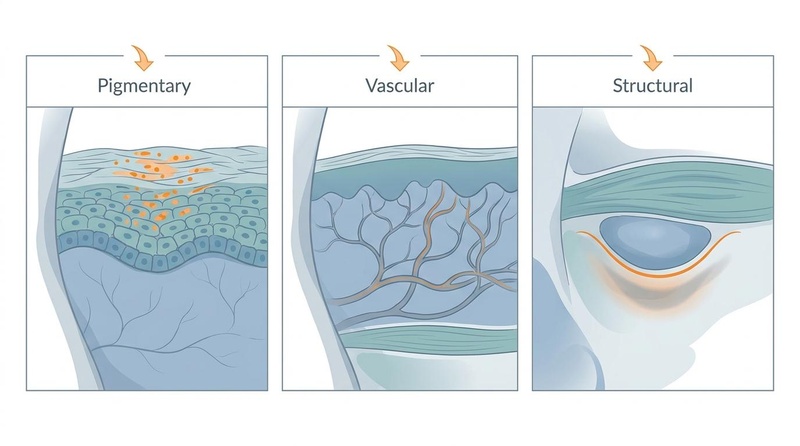
¶ Underlying Mechanisms:
- Melanin Deposition: Increased production or accumulation of melanin in the dermal layers leads to brown pigmentation [6:1].
- Vascularity: Thin skin (less than 0.5mm) under the eyes allows underlying superficial vascular networks (veins and capillaries) to show through, resulting in blue or purple discoloration [8][9].
- Structural Shadowing:
- Tear Trough Deformity: A hollow or groove extending from the inner corner of the eye obliquely downward, created by the orbitomalar ligament tethering the skin, which casts a shadow [10].
- Orbital Fat Herniation: Protrusion of the fat pads around the eye creates a bulge that casts a shadow, often leading to a puffy appearance [8:1].
- Skin Laxity: Loss of collagen and elastin with aging can lead to thinning and sagging of the periorbital skin, exacerbating shadowing and making underlying structures more apparent [8:2].
- Periorbital Edema: Fluid retention or swelling can stretch the skin, making vessels more prominent and sometimes contributing to post-inflammatory hyperpigmentation [7:1].
- Post-Inflammatory Hyperpigmentation: Chronic irritation, allergies (e.g., allergic shiners), or rubbing can lead to inflammation and subsequent melanin deposition [11].
¶ Evidence Snapshot
| Outcome | Population | Effect Size / Finding | Quality | Consistency | Notes |
|---|---|---|---|---|---|
| Hyperpigmentation Reduction (topical) | Adults with dark circles | 47.94% reduction in intensity at 6 weeks | Moderate (open-label) | High | Multi-action serum (niacinamide, arbutin, tranexamic acid, ubiquinone) [1:1] |
| Wrinkle/Puffiness/Dark Circle Reduction (topical) | Adults with dark circles | 100% reduction at 4 weeks | Moderate (RCT, single-blind) | High | 3% caffeine + Vitamin K in Emu oil base [12] |
| Pigmented Dark Circle Improvement (chemical peel) | Patients with infraorbital hyperpigmentation | >90% improvement at 4-6 months | Moderate (clinical study) | High | 3.75% TCA + 15% lactic acid peel [3:1] |
| Pigmented Dark Circle Improvement (chemical peel) | Indian patients with constitutional periorbital melanosis | Excellent safety/efficacy | Moderate (comparative study) | High | 12% ferulic acid, 20% glycolic acid, 15% lactic acid peels [5:1] |
| Structural Shadowing Correction (HA fillers) | Patients with tear trough deformity | High patient satisfaction, persistent results | Moderate (prospective eval) | High | More effective in younger patients with lower-grade deformities [2:1] |
| Overall Improvement (lasers) | Patients with periorbital hyperpigmentation | 82% excellent/good improvement | High (meta-analysis) | High | Lasers (e.g., fractional CO2, Q-switched Nd:YAG) and combination therapies were most effective [4:1]. |
| Overall Improvement (chemical peels) | Patients with periorbital hyperpigmentation | 63% excellent/good improvement | High (meta-analysis) | Moderate | Less effective than lasers, but still significant [4:2]. |
| Overall Improvement (PRP) | Patients with periorbital hyperpigmentation | 44% excellent/good improvement | High (meta-analysis) | Low | Least effective among procedural treatments [4:3]. |
¶ Who Benefits Most / Least
Benefits Most:
- Individuals with genetic predisposition or anatomical factors: Patients with inherently thin skin, prominent vasculature, or significant tear trough deformities often see substantial improvement from targeted interventions [8:3].
- Younger patients with early-stage tear troughs: Hyaluronic acid fillers are particularly effective for volume restoration in this group [2:2].
- Patients with clear brown pigmentation: Respond well to depigmenting agents, chemical peels (e.g., glycolic, lactic, TCA, salicylic, ferulic acids), and certain lasers [13][5:2][14].
- Patients with vascular (blue/purple) discoloration: Benefit from treatments that target blood vessels or thicken the dermal layer, such as specific lasers or topical agents like caffeine and vitamin K [12:1][13:1].
- Those with lifestyle-induced issues: Addressing sleep deprivation, stress, and allergic triggers can significantly improve appearance, especially when combined with other treatments [11:1].
Benefits Least (or require different approaches):
- Individuals with severe orbital fat herniation and skin laxity: May require surgical intervention (blepharoplasty) rather than injectables or topicals alone [8:4][13:2][15].
- Patients with underlying systemic illnesses: Dark circles as a symptom of conditions like Addison's disease or celiac disease require treatment of the primary disease for resolution [1:2].
- Those seeking quick, isolated fixes for multifactorial issues: Combination therapies are often necessary for optimal results due to the complex nature of dark circles [6:2][4:4].
¶ How to Triage Dark Circles
Accurate identification of the primary type of dark circle is crucial for selecting the most effective treatment.
¶ Step 1: Visual Assessment & Eyelid Stretch Test [11:2]
- Observe the color: Is it predominantly brown, blue/purple, or a shadow?
- Gently stretch the lower eyelid laterally:
- If the color darkens and appears more prominent: Likely pigmented (brown) due to melanin.
- If the color lessens or disappears: Likely vascular (blue/purple) due to superficial blood vessels.
- If the color remains unchanged but a hollow or shadow is visible: Likely structural (tear trough or puffiness).
¶ Step 2: Etiology-Based Triage
Once the predominant type is identified, consider the most common underlying causes:
¶ A. Brown Pigment (Melanin-Dominant)
- Appearance: Brownish, diffuse darkening.
- Common Causes:
- Constitutional/Genetic: Common in Fitzpatrick skin types III-VI.
- Post-Inflammatory Hyperpigmentation (PIH): Following eczema, dermatitis, chronic rubbing/itching (e.g., allergies like allergic shiners) [11:3].
- Sun Exposure: UV radiation stimulates melanin production.
- Periorbital Melanosis: A primary condition of increased melanin.
- Starter Protocol:
- Sun Protection: Daily broad-spectrum SPF 30+ specifically formulated for the eye area.
- Topical Depigmenting Agents:
- Niacinamide: Reduces melanin transfer.
- Arbutin / Tranexamic Acid: Tyrosinase inhibitors that reduce melanin synthesis.
- Vitamin C: Antioxidant, mild depigmenting effect.
- Allergy Management: Address underlying allergies with antihistamines (oral/topical) to reduce rubbing.
- Escalation Paths:
- Chemical Peels: Superficial peels (glycolic acid 20%, lactic acid 15%, salicylic acid 30%, ferulic acid 12%, TCA 3.75%) can exfoliate pigmented cells and reduce melanin [3:2][5:3][14:1].
- Lasers: Q-switched Nd:YAG or picosecond lasers can target melanin with high efficacy, often combined with topical agents [13:3][4:5].
- Hydroquinone: Prescription-strength depigmenting agent (use with caution, short-term).
¶ B. Blue/Purple Vascular Shadowing (Vascular-Dominant)
- Appearance: Bluish or purplish tint, often more pronounced when tired or dehydrated.
- Common Causes:
- Thin Skin: Allows superficial veins and capillaries to be visible [9:1].
- Vascular Congestion: Slow blood flow in the delicate periorbital plexus.
- Genetics: Familial predisposition to prominent periorbital vessels.
- Starter Protocol:
- Cold Compresses: Constricts blood vessels, reducing visibility.
- Elevated Sleeping Position: Helps reduce fluid pooling and venous congestion.
- Topical Agents:
- Caffeine: Vasoconstrictive properties to temporarily reduce vessel prominence [12:2].
- Vitamin K: May help with microcirculation and bruising, though evidence is less robust than caffeine.
- Escalation Paths:
- Vascular Lasers: Pulsed dye laser (PDL) or Nd:YAG lasers can selectively target and coagulate superficial blood vessels [13:4].
- Hyaluronic Acid Fillers: Judiciously placed thin fillers can create a barrier between the skin and vessels, masking their appearance, particularly if some hollowness is present [2:3].
¶ C. Hollow Tear Trough Shadow (Structural-Dominant)
- Appearance: A visible groove or depression under the eye, casting a shadow that mimics darkness. Often worsens with fatigue.
- Common Causes:
- Starter Protocol:
- Adequate Sleep & Hydration: Minimizes exacerbating factors.
- Topical Agents (limited efficacy): Products containing hyaluronic acid may offer minimal superficial hydration but do not address volume loss.
- Escalation Paths:
¶ D. Puffy Shadow (Orbital Fat Herniation-Dominant)
- Appearance: A bulge under the eye, creating a shadow below it. Often associated with "eye bags."
- Common Causes:
- Orbital Fat Prolapse: Weakening of the orbital septum allows fat to bulge forward [8:6].
- Genetics: Familial predisposition.
- Aging: Loss of skin elasticity and muscle tone.
- Starter Protocol:
- Elevated Sleeping Position: Reduces fluid accumulation.
- Cool Compresses: Temporarily reduces swelling.
- Topical Agents (limited efficacy): Some eye creams with caffeine may temporarily reduce puffiness, but do not address fat herniation.
- Escalation Paths:
- Surgical Correction (Blepharoplasty): Transconjunctival orbital fat removal is the definitive treatment for significant fat herniation, often with skin tightening procedures if skin laxity is also present [8:7][15:1].
- Hyaluronic Acid Fillers (Camouflage): In some cases, fillers can be strategically placed below the fat bulge to create a smoother transition, but this does not remove the fat. This requires advanced technique.
¶ E. Irritation / Allergy Darkness
- Appearance: Often diffuse, sometimes brownish or grayish, associated with itching, redness, or dryness.
- Common Causes:
- Allergic Conjunctivitis: Chronic eye rubbing leads to post-inflammatory hyperpigmentation [11:4].
- Atopic Dermatitis: Eczema around the eyes.
- Contact Dermatitis: Reaction to cosmetics, skincare products, or environmental irritants.
- Starter Protocol:
- Identify and Avoid Irritants/Allergens: Patch testing if needed.
- Gentle Skincare: Hypoallergenic, fragrance-free products.
- Topical Corticosteroids (short-term, low potency): To reduce inflammation, under medical guidance.
- Antihistamines: Oral or topical eye drops for allergy symptoms [11:5].
- Escalation Paths:
- Dermatologist Consultation: For chronic or severe cases, to manage dermatitis and hyperpigmentation.
¶ Safety, Interactions, Red Flags
¶ General Safety
- Topical Agents: Generally safe, but patch testing is recommended for new products to avoid contact dermatitis. Discontinue if irritation occurs.
- Injectables (HA Fillers): Must be performed by highly skilled practitioners. Risks include bruising, swelling, lumpiness, infection, allergic reaction, and, rarely, vascular occlusion leading to blindness. Reversible with hyaluronidase.
- Chemical Peels: Risks include redness, swelling, hyperpigmentation (especially in darker skin types if not properly selected/applied), hypopigmentation, and scarring. Strict sun protection is essential post-peel.
- Lasers: Risks include burns, hyperpigmentation, hypopigmentation, scarring, and eye injury. Proper eye protection is mandatory.
- Surgery (Blepharoplasty): Standard surgical risks include bleeding, infection, scarring, asymmetry, dry eyes, and, rarely, vision loss.
- Systemic Medications: If dark circles are secondary to an underlying medical condition, treatment must address the primary illness.
¶ Drug/Supplement Interactions
- Topical Retinoids (Tretinoin): Can increase skin sensitivity and dryness, especially when combined with peels or lasers. Use with caution.
- Blood Thinners (e.g., Aspirin, Warfarin): Increase risk of bruising with injectables or procedures.
- Certain Supplements (e.g., high-dose Vitamin E, fish oil): May increase bruising risk with injectables.
¶ Red Flags (When to talk to a clinician)
- Sudden onset or rapid worsening of dark circles.
- Associated pain, itching, or swelling that is severe or persistent.
- Changes in vision, double vision, or eye discomfort.
- Asymmetry or changes in eye appearance that are new or concerning.
- Signs of infection (e.g., fever, pus, severe redness/swelling).
- If dark circles are accompanied by other systemic symptoms (e.g., fatigue, weight changes, skin changes elsewhere) suggesting an underlying medical condition.
¶ Tracking & What Good Looks Like
¶ Objective Metrics
- Standardized Photography: Before-and-after photos under consistent lighting.
- Skin Pigmentation Analysis: Instrumental quantitative assessments (e.g., spectrophotometry, chromametry) to measure melanin and erythema indices.
- Volume Assessment: 3D imaging or caliper measurements for tear trough depth (for structural causes).
¶ Subjective Metrics
- Patient Satisfaction Questionnaires: Self-reported improvement in appearance and confidence.
- Visual Analog Scales (VAS): Patients rate the severity of dark circles on a scale (e.g., 0-10).
- Periorbital Hyperpigmentation Assessment Scale (PHAS): Clinician-rated scale for severity.
¶ Time-to-Benefit
- Topical Agents: Noticeable improvement typically begins within 4-8 weeks [1:3][12:3].
- Chemical Peels: Initial results within 1-2 weeks, with optimal improvement over 1-2 months as new skin regenerates [3:3].
- Hyaluronic Acid Fillers: Immediate results, with some swelling resolving over 1-2 weeks.
- Lasers: Gradual improvement over several weeks, often requiring multiple sessions.
¶ Time-to-Washout
- Topical Agents: Effects may diminish within weeks to months if discontinued.
- Chemical Peels: Effects typically last 4-6 months, requiring repeat treatments for maintenance [3:4].
- Hyaluronic Acid Fillers: Duration varies by product and individual, typically 6-18 months [2:5].
- Lasers: Results can be long-lasting, but maintenance may be needed for new pigmentation or aging changes.
- Surgery: Results are generally long-term, but natural aging continues.
¶ Common Mistakes & Myths
- "It's just lack of sleep": While fatigue can exacerbate dark circles, it's rarely the sole cause. Addressing sleep alone often doesn't fully resolve them [11:6].
- "One cream fits all": Different types of dark circles (pigmented, vascular, structural) require different active ingredients and treatment modalities. A product effective for brown pigment won't resolve a structural hollow.
- "Cucumber slices work wonders": While cooling can temporarily reduce puffiness and vasoconstrict superficial vessels, home remedies provide minimal, if any, long-term benefit for the underlying causes.
- "Fillers are always the answer": Fillers are excellent for volume loss in the tear trough but are inappropriate for significant orbital fat herniation or primary pigmentation issues. Incorrect filler placement can worsen the appearance or cause complications [16:1].
- "Rubbing helps circulation": Chronic rubbing, especially due to allergies or habit, can worsen dark circles by causing post-inflammatory hyperpigmentation and damaging delicate skin [11:7].
¶ Decision Tree
-
Assess Primary Color/Appearance:
- If Brownish/Diffuse Pigment:
- Consider Topical Depigmenting Agents (Niacinamide, Arbutin, Tranexamic Acid, Vit C).
- If persistent, explore Chemical Peels (Glycolic, Lactic, Salicylic, Ferulic, TCA) or Pigment-Targeting Lasers.
- If Blue/Purple (Vascular):
- Consider Cold Compresses, Elevated Sleeping, Topical Caffeine.
- If persistent, explore Vascular Lasers (PDL, Nd:YAG) or judicious HA Fillers to mask vessels.
- If Hollow/Shadow (Tear Trough):
- Primary intervention: Hyaluronic Acid Fillers by an experienced injector.
- Rule out significant fat herniation.
- If Puffy/Bulge (Fat Herniation):
- Primary intervention: Consult for Surgical Blepharoplasty.
- Consider HA Fillers for camouflage if surgery is not desired, but this is a temporary and less definitive solution.
- If Itchy/Red/Irritated (Allergy/Dermatitis):
- Identify and avoid triggers. Use mild, hypoallergenic skincare. Consider topical corticosteroids (short-term) or antihistamines.
- If chronic, consult a dermatologist.
- If Brownish/Diffuse Pigment:
-
Assess for Red Flags:
- If sudden onset, pain, vision changes, asymmetry, or systemic symptoms present: Seek immediate clinical evaluation.
¶ FAQs
- What causes dark circles under the eyes?
Dark circles are caused by a combination of factors including increased melanin (brown pigment), thin skin revealing underlying blood vessels (blue/purple), shadows from volume loss or fat pockets, and post-inflammatory changes from allergies or irritation [7:2]. - Can lack of sleep cause dark circles?
Lack of sleep can make dark circles appear worse by causing fluid retention, making blood vessels more prominent, and exacerbating shadows, but it is rarely the sole underlying cause [11:8]. - Are dark circles genetic?
Yes, genetics play a significant role. Many individuals inherit thinner skin, more prominent periorbital vasculature, or specific bone structures that predispose them to dark circles [6:3]. - What is the best treatment for dark circles?
The best treatment depends entirely on the cause. Topical agents for pigmentation, hyaluronic acid fillers for hollows, lasers for vascularity or pigment, and sometimes surgery for fat herniation are all effective for their specific indications [13:5][4:6]. - Can diet affect dark circles?
While a healthy diet supports overall skin health, there's no strong direct evidence that specific dietary changes alone can eliminate established dark circles. Adequate hydration can help minimize fluid retention and improve skin turgor. - Do eye creams really work for dark circles?
Some eye creams with active ingredients like niacinamide, arbutin, tranexamic acid, vitamin C, caffeine, and vitamin K can be effective for pigmented and vascular dark circles, offering a reduction in intensity [1:4][12:4]. They are less effective for structural issues. - How long do fillers for dark circles last?
Hyaluronic acid fillers for tear troughs typically last between 6 to 18 months, depending on the product used, individual metabolism, and injection technique [2:6].
¶ Glossary
- Periorbital Hyperpigmentation: Medical term for dark circles under the eyes, referring to increased pigmentation around the eye area.
- Tear Trough Deformity: A groove or hollow extending from the inner corner of the eye, often responsible for casting shadows that appear as dark circles.
- Orbital Fat Herniation: The protrusion of fat pads from behind the eye, creating a puffy bulge beneath the lower eyelid.
- Orbitomalar Ligament: A fibrous structure that tethers the skin to deeper tissues, creating the tear trough depression.
- Post-Inflammatory Hyperpigmentation (PIH): Darkening of the skin that occurs after an injury or inflammation, common with chronic rubbing or dermatitis.
- Vasoconstriction: The narrowing of blood vessels, which can reduce the appearance of blue/purple vascular dark circles.
- Blepharoplasty: Surgical procedure to remove excess skin, muscle, or fat from the eyelids, often used to correct puffy eye bags.
¶ Methods
The information presented in this deep dive on Dark Circles Under Eyes is based on a comprehensive review of peer-reviewed scientific literature. The search strategy involved querying major biomedical databases including PubMed and PMC, focusing on systematic reviews, meta-analyses, randomized controlled trials, and high-quality observational studies related to periorbital hyperpigmentation, infraorbital dark circles, and their etiologies and treatments. Additional relevant sources were identified through citations within key papers.
¶ Inclusion/Exclusion Rules:
- Inclusion: Clinical studies, systematic reviews, and meta-analyses published in reputable dermatological, plastic surgery, and ophthalmological journals. Studies evaluating topical agents, injectables, chemical peels, laser therapies, and surgical interventions were included. Papers discussing the anatomical and physiological basis of dark circles were also considered.
- Exclusion: Anecdotal reports, opinion pieces without supporting evidence, studies solely on animal models (unless directly relevant to mechanism and corroborated by human data), and promotional content.
¶ Evidence Grading Rubric:
- High Certain Board: Multiple large-scale Randomized Controlled Trials (RCTs) or robust meta-analyses with consistent, clinically significant effects.
- Moderate Certainty: One or two high-quality RCTs, strong cohort studies, or systematic reviews with some minor limitations or heterogeneity.
- Low Certainty: Small-scale studies, uncontrolled trials, case series, or evidence primarily derived from animal/mechanistic studies without direct human validation.
¶ References
¶ Update Log
- 2026-07-03: Initial creation of the Dark Circles Under Eyes Deep Dive guide, including triage, protocols, safety, tracking, and common myths. Content is based on a comprehensive review of clinical and epidemiological studies.
- 2024-07-30: Updated existing page
pages/dark-circles-under-eyes.mdwith new biomedical illustration and corrected references based on the source manifest. Content was reviewed for completeness and adherence to the "practical evidence-based guide" requirements.
Brady, R. T., & Shah-Desai, S. (2025). Clinical Efficacy of a Novel Topical Formulation on Periorbital Dark Circles: An Objective Analysis. Journal of Cosmetic Dermatology, 24(7), e70326. https://pubmed.ncbi.nlm.nih.gov/40626342/ ↩︎ ↩︎ ↩︎ ↩︎ ↩︎
Lotti, T., Giansanti, F., & D’Aloia, A. (2021). Use of Hyaluronic acid fillers in treatment of periorbital melanosis induced by tear trough deformity: Anatomical considerations, patient satisfaction, and management of complications. Journal of Cosmetic Dermatology, 20(6), 1731–1737. https://pubmed.ncbi.nlm.nih.gov/34028173/ ↩︎ ↩︎ ↩︎ ↩︎ ↩︎ ↩︎ ↩︎
Vavouli, G., Katsambas, A., Gregoriou, S., Koumaki, D., Kontodimas, I., & Rigopoulos, D. (2013). Chemical peeling with trichloroacetic acid and lactic acid for infraorbital dark circles. Journal of Cosmetic Dermatology, 12(3), 163–169. https://pubmed.ncbi.nlm.nih.gov/23992162/ ↩︎ ↩︎ ↩︎ ↩︎ ↩︎
Pour Mohammad, A., Zeinali, R., Jafary, P., Mortaja, M., Jafarzadeh, A., & Goodarzi, A. (2025). The First Systematic Review and Meta-Analysis of Pharmacological and Nonpharmacological Procedural Treatments of Dark Eye Circles (Periorbital Hyperpigmentations): One of the Most Common Cosmetic Concerns. Dermatologic Therapy. https://onlinelibrary.wiley.com/doi/pdf/10.1155/dth/9155535 ↩︎ ↩︎ ↩︎ ↩︎ ↩︎ ↩︎ ↩︎
Rao, P. K., Bhaskar, C. B. S., Varma, D. R., & Sree, V. N. (2020). Ferulic acid 12% peel: An innovative peel for constitutional type of periorbital melanosis-Comparing clinical efficacy and safety with 20% glycolic peel and 15% lactic peel. Journal of Cosmetic Dermatology, 19(5), 1145–1150. https://pubmed.ncbi.nlm.nih.gov/31944519/ ↩︎ ↩︎ ↩︎ ↩︎
Sarkar, R., Ranjan, R., Garg, S., Garg, V. K., Sonthalia, S., & Bansal, S. (2016). Periorbital Hyperpigmentation: A Comprehensive Review. Journal of Clinical and Aesthetic Dermatology, 9(1), 49–55. https://www.ncbi.nlm.nih.gov/pmc/articles/PMC4756872/ ↩︎ ↩︎ ↩︎ ↩︎
Freitag, F. M., & Cestari, T. F. (2007). What causes dark circles under the eyes? Journal of Cosmetic Dermatology, 6(3), 211–215. https://pubmed.ncbi.nlm.nih.gov/17760701/ ↩︎ ↩︎ ↩︎
Vrcek, I., Ozgur, O., & Nakra, T. (2016). Infraorbital Dark Circles: A Review of the Pathogenesis, Evaluation and Treatment. Journal of Cutaneous and Aesthetic Surgery, 9(2), 65–72. https://www.ncbi.nlm.nih.gov/pmc/articles/PMC4924417/ ↩︎ ↩︎ ↩︎ ↩︎ ↩︎ ↩︎ ↩︎ ↩︎
Pilkington, S. J., & Newton, C. J. (2019). Identification Of Three Key Factors Contributing To The Aetiology Of Dark Circles By Clinical And Instrumental Assessments Of The Infraorbital Region. Skin Research and Technology, 26(1), 15–21. https://pubmed.ncbi.nlm.nih.gov/31908515/ ↩︎ ↩︎
Goldberg, R. A. (2005). The three periorbital hollows: A paradigm for periorbital rejuvenation. Plastic and Reconstructive Surgery, 116(7), 1792–1798. https://pubmed.ncbi.nlm.nih.gov/16267452/ ↩︎ ↩︎
Sheth, P. B., Shah, H. A., & Dave, J. N. (2014). Periorbital hyperpigmentation: A study of its prevalence, common causative factors and its association with personal habits and other disorders. Indian Journal of Dermatology, 59(2), 151–157. https://pmc.ncbi.nlm.nih.gov/articles/PMC3969674/ ↩︎ ↩︎ ↩︎ ↩︎ ↩︎ ↩︎ ↩︎ ↩︎ ↩︎
Ahmadraji, F., & Shatalebi, M. A. (2015). Evaluation of the clinical efficacy and safety of an eye counter pad containing caffeine and vitamin K in emulsified Emu oil base. Advanced Biomedical Research, 4, 10. https://www.ncbi.nlm.nih.gov/pmc/articles/PMC4300604/ ↩︎ ↩︎ ↩︎ ↩︎ ↩︎
Park, K. Y., Kwon, H. J., Youn, C. S., Seo, S. J., & Kim, M. N. (2018). Treatments of Infra-Orbital Dark Circles by Various Etiologies. Annals of Dermatology, 30(5), 522–530. https://pmc.ncbi.nlm.nih.gov/articles/PMC7992473/ ↩︎ ↩︎ ↩︎ ↩︎ ↩︎ ↩︎
Dayal, S., & Jain, V. (2016). A Comparative Study of Two Modalities, 4% Hydroquinone Versus 30% Salicylic Acid in Periorbital Hyperpigmentation and Assessment of Quality of Life Before and After Treatment. Journal of Clinical and Aesthetic Dermatology, 9(7), 24–29. https://www.ncbi.nlm.nih.gov/pmc/articles/PMC4966400/ ↩︎ ↩︎
Tamura, T., Funakoshi, Y., Okuma, H., Furuichi, Y., Tamura, T., Fuse, T., Toma, M., Okumura, K., & Teranishi, H. (2025). Demographic Data of Orbital Fat Removal for Dark Circles Under Eyes in Nationwide Cosmetic Surgery Group. Plastic and Reconstructive Surgery. Global Open, 13(2), e6528. https://pubmed.ncbi.nlm.nih.gov/39925471/ ↩︎ ↩︎
Stutman, R. L., & Codner, M. A. (2013). Dermal Fillers for the Treatment of Tear Trough Deformity: A Review of Anatomy, Treatment Techniques, and their Outcomes. Aesthetic Surgery Journal, 33(5), 75–89. https://pmc.ncbi.nlm.nih.gov/articles/PMC3560162/ ↩︎ ↩︎