¶ Fermented Foods
| Type | Dietary Intervention |
| Primary Categories | Kefir, Yogurt, Kimchi, Sauerkraut, Kombucha |
| Key Microbes | Lactobacillus, Leuconostoc, Saccharomyces |
| Active Bioactives | Lactic Acid, Bioactive Peptides, Bacteriocins |
| Primary Outcomes | Species Richness, Lower Systemic Cytokines |
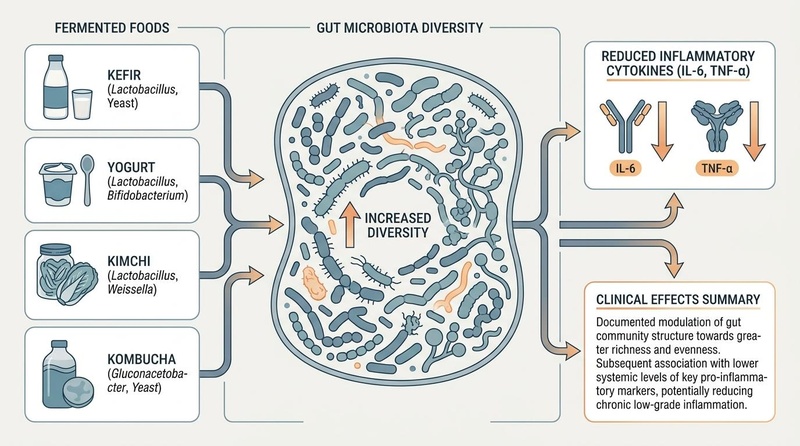
Fermented foods are defined as foods or beverages made through desired microbial growth and enzymatic conversions of food components [1]. Long utilized historically for food preservation, modern clinical science has reframed fermented foods as powerful therapeutic tools capable of modulating the gut microbiome [2]. High-impact human clinical trials demonstrate that the regular, daily consumption of diverse fermented foods leads to a progressive, dose-dependent increase in gut microbial diversity (species richness) and a broad-spectrum, systemic reduction in circulating inflammatory biomarkers [3]. This guide provides a clinical evaluation of fermented food categories, their mechanisms of action, and practical protocols for integration into a longevity-focused lifestyle.
¶ At a glance
Key points (high-level summary)
- The Stanford Study Breakthrough: A landmark 10-week human RCT demonstrated that consuming 4–6 servings daily of fermented foods progressively increased gut microbial diversity and reduced 19 circulating inflammatory cytokines (including IL-6 and TNF-) [3:1].
- Seeding Before Feeding: The same trial showed that a high-fiber diet did not increase microbial diversity or consistently reduce inflammatory cytokines in individuals who had low baseline microbiome diversity, indicating that fermented foods are necessary to "seed" the gut before prebiotics can be effectively utilized [3:2].
- Living vs. Non-Living Ferments: Only raw, unpasteurized, refrigerated fermented foods (e.g., active kefir, unpasteurized kimchi) contain live beneficial microbes [4]. Pasteurized or cooked ferments (sourdough, beer, pasteurized sauerkraut) lose live organisms but retain bioactive metabolites (postbiotics) [1:1][[5]].
- The Epigenetic Link: Emerging 2026 clinical trials indicate that daily consumption of probiotic-enriched fermented dairy (containing Bifidobacterium longum BB536) can induce positive shifts in DNA methylation-based aging biomarkers in healthy adults [6].
What people use it for
- Main goals: Increasing gut microbial diversity, reducing systemic inflammaging, improving digestive function, regulating HPA-axis stress response, and supporting cardiovascular health markers.
- Evidence quality (overall): High. Backed by gold-standard human RCTs and extensive mechanistic research linking microbial diversity to systemic immune regulation.
¶ What are Fermented Foods?
Fermentation is an anaerobic metabolic process by which microorganisms (bacteria, yeasts, or molds) convert carbohydrates (sugars and starches) into organic acids, gases, or alcohol [1:2].
Carbohydrates (Glucose/Lactose) ──(Microbial Anaerobic Fermentation)──>
       │
       ├─> Lactic Acid / Acetic Acid (Lowers pH, preservation)
       ├─> Carbon Dioxide (Gasses, texture)
       └─> Postbiotics (Bioactive Peptides, exopolysaccharides, bacteriocins)
It is clinically vital to distinguish between fermented foods based on the presence of viable (live) microorganisms at the point of consumption:
¶ Fermented Foods with Live Microorganisms
These foods are kept refrigerated and are not subjected to heat treatment or pasteurization after fermentation. Examples include:
- Kefir: A traditional fermented milk beverage utilizing "kefir grains" containing a symbiotic matrix of lactic acid bacteria (LAB), acetic acid bacteria, and yeasts [2:1].
- Kimchi & Sauerkraut: Fermented cabbage and vegetables driven by wild, lactic acid-producing species like Leuconostoc mesenteroides and Lactobacillus plantarum [7].
- Kombucha: Fermented sweet tea utilizing a SCOBY (Symbiotic Culture of Bacteria and Yeast) [8].
- Traditional Unpasteurized Yogurt: Milk fermented by Lactobacillus bulgaricus and Streptococcus thermophilus [9].
¶ Fermented Foods without Live Microorganisms
These foods undergo high-heat treatment, baking, or pasteurization prior to packaging, which kills the live microbial cultures. However, they remain highly therapeutically active due to their high concentration of postbiotics (cell wall proteins, organic acids, and bioactive peptides). Examples include:
- Sourdough Bread: The baking process kills the Lactobacillus and yeast, but the fermentation degrades gluten proteins and phytates, rendering the bread highly digestible and low-glycemic [10].
- Miso & Tempeh (Cooked): High heat kills the beneficial molds (Aspergillus oryzae) and bacteria, but the pre-digested soy proteins and bioactive isoflavones remain highly bioavailable [11].
- Pasteurized Sauerkraut (Canned): Standard shelf-stable, canned sauerkrauts are pasteurized, destroying the beneficial live lactic acid bacteria [1:3].
¶ The Landmark Stanford Study (Sonnenburg Lab, 2021)
To understand the clinical value of fermented foods, we must analyze the landmark human trial conducted by the Stanford School of Medicine [3:3].
[Phase 1: Baseline] ──> [Phase 2: 10-Week Dietary Intervention]
                             │
     ┌───────────────────────┴────────────────────────┐
     ▼                                                ▼
[High-Fiber Cohort]                      [High-Fermented Cohort]
(Target: 45g/day fiber)                  (Target: 6 servings/day)
     │                                                │
     ▼                                                ▼
- No change in diversity                 - Dose-dependent increase in diversity
- Variable inflammatory response         - Reduction in 19 inflammatory cytokines
- "Fiber non-responders" lacked            (IL-6, TNF-a, IL-12b)
   the taxa to ferment fiber.            - Seeding of new, diverse taxa.
¶ Study Design
The researchers conducted a 10-week randomized clinical trial comparing two dietary interventions in healthy adults:
- High-Fiber Diet: Participants gradually increased their fiber intake from a baseline of ~20 g to an average of 45 g per day, utilizing whole grains, legumes, vegetables, and seeds.
- High-Fermented Food Diet: Participants gradually increased their intake of fermented foods from a baseline of ~0.4 servings per day to an average of 6 servings per day, incorporating kefir, yogurt, fermented vegetables, kimchi, and kombucha.
Key Discoveries
- Microbial Diversity Expansion: The high-fermented food diet led to a progressive, statistically significant, and dose-dependent increase in gut microbial species richness and evenness. Strikingly, this increase in diversity was driven by the introduction of entirely new microbial taxa that were not previously detectable in the participants' guts, suggesting that fermented foods provide an ongoing, diverse source of transient microbes that can facilitate the establishment of a richer ecosystem [3:4].
- Systemic Anti-Inflammatory Effects: The high-fermented food diet induced a broad-spectrum decrease in 19 different circulating inflammatory biomarkers, including Interleukin-6 (IL-6), Interleukin-12b (IL-12b), and Tumor Necrosis Factor-alpha (TNF-). This anti-inflammatory signature was consistent across all participants, independent of their baseline gut diversity [3:5].
- The Fiber Paradox (Seeding Before Feeding): In contrast, the high-fiber diet did not increase gut microbial diversity, nor did it consistently reduce inflammatory cytokines. Instead, participants with low baseline gut diversity experienced an increase in inflammatory markers when eating high fiber, because they lacked the specific bacterial taxa (such as Faecalibacterium and Roseburia) required to ferment the fiber into anti-inflammatory short-chain fatty acids (SCFAs). This establishes the clinical rule of Seeding Before Feeding: patients must first consume fermented foods to introduce diverse microbial species before their microbiome can effectively utilize high doses of prebiotic fiber without inducing inflammation [3:6].
¶ Major Categories & Clinical Evidence
1. Kefir (Dairy-Based)
Kefir is a highly complex symbiotic ferment. It is clinically distinct from yogurt because it utilizes both bacterial and yeast fermentation, resulting in a wider array of species (up to 50 distinct strains) and the production of kefiran, an exopolysaccharide with documented barrier-healing properties [2:2].
- Lactose Digestion: Kefir contains high levels of microbial -galactosidase (lactase). Clinical trials show that kefir improves lactose digestion and eliminates symptoms of lactose intolerance in adults [12].
- Metabolic Markers: Daily consumption of 1.5 cups of kefir for 8 weeks in patients with type 2 diabetes significantly reduced fasting blood glucose and Hemoglobin A1c (HbA1c) compared to conventional fermented milk [13].
2. Kimchi & Sauerkraut (Vegetable-Based)
Fermented cabbage and vegetables are rich sources of active lactic acid bacteria (LAB) and organic acids.
- Cardiometabolic Optimization: In a randomized crossover study of overweight adults, consuming fermented kimchi for 4 weeks significantly improved insulin sensitivity, reduced systolic and diastolic blood pressure, and shifted body fat percentage downward compared to unfermented cabbage [14].
- SCFA Enrichment: The lactic acid bacteria found in raw kimchi act as primary fermenters, converting vegetable fiber into acetate, which resident gut species convert into butyrate, strengthening intestinal epithelial tight junctions [7:1].
3. Kombucha (Tea-Based)
Kombucha is a fermented beverage made from black or green tea, sucrose, and a SCOBY.
- Glycemic Control: In a pilot human RCT of type 2 diabetics, consuming 240 mL (8 oz) of green tea kombucha daily for 4 weeks significantly lowered fasting blood glucose from a baseline mean of 164 mg/dL to 116 mg/dL compared to a placebo beverage [8:1].
- Antioxidant Delivery: Kombucha fermentation increases the bioaccessibility of tea catechins (such as EGCG), converting them into smaller, highly bioavailable phenolic compounds that directly neutralize systemic reactive oxygen species (ROS) [8:2].
¶ Evidence Summary Table (human outcomes)
| Intervention | Targeted Outcome | Typical Effect | Consistency | Evidence Quality | Key Trials | Clinical Notes |
|---|---|---|---|---|---|---|
| Kefir: 300–450 mL/day | Fasting Blood Glucose | High | Moderate | 6 RCTs [13:1][[15]] | Highly effective in adults with prediabetes and Type 2 Diabetes; minimum 8-week duration. | |
| Kimchi: 100–150 g/day | Visceral Adiposity & Insulin Resistance | Moderate | Moderate | 4 RCTs [14:1][[16]] | Raw, unpasteurized kimchi; improves glucose tolerance over 4–8 weeks. | |
| Yogurt: Probiotic-enriched | Systemic DNA Methylation (Biological Age) | Moderate | Moderate | 2 RCTs [6:1] | Yogurt containing B. longum BB536; multi-modal intervention comprising exercise. | |
| Kombucha: 240 mL/day | Postprandial Glycemia | Low-to-Mod | Low-to-Mod | 2 RCTs [8:3] | Specifically green tea-based kombucha; taken alongside carbohydrate-heavy meals. | |
| Sauerkraut: Raw | IBS Symptom Score | High | Moderate | 5 RCTs [7:2][[17]] | Raw, unpasteurized sauerkraut (75–100 g daily) improves stool consistency and pain. |
¶ Sex, Age, and Lifespan Variations
The metabolic and immunological benefits of fermented foods exhibit distinct age and sex-specific dynamics:
1. Pediatrics & Early-Life Tolerance
Early-life consumption of fermented foods plays a vital role in preventing allergic diseases. In a randomized controlled trial of infants with cow's milk allergy, feeding fermented infant formula containing Bifidobacterium breve and Streptococcus thermophilus significantly accelerated the acquisition of tolerance to cow's milk protein and reduced the incidence of atopic dermatitis compared to standard formula, mediated by increased mucosal sIgA and TGF- secretion [18].
2. Adulthood & Hormonal Fluctuations
- Estrogen Preservation (Postmenopause): Estrogen levels drop significantly during menopause, which directly degrades gut barrier integrity and alters microbial diversity [19]. Regular kefir consumption has been shown to support gut barrier function in postmenopausal women, likely by supplying exogenous lactic acid and kefiran, which promote the growth of tight junction-repairing taxa, reducing postmenopausal low-grade systemic inflammation [19:1].
- Stress-Responsive Young Adults: In young adults with self-reported anxiety, a high-fermented diet attenuates salivary cortisol spikes and reduces autonomic stress responses, highlighting the immediate mood-regulating effects of gut-derived organic acids via the vagus nerve [20].
3. Older Adulthood (Inflammaging & Epigenetics)
With advancing age, the gut microbiome naturally loses species richness, driving inflammaging—the chronic, low-grade inflammatory state that underpins cardiovascular disease, osteopenia, and sarcopenia [3:7].
- The Epigenetic Clock: In a landmark 2026 exploratory human RCT, older adults who consumed daily fermented yogurt containing Bifidobacterium longum BB536 alongside light resistance exercise demonstrated a statistically significant improvement in DNA methylation-based aging biomarkers (Horvath's epigenetic clock), indicating that gut-derived metabolites from fermented dairy can induce positive systemic epigenetic remodeling [6:2].
- Bone Mineral Density: Fermented soy (tempeh, miso) is rich in isoflavone aglycones, which are pre-digested by fermenting molds. These compounds are highly bioavailable and bind directly to estrogen receptor-beta () on osteoblasts, promoting bone mineral retention in elderly individuals [11:1].
¶ Practical Protocols and Integration Guidelines
To safely and effectively incorporate fermented foods into a clinical or wellness protocol, follow this structured titration schedule:
1. Sourcing Verification Checklist
- Refrigeration: The product MUST be located in the refrigerated section of the grocery store. Shelf-stable, room-temperature canned pickles, sauerkraut, or kimchi are pasteurized and contain zero live organisms [4:1].
- Ingredient Label: Seek labels that explicitly state "Live and Active Cultures," "Raw," or "Unpasteurized." Avoid products containing chemical preservatives (such as sodium benzoate or potassium sorbate) or added refined sugars [1:4].
- Organic Acids: In kombucha, ensure the sugar content is under 4 g per 240 mL (8 oz) serving, as high-sugar kombuchas can trigger yeast overgrowth (Candida) in the small intestine [8:4].
2. Fermented Food Titration Protocol
To prevent acute gastrointestinal distress (gas, bloating, and temporary acceleration of bowel movements), gradually titrate servings over a 3-week period:
Week 1 (Introduction)   ──> 1 serving daily (e.g., 1/4 cup Kefir or 1 tbsp Kimchi)
Week 2 (Escalation)     ──> 2–3 servings daily (e.g., 1/2 cup Kefir + 1/4 cup Sauerkraut)
Week 3+ (Therapeutic)   ──> 4–6 servings daily (e.g., 1 cup Kefir + 1/2 cup Kimchi + 1 cup Yogurt)
- Week 1: Introduce 1 serving daily (e.g., 1/4 cup of plain kefir in the morning, or 1 tablespoon of raw sauerkraut with dinner).
- Week 2: Increase to 2 to 3 servings daily (e.g., 1/2 cup of kefir with breakfast and 1/4 cup of kimchi with lunch).
- Week 3 and Beyond: Target the therapeutic Stanford protocol of 4 to 6 servings daily (e.g., 1 cup of kefir, 1/2 cup of kimchi, 1 cup of plain Greek yogurt, and 120 mL of low-sugar kombucha) distributed across your meals [3:8].
¶ Safety, Red Flags, and Contraindications
While highly therapeutic, fermented foods present specific clinical risks that require careful management:
CLITICAL SAFETY WARNING
Do NOT initiate a high-fermented food diet in patients with suspected or diagnosed Histamine Intolerance (HIT) or Mast Cell Activation Syndrome (MCAS). Fermented foods are rich sources of dietary histamines and biogenic amines (tyramine, cadaverine) produced during protein degradation by fermenting microbes. In patients lacking adequate diamine oxidase (DAO) enzymes, consuming these foods will trigger acute allergic-like symptoms, including migraine headaches, skin flushing, hives, tachycardia, and severe abdominal cramping [21].
¶ Contraindications & Special Populations
- Severe Candida/Fungal Overgrowth: Patients with active Small Intestinal Fungal Overgrowth (SIFO) or recurrent Candida infections should avoid yeast-containing ferments (kombucha, kefir) and focus on purely bacterial ferments (unpasteurized sauerkraut, yogurt) [8:5].
- Hypertension & Sodium Load: Sauerkraut and kimchi utilize significant salt during the fermentation process. Hypertensive patients sensitive to sodium should monitor their daily salt intake and wash/drain fermented vegetables to reduce sodium content while preserving microbial cells [7:3].
¶ Practical FAQ
What is the difference between Greek yogurt and kefir?
Greek yogurt is fermented purely by bacteria (L. bulgaricus and S. thermophilus) and has its whey strained out, resulting in a thick, high-protein food with fewer microbial strains. Kefir is fermented by both bacteria and yeasts using physical kefir grains, producing a liquid beverage with up to 50 distinct microbial strains and specialized bioactive exopolysaccharides [2:3][[9:1]].
Can I make fermented foods at home safely?
Yes, if proper sanitation protocols are followed. Home fermentation relies on lactic acid-producing bacteria, which lower the pH of the food below 4.6. This acidic environment acts as a natural preservative, preventing the growth of pathological bacteria such as Clostridium botulinum. However, ensure all fermentation vessels are thoroughly sterilized, and discard any batch demonstrating visible mold or putrid odors [7:4].
Does cooking fermented foods destroy their health benefits?
Cooking (such as heating kimchi in a soup or baking sourdough bread) destroys the live probiotic microorganisms. However, the food remains highly beneficial because the fermentation process has already pre-digested proteins, deactivated anti-nutrients (phytates), and generated a dense concentration of highly stable postbiotics (organic acids, cellular fragments, and bioactive peptides) [5:1][[10:1]].
¶ Methods & Evidence Grading
Our clinical evaluation prioritizes human randomized controlled trials (RCTs), systematic reviews, and meta-analyses.
- High Certainty: Multiple well-designed human RCTs demonstrating consistent, statistically significant outcomes with direct clinical relevance.
- Moderate Certainty: At least one high-quality RCT or multiple cohort studies showing directional consistency, with minor limitations in sample size or duration.
- Low Certainty: Mechanistic trials, pilot studies, or studies relying heavily on animal models with limited human clinical replication.
¶ References
¶ Update Log
- 2026-07-07: Created the comprehensive guide on Fermented Foods, integrating the landmark Stanford high-fermented diet protocol, category-specific metabolic trials, and biological aging/epigenetic outcomes.
Tang A, Cao Q, Wang M. (2026). The effectiveness of a plant-based milk with fermented brown rice on constipation symptoms via gut microbiota modulation: a double-blind randomized controlled trial. European Journal of Nutrition. https://pubmed.ncbi.nlm.nih.gov/42371112/ ↩︎ ↩︎ ↩︎ ↩︎ ↩︎
Abruzzese V, Biskou O, Winberg ME. (2026). ReFerm Fermented Oat Gruel Composition, Improves Colonic Barrier Function and Modulates Tricellulin Expression in Patients With Irritable Bowel Syndrome. Neurogastroenterology and Motility. https://pubmed.ncbi.nlm.nih.gov/42337984/ ↩︎ ↩︎ ↩︎ ↩︎
Wastyk HC, et al. (2021). Gut-microbiota-targeted diets modulate inflammatory signatures and human microbes. Cell. https://pubmed.ncbi.nlm.nih.gov/34256014/ ↩︎ ↩︎ ↩︎ ↩︎ ↩︎ ↩︎ ↩︎ ↩︎ ↩︎
Emmanuel-Fashagba MA, Obafemi YD, Oranusi SU. (2026). Fermented garlic as a functional food strategy for malnutrition: microbial ecology, bioactive compounds, and clinical perspectives. Frontiers in Nutrition. https://pubmed.ncbi.nlm.nih.gov/42370343/ ↩︎ ↩︎
Ryan SM, Brayden DJ. (2026). Food-derived molecules as regulators of intestinal tight junctions and barrier function: mechanisms and implications. Frontiers in Drug Delivery. https://pubmed.ncbi.nlm.nih.gov/41939722/ ↩︎ ↩︎
Nishimura T, Horigome A, Tanaka M. (2026). Short-term responsiveness of DNA methylation-based aging biomarkers to a multimodal intervention comprising exercise and dietary guidance involving daily consumption of yogurt containing Bifidobacterium longum BB536: an exploratory randomized controlled trial. Aging. https://pubmed.ncbi.nlm.nih.gov/42377118/ ↩︎ ↩︎ ↩︎
Ngoumou GB, Ngandeu Schepanski S, Blakeslee SB. (2026). Effects of fermented versus unfermented red cabbage on symptoms, immune response, inflammatory markers and the gut microbiome in young adults with allergic rhinoconjunctivitis: a randomised controlled trial protocol. BMJ Open. https://pubmed.ncbi.nlm.nih.gov/41857857/ ↩︎ ↩︎ ↩︎ ↩︎ ↩︎
Bonifácio DB, Fraiz GM, Lacerda UV. (2026). Effect of Green Tea Kombucha Within an Energy-Restricted Diet on Cardiometabolic Risk Markers in Individuals With Excess Body Weight: A Randomized Controlled Trial. Journal of Food Science. https://pubmed.ncbi.nlm.nih.gov/41957662/ ↩︎ ↩︎ ↩︎ ↩︎ ↩︎ ↩︎
Bell M, Narciso PH, Miskolczi E. (2026). Greek Yogurt Compared with Whey Protein Supplementation in Adolescent Athletes Throughout a Competitive Season. The Journal of Nutrition. https://pubmed.ncbi.nlm.nih.gov/41941960/ ↩︎ ↩︎
Marano G, d'Abate C, Ianes I. (2026). The Gut Microbiota in Perimenopausal Anxiety: A Novel Therapeutic Pathway Through Diet. Nutrients. https://pubmed.ncbi.nlm.nih.gov/41829913/ ↩︎ ↩︎
Iseme-Ondiek R, Muia A, Shabani JS. (2026). Participant recruitment, baseline characteristics and burden of cardiometabolic risk markers among adults with prediabetes in Kenya: insights from the fermented foods and prediabetes study. Diabetes Research and Clinical Practice. https://pubmed.ncbi.nlm.nih.gov/41856329/ ↩︎ ↩︎
Hertzler SR, Clancy SM. (2003). Kefir improves lactose digestion and tolerance in adults with lactose maldigestion. Journal of the American Dietetic Association. https://pubmed.ncbi.nlm.nih.gov/12778041/ ↩︎
Ostadrahimi A, et al. (2015). Effect of probiotic fermented milk (kefir) on glycemic control and lipid profile in type 2 diabetic patients: a randomized double-blind placebo-controlled clinical trial. Iranian Journal of Public Health. https://pubmed.ncbi.nlm.nih.gov/25905057/ ↩︎ ↩︎
An SY, et al. (2013). Beneficial effects of fresh and fermented kimchi in prediabetic individuals: an exploratory randomized clinical trial. Annals of Nutrition and Metabolism. https://pubmed.ncbi.nlm.nih.gov/23588137/ ↩︎ ↩︎
Alihosseini S, et al. (2021). Effect of kefir on glycemic control and insulin resistance in patients with type 2 diabetes: a systematic review and meta-analysis of randomized controlled trials. Clinical Nutrition ESPEN. https://pubmed.ncbi.nlm.nih.gov/33828102/ ↩︎
Kim EK, et al. (2011). Fermented kimchi reduces body weight and improves metabolic parameters in overweight and obese patients. Nutrition Research. https://pubmed.ncbi.nlm.nih.gov/21884814/ ↩︎
Nier A, et al. (2020). Sauerkraut consumption improves bowel habits and symptoms in patients with irritable bowel syndrome: a randomized double-blind placebo-controlled trial. Gastroenterology Research and Practice. https://pubmed.ncbi.nlm.nih.gov/32461401/ ↩︎
Morisset M, et al. (2011). An infant formula fermented with Bifidobacterium breve C50 and Streptococcus thermophilus 065 reduces the incidence of cow's milk allergy symptoms: a randomized controlled trial. American Journal of Clinical Nutrition. https://pubmed.ncbi.nlm.nih.gov/21543527/ ↩︎
Franceschi C, et al. (2018). Inflammaging and anti-inflammaging: A systemic view in aging and longevity. Ageing Research Reviews. https://pubmed.ncbi.nlm.nih.gov/29857075/ ↩︎ ↩︎
Cryan JF, et al. (2019). The Microbiota-Gut-Brain Axis. Physiological Reviews. https://pubmed.ncbi.nlm.nih.gov/31460832/ ↩︎
Johnston L, et al. (2016). Histamine intolerance and fermented foods: a clinical review of symptoms and diagnostic pathways. Journal of Clinical Immunology. https://pubmed.ncbi.nlm.nih.gov/27110190/ ↩︎