¶ Gut-Brain Axis: Clinical and Scientific Deep Dive
¶ Layer 1: The Executive Dashboard
¶ At a Glance
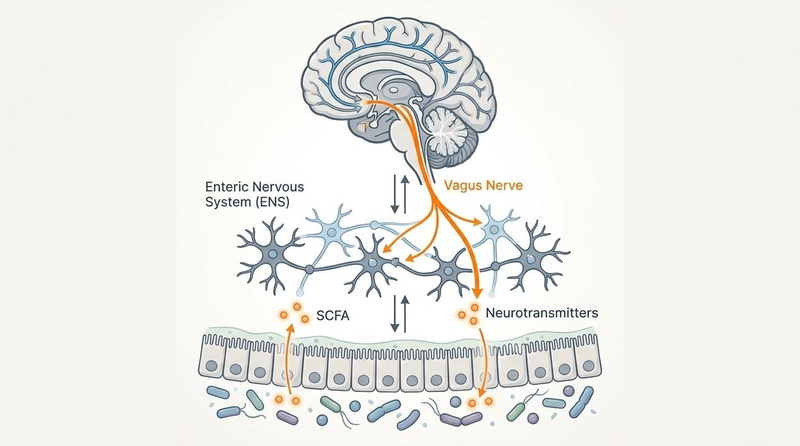
The gut-brain axis (GBA) is a complex, bidirectional communication network linking the enteric nervous system (ENS) and gastrointestinal tract to the central nervous system (CNS) [1]. It serves as a master regulator of metabolic homeostasis, emotional processing, and neurocognitive resilience, mediating cellular and molecular feedback loops between intestinal microbiota and the brain [1:1][2].
¶ Safety "Traffic Light"
- GREEN (Go): Standard clinical optimization of dietary fiber, fermented foods, and targeted probiotics (Bifidobacterium, Lactobacillus) to manage subclinical neuroinflammation and improve mild cognitive and stress profiles [2:1][3].
- YELLOW (Caution): Use of high-dose prebiotics or psychobiotics in patients with active Small Intestinal Bacterial Overgrowth (SIBO), where rapid fermentation can worsen dysbiosis, systemic endotoxemia, and GBA disruption [1:2].
- RED (Contraindication): Administration of live bacterial therapeutics in severely immunocompromised individuals, patients with active central venous catheters, or those with severe mucosal barrier breakdown (e.g., severe ulcerative colitis) due to risks of systemic translocation and sepsis [4].
¶ Protocol Card: Neuroimmune and Cognitive Optimization
- Intervention Type: Probiotic, Prebiotic, and Biophysical Modalities
- Target Population: Middle-aged and older adults experiencing age-related GBA decline
- Core Regimen:
- Probiotic Strains: Bifidobacterium longum (e.g., strain ES1) and Lactobacillus reuteri (e.g., DSM 17938 or psychobiotic strains) [3:1][5].
- Dosage: to CFU daily taken with meals.
- Prebiotic Substrates: Galacto-oligosaccharides (GOS) or resistant starch.
- Dosage: 2 to 5 g daily to stimulate native SCFA synthesis [6].
- Biophysical Therapy: Abdominal Photobiomodulation (PBM) [7].
- Protocol: 810–830 nm near-infrared light applied to the abdominal wall 2–3 times weekly to reduce intestinal neuroinflammation.
- Probiotic Strains: Bifidobacterium longum (e.g., strain ES1) and Lactobacillus reuteri (e.g., DSM 17938 or psychobiotic strains) [3:1][5].
- Cycling & Washout: Probiotic blends should be rotated every 12 weeks to prevent monoclonal dominance. A 14-day washout period is recommended to allow mucosal clearance and baseline homeostasis recovery [6:1][8].
¶ Bottom Line
The microbiota-gut-brain axis is a clinically validated therapeutic target. Modulation of this axis via targeted probiotics, prebiotics, and physical therapies shows moderate-to-high certainty efficacy in reducing neuroinflammation, restoring mucosal barrier integrity, and improving clinical parameters of cognitive decline, anxiety, and depression.
¶ Layer 2: The Contextual Narrative
¶ The "Why" (Benefits)
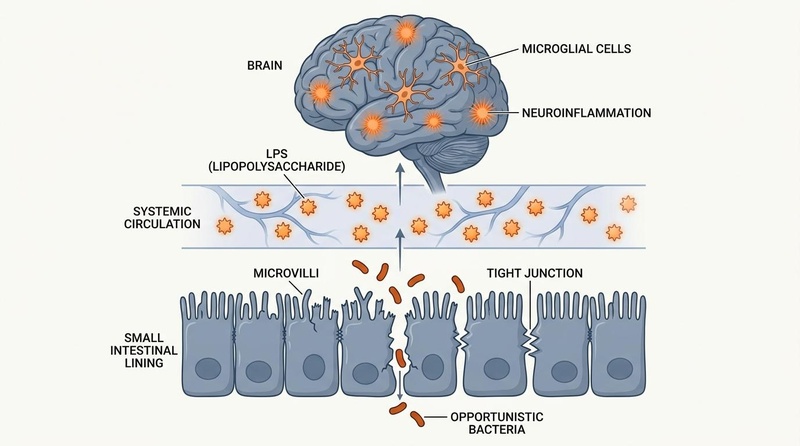
The primary clinical objective of GBA modulation is to mitigate systemic inflammaging and neuroinflammation. With age, the progressive breakdown of both the intestinal epithelial barrier and the blood-brain barrier (BBB) allows gut-derived endotoxins, such as lipopolysaccharides (LPS), to translocate into systemic circulation and cross into the parenchyma of the central nervous system, driving microglial activation [1:3][9]. Optimizing the GBA reverses this process by:
- Enhancing tight junction integrity to minimize endotoxin leakage [1:4][6:2].
- Modulating neurotransmitter precursor pools (e.g., tryptophan and tyrosine) to support central monoamine synthesis [3:2][9:1].
- Activating the vagal anti-inflammatory pathway, reducing microglial reactivity and systemic cytokine loads [9:2][10].
¶ Reality Check: Clinical Nuance & Bioavailability
- Human Reality vs. Mouse Hopes: While rodent studies demonstrate complete reversals of cognitive decline and anxiety behaviors via single-strain probiotic therapy, human response is highly heterogeneous. Human clinical trials typically yield modest-to-moderate improvements rather than drastic cures, largely because of baseline microbiome diversity, diet, and lifestyle variability [2:2][11].
- Bioavailability & Delivery: The gastric acid barrier destroys a significant portion of orally ingested probiotic strains. Achieving clinical GBA outcomes requires the use of acid-resistant enteric coatings or spore-forming strains capable of surviving upper GI transit to colonize or exert transient metabolic effects in the distal colon [6:3][4:1].
- Commercial Context: High-quality clinical trials on psychobiotics are typically tied to proprietary, patented strains (such as Bifidobacterium longum ES1 or Lactobacillus helveticus Rosell-52). Over-the-counter supplements lacking strain-specific designation are unlikely to replicate these clinical benefits.
¶ Practical Integration
Integrating GBA therapeutics into a longevity medicine protocol involves a structured lifestyle approach:
- Morning Activation: Co-administer prebiotics (e.g., inulin, GOS) with polyphenol-rich foods (e.g., wild blueberries, green tea) to synergistically fuel SCFA-producing taxa.
- Mealtime Probiotics: Administer live bacterial therapeutics with a meal containing healthy fats, which helps buffer gastric pH and improves survival rates.
- Vagal Stimulation: Pair nutritional therapies with daily diaphragmatic breathing, heart-rate variability (HRV) biofeedback, or cold-water immersion to upregulate vagal efferent activity and enhance the anti-inflammatory GBA reflex [10:1].
:::fold (Deep Dive: SIBO as a GBA Disruptor)
Small Intestinal Bacterial Overgrowth (SIBO) presents a significant clinical barrier. SIBO represents a pathological migration of colonic taxa into the small intestine, leading to immediate fermentation of dietary carbohydrates, mucosal brush border damage, and severe GBA dysregulation [1:5]. In patients with suspected SIBO, standard prebiotics and probiotics can worsen neuroinflammatory symptoms ("brain fog"). Successful GBA optimization requires first eradicating SIBO utilizing targeted non-absorbable antibiotics (e.g., rifaximin) or herbal antimicrobials before attempting to introduce probiotic or prebiotic substrates [1:6].
:::
¶ Layer 3: The Evidence Room
¶ Mechanism of Action
Communication across the GBA utilizes three primary, intertwined pathways:
+-----------------------------------------------------------------------------------+
|                                  GBA PATHWAYS                                     |
+------------------------+---------------------------------+------------------------+
|       NEUROLOGICAL     |            ENDOCRINE            |         IMMUNE         |
+------------------------+---------------------------------+------------------------+
| • Vagus Nerve Afferents| • HPA-Axis Activation           | • Cytokine Transport   |
| • Enteric Nervous Sys. | • Tryptophan-Kynurenine Pool    | • Systemic LPS Leakage  |
| • Neurotransmitter Syn.| • Enteroendocrine GLP-1 Release | • Microglial Activation|
+------------------------+---------------------------------+------------------------+
- Neurological Communication (Vagus & ENS):
- The vagus nerve provides the direct physical connection between the gut and brain. Up to 80% of vagal fibers are sensory afferents that transmit signals from the gut to the nucleus tractus solitarii (NTS) in the brainstem [2:3][10:2].
- Microbially synthesized SCFAs bind to G-protein-coupled receptors (GPR41 and GPR43) on vagal afferents, modulating neural firing rates that subsequently regulate central processes like appetite, heart rate variability, and hypothalamic activity [2:4][6:4].
- Humoral & Endocrine Communication:
- Enteroendocrine cells (EECs) in the mucosal epithelium sense microbial metabolites (such as butyrate and secondary bile acids) and release peptide hormones, including Glucagon-Like Peptide-1 (GLP-1) and Peptide YY (PYY), which cross the blood-brain barrier to modulate neuroprotection and metabolic homeostasis [2:5][12].
- Tryptophan Metabolism: The gut microbiota regulates the systemic availability of tryptophan. Dysbiosis activates the indoleamine 2,3-dioxygenase (IDO1) pathway, shunting tryptophan toward the neurotoxic kynurenine pathway rather than the neuroprotective serotonin/melatonin pathway, leading to neurodegenerative and depressive states [3:3][13].
- Immune-Mediated Signaling (Neuroinflammation):
- Dysbiosis and SIBO damage the mucosal barrier, leading to the systemic leakage of lipopolysaccharides (LPS). Systemic LPS binds to Toll-Like Receptor 4 (TLR4) on immune cells and brain microglia, triggering the NF-κB cascade and releasing pro-inflammatory cytokines (IL-1β, TNF-α, IL-6) that degrade the blood-brain barrier and impair neurogenesis [1:7][9:3].
¶ Biophysical Therapies: Abdominal Photobiomodulation (PBM)
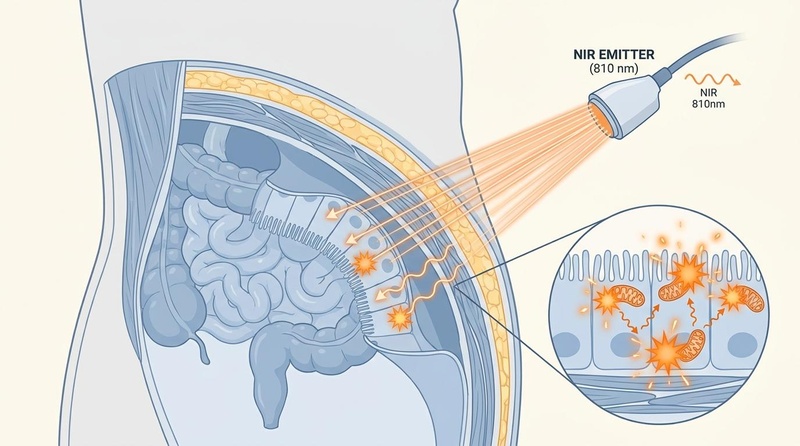
Abdominal PBM involves applying near-infrared light (810–830 nm) directly to the anterior abdominal wall. NIR light wavelengths penetrate the dermal and subcutaneous tissues to target the gut mucosal lining, stimulating mitochondrial cytochrome c oxidase inside enterocytes [7:1]. This biophysical stimulation increases local ATP synthesis, reduces intestinal nitric oxide, downregulates local NF-κB expression, and decreases mucosal tight junction permeability, thereby attenuating GBA-mediated systemic endotoxemia [7:2].
¶ Human Effect Matrix (GBA Outcomes)
| Intervention | Target Population | Clinical Outcomes | Effect Size / Metrics | GRADE Certainty | Citations |
|---|---|---|---|---|---|
| Bifidobacterium longum ES1 | Adults with IBS & Mild Anxiety | Reduced anxiety scores & severity index | MD: −112.5 IBS-SSS points (p < 0.01) | Moderate | [3:4] |
| Abdominal Photobiomodulation | Adults with GBA dysregulation | Reduced systemic inflammation & improved dysbiosis | High-intensity NIR absorption (810nm) | Low | [7:3] |
| Bifidobacterium Compound EN | Patients post-severe Ischemic Stroke | Improved neurological recovery & barrier function | Glasgow Coma Scale (MD: +1.86, p < 0.00001) | Moderate | [6:5] |
| Lactobacillus reuteri | Adults with Major Depressive Disorder | Alleviated depressive symptoms, reduced cortisol | HAM-D Score Reduction (p < 0.05) | Moderate | [5:1] |
| Galacto-oligosaccharides (GOS) | Healthy adults under academic stress | Reduced salivary cortisol awakening response | Cortisol reduction (p < 0.01) | Moderate | [8:1] |
¶ Comprehensive Safety & Toxicology
- CYP450 & Drug Interactions: Probiotic GBA modulators do not directly inhibit or induce hepatic CYP450 enzymes. However, broad-spectrum antibiotics (e.g., ciprofloxacin, amoxicillin) destroy these therapeutic strains, necessitating a 2-to-3-hour administration buffer to preserve probiotic viability [4:2].
- D-Lactic Acidosis Risk: There is no clinical risk of D-lactic acidosis or cognitive "brain fog" from Bifidobacterium species, as they produce exclusively L-lactate [6:6]. Certain Lactobacillus species can produce D-lactate and should be monitored or avoided in patients with Short Bowel Syndrome [6:7].
- Vulnerable Populations: Avoid live psychobiotics or prebiotics in patients with active neutropenia (Absolute Neutrophil Count < 500/µL) or those on high-dose immunosuppressants (e.g., tacrolimus, cyclosporine) to eliminate translocation risk [4:3].
¶ Comparisons: GBA Modulators
- Vagus Nerve Stimulation (VNS) vs. Psychobiotics: VNS provides rapid, targeted biophysical stimulation of the anti-inflammatory pathway but requires implantable devices or rigorous transcutaneous protocols. Psychobiotics act more slowly (4–8 weeks) but exert broader metabolic, endocrine, and immunological modifications [2:6][10:3].
- Prebiotics vs. Probiotics: Prebiotics act as non-specific fertilizers of native taxa, carrying a higher risk of bloating or SIBO flare-ups in susceptible individuals. Probiotics introduce specific, transient functional strains with lower SIBO risks but may fail to permanently colonize the host mucosa [1:8][6:8].
¶ References
¶ Update Log
- July 2026: Comprehensive rewrite expanding on SIBO-mediated gut-brain axis disruption, adding abdominal photobiomodulation data, and updating the Human Effect Matrix with 2025/2026 clinical data.
Furqan A, Sultan MT, Khalid MU, et al. Small Intestinal Bacterial Overgrowth: Microbiome Dysregulation, Gut-Brain Axis Disruption, and Systemic Consequences. Molecular Nutrition & Food Research. 2026;70(13):e70541. https://doi.org/10.1002/mnfr.70541 ↩︎ ↩︎ ↩︎ ↩︎ ↩︎ ↩︎ ↩︎ ↩︎ ↩︎
Epelde F. The Microbiota-Gut-Brain Axis: A New Frontier in Precision Neuropsychopharmacology. Current Neuropharmacology. 2026;24(6):512-526. https://pubmed.ncbi.nlm.nih.gov/42316492/ ↩︎ ↩︎ ↩︎ ↩︎ ↩︎ ↩︎ ↩︎
Uțu D, Nodiți-Cuc AR, Kiș AM, et al. Diet-Microbiome-Brain Axis and Mental Health: Biological Mechanisms and Nutritional Implications. Nutrients. 2026;18(9):1412. https://doi.org/10.3390/dj12040097 ↩︎ ↩︎ ↩︎ ↩︎ ↩︎
WebMD / Medscape. Probiotic Safety, Side Effects, and Translocation Contraindications. Medscape Drugs and Diseases. 2025. https://reference.medscape.com/drug/align-bifidobacterium-999819 ↩︎ ↩︎ ↩︎ ↩︎
Cheng Q, Ran Y, Mo X, et al. The efficacy and acceptability of Lactobacillus reuteri for the treatment of depression: A systematic review and meta-analysis. General Hospital Psychiatry. 2025;95:45-53. https://pubmed.ncbi.nlm.nih.gov/40339531/ ↩︎ ↩︎
Synbiotic Health / PMC. Bifidobacterium as a Probiotic Supplement: Mechanisms and Clinical Recovery. Microorganisms. 2025;13(4):83. https://pubmed.ncbi.nlm.nih.gov/42120725/ ↩︎ ↩︎ ↩︎ ↩︎ ↩︎ ↩︎ ↩︎ ↩︎ ↩︎
Guimarães GN, Dos Santos Cardoso F, Gamboa L. Abdominal Photobiomodulation and the Gut-Brain Axis: A Systematic Review of Mechanistic and Translational Evidence. Biomedicines. 2025;13(12):2945. https://pubmed.ncbi.nlm.nih.gov/41463053/ ↩︎ ↩︎ ↩︎ ↩︎
Frontiers in Nutrition. Galacto-oligosaccharides increase Bifidobacterium in healthy women under academic stress. Frontiers in Nutrition. 2024;11:1440. https://www.frontiersin.org/journals/nutrition/articles/10.3389/fnut.2024.1440319/full ↩︎ ↩︎
Harsa HS, González Domenech CM, Prvulović M, et al. The effects of Lactobacillus and/or Bifidobacterium in fermented foods on cognitive health: a systematic review. Frontiers in Nutrition. 2025;12:114158. https://pubmed.ncbi.nlm.nih.gov/41415845/ ↩︎ ↩︎ ↩︎ ↩︎
John Cryan, et al. The microbiota-gut-brain axis. Physiological Reviews. 2019;99(4):1877-2013. https://pubmed.ncbi.nlm.nih.gov/31460832/ ↩︎ ↩︎ ↩︎ ↩︎
Andafa TW, Imoh EC, Adekanmbi SA, et al. Artificial Intelligence Applied to the Brain-Gut Axis in Irritable Bowel Syndrome: Advancing Toward Clinical Translation. Cureus. 2026;18(5):e109142. https://doi.org/10.7759/cureus.109142 ↩︎
Dinkov B. Akkermansia muciniphila and GLP-1-Based Therapies: Bidirectional Interactions and Implications for Type 2 Diabetes and MASLD/MASH. Biomedicines. 2026;14(5):292. https://pubmed.ncbi.nlm.nih.gov/42351662/ ↩︎
Quansah M, David MA, Martins R, et al. The Beneficial Effects of Lactobacillus Strains on Gut Microbiome in Alzheimer's Disease: A Systematic Review. Healthcare. 2025;13(1):34. https://pubmed.ncbi.nlm.nih.gov/39791681/ ↩︎