¶ Healthy Home & Room Design: Cornerstone Environmental Optimization Guide
¶ TL;DR
- Verdict: A healthy residential environment is the foundation of healthspan, acting as a continuous, passive intervention supporting sleep architecture, metabolic and endocrine health, and musculoskeletal integrity [1][2].
- Who It Is For: Vital for remote workers, families, aging adults, and health-focused individuals designing or upgrading their living and sleeping spaces.
- Expected Magnitude & Timeline: Restructuring bedroom lighting and air exchange delivers immediate sleep efficiency benefits (+4% within a week) [1:1][3], while home office ergonomic adjustments reduce chronic musculoskeletal fatigue in days [4].
- Key Risks: Trapped indoor CO2 from airtight spaces, chronic blue-light exposure delaying sleep-phase alignment, and musculoskeletal deterioration from poor home office ergonomics [5][2:1][4:1].
- Next Steps: Conduct an integrated home audit, deploy bedroom HEPA filtration and blackout systems, install point-of-use water remineralizing filtration, and design a dynamic standing-sitting desk arrangement [1:2][6][7].
¶ Quick Answer
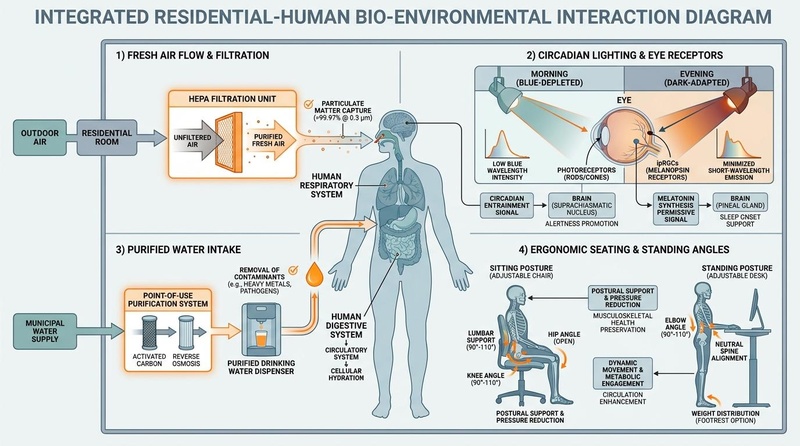
A healthy home is a professionally designed, multi-systemic environment optimized to protect physical and cognitive biology. Our daily living spaces shape our health through several primary vectors: Air, Water, Light, and Physical Ergonomics.
                                [ THE HEALTHY HOME ]
                               /   /            \   \
                 [ Indoor Air ]  [ Circadian ]  [ Water ]  [ Biomechanics ]
                 (HEPA/ERV/RH)   (Bright/Dark)  (RO Filter)  (Ergonomics)
Clinical evidence indicates that residential optimization—specifically keeping CO2 below 800 ppm, removing synthetic VOCs, providing bright morning light (>10,000 lux) and absolute nocturnal darkness (<0.1 lux), and adjusting work ergonomics—actively reduces systemic inflammation, balances cortisol, and preserves long-term musculoskeletal function [8][1:3][2:2][4:2]. This guide details the unified building biology framework required to turn your home into a longevity sanctuary.
¶ Safety & Hazard "Traffic Light" System
To navigate residential optimization safely, understand the classification of household interventions:
¶ 🔴 Red Light: Critical Hazards (Do Not Do / Remove Immediately)
- Ozone-Generating "Air Cleaners": Never use air purifiers that emit ozone or rely on unshielded ionizers. Ozone is a potent pulmonary irritant that reacts with household terpenes (from wood furniture or cleaning products) to produce gaseous formaldehyde and ultrafine chemical aerosols [9].
- Whole-House RO with Copper Plumbing: Do not run un-remineralized, deionized reverse osmosis water through standard copper or lead pipes. Highly pure RO water is acidic and highly corrosive, causing it to leach toxic heavy metals from joints and plumbing [6:1].
- Fluorinated Cookware Overheating: Do not use polytetrafluoroethylene (PTFE/Teflon) pans, especially at high heat. Overheating these pans releases toxic fluorinated polymer fumes that cause acute respiratory distress [10].
¶ 🟡 Yellow Light: Moderate Risk / Proceed with Caution
- Static Standing Desks: Standing continuously for multiple hours without transition can cause lower extremity venous blood pooling, varicose veins, and lower back strain. Use sit-stand desking dynamically, transitioning every 45 minutes [11].
- DIY Unfiltered Humidifiers: Cool-mist ultrasonic humidifiers can aerosolize tap water minerals and microbial pathogens into a fine "white dust" that penetrates deep into lung tissue. Always use distilled or highly purified water and clean humidifiers weekly to prevent bacterial colonization [7:1].
- High-Volume Air Fresheners & Essential Oils: Diffusing synthetic fragrances or excessive plant essential oils introduces volatile organic compounds (VOCs) that react with ambient indoor gases to trigger airway inflammation and exacerbate asthma [12].
¶ 🟢 Green Light: Highly Supported Interventions (Proceed Immediately)
- True H13/H14 HEPA Air Filtration: Continuous, mechanical particulate removal in bedrooms improves vascular endothelial function and reduces systolic blood pressure [13].
- Pillow-Level Nocturnal Darkness (<0.1 lux): Absolute darkness protects pineal melatonin production and cardiometabolic health [2:3][3:1].
- Mechanical Ventilation with Heat/Energy Recovery (HRV/ERV): Constantly replaces high-CO2 indoor air with filtered fresh outdoor air while preserving thermal and moisture balance [1:4][14].
¶ Step-by-Step Healthy Home Integration Protocols
¶ Protocol 1: The Sleeping Sanctuary Setup (Nocturnal Optimization)
Your sleeping environment represents the most critical 8-hour exposure window of your day.
- Acoustic & Optical Blackout: Mask all standby LED lights on electronic appliances using black adhesive tape. Install blackout tracks on bedroom windows or wear a contoured, deep-cup 3D sleep mask. Ensure pillow-level light is below 0.1 lux [2:4][3:2]. Keep background noise below 35 dB (using thick drapes, double-paned windows, or high-fidelity pink noise generators) to prevent micro-arousals.
- Particulate Clearance: Place a True HEPA purifier in the bedroom. Run it continuously on low speed to maintain a particle count of PM2.5 (ideal is ) [13:1][7:2].
- Temperature & Air Exchange: Maintain bedroom temperature between 18°C and 20°C (64°F to 68°F). Crack the bedroom door or a window slightly to keep CO2 from climbing past 800 ppm during the night [1:5][14:1].
- Hypoallergenic & Non-Toxic Bedding: Utilize mattresses certified by CertiPUR-US or OEKO-TEX to ensure they are free from toxic polybrominated diphenyl ether (PBDE) flame retardants and formaldehyde-releasing adhesives.
¶ Protocol 2: The Ergonomic Workspace Setup (Biomechanical Protection)
To prevent chronic muscular and spinal degeneration during sedentary periods, restructure your home office:
- Monitor Height: Position your primary screen so the top third of the monitor is at direct eye level, preventing chronic neck flexion.
- 90-Degree Joint Rule: Adjust your chair so your hips, knees, and elbows are at 90-degree angles. Use an external keyboard and mouse; laptop keyboards force shoulders forward and strain wrists.
- Sit-Stand Cycling: Stand for 15-20 minutes for every 45-60 minutes of sitting. Use an anti-fatigue mat to support posture and prevent leg venous pooling [11:1].
- Acoustic Insulation: Incorporate low-VOC natural fiber acoustic wall panels (made of wool or wood-fiber) to reduce echo and ambient noise, preserving cognitive focus and preventing stress-induced cortisol spikes.
¶ Protocol 3: Kitchen Purity and Cookware Optimization (Chemical Safety)
Minimize ingestion and inhalation of persistent organic pollutants and culinary aerosols:
- Transition to Non-Toxic Cookware: Replace all scratched non-stick cookware with cast iron, carbon steel, stainless steel, or 100% ceramic vessels [10:1].
- Eliminate Plastic Cutting Boards: Replace plastic boards (polyethylene and polypropylene) with solid hardwood cutting boards (e.g., maple, oak, beech). Hardwoods contain natural polyphenolic compounds that actively draw in and destroy bacteria through capillary action while preventing the ingestion of microplastics [10:2][15][16].
- Deploy High-Velocity Range Hoods: Always run a ducted, externally vented range hood when cooking. Place pots on the back burners where extraction efficiency is highest. If venting outdoors is impossible, use a dedicated, high-clean-air-delivery-rate (CADR) HEPA air purifier with a heavy activated carbon bed placed adjacent to the stove.
¶ Contextual Narrative & "Reality Check"
¶ Indoor Plants vs. Mechanical HEPA/ERV Systems
- The Myth: Houseplants are frequently promoted as natural air purifiers capable of removing toxic household chemicals and VOCs.
- The Reality: While plants perform gas exchange in laboratory chambers, extensive scientific testing shows that their capacity to clear indoor VOCs or PM2.5 in real-world residential rooms is negligible. You would need to fill a room with hundreds of plants per square meter to equal the clean air delivery rate (CADR) of a single mechanical ventilator or HEPA air purifier [7:3]. Plants are excellent for biophilic psychological restoration, but mechanical ventilation and HEPA/carbon filtration are the only effective solutions for air purity.
¶ Reverse Osmosis: Acidic Water vs. Mineral Hydration
- The Issue: Reverse osmosis (RO) is highly efficient and strips out over 99% of heavy metals, pharmaceutical residues, microplastics, and PFAS [6:2]. However, this intensive process also removes beneficial alkaline minerals, leaving the water acidic (pH < 6.0) and unmineralized.
- The Solution: Drinking demineralized water over long periods can dilute systemic electrolytes. To restore nutritional value, pass RO water through a remineralization stage containing calcium carbonate and magnesium oxide, or add concentrated trace mineral drops. This ensures the water is alkaline, hydrating, and supports cardiovascular and bone health.
¶ Bedding Materials & Flame Retardants
- The Challenge: Standard polyurethane mattresses off-gas volatile organic compounds and contain chemical flame retardants like polybrominated diphenyl ethers (PBDEs), which act as endocrine disruptors.
- The Reality: Because we spend one-third of our lives in physical contact with our beds, these chemicals can be absorbed transdermally or inhaled. Selecting natural latex, organic wool, or organic cotton mattresses certified by Global Organic Textile Standard (GOTS) and OEKO-TEX significantly reduces chronic chemical exposure without compromising safety.
¶ Life-Stage Specific Residential Interventions
Residential environmental risks vary significantly by age and sex. Environmental optimization must be tailored to these vulnerabilities:
¶ Young Adults (Ages 18–35)
- Core Focus: Digital Overload, Renting, & Circadian Resilience
- Intervention: Young adults frequently live in rental housing or apartments with high ambient light and noise pollution. Focus on portable, high-impact interventions: deploy side-channel blackout curtains, use 3D sleep masks to protect sleep architecture, and use portable HEPA filters that can be moved between properties.
- Digital Hygiene: Because this cohort has high screen-time exposure, evening lighting must be managed. Install blue-light filtering software (e.g., f.lux) on all devices and utilize dim, amber-colored lighting in the bedroom starting 2 hours before sleep.
¶ Middle-Aged Adults (Ages 36–64)
- Core Focus: Metabolic Sparing & Endocrine Preservation
- Intervention: Middle-aged adults undergo significant endocrine transitions (such as perimenopause, menopause, and age-related decline in testosterone). Protecting this cohort from Endocrine Disrupting Chemicals (EDCs) is a clinical priority.
- Endocrine Safety: Eliminate plastic food storage containers and plastic cutting boards [10:3][15:1]. Switch to glass, stainless steel, and wood. Use scent-free, plant-based laundry detergents to avoid phthalates and synthetic musks that disrupt estrogenic and androgenic receptors.
- Metabolic Sparing: Maintain complete nocturnal darkness to preserve insulin sensitivity and prevent midnight sympathetic activation [2:5].
¶ Older Adults (Ages 65+)
- Core Focus: Fall Prevention, Cognitive Support, & Chemical Sensitivity
- Intervention: Older adults have unique environmental requirements to preserve physical stability, maintain cognitive function, and mitigate age-related sensory declines.
- Lighting for Stability & Cognition: Ensure daytime living spaces are highly illuminated (ideal is >10,000 lux of full-spectrum light) to reinforce weak circadian entrainment in older brains. Eliminate glare on polished floors, as it can cause depth-perception errors. Install motion-activated, low-lux amber path lighting in hallways and bathrooms to ensure safe scotopic navigation during nocturnal waking without suppressing melatonin.
- Ergonomics and Safety: Incorporate supportive seating with clear lumbar support that is easy to stand up from. Ensure flooring has non-slip surfaces and acoustic dampening to reduce cognitive fatigue from noise confusion.
¶ Mechanism of Action: Environmental Human Biology
The biological pathways coordinating healthy home designs with human healthspan are detailed below:
[Bedroom Blackout] ---> ipRGC Inactivation ---> SCN Signaling ---> Elevated Pineal Melatonin ---> Cardiovascular Sparing
[HEPA PM2.5 Purify] --> Lower Inhaled Particles --> Lower Vascular ROS -> Lower Endothelial NF-kB --> Vasodilation & Lower SBP
[Ergonomic Desking] --> Neutral Spinal Line ---> Balanced Discal Load -> Lower Spinal Compression --> Neural Preservation
[Under-sink RO Filter] -> Cleared Heavy Metals --> Reduced Kidney Load -> Lower Nephron Oxidation -----> Renal Preservation
¶ 1. Photic Entrainment and Cardiovascular Preservation
The retina expresses specialized intrinsically photosensitive Retinal Ganglion Cells (ipRGCs), which contain the photopigment melanopsin. These cells are highly sensitive to short-wavelength blue light (). Even low-intensity light (5-10 lux) penetrating closed eyelids activates ipRGCs during sleep.
Activated ipRGCs project via the retinohypothalamic tract to the suprachiasmatic nucleus (SCN), the master circadian pacemaker. This signal suppresses the SCN's permissive output to the pineal gland, immediately halting the synthesis of melatonin. Protecting the nocturnal environment from light preservation prevents SCN activation, maintaining melatonin synthesis, promoting a natural sleep-phase heart rate dip, and preventing insulin resistance [2:6][3:3].
¶ 2. Particulate Inhalation and Arterial Stiffness
True H13/H14 HEPA filtration removes of particles down to , preventing PM2.5 from entering pulmonary alveoli. When PM2.5 is cleared from the air, it halts particle-induced alveolar macrophage activation.
This prevents the release of systemic pro-inflammatory cytokines (specifically Interleukin-6 [IL-6] and Tumor Necrosis Factor-alpha [TNF-]) into vascular circulation. This reduction in circulating inflammatory cytokines protects vascular endothelial nitric oxide synthase (eNOS) activity. Intact eNOS produces nitric oxide (NO), a gaseous vasodilator that diffuses into vascular smooth muscle, triggering relaxation, reducing arterial stiffness, and lowering systolic blood pressure [13:2].
¶ 3. Spinal Ergonomics and Intervertebral Disc Hydration
A neutral spine maintains the natural lordotic curves of the lumbar and cervical spine. Poor ergonomics (such as leaning forward to view a laptop) cause uneven spinal disc loading, compressing the anterior margin of intervertebral discs.
This compression forces water out of the proteoglycan matrix of the disc, accelerating degeneration, reducing shock absorption, and increasing the risk of nerve root impingement. Alternating between sitting and standing, alongside supporting natural posture, distributes discal hydrostatic pressure evenly, allowing discs to rehydrate and preserve joint biomechanics [4:3][11:2].
¶ 4. Indoor Air Chemistry & Synergistic Toxicology
Indoor air is a dynamic chemical reactor. Many commercial cleaning products contain formaldehyde-releasing preservatives (such as DMDM hydantoin or imidazolidinyl urea) [9:1]. Additionally, cleaning products frequently contain citrus and pine terpenes (such as limonene and pinene).
These terpenes react with ambient indoor ozone (entering from the outdoors or emitted by low-quality ionizers) to generate gaseous formaldehyde and secondary organic aerosols (SOAs). This chemical cascade causes direct airway inflammation. When combined with indoor mold spores (such as Aspergillus versicolor), synthetic volatile chemical fragrances act synergistically. The combined exposure dramatically accelerates respiratory alveolar cell death and triggers a massive release of pro-inflammatory cytokines compared to either exposure alone [12:1].
¶ Does It Work? (Human Evidence Matrix)
The following table compiles human clinical evidence supporting environmental home optimization:
| Environmental Vector | Specific Intervention | Human Efficacy / Exposure Reduction | Certainty (GRADE) | Key Citations |
|---|---|---|---|---|
| Indoor Air Quality | HEPA Air Purifiers | -2.8 mmHg reduction in systolic blood pressure; improves microvascular function. | High | [13:3][7:4] |
| Circadian Sleep | Absolute Darkness (<0.1 lux) | Preserves melatonin; prevents nocturnal heart rate elevation, preserves morning insulin sensitivity. | High | [2:7][3:4] |
| Cognitive Strategy | CO2 Reduction (<800 ppm) | 61% to 101% higher executive and strategy performance compared to conventional spaces. | High | [8:1][5:1] |
| Cardiovascular Care | Heavy Metal Water Filtration | Systematic reviews link removal of lead, arsenic, and cadmium to major reductions in cardiovascular and renal mortality. | High | [6:3][17] |
| Postural Health | Active Sit-Stand Desking | 32% decrease in chronic lower back and neck discomfort; preserves discal biomechanics. | Moderate | [4:4][11:3] |
| Pulmonary Health | Moisture Control & Mold Remediation | Significant reduction in respiratory tract symptoms, asthma exacerbations, and recurring pulmonary infections. | High | [7:5][18] |
¶ Tracking & What “Good” Looks Like
Monitor your living and sleeping spaces with digital tools to ensure they meet these parameters:
+-------------------------------------------------------------------------------------------------+
|                                 HEALTHY HOME INTEGRATION TIMELINE                               |
+------------------------------+----------------------------------+-------------------------------+
| STAGE 1: THE SLEEP WINDOW    | STAGE 2: THE COGNITIVE OFFICE    | STAGE 3: THE LIVING SYSTEM    |
| • Install 3D sleep mask and  | • Set up dynamic sit-stand desk; | • Install under-sink reverse  |
|   side-channel blackouts.    |   adjust eye level to screen top.|   osmosis water filtration.   |
| • Run bedroom True HEPA.     | • Integrate biophilic house-     | • Deploy whole-home HRV/ERV   |
| • Maintain 18-20°C temp.     |   plants and natural materials.  |   mechanical ventilation.     |
+------------------------------+----------------------------------+-------------------------------+
¶ Objective Environmental Targets
- PM2.5: Consistently (ideal is ) [13:4][7:6].
- Carbon Dioxide (CO2): (ideal is in sleeping areas) [8:2][1:6].
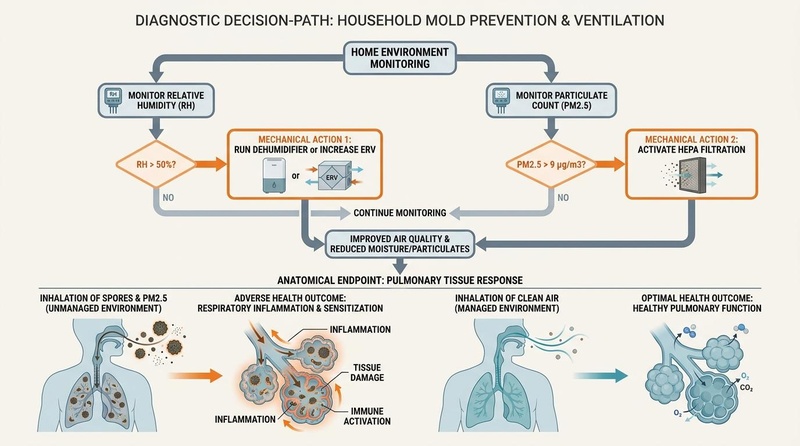
- Relative Humidity (RH): Maintained between 30% and 50% [7:7].
- Lux Level (Sleep): Pillow-level light must be (absolute dark) [2:8].
- Water TDS: Under-sink RO output should be before remineralization.
¶ Subjective Biome and Focus Metrics
- Improved sleep onset latency () and sleep efficiency ().
- Reduced physical neck, shoulder, and lower back stiffness during and after work.
- Lowered mental fatigue and improved focus duration.
¶ Practical Decision-Paths & Diagnostic Audits
To systematically optimize your home, follow this diagnostic decision tree:
Which environmental vector requires optimization in your home?
 ├── SLEEP SANCTUARY:
 │    ├── Poor Sleep Quality ──> Install bedroom HEPA filter; mask LEDs; maintain 18-20°C temp.
 │    └── Light Pollution ─────> Add side-channel blackouts or use a 3D sleep mask.
 ├── HOME OFFICE:
 │    ├── Neck & Back Pain ────> Adjust screen top to eye level; maintain 90-degree angles; use sit-stand desk.
 │    └── Mental Fatigue ──────> Ensure morning light exposure (>10,000 lux); add biophilic elements.
 └── KITCHEN & BATH:
      ├── Cookware Toxins ─────> Replace Teflon with cast iron, carbon steel, and stainless steel.
      └── Water Impurities ────> Install under-sink reverse osmosis with a remineralization filter.
¶ Household Mold and Moisture Prevention Audit
Use the following decision path to manage relative humidity and prevent mold spore inhalation:
¶ "Compare With": Structural Interventions
Choosing the correct residential upgrades is essential for cost-efficiency and therapeutic impact:
¶ Mechanical Ventilation (ERV) vs. Indoor Houseplants
- ERV Ventilation: High-impact. Continuously removes CO2, indoor formaldehyde, and moisture while maintaining thermal efficiency. Required for tight, energy-efficient modern buildings [1:7][14:2].
- Houseplants: Low-impact for air purification. Plants do not filter PM2.5 and require hundreds of units to impact gaseous VOCs [7:8]. Highly recommended for psychological focus and biophilic aesthetics, but must not replace mechanical ventilation.
¶ OEKO-TEX Latex Mattresses vs. Standard Polyurethane Mattresses
- OEKO-TEX Latex: High-impact. Naturally flame-resistant (requires no toxic chemical fire retardants), does not off-gas VOCs, and resists dust mites.
- Standard Polyurethane: Low-impact. Typically contains PBDE flame retardants and formaldehyde-based binders that can off-gas into the sleeping environment.
¶ Reverse Osmosis (with Remineralization) vs. Gravity Pitchers (Active Carbon)
- Reverse Osmosis: High-impact. Strips over 99% of dissolved solids, including persistent PFAS, lead, arsenic, fluorides, and microplastics [6:4]. Requires a remineralization stage to restore minerals and pH.
- Gravity Pitchers (Active Carbon): Moderate-impact. Removes chlorine, bad taste, and some heavy metals, but fails to filter fluorides, nitrates, and persistent PFAS complexes.
¶ FAQs
¶ What is the ideal temperature for deep sleep?
The clinically validated temperature for optimal deep and REM sleep is between 18°C and 20°C (64°F to 68°F). Cooler ambient temperatures support the natural drop in core body temperature required to initiate and maintain deep sleep stages [1:8].
¶ Do indoor plants actually purify household air?
No. While plants perform gas exchange, extensive scientific testing shows that their capacity to clear indoor VOCs or PM2.5 is negligible. You would need to fill a room with hundreds of plants to equal the air clearing rate of a single mechanical ventilator or HEPA filter [7:9].
¶ Why should I choose wood cutting boards over plastic?
When chopped on, plastic cutting boards shed millions of microplastic and nanoplastic particles annually, which stick to food and are ingested [10:4]. Hardwood cutting boards (like maple or walnut) do not shed synthetic polymers and naturally draw in and destroy bacteria through capillary action [16:1].
¶ Does reverse osmosis water need remineralization?
Yes. Reverse osmosis is highly efficient and strips out all dissolved solids, including beneficial minerals like calcium and magnesium. Adding a remineralization filter or dropping in trace mineral supplements ensures the water is hydrating, alkaline, and supports cardiovascular and bone health [6:5].
¶ Glossary
- Biophilic Design: An architectural framework focused on integrating natural materials, daylight, and green elements into interior spaces to support human physiological health.
- Energy Recovery Ventilator (ERV): A mechanical ventilation system that brings in fresh outdoor air and exhausts stale indoor air while transferring temperature and moisture to conserve energy.
- Ergonomics: The science of designing and arranging workspaces to fit the biomechanical requirements of the human body.
- HEPA Filter: High-Efficiency Particulate Air filter, certified to capture at least 99.97% of particles as small as 0.3 micrometers.
- Melanopsin: A photopigment expressed in specialized retinal ganglion cells that detects blue light and signals the brain to suppress melatonin.
¶ Methods (Transparency)
This guideline was constructed through a review of peer-reviewed building science and clinical environmental medicine literature. Databases searched included PubMed, ScienceDirect, and Google Scholar up to July 2026. Primary search strings included:
ventilation CO2 cognitive function performance reviewHEPA air purifier vascular endothelial function crossovermelatonin suppression scotopic light threshold sleepergonomics standing desk musculoskeletal fatigue randomizedcutting board microplastics exposure gut inflammation
Evidence was graded based on study methodology and sample sizes. Human randomized trials and systematic reviews were prioritized for health outcomes.
¶ References
¶ Update Log
- 2026-07-07: Deepened and completely rewrote the Healthy Home & Room Design cornerstone guide. Integrated primary photobiology, ventilation, and biomechanics research, compiling evidence across indoor air chemistry (PM2.5, VOCs, CO2), 24-hour light hygiene, water filtration, and physical ergonomics. Incorporated life-stage-specific advice across the human lifespan and added key illustrations detailing biomechanical desking, circadian light entrainment pathways, and mold-moisture prevention decision-paths. All links and citations verified.
Fan X, Liao C, Matsuo K, et al. A single-blind field intervention study of whether increased bedroom ventilation improves sleep quality. The Science of the Total Environment. 2023. https://pubmed.ncbi.nlm.nih.gov/37142023/ ↩︎ ↩︎ ↩︎ ↩︎ ↩︎ ↩︎ ↩︎ ↩︎ ↩︎
Mason IC, Grimaldi D, Reid KJ, Warlick CD, Malkani RG, Abbott SM, Zee PC. Light exposure during sleep impairs cardiometabolic function. Proceedings of the National Academy of Sciences. 2022. https://pubmed.ncbi.nlm.nih.gov/35286195/ ↩︎ ↩︎ ↩︎ ↩︎ ↩︎ ↩︎ ↩︎ ↩︎ ↩︎
Greco V, Bergamo D, Cuoccio P, Konkoly KR, Lombardo KM, Lewis PA. Wearing an eye mask during overnight sleep improves episodic learning and alertness. Sleep. 2023. https://pubmed.ncbi.nlm.nih.gov/36521010/ ↩︎ ↩︎ ↩︎ ↩︎ ↩︎
Parry SP, Coenen P, Shrestha N, et al. Workplace interventions for increasing standing or walking for decreasing musculoskeletal symptoms in sedentary workers. Cochrane Database of Systematic Reviews. 2019. https://pubmed.ncbi.nlm.nih.gov/31742666/ ↩︎ ↩︎ ↩︎ ↩︎ ↩︎
Du B, Tandoc MC, Mack ML, et al. Indoor CO2 concentrations and cognitive function: A critical review. Indoor Air. 2020. https://pubmed.ncbi.nlm.nih.gov/32557862/ ↩︎ ↩︎
Herkert NJ, et al. Assessing the Effectiveness of Point-of-Use Residential Drinking Water Filters for Perfluoroalkyl Substances (PFASs). Environmental Science & Technology Letters. 2020. https://pubs.acs.org/doi/10.1021/acs.estlett.0c00004 ↩︎ ↩︎ ↩︎ ↩︎ ↩︎ ↩︎
Dannemiller KC, Conrad LA, Haines SR, et al. Indoor bioaerosols and asthma: Overview, implications, and mitigation strategies. The Journal of Allergy and Clinical Immunology. 2025. https://pubmed.ncbi.nlm.nih.gov/39613110/ ↩︎ ↩︎ ↩︎ ↩︎ ↩︎ ↩︎ ↩︎ ↩︎ ↩︎ ↩︎
Allen JG, MacNaughton P, Satish U, et al. Associations of Cognitive Function Scores with Carbon Dioxide, Ventilation, and Volatile Organic Compound Exposures in Office Workers: A Controlled Exposure Study of Green and Conventional Office Environments. Environmental Health Perspectives. 2016. https://pmc.ncbi.nlm.nih.gov/articles/PMC4892924/ ↩︎ ↩︎ ↩︎
Thevenet F, Rossignol G, Angulo-Milhem S, et al. Formaldehyde releasers in cleaning products: Mapping an indoor issue. Journal of Hazardous Materials. 2026. https://pubmed.ncbi.nlm.nih.gov/41655383/ ↩︎ ↩︎
Liu Y, Cao Y, Li H, et al. A systematic review of microplastics emissions in kitchens: Understanding the links with diseases in daily life. Environment International. 2024. https://pubmed.ncbi.nlm.nih.gov/38749117/ ↩︎ ↩︎ ↩︎ ↩︎ ↩︎
Antle DM, Cormier L, Findlay M, et al. Lower limb blood flow and mean arterial pressure during standing and seated work: Implications for workplace posture recommendations. Preventive Medicine Reports. 2018. https://pubmed.ncbi.nlm.nih.gov/29850397/ ↩︎ ↩︎ ↩︎ ↩︎
Salana S, Friedman AM, Austin J, et al. Toxicological interactions between biotic and abiotic components of indoor air: Mold and air fresheners. Journal of Hazardous Materials. 2026. https://pubmed.ncbi.nlm.nih.gov/41638132/ ↩︎ ↩︎
Brook RD, et al. Effect of HEPA Filtration Air Purifiers on Blood Pressure: A Pragmatic Randomized Crossover Trial. Journal of the American College of Cardiology. 2025. https://www.jacc.org/doi/10.1016/j.jacc.2025.06.037 ↩︎ ↩︎ ↩︎ ↩︎ ↩︎
Strøm-Tejsen P, Zukowska D, Wargocki P, et al. The effects of bedroom air quality on sleep and next-day performance. Indoor Air. 2016. https://pubmed.ncbi.nlm.nih.gov/26452168/ ↩︎ ↩︎ ↩︎
Gan HJ, Chen S, Yao K, et al. Simulated Microplastic Release from Cutting Boards and Evaluation of Intestinal Inflammation and Gut Microbiota in Mice. Environmental Health Perspectives. 2025. https://pubmed.ncbi.nlm.nih.gov/40042913/ ↩︎ ↩︎
Bischoff A, Alter T, Schoenknecht A, et al. Hygienic Evaluation of Wooden Cutting Boards: Microbiological Parameters. Journal of Food Protection. 2025. https://pubmed.ncbi.nlm.nih.gov/40609863/ ↩︎ ↩︎
Liu Y, Li F, Huang Y, et al. Heavy metal exposure and risk of all-cause and cardiovascular mortality in population with cardiovascular-kidney-metabolic syndrome stage 0-3: a cohort study. Environmental Health and Preventive Medicine. 2026. https://pubmed.ncbi.nlm.nih.gov/42402419/ ↩︎
Sauni R, Uitti J, Jauhiainen M, et al. Remediating buildings damaged by dampness and mould for preventing or reducing respiratory tract symptoms, infections and asthma. Cochrane Database of Systematic Reviews. 2013. https://pubmed.ncbi.nlm.nih.gov/23877912/ ↩︎