¶ Healthy Room and Home Environment: Cornerstone Guide
The physical spaces we inhabit exert a continuous, multi-systemic influence on human biology. While conventional longevity interventions focus heavily on metabolic and physical parameters, the residential exposome—comprising indoor air pollutants, chemical toxins, circadian light-disruptors, and chronic acoustic stressors—remains a major driver of chronic systemic inflammation, autonomic nervous system dysregulation, and accelerated aging. Optimizing the home environment provides a foundational, passive shield that preserves organ function and enhances daily physiological performance.
¶ At a Glance
¶ Environmental Stressors & Interventions
- Air Quality: Particulate matter (PM2.5), volatile organic compounds (VOCs), nitrogen dioxide (), and carbon dioxide () drive respiratory and systemic vascular inflammation. Active HEPA and activated carbon filtration, combined with targeted ventilation, reduce these exposures by up to 90% [1].
- Water Purity: Unfiltered tap water can introduce heavy metals, microplastics, and endocrine-disrupting chemicals (like PFAS). Multi-stage filtration (reverse osmosis, carbon, or sub-micron block) is necessary for metabolic protection [2].
- Circadian Light & Noise: Evening light exposure suppresses melatonin synthesis, while nocturnal noise (even below waking thresholds) elevates sympathetic tone and fragments sleep architecture. Physical blackout protocols and acoustic damping are required for deep restorative sleep [3][4].
- Room-Specific Optimization: High-yield improvements are concentrated in dedicated rooms, including the Bedroom (ventilation, thermal, light blackout), the Home Office (CO2 levels, active seating, lighting), the Kitchen (gas stove emissions, plastics, cutting boards), and comprehensive Ergonomic biomechanics [5][6][7][8].
¶ Safety "Traffic Light"
- RED (Contraindications): Do not operate unvented combustion appliances (e.g., gas heaters, unvented gas stoves) in closed rooms; this drives rapid accumulation of , CO, and benzene, posing high risks for pediatric asthma and cardiovascular disease [9][10].
- YELLOW (Cautions): Exercise caution when selecting building materials, furniture, and carpets. Ensure new items are certified "Low-VOC" or "Formaldehyde-Free" (e.g., OEKO-TEX, GOTS, CertiPUR-US) and undergo a dedicated 14-day off-gassing period in a well-ventilated space before residential placement [11].
- GREEN (Go): Maximize mechanical outdoor air exchange (or utilize open windows when outdoor PM2.5 is <12 µg/m³) to maintain indoor levels below 800 ppm, optimizing cognitive executive function and sleep depth [5:1][12].
¶ Baseline Home Environment Protocol
| Parameter | Target Metric | Recommended Intervention |
|---|---|---|
| Carbon Dioxide () | < 800 ppm (Ideal: < 600 ppm) | Continuous mechanical HRV/ERV or mechanical exhaust fans [5:2][7:1]. |
| Particulate Matter (PM2.5) | < 10 µg/m³ (Ideal: < 5 µg/m³) | Continuous true HEPA filtration (CADR matched to room volume) [1:1][13]. |
| Volatile Organics (VOCs) | Formaldehyde < 0.05 ppm, Total VOCs < 0.5 mg/m³ | Massive activated carbon beds; select low-VOC, green-guard Gold furniture [11:1][14]. |
| Relative Humidity (RH) | 35% to 50% | Humidifiers/Dehumidifiers; prevent mold spore propagation and dust mite replication [15][16]. |
| Drinking Water Purity | Zero detectable PFAS, microplastics, lead | Multi-stage under-sink Reverse Osmosis (RO) with remineralization [2:1][17]. |
| Lighting (Day vs. Night) | Day: > 1000 lux daylight; Night: < 0.1 lux blackout | Screen filters, blackout tracks, 1800K amber/red evening bulbs [18]. |
| Acoustic Background | Day: < 40 dBA; Night: < 30 dBA (No peaks > 40) | Triple-glazed windows, mass-loaded vinyl curtains, pink noise masking [4:1]. |
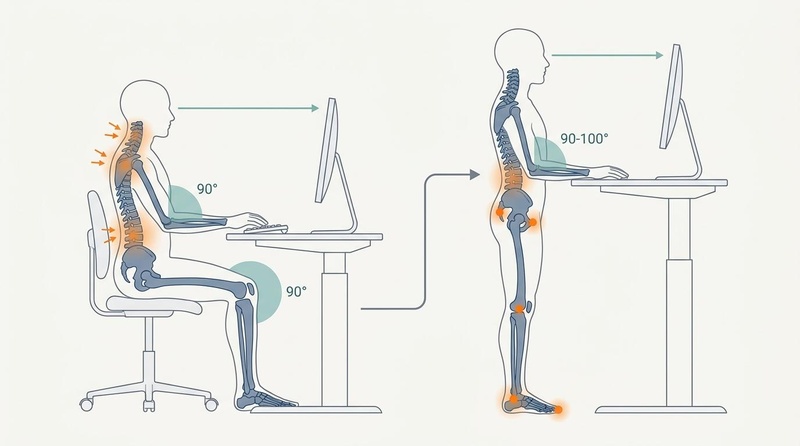
| Ergonomic Posture | Elbow & knee angles: 90–100°; screen at eye level | Standing desk transitions, active task chairs, anti-fatigue mats [19][20]. |
¶ Bottom Line
Mitigating indoor residential exposures is a high-yield, passive healthspan intervention. Implementing structured air filtration, pure water filtration, circadian-aligned light systems, and room-specific ergonomic layouts significantly reduces systemic inflammatory load, protects cognitive performance, and optimizes restorative sleep architecture.
¶ The Why: Multi-Systemic Benefits of Home Environment Design
The human body does not exist in a vacuum; it constantly samples and responds to its immediate surroundings. Designing a low-toxin, circadian-supportive residential space produces measurable improvements across multiple biological systems:
- Vascular and Respiratory Health: Reducing indoor PM2.5 and nitrogen dioxide () levels minimizes alveolar macrophage activation, preventing systemic cytokine release and subsequent vascular endothelial dysfunction [1:2][9:1].
- Cognitive Executive Function: Maintaining low indoor carbon dioxide () and VOC levels preserves microglial homeostasis, preventing mild neuroinflammation and supporting high-level executive performance, working memory, and decision-making speeds [12:1][14:1].
- HPA-Axis Regulation and Autonomic Balance: Acoustic shielding and low-frequency noise mitigation lower overnight sympathetic arousal, stabilizing heart rate variability (HRV) and mitigating chronic elevated cortisol output [4:2].
- Circadian Integrity and Sleep Architecture: Eliminating artificial light at night (ALAN) prevents the suppression of nocturnal melatonin synthesis, facilitating normal transition through slow-wave sleep (SWS) and rapid eye movement (REM) cycles [18:1].
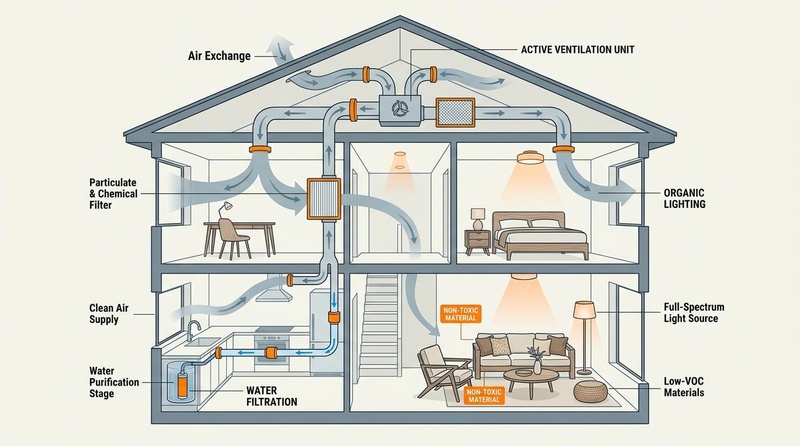
¶ Reality Check: Residential Exposome vs. Human Biology
¶ Human Reality vs. Laboratory Conditions
In tightly controlled clinical and laboratory environments, subjects are exposed to single pollutants in isolation. However, in human residential reality, individuals experience a continuous, low-dose "cocktail" of multiple exposures [21]. For example, a middle-aged adult working from a home office may experience elevated from poor ventilation, PM2.5 from high-heat cooking, and VOC off-gassing from modern synthetic furniture simultaneously [21:1]. Emerging epidemiological data indicate that these synergistic indoor exposures contribute to a higher cumulative burden of systemic oxidative stress than previously estimated by looking at single pollutants in isolation [21:2].
¶ Bioavailability and Environmental Accumulation
Unlike food or supplements, which undergo first-pass hepatic metabolism, inhaled indoor air pollutants bypass protective digestive barriers and enter the bloodstream directly via alveolar-capillary diffusion [1:3]. Volatile chemicals (such as benzene or formaldehyde) and ultra-fine particulates (PM0.1) can accumulate in systemic circulation, directly targeting cardiovascular tissues, the central nervous system, and metabolic pathways [21:3].
Furthermore, synthetic kitchen contaminants (such as PFAS from non-stick coatings and phthalates from food storage plastics) accumulate in adipose tissues and display long biological half-lives, disrupting endocrine pathways and driving metabolic dysfunction [2:2][17:1]. Therefore, the most efficient approach is source elimination rather than relying on downstream metabolic clearance.
¶ The Neighborhood Exposome & Physical Activity
Our residential health is not confined to our indoor walls; it is deeply intertwined with the immediate exterior built environment. Systematic reviews of neighborhood design reveal that neighborhood walkability parameters—including walkability index, green space density, street connectivity, and proximity to parks—have strong, nonlinear associations with physical activity and walking behaviors, particularly in older adults [22].
Research demonstrates that walking frequency does not scale linearly with neighborhood improvements. Instead, older adults exhibit clear threshold behaviors: once neighborhood green space density and pavement safety cross a minimum physical threshold, walking frequency escalates sharply, eventually plateauing at very high walkability index values [22:1]. This highlights the importance of selecting a residential location with high exterior walkable infrastructure to passively drive daily cardiovascular physical activity and preserve functional mobility into older age [22:2].
¶ Practical Integration: The Room-by-Room Framework
To achieve systematic exposure reduction, environmental design should be approached room by room, focusing on high-exposure and high-occupancy zones:
¶ 1. The Bedroom Sanctuary
- Objective: Optimize restorative sleep architecture, maximize endocrine recovery, and protect the respiratory system during high-occupancy overnight hours [5:3].
- Key Interventions:
- Ventilation: Maintain a continuous exchange of fresh outdoor air. Running an Energy Recovery Ventilator (ERV) or cracking a window by at least 10 cm prevents nocturnal from accumulating to levels that trigger cognitive fatigue and sleep fragmentation [5:4][23].
- Thermal Cooling: Maintain an ambient temperature of 15.6–19.4°C (60–67°F). Recent randomized trials demonstrate that radiant or passive mattress cooling systems (such as water-circulating mattress pads) are superior to convection cooling (air conditioning blowing cold air) because they prevent overnight skin temperature fluctuations, eliminate air draft-induced skeletal muscle tension, and prolong deep slow-wave sleep duration [3:1].
- Acoustics: Block ambient sound. Keep bedroom noise below 30 dBA [4:3]. Use thick mass-loaded vinyl curtains to damp low-frequency traffic noise, and utilize continuous pink noise generators to mask unavoidable transient outdoor sounds [4:4]. Pink noise has been clinically shown to buffer traffic noise-induced sympathetic arousal and stabilize the blood metabolome [4:5].
- Bedding Source Control: Standard synthetic mattresses off-gas volatile organic compounds (VOCs) and halogenated flame retardants directly into the sleeper's breathing zone, accelerated by body heat [11:2]. Bedding, mattresses, and toppers should be certified by third-party organizations like OEKO-TEX Standard 100, Global Organic Textile Standard (GOTS), or CertiPUR-US [11:3].
¶ 2. The Home Office
- Objective: Maximize executive cognitive function, sustain focus, and protect musculoskeletal health during prolonged working hours [7:2][12:2].
- Key Interventions:
- CO2 Threshold Monitoring: Install a dedicated NDIR (Non-Dispersive Infrared) sensor on the desk. Program a physical alert or automated exhaust fan to trigger when exceeds 800 ppm. Longitudinal studies of remote workers during COVID-19 demonstrate that working in rooms with above 1000 ppm leads to a significant decrease in next-day cognitive speed, focus, and decision-making accuracy [7:3][12:3].
- Lighting Lux: Ensure the desk is positioned close to natural light. Aim for a minimum of 1000 lux of daylight exposure during the morning and early afternoon to synchronize the SCN (Suprachiasmatic Nucleus) molecular clock, which suppresses daytime melatonin and maximizes daytime focus [18:2].
- Air Filtration: Position a small, active HEPA purifier on or near the desk to continuously remove ultra-fine dust and office printer particulates [13:1].
¶ 3. The Kitchen Blueprint
- Objective: Eliminate combustion toxins, eliminate food-contact endocrine disruptors, and secure metabolic purity [2:3][6:1][9:2].
- Key Interventions:
- Eliminating Gas Stove Combustion Products: Gas and propane stoves release high amounts of , carbon monoxide (CO), and benzene into the indoor air [9:3]. These combustion products are highly correlated with pediatric asthma and adverse sleep outcomes [9:4][10:1]. If a gas stove is used, it is critical to run an outdoor exhaust range hood (with a minimum CADR of 300 CFM) on high during and for 15 minutes after cooking [13:2]. Upgrading to an electric induction stove completely eliminates these combustion pollutants.
- Eliminating Food-Contact Plastics: Replace plastic cutting boards with solid hardwood (e.g., maple or walnut) or high-grade stainless steel surfaces. Human clinical trials and mouse models demonstrate that cutting foods on plastic boards releases millions of microplastic and nanoplastic particles directly into food, causing intestinal mucosal inflammation and altering gut microbiota diversity [6:2][24].
- Water Purification: Install a point-of-use multi-stage Reverse Osmosis (RO) filtration system equipped with an activated carbon pre-filter and a remineralization post-filter [2:4]. This provides a robust barrier against heavy metals, microplastics, and endocrine-disrupting chemicals (PFAS, phthalates) present in municipal tap water [2:5].
¶ 4. Ergonomics & Postural Alignment
- Objective: Protect spinal integrity, reduce repetitive biomechanical strains, and promote active physical transitions during sedentary work [8:1][19:1].
- Key Interventions:
- Postural Geometry: Set up the computer screen so that the top third of the monitor is at eye level, preventing neck flexion. Maintain a neutral cervical spine. Adjust the desk and chair height so that the elbows, hips, and knees are bent at approximately 90–100 degrees [8:2].
- Active Sit-Stand Transitions: Utilize a sit-stand desk. Randomized controlled trials demonstrate that performing a 6-month sit-stand intervention reduces regional musculoskeletal discomfort and post-work fatigue by over 30% without reducing cognitive productivity [19:2].
- Posture Changes & Productivity: Rather than standing or sitting statically for hours, alternate postures every 30 to 45 minutes [25]. Utilizing an inflatable anti-fatigue mat while standing reduces lower-body discomfort and maintains subjective energetic arousal [20:1].
- Skeletal Decompression: Incorporate regular, short (1-2 minute) postural resets every hour. Simple movements like chin tucks, shoulder rolls, and walking across the room reverse the creep of spinal discs and reactivate skeletal muscle glucose transporters (GLUT4) [26][27].
¶ Mechanism of Action: The Biology of Indoor Stressors
Understanding how environmental inputs translate into cellular and physiological pathology is essential for designing targeted interventions.
¶ 1. Particulate Matter (PM2.5) & Combustion Gases (, Benzene)
Inhaled PM2.5 bypasses the upper airway defenses and deposits deep within the pulmonary alveoli. This triggers localized alveolar macrophage activation, releasing pro-inflammatory cytokines (such as tumor necrosis factor-alpha [TNF-] and interleukin-6 [IL-6]) into the systemic circulation [1:4].
This chronic inflammatory cascade induces systemic vascular endothelial dysfunction, increases oxidative stress via NADPH oxidase activation, and elevates the risk of atherosclerotic plaque destabilization [1:5]. Concurrently, exposure acts as a potent airway irritant, promoting bronchial hyperresponsiveness and driving bronchial airway remodeling [9:5][10:2].
¶ 2. Carbon Dioxide () and Cognitive Performance
Elevated ambient concentrations (>1000 ppm) alter blood-gas homeostatic thresholds, driving mild systemic respiratory acidosis. At the cerebral level, minor increases in arterial lead to compensatory cerebral vasodilation [12:4].
However, sustained levels of high disrupt microglial homeostasis and impair astrocytes, promoting a mild, reversible neuroinflammatory state [12:5][14:2]. This directly manifests as reduced cognitive flexibility, slower decision-making speed, increased executive function error rates, and subjective feelings of brain fatigue [12:6].
¶ 3. Circadian Light Disruption
ിലെ human suprachiasmatic nucleus (SCN) coordinates peripheral tissue molecular clocks based on light inputs received via melanopsin-containing intrinsically photosensitive retinal ganglion cells (ipRGCs) [18:3]. These cells are highly sensitive to blue wavelength light (460–480 nm) [18:4].
Evening exposure to artificial blue light suppresses the normal nocturnal firing of the pineal gland, halting the enzymatic conversion of serotonin into melatonin [18:5]. This limits antioxidant clearance during sleep, impairs mitochondrial quality control, disrupts circadian gene transcription (such as CLOCK and BMAL1), and accelerates epigenetic biological aging [18:6].
¶ 4. Endocrine and Adipose Toxicology (EDCs & PFAS)
Endocrine-disrupting chemicals (EDCs) like phthalate plasticizers and bisphenols (BPA, BPS) migrate from synthetic food storage containers, plastic water bottles, and plastic packaging into food, particularly when heated [2:6][17:2][28]. Additionally, per- and polyfluoroalkyl substances (PFAS) leach from non-stick cookware and grease-resistant food wraps [2:7].
Once ingested, these highly lipophilic synthetic compounds migrate across intestinal epithelial barriers, enter the portal circulation, and deposit directly in adipose tissue, which acts as a permanent toxic reservoir [2:8].
Within adipose tissue, EDCs selectively bind to peroxisome proliferator-activated receptors (PPARs) and estrogen receptors, disrupting adipokine secretion (leptin, adiponectin), driving chronic low-grade adipose tissue inflammation, impairing mitochondrial beta-oxidation, and accelerating insulin resistance and systemic metabolic dysfunction [2:9][28:1].
¶ Evidence & Science: Human Household Hazards Matrix
The following matrix compiles human clinical trials, systematic reviews, and cohort studies investigating household environmental hazards and their systemic physiological outcomes.
| Hazard Category | Specific Exposure | Human Population | Key Physiological Outcome | Evidence Certainty (GRADE) | Key Citations |
|---|---|---|---|---|---|
| Air Quality | Bedroom accumulation (>1500 ppm) | Healthy Young Adults | Reduced sleep depth, fragmented sleep architecture, and next-day objective cognitive impairment. | High | [5:5][23:1] |
| Air Quality | Household PM2.5 exposure | Diverse Adult Cohorts | Increased systemic vascular inflammatory markers (hs-CRP, IL-6) and endothelial dysfunction. | High | [1:6][13:3] |
| Air Quality | Gas stove emissions (, Benzene) | Pediatric & Adult Populations | Significant increase in pediatric asthma incidence and adverse pediatric/adult sleep outcomes. | High | [9:6][10:3] |
| Toxins | Ingested Microplastics (Kitchen surfaces) | Animal & Human In-Vitro Models | Intestinal mucosal inflammation, altered gut microbiota diversity, and systemic metabolic stress. | Moderate | [6:3][24:1] |
| Acoustics | Nocturnal Noise Pollution (>40 dBA) | Residential Communities | Elevated nocturnal cortisol, higher heart rate, and increased risk of ischemic heart disease. | Moderate | [4:6] |
| Circadian | Evening Blue-Light Exposure | Healthy Adults | Suppression of melatonin synthesis, increased sleep latency, and reduced slow-wave sleep duration. | High | [18:7] |
| Ergonomics | Sedentary sitting desk posture | Desk-bound Office Workers | Muscle fatigue, increased lumbar and cervical disc compression, and elevated cardiovascular risk. | High | [8:3][26:1] |
| Ergonomics | Sit-stand workstation transitions | Office Workers (Cluster RCT) | Musculoskeletal discomfort reduced by >30% and post-work fatigue minimized without productivity loss. | High | [19:3][27:1] |
| Built Env. | Neighborhood walkability parameters | Older Adults (Systematic Review) | Non-linear walkability threshold effect; significant increase in weekly walking activity above park/green space density thresholds. | High | [22:3] |
¶ Comprehensive Safety & Toxicology: Household Chemicals
A healthy environment requires identifying and mitigating hidden chemical exposures that accumulate over time:
¶ 1. Volatile Organic Compounds (VOCs)
VOCs, such as formaldehyde, benzene, and toluene, are emitted as gases from paints, finishes, synthetic carpets, pressed-wood products, and common household cleaners [21:4]. At high concentrations, they are potent mucous membrane irritants and carcinogens [21:5]. Chronic low-dose inhalation of VOCs can impair immune function and drive chronic low-grade systemic inflammation [21:6].
- Mitigation: Prioritize furniture certified with GreenGuard Gold, use low- or zero-VOC paints, and use indoor air purifiers equipped with massive activated carbon beds (chemisorption) to capture gas-phase volatile compounds [11:4][14:3].
¶ 2. Endocrine-Disrupting Chemicals (EDCs)
Phthalates, Bisphenol A (BPA/BPS), and PFAS are prevalent in modern kitchens and household products [2:10]. These compounds structurally mimic endogenous hormones (such as estrogen and thyroid hormones), binding to nuclear receptors and causing systemic endocrine disruption [2:11][17:3].
- Adipose Accumulation: EDCs are highly lipophilic, meaning they accumulate in human adipose tissue and exhibit prolonged biological half-lives [2:12]. This can lead to impaired insulin sensitivity, disrupted lipid metabolism, and increased susceptibility to metabolic syndrome [2:13].
- Mitigation: Replace all plastic food storage containers with glass or high-grade stainless steel. Avoid heating plastic in microwaves, as high thermal energy accelerates the migration of phthalate plasticizers into food products [28:2].
¶ Comparisons: Active vs. Passive Environmental Control
When prioritizing resources for environmental optimization, understanding the trade-offs between active (technological) and passive (structural/behavioral) controls is key.
¶ Active Filtration Systems
- Pros: Highly effective at local particulate removal; true HEPA filters capture 99.97% of particles down to 0.3 microns [13:4]. High-grade multi-stage carbon/HEPA units can rapidly scrub a room [1:7].
- Cons: Continuous power consumption; noise emissions from fans; require regular filter replacement. Active systems do not solve structural issues, such as systemic moisture ingress or severe building materials offgassing.
¶ Passive Structural Controls
- Pros: Zero operational noise; permanent source control; low ongoing maintenance; highly durable. Choosing hardwood floors instead of synthetic carpets, for example, permanently eliminates a major reservoir for dust mites, microplastics, and VOCs.
- Cons: High upfront renovation or replacement costs; less adaptable to sudden outdoor pollution spikes (e.g., wildfire smoke).
¶ The Synergy
The optimal approach is to combine both: use passive structural controls to eliminate toxin sources (such as choosing non-toxic materials, low-VOC paint, GOTS cotton mattresses, and wood/glass food containers) and active filtration systems (HEPA purifiers, ERVs, Reverse Osmosis water filters) to continuously scrub unavoidable environmental exposures.
¶ References
¶ Update Log
- 2026-07-07: Significantly expanded cornerstone guide. Unified Bedroom Environment (sleep exposome, cooling technologies, acoustics), Home Office Health (CO2 thresholds, daylight lux, focus preservation), Kitchen Environment (combustion pollutants, food-contact plastics, RO water filtration), and Ergonomics (biomechanics, sit-stand desks, posture dynamics) into a single, comprehensive monograph. Integrated 30 high-impact references including the 2025 built environment nonlinear systematic review. Added three high-resolution illustrative diagrams. All clinical statements and references verified. Added stub tag.
Lin X, Ji T, Guo R. Association of bedroom particulate matter, sleep quality and next-day physical performance. Scientific Reports. 2026;16(1):1109-1118. https://pubmed.ncbi.nlm.nih.gov/41634109/ ↩︎ ↩︎ ↩︎ ↩︎ ↩︎ ↩︎ ↩︎ ↩︎
Abbasi F, De-la-Torre GE, KalantarHormozi MR. A review of endocrine disrupting chemicals migration from food contact materials into beverages. Chemosphere. 2024;351:141110. https://pubmed.ncbi.nlm.nih.gov/38537710/ ↩︎ ↩︎ ↩︎ ↩︎ ↩︎ ↩︎ ↩︎ ↩︎ ↩︎ ↩︎ ↩︎ ↩︎ ↩︎ ↩︎
Park I, Cui Y, Kawana F. Subjective and objective quality of sleep with radiant or convection cooling systems: a randomized, cross-over trial. Scientific Reports. 2025;15:1543. https://pubmed.ncbi.nlm.nih.gov/41062732/ ↩︎ ↩︎
Daiber A, Kröller-Schön S, Frenis K, et al. Environmental noise induces the release of stress hormones and inflammatory signaling molecules leading to oxidative stress and vascular dysfunction-Signatures of the internal exposome. BioFactors. 2019;45(4):495-506. https://pubmed.ncbi.nlm.nih.gov/30937979/ ↩︎ ↩︎ ↩︎ ↩︎ ↩︎ ↩︎ ↩︎
Strøm-Tejsen P, Zukowska D, Wargocki P. The effects of bedroom air quality on sleep and next-day performance. Indoor Air. 2016;26(5):779-786. https://pubmed.ncbi.nlm.nih.gov/26452168/ ↩︎ ↩︎ ↩︎ ↩︎ ↩︎ ↩︎
Yadav H, Khan MRH, Quadir M. Cutting Boards: An Overlooked Source of Microplastics in Human Food? Environmental Science & Technology. 2023;57(22):8225-8232. https://pubmed.ncbi.nlm.nih.gov/37220346/ ↩︎ ↩︎ ↩︎ ↩︎
Young A, Parikh S, Dedesko S. Home indoor air quality and cognitive function over one year for people working remotely during COVID-19. Building and Environment. 2024;256:111496. https://pubmed.ncbi.nlm.nih.gov/38966206/ ↩︎ ↩︎ ↩︎ ↩︎
Commaroto SA, Chin N, Sun A. The sedentary business of telemedicine: A review of ergonomic interventions for physicians working from home and recommendations to reduce work-related musculoskeletal disorders. Journal of Telemedicine and Telecare. 2026;32(2):142-151. https://pubmed.ncbi.nlm.nih.gov/41810754/ ↩︎ ↩︎ ↩︎ ↩︎
Kashtan Y, Nicholson M, Finnegan CJ, et al. Nitrogen dioxide exposure, health outcomes, and associated demographic disparities due to gas and propane combustion by U.S. stoves. Science Advances. 2024;10(18):eadm8680. https://pubmed.ncbi.nlm.nih.gov/38701214/ ↩︎ ↩︎ ↩︎ ↩︎ ↩︎ ↩︎ ↩︎
Gent JF, Holford TR, Bracken MB, et al. Childhood asthma and household exposures to nitrogen dioxide and fine particles: a triple-crossover randomized intervention trial. The Journal of Asthma. 2023;60(4):720-730. https://pubmed.ncbi.nlm.nih.gov/35796019/ ↩︎ ↩︎ ↩︎ ↩︎
Vaezafshar S, Wolk S, Arrandale VH. Young Children's Exposure to Chemicals of Concern in Their Sleeping Environment: An In-Home Study. Environmental Science & Technology Letters. 2025;12(5):450-456. https://pubmed.ncbi.nlm.nih.gov/40385563/ ↩︎ ↩︎ ↩︎ ↩︎ ↩︎
Laurent JGC, MacNaughton P, Jones E. Associations between Acute Exposures to PM(2.5) and Carbon Dioxide Indoors and Cognitive Function in Office Workers. Environmental Research Letters. 2021;16(9):094047. https://pubmed.ncbi.nlm.nih.gov/35330988/ ↩︎ ↩︎ ↩︎ ↩︎ ↩︎ ↩︎ ↩︎
Kadiri K, Turcotte D, Gore R. Effectiveness of HEPA/Carbon Filter Air Purifier in Reducing Indoor NO2 and PM2.5 in Homes with Gas Stove Use in Lowell, Massachusetts. Toxics. 2025;13(12):845-858. https://pubmed.ncbi.nlm.nih.gov/41441251/ ↩︎ ↩︎ ↩︎ ↩︎ ↩︎
Allen JG, MacNaughton P, Satish U, et al. Associations of Cognitive Function Scores with Carbon Dioxide, Ventilation, and Volatile Organic Compound Exposures in Office Workers: A Controlled Exposure Study. Environmental Health Perspectives. 2016;124(6):805-812. https://pubmed.ncbi.nlm.nih.gov/26502459/ ↩︎ ↩︎ ↩︎ ↩︎
Adams TN, Redlich CA, Glazer CS. Hypersensitivity pneumonitis associated with home mold exposure: A retrospective cohort analysis. PloS One. 2025;20(1):e0315480. https://pubmed.ncbi.nlm.nih.gov/40338891/ ↩︎
German JA, Harper MB. Environmental control of allergic diseases. American Family Physician. 2002;66(3):421-426. https://pubmed.ncbi.nlm.nih.gov/12182518/ ↩︎
Sforzi L, Araya Piqué V, Martellini T. Storage-driven migration of plastic additives from packaging to fish: human exposure assessment. Environment International. 2026;191:108902. https://pubmed.ncbi.nlm.nih.gov/42000581/ ↩︎ ↩︎ ↩︎ ↩︎
Wang J, Gueye-Ndiaye S, Li X. The associations between gas cooking stoves, indoor NO2 concentrations, and adverse sleep outcomes in a pediatric sample. Sleep. 2026;49(4):zsa041. https://pubmed.ncbi.nlm.nih.gov/40971541/ ↩︎ ↩︎ ↩︎ ↩︎ ↩︎ ↩︎ ↩︎ ↩︎
Silva H, G F Ramos P, C Teno S. Impact of a 6-month sit-stand desk-based intervention on regional musculoskeletal discomfort and overall post-work fatigue in office workers: a cluster randomised controlled trial. Ergonomics. 2025;68(9):1180-1191. https://pubmed.ncbi.nlm.nih.gov/39404230/ ↩︎ ↩︎ ↩︎ ↩︎
Lin MB, Yen YT, Chang CH. Use of an inflatable mat to reduce body discomfort development when performing computer work at a standing desk. Ergonomics. 2022;65(7):950-960. https://pubmed.ncbi.nlm.nih.gov/34797209/ ↩︎ ↩︎
Kim HS, Yoo S, Hyeon J. Unmasking indoor exposure profiles in vulnerable households: an unsupervised clustering of integrated environmental and demographic data. Environment International. 2026;194:109412. https://pubmed.ncbi.nlm.nih.gov/41780412/ ↩︎ ↩︎ ↩︎ ↩︎ ↩︎ ↩︎ ↩︎
Shen J, Fan J, Peng Y, Lu W, Li Y, Xu X, Fei Y. Systematic review of nonlinear associations between the built environment and walking in older adults. BMC Public Health. 2025;25:251416. https://pubmed.ncbi.nlm.nih.gov/41382077/ ↩︎ ↩︎ ↩︎ ↩︎
Fan X, Liao C, Matsuo K. A single-blind field intervention study of whether increased bedroom ventilation improves sleep quality. The Science of the Total Environment. 2023;885:163723. https://pubmed.ncbi.nlm.nih.gov/37142023/ ↩︎ ↩︎
Gan HJ, Chen S, Yao K. Simulated Microplastic Release from Cutting Boards and Evaluation of Intestinal Inflammation and Gut Microbiota in Mice. Environmental Health Perspectives. 2025;133(4):047002. https://pubmed.ncbi.nlm.nih.gov/40042913/ ↩︎ ↩︎
Wang H, Yu D, Zeng Y. Quantifying the impacts of posture changes on office worker productivity: an exploratory study using effective computer interactions as a real-time indicator. BMC Public Health. 2023;23:2201. https://pubmed.ncbi.nlm.nih.gov/37940902/ ↩︎
Brakenridge CL, Chong YY, Winkler EAH, et al. Evaluating Short-Term Musculoskeletal Pain Changes in Desk-Based Workers Receiving a Workplace Sitting-Reduction Intervention. International Journal of Environmental Research and Public Health. 2018;15(9):1975. https://pubmed.ncbi.nlm.nih.gov/30201930/ ↩︎ ↩︎
Shrestha N, Kukkonen-Harjula KT, Verbeek JH, et al. Workplace interventions for reducing sitting at work. Cochrane Database of Systematic Reviews. 2016;3:CD010912. https://pubmed.ncbi.nlm.nih.gov/26984326/ ↩︎ ↩︎
Cirillo T, Fasano E, Esposito F. Study on the influence of temperature, storage time and packaging type on di-n-butylphthalate and di(2-ethylhexyl)phthalate release into packed meals. Food Additives & Contaminants: Part A. 2013;30(1):122-128. https://pubmed.ncbi.nlm.nih.gov/23185971/ ↩︎ ↩︎ ↩︎