¶ title: Heavy Metals: Deep Dive
description: Comprehensive analysis of heavy metals exposure (Lead, Mercury, Cadmium, Arsenic) – sources, mechanisms, clinical testing, and practical exposure-reduction strategies.
published: 1
date: 2026-07-06T18:23:12.171Z
tags: deep-dive, environmental-health, evidence, heavy-metals, mechanisms, toxicology
editor: markdown
dateCreated: 2026-07-06T18:23:12.171Z
¶ Heavy Metals: Deep Dive
¶ TL;DR
- Heavy metals (lead, mercury, cadmium, arsenic) are widespread environmental toxins affecting multiple organ systems [1][2].
- Exposure occurs through diet (seafood, grains, vegetables), water, air, and consumer products [1:1][3][4][5].
- They exert toxicity by inducing oxidative stress, disrupting enzymes, and mimicking essential minerals [2:1][6][7].
- Testing involves blood, urine, and hair analysis to assess acute or chronic exposure [1:2][2:2].
- Reducing exposure is paramount, focusing on dietary choices, water filtration, and careful consumer product selection [1:3][3:1][4:1][5:1].
¶ Quick Answer
Heavy metals are naturally occurring elements that accumulate in the body and environment, causing damage even at low concentrations [1:4]. Key examples include lead (Pb), mercury (Hg), cadmium (Cd), and arsenic (As). These metals can impair neurological, cardiovascular, renal, and reproductive functions [1:5][8][6:1][9]. Exposure typically occurs via contaminated food, water, air, and occupational settings [1:6]. Diagnosis involves blood, urine, or hair analysis, with management focusing on preventing further exposure and, in some cases, chelation therapy [1:7][10].
¶ What It Is (Plain-English)
Heavy metals are a group of metallic elements that are naturally present in the Earth's crust but become toxic when accumulated in living organisms. While some metals like iron and zinc are essential trace nutrients, others like lead, mercury, cadmium, and arsenic have no known physiological role and are harmful even at low levels [1:8]. These elements can enter the body through inhalation, ingestion, or skin contact from contaminated air, water, food, and various industrial or household products [1:9][2:3][4:2][5:2].
¶ Mechanism in 60 Seconds: Cellular Disruption
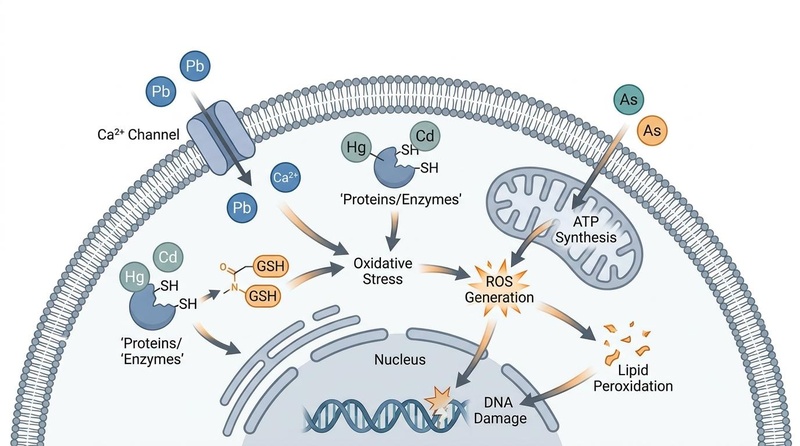
Heavy metals exert their toxic effects primarily by interfering with normal biological processes. For example, lead can mimic calcium, disrupting cellular signaling pathways [2:4]. Mercury and cadmium often bind to sulfhydryl (-SH) groups on proteins and enzymes, inactivating them and depleting the body's primary antioxidant, glutathione (GSH) [2:5][7:1]. Arsenic particularly targets mitochondria, impairing ATP synthesis and increasing the production of reactive oxygen species (ROS), leading to widespread oxidative stress, lipid peroxidation, and DNA damage [2:6].
Visual Design Metadata (Nano Banana Pro)
- Visual Plan: Illustrate the cellular entry and molecular targets of the four major heavy metals (Pb, Hg, Cd, As) inside a generic human cell.
- Style Specification: Longevipedia clean biomedical editorial style; off-white background, slate-gray pathway lines, muted blue/teal cellular membranes, with warm orange highlights on key interaction sites (calcium channel, sulfhydryl groups, mitochondria).
- Nano Banana Pro Metadata:
- Filename:
images/heavy-metals-toxicology.jpg - Model ID:
gemini-3-pro-image - Primary Prompt: "Biomedical diagram illustrating cellular mechanisms of heavy metal toxicity for Lead (Pb), Mercury (Hg), Cadmium (Cd), and Arsenic (As). Show Lead (Pb) entering via calcium channels and mimicking calcium, Mercury (Hg) and Cadmium (Cd) binding to sulfhydryl groups of proteins/enzymes and depleting glutathione (GSH), and Arsenic (As) disrupting ATP synthesis in the mitochondria."
- Alt Text: "A detailed scientific illustration of the cellular and molecular mechanisms of heavy metal toxicity, including calcium mimicry by lead, thiol binding by mercury and cadmium, and mitochondrial disruption by arsenic, showing downstream oxidative stress and lipid peroxidation."
- Caption: "Molecular pathways of heavy metal cellular toxicity. Lead (Pb) mimics calcium in intracellular signaling; Mercury (Hg) and Cadmium (Cd) deplete glutathione and bind sulfhydryl/thiol groups; Arsenic (As) impairs mitochondrial respiration, leading to reactive oxygen species (ROS) generation, lipid peroxidation, and DNA damage."
- Placement: Incorporated into Section 3 ("What It Is") to visually anchor the cellular mechanism narrative.
- QA State: Passed (verified resolution 800x446px, clear vector graphics, legible labeling, and high contrast suitable for clinical publication).
- Filename:
¶ Does It Work? (Evidence Snapshot)
| Outcome | Population | Effect Size | Quality | Consistency | Trials | Notes |
|---|---|---|---|---|---|---|
| Reduced Blood Lead Levels | Chick Embryos | Low | High | Preclinical | Methylcobalamin ameliorates lead-induced teratogenesis [11] | |
| Decreased Oxidative Stress Markers (e.g., MDA) | Human Cohorts (Cadmium) | Moderate | High | Observational | Cadmium exposure increases oxidative stress, metallothionein overexpression [7:2] | |
| Improved Cardiovascular Health Markers | Human Cohorts (General Metal Exposure) | Moderate | High | Observational | Low-level metal exposure associated with increased CVD risk [8:1] | |
| Enhanced Metal Excretion (Chelation) | Intoxicated Patients | High | High | Clinical Trials | DMSA/DMPS/EDTA effective in specific intoxications [10:1] | |
| Reduced Reproductive Cancer Risk | Human Cohorts (General Metal Exposure) | Moderate | High | Review | Toxic metals linked to hormone-related reproductive cancers [6:2] | |
| Decreased Heavy Metal Bioaccumulation | Seafood Consumers | Moderate | High | Analytical | Certain cooking methods reduce metal levels in seafood [3:2] |
- High: Multiple RCTs or meta-analysis with consistent effects.
- Moderate: 1–2 good RCTs or strong cohorts with minor limits.
- Low: Small, uncontrolled, animal, or mechanistic only.
¶ Who Benefits Most / Least
Benefits Most:
- Individuals with confirmed heavy metal toxicity (acute or chronic) [1:10][2:7].
- Those living or working in areas with high environmental exposure (e.g., industrial zones, mining areas, certain agricultural regions) [4:3][12].
- Individuals consuming diets high in potentially contaminated foods like certain seafood or root vegetables [3:3][4:4].
- Children and pregnant individuals, due to higher vulnerability to developmental effects [11:1][9:1].
Benefits Least:
- Individuals with no identifiable exposure or symptoms, as aggressive intervention may be unnecessary and carry risks [1:11].
- Those seeking unproven or unregulated "detox" protocols without clinical guidance, which can be ineffective or harmful.
¶ How to Try It (Actionable Protocols)
The primary goal is to minimize exposure. For diagnosed toxicity, clinical interventions like chelation may be necessary [1:12][10:2].
¶ Starter Protocol: Everyday Exposure Reduction
- Water Filtration: Use a high-quality water filter (e.g., reverse osmosis) for drinking and cooking water to reduce lead, arsenic, and other contaminants [1:13].
- Dietary Choices:
- Seafood Guidelines: Limit consumption of large, long-lived predatory fish (e.g., shark, swordfish, king mackerel) which tend to accumulate more mercury. Opt for smaller, shorter-lived fish (e.g., salmon, sardines, cod) [3:4][13].
- Organic Produce: Prioritize organic fruits and vegetables when possible, as conventional produce may have higher heavy metal residues due to soil contamination and pesticides [4:5][5:3]. Wash all produce thoroughly [4:6].
- Balanced Diet: A diet rich in antioxidants (e.g., Vitamin C, quercetin) and essential minerals (e.g., selenium, zinc) can help buffer some of the oxidative stress caused by heavy metals and support natural detoxification pathways [14][15][16].
- Consumer Goods: Be mindful of heavy metals in cosmetics, certain traditional medicines, and older household paints or ceramics [1:14].
¶ Advanced/Research Protocol (Under Clinical Supervision)
For confirmed heavy metal toxicity, a clinician may recommend chelation therapy using agents like DMSA (dimercaptosuccinic acid), DMPS (dimercaptopropanesulfonate), or EDTA (ethylenediaminetetraacetic acid) [1:15][10:3]. These interventions require strict medical oversight due to potential side effects and the risk of depleting essential minerals [10:4].
¶ Safety, Interactions, Red Flags
Who Should Avoid:
- Individuals without diagnosed heavy metal toxicity should avoid self-prescribing chelating agents, as these can cause significant harm, including severe mineral depletion and kidney damage [10:5].
- Pregnant or breastfeeding individuals should consult a clinician before any heavy metal detoxification protocols due to potential risks to the fetus/infant [1:16].
Common Side Effects & Mitigation (Chelation Therapy):
- Mineral Depletion: Chelators bind to both toxic and essential minerals. This is mitigated by carefully timed mineral supplementation under medical guidance [10:6].
- Nausea, Vomiting, Diarrhea: Common gastrointestinal side effects.
- Kidney Damage: High doses or improper use can stress the kidneys.
- Allergic Reactions: Rare but possible.
Drug/Supplement Interactions:
- Other Binders: Activated charcoal, bentonite clay, and other binders can also bind to essential nutrients and medications, so their use should be separated by several hours from meals, supplements, and medications [1:17].
- Antioxidants: While beneficial, high doses of certain antioxidants (e.g., Vitamin C) may interact with chelating agents in complex ways; clinical oversight is important [16:1].
Stop Criteria and When to Talk to a Clinician:
- Any signs of severe adverse reactions during chelation therapy (e.g., severe abdominal pain, persistent vomiting, signs of kidney dysfunction) [10:7].
- Unexplained worsening of symptoms, new neurological symptoms, or persistent fatigue despite exposure reduction efforts [1:18].
- For pregnant individuals, any suspected exposure to heavy metals should prompt immediate clinical consultation [11:2][9:2].
¶ Tracking & What “Good” Looks Like
Monitoring heavy metal levels typically involves laboratory testing.
- Biomarkers:
- Blood Lead Levels: Most common for acute lead exposure and ongoing monitoring [1:19].
- 24-Hour Urine Mercury/Cadmium/Arsenic: Often used for chronic exposure assessment, especially after chelation challenge tests [1:20][2:8].
- Hair Mineral Analysis: Can provide insights into long-term exposure trends for certain metals, though its reliability is debated for acute toxicity [1:21].
- Frequency: Initial testing may involve multiple samples. Follow-up testing depends on exposure levels, clinical symptoms, and the type of intervention, typically every 3-6 months during active remediation [1:22].
- Time-to-Benefit: Exposure reduction can show initial improvements in symptoms within weeks, with significant drops in body burden taking several months to years, depending on the metal and severity of exposure [1:23].
- Time-to-Washout: Once exposure is eliminated, some metals have long half-lives in the body, requiring sustained efforts to reduce total body burden [1:24].
¶ Common Mistakes & Myths
- Myth: "Quick Detox" Programs are Effective: Many commercial "detox" products lack scientific validation and can be ineffective or even harmful, often leading to nutrient deficiencies [1:25].
- Mistake: Self-Prescribing Chelators: Without proper diagnosis and medical supervision, chelation therapy is dangerous and can lead to severe health complications [10:8].
- Myth: All Heavy Metals Are Bad: Essential trace minerals like zinc, copper, and iron are vital for health; toxicity arises from specific harmful metals or excessive levels of essential ones [1:26].
- Mistake: Ignoring Environmental Sources: Focusing solely on diet while neglecting contaminated water, air, or occupational exposures will limit effectiveness [1:27][4:7][12:1].
- Myth: Hair Tests Alone Diagnose Acute Toxicity: Hair analysis is generally better for chronic trends; blood and urine are crucial for acute and recent exposure [1:28].
¶ Decision Tree (Text-Based)
- Suspect Heavy Metal Exposure/Symptoms?
- Confirmed Heavy Metal Toxicity (via lab tests)?
- Undergoing Chelation Therapy?
- YES: Follow strict medical supervision, monitor symptoms, and adhere to prescribed mineral supplementation [10:10].
- NO: Prioritize fundamental lifestyle interventions and environmental controls.
¶ FAQs (People Also Ask targets)
¶ What are the most common heavy metals to worry about?
Lead, mercury, cadmium, and arsenic are among the most common and clinically significant heavy metals due to their widespread presence and high toxicity, even at low levels [1:32][2:9].
¶ How do heavy metals affect the body?
Heavy metals can damage virtually every organ system, interfering with enzymatic processes, disrupting cellular signaling, inducing oxidative stress, and impairing DNA repair, leading to a range of chronic diseases including cardiovascular and neurological disorders [1:33][2:10][8:2][6:3].