¶ Home Blood Pressure Monitoring
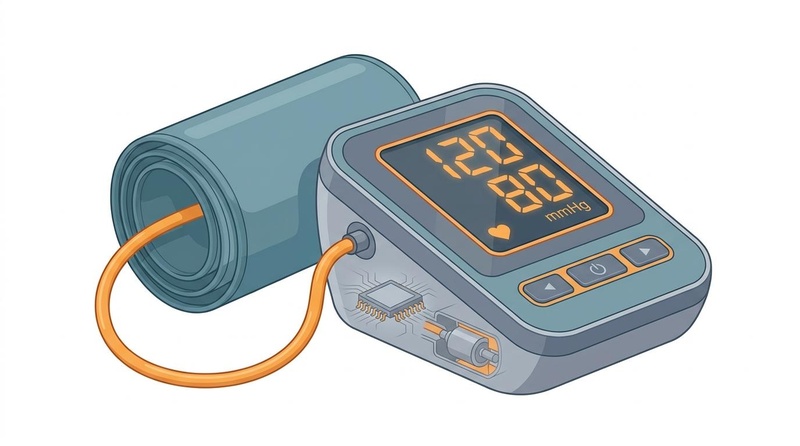
| Mechanism | Oscillometry |
| Key Spec | Independent Validation (ISO/AAMI) |
| Protocol | Twice daily, 3-7 days |
| Placement | Upper arm |
| FDA Class | Class II |
| Entry Cost | $40–$100 |
Home blood pressure monitoring (HBPM) estimates resting blood pressure outside the clinic. When performed with a validated upper-arm cuff and a standardized protocol, repeated home measurements can complement office readings, improve risk assessment, and help identify white-coat or masked hypertension [1][2][3]. It is a monitoring tool rather than a stand-alone diagnosis.
¶ At a glance
Key points
- Does it work? Yes. Properly conducted HBPM is supported by hypertension guidelines and is generally more informative than relying on a single clinic reading.
- Who needs it? Individuals tracking longevity metrics, those with fluctuating clinic readings, people receiving antihypertensive therapy, and those assessing the impact of lifestyle modifications on cardiovascular health.
- Verdict A highly actionable diagnostic tool, provided that users adhere strictly to clinical protocols—specifically regarding posture, rest, cuff sizing, and the use of independently validated upper-arm devices.
¶ Mechanism
Home blood pressure monitors predominantly use oscillometry to estimate systolic and diastolic pressures. As the automated cuff inflates around the upper arm, it temporarily occludes the brachial artery. As it gradually deflates, the sensor detects oscillations (pulsations) in the cuff pressure caused by arterial wall expansion with each heartbeat.
The device calculates the mean arterial pressure (MAP) where the oscillation amplitude is highest. Systolic and diastolic pressures are then derived using proprietary algorithms, which is why independent validation of these devices is absolutely critical.
¶ White-Coat and Masked Hypertension
HBPM helps overcome two significant clinical phenomena:
- White-Coat Hypertension: Elevated readings in clinical settings due to anxiety or stress, but normal readings at home. Over-treatment of this condition can cause dangerous hypotension [4].
- Masked Hypertension: Normal readings in a clinic but elevated readings in daily life, often due to occupational stress or physical activity, leaving individuals at a high hidden risk for organ damage [5][6].
¶ Key Specs: The Validated Upper-Arm Cuff
Not all blood pressure monitors are equal. The accuracy of HBPM relies entirely on the quality and fit of the device used.
¶ Independent Validation
A monitor should be validated according to universal protocols, such as those established by ANSI/AAMI/ISO 81060-2 [7]. Rather than trusting manufacturer claims, verification should be confirmed through independent registries (e.g., Validate BP in the US, Stride BP globally) [8]. Wrist and finger monitors are significantly less accurate due to hydrostatic pressure differences and positioning errors and are generally not recommended for routine diagnostic use.
¶ The Importance of Cuff Sizing
Using an incorrectly sized cuff is the most common source of measurement error [9].
- Cuff too small: Falsely elevates readings (often by 5–15 mmHg).
- Cuff too large: Falsely lowers readings.
The inflatable bladder inside the cuff should cover 75–100% of the upper arm's circumference. Always measure the mid-arm circumference and purchase a device equipped with the corresponding cuff size [9:1].
¶ Protocols: The Guideline-Supported Method
Single readings are highly variable. Standardized multi-day protocols are required to calculate an accurate average [10].
¶ Standardized Measurement Technique
Every step matters. Failure to prepare can significantly skew results:
- Preparation: Empty bladder. Avoid caffeine, exercise, and smoking for 30 minutes prior.
- Positioning: Sit in a chair with back support. Feet flat on the floor (uncrossed legs).
- Arm Placement: Rest the arm on a table so the mid-cuff is perfectly level with the right atrium of the heart.
- Rest: Sit quietly without talking or looking at a phone for 5 full minutes before the first reading.
¶ Multi-Day Measurement Protocol
For a true baseline assessment, international guidelines recommend [10:1]:
- Duration: 3 to 7 consecutive days.
- Frequency: Two sessions per day (morning before taking medications and eating, and evening before bed).
- Repetitions: Take 2 to 3 readings per session, spaced 1 minute apart.
- Calculation: Average the readings according to the protocol used by your clinician or health system. Some protocols discard the first day; others retain all valid readings, so do not silently mix methods when comparing results over time.
¶ Evidence summary table (human outcomes)
| Outcome / Goal | Effect* | Consistency** | Evidence quality | Trials*** | Notes (population, duration, dose) |
|---|---|---|---|---|---|
| Diagnostic Accuracy (vs Clinic BP) | High | High | Meta-Analyses | HBPM is superior to clinic BP in predicting cardiovascular mortality and target organ damage [1:1][2:1][3:1]. | |
| Detection of Masked Hypertension | High | High | Cohorts | Identifies normal clinic / high home BP phenotypes associated with increased cardiovascular risk [5:1][6:1]. | |
| Avoidance of White-Coat Effect | High | High | Cohorts | Prevents overtreatment by identifying clinic-induced elevations [4:1]. | |
| Blood Pressure Control | Moderate | High | RCTs | Self-monitoring, especially when combined with telehealth or clinical support, improves long-term BP control [11][12]. |
¶ What to do with the results
While HBPM is physically safe, interpretation requires clinical context. Share the log with a healthcare professional, and do not start, stop, or change prescription medication based only on home readings without clinical guidance.
¶ Region-Specific Classification Thresholds
Interpretation of hypertension varies by regional guidelines. The average of the multi-day protocol can be compared with the threshold used by the relevant guideline and clinician [13]:
- ACC/AHA (United States): Hypertension is defined as an average home BP ≥ 130/80 mmHg.
- ESC/ESH (Europe): Hypertension is defined as an average home BP ≥ 135/85 mmHg.
These are classification thresholds, not instructions to diagnose yourself or change treatment. Home thresholds and treatment targets are not interchangeable, and recommendations can differ with age, pregnancy, kidney disease, diabetes, frailty, and other clinical factors.
¶ Hypertensive Emergency Recognition
If a reading is above 180 systolic and/or 120 diastolic, sit quietly and repeat it after at least 1 minute using correct technique [14]. If it remains that high, contact a healthcare professional promptly even if you feel well. Call emergency services immediately when a reading in this range is accompanied by severe chest pain, shortness of breath, sudden weakness or numbness, difficulty speaking, confusion, a major vision change, severe headache, or severe back pain.
¶ Calibration and Validation
Monitors should be brought to the clinic annually to perform a validation check against a calibrated sphygmomanometer.
¶ Limitations and access
Automated devices may be less reliable with an irregular rhythm, movement, an unsuitable cuff, unusual arm anatomy, or poor positioning. People who cannot obtain a correctly sized upper-arm cuff should ask a clinician or pharmacist about an appropriate validated alternative rather than relying on an unvalidated wrist or finger device [2:2][9:2]. Cost, replacement cuffs, digital access, and the ability to sit or position the arm correctly can all affect access; a paper log remains useful when app-based sharing is unavailable.
¶ FAQ
Can I use a wrist blood pressure monitor?
Wrist monitors are highly sensitive to arm position; if the wrist is not exactly at heart level, the reading will be inaccurate. Validated upper-arm cuffs are universally recommended over wrist devices unless anatomical reasons prevent upper-arm measurement.
Why are my home readings lower than at the doctor's office?
This is typically the "white-coat effect." Clinical environments often induce low-level stress, temporarily elevating blood pressure [4:2].
Should I measure my left or right arm?
For the first time, measure both arms. If there is a consistent difference, use the arm that yields the higher reading for all future measurements.
¶ References
Kavia J, Mittal R, Kaplan JM. Updates in the Diagnosis and Management of Hypertension: A Review of Recent Guidelines. British journal of hospital medicine. 2026. https://pubmed.ncbi.nlm.nih.gov/42411518/ ↩︎ ↩︎
Mihailidou AS. Measuring blood pressure accurately. Australian prescriber. 2026. https://pubmed.ncbi.nlm.nih.gov/42039705/ ↩︎ ↩︎ ↩︎
Nugent J, Binka EK, Brady TM. Improving Blood Pressure Management and Control With Out-of-Office Blood Pressure Monitoring. American journal of hypertension. 2026. https://pubmed.ncbi.nlm.nih.gov/41206527/ ↩︎ ↩︎
Zheng Z, Yu Z. From clinic to home monitoring: Diagnostic strategies and evidence landscape of white-coat uncontrolled hypertension. Clinical and experimental hypertension. 2026. https://pubmed.ncbi.nlm.nih.gov/42018662/ ↩︎ ↩︎ ↩︎
Mourad JJ, Lopez-Sublet M, Aoun-Bahous S. Impact of miscuffing during home blood pressure measurement on the prevalence of masked hypertension. American journal of hypertension. 2013. https://pubmed.ncbi.nlm.nih.gov/23727841/ ↩︎ ↩︎
Govo V, Mateus Â, Novela C. Prevalence of masked hypertension in patients with diabetes: a study in Mozambique. Journal of hypertension. 2026. https://pubmed.ncbi.nlm.nih.gov/42201657/ ↩︎ ↩︎
Lin CY, Huang IC. Validation of the AViTA upper-arm blood pressure monitor BP636 with multiple cuff sizes in the general population according to the ANSI/AAMI/ISO 81060-2:2018/Amd1:2020. Blood pressure monitoring. 2024. https://pubmed.ncbi.nlm.nih.gov/39129374/ ↩︎
Graves JW. A survey of validated automated home blood pressure monitors available for the Internet shopper. Blood pressure monitoring. 2005. https://pubmed.ncbi.nlm.nih.gov/15812259/ ↩︎
Shahi S, Jackson SL, Streeter TE. Cuff Size Variation Across Manufacturers of Home Blood Pressure Devices: A Current Patient Dilemma. American journal of hypertension. 2023. https://pubmed.ncbi.nlm.nih.gov/37422909/ ↩︎ ↩︎ ↩︎
Sharman JE, Howes F, Head GA. How to measure home blood pressure: Recommendations for healthcare professionals and patients. Australian family physician. 2016. https://pubmed.ncbi.nlm.nih.gov/27051984/ ↩︎ ↩︎
McGrath D, Meador M, Wall HK. Self-Measured Blood Pressure Telemonitoring Programs: A Pragmatic How-to Guide. American journal of hypertension. 2023. https://pubmed.ncbi.nlm.nih.gov/37140147/ ↩︎
Xia JH, Wang XY, Kang YY. Ambulatory Versus Home Blood Pressure Monitoring in Chinese Outpatients. JACC. Asia. 2026. https://pubmed.ncbi.nlm.nih.gov/42142095/ ↩︎
Chung J, Rhee MY, Kim KH. Reassessing home blood pressure thresholds: clinical implications of lowering the diagnostic criteria to 130/80 mmHg. Journal of hypertension. 2026. https://pubmed.ncbi.nlm.nih.gov/41669880/ ↩︎
Gauer RL, Rifaat AI, Blankinship DR. Severe Hypertension: Evaluation and Treatment. American family physician. 2026. https://pubmed.ncbi.nlm.nih.gov/42202349/ ↩︎