¶ Indoor Humidity: Deep Dive
¶ TL;DR
- Verdict: Managing indoor relative humidity (RH) is a cornerstone of environmental health, directly influencing the integrity of the respiratory mucosal barrier, the transmission rate of airborne viruses, and the growth of biological allergens like mold and dust mites.
- Who it's for: Individuals with chronic sinus issues, dry eyes, asthma, seasonal allergies, or sleep disruptions; families living in humid coastal or dry continental climates.
- Expected magnitude + timeline: Maintaining bedroom humidity between 40% and 60% yields immediate improvements in morning airway comfort, skin hydration, and sleep efficiency within days [1][2].
- Key risk(s): Humidifiers that are not cleaned properly can cultivate and disperse pathogenic bacteria and mold, causing a severe inflammatory lung condition known as "humidifier fever" or hypersensitivity pneumonitis.
- What to do next: Monitor your home with a digital hygrometer. Deploy a clean evaporative humidifier in the winter and a compressor dehumidifier in the summer to maintain a strict 40–60% RH range.
¶ Quick Answer
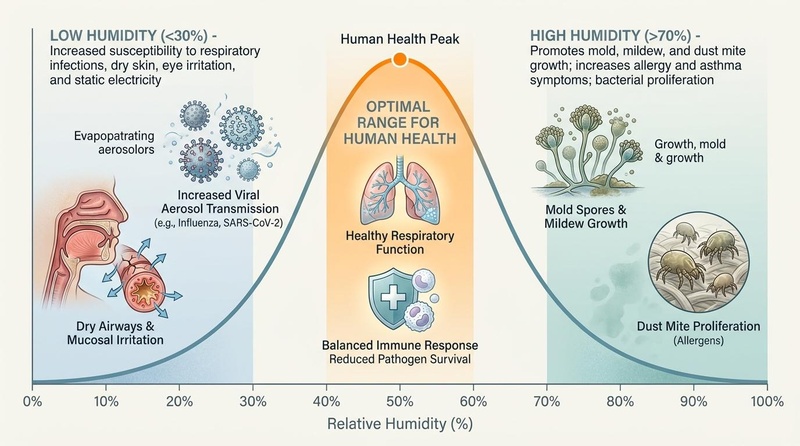
The human body is optimized for a narrow, mid-range relative humidity of 40% to 60%. Indoor air that drops below 30% RH dries out the protective mucosal lining of the nasal passages and airways, freezing the mucociliary escalator (the biological conveyor belt that sweeps pathogens out of the lungs) and dramatically increasing susceptibility to respiratory infections like influenza and SARS-CoV-2 [3][4]. Conversely, indoor air that exceeds 60% RH promotes the rapid proliferation of house dust mites (Dermatophagoides) and the germination of toxic indoor mold spores [WHO2009]. To optimize healthspan and sleep architecture, actively regulate humidity levels to avoid both dry and damp extremes [2:1].
¶ What It Is
Humidity is the measure of water vapor in the air. Environmental medicine focuses on Relative Humidity (RH): the percentage of water vapor present in the air compared to the maximum amount the air can hold at a given temperature. Because warm air can hold significantly more water vapor than cold air, heating cold outdoor air in the winter dramatically lowers its relative humidity, often dragging indoor spaces down to desert-like levels (<15% RH).
¶ The "Sweet Spot" (40–60% RH) and Pathogen Dynamics
A landmark body of environmental biology shows that a relative humidity of 40% to 60% is a hostile environment for most airborne pathogens and biological allergens:
- Low Humidity Hazards (<30% RH):
- Pathogen Survival: Influenza and other enveloped viruses remain stable and infectious in small aerosol droplets for hours at low humidity. When exhaled, water evaporates rapidly from droplets, leaving behind tiny, lightweight "droplet nuclei" that remain suspended in the air indefinitely, facilitating transmission [3:1].
- Airway Drying: Low humidity dehydrates the nasal mucus layer, increasing its viscosity. This impairs the beating of cilia, paralyzing the mucociliary escalator and allowing viruses and bacteria to easily penetrate and infect epithelial cells.
- High Humidity Hazards (>60% RH):
- Dust Mite Proliferation: Dust mites cannot drink water; they absorb moisture directly from the air. They require an RH above 55–60% to survive and reproduce. High humidity leads to exponential mite growth, saturating carpets and mattresses with potent allergens that trigger chronic asthma and rhinitis.
- Mold and Fungal Germination: High humidity on wall surfaces, carpets, and ceilings causes the germination of dormant mold spores within 24 to 48 hours, releasing mycotoxins and allergenic beta-glucans into the air [WHO2009].
¶ Does It Work? (Evidence Snapshot)
Evidence demonstrates that maintaining mid-range relative humidity has a profound impact on physical comfort, allergen load, and infectious disease rates.