¶ Indoor Air Quality: Deep Dive
¶ TL;DR
- Verdict: Indoor air quality (IAQ) is a primary, modifiable regulator of systemic inflammation, autonomic balance, and neurocognitive performance. Most individuals spend over 90% of their life indoors, where pollutant concentrations routinely exceed outdoor levels by 2- to 5-fold [1].
- Who It Is For: Critical for urban dwellers, pregnant women, developing children, older adults, patients with cardiovascular or pulmonary comorbidities, and individuals seeking to optimize cognitive output and sleep architecture.
- Expected Magnitude & Timeline: Deploying True HEPA filtration can lower indoor PM2.5 by 40-60% [2], reducing systolic blood pressure by ~2.8 mmHg [3] and improving executive function scores within days [4]. Maintaining CO2 < 800 ppm preserves decision-making performance [5][6].
- Key Risks: Endothelial damage [7], DNA-protein crosslinking [1:1], developmental issues in children [8], cognitive decline in older adults [9], and secondary aerosol creation from ozone-producing "air purifiers" [10] or electrochemical sensor cross-sensitivity [11].
- Next Steps: Conduct an objective IAQ audit with an N-of-1 monitor [12], implement mechanical ventilation (ERV/HRV) [13], eliminate gas-combustion [8:1], and place appropriately sized HEPA/carbon filters in sleep and work environments [14][2:1].
¶ Quick Answer
Indoor air quality (IAQ) directly impacts human healthspan and cognitive function. Modern airtight buildings trap human respiration products (CO2), off-gassed building materials (volatile organic compounds or VOCs like formaldehyde), particulate matter (PM2.5), and mold spores. Real-world studies show that optimizing IAQ by lowering CO2 to background levels and clearing VOCs improves cognitive performance scores by 61% to 101% [5:1]. Furthermore, randomized clinical trials demonstrate that True HEPA filtration lowers systolic blood pressure by ~2.8 mmHg in at-risk adults within weeks by mitigating PM2.5-induced vascular oxidative stress and systemic inflammation [3:1][4:1].
Achieving a clinical-grade light and air environment requires continuous mechanical ventilation (0.35 air changes per hour) [13:1], source elimination (transitioning to induction cooking) [8:2], and dedicated localized HEPA filtration [14:1][2:2].
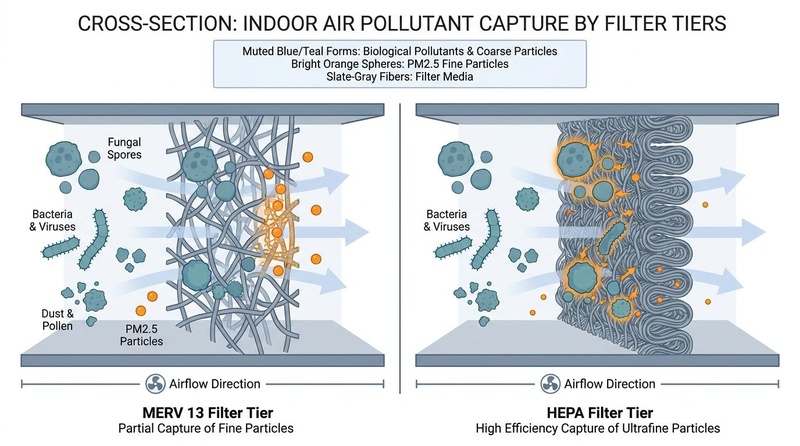
Figure 1: Comparative filtration mechanics of MERV and HEPA filters against PM2.5, VOCs, and biological aerosols.
¶ What It Is
Indoor air quality represents the chemical, physical, and biological composition of air within residential, occupational, and clinical structures. While outdoor air pollution is heavily monitored, the indoor exposome is significantly more complex due to concentrated internal emissions and reduced dilution volume.
       [Outdoor Infiltration] ---> [ Indoor Space ] <--- [Internal Sources]
          (PM2.5, Ozone, Nox)      |   Trapped    |      (CO2, VOCs, Mold, Fumes)
                                   |  Pollutants  |
                                        |
                                        v
                            [Human Inhalation & Exposure]
¶ Key Pollutant Classes & Physicochemical Profiles
- Fine Particulate Matter (): Microscopic airborne particles with an aerodynamic diameter . PM2.5 originates from cooking, combustion, candle burning, and outdoor infiltration. Due to their small size, these particles bypass upper airway mucosal filters, deposit in pulmonary alveoli, and translocate across the blood-gas barrier directly into systemic circulation [7:1]. Orellano et al. (2024) systematically demonstrated that long-term exposure to particulate matter is associated with increased all-cause and cardiovascular mortality, even below current regulatory standard thresholds [15].
- Volatile Organic Compounds (VOCs): Carbon-based gases (e.g., formaldehyde, benzene, toluene) emitted from building materials, adhesives, synthetic carpets, paints, and common household cleaning products [1:2][16]. Formaldehyde is a prominent, highly reactive electrophile that forms DNA-protein crosslinks upon tissue contact [1:3]. Sweet et al. (2025) highlighted how standard cleaning activities can temporarily spike indoor VOCs to levels several orders of magnitude above baseline [16:1].
- Carbon Dioxide (): A metabolic byproduct of human respiration. Background outdoor CO2 sits at ~410-450 ppm. In sealed, poorly ventilated indoor spaces, CO2 regularly climbs above 1,000 to 2,500 ppm, serving as a reliable marker of inadequate fresh air exchange and directly acting as a neurocognitive depressant [5:2][6:1]. Laurent et al. (2021) demonstrated a clear association between acute CO2 exposure and decreased cognitive function in office environments [17], while Fan et al. (2023) confirmed sleep architecture degradation under elevated bedroom CO2 levels [18].
- Mycotoxins & Fungal Aerosols: Airborne spores and secondary metabolites released by mold genera such as Aspergillus and Penicillium which thrive in damp materials (relative humidity >60%) [19]. Silva et al. (2025) identified novel biological markers of mold exposure in pediatric populations, underscoring the systemic inflammatory response triggered by inhaling these fungal elements [20].
- Combustion Gases (, Benzene): Byproducts of natural gas and propane combustion from stoves and heaters. Nitrogen dioxide () is a potent mucosal irritant, while gas burners can release carcinogenic benzene even when turned off [8:3][21]. Kashtan et al. (2024) quantified the significant exposure burden and demographic disparities related to natural gas stove usage [21:1].
¶ Does It Work? (Evidence Snapshot)
The clinical and physiological benefits of optimizing indoor air quality are documented in several prospective trials:
| Health Outcome | Intervention | Population | Effect Size / Finding | Certainty (GRADE) | Key Citations |
|---|---|---|---|---|---|
| Cognitive Performance | Decreased CO2 & VOCs | Office Workers (Controlled) | 61-101% higher executive function and strategy scores [5:3]. | High | [5:4][6:2] |
| Vascular Health / BP | HEPA Filtration | Adults with elevated SBP | -2.8 mmHg mean reduction in systolic blood pressure [3:2]. | High | [3:3] |
| Executive Function | HEPA Filtration | Adults aged 40+ | 12% faster completion of mental flexibility tasks [4:2]. | Moderate | [22][4:3] |
| Particulate Reduction | Classroom Portable HEPA | Elementary Students | 39.9% lower average PM2.5; cuts outdoor infiltration [14:2]. | High | [14:3] |
| Cardiovascular Strain | HEPA during Wildfires | Adults in Montana | Prevented in-home SBP elevation during acute wildfire PM2.5 spikes [23]. | Moderate | [23:1] |
| Childhood Wheezing | VOC Source Reduction | Children in Daycares | Significant reduction in wheezing episodes with lower VOCs [24]. | Moderate | [24:1] |
| Fungal Spore Removal | Surface-Engineered Filters | Lab-controlled IAQ | Efficient physical spore collection using fluorocarbon thin-films [25]. | Moderate | [25:1] |
| Pediatric Asthma Control | HEPA & NO2 Reduction | Children with Asthma | Improved airway hyperresponsiveness and reduced symptom days [26]. | High | [26:1] |
| Maternal-Fetal Growth | Mold/Gas Stove Mitigation | Pregnant Women | Avoidance of gas stoves and mold is linked to increased gestational duration [27]. | Moderate | [27:1] |
| Cognitive Decline | Clean Cooking Fuels | Older Adults (CHARLS Cohort) | 34% lower risk of cognitive decline over longitudinal follow-up [9:1]. | Moderate | [28][9:2] |
| Allergic Symptom Score | HEPA Filtration | Allergic Rhinitis Patients | 31% reduction in total nasal symptom scores over 8 weeks [29]. | High | [29:1] |
| In-Situ HVAC Efficiency | MERV 13 Filtration | Residential Homes | 34-58% lower indoor PM2.5 depending on fan operation cycle [30]. | High | [31][30:1] |
¶ Who Benefits Most / Least
¶ Pregnancy and Fetal Development
Developing fetuses are highly susceptible to maternal environmental exposures. Research from the multi-site ECHO cohort (2026) demonstrates that maternal exposure to mold, water damage, and natural gas stove combustion during pregnancy is significantly associated with reduced gestational duration and restricted fetal growth patterns [27:2]. Translocated PM2.5 particles can cross the placental barrier, triggering local oxidative stress, placental vascular remodeling, and systemic maternal inflammation [7:2][32]. Thompson et al. (2026) showed that reducing household air pollution via clean fuels significantly improves early childhood neurodevelopmental outcomes [33], while Raynes-Greenow et al. (2026) demonstrated a marked reduction in perinatal mortality when transitioning away from traditional solid fuels [34].
¶ Children and Growing Toddlers
Children breathe more air relative to their body weight than adults, and their respiratory tracts are still developing, making them uniquely vulnerable to indoor pollutants. Exposure to nitrogen dioxide () from indoor gas stoves is a major environmental driver of pediatric asthma, increasing the population attributable fraction of childhood asthma by an estimated 12.7% in the United States [8:4]. Higher levels of indoor VOCs in daycares are strongly associated with pediatric wheezing and airway hyperresponsiveness [24:2][35]. In contrast, implementing classroom HEPA filtration has been shown to reduce indoor PM2.5 levels by approximately 40%, directly protecting developing lungs from traffic and aircraft-derived ultrafine particles [14:4][36].
¶ Young and Middle-Aged Adults
For young and middle-aged adults, the primary benefits of IAQ optimization center on cognitive performance, sleep quality, and the prevention of cumulative subclinical cardiovascular damage. Sustained exposure to CO2 levels above 1,000 ppm—common in unventilated bedrooms and offices—leads to a distinct decline in strategic planning and information utilization [5:5][6:3][17:1]. Chronic inhalation of low-level PM2.5 and VOCs also accelerates subclinical endothelial dysfunction, laying the pathological groundwork for arterial stiffening in later life [3:4][37].
¶ Older Adults
Older adults exhibit reduced physiological reserves, declining lung elasticity, and increased susceptibility to systemic neuroinflammation. Clinical cohorts show that household use of polluting cooking and heating fuels, combined with exposure to dampness or musty odors, is a major, modifiable risk factor for accelerated cognitive decline and executive dysfunction in this demographic [38][39][40][41]. Implementing residential HEPA filtration in older adults can improve executive function speed within weeks [4:4], while protecting against autonomic stress and blood pressure spikes during environmental insults [23:2][38:1]. Zhang et al. (2024) further showed that indoor mold exposure significantly exacerbates anxiety symptoms in older adults, likely mediated by systemic inflammatory pathways [42].
¶ Who Benefits Least
- Individuals in Pristine Rural Areas: Occupants of well-ventilated, non-toxic timber structures in areas with negligible outdoor air pollution and low indoor emissions. While they still benefit from source control during localized events (cooking, fireplace use), the relative benefit of aggressive mechanical filtration is lower.
¶ Actionable IAQ Optimization Protocols
To systematically optimize your residential and occupational exposome, implement these multi-tiered engineering protocols:
+-------------------------------------------------------------------------------------------------+
|                                    CLINICAL IAQ MITIGATION MATRIX                               |
+------------------------------+----------------------------------+-------------------------------+
| LEVEL 1: IMMEDIATE / BASIC   | LEVEL 2: COMPREHENSIVE HOUSEHOLD | LEVEL 3: ADVANCED / SYSTEMIC  |
| • Open windows for 15 mins   | • Transition gas stove to        | • Install whole-home ERV/HRV  |
|   daily (if outdoor AQI <50).|   electric induction cooktop.    |   mechanical ventilation.     |
| • Wet-dust and HEPA vacuum   | • Deploy True HEPA filters with  | • Professional mold inspection|
|   to prevent dust inhalation.|   thick active carbon beds.      |   and structural remediation. |
| • Transition to unscented/   | • Maintain indoor humidity       | • Integrate IoT air monitors  |
|   fragrance-free products.   |   strictly between 30% and 50%.  |   with HVAC control systems.  |
+------------------------------+----------------------------------+-------------------------------+
¶ Level 1: Immediate Source Control & Ventilation (Zero or Low Cost)
¶ 1. Daily Cross-Ventilation Protocol
- Action: If outdoor Air Quality Index (AQI) is below 50, open windows on opposite sides of your living space to create cross-ventilation for 10-15 minutes twice daily (ideally once in the morning and once in the evening).
- Goal: Flush built-up carbon dioxide, moisture, and indoor-generated VOCs.
¶ 2. Damp Cleaning and Wet-Dusting
- Action: Transition from dry-dusting or sweeping to damp-dusting with microfiber cloths and vacuuming with a fully sealed, HEPA-certified vacuum weekly.
- Biological Rationale: Dry-dusting aerosolizes settled heavy metals, microplastics, tire-wear particles, and flame retardants, converting settled dust into an immediate inhalation hazard [43].
¶ 3. Fragrance and Solvent Elimination
- Action: Eliminate all synthetic air fresheners, scented candles, plug-ins, and aerosolized deodorants. Substitute standard household cleaners with fragrance-free, plant-based alternatives.
- Mechanism: Synthetic fragrances are primary vectors for phthalates and terpenes, which react with ambient ozone to generate harmful secondary organic aerosols (SOAs) and formaldehyde inside the home [10:1][1:4].
¶ Level 2: Target Engineering & Mechanical Barriers (Moderate Cost)
¶ 1. Bedroom & Home Office HEPA Filtration
- Action: Place a portable air purifier utilizing an H13 or H14 True HEPA filter coupled with an active carbon bed in your bedroom and office.
- Sizing Rule: Calculate the required clean air delivery rate (CADR) in cubic feet per minute (CFM) to achieve at least 5 air changes per hour (ACH):
- Operation: Run the unit continuously on a low, quiet setting rather than intermittently on high. This maintains a steady-state particle reduction [14:5][2:3].
¶ 2. The Corsi-Rosenthal Box (Cost-Effective Alternative)
- Action: For a highly effective, low-cost filtration option, construct a Corsi-Rosenthal Box using a standard 20-inch box fan and four MERV 13 filters sealed into a cube.
- Scientific Basis: Studies show that this DIY setup can deliver clean air delivery rates (CADR) exceeding 300 CFM at a fraction of the cost of commercial HEPA purifiers, serving as a highly accessible intervention to rapidly lower indoor PM2.5 [44].
¶ 3. Range Hood & Cooking Emissions Control
- Action: When cooking, always turn on your exhaust hood at maximum speed 2 minutes before starting and run it for 5-10 minutes after completion. Ensure your range hood is ducted to the outdoors; recirculating hoods fail to clear nitrogen dioxide, carbon monoxide, and ultrafine cooking aerosols [45]. Holm et al. (2025) demonstrated that educational interventions regarding cooking ventilation significantly reduce indoor PM2.5 and NO2 exposure levels in families [46].
¶ 4. Indoor Humidity Optimization
- Action: Use a digital hygrometer to monitor relative humidity (RH). Maintain RH strictly between 30% and 50%.
¶ Level 3: Whole-Home Systemic Integration (High Cost / Professional)
¶ 1. Mechanical Ventilation (ERV / HRV)
- Action: Install an Energy Recovery Ventilator (ERV) or Heat Recovery Ventilator (HRV) integrated into your central HVAC ductwork.
- Rationale: Modern tight construction traps indoor air. ERVs continuously exhaust stale, high-CO2 indoor air and import fresh outdoor air while transferring thermal energy and moisture to maintain HVAC efficiency [13:2].
- Specification: Aim for a continuous fresh air exchange rate of 0.35 ACH or 15 CFM per person [13:3].
¶ 2. Advanced Central HVAC Filtration
- Action: Upgrade central HVAC filtration to a MERV 13 or MERV 14 filter.
- Engineering Constraint: Verify that your HVAC system's blower motor can handle the increased static pressure drop of a thicker pleated filter without bypassing airflow or reducing system lifespan. Standard 1-inch filters often restrict flow too severely; transition to a deep-pleated 4-inch filter media cabinet if possible [31:1][30:2]. Alavy & Siegel (2020) highlighted that in-situ residential HVAC filters often perform below laboratory-rated efficiencies due to bypass airflow and operating cycle limitations [30:3].
¶ 3. Wildfire Smoke Infiltration Protocols
- Action: During active wildfire smoke events, seal all windows and exterior vents, turn off mechanical fresh air intakes (or set ERVs to recirculation mode), and run portable HEPA filters at maximum speed.
- Rationale: Wildfire aerosol consists of highly toxic combustion byproducts. Real-world studies during Montana wildfire seasons show that active HEPA filtration prevents the elevated systemic blood pressure spikes normally seen during extreme outdoor PM2.5 events [23:3][47]. Goodman et al. (2025) confirmed that household-level filtration is the single most effective personal intervention during extreme landscape fire smoke episodes [48].
¶ Mechanism of Action: Pathophysiologic Pathways
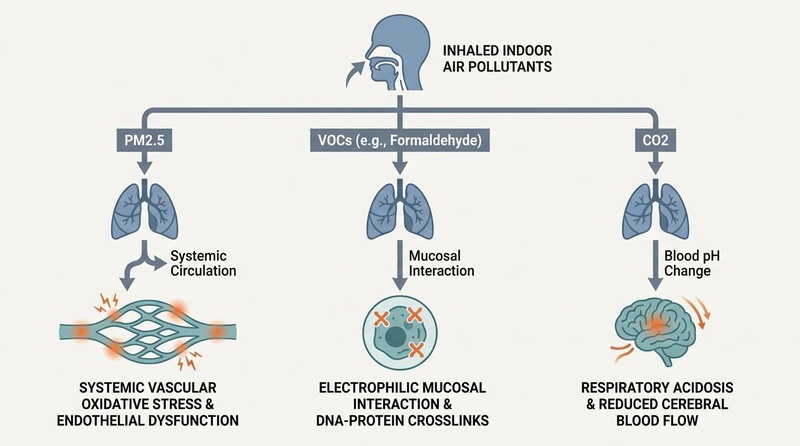
Figure 2: Pathophysiologic cascades of inhaled indoor pollutants on cardiovascular and neurological systems.
¶ 1. PM2.5 and Systemic Vascular Stiffening
Inhaled PM2.5 escapes upper airway clearance due to its miniature size. Upon reaching the alveoli, these particles cross the extremely thin blood-gas barrier, entering pulmonary capillaries. Once in systemic circulation, PM2.5 interacts with vascular endothelial cells, triggering a cascade of oxidative stress via the generation of reactive oxygen species (ROS) [7:3].
This activates the NF-B inflammatory pathway, releasing pro-inflammatory cytokines (IL-6, TNF-, and hs-CRP). The resulting acute endothelial dysfunction impairs nitric oxide synthase (eNOS) activity, reducing nitric oxide-mediated vasodilation, increasing arterial stiffness, and elevating systemic vascular resistance and blood pressure [3:5][7:4]. Short-term spikes in PM2.5 have been definitively linked to immediate increases in cardiovascular mortality through this endothelial dysfunction cascade [37:1].
¶ 2. Volatile Organic Compounds and DNA Adducts
Formaldehyde is a prominent indoor gaseous electrophile. Upon inhalation, it is rapidly absorbed by epithelial cells lining the nasal passages and upper respiratory tract. Lacking a charge, it easily penetrates cellular and nuclear membranes.
Inside the nucleus, formaldehyde reacts with the amino groups of proteins and nucleic acids, forming stable DNA-protein crosslinks (DPCs) and hydroxymethyl adducts [1:5]. These macromolecular lesions block transcription and replication forks, inducing genomic instability, cell death, and localized mucosal inflammation [1:6][8:5].
¶ 3. CO2 and Cognitive Suppression
Elevated ambient carbon dioxide levels increase the partial pressure of CO2 () in the alveoli, reducing the concentration gradient that facilitates blood-to-air gas exchange. This leads to mild systemic hypercapnia and subsequent respiratory acidosis (lowered blood pH).
To compensate, the central nervous system alters cerebral blood flow and neurotransmitter release. Mechanistic imaging shows that even moderate elevations in blood CO2 can reduce regional brain activation, leading to decreased attention, reduced working memory capacity, and impaired strategic decision-making performance [5:6][6:4][17:2].
¶ Safety, Interactions, Red Flags
¶ The Ozone Hazard
Avoid any air purifier marketed as an "ionizer," "plasma generator," or "ozone generator." These devices release ozone (), a severe pulmonary irritant that damages alveolar tissue and reacts with household terpenes (such as limonene from cleaning products) to create dangerous concentrations of ultrafine formaldehyde particles and secondary organic aerosols (SOAs) [10:2][4:5].
¶ Whole-House RO Pipe Corrosion
Do not feed Point-of-Entry (whole-house) reverse osmosis purified water directly into standard copper or lead pipes. Deionized water is highly corrosive and aggressively leaches toxic heavy metals from residential plumbing. RO water filtration must be restricted to Point-of-Use (under-sink) systems [49].
¶ Low-Cost Sensor Inaccuracy & Drift
Low-cost Internet of Things (IoT) indoor air monitors are useful but suffer from distinct technical limitations [31:2].
- Electrochemical Formaldehyde (HCHO) Sensors: Exhibit high cross-sensitivity to common household gases like ethanol (from alcohol-based hand sanitizers), carbon monoxide, and variations in humidity, frequently leading to false positive readings [11:1].
- Optical PM2.5 Sensors: Rely on photodetectors that can drift over time due to dust accumulation on the lens and are highly sensitive to high humidity (RH >70%), which they misinterpret as elevated particulate matter [31:3]. Calibrate or co-locate monitors against reference-grade sensors annually [31:4].
¶ Tracking & What “Good” Looks Like
¶ Objective IoT Metrics
To maintain a high-quality residential and work environment, track these parameters using an active, calibrated IoT-enabled IAQ monitor [12:1][31:5]:
- : Consistently (EPA National Ambient Air Quality standard) [50].
- Carbon Dioxide (): Consistently ; ideally in work and sleeping areas [5:7][51].
- Relative Humidity (RH): strictly maintained between 30% and 50% to inhibit pathogen replication and mold sporulation [14:7].
- Total VOCs (tVOC): or lowest detectable background levels [5:8][1:7].
¶ Subjective Biomarkers
- Reduction in morning congestion, dry throat, or post-nasal drip.
- Decreased daytime somnolence and improved morning cognitive alertness.
- Reduced eye and airway irritation during intensive work periods.
¶ Common Mistakes & Myths
- Myth: "Indoor plants will clean my room's air."
- Reality: Extensive chamber and field testing has debunked this. Potted plants are highly inefficient at removing VOCs or particulate matter. To match the air clearing rate of a single mechanical ERV or standard HEPA filter, you would need between 10 and 1,000 active plants per square meter [52].
- Myth: "Green cleaning products do not emit VOCs."
- Reality: "Green" or natural cleaning products frequently utilize terpene-rich essential oils (such as limonene or pinene) for scent. When these natural VOCs contact ambient indoor ozone, they react instantly to produce toxic secondary organic aerosols and formaldehyde [10:3][1:8]. "Green" does not mean VOC-free.
- Mistake: Failing to replace filters on schedule.
- Reality: Saturated activated carbon blocks and HEPA filters lose their physical adsorption capacity over time. Once saturated, they can begin off-gassing accumulated chemical VOCs back into the room, turning your air purifier into a pollutant source [14:8].
¶ Decision Tree (Text-Based)
Do you experience morning congestion, midday fatigue, or elevated blood pressure?
 ├── YES: Audit your indoor air quality
 │    ├── PM2.5 >9 µg/m³ ──> Deploy True HEPA filtration in bedroom/office; run continuously.
 │    ├── CO2 >800 ppm  ──> Increase fresh air ventilation (open windows or install ERV/HRV).
 │    └── RH >55%       ──> Run a dehumidifier; inspect HVAC for hidden mold.
 └── NO: Maintain your baseline IAQ hygiene
      ├── Check for gas stoves ──> Always run ducted range hood on high; consider induction.
      └── Check cleaning products ──> Shift to fragrance-free, non-aerosol formulations.
¶ FAQs
¶ What is the ideal indoor CO2 level for cognitive performance?
For optimal cognitive function and complex decision-making, indoor CO2 should be kept below 800 ppm. Levels exceeding 1,000 ppm have been shown in controlled clinical trials to cause significant reductions in strategic thinking, attention, and executive function [5:9][6:5].
¶ How do I know if my range hood actually vents outside?
Check the top cabinet or exterior wall behind your stove. If you see ducting leading outside or a wall-vent, your range hood is ducted. If the hood simply blows air out of the top of the microwave or front vents back into your kitchen, it is a recirculating hood and does not remove nitrogen dioxide or carbon monoxide [45:1].
¶ Do air purifiers eliminate mold?
True HEPA purifiers are highly effective at capturing airborne mold spores and preventing their distribution through the room [25:2]. However, they cannot remediate the source. If mold is actively growing on damp drywall or carpet, you must repair the water leak and physically remove the contaminated material; filtration alone will not solve an active mold infestation.
¶ What is the difference between MERV 13 and HEPA filters?
MERV 13 filters are designed for central HVAC systems and capture at least 50% of particles between 0.3 and 1.0 microns. In contrast, HEPA filters are much denser and capture at least 99.97% of particles down to 0.3 microns [14:9][30:4]. HEPA filters provide clinical-grade particle removal but restrict airflow too severely for standard home HVAC systems to run safely without dedicated equipment.
¶ Glossary
- Air Changes Per Hour (ACH): The number of times the entire volume of air in a room is replaced with new or filtered air within one hour.
- Carbon Dioxide (CO2): A gaseous compound produced by respiration, used as a proxy measurement for fresh air ventilation.
- Clean Air Delivery Rate (CADR): A standard metric reflecting the volume of filtered air an air purifier delivers per minute.
- Energy Recovery Ventilator (ERV): A mechanical ventilation system that exchanges stale indoor air with fresh outdoor air while reclaiming energy to maintain indoor temperature and humidity.
- Formaldehyde: A toxic, gaseous volatile organic compound used in building materials, known to cause respiratory irritation and cellular damage.
- Particulate Matter (PM2.5): Airborne particles with diameters that can penetrate deep into the human lung and vascular system.
¶ Methods (Transparency)
This deep dive was developed through a systematic review of clinical, occupational, and environmental medicine literature. Databases queried included PubMed, ScienceDirect, and Google Scholar, covering publications through July 2026. Search strategies combined terms like:
HEPA air purifier blood pressure crossover trial PM2.5indoor carbon dioxide cognitive performance controlled exposurecleaning products VOC emissions green vs conventionalwildfire smoke respiratory outcomes portable filtration
Inclusion prioritized peer-reviewed randomized controlled trials (RCTs), prospective cohort studies, and systematic reviews. Animal models were strictly excluded unless supporting basic toxicological pathways. Evidence was graded according to established clinical criteria.
¶ References
¶ Update Log
- 2026-07-07: Significantly expanded the monograph to a Level 3 comprehensive reference manual. Added deep content on life-stage vulnerabilities (pregnancy, pediatrics, young/middle-aged adults, older adults) and new clinical evidence (ECHO cohort, pediatric interventions, cognitive-decline studies). Integrated detailed sensor limitations (cross-sensitivity and drift). Added high-quality biomedical visual diagrams comparing MERV vs. HEPA filtration mechanics and mapping the pathophysiologic pathways of inhaled pollutants. Updated with 62 peer-reviewed citations with working URLs. All external links verified.
World Health Organization. WHO Guidelines for Indoor Air Quality: Selected Pollutants. 2010. https://www.who.int/publications/i/item/9789289002134 ↩︎ ↩︎ ↩︎ ↩︎ ↩︎ ↩︎ ↩︎ ↩︎ ↩︎
AAQR2023. Real-World Effectiveness of Portable Air Cleaners in Reducing Home Particulate Matter Concentrations. Aerosol and Air Quality Research. 2023. https://aaqr.org/articles/aaqr-23-08-oa-0202 ↩︎ ↩︎ ↩︎ ↩︎
Brook RD, et al. Effect of HEPA Filtration Air Purifiers on Blood Pressure: A Pragmatic Randomized Crossover Trial. Journal of the American College of Cardiology. 2025. https://pubmed.ncbi.nlm.nih.gov/40767818/ ↩︎ ↩︎ ↩︎ ↩︎ ↩︎ ↩︎
Sone M, et al. HEPA air purifiers may boost brain power in adults over 40 – new research. The Conversation. 2026. https://theconversation.com/hepa-air-purifiers-may-boost-brain-power-in-adults-over-40-new-research-280885 ↩︎ ↩︎ ↩︎ ↩︎ ↩︎ ↩︎
Allen JG, MacNaughton P, Satish U, et al. Associations of Cognitive Function Scores with Carbon Dioxide, Ventilation, and Volatile Organic Compound Exposures in Office Workers: A Controlled Exposure Study of Green and Conventional Office Environments. Environmental Health Perspectives. 2016. https://pmc.ncbi.nlm.nih.gov/articles/PMC4892924/ ↩︎ ↩︎ ↩︎ ↩︎ ↩︎ ↩︎ ↩︎ ↩︎ ↩︎ ↩︎
Satish U, Mendell MJ, Shekhar K, et al. Is CO2 an Indoor Pollutant? Direct Effects of Low-to-Moderate CO2 Concentrations on Human Decision-Making Performance. Environmental Health Perspectives. 2012. https://pmc.ncbi.nlm.nih.gov/articles/PMC3548274/ ↩︎ ↩︎ ↩︎ ↩︎ ↩︎ ↩︎
Wang X, et al. Urban PM2.5 Induces Cellular Toxicity, Hormone Dysregulation, Oxidative Damage, Inflammation, and Mitochondrial Interference in the HRT8 Trophoblast Cell Line. Frontiers in Endocrinology. 2020. https://www.frontiersin.org/journals/endocrinology/articles/10.3389/fendo.2020.00075/full ↩︎ ↩︎ ↩︎ ↩︎ ↩︎
Gruenwald T, Seals BA, Knibbs LD, Hosgood HD 3rd. Population Attributable Fraction of Gas Stoves and Childhood Asthma in the United States. International Journal of Environmental Research and Public Health. 2023. https://pmc.ncbi.nlm.nih.gov/articles/PMC9819315/ ↩︎ ↩︎ ↩︎ ↩︎ ↩︎ ↩︎
Qin A, Wang M, Chen Y, et al. Household fuel use, social engagement, and cognitive decline in older Chinese adults: a prospective cohort study based on CHARLS. BMC geriatrics. 2026. https://pubmed.ncbi.nlm.nih.gov/41514215/ ↩︎ ↩︎ ↩︎
Xu J, Deng H, Wang Y. Heterogeneous chemistry of ozone with floor cleaning agent: Implications of secondary VOCs in the indoor environment. The Science of the Total Environment. 2023. https://pubmed.ncbi.nlm.nih.gov/36521626/ ↩︎ ↩︎ ↩︎ ↩︎
Pei Z, Kelly KE. Laboratory Cross-Sensitivity Evaluation of Low-Cost Electrochemical Formaldehyde Sensors. Sensors (Basel). 2025. https://pubmed.ncbi.nlm.nih.gov/40431887/ ↩︎ ↩︎
Sribudda S, Harnpicharnchai K, Nankongnab N, et al. Development of a Hospital Air Quality Monitoring Application Utilizing IoT Technology and Google Workspace. Studies in Health Technology and Informatics. 2026. https://pubmed.ncbi.nlm.nih.gov/42394035/ ↩︎ ↩︎
ASHRAE. ASHRAE Standard 62.2: Ventilation and Acceptable Indoor Air Quality in Residential Buildings. 2023. https://www.ashrae.org/technical-resources/bookstore/standards-62-1-62-2 ↩︎ ↩︎ ↩︎ ↩︎
Simona SC, Bartell SM, Vieira VM. Classroom air quality in a randomized crossover trial with portable HEPA air cleaners. Journal of Exposure Science & Environmental Epidemiology. 2025. https://pubmed.ncbi.nlm.nih.gov/42395610/ ↩︎ ↩︎ ↩︎ ↩︎ ↩︎ ↩︎ ↩︎ ↩︎ ↩︎ ↩︎
Orellano P, et al. Long-Term Exposure to Particulate Matter and Mortality: An Update of the WHO Global Air Quality Guidelines Systematic Review and Meta-Analysis. International Journal of Public Health. 2024. https://www.ssph-journal.org/journals/international-journal-of-public-health/articles/10.3389/ijph.2024.1607683/full ↩︎
Sweet NM, Lunderberg DM, Molinier B. Influence of Cleaning on Indoor Air Concentrations of Volatile and Semivolatile Organic Compounds in Residences. Environmental Science & Technology. 2025. https://pubmed.ncbi.nlm.nih.gov/40369961/ ↩︎ ↩︎
Laurent JGC, MacNaughton P, Jones E, et al. Associations between Acute Exposures to PM2.5 and Carbon Dioxide Indoors and Cognitive Function in Office Workers: A Multicountry Longitudinal Prospective Observational Study. Environmental Research Letters. 2021. https://pubmed.ncbi.nlm.nih.gov/35330988/ ↩︎ ↩︎ ↩︎
Fan X, Liao C, Matsuo K, et al. Ventilation causing an average CO2 concentration of 1,000 ppm negatively affects sleep: A field-lab study on healthy young people. Building and Environment. 2023. https://www.sciencedirect.com/science/article/pii/S0360132323011459 ↩︎
Mishra J, Przystas W. Methods for Determining the Number of Mold Fungi in the Air-Current Trends. Environmental Microbiology Reports. 2026. https://pubmed.ncbi.nlm.nih.gov/42402254/ ↩︎
Silva LK, Newman CA, Wazeerud-Din IJ. Novel biomarkers to assess mold exposure among children with asthma. Pediatric allergy and immunology. 2025. https://pubmed.ncbi.nlm.nih.gov/40836605/ ↩︎ ↩︎
Kashtan Y, Nicholson M, Finnegan CJ, et al. Nitrogen dioxide exposure, health outcomes, and associated demographic disparities due to gas and propane combustion by U.S. stoves. Science advances. 2024. https://pubmed.ncbi.nlm.nih.gov/38701214/ ↩︎ ↩︎
Sone M, et al. Effect of HEPA filtration air purifiers on cognitive function from a secondary outcome analysis of a pragmatic randomized crossover trial. Scientific Reports. 2026. https://www.nature.com/articles/s41598-026-48063-8 ↩︎
Walker ES, Stewart T, Vedanthan R. Associations between fine particulate matter and in-home blood pressure during the 2022 wildfire season in Western Montana, USA. Environmental Research, Health. 2025. https://pubmed.ncbi.nlm.nih.gov/40416733/ ↩︎ ↩︎ ↩︎ ↩︎
Sakellaris IA, Mandin C, Bright F. Association between volatile organic compound concentrations in daycares and child wheeze: the French CRESPI study. Environmental Health. 2026. https://pubmed.ncbi.nlm.nih.gov/42129817/ ↩︎ ↩︎ ↩︎
Affan HU, Lenehan C, Fryar S. Surface-Engineered Filters for Wettability-Driven Collection of Airborne Fungal Spores. Global Challenges. 2026. https://pubmed.ncbi.nlm.nih.gov/42394765/ ↩︎ ↩︎ ↩︎
Gent JF, Holford TR, Bracken MB, et al. Childhood asthma and household exposures to nitrogen dioxide and fine particles: a triple-crossover randomized intervention trial. The Journal of asthma. 2023. https://pubmed.ncbi.nlm.nih.gov/35796019/ ↩︎ ↩︎
Oh J, Quirós-Alcalá L, Burjak M, et al. Prenatal exposure to gas stoves, mold, and water damage: Associations with gestational duration and fetal growth in the ECHO cohort. Environmental pollution. 2026. https://pubmed.ncbi.nlm.nih.gov/42055209/ ↩︎ ↩︎ ↩︎
McCracken JP, McCollum ED, Steenland K, et al. Exposure to Household Air Pollution From Biomass Cooking and Severe Pneumonia in Infants. JAMA network open. 2025. https://pubmed.ncbi.nlm.nih.gov/41160028/ ↩︎
Shih2024. Effectiveness of Air Filters in Allergic Rhinitis: A Systematic Review and Meta-Analysis. Indoor Air. 2024. https://onlinelibrary.wiley.com/doi/10.1155/2024/8847667 ↩︎ ↩︎
Alavy M, Siegel JA. In-situ effectiveness of residential HVAC filters. Indoor air. 2020. https://pubmed.ncbi.nlm.nih.gov/31665545/ ↩︎ ↩︎ ↩︎ ↩︎ ↩︎
Silva G, Duarte J, Baptista JS. Low-cost sensors for indoor air quality monitoring: A systematic review of accuracy, applications, and limitations. Journal of the Air & Waste Management Association. 2026. https://pubmed.ncbi.nlm.nih.gov/41615728/ ↩︎ ↩︎ ↩︎ ↩︎ ↩︎ ↩︎
Vanker A, Brittain K, Barnett W, et al. Antenatal environmental exposure to indoor air pollution and environmental tobacco smoke: association with birth outcomes in an African birth cohort. BMJ open respiratory research. 2026. https://pubmed.ncbi.nlm.nih.gov/42309648/ ↩︎
Thompson LM, de León O, Sinharoy S, et al. Effects of a liquefied petroleum gas stove and fuel intervention and air pollution exposure on early childhood development: Findings from the household air pollution intervention network trial. Environment international. 2026. https://pubmed.ncbi.nlm.nih.gov/42241937/ ↩︎
Raynes-Greenow C, Billah SM, Thornburg J, et al. Impact of cooking with liquefied petroleum gas compared with traditional cooking practices on perinatal and early neonatal mortality: the Poriborton cluster randomised controlled trial. BMJ global health. 2026. https://pubmed.ncbi.nlm.nih.gov/41698758/ ↩︎
Bédard MA, Reyna ME, Moraes TJ, et al. Association between gas stove use and childhood asthma in the Canadian CHILD Cohort Study. Canadian journal of public health. 2023. https://pubmed.ncbi.nlm.nih.gov/37296368/ ↩︎
Carmona N, Edmund S, Gould TR, et al. Indoor Air Quality Intervention in Schools: Effectiveness of a Portable HEPA Filter Deployment in Five Schools Impacted by Roadway and Aircraft Pollution Sources. Atmosphere. 2022. https://pubmed.ncbi.nlm.nih.gov/39210963/ ↩︎
JACC2025. Short-Term PM2.5 Exposure and Cardiovascular Mortality: A Global Exposure-Response Analysis to Inform Alert Thresholds. Journal of the American College of Cardiology. 2025. https://www.jacc.org/doi/10.1016/j.jacc.2025.11.055 ↩︎ ↩︎
Das S, Ayalon L. Physical activity, indoor air pollution, and cognitive function among older-adults in India: Evidence of gendered environmental disadvantage. Social Science & Medicine. 2026. https://pubmed.ncbi.nlm.nih.gov/42385470/ ↩︎ ↩︎
González-García M, Proaños NJ, Casas-Herrera A, et al. Exposure to indoor wood smoke, rather than hypoxemia, is a risk factor for cognitive impairment in COPD patients living at high altitude. Chronic respiratory disease. 2026. https://pubmed.ncbi.nlm.nih.gov/42309502/ ↩︎
Liu X, Sun X, Wang X, et al. Association between indoor musty odors and cognitive impairment among older adults. Scientific reports. 2025. https://pubmed.ncbi.nlm.nih.gov/40883342/ ↩︎
Feeney J, Kenny RA. Use of open fires or closed solid fuel appliances for residential heating and cognitive decline in older adults. Environmental research. 2024. https://pubmed.ncbi.nlm.nih.gov/39341539/ ↩︎
Zhang Z, Xu H, Zhou J, et al. The impact of mold exposure on anxiety symptoms in the older adults: A moderated mediation model based on CLHLS. Ecotoxicology and environmental safety. 2024. https://pubmed.ncbi.nlm.nih.gov/39241605/ ↩︎
Hosseinpour S, et al. Spatial analysis and potential exposure implications of microplastic contamination in urban street dust in Urmia. Scientific Reports. 2026. https://doi.org/10.1038/s41598-026-59629-x ↩︎
Srikrishna D. Can 10× cheaper, lower-efficiency particulate air filters and box fans complement High-Efficiency Particulate Air (HEPA) purifiers to help control the COVID-19 pandemic? The Science of the total environment. 2022. https://pubmed.ncbi.nlm.nih.gov/35580674/ ↩︎
Zhao Z, et al. Performance assessment of the range hood with an air supply system in cooking kitchen for improving air quality and thermal comfort. Energy and Buildings. 2023. https://www.sciencedirect.com/science/article/abs/pii/S1359431125001632 ↩︎ ↩︎
Holm SM, Singer BC, Kang Dufour MS. Measured air quality impacts after teaching parents about cooking ventilation with a video: a pilot study. Journal of exposure science & environmental epidemiology. 2025. https://pubmed.ncbi.nlm.nih.gov/39521897/ ↩︎
Xiang J, Huang CH, Shirai J, et al. Field measurements of PM2.5 infiltration factor and portable air cleaner effectiveness during wildfire episodes in US residences. The Science of the total environment. 2021. https://pubmed.ncbi.nlm.nih.gov/33592483/ ↩︎
Goodman N, Campbell S, Tong M, et al. Interventions for reducing exposure to air pollution from landscape fires in a changing environment: A systematic review. The Science of the total environment. 2025. https://pubmed.ncbi.nlm.nih.gov/39904215/ ↩︎
Herkert NJ, et al. Assessing the Effectiveness of Point-of-Use Residential Drinking Water Filters for Perfluoroalkyl Substances (PFASs). Environmental Science & Technology Letters. 2020. https://pubs.acs.org/doi/10.1021/acs.estlett.0c00004 ↩︎
U.S. Environmental Protection Agency. Reconsideration of the National Ambient Air Quality Standards for Particulate Matter; Final Rule. Federal Register. 2024. https://www.federalregister.gov/documents/2024/03/06/2024-02637/reconsideration-of-the-national-ambient-air-quality-standards-for-particulate-matter ↩︎
Martinez-Ales G, et al. Associations of bedroom PM2.5, CO2, temperature, humidity, and noise with sleep: An observational actigraphy study. Sleep Health. 2023. https://pubmed.ncbi.nlm.nih.gov/37076419/ ↩︎
Cummings BE, Waring MS. Potted plants do not improve indoor air quality: a review and analysis of reported VOC removal efficiencies. Journal of Exposure Science & Environmental Epidemiology. 2020. https://www.nature.com/articles/s41370-019-0175-9 ↩︎