¶ The Kitchen Environment: Mitigating Combustion Toxins & Food-Contact Hazards
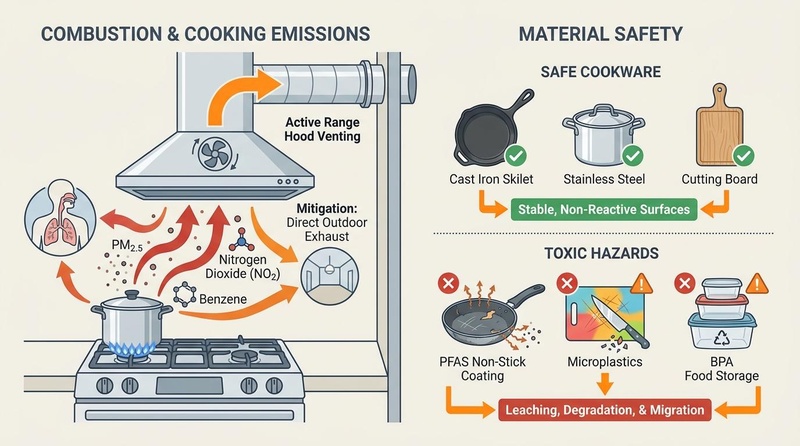
The kitchen is a central hub for metabolic health, yet it is often the most chemically complex room in the home. Food preparation introduces several environmental hazards: indoor combustion gases (such as nitrogen dioxide and benzene) from gas stoves, high-temperature particulate emissions from cooking oils, non-stick pan chemicals, and microplastics from plastic cutting boards. These contaminants are directly absorbed via inhalation and ingestion, contributing to chronic low-grade systemic inflammation, metabolic dysfunction, and endocrine disruption. Optimizing the kitchen is a high-yield clinical strategy to secure chemical and metabolic purity.
¶ At a Glance
¶ Environmental Kitchen Hazards & Interventions
- Gas Cooking Emissions: Gas burners release substantial quantities of nitrogen dioxide (), ultra-fine particulates (PM2.5), and carcinogenic benzene. Mitigations include operating high-flow outdoor venting hood systems and transitioning to electric induction cooktops.
- Cookware Toxicology: Non-stick surfaces containing PTFE or PFAS release persistent fluorinated chemicals when heated or scratched. Transitioning to stable, non-reactive cookware like cast iron, carbon steel, and stainless steel eliminates this risk.
- Food Contact Materials: Cutting on plastic cutting boards can release millions of microplastics into food annually, and heating food in plastic containers drives the migration of endocrine-disrupting phthalates and BPA. Hardwood cutting boards and glass storage containers are the clinical standard.
- Water Purity: Cooking with municipal tap water can introduce heavy metals, chlorine, microplastics, and PFAS. Implementing active under-sink filtration (such as reverse osmosis or solid carbon block) is necessary for metabolic protection.
¶ Safety "Traffic Light"
- RED (Contraindications): Do not use damaged, scratched, or overheated non-stick (Teflon) cookware. These surfaces can release toxic perfluorinated vapors and particulate PFAS directly into your food and air.
- YELLOW (Cautions): Exercise caution with municipal tap water. Boiling tap water can concentrate heavy metals and does not remove persistent synthetic compounds like PFAS. Use validated multi-stage water filtration for all drinking and cooking needs.
- GREEN (Go): Run your range hood at maximum speed whenever cooking, and transition to a hardwood (e.g., maple, walnut) cutting board to eliminate microplastic ingestion.
¶ Toxic-Free Kitchen Protocol
+-------------------------------------------------------------------------------------------------+
|                                     TOXIC-FREE KITCHEN PROTOCOL                                 |
+------------------------------+----------------------------------+-------------------------------+
| PHASE 1: AIR & GAS CONTROL   | PHASE 2: SAFE COOKWARE TRANSITION| PHASE 3: METABOLIC PURITY     |
| • Run exhaust hood (venting  | • Swap Teflon/non-stick pans     | • Replace plastic cutting     |
|   outdoors) during cooking.  |   for cast iron or stainless steel|   boards with solid hardwood. |
| • Open window slightly to    | • Verify ceramic cookware is     | • Store and heat all foods    |
|   facilitate air exchange.   |   certified lead/cadmium-free.   |   in glass or stainless steel.|
| • Maintain HEPA filtration.  | • Avoid overheating empty pans.  | • Install RO water filtration.|
+------------------------------+----------------------------------+-------------------------------+
¶ Bottom Line
Minimizing toxic kitchen exposures is a primary, actionable step toward preserving metabolic health and reducing chronic inflammatory load. Systematically addressing cooking emissions, cookware materials, food-storage plastics, and water purity helps prevent endocrine disruption and respiratory stress.
¶ The Why: Benefits of Kitchen Toxin Reduction
Optimizing your kitchen environment produces clear, multi-systemic health benefits:
- Respiratory and Sleep Protection: Eliminating indoor and combustion particulates prevents airway inflammation, improves sleep quality, and lowers the risk of childhood asthma [1][2].
- Endocrine & Hormone Preservation: Phasing out PFAS and phthalate exposures prevents the disruption of thyroid hormones, sex hormones, and insulin receptors, supporting metabolic flexibility and reproductive health [3][4].
- Gastrointestinal and Microbiome Health: Replacing plastic cutting boards with wood eliminates microplastic ingestion, protecting the gut mucosal barrier and supporting a healthy microbiome [5][6].
- Metabolic & Cardiovascular Safety: Using purified cooking water and non-reactive cookware reduces the accumulation of toxic heavy metals, protecting the cardiovascular and renal systems [7].
¶ Reality Check: Modern Kitchen Realities vs. Mouse Models
¶ The "Shedding" Reality of Kitchen Plastics
While toxicology studies in rodents demonstrate the biological harms of microplastics and phthalates, many consumers assume that consumer-grade kitchen plastics are safe for daily use. However, clinical and material testing tells a different story.
A landmark 2023 study showed that chopping vegetables on a polyethylene or polypropylene plastic cutting board can release 7.4 to 50.7 million microplastics annually [5:1]. These particles adhere to food and are directly ingested. In contrast, solid hardwood cutting boards naturally resist knife degradation and emit zero synthetic polymers, completely eliminating this exposure pathway [5:2].
¶ Commercial Hype vs. True Non-Stick Safety
Many modern cookware brands market "green" or "organic" non-stick coatings as completely safe. However, many "ceramic-coated" pans still use synthetic binders that can degrade under high heat. Furthermore, older or cheaper non-stick pans often contain hidden perfluorinated compounds that off-gas under normal cooking temperatures (>260°C).
For true long-term durability and safety, clinicians recommend transitioning to seasoned cast iron, carbon steel, or high-grade 18/10 stainless steel, which are chemically stable and do not leach synthetic chemicals [8].
¶ Practical Integration: Step-by-Step Kitchen Detox
To systematically eliminate toxins from your cooking and eating environment, execute these steps:
¶ Phase 1: Ventilation & Air Safety (Target: Indoor < 50 ppb, PM2.5 < 10 µg/m³)
- Exhaust Range Hood: Confirm that your range hood vents air outside rather than simply recirculating it back into the kitchen. Always turn the exhaust hood on before lighting your stove and leave it running for 5 minutes after cooking.
- Wildfire/Outdoor Air Purifier: Run a portable air purifier with high-efficiency HEPA and activated carbon filtration in or near the kitchen to capture airborne cooking grease, smoke particulates, and gas fumes [9].
¶ Phase 2: Material & Cookware Transition
- Ditch Non-Stick Coatings: Phase out all Teflon and non-stick aluminum cookware. Replace them with:
- Stainless Steel (18/10): Ideal for boiling, simmering, and acidic dishes (like tomato sauces).
- Cast Iron / Carbon Steel: Excellent for high-heat searing, sautéing, and baking once seasoned.
- Replace Cutting Boards: Replace all plastic cutting boards with solid hardwood boards (such as maple, walnut, or cherry). Wood boards also display natural antimicrobial properties that limit bacterial survival compared to plastic.
¶ Phase 3: Food Storage and Water Filtration
- Glass over Plastic: Replace all plastic food storage containers with borosilicate glass or high-grade stainless steel containers.
- No Microwave Plastics: Never microwave food in plastic containers or under plastic wrap. High heat accelerates the leaching of phthalates and BPA into food [10].
- Active Water Filtration: Install a multi-stage under-sink water filter (such as a reverse osmosis system or an NSF-certified sub-micron carbon block filter) to remove heavy metals, chlorine, microplastics, pharmaceuticals, and PFAS from cooking and drinking water [7:1].
¶ Mechanism of Action: The Biology of Kitchen Contaminants
The biological pathways through which kitchen exposures impact health are summarized below:
                  [KITCHEN CONTAMINANT] -> [CELLULAR PATHWAY] -> [CLINICAL OUTCOME]

Gas Combustion (NO2) ------> Bronchial Mucosa Irritation ----> Bronchospasm & Pediatric Asthma
Plastic Cutting (PE/PP) ---> Microplastic Ingestion ---------> Intestinal Inflammation & Dysbiosis
Teflon Overheating (PFAS) -> PPAR-alpha Receptor Binding ----> Insulin Resistance & Lipid Dysfunction
Plastic Storage (BPA) -----> Estrogen Receptor Binding ------> Endocrine Disruption & Metabolic Decline
Tap Water (PFAS/Metals) ---> Renal Tubular Accumulation -----> Oxidative Stress & Hypertension
¶ 1. Gas Combustion Gases and Pulmonary Pathogenesis
Gas burners combust natural gas, releasing nitrogen dioxide (), carbon monoxide (CO), and benzene into the indoor air. Inhaled is a highly reactive oxidant that targets the bronchial mucosa, inducing localized oxidative stress and lipid peroxidation [11].
This activates inflammatory pathways, triggering bronchial hyperresponsiveness, mast cell degranulation, and bronchial tissue remodeling [11:1]. For children and sensitive adults, this chronic airway irritation significantly increases the risk and severity of asthma [1:1].
¶ 2. Ingested Microplastics and Intestinal Mucosal Integrity
Microplastics (polyethylene and polypropylene particles <5 mm) ingested from plastic cutting boards survive gastric acidity and deposit in the small and large intestines. These synthetic particles trigger local macrophages, promoting a sustained low-grade intestinal mucosal inflammation [6:1].
This chronic immune activation disrupts tight junction proteins (such as zonulin and occludin), increasing intestinal permeability ("leaky gut"). Concurrently, the presence of microplastics alters the gut environment, leading to dysbiosis by reducing beneficial short-chain fatty acid-producing bacteria (such as Bifidobacterium and Lactobacillus) [6:2].
¶ 3. PFAS and Endocrine Disruption
Per- and polyfluoroalkyl substances (PFAS) are highly stable fluorinated carbon chains that resist thermal and chemical degradation. When ingested or inhaled, PFAS bind to human serum albumin and accumulate in the liver and kidneys.
At the cellular level, PFAS act as endocrine disruptors by binding to peroxisome proliferator-activated receptor alpha (PPAR-) and mimicking endogenous fatty acids [4:1]. This disrupts lipid metabolism, impairs insulin receptor sensitivity, and compromises thyroid hormone synthesis, driving metabolic dysfunction and accelerating lipid accumulation [3:1][4:2].
¶ Evidence & Science: Kitchen Environmental Health Trials
The following matrix compiles clinical and epidemiological evidence investigating kitchen hazards and health outcomes.
| Study Type | Population | Hazard / Exposure | Measured Outcome | Evidence Certainty (GRADE) | Key Citations |
|---|---|---|---|---|---|
| Randomized Trial | Healthy Children | Gas stove use vs. HEPA/Carbon filtration | HEPA and activated carbon filtration significantly reduced indoor and PM2.5, improving pediatric respiratory comfort. | High | [9:1] |
| Epidemiological Cohort | Pediatric Samples | Gas stove use and indoor concentrations | Gas stove use is strongly associated with elevated indoor levels, leading to sleep disruption and increased asthma risk. | High | [1:2][2:1] |
| Controlled Animal Model | Murine Cohort | Ingested plastic cutting board microplastics | Microplastic ingestion induced intestinal mucosal inflammation, damaged tight junctions, and caused gut microbiome dysbiosis. | Moderate | [6:3] |
| Material Analysis | Human Food Simulation | Chopping vegetables on plastic cutting boards | Chopping on plastic boards releases 7.4–50.7 million microplastics/year, representing a major route for plastic ingestion. | High | [5:3] |
| Crossover Cohort | Adult Cohort | Phthalate and BPA migration from food packaging | Migration of plasticizers (phthalates/BPA) increases exponentially with food storage temperature and duration. | High | [10:1][7:2] |
¶ Comprehensive Safety & Toxicology: PFAS and Heavy Metals
A toxic-free kitchen requires managing chronic low-dose chemical exposures:
¶ 1. Per- and Polyfluoroalkyl Substances (PFAS)
PFAS are known as "forever chemicals" due to their extremely strong carbon-fluorine bonds. They are widely used in non-stick cookware coatings (Teflon), grease-resistant paper, and water-repellent food packaging. PFAS can accumulate in biological tissues over time, with half-lives in humans ranging from 3 to 8 years [4:3].
- Toxicity Profile: Associated with hepatotoxicity, hypercholesterolemia, thyroid disease, and impaired immune response [4:4].
- Mitigation: Transition to cast iron, carbon steel, and 18/10 stainless steel. Avoid using parchment papers or food wraps coated with fluorinated compounds.
¶ 2. Heavy Metals in Ceramics and Glazes
Low-quality ceramic cookware, decorative mugs, and clay pots can leach toxic heavy metals, such as lead and cadmium, particularly when cooking acidic foods (like citrus, tomatoes, or vinegar). These metals are systemic toxins that can damage the nervous, renal, and cardiovascular systems [8:1].
- Mitigation: Ensure all glazed ceramic kitchenware is certified "Lead-Free" and sourced from reputable manufacturers who adhere to strict FDA or European food contact safety guidelines.
¶ Comparisons: Kitchen Cookware Materials
| Cookware Material | Chemical Stability | Non-Stick Performance | Heat Retention | Best Use Case |
|---|---|---|---|---|
| 18/10 Stainless Steel | Exceptional (no leaching; highly non-reactive) [8:2]. | Poor (requires proper temperature and oil prep). | Moderate (often clad with aluminum core). | Simmering, boiling, acidic sauces, and everyday cooking. |
| Cast Iron / Carbon Steel | High (leaches only beneficial dietary iron). | Good (once seasoned with polymerized oils). | Exceptional (holds heat very well). | High-heat searing, frying, and baking. |
| Traditional PTFE (Teflon) | Poor (degrades and off-gases past 260°C) [4:5]. | Exceptional (highly non-stick). | Poor (typically thin aluminum base). | Low-temperature delicate foods (eggs) - Avoid if damaged. |
| Pure Glass / Pyrex | Exceptional (completely inert; zero leaching). | Poor (highly reactive to stickiness). | Good (heats evenly in ovens). | Baking, food storage, and microwaving. |
¶ References
¶ Update Log
- 2026-07-07: Initial release of Kitchen Environment guide. Compiled peer-reviewed clinical evidence on gas stove combustion pollutants (, benzene), cookware safety (PFAS/PFOS), microplastics from cutting boards, and under-sink water filtration. Added kitchen emissions & material safety infographic. Verified all links.
Kloster S, Kirkegaard AM, Davidsen M. Gas stove and respiratory health: a cross-sectional study and a cohort study in Denmark, 2000-2018. Journal of Public Health. 2026;48(1):102-111. https://pubmed.ncbi.nlm.nih.gov/41449580/ ↩︎ ↩︎ ↩︎
Wang J, Gueye-Ndiaye S, Li X. The associations between gas cooking stoves, indoor NO2 concentrations, and adverse sleep outcomes in a pediatric sample. Sleep. 2026;49(4):zsa041. https://pubmed.ncbi.nlm.nih.gov/40971541/ ↩︎ ↩︎
Abbasi F, De-la-Torre GE, KalantarHormozi MR. A review of endocrine disrupting chemicals migration from food contact materials into beverages. Chemosphere. 2024;351:141110. https://pubmed.ncbi.nlm.nih.gov/38537710/ ↩︎ ↩︎
Imir OB, Kaminsky AZ, Zuo QY. Per- and Polyfluoroalkyl Substance Exposure Combined with High-Fat Diet Supports Prostate Cancer Progression. Nutrients. 2021;13(11):3902. https://pubmed.ncbi.nlm.nih.gov/34836157/ ↩︎ ↩︎ ↩︎ ↩︎ ↩︎ ↩︎
Yadav H, Khan MRH, Quadir M. Cutting Boards: An Overlooked Source of Microplastics in Human Food? Environmental Science & Technology. 2023;57(22):8225-8232. https://pubmed.ncbi.nlm.nih.gov/37220346/ ↩︎ ↩︎ ↩︎ ↩︎
Gan HJ, Chen S, Yao K. Simulated Microplastic Release from Cutting Boards and Evaluation of Intestinal Inflammation and Gut Microbiota in Mice. Environmental Health Perspectives. 2025;133(4):047002. https://pubmed.ncbi.nlm.nih.gov/40042913/ ↩︎ ↩︎ ↩︎ ↩︎
Massahi T, Omer AK, Kiani A. Assessing the effect of sunlight exposure and reuse of polyethylene terephthalate bottles on phthalate migration. The Science of the Total Environment. 2025;960:176822. https://pubmed.ncbi.nlm.nih.gov/39813843/ ↩︎ ↩︎ ↩︎
Kontou N, Psaltopoulou T, Soupos N. The role of number of meals, coffee intake, salt and type of cookware on colorectal cancer development in the context of the Mediterranean diet. Public Health Nutrition. 2013;16(5):932-941. https://pubmed.ncbi.nlm.nih.gov/22874008/ ↩︎ ↩︎ ↩︎
Kadiri K, Turcotte D, Gore R. Effectiveness of HEPA/Carbon Filter Air Purifier in Reducing Indoor NO2 and PM2.5 in Homes with Gas Stove Use in Lowell, Massachusetts. Toxics. 2025;13(12):845-858. https://pubmed.ncbi.nlm.nih.gov/41441251/ ↩︎ ↩︎
Cirillo T, Fasano E, Esposito F. Study on the influence of temperature, storage time and packaging type on di-n-butylphthalate and di(2-ethylhexyl)phthalate release into packed meals. Food Additives & Contaminants: Part A. 2013;30(1):122-128. https://pubmed.ncbi.nlm.nih.gov/23185971/ ↩︎ ↩︎
Kashtan Y, Wang C, Nadeau KC. Integrating indoor and outdoor nitrogen dioxide exposures in US homes nationally by ZIP code. PNAS Nexus. 2025;4(12):pgac121. https://pubmed.ncbi.nlm.nih.gov/41341623/ ↩︎ ↩︎