¶ Microneedling and Platelet-Rich Plasma (PRP)
| Type | Combined Mechanical Procedure & Biologic Therapy |
| Mechanism | Percutaneous Collagen Induction (PCI) & Growth Factor Stimulation |
| Primary Indications | Atrophic scars, Androgenetic alopecia, Rhytides, Striae distensae |
| Key Specs | Needle depth (0.5 mm – 2.5 mm), PRP Concentration |
| Protocol Frequency | Monthly (3-6 sessions initially) |
| Safety Profile | Good (Autologous, minimal systemic risk) |
| Est. Cost | $700–$2,500 per session |
The combination of Microneedling (Percutaneous Collagen Induction Therapy) with Platelet-Rich Plasma (PRP) represents a powerful synergistic approach in aesthetic and regenerative medicine. This dual therapy harnesses the mechanical stimulation of collagen production from microneedling with the biological potentiation of growth factors found in autologous PRP, leading to enhanced tissue repair, improved skin texture, and accelerated hair regrowth. It is widely applied for conditions such as atrophic acne scars, androgenetic alopecia, fine lines, wrinkles, and stretch marks, offering a safe and effective pathway for natural tissue regeneration [1][2].
¶ TL;DR
- Synergistic Regeneration: Microneedling creates micro-channels, enhancing PRP's penetration and delivering concentrated growth factors to stimulate collagen, elastin, and cellular repair [3].
- Broad Applications: Highly effective for atrophic acne scars, androgenetic alopecia, fine lines, wrinkles, and striae distensae [1:1][4][5].
- Enhanced Outcomes: Combining PRP with microneedling often yields superior results compared to either therapy alone, particularly for scar remodeling and hair density [1:2][2:1][6].
- Safety Profile: Generally safe due to autologous PRP and minimally invasive microneedling; risks are primarily related to technique, infection, or non-sterile practices [7].
- Professional Guidance: While home devices exist, professional treatments offer greater depth control, sterility, and efficacy, especially for deeper dermal remodeling [8].
¶ Quick Answer
Microneedling with PRP is a procedure that combines controlled micro-injuries to the skin or scalp with the topical application of a patient's own concentrated growth factors. The microneedles create thousands of microscopic channels, which serve as pathways for PRP to penetrate deeply, stimulating collagen induction, scar remodeling, and follicular regeneration. This combination is particularly effective for atrophic acne scars, where it can lead to a 2.97-fold greater improvement compared to microneedling alone, and for androgenetic alopecia, showing superior hair density increases when stacked with minoxidil [3:1][9]. Optimal results typically require 3-6 monthly sessions, with strict adherence to professional protocols to ensure safety and efficacy.
¶ First: Identify the Candidate
This combined therapy is best suited for individuals seeking significant improvements in skin texture, scar appearance, or hair density.
| Condition | Ideal Candidate | Primary Benefit | Contraindications / Considerations |
|---|---|---|---|
| Atrophic Acne Scars | Individuals with icepick, boxcar, or rolling scars, seeking textural improvement. | Significant collagen induction and scar depth reduction [3:2][2:2]. | Active acne, keloidal diathesis [7:1]. |
| Androgenetic Alopecia | Men and women with pattern hair loss, aiming for increased hair density and thickness. | Stimulates dormant follicles and prolongs anagen phase [9:1][10]. | Active scalp infections, low platelet count [7:2]. |
| Fine Lines & Wrinkles | Those with early to moderate signs of photoaging and skin laxity. | Dermal thickening and improved elasticity [5:1][11]. | Very thin skin, active inflammatory conditions [7:3]. |
| Striae Distensae (Stretch Marks) | Individuals with recent (rubra) or older (alba) stretch marks. | Collagen and elastin remodeling, improved texture and color [4:1][12]. | N/A |
¶ Evidence Snapshot
¶ Evidence Summary Table (Human Outcomes)
| Intervention | Condition Treated | Outcome Measured | Efficacy | Certainty of Evidence (GRADE) | Key Findings & Caveats | References |
|---|---|---|---|---|---|---|
| Microneedling + PRP | Atrophic Acne Scars | Global Aesthetic Improvement Scale (>50% improvement) | Moderate | Significantly superior to microneedling alone (2.97-fold increased odds of >50% improvement) due to synergistic collagen production and accelerated healing. Optimal with 3-6 sessions [3:3][2:3]. | [3:4][2:4][13] | |
| Microneedling + PRP | Androgenetic Alopecia | Hair density and thickness | Moderate | Leads to significant increases in hair count and thickness. Studies show superior results over microneedling monotherapy or minoxidil alone, by promoting follicular stem cell activation [9:2][10:1][6:1]. | [9:3][10:2][6:2] | |
| Microneedling + PRP | Photoaged Skin/Wrinkles | Skin texture, elasticity, wrinkle depth | Low | Improves skin texture, elasticity, and reduces fine lines and wrinkles by boosting collagen and elastin synthesis. Efficacy can vary with PRP preparation and microneedling depth [5:2][11:1]. | [5:3][11:2] | |
| Microneedling + PRP | Striae Distensae | Texture, depth, and pigmentation of stretch marks | Low | Promotes neocollagenesis and neoelastinogenesis, leading to significant improvement in both striae rubra and alba. Multiple sessions are required for optimal results [4:2][12:1]. | [4:3][12:2] |
¶ What is Microneedling and PRP?
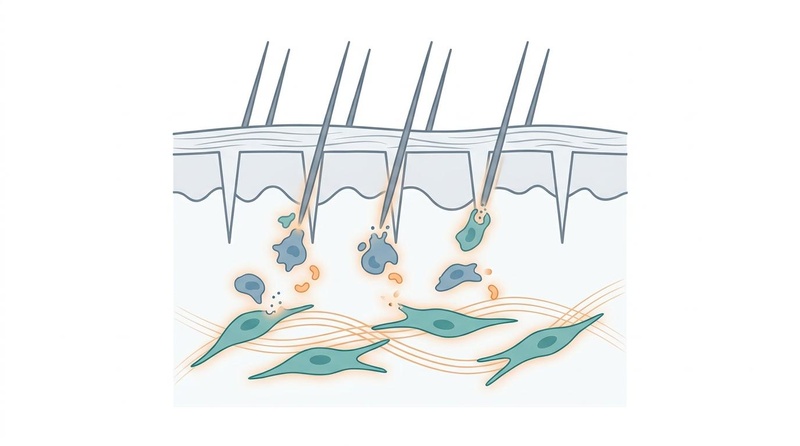
[[pages/microneedling.md|Microneedling]] (Percutaneous Collagen Induction Therapy) involves creating controlled micro-injuries to the skin using fine needles. This mechanical trauma initiates a wound healing cascade, stimulating fibroblasts to produce new collagen and elastin fibers, which improves skin texture, firmness, and reduces scars. [[pages/prp-platelet-rich-plasma.md|Platelet-Rich Plasma (PRP)]] is derived from a patient's own blood, concentrated to contain a high density of platelets. These platelets, when activated, release a potent cocktail of growth factors (e.g., PDGF, TGF-β, VEGF, EGF) that are critical for tissue repair, angiogenesis, and cell proliferation [14][15].
¶ Synergy of Microneedling and PRP
The combination works synergistically: microneedling creates temporary micro-channels in the skin, which significantly enhances the penetration and absorption of the growth factors contained in the topically applied PRP. This direct delivery to the deeper dermal layers amplifies the natural healing response initiated by microneedling, leading to more robust neocollagenesis, faster tissue remodeling, and superior aesthetic outcomes compared to either treatment alone [3:5][9:4]. For example, in atrophic acne scars, this combination provides a strong signal for the breakdown of fibrotic scar tissue and the organized deposition of new, healthy collagen [2:5].
¶ When to Refer to Standalone Pages
- Standalone [[pages/microneedling.md|Microneedling]] Guide: Refer to this page for detailed mechanical device specifications (e.g., rollers vs. motorized pens), needle cartridge selection, needle spacing, and general micro-channel creation protocols without the use of biologics.
- Standalone [[pages/prp-platelet-rich-plasma.md|PRP (Platelet-Rich Plasma)]] Guide: Refer to this page for in-depth coverage of autologous blood collection, centrifugation speeds and processing protocols, molecular biology of platelet growth factors, and non-dermatological therapeutic applications (e.g., joint or soft tissue regeneration).
- This Combined Guide: Use this guide when researching the clinical synergy of applying autologous platelet-rich plasma alongside mechanical needling for dermal and follicular remodeling, treating atrophic scars, stretch marks, fine lines, or pattern hair loss.
¶ Professional versus Home Needling Boundaries
The depth of needle penetration is a critical factor distinguishing professional clinical microneedling from at-home dermarolling.
- Professional Microneedling (Clinical Depth: 0.5mm – 2.5mm): Performed by trained clinicians using motorized pens or RF microneedling devices. These devices allow for precise control of needle depth, enabling penetration into the dermis to effectively treat deep acne scars, advanced photoaging, and significant hair loss. Professional settings ensure sterile technique, reducing infection risk.
- At-Home Microneedling (Cosmetic Depth: 0.2mm – 0.3mm): Typically uses dermarollers with very short needles, primarily for enhancing topical product absorption and minor textural improvements. These devices generally do not penetrate deeply enough to induce significant collagen remodeling or address deep scars/hair loss. Crucially, deeper at-home needling (beyond 0.3mm) is discouraged due to significant risks of infection, scarring, and granuloma formation if sterile technique and proper aftercare are not rigorously followed [7:4][16].
¶ PRP Variability
The efficacy of PRP therapy is highly dependent on the preparation method, which influences the concentration of platelets, leukocytes (white blood cells), and red blood cells in the final product [17].
- Platelet Concentration: Most therapeutic PRP preparations aim for a platelet concentration 3-5 times baseline, or at least 1,000,000 platelets/µL [15:1]. Lower concentrations may not deliver sufficient growth factors for optimal results.
- Leukocyte Content (LR-PRP vs. LP-PRP): Leukocyte-rich PRP (LR-PRP) contains a higher concentration of white blood cells, which can sometimes be pro-inflammatory, while leukocyte-poor PRP (LP-PRP) aims to minimize this inflammatory component. The optimal choice depends on the specific condition being treated, with some evidence suggesting LP-PRP may be preferable for certain aesthetic applications to minimize post-procedure inflammation [18].
- Activation Methods: Platelets must be activated (e.g., with calcium chloride or naturally by collagen exposure) to release their growth factors. In-situ activation by microneedling itself is common.
This variability underscores the importance of standardized preparation protocols and high-quality commercial PRP systems to ensure consistent therapeutic outcomes [17:1].
¶ Starter Protocol
A typical starter protocol for microneedling with PRP involves:
- Consultation & Assessment: Professional evaluation to determine suitability, identify target areas (e.g., acne scars, scalp), and establish realistic expectations.
- Blood Draw: Collection of a small volume of autologous blood.
- PRP Preparation: Centrifugation of blood to separate and concentrate the platelet-rich plasma [15:2].
- Skin Numbing: Application of a topical anesthetic cream to ensure patient comfort.
- Microneedling: The skin is cleansed and treated with a microneedling device, often with PRP simultaneously applied topically to allow penetration into the micro-channels. Needle depths vary by area and concern (e.g., 1.5mm-2.0mm for deep scars/hair loss, 0.5mm-1.0mm for fine lines) [19].
- Post-Procedure Care: Application of a soothing serum (often the remaining PRP) and strict sun protection. Avoidance of harsh topicals, makeup, and strenuous exercise for 24-48 hours.
- Frequency: Typically, 3-6 sessions are recommended, spaced 4-6 weeks apart, to allow for full collagen remodeling and tissue regeneration [3:6][9:5].
¶ Stronger Add-on Path
To enhance results, microneedling with PRP can be combined with other therapies:
- For Acne Scars:
- Subcision: For rolling scars, this technique can release tethered scar tissue before microneedling + PRP, allowing for better lifting and remodeling. See [[pages/acne-scar-remodeling.md|Acne Scar Remodeling]] for details.
- Fractional Lasers: Non-ablative or ablative fractional lasers can further stimulate collagen production and improve texture in severe cases.
- For Hair Loss:
- Topical Minoxidil: After a 24-hour waiting period post-needling, resuming topical minoxidil can significantly boost hair regrowth, with studies showing superior results compared to either therapy alone [9:6][6:3]. See [[pages/reversing-hair-loss.md|Reversing Hair Loss]] for protocols.
- Low-Level Laser Therapy (LLLT): Adjunctive LLLT can further stimulate follicular activity and accelerate healing.
- For Wrinkles & Skin Elasticity:
- Radiofrequency (RF) Microneedling: Incorporates RF energy delivered through the needles, providing thermal stimulation to tighten skin and boost collagen more intensely than traditional microneedling. See [[pages/wrinkles-and-skin-elasticity.md|Wrinkles and Skin Elasticity]].
- Topical Peptides: After the initial healing phase, non-irritating peptides like GHK-Cu can be introduced to support collagen synthesis [20].
¶ Clinical/Procedure Path
For more advanced cases or those seeking aggressive remodeling, professional interventions may include:
- Dermal Fillers: To address volume loss or fill deep atrophic scars that do not fully respond to collagen induction therapies.
- TCA CROSS (Chemical Reconstruction of Skin Scars): Highly targeted chemical peels for icepick scars.
- Surgical Excision/Punch Grafting: For very deep or resistant scars.
- Exosomes: Emerging therapies utilizing exosomes (extracellular vesicles) derived from stem cells or other sources, applied topically post-microneedling, are being explored for enhanced regeneration [21].
¶ What Usually Fails
Common reasons for suboptimal outcomes or complications include:
- Inadequate Needle Depth: Using needles that are too short for the targeted condition, particularly for deep scars or hair loss, will not achieve the desired dermal remodeling [19:1].
- Improper PRP Preparation: Variability in PRP concentration, leukocyte content, or activation methods can lead to inconsistent results. Non-standardized commercial kits or improper centrifugation techniques can yield a suboptimal PRP product [17:2].
- Poor Sterile Technique: This is the most critical failure point, especially with at-home devices. Non-sterile needles or skin preparation can introduce bacteria, leading to infections, abscesses, or granulomas [7:5][16:1].
- Over-Treatment/Under-Treatment: Too frequent sessions can hinder proper healing and lead to irritation or scarring. Too few sessions may not achieve significant improvement.
- Ignoring Contraindications: Performing the procedure on individuals with active infections (e.g., herpes outbreaks, active acne), a history of keloids, or those on certain medications (e.g., oral isotretinoin) can lead to severe complications [7:6].
- Unrealistic Expectations: Patients may be disappointed if they expect immediate or complete resolution of severe conditions without understanding the biological timeline of collagen remodeling, which takes months to a year.
¶ Tracking Plan
Monitoring progress is essential to assess efficacy and adjust treatment plans:
- Standardized Photography: Take high-quality, consistent before-and-after photos (same lighting, angles, distance) at baseline, every session, and at 3, 6, and 12 months post-treatment. This is crucial for objective assessment of scar improvement, hair density, and overall skin texture.
- Patient-Reported Outcomes (PROs): Utilize validated questionnaires to capture patient satisfaction, perceived improvement, and quality of life changes.
- Trichoscopy (for hair loss): A dermoscopic examination of the scalp to quantify hair density, shaft thickness, and follicular unit count.
- Skin Elasticity and Hydration Measurements: Devices can objectively measure improvements in skin firmness and hydration over time, particularly for anti-aging protocols.
¶ Safety and Red Flags
While generally safe, microneedling with PRP carries specific risks:
¶ Common Side Effects:
- Erythema and Edema: Redness and swelling, typically resolving within 24-48 hours [7:7].
- Mild Bruising: More common with deeper needling or in areas with fragile capillaries.
- Dryness and Flaking: As skin turnover accelerates in the days following treatment.
¶ Less Common / Serious Concerns:
- Infection: Bacterial, viral (e.g., herpes simplex reactivation), or fungal infections can occur if sterile protocols are not strictly followed [7:8].
- Post-Inflammatory Hyperpigmentation (PIH): Especially in individuals with darker skin types (Fitzpatrick IV-VI) if aggressive settings are used or sun protection is inadequate [7:9].
- Granulomatous Reactions: Persistent nodules can form due to foreign body reactions to non-sterile products or impurities introduced into the deeper skin layers [16:2][22].
- Allergic Reactions: Rare, but possible to topical anesthetics or other solutions used during the procedure.
- Scarring: Extremely rare with proper technique, but possible with excessive depth, aggressive passes, or infection.
¶ When to Refer to a Specialist / Red Flags:
- Persistent Pain, Swelling, or Redness: Beyond 48-72 hours, especially if accompanied by warmth, pus, or fever, indicates potential infection.
- New or Worsening Lesions: Development of new bumps, nodules, or unusual skin changes.
- Exacerbation of Pre-existing Conditions: Flare-ups of herpes, acne, or inflammatory dermatoses.
- Lack of Expected Improvement: After several sessions, if no discernible improvement is noted, a re-evaluation of the diagnosis or treatment approach is warranted.
¶ Contraindications for Microneedling with PRP:
- Active Skin Infection: Herpes simplex, warts, active acne (cystic/pustular), impetigo, or fungal infections at the treatment site [7:10].
- Chronic Skin Conditions: Moderate to severe eczema, psoriasis, or rosacea in the treatment area.
- Keloidal Tendency: A personal or family history of keloid scarring [7:11].
- Immunosuppression/Poor Healing: Individuals on immunosuppressive therapies, with uncontrolled diabetes, or undergoing chemotherapy/radiation, as this impairs wound healing.
- Anticoagulant Therapy: Patients on blood thinners are at increased risk of bruising and bleeding.
- Pregnancy/Lactation: Generally avoided due to lack of safety data.
- Recent Isotretinoin Use: Within 6-12 months due to impaired wound healing [7:12].
¶ Practical FAQ
Is microneedling with PRP painful?
A topical anesthetic cream is applied to the treatment area for 30-60 minutes prior to the procedure, making it generally well-tolerated. Patients typically report feeling pressure, vibration, or a mild stinging sensation, rather than sharp pain. Post-procedure discomfort is usually minimal, akin to a mild sunburn.
How many sessions are needed to see results?
For most indications, a series of 3-6 sessions, spaced 4-6 weeks apart, is recommended for optimal results [3:7][9:7]. Some patients may see initial improvements after 1-2 sessions, but significant collagen remodeling and sustained benefits accrue over a full course of treatment. Maintenance sessions may be advised every 6-12 months.
Can PRP alone stimulate collagen?
While PRP contains powerful growth factors that promote cellular proliferation and tissue repair, its ability to deeply penetrate the skin barrier when applied topically as a standalone treatment is limited. Microneedling enhances this penetration significantly, making the combination more effective for collagen induction [3:8]. Injections of PRP directly into the dermis (without microneedling) can stimulate collagen but may be more painful and prone to bruising.
What is the downtime after microneedling with PRP?
Downtime is generally minimal. Patients typically experience redness and mild swelling for 24-48 hours. Some may have pinpoint bleeding immediately after the procedure, which resolves quickly. Makeup can usually be applied after 24 hours, and normal activities can resume shortly thereafter, with strict avoidance of direct sun exposure.
Can microneedling with PRP be done at home?
Professional microneedling with PRP should never be attempted at home. The process requires sterile blood collection, precise PRP preparation, and controlled microneedling depths (often 0.5mm to 2.5mm) that can only be safely achieved by trained professionals in a clinical setting. Attempting this at home carries severe risks of infection, scarring, and adverse reactions [7:13][16:3]. At-home dermarollers are limited to superficial depths (0.2mm-0.3mm) for product absorption and should not be used with PRP.
¶ References
Albazee E, AlOtaibi A, Alsaffar H. Microneedling with Topical Insulin Versus Microneedling with Platelet-rich Plasma for Post-Acne Scars: A Systematic Review and Meta-Analysis with Trial Sequential Analysis. Aesthetic Plastic Surgery. 2026 Jun 21. https://pubmed.ncbi.nlm.nih.gov/42324392/ ↩︎ ↩︎ ↩︎
Li H, Jia B, Zhang X. Comparing the efficacy and safety of microneedling and its combination with other treatments in patients with acne scars: a network meta-analysis of randomized controlled trials. Archives of Dermatological Research. 2024 Aug 7. https://pubmed.ncbi.nlm.nih.gov/39110247/ ↩︎ ↩︎ ↩︎ ↩︎ ↩︎ ↩︎
Kang C, Lu D. Combined Effect of Microneedling and Platelet-Rich Plasma for the Treatment of Acne Scars: A Meta-Analysis. Frontiers in Medicine. 2021. https://pmc.ncbi.nlm.nih.gov/articles/PMC8882957/ ↩︎ ↩︎ ↩︎ ↩︎ ↩︎ ↩︎ ↩︎ ↩︎ ↩︎
Kaur T, Kaur S, Bagga PK. Comparative study of microneedling monotherapy versus microneedling with autologous platelet-rich plasma for the treatment of stretch marks (striae distensae) and post-surgical scars: Clinical and dermoscopy outcomes. Journal of Cutaneous and Aesthetic Surgery. 2024 Oct-Dec. https://pmc.ncbi.nlm.nih.gov/articles/PMC11619171/ ↩︎ ↩︎ ↩︎ ↩︎
Hassan SA, Saade DS, Kurban M. Evaluating the Efficacy of Combined Platelet-Rich Plasma and Microneedling for Aesthetic Rejuvenation of the Periorbital Area: A Randomized, Blinded Cohort Study. Journal of Cosmetic Dermatology. 2025 Feb. https://pubmed.ncbi.nlm.nih.gov/39645648/ ↩︎ ↩︎ ↩︎ ↩︎
Gupta AK, Wang T, Bamimore MA. Relative Effects of Minoxidil 5%, Platelet-Rich Plasma, and Microneedling in Pattern Hair Loss: A Systematic Review and Network Meta-Analysis. Skin Appendage Disorders. 2023 Dec. https://pubmed.ncbi.nlm.nih.gov/38058547/ ↩︎ ↩︎ ↩︎ ↩︎
Litchman G, et al. A Systematic Review Examining the Potential Adverse Effects of Microneedling. The Journal of Clinical and Aesthetic Dermatology. 2021;14(1):45–54. https://pmc.ncbi.nlm.nih.gov/articles/PMC7869810/ ↩︎ ↩︎ ↩︎ ↩︎ ↩︎ ↩︎ ↩︎ ↩︎ ↩︎ ↩︎ ↩︎ ↩︎ ↩︎ ↩︎
Bonati LM, Epstein GK, Strugar TL. Microneedling in All Skin Types: A Review. Journal of Drugs in Dermatology. 2017 Apr 1. https://pubmed.ncbi.nlm.nih.gov/28403263/ ↩︎
Pei S, et al. Efficacy and safety of combined microneedling therapy for androgenic alopecia: A systematic review and meta-analysis of randomized clinical trials. Journal of Cosmetic Dermatology. 2024;23(5):1560-1572. https://pubmed.ncbi.nlm.nih.gov/38239003/ ↩︎ ↩︎ ↩︎ ↩︎ ↩︎ ↩︎ ↩︎ ↩︎
Mishra M, Varia R, Mondal S. Efficacy of Platelet Rich Plasma and Concentrated Growth Factor in Treating Androgenetic Alopecia: A Split-Scalp Study. Journal of Maxillofacial and Oral Surgery. 2026 Apr. https://pubmed.ncbi.nlm.nih.gov/41971493/ ↩︎ ↩︎ ↩︎
Wang Q, Ma C, Zhang L. A Scoping Review of Radiofrequency Microneedling: Clinical Application and Outcome Assessment. Aesthetic Plastic Surgery. 2025 Sep. https://pubmed.ncbi.nlm.nih.gov/40537669/ ↩︎ ↩︎ ↩︎
Ahmed AEM, Mahmoud WA, El-Komy FBY. Microneedling with autologous platelet rich fibrin versus microneedling with autologous platelet rich plasma in treatment of abdominal stretch marks: a randomized comparative study. Archives of Dermatological Research. 2025 Mar 19. https://pubmed.ncbi.nlm.nih.gov/40106114/ ↩︎ ↩︎ ↩︎
Hsieh TS, Chiu WK, Yang TF. A Meta-analysis of the Evidence for Assisted Therapy with Platelet-Rich Plasma for Atrophic Acne Scars. Aesthetic Plastic Surgery. 2019 Dec. https://pubmed.ncbi.nlm.nih.gov/31506783/ ↩︎
Sundman EA, Cole BJ, Karas V. Anti-inflammatory and matrix restorative mechanisms of Platelet-Rich Plasma in osteoarthritis. American Journal of Sports Medicine. 2014;42(12):3020-3027. https://doi.org/10.1177/0363546513507766 ↩︎
Marx RE. Platelet-rich plasma (PRP): A short review. Implant Dentistry. 2001;10(4):279-281. https://pubmed.ncbi.nlm.nih.gov/11813662/ ↩︎ ↩︎ ↩︎
Huang C, Smoller BR, Kerstetter JC. Destructive Facial Granuloma Following Self-Treatment With Vitamin E Oil and an At-Home Microneedling Device. Cutis. 2025 Oct. https://pubmed.ncbi.nlm.nih.gov/41363966/ ↩︎ ↩︎ ↩︎ ↩︎
Fadadu RP, et al. Review of concentration yields in commercially available PRP systems. HSS Journal. 2019;15(1):7-15. https://pubmed.ncbi.nlm.nih.gov/30607833/ ↩︎ ↩︎ ↩︎
Bensa C, et al. PRP injections for knee osteoarthritis. American Journal of Sports Medicine. 2025;53(3):700-710. https://doi.org/10.1177/03635465241246524 ↩︎
Singh A, et al. Microneedling: Advances and widening horizons. Indian Dermatology Online Journal. 2016;7(4):244-254. https://pmc.ncbi.nlm.nih.gov/articles/PMC4976400/ ↩︎ ↩︎
Kang L, et al. Microneedle-Mediated Delivery of Copper Peptide Through Skin. Pharmaceutical Research. 2015;32(11):3585-3594. https://pubmed.ncbi.nlm.nih.gov/25690343/ ↩︎
Estupiñan B, Ly K, Goldberg DJ. Adipose Mesenchymal Stem Cell-Derived Exosomes Versus Platelet-Rich Plasma Treatment for Photoaged Facial Skin: An Investigator-Blinded, Split-Face, Non-Inferiority Trial. Journal of Cosmetic Dermatology. 2025 May. https://pubmed.ncbi.nlm.nih.gov/40414798/ ↩︎
Friedmann DP, Mehta E, Verma KK. Granulomatous Reactions From Microneedling: A Systematic Review of the Literature. Dermatologic Surgery. 2025 Mar 1. https://pubmed.ncbi.nlm.nih.gov/39584690/ ↩︎