¶ Mold and Mycotoxins: Deep Dive
¶ TL;DR
- Verdict: Exposure to dampness, mold spores, and secondary fungal metabolites (mycotoxins) in water-damaged buildings is a clinically validated driver of respiratory irritation, allergic asthma, and localized or systemic inflammation.
- Who it's for: Individuals with unexplained chronic fatigue, cognitive impairment ("brain fog"), treatment-resistant allergies, or those occupying buildings with a history of water leaks or high humidity.
- Expected magnitude + timeline: Identifying and resolving the moisture source and removing mold completely resolves allergic/respiratory symptoms in weeks. In individuals suffering from Chronic Inflammatory Response Syndrome (CIRS), clinical binder protocols can improve inflammatory markers and neuro-symptom scores over 1 to 3 months [Dooley2024][Shoemaker2006].
- Key risk(s): Relying on unscientific urine mycotoxin tests can lead to misdiagnosis and expensive, unnecessary treatments. Taking high-dose binder supplements without clinical guidance can cause severe nutrient malabsorption and gastrointestinal distress [He2022].
- What to do next: Perform an ERMI qPCR dust test to evaluate fungal load, inspect your home for moisture sources (>60% humidity), and if systemic symptoms exist, consult a medical toxicologist.
¶ Quick Answer
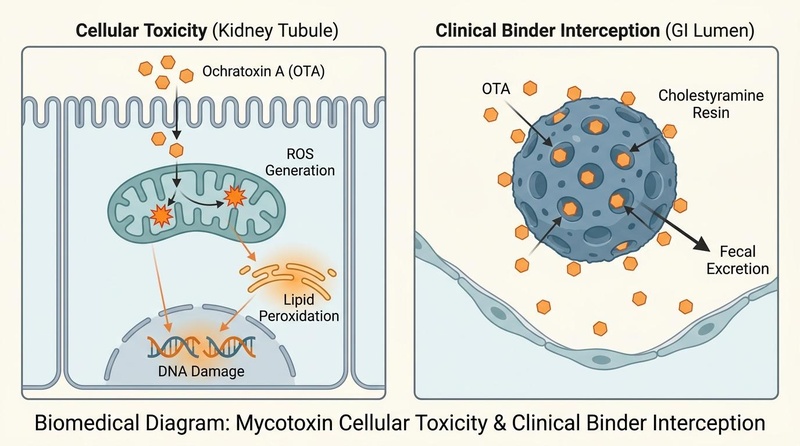
Indoor dampness and mold are major environmental health hazards. Water-damaged building materials cultivate toxigenic molds (e.g., Stachybotrys chartarum, Aspergillus, Penicillium) that release airborne spores, fragments, and highly toxic mycotoxins (such as Ochratoxin A, Aflatoxin B1, and Trichothecenes) [Hope2013][WHO2009]. While inhalation exposure causes respiratory and allergic responses, some individuals develop a systemic inflammatory response known as Chronic Inflammatory Response Syndrome (CIRS) [Dooley2024]. Clinically validated interventions prioritize source removal (remediation under negative pressure) [IICRCS520] and, in cases of documented systemic biotoxin illness, the use of oral enterosorbents (like cholestyramine or calcium bentonite clay) to intercept mycotoxins in the gastrointestinal lumen and block their enterohepatic recirculation [Shoemaker2006][Kermardi1999][Phillips2008].
¶ What It Is
Molds are microscopic fungi that play a vital role in decomposing organic matter. Indoors, however, mold growth is an abnormal state that occurs only in the presence of excess moisture (relative humidity >60%, water leaks, condensation).
When modern building materials (cellulose, drywall, wood) remain damp for more than 24–48 hours, they select for specific toxigenic molds. These fungi release three classes of airborne bio-contaminants:
- Fungal Spores and Hyphal Fragments: Physical particulates (1 to 10 µm) containing beta-glucans and glycoproteins that act as potent allergens, triggering IgE-mediated immune cascades in the upper and lower respiratory tracts.
- Microbial Volatile Organic Compounds (mVOCs): Low-molecular-weight compounds that evaporate easily. They are responsible for the characteristic "musty, damp" odor of mold and cause direct sensory irritation to eyes and airways.
- Mycotoxins: Low-molecular-weight secondary metabolites that are structurally stable and highly toxic at cellular levels.
¶ Toxicological Mechanisms of Mycotoxins
Unlike spores, which primarily trigger allergic pathways, mycotoxins possess diverse, potent toxicological profiles:
- Ochratoxin A (OTA): Produced by Aspergillus and Penicillium. It targets the kidneys and is highly nephrotoxic. At the cellular level, OTA enters proximal tubule cells, where it competes with phenylalanine, inhibiting protein synthesis, disrupting the mitochondrial respiratory chain, and generating massive reactive oxygen species (ROS) that cause lipid peroxidation and DNA adducts [Hope2012][Al-Anati2022].
- Aflatoxins: Produced by Aspergillus flavus. They are highly hepatotoxic and are class-1 human carcinogens. Aflatoxins are metabolized by CYP450 enzymes into a highly reactive epoxide intermediate that binds covalently to DNA, causing G-to-T transversion mutations, particularly in the p53 tumor suppressor gene [Mitchell2014].
- Trichothecenes (e.g., Satratoxin G): Produced by Stachybotrys chartarum ("black mold"). They are extremely potent inhibitors of eukaryotic translation. Upon skin contact or inhalation, they bind directly to the active site of the 60S ribosomal subunit, triggering "ribotoxic stress response" which initiates cellular apoptosis, tissue necrosis, and severe mucosal irritation [ToxRep2025].
¶ Chronic Inflammatory Response Syndrome (CIRS)
In approximately 24% of the population, genetic variations in HLA-DR/DQ haplotypes impair the immune system's ability to recognize and produce antibodies against biotoxins (like mycotoxins, ciguatoxin, or Pfiesteria) [Shoemaker2016]. In these "biotoxin-susceptible" individuals, inhaled mycotoxins are not cleared by the adaptive immune system. Instead, they continuously circulate throughout the body, localizing in fatty tissues and the central nervous system. This triggers a chronic, systemic innate immune activation, presenting as multi-system chronic fatigue, neuroinflammation, muscle aches, executive dysfunction, and dysregulation of regulatory neuropeptides (such as Melanocyte-Stimulating Hormone [MSH] and Vasoactive Intestinal Peptide [VIP]) [Dooley2024][Hope2013].
¶ Does It Work? (Evidence Snapshot)
Clinical trials, epidemiological guidelines, and toxicological studies support specific mold interventions.
| Outcome | Population | Intervention | Quality of Evidence | Study Count & Type | Notes |
|---|---|---|---|---|---|
| Allergy & Asthma Relief | Children & Adults with asthma | Moisture control & Mold removal | High | Systematic reviews & Cohorts [WHO2009] | Remediation significantly reduces respiratory symptoms and asthma exacerbations. |
| CIRS Symptom Resolution | Patients with water-damaged building illness | Shoemaker Protocol (Cholestyramine) | Moderate | Clinical trial & Double-blind RCT [Shoemaker2006] | Cholestyramine significantly improved cognitive and physical symptoms in affected cohorts. |
| Enterohepatic Toxin Elimination (OTA) | In Vivo models | Cholestyramine (Anion exchange resin) | High | Animal clinical trials [Kermardi1999][Madhyastha1992] | Cholestyramine binds OTA in bile, preventing reabsorption and increasing fecal excretion by up to 5-fold. |
| Aflatoxin Bio-marker Reduction | Human cohorts in high-risk zones | Calcium Bentonite Clay (NovaSil) | High | Randomized, double-blind clinical trials [Mitchell2014] | NovaSil clay (1.5-3.0g/day) safely bound gastrointestinal aflatoxins and reduced urinary biomarkers. |
| Mycotoxin Binding (General) | Toxicological assays | Activated Charcoal (Activated Carbon) | Moderate | In vitro & In vivo [Hatch1982][He2022] | Highly effective for broad-spectrum binding, but carries high risk of binding essential micronutrients. |
¶ Who Benefits Most / Least
Benefits Most:
- HLA-Susceptible Individuals: The 24% of the population who are genetically unable to clear biotoxins and exhibit chronic, systemic inflammation after exposure to damp buildings [Shoemaker2016].
- Individuals with Chronic Atopic Conditions: Asthmatics, people with allergic rhinitis, and patients with eczema who suffer from immediate hypersensitivity reactions to airborne fungal spores.
- Immuno-compromised Patients: Highly vulnerable to invasive pulmonary aspergillosis or other deep fungal infections from high mold environments.
Benefits Least:
- Immuno-competent, Non-atopic Individuals: Healthy individuals occupying clean, dry, well-ventilated buildings will see no clinical changes from binder protocols or environmental mold testing.
¶ How to Try It (Actionable Protocols)
¶ Starter Protocol: Environmental Detection & Moisture Control
Before any medical therapy can succeed, you must verify and eliminate the environmental source of mold.
- Stop the Moisture Source: Keep indoor relative humidity strictly between 40% and 60% using dehumidifiers and exhaust fans. Fix any water leaks within 24 hours.
- Environmental qPCR Testing (ERMI):
- Do not use cheap settle plates (petri dishes), which are highly inaccurate.
- Order an Environmental Relative Moldiness Index (ERMI) dust test [Shoemaker2016]. Collect dust from living areas using a specialized vacuum attachment.
- Goal: Achieve an ERMI score below 2 (or a HERTSMI-2 score below 10), which represents a safe environment for biotoxin-susceptible individuals.
¶ Standard Protocol: Professional Mold Remediation
If mold-damaged materials exceed 10 square feet:
- Containment & Negative Pressure: Hire a professional remediation firm certifying compliance with the IICRC S520 Standard [IICRCS520]. The work area must be sealed under negative air pressure using HEPA scrubbers to prevent cross-contamination.
- Source Removal: Discard porous materials (drywall, carpet, insulation) with visible mold growth. Do not paint over or spray bleach on mold; bleach does not kill deep roots and leaves toxic residues.
- HEPA Vacuuming and Wiping: Non-porous surfaces must be thoroughly vacuumed with a True HEPA vacuum and wiped down with specialized surfactants.
¶ Advanced Protocol: Clinical Mycotoxin Binder Therapy
Note: This clinical protocol is designed for individuals diagnosed with CIRS or biotoxin illness under direct clinician supervision.
                              Biotoxin Binder Protocol Matrix

      Mycotoxin Target          First-Line Binder           Dosing Strategy
      ----------------          -----------------           ---------------
      Ochratoxin A (OTA) ----> Cholestyramine (CSM) ----> 4g, 4x daily, empty stomach
                                                          (Take 1 hour after or 2 hours
                                                           before meals/meds/supplements)

      Aflatoxins ----------> Calcium Bentonite Clay ----> 1g to 1.5g, twice daily
                             (NovaSil / Smectite)         with large glass of water

      Trichothecenes -------> Activated Charcoal -------> 500mg, twice daily on an
                                                          empty stomach
- First-Line: Cholestyramine (CSM) (for Ochratoxin A exposure):
- Dose: 4 grams, taken 4 times daily, mixed in 8 oz of water.
- Timing: Take on an empty stomach, ideally 30 minutes before a meal. You must wait at least 1 hour after or 2 hours before taking any other medications or fat-soluble vitamins, as CSM acts as a powerful non-specific anion exchanger that will bind and prevent their absorption [He2022].
- Alternative: Welchol (Colesevelam) at 625mg tablets (2 tabs, twice daily) is less potent but much better tolerated.
- Supportive Enterosorbents:
- Calcium Bentonite Clay (NovaSil): Highly effective for aflatoxins [Phillips2008]. Take 1.5 grams daily in divided doses.
- Activated Charcoal (Activated Carbon): Broad-spectrum binder [Hatch1982]. Take 500mg, twice daily between meals.
- Preventing Malabsorption: Supplement with fat-soluble vitamins (Vitamins A, D, E, K) at bedtime, far away from binder doses, to prevent deficiency [He2022].
¶ Safety, Interactions, Red Flags
¶ Safety Warnings
- Nutrient and Drug Malabsorption: Binders, particularly cholestyramine and activated charcoal, are non-specific. They will bind and purge thyroid medications, hormones, birth control, and essential fat-soluble nutrients (Vitamins A, D, E, K, CoQ10, omega-3s) if taken concurrently [He2022].
- Severe Constipation: Cholestyramine frequently causes severe, painful constipation. Patients must increase fluid intake and may require magnesium supplementation or stool softeners.
¶ The Urine Mycotoxin Test Controversy (Red Flag)
Both the CDC and the American College of Medical Toxicology (ACMT) have published formal position statements warning against the use of commercial urine mycotoxin assays for diagnosing clinical mold illness [CDC2015][ACMT2006].
- The Issue: Urine mycotoxin tests are unvalidated. Studies show that healthy, asymptomatic individuals regularly excrete mycotoxins in urine simply from eating common dietary sources such as coffee, grains, cheese, and nuts [Solfrizzo2014][Gerding2015][Vila-Donat2020]. A positive urine test is often a marker of normal dietary excretion rather than mold inhalation from a water-damaged building.
- Clinician Recommendation: Diagnosis should be based on environmental history, documented water damage, HLA genetics, and systemic inflammatory biomarkers (TGF-beta1, C4a, MMP-9, MSH) [Dooley2024][Shoemaker2016].
¶ Stop Criteria
- Gastrointestinal Obstruction: If severe abdominal pain, constipation lasting >3 days, or rectal bleeding occurs, stop all binders immediately and seek medical evaluation.
¶ Tracking & What "Good" Looks Like
¶ Objective Markers (Biotoxin Panel)
- TGF-beta 1: Under 2,380 pg/mL (elevated indicates chronic innate immune activation).
- C4a: Under 2,830 ng/mL (highly sensitive marker of immediate innate system reaction).
- MSH (Melanocyte-Stimulating Hormone): Maintain between 35 and 81 pg/mL (low levels indicate hypothalamic-pituitary dysregulation).
- Visual Contrast Sensitivity (VCS) Test: A standardized neurological test measuring capillary perfusion in the retina. Improving VCS scores indicate successful detox [Shoemaker2006].
¶ Subjective Gains
- Resolution of chronic, migratory joint and muscle pain.
- Disappearance of brain fog, chronic sinus congestion, and sleep fragmentation.
¶ Common Mistakes & Myths
- Myth: "Bleaching mold kills it."
- Reality: Household bleach contains 90% water. When sprayed on porous materials (drywall, wood), the chlorine cannot penetrate and evaporates, while the water penetrates deep, feeding the mold's root system (mycelium) and causing it to return stronger. Always mechanically remove moldy drywall.
- Mistake: Relying on portable air purifiers to solve a mold leak.
- Reality: While a HEPA air purifier captures airborne spores, it cannot stop the continuous chemical off-gassing or growth of active mold feeding on water leaks. You must fix the plumbing or roof leak first.
- Mistake: Taking binders with food or other supplements.
- Reality: Binders taken with meals will bind the nutrients and fats in your food rather than systemic biotoxins excreted in bile, leading to nutritional deficiencies.
¶ Decision Tree (Text-Based)
                       Do you suspect mold exposure?
                                      |
                 -------------------------------------------
                |                                           |
         Visible mold growth?                      No visible mold, but
                |                                  unexplained systemic symptoms?
      ----------------------                                |
     |                      |                       Perform ERMI qPCR Test
  <10 sq ft?             >10 sq ft?                         |
     |                      |                    -----------------------
Clean with surfactant   Hire IICRC S520         ERMI < 2?             ERMI > 2?
and wear N95 mask       Professional team       |                     |
                        for negative pressure   Look for other        Identify moisture
                        remediation             CIRS triggers         leak & remediate
¶ FAQs
¶ What is the difference between an ERMI and a HERTSMI-2 test?
ERMI (Environmental Relative Moldiness Index) is a standardized EPA method using qPCR to analyze dust for 36 mold species. HERTSMI-2 is a focused, cost-effective derivative analyzing the dust for the 5 most hazardous toxigenic molds (including Stachybotrys and Aspergillus niger), assigning a point system to dictate if a building is safe for biotoxin-susceptible patients [Shoemaker2016].