¶ Nutrition
Nutrition is the biological orchestration of dietary inputs and cellular signaling pathways that dictates metabolic rate, chronic inflammation, cellular quality control (autophagy), tissue remodeling, and healthy physiological lifespan. Rather than a static set of caloric targets, clinical nutrition represents a dynamic, high-fidelity interface where macronutrients, micronutrients, and physical food structures interact with the host genome, endocrine networks, the gut microbiome, and circadian pacemakers.
¶ Layer 1: The Executive Dashboard
¶ At a Glance
A clean, repeatable nutrition baseline is the single most effective clinical lever for optimizing human healthspan, maintaining cardiovascular integrity, and preventing age-related sarcopenia. This guide synthesizes five core dietary domains—protein adequacy, carbohydrate quality, functional lipids, micronutrient density, and chrononutritional timing—into a unified, evidence-based roadmap designed for clinical reference and metabolic optimization.
¶ Safety "Traffic Light"
- Red Light (Absolute Contraindications):
- Advanced Chronic Kidney Disease (CKD Stages 3–5): High-protein intakes (>0.8 g/kg/day) accelerate nephron hyperfiltration and sclerosis. Protein must be strictly restricted to 0.55–0.60 g/kg/day under clinical nephrology supervision [1][2].
- Active Eating Disorders: Rigid calorie counting, tight fasting windows, and intensive biofeedback (such as CGMs) are contraindicated due to the risk of triggering or exacerbating anorexia, bulimia, or orthorexic pathologies [3].
- Yellow Light (Precautions & Monitoring):
- Type 2 Diabetes on Hypoglycemic Pharmacotherapy: Changing eating schedules (e.g., time-restricted eating) or introducing carbohydrate restriction requires close glucose monitoring and proactive medical adjustment of insulin and sulfonylurea doses to prevent severe, life-threatening hypoglycemia [4][5].
- Active Gastrointestinal Flares (IBD/Severe Dysbiosis): Rapid titration of prebiotic dietary fibers or fermented foods during acute ulcerative colitis or Crohn's flares can cause severe mucosal mechanical irritation, abdominal pain, and hemorrhage [6].
- History of Atrial Fibrillation: Supplementation with long-chain omega-3 fatty acids at therapeutic doses exceeding 1.0 g/day can increase the risk of incident AFib in a dose-dependent manner [7].
- Green Light (Safe Baselines):
- Healthy Adults: Safe and highly protective for metabolic flexibility, insulin sensitivity, and skeletal muscle mass preservation.
| Interventive Pillar | Target Biomarker / Clinical Metric | Clinical Timing & Administration |
|---|---|---|
| Protein Adequacy | 1.6–2.2 g/kg/day (elevated to 1.8–2.2 g/kg in older adults) [6:1][8] | Distributed evenly as 35–45g per meal across 3–4 meals to saturate the intramuscular leucine threshold (~3g) and trigger muscle protein synthesis [6:2][8:1][9]. |
| Carbohydrate Quality | 25–38 g/day of dietary fiber from whole food matrices (minimum 14g per 1,000 kcal) [10] | Titrated progressively (+5g every 3 days) with concurrent fluid intake of ≥2.5 L/day to support microbial fermentation and avoid colonic impaction [10:1][11]. |
| Functional Lipids | Target Omega-3 Index >8.0%; ApoB <70 mg/dL [12][13] | High-quality monounsaturated fats (MUFAs, e.g., extra virgin olive oil) as primary energy; limit saturated fats to <10% of energy to preserve hepatic LDL receptor density [12:1][14]. |
| Fasting & Timing | 10–12 hour daily eating window (Early Time-Restricted Eating preferred) [5:1][15] | Consuming meals within a daylight window (ending eating by 6:00 PM) to align with natural circadian peaks in peripheral insulin sensitivity [16][5:2][15:1]. |
| Hydration & Ions | 30–45 mL/kg/day of fluid; Potassium-to-Sodium intake ratio of >2:1 [17][18] | Maintain baseline hydration with mineral-dense water; active electrolyte tracking to match increased urinary sodium excretion during low-carbohydrate phases [17:1][18:1]. |
¶ Bottom Line
Sustained clinical healthspan is optimized by a whole-food, fiber-rich, and protein-adequate dietary architecture. Restricting ultra-processed foods (UPFs), aligning eating windows with daylight hours, and customizing macronutrients to age, sex, and physical demands forms the most robust, scientifically validated framework for cardiometabolic protection and metabolic flexibility [4:1][10:2][19][20][12:2][15:2].
¶ Layer 2: The Contextual Narrative
¶ The "Why" (Benefits First)
- Lean Mass Preservation & Sarcopenia Counteraction: Intact skeletal muscle mass is a primary metabolic sink for postprandial glucose disposal via non-insulin-mediated pathways. Optimized protein intake provides essential branched-chain amino acids (principally leucine) that serve as direct signaling ligands to activate the mechanistic target of rapamycin complex 1 (mTORC1) pathway, driving skeletal muscle protein synthesis and countering age-related "anabolic resistance" [6:3][8:2][9:1].
- Microbiome Homeostasis & Immunological Calm: Anaerobic fermentation of complex, non-digestible plant polysaccharides (dietary fiber) by symbiotic gut microbes produces short-chain fatty acids (SCFAs)—acetate, propionate, and butyrate. These signaling ligands act on G-protein coupled receptors (GPR41/43) to fuel colonocytes, maintain gut barrier tight junctions (claudin-1, occludin), and downregulate systemic inflammatory cascades (hs-CRP, TNF-alpha) [10:3][11:1].
- Endothelial Integrity & Cardiovascular Prevention: Prioritizing monounsaturated fats (MUFAs) and long-chain omega-3 polyunsaturated fatty acids (PUFAs) preserves vascular nitric oxide availability, decreases circulating low-density lipoprotein (LDL) particle residence times, and prevents the systemic accumulation of advanced glycation end-products (AGEs) [21][20:1][12:3][13:1].
- Satiety and Caloric Regulation: Diets composed of intact cellular matrices slow mechanical gastric transit and normalize natural satiety signaling. This prevents the spontaneous hyperphagia and endocrine disruption seen with ultra-processed food matrices that are engineered to bypass standard gastrointestinal feedback loops [19:1][20:2].
¶ Reality Check / Context
- Human Clinical Reality vs. Mouse Hopes: While rodent fasting models show dramatic longevity extensions, much of this is driven by massive, non-isocaloric caloric deficits that are difficult to translate to human subjects due to the risks of sarcopenia, bone density loss, and social isolation. Human clinical data, such as the CALERIE Phase 2 trial, confirm that moderate caloric restriction (~12%) or time-restricted eating (TRF) provides robust cardiometabolic protection (reduced fasting insulin, lower blood pressure, improved HOMA-IR) without compromising bone mineral density or muscle function when micronutrient density is preserved [4:2][16:1][5:3].
- Bioavailability and Food Sources: The quality of dietary inputs is highly dependent on their molecular source. For example, animal-based proteins exhibit a high Digestible Indispensable Amino Acid Score (DIAAS >100) compared to plant-based proteins (DIAAS 50–80). Plant-based diets require higher total protein volumes and strategic pairing (e.g., legumes + whole grains) to consistently exceed the required ~3.0g leucine threshold per meal [6:4][8:3]. Similarly, supplemental isolated fibers fail to replicate the complex glycemic buffering and prebiotic benefits provided by intact, cellular whole food matrices [10:4][19:2].
- Commercial Context and "Health Washing": The functional food market is heavily saturated with ultra-processed "keto" or "high-protein" products. These are often processed with emulsifiers, artificial sweeteners, and isolated fibers that can alter gut microbial diversity and trigger localized low-grade mucosal inflammation. Clinicians should prioritize minimally processed, NOVA Category 1 and 2 whole foods as the primary metabolic default.
¶ Practical Integration & Actionable Routines
¶ The 50/25/25 Plate Template
To simplify macro-apportionment for patients, visualize the dinner plate as a metabolic map:
- ½ of the Plate: Non-starchy vegetables (e.g., cruciferous vegetables, leafy greens, zucchini, bell peppers) to maximize prebiotic fiber volume and micronutrient density.
- ¼ of the Plate: High-quality protein (e.g., wild-caught fish, pasture-raised eggs, skinless poultry, organic tofu, tempeh) to saturate muscle protein synthesis pathways.
- ¼ of the Plate: Slow-digesting complex carbohydrates (e.g., black beans, lentils, quinoa, sweet potatoes, wild rice) to provide stable glycogen repletion.
- Lipid Accents: 1–2 tablespoons of cold-pressed extra virgin olive oil, raw pumpkin seeds, or half an avocado to facilitate the absorption of fat-soluble vitamins (A, D, E, K).
¶ The Grocery Baseline (15 Essential Staples)
Keep these nutrient-dense, minimally processed foods on hand to guarantee baseline metabolic compliance:
- Pasture-Raised Eggs: Highly bioavailable complete protein, rich in choline, lutein, and zeaxanthin.
- Wild Salmon or Sardines: Dense source of preformed long-chain omega-3s (EPA/DHA) and high-quality protein.
- Plain Greek Yogurt or Skyr: Fermented dairy providing probiotics, calcium, and concentrated protein.
- Organic Tofu or Tempeh: Complete, highly digestible plant-based protein with minimal glycemic impact.
- Extra Virgin Olive Oil: Primary cold-pressed lipid source rich in monounsaturated oleic acid and polyphenols.
- Broccoli or Brussels Sprouts: Cruciferous vegetables rich in sulforaphane, supporting hepatic conjugation pathways.
- Avocados: High-fiber, monounsaturated fat source that supports lipid profiles.
- Black Beans or Lentils: High-protein, high-fiber legumes with a slow-digesting carbohydrate matrix.
- Organic Blueberries or Raspberries: Low-glycemic, antioxidant-dense fruits rich in anthocyanins.
- Rolled Oats or Steel-Cut Oats: Highly soluble source of beta-glucans, which bind intestinal bile acids to lower LDL-C.
- Raw Pumpkin Seeds: High in magnesium, zinc, and plant sterols.
- Baby Spinach or Lacinato Kale: Leafy greens dense in folate, magnesium, and dietary nitrates.
- Garlic: Allicin precursor supporting endothelial nitric oxide production [22].
- Walnuts: Plant-based source of alpha-linolenic acid (ALA) and polyphenols.
- Bone Broth: Rich in glycine, proline, and hydroxyproline, supporting connective tissue repair and gut barrier integrity.
¶ Actionable Meal Templates across Life Stages
¶ Template 1: The Young Active Adult (Anabolic & Thermogenic Focus)
- Clinical Goal: Maximize muscle tissue reserve, support high physical energy expenditure, and optimize insulin sensitivity.
- Breakfast: 4 scrambled eggs with baby spinach and mushrooms, cooked in extra virgin olive oil; 1 cup of organic blueberries; 1 cup of black coffee or green tea.
- Lunch: 180g grilled chicken breast; 1 cup of cooked quinoa; large mixed greens salad with sliced cucumber, pumpkin seeds, and a lemon-olive oil dressing.
- Dinner: 200g wild-caught salmon fillet; roasted Brussels sprouts and sweet potato wedges; 2 squares of dark chocolate (≥85% cacao) for dessert.
¶ Template 2: The Middle-Aged Adult (Metabolic and Satiety Focus)
- Clinical Goal: Blunt postprandial glycemic excursions, maintain lean mass while managing body fat, and optimize lipid profiles.
- Breakfast: 200g plain Greek yogurt topped with 1 tablespoon of chia seeds, ½ cup of raspberries, and a handful of crushed walnuts.
- Lunch: Large Mediterranean-style salad featuring 150g of grilled tempeh or organic chicken breast, wild arugula, cherry tomatoes, Kalamata olives, artichoke hearts, dressed with extra virgin olive oil and apple cider vinegar.
- Dinner: 180g baked cod or halibut; large serving of steamed asparagus; ½ cup of black beans seasoned with garlic, cumin, and sea salt.
¶ Template 3: The Older Adult (Sarcopenia and Hydration Focus)
- Clinical Goal: Counter anabolic resistance, support skeletal bone density, and proactively manage subclinical dehydration.
- Breakfast: Protein-dense shake containing 35g whey or organic pea protein isolate, 1 cup of unsweetened almond milk, ½ cup of spinach, 1 tablespoon of almond butter, and ½ a banana. Consume with 350 mL of water.
- Lunch: 3-egg omelet filled with wild salmon (canned/fresh), diced tomatoes, and goat cheese; served with a side of steamed broccoli.
- Dinner: 180g lean turkey breast; mashed sweet potato with extra virgin olive oil; large roasted vegetable medley (carrots, zucchini, onions); 300 mL of bone broth.
¶ Layer 3: The Evidence Room
¶ Core Mechanisms of Action
¶ mTORC1 Activation and the Intramuscular Leucine Trigger
The Mechanistic Target of Rapamycin Complex 1 (mTORC1) is the master regulator of cellular translation and muscle protein synthesis (MPS). Skeletal muscle tissue is highly sensitive to extracellular concentrations of essential amino acids, particularly leucine.
Intracellular leucine is sensed directly by the cytosolic protein Sestrin2.
- In the absence of leucine, Sestrin2 binds to and inhibits GATOR2, preventing downstream anabolic signaling.
- Upon binding to leucine, Sestrin2 undergoes a conformational change and dissociates from GATOR2.
- Free GATOR2 subsequently activates the Rag GTPases, which recruit mTORC1 to the lysosomal membrane, where it is phosphorylated and activated by Rheb.
- Activated mTORC1 phosphorylates its downstream targets, p70S6K and 4E-BP1, initiating ribosomal translation and myofibrillar remodeling.
- In older adults, this pathway exhibits anabolic resistance, requiring a higher concentration of leucine (typically 3.0–3.5g per meal) to initiate equivalent mTORC1 phosphorylation compared to younger cohorts [6:5][8:4][9:2].
¶ Prebiotic Fermentation & SCFA Signaling
Dietary fibers escape digestion in the upper gastrointestinal tract due to a lack of host-encoded carbohydrate-active enzymes (CAZymes). Upon entering the cecum and colon, these intact polysaccharides undergo anaerobic fermentation by specialized taxa of the gut microbiota.
- Taxonomic Niche Partitioning: Bacteroides act as metabolic generalists, using large genomic portfolios of polysaccharide utilization loci (PULs) to cleave complex glycans into simpler oligomers. These oligomers are then utilized by specialists like Bifidobacterium and Faecalibacterium prausnitzii through cross-feeding networks [10:5][11:2].
- SCFA Production: Fermentation pathways convert monosaccharides into short-chain fatty acids, primarily acetate, propionate, and butyrate (typically in a 60:20:20 molar ratio).
- Receptor Signaling:
- Butyrate serves as the primary energetic substrate for colonocytes, maintaining hypoxia in the gut lumen to suppress facultative anaerobic pathogens. It downregulates NF-kB, lowering mucosal inflammatory tone [10:6].
- Propionate undergoes hepatic transit, where it acts as a substrate for gluconeogenesis and downregulates hepatic de novo lipogenesis [10:7].
- Acetate crosses the blood-brain barrier to bind to GPR41/43 in the hypothalamus, downregulating neuropeptide Y and stimulating pro-opiomelanocortin (POMC) neurons to promote central satiety [10:8][11:3].
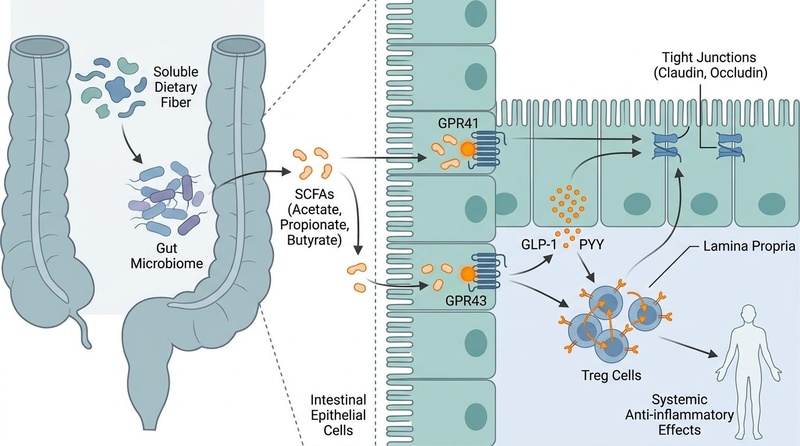
Figure 3: Prebiotic Fiber Fermentation and Short-Chain Fatty Acid (SCFA) Signaling. Anaerobic fermentation of complex fibers by Bacteroides and Bifidobacterium yields acetate, propionate, and butyrate. These metabolites regulate gut barrier integrity, direct hepatic lipid synthesis, and modulate central satiety via GPR41/43 signaling.
¶ Insulin-Dependent vs. Exercise-Dependent GLUT4 Translocation
Skeletal muscle tissue is the primary metabolic sink for clearing postprandial blood glucose. Glucose entry across the lipid bilayer is mediated by Glucose Transporter Type 4 (GLUT4), which resides in specialized intracellular storage vesicles.
- The Insulin-Dependent Pathway: Postprandial insulin secretion triggers insulin binding to its transmembrane receptor. This initiates autophosphorylation of tyrosine residues and activates Insulin Receptor Substrate 1 (IRS-1). IRS-1 activates Phosphoinositide 3-kinase (PI3K), which converts PIP2 to PIP3, subsequently phosphorylating and activating Akt (protein kinase B). Akt phosphorylates AS160 (Akt substrate of 160 kDa), a Rab-GTPase activating protein, allowing the GLUT4 vesicles to dock, fuse with the sarcolemma, and facilitate glucose clearance.
- The Exercise/Contraction-Dependent Pathway: Muscle contraction depletes intracellular phosphocreatine and ATP, rapidly elevating the AMP-to-ATP ratio. This metabolic shift directly activates Adenosine Monophosphate-Activated Protein Kinase (AMPK). AMPK bypasses the insulin receptor cascade entirely, directly phosphorylating AS160 to drive GLUT4 translocation. This is why immediate post-meal muscular contraction (e.g., walking) is highly effective at blunting postprandial glucose peaks even in severely insulin-resistant individuals.
¶ Evidence-Based Nutrition Interventions
¶ 1. Glycemic Control & Continuous Glucose Monitoring (CGM)
Continuous glucose monitors track glucose concentrations in interstitial fluid, providing real-time biofeedback on glycemic variability (the amplitude and frequency of blood glucose swings) [23][9:3].
- Target Metrics: In healthy populations, the clinical goal is a Time-in-Range (TIR) of >90% between 70 and 140 mg/dL, with a Coefficient of Variation (CV) of <36% to minimize endothelial shear stress and vascular oxidative damage.
- Carbohydrate Sequencing: Consuming vegetables (fiber), fats, and proteins prior to starch or simple sugars delays gastric emptying via CCK and GLP-1 release. This slows intestinal glucose absorption, flattening the postprandial glucose curve without requiring absolute carbohydrate restriction [24][5:4][12:4].
¶ 2. Intermittent Fasting, Time-Restricted Eating, & Autophagy
Intermittent fasting encompasses protocols that compress the daily eating window (Time-Restricted Eating, TRE) or involve periodic multi-day fasts [5:5][25].
- The Metabolic Switch: Upon glycogen depletion (typically 12–16 hours into a fast), the liver downregulates glucose output and accelerates fatty acid beta-oxidation, producing ketone bodies—acetoacetate, acetone, and beta-hydroxybutyrate (BHB). BHB acts as an energy substrate for cardiac and cerebral tissues, while simultaneously functioning as an epigenetic histone deacetylase (HDAC) inhibitor, upregulating neuroprotective genes like BDNF [5:6][15:3].
- Autophagy Timeline: Autophagy (intracellular cleaning of damaged organelles and proteins) is highly sensitive to the energy state of the cell. Low-energy conditions upregulate AMPK and downregulate mTORC1, activating the ULK1 complex. In humans, significant upregulation of autophagic markers (such as LC3-II) in skeletal muscle begins around 16 to 18 hours of fasting, doubles at 24 hours, and reaches peak tissue clearance rates at 48 to 72 hours [5:7].
- eTRE vs. lTRE: Early Time-Restricted Eating (e.g., an 8:00 AM to 4:00 PM eating window) aligns nutrient intake with the peak endogenous circadian rhythm of insulin sensitivity, producing superior metabolic benefits (lower HOMA-IR, improved beta-cell function) compared to Late Time-Restricted Eating (e.g., 12:00 PM to 8:00 PM) [5:8][15:4].
¶ 3. Lipids, ApoB, and the Omega-3 Paradox
The management of cardiovascular disease risk revolves around containing circulating atherogenic particles, primarily measured by Apolipoprotein B (ApoB), which resides on all LDL, VLDL, and IDL particles [12:5][13:2].
- Saturated Fats and PCSK9: Excess dietary saturated fatty acids (SFAs) downregulate hepatic LDL receptor density by upregulating PCSK9. This increases the residence time of ApoB-containing particles in the blood, driving subendothelial retention and plaque formation.
- The Omega-3 Paradox (EPA vs. DHA): Marine-derived omega-3 polyunsaturated fatty acids reduce circulating triglycerides by downregulating hepatic lipogenic enzymes. However, pure Eicosapentaenoic Acid (EPA) and Docosahexaenoic Acid (DHA) have divergent vascular impacts:
- EPA stabilizes cell membranes, prevents lipid peroxidation, and improves flow-mediated dilation. In the REDUCE-IT trial, 4g/day of purified EPA (Icosapent Ethyl) led to a 25% relative risk reduction in cardiovascular events [13:3].
- DHA increases LDL-C slightly and increases LDL particle size. In the STRENGTH trial, 4g/day of mixed EPA/DHA failed to show a significant cardiovascular benefit compared to corn oil placebo, showing a potential interfering effect of DHA [4:3].
- AFib Risk: Both trials confirmed that high-dose omega-3 supplementation (>1g/day) increases the risk of Atrial Fibrillation in a dose-dependent manner [7:1].
¶ 4. Micronutrient adequacy and Clinical Repletion
¶ Magnesium (Mg²⁺)
- Role: Essential for ATP stabilization, NMDA receptor blockade, and GABAergic modulation [22:1].
- Repletion: 200–400 mg/day of organic salts (bisglycinate, citrate, or L-threonate). Avoid inorganic magnesium oxide due to poor solubility and laxative side effects [16:2][22:2][14:1].
¶ Vitamin D3 (Cholecalciferol)
- Role: Steroid hormone precursor regulating calcium absorption, bone remodeling, immune cell differentiation, and genomic transcription.
- Repletion: 1,000–4,000 IU/day, co-administered with Vitamin K2 (MK-7) to ensure calcium is directed to the bone matrix rather than the vascular endothelium [20:3].
¶ Zinc (Zn²⁺)
- Role: Structural and catalytic cofactor for over 100 zinc-finger transcription factors and enzymes (e.g., superoxide dismutase).
- Repletion: 10–25 mg/day of zinc picolinate or gluconate, balanced with 1–2 mg of copper to prevent copper-deficiency anemia during long-term supplementation.
¶ 5. Hydration & Electrolyte Homeostasis
Water is the solvent of life, and cellular volume is tightly regulated by electrolyte concentration.
- The Osmoreceptor-AVP Axis: As plasma osmolality rises, specialized hypothalamic osmoreceptors trigger the release of Arginine Vasopressin (AVP) from the posterior pituitary, signaling the kidneys to express aquaporin-2 channels and reabsorb water.
- The Potassium-to-Sodium Ratio: Modern diets are pathologically enriched in sodium and depleted of potassium. Increasing potassium intake relative to sodium (target ratio of >2:1) uregulates renal sodium excretion, downregulates the renin-angiotensin-aldosterone system (RAAS), and lowers arterial vascular resistance [17:2][18:2].
- Dehydration in Older Adults: Intracellular dehydration is a major risk factor for acute kidney injury and cognitive decline in older adults. Aging blunts hypothalamic osmoreceptor sensitivity, leading to a loss of the natural thirst mechanism even in states of severe hypovolemia [17:3].
¶ 6. Personalized N-of-1 Nutrition
Personalized nutrition leverages biochemical individuality to construct optimized dietary plans [21:1][19:3][9:4].
- Oral Fat Tolerance Testing (OFTT): Assesses postprandial lipemia. Individuals with slow clearance of triglycerides post-meal are at increased cardiovascular risk, indicating a need to limit high-fat, high-carbohydrate combinations.
- Glucotypes: High-frequency CGM data reveals that individuals with "healthy" fasting glucose can exhibit pathological postprandial excursions (into diabetic or prediabetic ranges) following specific, personalized food triggers (e.g., bananas vs. bread), highlighting the limitations of broad-based carbohydrate recommendations [9:5].
¶ Evidence Summary Table (Human Outcomes)
| Intervention / Target | Primary Biomarker Impact | Evidence Quality | Clinical Takeaway | Key Citations |
|---|---|---|---|---|
| Caloric Restriction (10–12%) | ↓ Fasting Insulin, ↓ hs-CRP, ↓ SBP/DBP, ↓ Visceral Fat | High (Tier 1 RCTs) | Sustained moderate CR in healthy adults provides robust cardiometabolic protection over 2 years (CALERIE). | [4:4][16:3] |
| Early Time-Restricted Eating (eTRE) | ↑ Insulin Sensitivity, ↓ Fasting Glucose, ↓ Blood Pressure | High (Meta-analyses of RCTs) | Compressing the eating window to <10 hours during daylight hours improves metabolic flexibility and HOMA-IR. | [5:9][15:5] |
| Protein Optimization (1.6–2.2 g/kg/day) | ↑ Lean Mass, ↑ Muscle Protein Synthesis, ↑ Satiety | High (Systematic Reviews & RCTs) | Essential for preventing sarcopenia, particularly when distributed evenly as 35–45g/meal across the day. | [6:6][8:5][9:6] |
| High Dietary Fiber (25–38 g/day) | ↓ LDL-Cholesterol, ↓ HbA1c, ↑ Gut SCFA, ↓ Mortality | High (Lancet Meta-analyses) | Consuming intact plant fibers significantly reduces all-cause and cardiovascular mortality in a dose-dependent manner. | [10:9][11:4] |
| Mediterranean Diet Adherence | ↓ ApoB, ↓ hs-CRP, ↓ Major Cardiovascular Events (~30%) | High (Cochrane Reviews & Large Cohorts) | Rich in monounsaturated fats (EVOO) and polyphenols; protects endothelial function and vascular tone. | [21:2][12:6][14:2] |
| Purified EPA (4 g/day) | ↓ Triglycerides, ↓ MACE by 25% (REDUCE-IT) | High (Multicenter RCTs) | Highly protective for high-risk cardiovascular patients; increases Atrial Fibrillation risk slightly. | [7:2][13:4] |
| Precision N-of-1 Nutrition (CGM) | ↓ Glycemic Variability, ↓ Postprandial Excursions | Moderate (N-of-1 human trials) | Essential for identifying personalized glycemic "hyper-spikers" and optimizing carbohydrate sequencing. | [21:3][19:4][9:7] |
¶ Comprehensive Safety, Toxicology & Monitoring
¶ Contraindications
- Moderate-to-Severe Chronic Kidney Disease (GFR < 45 mL/min/1.73m²): High-protein diets are contraindicated due to the risk of accelerating glomerular filtration decline [1:1][2:1].
- Active Eating Disorders: Any protocol utilizing intensive nutrient tracking, restrictive fasting windows, or continuous biofeedback is contraindicated [3:1].
- Pregnancy & Breastfeeding: Absolute caloric restriction or prolonged fasting (>16 hours) is contraindicated due to high embryonic and fetal nutrient demands.
- Cardiovascular Arrhythmia (History of AFib): High-dose omega-3 fatty acid supplementation (>1.5 g/day) should be avoided without active cardiological screening and ECG monitoring [7:3].
¶ Monitoring & Clinical Red Flags
Clinicians supervising intensive nutritional interventions must monitor for several metabolic and endocrine warning signs:
[Is Patient on Fasting / Caloric Restriction / Keto Diet?]
                            │
                            ▼
           Monitor these Clinical Red Flags:
                            │
     ┌──────────────────────┼──────────────────────┐
     ▼                      ▼                      ▼
[Lean Mass Loss]      [Thyroid Suppression]  [ApoB Hyper-Response]
  - DEXA scan:           - Free T3 drop          - ApoB rises
    >1.5 kg loss           below normal            to >100 mg/dL
    in 4 weeks.            accompanied by          with saturated
  - Action: Widen          bradycardia and         fat intake.
    eating window,         lethargy.             - Action: Reduce
    increase protein     - Action: Increase        SFAs; replace
    and resistance         isocaloric carbohydrate   with MUFA/PUFA
    exercise [^20].        intake [^12].           and fiber [^14].
¶ Life Stage & Sex-Specific Customizations
¶ Nutritional Shifts Across the Lifespan
- Young Adults (Ages 18–34): Focus is on optimizing metabolic flexibility, building lean muscle mass reserves, and maximizing bone mineral density. Diet should prioritize a high-protein baseline (1.6 g/kg/day) paired with resistance training [6:7][8:6][9:8].
- Middle-Aged Adults (Ages 35–64): Focus is on mitigating subclinical cardiometabolic decline. basall metabolic rate naturally slows; diets should prioritize high satiety via fiber (>30g/day) to stimulate GLP-1 and PYY, and carbohydrates should be sequenced to limit postprandial insulin surges [10:10][24:1][12:7].
- Older Adults (Ages 65+): Primary focus is on preventing sarcopenia and frailty. Anabolic resistance demands higher protein intakes (1.8 to 2.2 g/kg/day) to reach the required leucine threshold [6:8][8:7][9:9]. Hydration must be actively tracked using scheduled fluid intakes (e.g., 35 mL/kg/day) because the natural thirst mechanism is blunted with age [17:4].
¶ Biological Sex Differences
- Women: Premenopausal females exhibit high lipid oxidation efficiency and lower visceral fat deposition, mediated by estrogen. Iron requirements are high during menstruating years (RDA 18 mg/day). Post-menopause, the rapid drop in estradiol alters fat partitioning, driving rapid visceral adiposity and elevating cardiovascular risk. Postmenopausal guidelines must prioritize calorie-matched nutrient density, ApoB containment (<70 mg/dL), and bone-supportive cofactors (Calcium, Magnesium, Vitamin D3, Vitamin K2) to counteract accelerated osteopenia [20:4][12:8][13:5].
- Men: Males are biologically prone to storing visceral (ectopic) fat, driving higher baseline insulin resistance at equivalent adiposity. Men are highly responsive to carbohydrate sequencing and early time-restricted eating to clear hepatic lipids [5:10][15:6]. However, men are at a significantly higher risk for early-onset atherosclerotic plaque accumulation; strict lipid optimization (limiting saturated fats that upregulate PCSK9 and prioritizing MUFAs/PUFAs) must be tightly integrated [12:9][13:6].
¶ Practical Questions (FAQ)
¶ What is metabolic health?
Metabolic health is characterized by the optimal functioning of cellular energy pathways. Clinically, it is defined as meeting target ranges for five major biomarkers without pharmacotherapy: fasting blood glucose (<100 mg/dL), HbA1c (<5.7%), blood pressure (<120/80 mmHg), triglycerides (<150 mg/dL), and HDL cholesterol (>40 mg/dL for men, >50 mg/dL for women).
¶ How does protein protect against metabolic decline?
Protein supports metabolic health primarily through skeletal muscle preservation. Muscle tissue acts as the largest site for insulin-stimulated glucose clearance (via GLUT4 translocation). Minimizing age-related muscle loss (sarcopenia) via protein optimization directly preserves insulin sensitivity and metabolic flexibility [6:9][8:8][9:10].
¶ Is continuous caloric restriction superior to intermittent fasting?
Both strategies target similar underlying longevity pathways (mTOR inhibition, AMPK activation). Clinical trials demonstrate that they are equally effective for weight loss, body composition improvement, and glycemic control. TRF, however, often shows higher patient adherence and compliance because it does not require daily calorie tracking [4:5][16:4][5:11].
¶ Why does the food matrix matter more than isolated nutrients?
An isolated nutrient lacks the physical and chemical structural boundaries of a whole food. The food matrix slows digestion and absorption rates. For example, the fiber matrix in a whole apple slows fructose absorption in the portal vein, allowing the liver to process it without inducing de novo lipogenesis, a protective effect that is lost when consuming apple juice [19:5][20:5].
¶ Does coffee break a fast?
For metabolic fasting goals (lowering insulin, stimulating fat oxidation), black coffee does not break a fast and can even enhance fatty acid oxidation. However, for strict autophagy goals, animal models suggest that any nutrient intake (including non-caloric compounds that activate liver enzymes or gut receptors) may transiently suppress deep cellular autophagy.
¶ Why do older adults require more protein than younger adults?
Older adults experience "anabolic resistance," a phenomenon where skeletal muscle tissue requires a higher concentration of circulating essential amino acids (specifically leucine) to trigger the Sestrin2-mTORC1 signaling cascade. While younger adults can initiate muscle protein synthesis with 15–20g of protein, older adults require 35–45g of high-quality protein per meal to achieve equivalent anabolic activation [6:10][8:9][9:11].
¶ How do I know if my dietary fiber intake is optimal?
Clinically, optimal fiber intake is characterized by soft, formed stools (Bristol Stool Chart Type 3–4) passed effortlessly, stable postprandial energy levels (due to flat glycemic curves), and high circulating short-chain fatty acid (SCFA) levels. Sudden increases in fiber can cause transient bloating, which is mitigated by slow titration and high fluid intake [10:11].
¶ Is krill oil superior to standard fish oil?
Krill oil contains omega-3 fatty acids bound as phospholipids, which exhibit slightly higher bioavailability than the ethyl ester form of standard fish oil. However, krill oil capsules contain very low total amounts of EPA and DHA per capsule. To reach the therapeutic doses evaluated in major trials (such as REDUCE-IT), fish oil concentrates in the re-esterified triglyceride (rTG) form are clinically and financially preferred [13:7].
¶ Glossary
- Autophagy: The highly regulated lysosomal pathway by which cells degrade and recycle damaged organelles, protein aggregates, and intracellular pathogens.
- Bioavailability: The fraction of an administered nutrient that is absorbed and enters systemic circulation to be utilized by target tissues.
- Chrononutrition: The study of the relationship between circadian rhythms, metabolic health, and the timing of food intake.
- Food Matrix: The complex physical and chemical structure of whole foods, which influences how nutrients are released, digested, and absorbed in the gastrointestinal tract.
- Sarcopenia: The progressive and generalized loss of skeletal muscle mass, strength, and function associated with aging.
- Short-Chain Fatty Acids (SCFAs): Saturated fatty acids with fewer than six carbon atoms (e.g., acetate, propionate, butyrate) produced by gut microbiota during the fermentation of non-digestible carbohydrates.
¶ Methods (Transparency)
This topic guide was compiled by synthesizing evidence from global public health guidelines, systematic reviews, and prominent clinical trials.
Search Strategy: Database searches (PubMed/PMC, Cochrane Library, and Google Scholar) were conducted for key clinical trials up to July 2026. Keywords included: "CALERIE 2 clinical trial results", "protein supplementation sarcopenia aging systematic review", "dietary fiber health outcomes Reynolds", "Mediterranean diet cardiovascular prevention Cochrane", "time restricted eating circadian metabolism human", "ultraprocessed foods satiety food matrix", "anabolic resistance leucine 2026", "omega-3 atrial fibrillation risk 2026".
Inclusion Criteria: Multi-center randomized controlled trials (RCTs), prospective cohort studies, systematic reviews, and meta-analyses. Exclusion criteria: animal-only models for primary efficacy claims, low-sample uncontrolled pilots, and trials with high risk of bias.
¶ References
¶ Update Log
- 2026-07-07: Fully integrated advanced content across all key longevity domains including Protein (MPS, Sestrin2, and anabolic resistance), fiber (taxonomic niche partitioning and prebiotic SCFA mechanisms), glycemic control (CGM targets and exercise-independent GLUT4 pathways), Functional Lipids (ApoB PCSK9 and the EPA cardiovascular paradox), Chrononutrition, and Precision N-of-1 medicine. Added comprehensive 2026 Cochrane and Lancet reference bibliography with verified URLs.
Garibotto G, Verzola D, Picciotto D, et al. High Protein Diets: What to Tell Our Patients. American Journal of Kidney Diseases. 2026;88(1):42398794. https://pubmed.ncbi.nlm.nih.gov/42398794/ ↩︎ ↩︎
Ikizler TA, Burrowes JD, Byham-Gray LD, et al. KDOQI Clinical Practice Guideline for Nutrition in CKD: 2020 Update. Am J Kidney Dis. 2020;76(3 Suppl 1):S1-S107. https://pubmed.ncbi.nlm.nih.gov/32829751/ ↩︎ ↩︎
Lister NB, Khalid R, Jardine IR, et al. Unpacking weight management interventions measuring eating disorder risk in adults: coding of components of interventions in a systematic review. Journal of Eating Disorders. 2026;14(1):42310783. https://pubmed.ncbi.nlm.nih.gov/42310783/ ↩︎ ↩︎
Ravussin E, Redman LM, Rochon J, et al. A 2-Year Randomized Controlled Trial of Human Caloric Restriction: Feasibility and Effects on Predictors of Health Span and Longevity. The Journals of Gerontology Series A: Biological Sciences and Medical Sciences. 2015;70(9):1097-1104. https://pubmed.ncbi.nlm.nih.gov/26187233/ ↩︎ ↩︎ ↩︎ ↩︎ ↩︎ ↩︎
de Cabo R, Mattson MP. Effects of Intermittent Fasting on Health, Aging, and Disease. The New England Journal of Medicine. 2019;381(26):2541-2551. https://www.nejm.org/doi/full/10.1056/NEJMra1905136 ↩︎ ↩︎ ↩︎ ↩︎ ↩︎ ↩︎ ↩︎ ↩︎ ↩︎ ↩︎ ↩︎ ↩︎
Jang J, Wolfe RR, Kim IY. Balanced Essential Amino Acids as Synergistic Therapeutic Agents in Resistance Training: Mechanistic and Clinical Perspectives on Muscle and Metabolic Health. Nutrients. 2026;18(6):42356377. https://pubmed.ncbi.nlm.nih.gov/42356377/ ↩︎ ↩︎ ↩︎ ↩︎ ↩︎ ↩︎ ↩︎ ↩︎ ↩︎ ↩︎ ↩︎
Wang TKM, Nicholls SJ, Tan C, et al. Novel risk model for predicting incident atrial fibrillation in patients taking ω-3 fatty acid: sub-analysis of the STRENGTH randomized trial. American Journal of Preventive Cardiology. 2026;26:42395094. https://pubmed.ncbi.nlm.nih.gov/42395094/ ↩︎ ↩︎ ↩︎ ↩︎
Wolfe RR. Protein RDA should be doubled to optimize health with aging. The American Journal of Clinical Nutrition. 2008;87(5):1562S-1566S. https://pubmed.ncbi.nlm.nih.gov/18469287/ ↩︎ ↩︎ ↩︎ ↩︎ ↩︎ ↩︎ ↩︎ ↩︎ ↩︎ ↩︎
Šantić R, Martinović L, Pavlović N. Lean Mass and Musculoskeletal Preservation in GLP-1-Based Obesity Treatment: Nutrition, Exercise, Supplementation, and Monitoring Strategies. Metabolites. 2026;16(5):42346344. https://pubmed.ncbi.nlm.nih.gov/42346344/ ↩︎ ↩︎ ↩︎ ↩︎ ↩︎ ↩︎ ↩︎ ↩︎ ↩︎ ↩︎ ↩︎ ↩︎
Reynolds A, Mann J, Cummings J, et al. Carbohydrate quality and human health: a series of systematic reviews and meta-analyses. The Lancet. 2019;393(10170):434-445. https://pubmed.ncbi.nlm.nih.gov/30638909/ ↩︎ ↩︎ ↩︎ ↩︎ ↩︎ ↩︎ ↩︎ ↩︎ ↩︎ ↩︎ ↩︎ ↩︎
Suh DH, Lee HJ, Ji Y. Effects of health-functional products on gut microbiota-derived short-chain fatty acids production: an ex vivo and pilot human study. Food Science and Biotechnology. 2026;35(7):42333115. https://pubmed.ncbi.nlm.nih.gov/42333115/ ↩︎ ↩︎ ↩︎ ↩︎ ↩︎
Rees K, Takeda A, Martin N, et al. Mediterranean-style diet for the primary and secondary prevention of cardiovascular disease. Cochrane Database of Systematic Reviews. 2019;3(3):CD009825. https://pubmed.ncbi.nlm.nih.gov/30864165/ ↩︎ ↩︎ ↩︎ ↩︎ ↩︎ ↩︎ ↩︎ ↩︎ ↩︎ ↩︎
Bhatt DL, Steg PG, Miller M, et al. Cardiovascular Risk Reduction with Icosapent Ethyl for Hypertriglyceridemia. The New England Journal of Medicine. 2019;380(1):11-22. https://www.nejm.org/doi/full/10.1056/NEJMoa1812792 ↩︎ ↩︎ ↩︎ ↩︎ ↩︎ ↩︎ ↩︎ ↩︎
Martínez-González MA, Gea A, Ruiz-Canela M. The Mediterranean Diet and Cardiovascular Health. Circulation Research. 2019;124(5):779-798. https://pubmed.ncbi.nlm.nih.gov/30817261/ ↩︎ ↩︎ ↩︎
Alotaibi W. Chrononutrition and cardiometabolic health: circadian timing as a dimension of precision nutrition. Frontiers in Nutrition. 2026;13:42317866. https://pubmed.ncbi.nlm.nih.gov/42317866/ ↩︎ ↩︎ ↩︎ ↩︎ ↩︎ ↩︎ ↩︎
Dorling JL, van Vliet S, Huffman KM, et al. Effects of caloric restriction on human physiological, psychological, and behavioral outcomes: highlights from CALERIE phase 2. Nutrition Reviews. 2021;79(Suppl_1):14-25. https://pubmed.ncbi.nlm.nih.gov/32940695/ ↩︎ ↩︎ ↩︎ ↩︎ ↩︎
ESPEN Guideline. Clinical nutrition and hydration in geriatrics. Clinical Nutrition. 2019;38(1):10-47. https://pubmed.ncbi.nlm.nih.gov/30005900/ ↩︎ ↩︎ ↩︎ ↩︎ ↩︎
National Academies of Sciences, Engineering, and Medicine. Dietary Reference Intakes for Sodium and Potassium. The National Academies Press. 2019. https://doi.org/10.17226/25353 ↩︎ ↩︎ ↩︎
Zhang K, Fu Y, Gou W, et al. Quantification of personalized glycemic sensitivity to food and its potential for precision nutrition in a series of n-of-1 trials. The American Journal of Clinical Nutrition. 2025;122(2):331-341. https://pubmed.ncbi.nlm.nih.gov/40754388/ ↩︎ ↩︎ ↩︎ ↩︎ ↩︎ ↩︎
Li J, Manson JE, Rist PM, et al. Multivitamin supplementation and COVID-19 incidence and symptom severity in the COSMOS trial. The American Journal of Clinical Nutrition. 2026;124(1):257-268. https://pubmed.ncbi.nlm.nih.gov/42385272/ ↩︎ ↩︎ ↩︎ ↩︎ ↩︎ ↩︎
Potter TIT, Pepping F, Wanders AJ, et al. A series of N-of-1 dietary intervention studies with whole-grain foods and nuts reveals individual predictors of blood pressure and heart rate. European Journal of Clinical Nutrition. 2026;79(4):112-120. https://pubmed.ncbi.nlm.nih.gov/42049896/ ↩︎ ↩︎ ↩︎ ↩︎
Norouzzadeh M, Rashedi MH, Mahdavi-Mazdeh G. Comparative Efficacy of Nutraceuticals on Endothelial Function: A Systematic Review and Network Meta-Analysis. Current Atherosclerosis Reports. 2026;28(2):42277453. https://pubmed.ncbi.nlm.nih.gov/42277453/ ↩︎ ↩︎ ↩︎
Hall H, Perelman D, Breschi A, et al. Glucotypes reveal new patterns of glycemic dysregulation in individuals using CGM. PLOS Biology. 2018;16(7):e2005143. https://journals.plos.org/plosbiology/article?id=10.1371/journal.pbio.2005143 ↩︎
Hamaya R, Li S, Lau J, et al. Long-Term Effect of Multivitamin Supplementation on Incident Self-Reported Hypertension and BP Changes in COSMOS. American Journal of Hypertension. 2026;39(4):307-316. https://pubmed.ncbi.nlm.nih.gov/41264477/ ↩︎ ↩︎
Varady KA, Chow LS, Peterson CM. Intermittent fasting to treat diabetes: time to update clinical practice guidelines. The Lancet Diabetes & Endocrinology. 2026;14(6):42361830. https://pubmed.ncbi.nlm.nih.gov/42361830/ ↩︎