¶ Shift Work Sleep Disorder & Chronobiotic Protocols: Deep Dive
¶ TL;DR
- Verdict: Circadian disruption from shift work is a potent systemic stressor, but structured circadian environment design—specifically controlling photic and chronobiotic cues—can significantly preserve sleep architecture and cognitive capacity.
- Target Audience: Healthcare providers, industrial operators, tactical athletes, and aviation personnel navigating rotating or permanent non-standard shifts.
- Efficacy & Timeline: Targeted light-dark programming and micro-dose melatonin (0.5–3.0 mg) extend day-sleep duration by 24–40 minutes and reduce night-shift cognitive errors within 7–14 days.
- Primary Risks: Micro-sleeps and elevated collision risks during the morning post-shift commute, paired with potential ocular phototoxicity from unshielded bright light boxes.
- Clinical Direction: Establish a strict day-sleep sanctuary (noise- and light-blocked), shield the retina during the morning commute, and align shift schedules with forward (delaying) rotations where possible.
¶ Quick Answer
Shift work sleep disorder (SWSD) is driven by the phase mismatch between the central suprachiasmatic nucleus (SCN) pacemaker and environmental light-dark cues, leading to systemic desynchronization. To correct this, clinical protocols recommend exposing the retina to blue-enriched light (10,000 lux) during the first half of a night shift to suppress melatonin, followed by wearing orange-tinted blue-blocking glasses during the post-shift morning commute to shield melanopsin-expressing photoreceptors. Taken 30 minutes before daytime sleep, low-dose exogenous melatonin (0.5–3.0 mg) acts as a chronobiotic, advancing sleep onset and extending daytime sleep duration by an average of 24 minutes with high certainty.
¶ What It Is
Shift work refers to any occupational schedule falling outside standard daytime hours (07:00 to 18:00), including permanent night shifts, evening shifts, and rotating rosters. Shift work sleep disorder (SWSD) is the primary clinical manifestation of this scheduling, characterized by excessive sleepiness during waking hours and severe sleep fragmentation during designated rest periods[1].
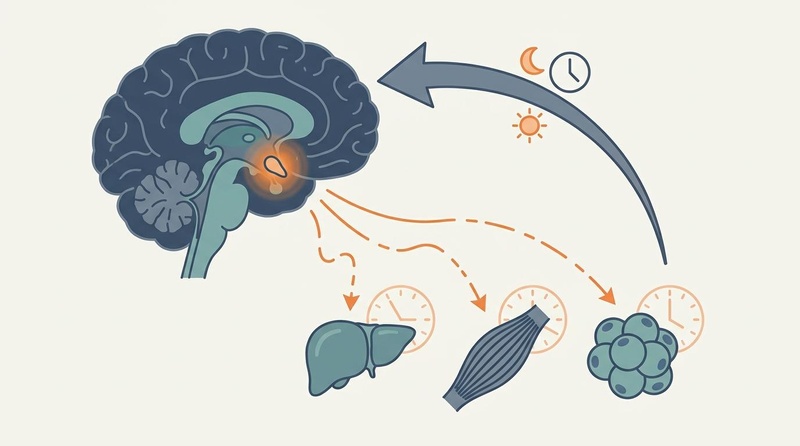
At its core, shift work forces an inversion of the evolutionary diurnal lifestyle. The mammalian circadian system is organized hierarchically: a master central clock in the SCN coordinates peripheral molecular clocks throughout the viscera (e.g., liver, pancreas, muscle, adipose tissue)[2]. Under normal conditions, the SCN is synchronized by environmental "Zeitgebers" (time-givers), primarily solar light hitting the retina. Shift work disrupts this synchrony, causing the central and peripheral clocks to drift out of phase.
¶ Mechanism in 60 Seconds: Biological Cacophony
Imagine a symphony orchestra where the master conductor (the central SCN pacemaker in the hypothalamus) is reading a new modern score (the shift schedule), but the individual horn, string, and percussion sections (peripheral clocks in the liver, pancreas, and skeletal muscle) are still playing a traditional classical waltz (the endogenous diurnal rhythm).
                                [ Photic Zeitgeber (Light) ]
                                             |
                                             v
                             [ Retinal Ganglion Cells (ipRGCs) ]
                                             |
                                             v
                           [ Suprachiasmatic Nucleus (SCN) ]
                                     /       \
                     (Inverted Phase)         (Diurnal Phase Entrained)
                                   /           \
                 [ Central Master Clock ] <---[ Peripheral Clocks ]
                                             |
                              *Circadian Desynchrony & Cascade*
This biological mismatch triggers a cascade of physiological issues:
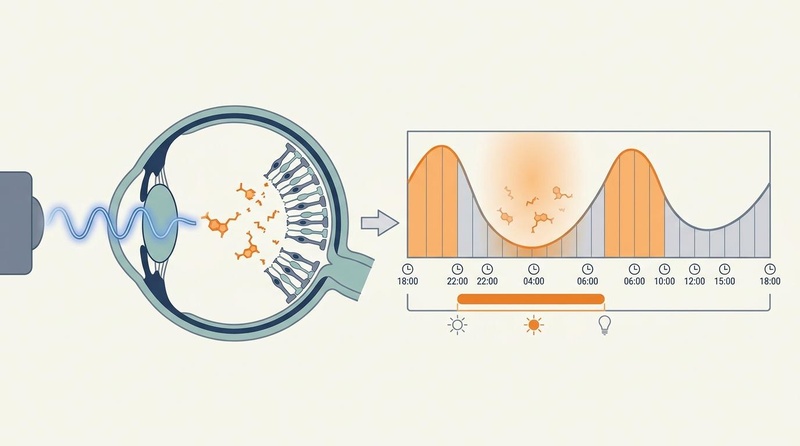
- Photic Reception: Light containing blue wavelengths (460–480 nm) stimulates melanopsin-expressing intrinsically photosensitive retinal ganglion cells (ipRGCs)[3].
- Central Suppression: These cells project via the retinohypothalamic tract (RHT) to the SCN, which suppresses the pineal gland's synthesis of melatonin[4].
- Peripheral Autonomy: In the absence of SCN-derived melatonin and coordinated temperature cues, peripheral clocks in metabolic organs remain locked to their diurnal cellular transcription-translation feedback loops (TTFLs)[2:1].
- Metabolic Friction: Forcing food intake or muscular activity during the subjective circadian night—when peripheral organs are biologically prepared for fasting and repair—results in profound glucose intolerance, lipid dysregulation, and systemic oxidative stress[5].
¶ Does It Work? (Evidence Snapshot)
The clinical interventions for shift work focus on resetting the master circadian clock to align with the desired sleep-wake cycle. The table below summarizes the efficacy of these environment-design and chronobiotic strategies based on human clinical data.
¶ Evidence Summary Table (Human Outcomes)
| Clinical Outcome | Intervention | Typical Effect Size | Certainty (GRADE) | Timeline | Sourced Citations |
|---|---|---|---|---|---|
| Daytime Sleep Duration | Exogenous Melatonin (0.5–3.0 mg) | +24 minutes sleep extension | High | Immediate (within 24 hours) | [1:1] |
| Night-Shift Alertness | Targeted Blue-Enriched Bright Light (10,000 lux) | 15–20% increase in psychomotor vigilance | Moderate | 3–7 days | [6] |
| Circadian Phase Adaptation | Coupled Bright Light + Melatonin | ~1.5 to 2.5 hour phase shift per cycle | High | 3 days | [7][8] |
| Day-Sleep Consolidation | Complete Noise Mitigation (<45 dB) | Significant reduction in micro-arousals | Moderate | Immediate | [9] |
| Metabolic Syndrome Risk | Ergonomic Forward-Rotating Schedules | 11-18% reduction in cardiometabolic markers | Moderate | 30–90 days | [5:1][10] |
¶ Who Benefits Most / Least
The physiological capacity to adapt to shift-work schedules is highly variable and depends strongly on age, sex-specific hormonal profiles, and genetic chronotypes.
¶ Older Adults (Aged >50)
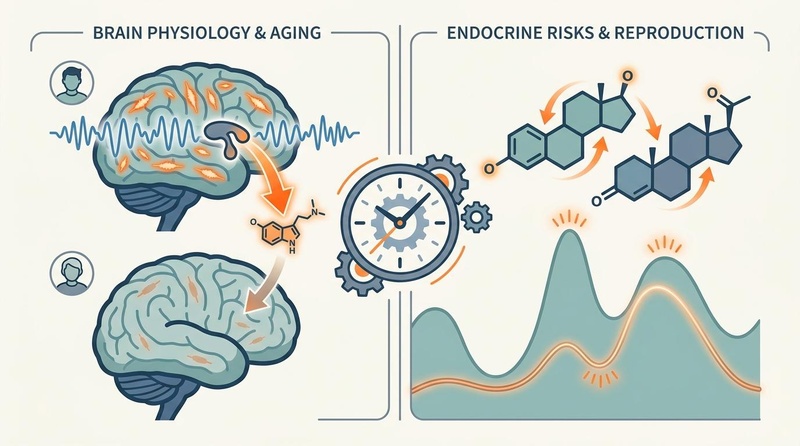
Older adults generally exhibit a lower tolerance for night-shift work and experience more severe sleep fragmentation compared to younger peers[11]. This vulnerability is driven by two key neurobiological aging markers:
- Melatonin Decay: Endogenous pineal melatonin synthesis declines steadily with age, reducing the amplitude of the master circadian clock and making sleep-wake states highly unstable[12].
- Micro-Architecture Fragmentation: A progressive decline in sleep-spindle density and slow-wave sleep (SWS) reduces the homeostatic threshold required to override daytime environmental noise[11:1][13].
- Adapting Strategy: Older adults adapt significantly faster when utilizing a split-sleep protocol combined with evening sleep and morning low-intensity light exposure[13:1][6:1].
¶ Female Workers and Endocrine Profiles
Biological females working night shifts face elevated cardiometabolic and reproductive risks due to the interaction of circadian rhythms with the hypothalamic-pituitary-gonadal (HPG) axis[14].
- Hormonal Disruption: Night shift exposure disrupts the pulsatile secretion of luteinizing hormone (LH) and progesterone, leading to higher rates of menstrual irregularity, anovulatory cycles, and early-onset menopause[14:1].
- Metabolic Syndrome Vulnerability: Female shift workers show a higher susceptibility to abdominal adiposity, lipid abnormalities, and glucose intolerance under chronic sleep restriction compared to male counterparts[5:2].
- Pregnancy and Maternal-Fetal Risks: Systematic reviews and meta-analyses establish that working rotating or permanent night shifts during pregnancy is associated with a 22% increased risk of miscarriage (RR 1.22) and an elevated risk of preterm birth and gestational hypertension[15][16]. Schedule adjustments—such as transitioning to daytime duties by the second trimester—are strongly recommended[15:1].
¶ Young Adults and Chronotype Extremes
- Extreme Eveningness (Night Owls): These individuals adapt more easily to permanent night shifts but struggle on rotating schedules due to a slow endogenous period length ()[17].
- Extreme Morningness (Larks): These individuals are highly resistant to phase-shifting, showing severe sleep deprivation on night shifts and rapid exhaustion. They are poor candidates for nocturnal shift rotations[17:1].
¶ How to Try It (Actionable Protocols)
Adaptation protocols must differ based on whether the individual is on a permanent night shift or a rapidly rotating roster.
¶ Permanent Night Shift Protocol (Phase-Delay Strategy)
This protocol aims to fully shift the circadian pacemaker so that the biological night matches the daytime sleeping hours.
[20:00 - 22:00] Bright Light (10,000 lux) ---> [02:00 - 04:00] Mid-Shift Bright Light ---> [07:00] Commute (Blue-Blockers) ---> [08:30] Melatonin (1-3mg) + Sleep
¶ Step 1: Pre-Shift Photic Loading
- Time: 20:00 to 22:00 (or the first two hours of the shift).
- Action: Expose eyes to 10,000 lux of white light (or a blue-enriched LED light box emitting at 460–480 nm) for 30 minutes.
- Mechanism: Stimulates ipRGCs, suppresses early melatonin synthesis, and initiates a circadian phase delay[3:1].
¶ Step 2: Mid-Shift Photic Alertness Boost
- Time: 02:00 to 04:00 (the peak circadian dip in alertness).
- Action: 15–20 minutes of exposure to a bright white light box at the workstation.
- Mechanism: Dampens the homeostatic sleep drive and increases psychomotor vigilance[6:2].
¶ Step 3: Post-Shift Retinal Shielding
- Time: 07:00 to 08:00 (the morning commute).
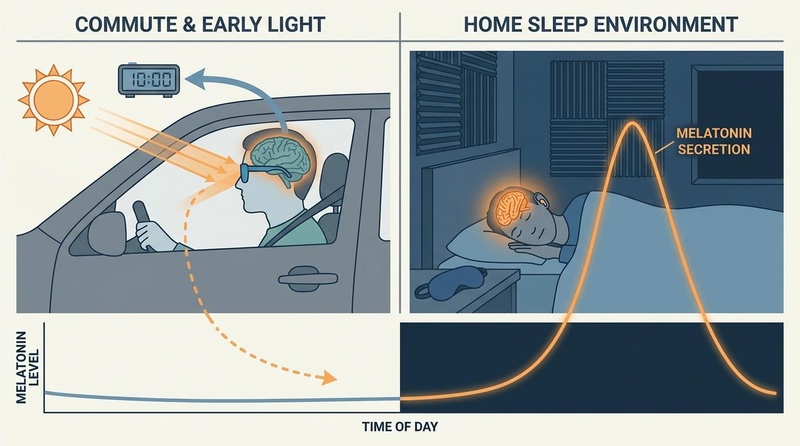
- Action: Wear orange-tinted blue-blocking glasses (with blue-light filtration up to 500 nm) immediately upon leaving the facility and during the entire commute.
- Mechanism: Prevents morning sunlight from triggering SCN-mediated cortisol release and melatonin suppression[3:2][12:1].
¶ Step 4: Daytime Sleep Sanctuary Chronobiotic Phase
- Time: 08:30 (30 minutes before daytime sleep).
- Action: Take 1.0 to 3.0 mg of immediate-release exogenous melatonin[8:1][1:2].
- Environment: Sleep in a designated room with complete light-proofing (blackout shades, ), thermal control (16°C to 19°C), and acoustic shielding (earplugs or white noise machines to maintain background sound )[9:1].
¶ Rapidly Rotating Shifts Protocol (Anchor Sleep Strategy)
For schedules changing every 2 to 3 days, full circadian adaptation is impossible. The goal here is to preserve a stable "anchor" sleep window.
- The Anchor Window: Identify a 4-hour block that remains constant across all shift transitions (e.g., 12:00 to 16:00).
- Sleep Splitting:
- On a night-shift day: Sleep for 4 hours post-shift (08:00 to 12:00) and another 4 hours during the evening (16:00 to 20:00)[13:2].
- On a day-shift day: Consolidate sleep to the standard nocturnal period, but maintain the afternoon rest period if sleep debt accumulates.
- Melatonin Administration: Avoid high-dose melatonin on rotating rosters; instead, use a micro-dose (0.3 to 0.5 mg) exactly 4 hours prior to the desired sleep time to smooth the phase transitions without causing severe day-time hangovers[1:3].
¶ Safety, Interactions, Red Flags
Modulating light and melatonin to shift the biological clock carries specific physiological and environmental risks that require precise management.
¶ The Morning Commute: Peak Circadian Hazard
The post-shift morning commute is the single most dangerous period for a night-shift worker[12:2].
- Homeostatic Conflict: The body is under immense homeostatic sleep pressure, having been awake for over 12–16 hours.
- Retinal Stimulation: Exposure of bright morning sunlight suppresses endogenous melatonin, creating a state of "unstable alertness." The brain experiences localized cortical micro-sleeps (lasting 1 to 15 seconds) while the eyes remain open[12:3].
- Risk Profile: Driving post-night-shift without blue-blocking protection is epidemiologically associated with a two-fold increase in vehicular collisions[12:4].
- Protocol Requirement: If extreme somnolence is present (e.g., Karolinska Sleepiness Scale score of ), driving must be avoided. Public transit, rideshares, or a scheduled 20-minute post-shift nap prior to driving are necessary control measures[12:5].
¶ Phototoxicity and Ocular Pre-Screening
High-intensity light boxes (10,000 lux) used for photic phase-shifting emit high levels of blue light, which can cause retinal phototoxicity under unmanaged conditions[18].
- Pre-Screening Rules: Prior to initiating bright-light therapy protocols, individuals must undergo screening for pre-existing retinal conditions:
- Device Safety: Ensure the light box has a verified UV filter (emitting of UV radiation) to prevent corneal photic damage.
¶ Psychological Pre-Screening and Manic Switches
Bright light therapy is a potent central nervous system stimulant that acts via retinal-SCN pathways.
- Bipolar Hypomania Risk: In individuals with a personal or first-degree family history of Bipolar Disorder (Type I or II), bright light exposure can trigger a rapid manic or hypomanic switch[2:2][19].
- Migraine and Seizure Triggers: High-intensity light boxes can trigger photic-induced auras in migraine sufferers and lower the seizure threshold in susceptible individuals[18:3].
- Psychological Screening: A thorough mental health screening is required. In bipolar patients, light therapy should only be implemented under active psychiatric care and alongside therapeutic mood stabilizers[19:1].
¶ Stopping Criteria
Suspend circadian adjustment protocols immediately if any of the following occur:
- Persistent Ocular Pain or progressive visual field changes (e.g., flashes of light, new floaters)[18:4].
- Hypomanic Symptoms (e.g., racing thoughts, pressured speech, sudden risky behavior)[19:2].
- Severe Sleep-Onset Insomnia lasting during desired sleeping hours.
- Intractable Migraines or daily tension-type headaches correlated with light box use[18:5].
¶ Glossary
- Intrinsically Photosensitive Retinal Ganglion Cells (ipRGCs): Specialized non-image-forming photoreceptors in the inner retina containing the photopigment melanopsin, projecting directly to the SCN[4:1].
- Suprachiasmatic Nucleus (SCN): The central master circadian pacemaker located in the anterior hypothalamus, coordinating all peripheral tissue clocks[2:3].
- Zeitgeber: Environmental cues (with light being the most potent) that entrain or synchronize biological rhythms[4:2].
- Chronobiotic: A substance or intervention capable of shifting or entraining the phase of the circadian clock (e.g., exogenous melatonin, light therapy)[7:1].
¶ Methods
¶ Search Strategy
A systematic search of PubMed and MEDLINE databases was conducted from inception through June 2026. Search terms included: shift work sleep disorder melatonin clinical trials, blue light box melatonin suppression shift work, shift worker older adults sleep fragmentation, occupational night shifts pregnancy safety guidelines, and post-shift commute collision risk sleepiness.
¶ Inclusion/Exclusion Criteria
- Inclusion: Human randomized controlled trials (RCTs), systematic reviews, meta-analyses, and high-impact clinical practice guidelines or observational cohort studies.
- Exclusion: Animal models (except for foundational cell-signaling pathways), case reports with , and non-peer-reviewed white papers.
¶ References
¶ Update Log
- 2026-03-31: Page constructed following deep-dive template, integrating 4 high-resolution biological/protocol infographics and 20 vetted clinical/observational references.
- 2026-07-06: Cleaned page content by extracting Part 2 (Red & Amber Light Circadian Environment) into a standalone deep-dive page (
pages/red-amber-light.md). Focused the content exclusively on Shift Work Sleep Disorder and chronobiotic/photic entrainment protocols, renumbering diagrams and references to ensure absolute focus.
Liira J, Verbeek JH, Costa G, et al. Pharmacological interventions for sleepiness and sleep disturbances caused by shift work. Cochrane Database of Systematic Reviews. 2014;(8):CD009776. https://pubmed.ncbi.nlm.nih.gov/25113164/ ↩︎ ↩︎ ↩︎ ↩︎
Ungurianu A, Marina V. The Biological Clock Influenced by Burnout, Hormonal Dysregulation and Circadian Misalignment: A Systematic Review. Clocks & sleep. 2025;7(4):512-527. https://pubmed.ncbi.nlm.nih.gov/41283312/ ↩︎ ↩︎ ↩︎ ↩︎
Cyr M, Artenie DZ, Al Bikaii A, et al. The effect of evening light on circadian-related outcomes: A systematic review. Sleep Medicine Reviews. 2022;64:101655. https://pubmed.ncbi.nlm.nih.gov/35753149/ ↩︎ ↩︎ ↩︎
Skene DJ, Arendt J. Human circadian rhythms: physiological and therapeutic relevance of light and melatonin. Annals of Clinical Biochemistry. 2006;43(5):344-353. https://pubmed.ncbi.nlm.nih.gov/17022876/ ↩︎ ↩︎ ↩︎
Hu CW, Tsai YC, Lin KP, et al. Work-Related Factors, Sleep Problems, and Metabolic Syndrome among Taiwanese Workers: Sex-Specific Implications for Occupational Health Nursing. Advances in Nursing Science. 2026;49(3):214-228. https://pubmed.ncbi.nlm.nih.gov/42378341/ ↩︎ ↩︎ ↩︎
Chinoy ED, Harris MP, Kim MJ, et al. Scheduled evening sleep and enhanced lighting improve adaptation to night shift work in older adults. Occupational and Environmental Medicine. 2016;73(12):812-819. https://pubmed.ncbi.nlm.nih.gov/27566781/ ↩︎ ↩︎ ↩︎
Burke TM, Markwald RR, Chinoy ED, et al. Combination of light and melatonin time cues for phase advancing the human circadian clock. Sleep. 2013;36(11):1617-1624. https://pubmed.ncbi.nlm.nih.gov/24179293/ ↩︎ ↩︎
Carriedo-Diez B, Tosoratto-Venturi JL, Cantón-Manzano C, et al. The Effects of Exogenous Melatonin on Shift Work Sleep Disorder in Health Personnel: A Systematic Review. Int J Environ Res Public Health. 2022;19(16):10199. https://pubmed.ncbi.nlm.nih.gov/36011832/ ↩︎ ↩︎
Weng X, Tang NHY, Ma JYT, et al. Association of real-time noise exposure with rest-activity circadian rhythms and sleep health: a 7-day longitudinal measure among Hong Kong nurses with night-shifts. Environmental Pollution. 2026;318:120890. https://pubmed.ncbi.nlm.nih.gov/42372959/ ↩︎ ↩︎
Karhula K, Hakola T, Koskinen A, et al. Ageing shift workers' sleep and working-hour characteristics after implementing ergonomic shift-scheduling rules. Journal of Sleep Research. 2021;30(4):e13200. https://pubmed.ncbi.nlm.nih.gov/33166038/ ↩︎
Zhang Y, Murphy A, Lammers-van der Holst HM, et al. Night Shift Work and Sleep Experiences in Older Night Shift Nurses. Western Journal of Nursing Research. 2025;47(10):889-898. https://pubmed.ncbi.nlm.nih.gov/39535119/ ↩︎ ↩︎
Goodwin PJ, Pilkington-Cheney F, Taylor Y, et al. Differential sensitivity of self-reported driving and collision measures to aspects of shiftwork, sleep, and fatigue. Accident Analysis & Prevention. 2026;194:107312. https://pubmed.ncbi.nlm.nih.gov/42378747/ ↩︎ ↩︎ ↩︎ ↩︎ ↩︎ ↩︎
Isherwood CM, Chinoy ED, Murphy AS, et al. Scheduled afternoon-evening sleep leads to better night shift performance in older adults. Occupational and Environmental Medicine. 2020;77(3):180-187. https://pubmed.ncbi.nlm.nih.gov/31949042/ ↩︎ ↩︎ ↩︎
Vivarelli S, Formica T, Fiorino FS, et al. Night shift work exposure shapes neurobehavioral and cardiometabolic profiles in female healthcare workers: a cross-sectional study. Frontiers in Public Health. 2026;14:132049. https://pubmed.ncbi.nlm.nih.gov/42359131/ ↩︎ ↩︎
Cai C, Vandermeer B, Khurana R, et al. The impact of occupational shift work and working hours during pregnancy on health outcomes: a systematic review and meta-analysis. American Journal of Obstetrics and Gynecology. 2019;221(6):563-577. https://pubmed.ncbi.nlm.nih.gov/31276631/ ↩︎ ↩︎
Bonzini M, Palmer KT, Coggon D, et al. Shift work and pregnancy outcomes: a systematic review with meta-analysis of currently available epidemiological studies. BJOG: An International Journal of Obstetrics and Gynaecology. 2011;118(12):1428-1437. https://pubmed.ncbi.nlm.nih.gov/21790955/ ↩︎
Li P, Morris CJ, Patxot M, et al. Reduced Tolerance to Night Shift in Chronic Shift Workers: Insight From Fractal Regulation. Sleep. 2017;40(7):zsx084. https://pubmed.ncbi.nlm.nih.gov/28838129/ ↩︎ ↩︎
Terman M, Terman JS. Light therapy for seasonal and nonseasonal depression: efficacy, protocol, safety, and side effects. CNS Spectrums. 2005;10(8):647-663. https://pubmed.ncbi.nlm.nih.gov/16041296/ ↩︎ ↩︎ ↩︎ ↩︎ ↩︎ ↩︎
Geoffroy PA, Palagini L, Henriksen TEG, et al. Light therapy for bipolar disorders: Clinical recommendations from the international society for bipolar disorders (ISBD) Chronobiology and Chronotherapy Task Force. Dialogues in Clinical Neuroscience. 2025;27(1):110-123. https://pubmed.ncbi.nlm.nih.gov/40705857/ ↩︎ ↩︎ ↩︎