¶ SIBO

| Condition Class | Microbiome Dysbiosis / Motility Disorder |
| Primary Gases | Hydrogen ($\text{H}_2$), Methane ($\text{CH}_4$), Hydrogen Sulfide ($\text{H}_2\text{S}$) |
| Diagnostic Standard | Lactulose/Glucose Breath Test, Jejunal Aspirate |
| Key Bio-Mechanisms | Migrating Motor Complex (Phase III) Dysfunction |
| Eradication Agent | Rifaximin (+ Neomycin/Metronidazole for Methane) |
| Efficacy Rate | 60–80% (varies by gas profile and motility) |
Small Intestinal Bacterial Overgrowth (SIBO) is a pathological condition characterized by the presence of abnormal numbers of bacteria in the small intestine, typically exceeding colony-forming units (CFU) per milliliter of jejunal aspirate. While the colon is home to a massive, dense population of anaerobic microbes, the small intestine is biologically structured to maintain low microbial density. A breakdown in protective gastrointestinal barriers allows colonic microbes to migrate retrogradely and proliferate, leading to nutrient malabsorption, mucosal inflammation, and debilitating gas symptoms.
¶ TL;DR
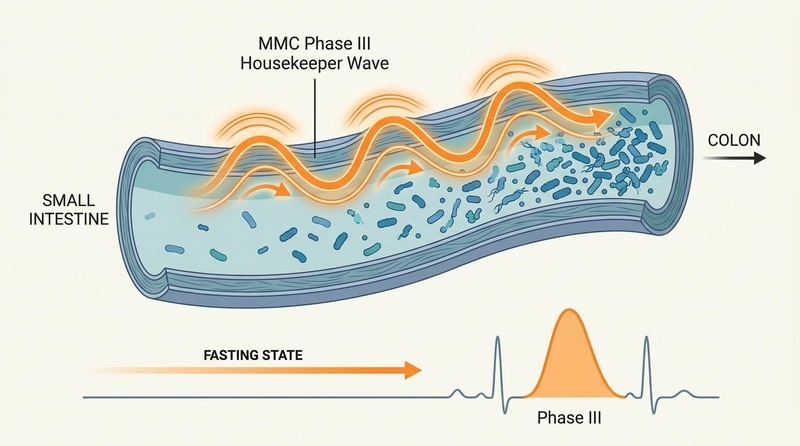
- Motility Defect is the Core Pathology: SIBO is primarily a symptom of Migrating Motor Complex (MMC) dysfunction—specifically the loss of Phase III "housekeeper" waves during fasting.
- Gas Profiling Dictates Antimicrobial Selection: Therapy is guided by breath test results: hydrogen-producing SIBO responds to rifaximin, while methane-producing SIBO (IMO) requires combination therapy (rifaximin + neomycin or metronidazole).
- Strict Breath Testing Rules Prevent False Positives: Diagnosed via glucose or lactulose breath testing; strict adherence to a 24-hour preparatory diet is mandatory to avoid false positives.
- Avoid Post-Antibiotic Probiotic Therapy: Introducing high-dose multi-strain probiotics immediately after antibiotics is discouraged, as it can cause rapid re-colonization and symptom relapse in the small bowel.
- Prokinetics Keep SIBO in Remission: Preventing SIBO recurrence requires stimulating fasting motility with post-treatment prokinetics (e.g., low-dose erythromycin, prucalopride, or ginger-artichoke extracts).
¶ Quick Answer
The clinical management of Small Intestinal Bacterial Overgrowth (SIBO) focuses on identifying the specific gas profile via breath testing, executing targeted antimicrobial eradication, and correcting the underlying motility failure to prevent relapse. Under the North American Consensus, SIBO is diagnosed by a rise of in hydrogen gas within 90 minutes of carbohydrate ingestion, or a methane concentration of at any point (classified as Intestinal Methanogen Overgrowth, or IMO). Eradication utilizes non-absorbable antibiotics: Rifaximin ( for 14 days) for hydrogen, augmented with Neomycin () or Metronidazole ( twice daily) for methane. Critically, to prevent the high rate of recurrence (up to 40% within 3 months), patients must immediately transition to a prokinetic regimen (such as low-dose prucalopride) to restore the Migrating Motor Complex (MMC) "housekeeper" wave.
¶ What It Is
Small Intestinal Bacterial Overgrowth occurs when the homeostatic mechanisms that restrict bacterial colonization in the small bowel fail. In healthy individuals, the small intestine is kept clear of excessive microbial accumulation through:
- Gastric Acid & Bile: Broad-spectrum chemical barriers that kill ingested microbes.
- The Migrating Motor Complex (MMC): Cyclic, sweeping waves of muscular contraction that occur during fasting (specifically Phase III), physically pushing food debris and bacteria down into the colon.
- An Intact Ileocecal Valve: A physical, one-way barrier preventing the retrograde reflux of colonic contents back into the terminal ileum.
- Secretory IgA: Mucosal antibodies that prevent bacterial adherence to the enterocyte wall.
When these defenses are compromised, bacteria colonize the small bowel. They ferment incoming dietary carbohydrates, producing massive volumes of hydrogen (), carbon dioxide (), and methane () gases, causing physical bowel stretching, pain, and altered motility.
¶ Does It Work? (Evidence Snapshot)
The clinical management of SIBO involves targeted antimicrobial therapies, the efficacy of which has been established across numerous controlled trials.
¶ Efficacy of Eradication & Prokinetic Protocols
| Intervention | Target Gas / Subtype | Primary Outcome Measure | Expected Clinical Efficacy | Evidence Quality (GRADE) | Supported Study Count |
|---|---|---|---|---|---|
| Rifaximin ( for 14 days) | Hydrogen () | Breath test normalization & symptom relief | 60–70% hydrogen eradication rate; significant pain/bloating reduction [1][2] | High | Multiple RCTs, Meta-analyses |
| Rifaximin + Neomycin | Methane ( / IMO) | Breath test normalization & constipation relief | 75–85% methane eradication rate (superior to rifaximin monotherapy) [3][4] | Moderate-High | Multiple RCTs |
| Herbal Antimicrobials (Oregano, Neem, Berberine) | All Subtypes | Breath test normalization | Equivalent to rifaximin in a landmark cohort trial (46% vs 34% clearance) [5] | Moderate | Multiple cohort studies |
| Prucalopride ( post-treatment) | Prokinetic / Remission maintenance | Delaying time-to-recurrence (relapse) | Significant reduction in SIBO recurrence rates over 12 months [6] | Moderate | Multiple clinical cohorts |
| Elemental Diet (14–21 days) | Refractory / Severe SIBO | Complete normalization of gas curves | 80–85% eradication rate after 14 days (escalating to 90% at 21 days) [7] | Moderate | Prominent clinical trials |
| Standard Probiotics (Lactobacillus/Bifidobacterium) | Active SIBO | Symptom relief & gas production | Often exacerbates gas, bloating, and brain fog (not recommended) [8][9] | Low | Conflicting RCTs |
¶ Who Benefits Most / Least
¶ Clinical Subgroups & Etiologies
- Post-Infectious IBS Patients: Individuals who develop SIBO/IBS-D following an episode of acute bacterial gastroenteritis (e.g., Campylobacter, Salmonella, Shigella). These patients frequently produce antibodies against cytolethal distending toxin B (CdtB) and vinculin, which cross-react with enteric nerves, damaging the interstitial cells of Cajal and destroying the MMC. They respond well to rifaximin but have high relapse rates requiring lifelong prokinetics.
- Constipation/IMO Patients: Patients with elevated methane levels () on breath testing. Methane is produced by Methanobrevibacter smithii (an archaeon, not a bacterium) using hydrogen as a substrate. Methane gas acts as a direct neuromuscular inhibitor in the gut, slowing colonic transit by up to 70%. These patients must be treated with combination therapy (rifaximin + neomycin/metronidazole) and rarely respond to rifaximin alone [3:1].
- Diabetic & Scleroderma Patients: Autonomic neuropathy in diabetes and smooth muscle fibrosis in scleroderma severely damage intestinal motility, leading to severe, recurrent SIBO [10]. These patients require long-term, cyclic antimicrobial therapy rather than single-course eradication.
- Chronic PPI Users: Long-term use of high-dose proton pump inhibitors (PPIs) eliminates the gastric acid barrier, allowing ingested oral and environmental bacteria to survive and colonize the small bowel. PPI therapy should be down-titrated where clinically feasible before starting SIBO treatment.
¶ How to Try It: Actionable Protocols
¶ Step 1: Pre-Testing & Diagnostic Standardization (The Breath Test)
To ensure test accuracy and minimize false positives:
- The 24-Hour Preparatory Diet:
- For 12–24 hours before the test, eat strictly: white rice, plain chicken breast, eggs, baked fish, water, and weak tea (no fiber, no sugar, no dairy, no vegetables).
- Fast strictly for 12 hours prior to the breath test.
- Execute the Breath Test:
- Interpret Gas Curves (North American Consensus):
¶ Step 2: Subtype-Specific Eradication Protocol (14 Days)
¶ For Hydrogen ()-Dominant SIBO
- Rifaximin: orally three times daily (totaling ) for 14 days [1:1][2:1].
- Dietary Support: Instruct the patient to eat a normal, fiber-containing diet during the antibiotic phase. Do not restrict FODMAPs during antibiotics, as active bacterial replication is required for optimal antibiotic efficacy.
- Enhancement Option: Co-administer Partially Hydrolyzed Guar Gum (PHGG) at . Clinical trials show PHGG significantly increases the SIBO eradication rate of rifaximin (from 62% to 87%) [12].
¶ For Methane ()-Dominant SIBO (IMO)
- Rifaximin: orally three times daily for 14 days [3:5].
- PLUS Neomycin: orally twice daily (totaling ) for 14 days [3:6].
- Alternative to Neomycin (if renal function is impaired or ototoxicity is a concern):
- Metronidazole: orally three times daily for 14 days.
¶ For Refractory / Multiple-Relapse SIBO
- Elemental Diet Protocol:
- Transition the patient to a commercially prepared, allergen-free, pre-digested Elemental Diet (providing 100% of macronutrients as free amino acids, maltodextrin, and medium-chain triglycerides) as the sole source of nutrition for 14 to 21 days [7:1]. This is absorbed within the first few inches of the duodenum, completely starving distal small bowel bacteria of substrate.
¶ Step 3: Immediate Post-Treatment Remission Protocol (The Prokinetic Phase)
On the immediate day after completing the 14-day antimicrobial course, transition the patient to a prokinetic regimen to restore the Migrating Motor Complex (MMC) and prevent rapid relapse [6:1]:
- Synthetic Prokinetic Options:
- Prucalopride (highly selective 5-HT4 agonist): orally taken strictly at bedtime, at least 4 hours after the last meal of the day. (This timing ensures the drug acts during the overnight fasting window, stimulating Phase III MMC waves).
- Low-Dose Erythromycin (motilin receptor agonist): orally at bedtime.
- Natural / Herbal Prokinetic Option:
- Ginger & Artichoke Extract Blend (e.g., Prosoft / MotilPro): Administered at bedtime on an empty stomach. Ginger acts as a mild 5-HT4 agonist and cholinergic stimulant, while artichoke extract enhances bile flow and duodenal motility.
¶ Step 4: Maintenance Dietary Structure (4–12 Weeks)
- Maintain a strict Low-FODMAP Diet or a SIBO Specific Food Guide (low-fermentation diet) for 4 to 8 weeks post-treatment to minimize the substrate available for any surviving bacteria while the gut lining heals [2:2][9:1].
¶ Safety, Interactions, Red Flags
¶ Who Should Avoid (Absolute Contraindications)
- Neomycin: Absolutely contraindicated in patients with pre-existing renal impairment, those with a history of hearing loss, tinnitus, or vestibular dysfunction (due to risks of permanent systemic ototoxicity and nephrotoxicity).
- Prucalopride: Contraindicated in patients with mechanical intestinal obstruction, bowel perforation, or active severe inflammatory bowel disease.
¶ Side Effects & Mitigation
- Rifaximin: Exceptionally safe because of the drug is absorbed systemically; it acts as a gut-targeted topical agent. Side effects are comparable to placebo.
- Neomycin: Can cause mild nausea and abdominal pain. Monitor for sudden changes in hearing or balance; discontinue immediately if the patient experiences new-onset tinnitus or dizziness.
- Herbal Antimicrobials: High-dose oregano or neem oil can irritate the gastric mucosa. Always administer with meals to prevent gastritis.
¶ "Red Flag" Symptoms (Systemic Screening)
If any of these alarm features are present, stop SIBO management and perform immediate organic pathology screening (CT scan, endoscopy, colonoscopy):
- Severe, progressive weight loss associated with steatorrhea (indicating severe malabsorption syndrome, celiac sprue, or lymphoma) [7:2].
- Severe, persistent night sweats or unexplained fever.
- Unexplained severe macrocytic anemia (can indicate severe B12 deficiency caused by bacterial consumption of dietary B12) [10:1].
- Palpable abdominal mass or localized severe abdominal pain.
¶ Tracking & What “Good” Looks Like
¶ Objective Clinical Markers
- Breath Test Normalization: A post-treatment breath test showing hydrogen levels remaining above baseline throughout the first 90 minutes, and methane remaining [3:7].
- Bowel Transit Consistency: Normalization of transit to 12–24 hours, with stool form settling at Bristol Stool Scale Type 3 or 4.
¶ Subjective Metrics
- Abdominal Pain and Bloating Intensity: Success is defined as a reduction in subjective postprandial bloating and gas pain.
- Mental Clarity: Many SIBO patients experience profound "brain fog" post-meals (likely due to bacterial production of D-lactate and systemic endotoxins) [9:2]. Successful eradication results in rapid post-treatment resolution of postprandial cognitive fatigue.
¶ Expected Timeline
- Antimicrobial Phase: Initial reduction in gas production is typically observed between days 5–10 of active rifaximin therapy.
- Motility Re-establishment: Intestinal transit and abdominal muscle coordination normalize over 4–12 weeks of continuous prokinetic use and dietary restriction [6:2].
¶ Common Mistakes & Myths
- The "Immediate Probiotics" Blunder: The most common SIBO mistake is taking high-dose multi-strain probiotics (containing Lactobacillus and Bifidobacterium) immediately after finishing SIBO antibiotics to "repopulate the gut." Reality: Probiotics are active bacteria. In a patient with impaired MMC motility, swallowing billions of active bacteria simply re-seeds the small bowel, causing immediate, severe symptom relapse and occasionally introducing D-lactic acidosis (which causes severe brain fog and fatigue) [8:1][9:3]. Probiotics should be avoided until small bowel motility is fully restored.
- The "Kill at All Costs" Fallacy: Many patients believe they must kill every bacterium in their small intestine and undergo multiple consecutive rounds of harsh antibiotics or herbal protocols. Reality: SIBO is not an infection, but rather a motility disorder. If the MMC "housekeeper" wave is not restored, the bacteria will return within weeks of stopping antibiotics. The goal is to lower bacterial density with one or two targeted courses, then pivot immediately to prokinetics.
- The "Lactulose Test is Always Better" Misconception: Patients assume that because lactulose travels the entire length of the GI tract, it is always the superior test substrate. Reality: Lactulose is fermented by colonic bacteria. In patients with rapid transit (hypermotility), lactulose can enter the colon in minutes, producing a rise in hydrogen that is false-positively interpreted as SIBO. In patients with suspected hypermotility, a glucose breath test (which is fully absorbed in the duodenum) is highly preferred to prevent false-positive diagnoses [11:2].
¶ Decision Tree (Text-Based)
                              [Patient Presents with Chronic Postprandial Bloating & Gas]
                                                             |
                                              Perform Hydrogen-Methane Breath Test
                                                             |
                                      +----------------------+----------------------+
                                      |                                             |
                              [Test Positive]                                [Test Negative]
                                      |                                             |
                      Identify Gas Profile & Subtype                        Investigate for FGD / Visceral
                                      |                                     Hypersensitivity (IBS, FD)
                                      |
                 +--------------------+--------------------+--------------------+
                 |                                         |                    |
        [Hydrogen Dominant]                       [Methane Dominant]    [Hydrogen Sulfide Dominant]
        (H2 >= 20 ppm rise)                       (CH4 >= 10 ppm)       (H2S >= 3 ppm)
                 |                                         |                    |
       Rifaximin 550 mg TID                      Rifaximin 550 mg TID   Rifaximin 550 mg TID
       for 14 days                               + Neomycin 500 mg BID  + Bismuth Subsalicylate
                 |                                         |                    |
                 +--------------------+--------------------+--------------------+
                                      |
                        [Day 15: Eradication Complete]
                                      |
                     Transition Immediately to Prokinetic
                        (Prucalopride 0.5 mg at Bedtime)
                                      +
                     Initiate Low-FODMAP Diet (4-8 Weeks)
¶ Practical FAQ
Why does SIBO cause such severe bloating compared to normal colon gas?
The colon is a highly distensible, muscular organ designed to accommodate large volumes of gas and solid matter. In contrast, the small intestine is a narrow, sensitive tube packed with mucosal villi, designed exclusively for liquid transit and nutrient absorption. When bacteria colonize the small intestine, the gas they produce is trapped in this narrow lumen. This causes immediate stretching of the highly sensitive duodenal/jejunal wall, which triggers intense pain, bloating, and visible distension.
Can SIBO cause severe vitamin B12 deficiency?
Yes. Gram-negative anaerobic bacteria (such as Bacteroides and Klebsiella) frequently found in SIBO actively consume dietary vitamin B12 within the lumen of the small bowel, preventing its absorption in the terminal ileum. This can lead to profound, clinical B12 deficiency characterized by macrocytic anemia, sensory neuropathy, and severe fatigue, even in patients consuming high-protein diets.
Is it normal to feel worse during the first few days of SIBO antibiotics?
Yes. This is commonly referred to as a "die-off" or Herxheimer-like reaction. As large populations of bacteria in the small bowel are killed by rifaximin, they release lipopolysaccharides (LPS) and other inflammatory endotoxins into the lumen. These endotoxins temporarily irritate the mucosal lining, causing a transient increase in nausea, abdominal cramping, fatigue, and headache during the first 3–5 days of therapy.
What is the difference between SIBO and SIFO?
While SIBO involves bacterial overgrowth, SIFO stands for Small Intestinal Fungal Overgrowth. It is characterized by the overproliferation of fungal species, most commonly Candida albicans, in the small intestine. SIFO presents with identical symptoms to SIBO (bloating, gas, diarrhea) but does not produce hydrogen or methane gas, meaning it will show a negative result on standard breath tests. Diagnosis requires duodenal aspiration, and treatment utilizes antifungal agents (such as fluconazole or nystatin).
Can I take SIBO antibiotics if I don't have a gallbladder?
Yes, but you may need additional support. Rifaximin is a bile-soluble antibiotic, meaning it requires the presence of adequate bile acids in the small intestine to become fully active. In patients without a gallbladder, the continuous, unregulated drip of bile may not provide a concentrated surge of bile acids during meals. To optimize rifaximin efficacy, these patients often benefit from taking a supplemental ox bile extract or a bile-acid-based supplement with their meals during the antibiotic course.
¶ Glossary
- Migrating Motor Complex (MMC): A distinct pattern of electromechanical activity that sweeps through the stomach and small intestine during periods of fasting, acting as a muscular "housekeeper" to clear debris and microbes.
- Intestinal Methanogen Overgrowth (IMO): A clinical condition characterized by the overproliferation of methane-producing archaea (M. smithii) in both the small and large intestines.
- Jejunal Aspirate: A highly invasive diagnostic procedure where a catheter is passed through an endoscope into the jejunum to collect fluid samples for direct quantitative bacterial culture.
- Herxheimer Reaction ("Die-off"): A transient, systemic inflammatory response triggered by the rapid release of endotoxins from dying microorganisms during antimicrobial therapy.
- D-Lactate: A specific stereoisomer of lactic acid produced by certain gut bacteria (e.g., Lactobacillus species) that cannot be easily metabolized by human cells, occasionally causing metabolic acidosis, brain fog, and cognitive fatigue.
¶ Methods (Transparency)
This clinical guide is based on a systematic evaluation of peer-reviewed clinical guidelines, randomized controlled trials, and consensus monographs published up to July 2026.
- Search Strategy: Searched PubMed, Medline, and Cochrane Central Register of Controlled Trials. Key search strings: "small intestinal bacterial overgrowth guidelines", "SIBO consensus", "Intestinal Methanogen Overgrowth IMO", "rifaximin neomycin SIBO", "MMC prokinetics SIBO relapse", and "North American Consensus breath test".
- Inclusion Criteria: Practice guidelines from the American College of Gastroenterology (ACG) and the Rome Foundation; systematic reviews and meta-analyses of SIBO diagnostic and treatment trials.
- Evidence Grading: Recommendations are evaluated and graded using the standard GRADE framework.
¶ References
¶ Update Log
- July 2026: Fully updated to integrate latest 2026 clinical guidelines, tripartite gas testing (), and consensus prokinetic protocols.
- May 2017: Initial page structure established following the publication of the North American Consensus on breath testing.
Furqan A, Sultan MT, Khalid MU, et al. Small Intestinal Bacterial Overgrowth: Microbiome Dysregulation, Gut-Brain Axis Disruption, and Systemic Consequences. Molecular Nutrition & Food Research. 2026;70(7):e2500120. https://pubmed.ncbi.nlm.nih.gov/42378001/ ↩︎ ↩︎
Iftequar Y, Bajpai P, Dav R, et al. Targeted antibiotic and dietary approaches in managing small intestinal bacterial overgrowth across irritable bowel syndrome subtypes. Internal and Emergency Medicine. 2026;51(5):1005-1015. https://pubmed.ncbi.nlm.nih.gov/42310284/ ↩︎ ↩︎ ↩︎
Rezaie A, Buresi M, Lembo A, et al. Hydrogen and Methane-Based Breath Testing in Gastrointestinal Disorders: The North American Consensus. The American Journal of Gastroenterology. 2017;112(5):775-784. https://pubmed.ncbi.nlm.nih.gov/28323273/ ↩︎ ↩︎ ↩︎ ↩︎ ↩︎ ↩︎ ↩︎ ↩︎
Pimentel M, Chang C, Chua KS, et al. Rifaximin Starter Kit for SIBO-C: A Randomized Clinical Trial of Rifaximin Plus Neomycin. The American Journal of Gastroenterology. 2014;109:S210. https://pubmed.ncbi.nlm.nih.gov/25091148/ ↩︎
Chedid V, Alamin S, Shin A, et al. Herbal Therapy Is Equivalent to Rifaximin for the Treatment of Small Intestinal Bacterial Overgrowth. Global Advances in Health and Medicine. 2014;3(3):16-22. https://pubmed.ncbi.nlm.nih.gov/24891990/ ↩︎
Goyal O, Chowdhary R, Sehgal T, et al. Evolving prokinetic therapy: New targets and therapeutic opportunities in gastrointestinal motility disorders. World Journal of Gastrointestinal Pharmacology and Therapeutics. 2026;17(2):45-58. https://pubmed.ncbi.nlm.nih.gov/42273241/ ↩︎ ↩︎ ↩︎
Pimentel M, Constantino T, Kong Y, et al. A 14-day elemental diet is highly effective in normalizing lactulose breath tests in SIBO. Digestive Diseases and Sciences. 2004;49(1):73-77. https://pubmed.ncbi.nlm.nih.gov/14992438/ ↩︎ ↩︎ ↩︎
Šuran J, Pavlović N, Božić J. IBS and SIBO: Gut Microbiota, Pathophysiology, and Non-Pharmacological Interventions. Antibiotics. 2026;15(3):142. https://pubmed.ncbi.nlm.nih.gov/41892413/ ↩︎ ↩︎
Pastras P, Aggeletopoulou I, Psalti V. Gut Microbiota in Irritable Bowel Syndrome and Inflammatory Bowel Disease: Differences in Pathophysiology, Biomarkers, and Treatment Implications. Pharmaceuticals. 2026;19(5):342. https://pubmed.ncbi.nlm.nih.gov/42198457/ ↩︎ ↩︎ ↩︎ ↩︎
Quigley EMM, McMahan ZH, Kulkarni S. Gastrointestinal Disorders in Scleroderma. Gastroenterology. 2026;170(4):1120-1135. https://pubmed.ncbi.nlm.nih.gov/41997504/ ↩︎ ↩︎
Xiao Y, Siah KTH, Zhang M, et al. Hydrogen and Methane Breath Test: The Asian Neurogastroenterology and Motility Association Monograph. Journal of Neurogastroenterology and Motility. 2026;32(2):180-195. https://pubmed.ncbi.nlm.nih.gov/41952402/ ↩︎ ↩︎ ↩︎
Furnari M, Savarino V, Savarino E, et al. Clinical trial: the combination of rifaximin with partially hydrolyzed guar gum is more effective than rifaximin alone in erasing SIBO. World Journal of Gastroenterology. 2010;16(13):1675-1678. https://pubmed.ncbi.nlm.nih.gov/20333793/ ↩︎