¶ Skin Cancer Screening
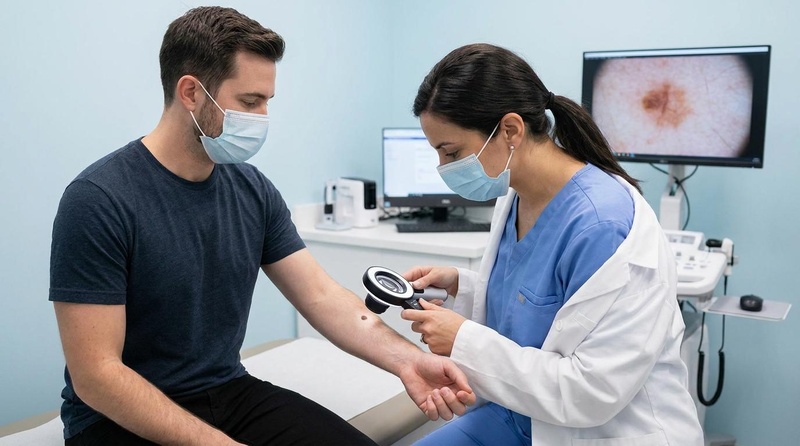
| Indication | Early detection of cutaneous malignancies (melanoma, basal cell carcinoma, squamous cell carcinoma) |
| Access | Dermatology clinical visit, primary care physical, or skin self-examination |
| Dosing Sched | High risk: Risk-adapted dermatology surveillance; Average risk: Opportunistic / clinical judgment |
| Safety Profile | High safety (non-invasive; low procedural risk from biopsy if indicated) |
| Key Marker | Evolution of atypical lesions, dermoscopic structures, histopathological thickness (Breslow) |
| Est. Cost | $0-$200 (insurance-dependent or self-pay) |
Globally, cutaneous malignancies represent an immense public health challenge. According to the 2019 Global Burden of Disease (GBD) study, there were approximately 23.6 million new cancer cases worldwide, with non-melanoma skin cancers (NMSCs) accounting for a massive proportion of this burden (approximately 6.4 million cases, making NMSC the highest-incidence cancer group globally) [1]. While non-melanoma skin cancers rarely metastasize, they can cause significant local tissue destruction and cosmetic disfigurement. Their high incidence also poses a substantial burden on healthcare systems. Treatment and management of these malignancies are guided by comprehensive clinical frameworks, such as the European consensus-based interdisciplinary guidelines (EADO 2023; EDF/EADO/EORTC 2020) [2][3]. Cutaneous melanoma accounts for about 1% of all skin cancer cases [4] but is highly aggressive and represents 90% of skin cancer-specific mortality [5], making early screening and detection crucial for overall survival (per the European consensus-based interdisciplinary guidelines (EADO/EDF/EORTC 2025)) [5:1].
¶ At a Glance
- What people use it for: Early identification of suspicious cutaneous lesions to achieve definitive local cure before invasion, deep vertical growth, or distant metastasis.
- Does it work? Yes, for identifying early-stage lesions, particularly in high-risk cohorts through sequential dermoscopy and advanced diagnostic tools (per EADO/EDF/EORTC 2025 guidelines) [5:2].
- Efficacy of AI: Deep learning algorithms significantly enhance diagnostic accuracy. AI alone compares favorably to expert dermatologists [6] and significantly improves clinician diagnostic sensitivity and specificity when used as an interactive diagnostic aid, with the largest benefit observed among non-dermatologist clinicians [7].
- Key risks: Systemic skin cancer screening is associated with potential global harms of screening (per the US Preventive Services Task Force (USPSTF) 2023 guidelines) [4:1]. Clinically, these harms manifest as overdiagnosis of indolent, slow-growing lesions, a cumulative biopsy burden for benign atypical nevi, downstream healthcare costs, patient anxiety, and surgical scarring or localized procedural infection.
- Verdict: Highly effective and recommended for high-risk cohorts (e.g., individuals with chronic immunosuppression (US Multidisciplinary Expert Consensus 2019) [8] or a history of multiple skin cancers (EADO/EDF/EORTC 2025) [5:3]). While individuals with idiopathic inflammatory myopathies (like dermatomyositis) carry a high cancer risk, screening in that cohort targets internal malignancies via systemic imaging rather than skin-specific examinations (Oldroyd 2021) [9]. For average-risk, asymptomatic populations, clinical decisions are guided by clinical judgment and opportunistic surveillance during routine physical checks (per the USPSTF 2023 guidelines) [4:2].
¶ Safety "Traffic Light"
¶ Protocol Card
¶ Clinical Screening Protocol Matrix
| Risk Category | Target Cohort | Recommended Frequency | Primary Screening Modality |
|---|---|---|---|
| Average Risk | Adolescents and adults without high-risk phenotypic or genetic markers (USPSTF 2023) [^3]. | Opportunistic surveillance; no routine population-wide mandate (USPSTF 2023) [^3]. | Opportunistic clinician visual skin examination, and dermoscopy for suspicious lesions (per the USPSTF 2023 recommendations and established clinical guidelines) [^3]. |
| High Risk (Phenotypic) | Atypical mole syndrome, personal/family history of skin cancer, Fitzpatrick Type I/II, blistering sunburns (USPSTF 2023 / EADO/EDF/EORTC 2025) [^3][^11]. | Risk-adapted intervals determined by clinical judgment; sequential monitoring is recommended for tracking atypical lesions (EADO/EDF/EORTC 2025) [^11]. | Full-Body Skin Examination (FBSE), sequential digital dermoscopy (SDDI), and whole-body photography (EADO/EDF/EORTC 2025) [^11]. |
| High Risk (Immunosuppressed) | Solid organ transplant recipients (SOTRs) (per the US Multidisciplinary Expert Consensus 2019) [^2]. | High-risk Caucasian SOTRs: within 2 years post-transplant; Other Caucasian SOTRs (along with Asian, Hispanic, and high-risk African American SOTRs): within 5 years post-transplant; regular follow-up with dermatology (US Multidisciplinary Expert Consensus 2019) [^2]. | Full-body skin examination (FBSE) by a dermatologist (US Multidisciplinary Expert Consensus 2019) [^2]. |
The clinical efficacy of skin cancer screening depends heavily on risk-stratified targeting rather than population-wide visual screening. In high-risk populations, clinician-led screening utilizing advanced dermoscopy significantly improves early detection and overall prognosis, whereas for average-risk individuals, the diagnostic yield is lower and must be balanced against the harms of overdiagnosis and unnecessary biopsies (USPSTF 2023 / EADO/EDF/EORTC 2025) [4:3][5:4].
¶ Pathophysiology & Screening Modalities
¶ Cutaneous Malignancies
Cutaneous malignancies arise from distinct cellular lineages and require targeted clinical screening perspectives:
- Basal Cell Carcinoma (BCC): Arising from the basal layer of the epidermis, BCC is the most common malignant tumor in white populations (EADO 2023) [2:1]. BCC is typically slow-growing and locally invasive, presenting with a very low propensity for metastasis. While complete surgical excision is the first-line treatment, alternative therapeutic modalities can be considered for low-risk superficial cases. Systematic review and meta-analysis data (Sharon 2021) demonstrates that the Nd:YAG laser is a highly safe and efficacious treatment for low-risk BCC, achieving a low 3.1% recurrence rate over a mean follow-up of 7.9 years and a low rate (<20%) of scarring and dyspigmentation [10]. Conversely, the CO2 laser is less efficacious, demonstrating a 9.4% recurrence rate over a mean follow-up of 2.1 years; consequently, based on settings applied in prior studies, the CO2 laser is not recommended for routine BCC treatment due to this lower efficacy [10:1].
- Squamous Cell Carcinoma (SCC): Arising from epidermal keratinocytes, cutaneous SCC (cSCC) is highly associated with cumulative ultraviolet (UV) radiation exposure and chronic immunosuppression. It is typically indolent, with a low rate of metastasis (<4%), but requires diligent monitoring in high-risk patients (per the EDF/EADO/EORTC 2020 guidelines) [3:1].
- Cutaneous Melanoma: Arising from melanocytes, melanoma accounts for the vast majority of skin cancer mortality (EADO/EDF/EORTC 2025) [5:5]. Catching melanoma at an early stage is the primary goal of clinical screening, as prognosis is highly dependent on Breslow thickness at diagnosis (EADO/EDF/EORTC 2025) [5:6].
¶ Screening Modalities
- Full-Body Skin Examination (FBSE): Under standard clinical consensus and dermatological practice, FBSE is a comprehensive clinical inspection of the entire skin surface, including the scalp, palms, soles, interdigital spaces, and genital regions, performed by a trained clinician under optimal lighting.
- Skin Self-Examination (SSE): Patient-led inspection of their own skin to track new or changing lesions. It empowers patients to identify evolving lesions between clinical visits, which is highly relevant for individuals at increased risk of cutaneous malignancies.
- Dermoscopy: Handheld epiluminescence microscopy that visualizes sub-epidermal microstructures invisible to the naked eye.
- Artificial Intelligence (AI) Algorithms: Machine learning models have revolutionized diagnostic accuracy:
- AI vs. Clinicians: A systematic review and meta-analysis of 19 studies (Salinas 2024) demonstrated a pooled sensitivity of 87.0% and specificity of 77.1% for AI algorithms, compared to 79.8% sensitivity and 73.6% specificity for all clinicians overall [6:1]. While the diagnostic performance between AI (86.3% sensitivity, 78.4% specificity) and expert dermatologists (84.2% sensitivity, 74.4% specificity) was clinically comparable, the performance gap was much larger when comparing AI (92.5% sensitivity, 66.5% specificity) against generalist clinicians (64.6% sensitivity, 72.8% specificity), indicating AI's significant diagnostic advantage for non-specialists [6:2].
- AI-Assisted Clinicians: A systematic review and meta-analysis of 10 studies (Krakowski 2024) evaluated the clinical effect of AI assistance [7:1]. Clinicians diagnosing skin cancer without AI assistance achieved a pooled sensitivity of 74.8% (95% CI 68.6-80.1) and specificity of 81.5% (95% CI 73.9-87.3) [7:2]. With AI assistance, clinician diagnostic accuracy significantly improved, achieving a pooled sensitivity of 81.1% (95% CI 74.4-86.5) and specificity of 86.1% (95% CI 79.2-90.9) [7:3]. AI assistance benefited medical professionals across all experience levels, with the largest improvement observed among non-dermatologist clinicians [7:4].
¶ Risk Stratification & High-Risk Pathways
Rather than population-wide screening of average-risk individuals, skin cancer surveillance should be risk-stratified to identify patients requiring intensive monitoring.
¶ High-Risk Cohorts
- Idiopathic Inflammatory Myopathies (IIMs): Patients diagnosed with dermatomyositis (DM) subtype carry a significantly increased risk of developing internal malignancies, with a pooled risk ratio (RR) of 2.21 (per systematic review and meta-analysis data by Oldroyd 2021) [9:1]. Specific clinical factors associated with an elevated risk of internal cancer in this population include older age, male sex, dysphagia (RR: 2.09), cutaneous ulceration (RR: 2.73), and anti-TIF-1 gamma antibody positivity (RR: 4.66) (Oldroyd 2021) [9:2]. Conversely, the polymyositis (PM) subtype (RR: 0.49), clinical amyopathic DM (RR: 0.44), Raynaud's phenomenon (RR: 0.61), interstitial lung disease (RR: 0.49), and anti-Jo1 positivity (RR: 0.45) are associated with a significantly reduced risk of internal cancer (Oldroyd 2021) [9:3]. Crucially, screening guidelines for this population focus on systemic internal malignancy detection (such as CT scans of the thorax, abdomen, and pelvis) rather than skin-specific screening protocols [9:4].
- Immunosuppressed Individuals: Organ transplant recipients and patients on long-term immunosuppressive therapy require routine clinical skin surveillance due to a heavily elevated risk of NMSC.
¶ Oral Chemoprevention in High-Risk Patients
For patients with a history of skin cancer or a high field of cancerization, oral nicotinamide serves as an effective chemopreventive agent [11]. A systematic review and meta-analysis of randomized controlled trials (Mainville 2022, which included 29 trials in total) concluded that in the subset of 5 trials (552 patients) evaluating skin cancer incidence, oral nicotinamide was associated with a significant 50% reduction in skin cancers compared to control (rate ratio 0.50, 95% CI: 0.29–0.85; moderate strength of evidence) [11:1]. This protective effect is especially pronounced for both basal cell carcinomas (BCCs) and cutaneous squamous cell carcinomas (cSCCs) in both healthy high-risk individuals and organ transplant recipients with a prior history of NMSC [11:2].
¶ Average-Risk Eligibility & Screening Protocols
The clinical consensus regarding visual skin cancer screening for asymptomatic, average-risk individuals is characterized by divergence across major medical and guideline-issuing organizations:
- US Preventive Services Task Force (USPSTF 2016 and 2023): In both its 2016 and 2023 clinical updates, the USPSTF concluded that the current evidence is insufficient to determine the balance of clinical benefits and harms of routine visual skin examination by a clinician to screen for skin cancer in asymptomatic adolescents and adults (I statement) [4:4][12]. The USPSTF highlighted a critical gap in high-quality clinical trials showing that screening reduces melanoma mortality and raised concerns about overdiagnosis and the biopsy burden associated with screening average-risk populations [4:5].
- Dermatological Clinical Practice: In contrast to the USPSTF's population-level focus, established dermatological consensus (such as the American Academy of Dermatology clinical reference standards) supports clinician-performed skin cancer screening and periodic patient-led skin self-examinations, particularly for individuals with identified risk factors. Surveys of clinical practice (Algarin 2022) indicate that a majority of dermatologist respondents (77.4%) perform routine screening exams in their daily practice, although a slight majority (52.4%) do not follow any specific guidelines regarding routine screenings [13].
- American Cancer Society (ACS 2016): The ACS recommends that clinicians remain alert for cutaneous signs of skin cancer during routine physical examinations but does not support population-level, asymptomatic screening mandates for average-risk adults.
¶ High-Risk Pathways
Rather than general average-risk screening, clinical guidelines advocate for targeted, high-risk pathways designed around individual genetic, environmental, and phenotypic risk factors [4:6][5:7]:
- Personal or Family History: Under general clinical consensus, a family history of cutaneous melanoma is a recognized risk factor for developing the disease. A personal history of melanoma, basal cell carcinoma, or squamous cell carcinoma is associated with a highly elevated risk of developing subsequent primary cutaneous malignancies (per the European Consensus Guidelines 2025) [5:8].
- Atypical Mole Syndrome (Dysplastic Nevus Syndrome): Individuals with multiple atypical nevi are at a heavily increased risk of melanoma, and clinical guidelines recommend sequential digital dermoscopy imaging (SDDI) and whole-body photography for high-risk patients to improve the detection of early-stage melanoma (EADO/EDF/EORTC 2025) [5:9].
- Phenotypic Markers: Red hair, pale skin (Fitzpatrick Type I and II), blue or green eyes, a high density of freckles, and a tendency to sunburn easily are strong phenotypic risk markers, frequently driven by mutations in the melanocortin 1 receptor (MC1R) gene (USPSTF 2023) [4:7].
- Blistering Sunburns: A history of severe, blistering sunburns, particularly during childhood or adolescence, represents a potent risk factor for the development of melanoma in adulthood (USPSTF 2023) [4:8].
- Ultraviolet Radiation and Tanning: Accumulative occupational or recreational solar exposure, along with a history of artificial tanning bed use, are primary modifiable risk factors for both non-melanoma skin cancer and melanoma (USPSTF 2023) [4:9].
- Xeroderma Pigmentosum: A rare genetic condition characterized by defective nucleotide excision repair (NER), resulting in extreme UV sensitivity and the development of numerous skin cancers starting in early childhood.
- Immunosuppressed Populations and Solid Organ Transplant Recipients (SOTRs): Lifelong immunosuppressive therapy leaves SOTRs with a heavily elevated risk of both cutaneous squamous cell carcinoma (cSCC) and basal cell carcinoma (BCC) compared to the general population. Delphi-derived clinical consensus guidelines (US Multidisciplinary Expert Consensus 2019) establish structured post-transplant screening timelines [8:1]:
- High-risk Caucasian SOTRs (e.g., thoracic organ recipients, aged years, male sex, or with pre-transplant actinic damage) should receive their initial clinical skin screening within 2 years post-transplantation (US Multidisciplinary Expert Consensus 2019) [8:2].
- All other Caucasian, Asian, Hispanic, and high-risk African American SOTRs must undergo their initial screening within 5 years post-transplantation (US Multidisciplinary Expert Consensus 2019) [8:3]. Following the initial exam, all SOTRs should be maintained on a personalized, risk-adapted follow-up schedule.
¶ The German Population Screening Program
The primary real-world precedent for population-level skin cancer screening is the nationwide statutory skin cancer screening program implemented in Germany [14][4:10].
- Program Design: Initiated in 2008, the program entitles insured individuals aged 35 years and older to a visual skin examination every 2 years (per German Federal Joint Committee (G-BA) statutory guidelines 2026) [14:1].
- Efficacy and Mortality Outcomes: Long-term evaluations of the German program have failed to show a clear population-level melanoma mortality benefit over long-term follow-up [14:2][4:11]. Evidence synthesized in the USPSTF systematic review suggests no significant melanoma mortality reduction associated with population-wide visual skin examinations [4:12].
- The Hübner 2026 Ecological Study: A population-based, ecological comparative effectiveness study (Hübner 2026) evaluated German melanoma mortality trends against neighboring European countries without population-based screening programs [14:3]. The study found that while age-standardized melanoma mortality rates decreased across all studied regions, there was no statistically significant difference in the comparative downward trends of melanoma mortality rates between Germany and neighboring control countries [14:4].
- Methodological and Implementation Factors: Several factors are hypothesized to contribute to the lack of a measurable population-level mortality reduction:
- GP Screening Thoroughness: Differences in the thoroughness of training and screening processes compared to highly coordinated pilot networks may lower the overall sensitivity of nationwide visual exams [15].
- Self-Selection Bias: Population-wide screenings often attract lower-risk, health-conscious cohorts who are already compliant with sun-safety measures, rather than the highest-risk individuals (such as older males with cumulative solar exposure) who would benefit most.
¶ Shared Decision-Making & Stopping Considerations
Clinicians must approach skin cancer screening as an individualized encounter that balances objective risk factors against the potential harms of overdiagnosis and procedural morbidity [4:13]:
- Biopsy and Procedural Harms: Visual screening frequently identifies atypical, benign nevi that require biopsy to rule out malignancy. This introduces cumulative procedural harms, including surgical scarring, localized pain, risk of wound infection, cosmetic disfigurement (especially on cosmetically sensitive areas like the face or chest), and significant patient anxiety [4:14].
- Overdiagnosis and Overtreatment: Overdiagnosis occurs when screening identifies slow-growing, indolent, or superficial malignancies (such as superficial BCC or melanoma in situ) that would never cause clinical symptoms, morbidity, or death during the patient's lifetime [4:15]. This leads to aggressive surgical treatment of low-risk lesions, which may be unnecessary.
- Stopping Screening Considerations: Clinicians should use individualized clinical judgment to determine when to stop screening based on patient comorbidities and life expectancy (per the USPSTF 2023 recommendations) [4:16]. In older populations or patients with severe comorbid illnesses, the potential benefits of detecting and resecting slow-growing non-melanoma skin cancers must be carefully weighed against the risks of immediate post-surgical complications, delayed wound healing, and decreased quality of life.
- Personalized Decision-Making: Clinicians should engage in structured discussions, reviewing the patient's phenotypic risk profile (Fitzpatrick skin type), genetic factors, overall health status, life expectancy, and personal values (such as a desire to avoid cosmetic scarring versus a preference for maximum cancer surveillance) to formulate a personalized screening plan (per the USPSTF 2023 and EADO/EDF/EORTC 2025 recommendations) [4:17][5:10].
¶ Benefits of Screening
The primary benefit of visual skin cancer screening is secondary prevention: detecting malignancies at an early stage when local intervention is curative, minimizing treatment-associated morbidity and tissue disfigurement.
¶ Survival and Efficacy of Post-Diagnosis Exercise
Physical activity is a key modifiable factor that improves survival outcomes across several oncological conditions. A comprehensive meta-analysis of 151 cohorts involving nearly 1.5 million cancer patients (Ungvari 2025) evaluated the association between physical activity and survival in patients diagnosed with breast, lung, prostate, colorectal, and skin cancers [16]. This meta-analysis demonstrated that post-diagnosis physical activity is associated with significantly lower cancer-specific mortality in breast, prostate, lung, and colorectal cancers; however, for skin cancer specifically, physical activity was associated with only a non-significant reduction in mortality (HR: 0.86, 95% CI: 0.71–1.05) [16:1].
¶ Harms & Clinical Uncertainties
Systemic visual screening, particularly when applied to low-risk, asymptomatic average-risk populations, introduces clinical trade-offs:
- Biopsy Burden and Overdiagnosis: Screenings can result in a high rate of biopsies performed on benign atypical nevi, leading to procedurally-induced surgical scarring, localized infections, and significant patient anxiety. Overdiagnosis—the identification of indolent, slow-growing lesions that would never cause clinical symptoms or death during the patient's lifetime—is also a major clinical trade-off.
- Sunscreen and Vitamin D Concerns: A common clinical concern is whether regular sunscreen use, widely recommended for skin cancer prevention, induces Vitamin D deficiency. A systematic review (Neale 2019) resolved this debate: while experimental laboratory studies using artificial UVR sources show that sunscreen can considerably abrogate Vitamin D3 synthesis, randomized controlled field trials and observational studies show no real-world effect of daily sunscreen application on serum 25-hydroxyvitamin D concentrations (per European and UK dermatological guidelines 2019) [17]. Sunscreen use in daily life does not cause Vitamin D deficiency, confirming that fears regarding bone health should not compromise skin cancer photoprotection advice (Neale 2019) [17:1].
¶ Mechanism of Action
¶ UVR-Induced Carcinogenesis
Ultraviolet radiation (UVR) induces direct DNA damage (primarily cyclobutane pyrimidine dimers and 6-4 photoproducts) in cutaneous cells, leading to characteristic G:C to A:T transition mutations in key tumor suppressor genes (such as p53). Sunscreens contain organic and inorganic filters that absorb, reflect, or scatter UVR, preventing the photon energy from reaching the epidermal cells, thereby blocking DNA damage and reducing mutational burden [17:2].
¶ Nicotinamide Chemoprevention Pathway
Nicotinamide (Vitamin B3) serves as a precursor to nicotinamide adenine dinucleotide (NAD+), which plays an essential role in cellular energy generation and metabolic pathways [18]. Ultraviolet radiation inhibits mitochondrial adenosine triphosphate (ATP) production, creating an energy crisis that impairs cutaneous immunity and cellular DNA repair mechanisms [19]. Oral administration of nicotinamide enhances the repair of UVR-induced DNA damage (specifically photoproducts) and prevents localized photoimmunosuppression, thereby restoring energy levels in keratinocytes and inhibiting malignant cellular transformation [19:1].
¶ Supportive Care & Side Effect Management
Cutaneous oncological interventions and surgeries often require supportive care to manage post-treatment side effects:
- Radiodermatitis Management: Radiation therapy, a common definitive or adjuvant treatment for cutaneous malignancies, carries a high rate of skin complications. Up to 95% of cancer patients receiving ionizing radiation develop some form of radiodermatitis (radiation-induced skin reactions), ranging from erythema and dry desquamation to severe moist desquamation and ulceration (per a clinical review by Singh 2016) [20]. These reactions can cause significant pain, delay oncological treatments, and severely reduce quality of life [20:1]. Management involves structured, non-adherent dressing, gentle skin care, and localized supportive interventions [20:2].
- Post-Surgical Lymphedema Support: For skin cancers of the head and neck that require regional lymph node dissection or extensive surgical margins, secondary lymphedema is a common and distressing complication [21]. Systematic review data (de-la-Cruz-Fernández 2025) strictly focusing on head and neck cancers indicates that physical therapy interventions—specifically a structured exercise program combined with manual lymphatic drainage, and supplemented with kinesio taping or compression therapy—provide significant clinical benefit in treating external lymphedema, though they do not improve internal lymphedema [21:1].
- Nicotinamide Adverse Effects: While highly effective for chemoprevention, clinical trials of oral nicotinamide have monitored for digestive adverse effects as a key safety parameter, noting them as potential considerations during therapy (Mainville 2022) [11:3].
¶ Clinical Red Flags
Clinicians and patients should remain highly vigilant for the following clinical signs, which represent major indicators of cutaneous malignancy:
¶ Cutaneous Melanoma (The ABCDE Rule)
The ABCDE rule represents a standard visual screening checklist for identifying potential cutaneous melanoma under established clinical dermatological practice:
- A - Asymmetry: One half of the pigmented lesion does not match the other half.
- B - Border: The borders are irregular, ragged, notched, scalloped, or blurred.
- C - Color: The color is not uniform; it contains varying shades of brown, black, tan, white, red, or blue.
- D - Diameter: The lesion is larger than 6 mm (the size of a pencil eraser) under established clinical criteria, though melanomas can occasionally present at smaller sizes.
- E - Evolving: The lesion is changing in size, shape, color, or height, or presents with new clinical signs such as chewing, bleeding, or failure to heal.
¶ The Ugly Duckling Sign
The Ugly Duckling sign is a highly sensitive clinical screening concept based on identifying a cutaneous lesion that looks markedly different from all of the patient's other moles (an outlier in size, shape, or color). This concept helps detect melanomas that do not meet standard ABCDE criteria but stand out from the patient's background nevus pattern.
¶ Basal Cell Carcinoma (BCC) Symptoms
BCCs are typically slow-growing and can present with several classic clinical patterns:
- A pearly, translucent, or waxy papule or nodule, often with prominent overlying telangiectasias (visible small blood vessels).
- An ulcerated lesion with raised, rolled borders that bleeds easily and fails to heal ("rodent ulcer").
- A flat, firm, pink or red scar-like plaque (morpheaform BCC), which can easily be overlooked.
¶ Cutaneous Squamous Cell Carcinoma (cSCC) Symptoms
cSCCs are associated with UV damage and chronic photoaging, typically presenting with several classic clinical patterns:
- A firm, red nodule on sun-exposed areas (face, neck, ears, hands).
- A flat lesion with a rough, scaly, or crusted surface that may bleed if irritated.
- A rapidly growing, ulcerated, or cutaneous horn-like lesion arising from an actinic keratosis.
¶ Clinician-Discussion Checklist & Actionable Next Steps
To implement a risk-adapted approach in clinical practice, clinicians can utilize the following structured resources during patient evaluations:
¶ Fitzpatrick Skin Type Classification Table
The Fitzpatrick Skin Type scale classifies an individual's skin phenotypic characteristics and their response to UV light, which directly guides skin cancer risk stratification under established clinical reference standards:
| Type | Phenotype / Characteristics | Sunburn & Tanning Tendency | Skin Cancer Risk Level |
|---|---|---|---|
| I | Very pale skin, red or light blonde hair, blue/green eyes, numerous freckles. | Always burns easily, never tans. | Very High |
| II | Fair skin, blonde or light brown hair, blue/hazel/green eyes. | Usually burns easily, tans minimally. | High |
| III | Creamy white skin, brown hair, brown eyes. | Burns moderately, tans gradually and evenly. | Moderate |
| IV | Light brown or olive skin, dark brown hair, dark eyes. | Burns minimally, tans easily and deeply. | Moderate-Low |
| V | Dark brown skin, dark eyes, rarely freckled. | Rarely burns, tans profusely and deeply. | Low (with susceptibility to acral and mucosal melanoma on sun-shielded sites) |
| VI | Deeply pigmented dark brown to black skin, dark eyes. | Never burns, deeply pigmented. | Low (with susceptibility to acral and mucosal melanoma on sun-shielded sites) |
¶ Step-by-Step Skin Self-Exam (SSE) Methodology
Patients should be instructed to perform a systematic skin self-examination under established clinical dermatological practice in a well-lit room with a full-length mirror and a hand mirror to inspect hard-to-reach areas:
- Head & Neck: Use a hand mirror to inspect your face, nose, lips, ears (front and back), and the back of your neck. Use a blow dryer or comb to part your hair and inspect the scalp in sections.
- Torso & Chest: Check your chest, abdomen, and sides. Women should lift and check the skin under and around their breasts.
- Upper Extremities: Inspect your underarms, shoulders, upper arms, forearms, wrists, and both sides of your hands, including the webbing between your fingers and under your nails.
- Back & Posterior: Stand with your back to the full-length mirror and use the hand mirror to inspect your shoulders, upper back, lower back, buttocks, and the back of your thighs.
- Lower Extremities & Feet: Check the front and sides of your thighs, shins, calves, ankles, heels, soles, tops of your feet, and the interdigital spaces between your toes.
¶ Patient-Clinician Discussion Checklist
To facilitate informed shared decision-making during a dermatology consultation, patients are encouraged to discuss the following structured questions with their healthcare provider [4:18][5:11]:
- "Based on my Fitzpatrick skin type, family history, and personal UV exposure, what is my individualized risk level for melanoma and non-melanoma skin cancers?" [4:19]
- "How often should I undergo a clinical full-body skin examination, and is sequential digital dermoscopy indicated for my nevus pattern?" [5:12]
- "If a suspicious lesion is identified and requires biopsy, what technique (e.g., shave or punch biopsy) will be used to ensure an accurate histological diagnosis?" [22]
- "What is the recommended frequency and technique for performing skin self-examinations at home to monitor for evolving lesions?"
- "If I am at highly elevated risk for skin cancer (e.g., organ transplant recipient or multiple previous NMSCs), are oral nicotinamide or other chemoprevention strategies appropriate for me?" [11:4]
¶ Evidence Summary Table (Human Outcomes)
| Outcome / Goal | Effect* | Consistency** | Evidence Quality | Studies*** | Notes (Population, Duration, Dose) |
|---|---|---|---|---|---|
| AI Diagnostic Accuracy vs. All Clinicians | High | Moderate | 19 studies | Salinas 2024 showed AI had 87.0% sensitivity and 77.1% specificity vs. 79.8% sensitivity and 73.6% specificity for all clinicians [6:3]. | |
| AI Diagnostic Accuracy vs. Generalist Clinicians | High | Moderate | Subgroup analysis | Salinas 2024 showed AI had 92.5% sensitivity and 66.5% specificity vs. 64.6% sensitivity and 72.8% specificity for generalists [6:4]. | |
| AI-Assisted vs. Unassisted Clinicians | High | Moderate | 10 studies | Krakowski 2024 showed diagnostic sensitivity/specificity improved from 74.8%/81.5% (unassisted) to 81.1%/86.1% (AI-assisted) [7:5]. | |
| Melanoma-Specific Mortality Reduction (population-level FBSE) | High | Moderate | 2 population programs | Hübner 2026 [14:5] & Henrikson 2023 [4:20] found no statistically significant difference in melanoma mortality trends compared to non-screening control regions. | |
| All-Cause Mortality Reduction | High | Moderate | Multiple cohorts | Systematic evidence suggests visual skin screening does not associate with any measurable reduction in all-cause mortality [4:21]. | |
| Diagnostic Stage Shift (detection of Breslow depth <1mm) | Low | Moderate | 6 studies | Systematic evidence is inconsistent; routine clinician skin examination is not associated with melanoma stage at detection, and studies linking it to thinner lesions show mixed, inconsistent results [4:22][5:13]. | |
| Biopsy Rate for Benign Lesions (biopsy burden) | High | High | Multiple registries | Visual screening leads to high biopsy rates for benign atypical nevi, with only a small fraction of biopsies yielding melanoma [4:23]. | |
| Surgical/Cosmetic Procedural Scarring | High | Moderate | Clinical cohorts | Unnecessary diagnostic biopsies or excisions yield permanent surgical scars and localized cosmetic disfigurement [4:24]. | |
| Patient-Performed Skin Self-Exam Benefit (melanoma thickness reduction) | Moderate | Low | RCTs & cohorts | Skin self-examinations are widely discussed, though evidence remains insufficient to prove that self-examinations directly reduce lesion thickness, and community-based trials have found self-examination rates remain stable during interventions [23]. | |
| Overdiagnosis Rate of Indolent Melanocytic Lesions | High | Moderate | German registry data | Elevated risk of diagnosing indolent, slow-growing melanomas or melanomas in situ that would not have caused clinical harm [4:25]. | |
| High-Risk Surveillance (Immunosuppressed/Transplant) Benefit | High | Moderate | Delphi consensus | Establishes validated risk-stratification frameworks (e.g., SUNTRAC tool) and standardized post-transplant clinical screening timelines to identify and monitor high-risk patients [8:4][24]. | |
| Skin Cancer Chemoprevention (Nicotinamide) | Moderate | Moderate | 5 trials (552 patients) | Oral nicotinamide associated with a significant 50% reduction in new skin cancers (BCC and cSCC) in high-risk cohorts [11:5]. | |
| BCC Recurrence with Nd:YAG Laser | High | Low | 7 studies | Nd:YAG laser achieved a low 3.1% recurrence rate over a mean 7.9-year follow-up for low-risk superficial BCCs [10:2]. | |
| Skin Cancer-Specific Mortality with Post-Diagnosis Exercise | High | Moderate | 151 cohorts | Ungvari 2025 demonstrated a non-significant reduction in skin cancer-specific mortality (HR: 0.86, 95% CI: 0.71–1.05), despite significant benefits in other cancer types [16:2]. | |
| Real-World Sunscreen Use impact on Vitamin D | High | High | 76 studies | Neale 2019 demonstrated that real-world sunscreen use has little to no impact on serum 25-hydroxyvitamin D concentrations [17:3]. | |
| Dermatomyositis Internal Cancer Risk | High | Moderate | 69 studies | Dermatomyositis subtype carries a significantly increased risk of internal cancers (RR 2.21), with cutaneous ulceration (RR 2.73) as a key risk factor indicating need for systemic CT imaging [9:5]. |
- *Effect: Compact renderer encoding (preferred when using custom tags):
effect e="[dir][mag][impact]"wheredir=u|d|e|q,mag=0|1|2|3,impact=p|n|x. - **Consistency: Low (results conflict), Moderate (mixed but leaning one way), High (most trials agree).
- ***Studies: Number of cohorts, randomized trials, or registry analyses.
¶ FAQ
¶ 1. What is the difference between an Nd:YAG and a CO2 laser for treating low-risk Basal Cell Carcinoma (BCC)?
According to systematic review and meta-analysis data (Sharon 2021), the Nd:YAG laser is highly safe and efficacious for low-risk BCC, demonstrating a 3.1% recurrence rate during a mean follow-up of 7.9 years with minimal scarring [10:3]. Conversely, the CO2 laser is less efficacious, demonstrating a 9.4% recurrence rate during a mean follow-up of 2.1 years; consequently, based on settings applied in prior studies, the CO2 laser is not recommended for routine BCC treatment due to this lower efficacy [10:4].
¶ 2. Does the use of sunscreen increase the risk of Vitamin D deficiency in real-life settings?
No. While experimental laboratory studies using artificial UVR sources show that sunscreen can block Vitamin D synthesis, extensive evidence from randomized controlled field trials and observational studies confirms that daily, real-world sunscreen use has no impact on serum 25-hydroxyvitamin D concentrations and does not cause Vitamin D deficiency [17:4].
¶ 3. Does oral nicotinamide provide any protection against skin cancers?
Yes. Systematic review and meta-analysis of randomized controlled trials (Mainville 2022) indicates that oral nicotinamide is associated with a significant 50% reduction in skin cancers (including basal cell carcinomas and cutaneous squamous cell carcinomas) in patients with a prior history of NMSC, with digestive adverse effects being monitored as a secondary safety parameter [11:6].
¶ 4. How does AI assistance impact the diagnostic accuracy of clinicians?
AI assistance significantly improves the diagnostic sensitivity and specificity of clinicians, with unassisted clinician diagnostic sensitivity/specificity increasing from 74.8%/81.5% to 81.1%/86.1% with AI assistance [7:6]. AI-assisted diagnostic accuracy improves across all levels of clinician experience, with the largest benefit observed among non-dermatologist clinicians [7:7].
¶ References
Global Burden of Disease 2019 Cancer Collaboration, Kocarnik JM, Compton K, et al. Cancer Incidence, Mortality, Years of Life Lost, Years Lived With Disability, and Disability-Adjusted Life Years for 29 Cancer Groups From 2010 to 2019: A Systematic Analysis for the Global Burden of Disease Study 2019. JAMA Oncology. 2022;8(2):230-244. https://pubmed.ncbi.nlm.nih.gov/34967848/ ↩︎
Peris K, Fargnoli MC, Kaufmann R, et al. European consensus-based interdisciplinary guideline for diagnosis and treatment of basal cell carcinoma-update 2023. European Journal of Cancer. 2023;192:113254. https://pubmed.ncbi.nlm.nih.gov/37604067/ ↩︎ ↩︎
Stratigos AJ, Garbe C, Dessinioti C, et al. European interdisciplinary guideline on invasive squamous cell carcinoma of the skin: Part 1. epidemiology, diagnostics and prevention. European Journal of Cancer. 2020;128:60-82. https://pubmed.ncbi.nlm.nih.gov/32113941/ ↩︎ ↩︎
US Preventive Services Task Force, Mangione CM, Barry MJ, et al. Screening for Skin Cancer: US Preventive Services Task Force Recommendation Statement. JAMA. 2023;329(15):1290-1294. https://pubmed.ncbi.nlm.nih.gov/37071089/ ↩︎ ↩︎ ↩︎ ↩︎ ↩︎ ↩︎ ↩︎ ↩︎ ↩︎ ↩︎ ↩︎ ↩︎ ↩︎ ↩︎ ↩︎ ↩︎ ↩︎ ↩︎ ↩︎ ↩︎ ↩︎ ↩︎ ↩︎ ↩︎ ↩︎ ↩︎
Garbe C, Amaral T, Peris K, et al. European consensus-based interdisciplinary guideline for melanoma. Part 1: Diagnostics - Update 2024. European Journal of Cancer. 2025;214:114389. https://pubmed.ncbi.nlm.nih.gov/39700658/ ↩︎ ↩︎ ↩︎ ↩︎ ↩︎ ↩︎ ↩︎ ↩︎ ↩︎ ↩︎ ↩︎ ↩︎ ↩︎ ↩︎
Salinas MP, Sepúlveda J, Hidalgo L. A systematic review and meta-analysis of artificial intelligence versus clinicians for skin cancer diagnosis. NPJ Digital Medicine. 2024;7(1):119. https://pubmed.ncbi.nlm.nih.gov/38744955/ ↩︎ ↩︎ ↩︎ ↩︎ ↩︎
Krakowski I, Kim J, Cai ZR, et al. Human-AI interaction in skin cancer diagnosis: a systematic review and meta-analysis. NPJ Digital Medicine. 2024;7(1):86. https://pubmed.ncbi.nlm.nih.gov/38594408/ ↩︎ ↩︎ ↩︎ ↩︎ ↩︎ ↩︎ ↩︎ ↩︎
Crow LD, Jambusaria-Pahlajani A, Chung CL, et al. Initial skin cancer screening for solid organ transplant recipients in the United States: Delphi method development of expert consensus guidelines. Transplant International. 2019;32(12):1268-1276. https://pubmed.ncbi.nlm.nih.gov/31502728/ ↩︎ ↩︎ ↩︎ ↩︎ ↩︎
Oldroyd AGS, Allard AB, Callen JP, et al. A systematic review and meta-analysis to inform cancer screening guidelines in idiopathic inflammatory myopathies. Rheumatology (Oxford). 2021;60(6):2536-2549. https://pubmed.ncbi.nlm.nih.gov/33599244/ ↩︎ ↩︎ ↩︎ ↩︎ ↩︎ ↩︎
Sharon E, Snast I, Lapidoth M. Laser Treatment for Non-Melanoma Skin Cancer: A Systematic Review and Meta-Analysis. American Journal of Clinical Dermatology. 2021;22(1):11-23. https://pubmed.ncbi.nlm.nih.gov/32930983/ ↩︎ ↩︎ ↩︎ ↩︎ ↩︎
Mainville L, Smilga AS, Fortin PR. Effect of Nicotinamide in Skin Cancer and Actinic Keratoses Chemoprophylaxis, and Adverse Effects Related to Nicotinamide: A Systematic Review and Meta-Analysis. Journal of Cutaneous Medicine and Surgery. 2022;26(3):289-297. https://pubmed.ncbi.nlm.nih.gov/35134311/ ↩︎ ↩︎ ↩︎ ↩︎ ↩︎ ↩︎ ↩︎
US Preventive Services Task Force, Bibbins-Domingo K, Grossman DC, et al. Screening for Skin Cancer: US Preventive Services Task Force Recommendation Statement. JAMA. 2016;316(4):429-435. https://pubmed.ncbi.nlm.nih.gov/27458948/ ↩︎
Algarin Y, McCullum C, Patel V, et al. Skin Cancer Screening Practices Among Dermatologists: A Survey Study. Journal of Drugs in Dermatology. 2022;21(11):1235-1241. https://pubmed.ncbi.nlm.nih.gov/36342731/ ↩︎
Hübner J, Schumann L, Eisemann N. Population Skin Cancer Screening and Melanoma Mortality Rates. JAMA Dermatology. 2026. https://pubmed.ncbi.nlm.nih.gov/42268621/ ↩︎ ↩︎ ↩︎ ↩︎ ↩︎ ↩︎
Katalinic A, Eisemann N, Waldmann A, et al. Skin Cancer Screening in Germany. Documenting Melanoma Incidence and Mortality From 2008 to 2013. Deutsches Arzteblatt International. 2015;112(37):629-634. https://pubmed.ncbi.nlm.nih.gov/26429634/ ↩︎
Ungvari Z, Fekete M, Varga P, et al. Exercise and survival benefit in cancer patients: evidence from a comprehensive meta-analysis. GeroScience. 2025. https://pubmed.ncbi.nlm.nih.gov/40220151/ ↩︎ ↩︎ ↩︎
Neale RE, Khan SR, Lucas RM, et al. The effect of sunscreen on vitamin D: a review. The British Journal of Dermatology. 2019;181(5):907-921. https://pubmed.ncbi.nlm.nih.gov/30945275/ ↩︎ ↩︎ ↩︎ ↩︎ ↩︎
Buqué A, Bloy N, Kroemer G. Possible mechanisms of cancer prevention by nicotinamide. British Journal of Pharmacology. 2021;178(10):2031-2033. https://pubmed.ncbi.nlm.nih.gov/32383227/ ↩︎
Fania L, Mazzanti C, Campione E, et al. Role of Nicotinamide in Genomic Stability and Skin Cancer Chemoprevention. International Journal of Molecular Sciences. 2019;20(23):5946. https://pubmed.ncbi.nlm.nih.gov/31779194/ ↩︎ ↩︎
Singh M, Alavi A, Wong R, et al. Radiodermatitis: A Review of Our Current Understanding. American Journal of Clinical Dermatology. 2016;17(3):221-235. https://pubmed.ncbi.nlm.nih.gov/27021652/ ↩︎ ↩︎ ↩︎
de-la-Cruz-Fernández L, Galiano-Castillo N, Galván-Banqueri P, et al. Lymphedema management in patients with head and neck cancer: a systematic review of randomized controlled trials on physical therapy interventions. Supportive Care in Cancer. 2025;33(4):215. https://pubmed.ncbi.nlm.nih.gov/40285885/ ↩︎ ↩︎
Martinez JC, Otley CC. The management of melanoma and nonmelanoma skin cancer: a review for the primary care physician. Mayo Clinic Proceedings. 2001;76(12):1253-1273. https://pubmed.ncbi.nlm.nih.gov/11761506/ ↩︎
Aitken JF, Youl PH, Janda M, et al. Increase in skin cancer screening during a community-based randomized intervention trial. International Journal of Cancer. 2006;118(4):1010-1016. https://pubmed.ncbi.nlm.nih.gov/16152577/ ↩︎
Korzeniowski P, Griffith C, Young PA, et al. Update on skin cancer prevention modalities and screening protocols in solid organ transplant recipients: a scoping review. Archives of Dermatological Research. 2024. https://pubmed.ncbi.nlm.nih.gov/39589541/ ↩︎