¶ Ulcerative Colitis
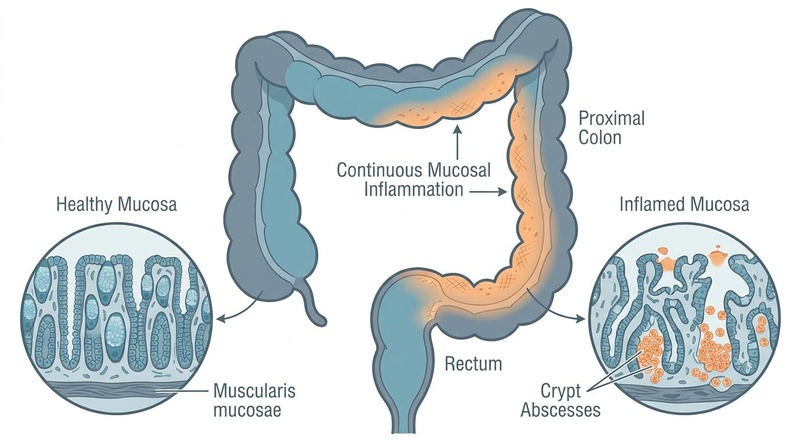
| Pathology Type | Superficial, Symmetrical, Continuous |
| Anatomical Range | Colon and Rectum Only (Starts Rectally) |
| Core Complications | Toxic Megacolon, Severe Hemorrhage, Dysplasia |
| Clinical Class | Autoimmune Mucosal Inflammatory |
| Oral Small Molecules | Upadacitinib, Ozanimod, Etrasimod |
| Surgical Option | Total Proctocolectomy with IPAA (J-Pouch) |
Ulcerative Colitis is a chronic, relapsing, immune-mediated inflammatory bowel disease restricted to the mucosal and submucosal layers of the colon and rectum. Characterized by continuous, symmetrical inflammation extending proximally from the anal verge, it leads to severe tenesmus, bloody diarrhea, and substantial risks of toxic megacolon and colorectal dysplasia[1][2][3]. Over the past decade, the therapeutic paradigm has transitioned from systemic corticosteroids to targeted mucosal-healing protocols utilizing high-potency oral small-molecule inhibitors (JAK inhibitors, S1P receptor modulators) and biologic agents alongside advanced reconstructive surgical options[4][1:1][2:1].
¶ At a glance
Key points (high-level summary)
- Continuous Mucosal Injury: Inflammation starts in the rectum (proctitis) and spreads continuously through the colon without "skip lesions," strictly sparing the small intestine[1:2][2:2].
- Mucosal Healing Target: Clinical management is driven by the Mayo Endoscopic Score, targeting complete mucosal restoration (score of 0 or 1) to prevent long-term neoplastic progression[2:3][5].
- Small-Molecule Revolution: Highly effective oral small molecules (Upadacitinib, Ozanimod, Etrasimod) offer rapid induction of remission, outperforming traditional biologics in speed of action[6][2:4][7].
- Surgical Cure Pathway: Complete removal of the colon (colectomy) offers a curative pathway, with reconstruction via an Ileal Pouch-Anal Anastomosis (IPAA) to preserve fecal continence[1:3][8].
What people use it for
- Aims: Induction and maintenance of steroid-free clinical and endoscopic remission, elimination of bloody diarrhea and urgency, prevention of colorectal cancer, and restorative surgical rehabilitation[1:4][2:5][9].
- Evidence quality: High-certainty evidence from numerous multi-center Phase 3 randomized controlled trials supports mesalamine, biologics, and novel small molecules[1:5][2:6][9:1][7:1].
¶ What is Ulcerative Colitis?
Ulcerative Colitis is a continuous inflammatory condition that specifically compromises the mucosal integrity of the large intestine.
¶ Pathology and Histopathology
Macroscopically, the inflamed mucosa appears diffuse, erythematous, granular, and friable, bleeding easily upon contact. As shallow ulcerations coalesce, remaining islands of relatively normal or regenerating mucosa project above the surface, forming "pseudopolyps." Unlike Crohn's disease, the muscularis propria is spared except in cases of fulminant colitis or toxic megacolon. Histological hallmarks include mucosal architectural distortion, branched crypts, goblet cell depletion, and neutrophil infiltration of the crypt epithelium, resulting in cryptitis and crypt abscesses.
¶ Epidemiology and Age of Onset
Ulcerative colitis has a peak incidence between 15 and 30 years of age, with a secondary smaller peak occurring in males between 50 and 70.
- Young Adults (15–30): Pediatric and young-adult onset ulcerative colitis often manifests as an acute severe pan-colitis (E3), carrying higher rates of primary steroid resistance, rapid inflammatory kinetics, and an accelerated progression to colectomy[10][11][6:1].
- Older Adults (50–70): Older-onset UC is typically more distal (proctitis or left-sided) but is associated with a greater baseline risk of cardiovascular comorbidities, venous thromboembolism (VTE), and severe drug-drug interactions with systemic therapies[6:2][12].
¶ Sex-Based Differences
Unlike Crohn's disease, adult ulcerative colitis is slightly more prevalent in males than in females, with a ratio of approximately 1.2:1.
- Men: Particularly those diagnosed after the age of 50, are more likely to present with extensive pancolitis (E3) and carry a significantly higher lifetime risk of developing Primary Sclerosing Cholangitis (PSC) and subsequent colorectal neoplasia[13][14].
- Women: Experience unique disease dynamics during pregnancy. Active disease flares at the time of conception exponentially increase the risks of preterm birth, low birth weight, and spontaneous abortion, emphasizing the need for robust pre-conception endoscopic control[15][12:1].
¶ Clinical Classification and Staging
Clinical staging of ulcerative colitis incorporates both anatomical extent (E) and clinical severity, which dictate the aggressiveness of the therapeutic approach:
¶ Anatomical Extent (Montreal Classification)
- E1 (Ulcerative Proctitis): Confined strictly to the rectum (proximal extent distal to the rectosigmoid junction). Highly localized; rarely induces systemic symptoms.
- E2 (Left-sided Colitis / Distal UC): Inflammation extends proximal to the rectosigmoid junction but is limited to the portion distal to the splenic flexure (involving descending colon).
- E3 (Pancolitis / Extensive UC): Inflammation extends proximal to the splenic flexure, involving the entire colon (transverse and ascending colon) up to the cecum. Associated with maximum systemic risk.
¶ Endoscopic Staging (Mayo Endoscopic Subscore)
Endoscopic healing is the primary treatment target (STRIDE-II guidelines), graded from 0 to 3[2:7][5:1]:
- Score 0 (Normal or Inactive Disease): Pale mucosa with normal, clear vascular patterns and no mucosal friability.
- Score 1 (Mild Disease): Erythema, decreased vascular pattern, and mild friability (minimal bleeding upon friction).
- Score 2 (Moderate Disease): Marked erythema, absent vascular pattern, friability, and erosions.
- Score 3 (Severe Disease): Spontaneous bleeding and prominent, deep ulceration.
¶ Diagnostic and Monitoring Framework
Robust monitoring protocols are required to track subclinical mucosal disease and prevent disease progression:
- Full Colonoscopy with Biopsies: The gold standard diagnostic procedure. Essential to confirm continuous rectal involvement, map colonic extent, and obtain histological biopsies to rule out Crohn's disease (lack of transmural lesions or granulomas) and cytomegalovirus (CMV) superinfection.
- Fecal Calprotectin (FC): Highly correlated with endoscopic and histological activity. Achieving a target of <100 µg/g represents complete mucosal healing, while levels >250 µg/g indicate active mucosal inflammation and dictate therapeutic optimization even in asymptomatic patients[16][5:2].
- C-Reactive Protein (CRP): Elevated CRP (>5 mg/L) indicates systemic inflammation but has lower sensitivity in UC compared to Crohn's; patients with isolated proctitis (E1) or moderate left-sided colitis (E2) often exhibit normal serum CRP despite active mucosal ulceration.
- Intestinal Ultrasound (IUS): Offers rapid, non-invasive assessment of colonic wall thickness. A bowel wall thickness >3.0 mm in the sigmoid or descending colon indicates moderate-to-severe disease activity[16:1][5:3].
¶ Evidence summary table (human outcomes)
| Target Outcome / Goal | Intervention | Effect Size | Consistency | Evidence Quality | Secondary Studies | Clinical Notes |
|---|---|---|---|---|---|---|
| Induction of Remission in Mild-to-Moderate UC | Mesalamine (5-ASA) Oral + Rectal Combined | High | High | Cochrane Systematic Reviews[1:6][9:2] | Combined oral + rectal therapy is significantly superior to oral or rectal monotherapy alone. | |
| Rapid Induction in Moderate-to-Severe UC | Oral Upadacitinib (JAK Inhibitor) | High | High | Phase 3 RCTs[2:8] | Induces clinical response within 1–2 weeks; blocks multiple cytokine pathways. | |
| Maintenance of Remission in Moderate-to-Severe UC | Vedolizumab (Anti-integrin) | High | High | Longitudinal Cohorts[16:2] | Highly gut-selective mechanism with an exceptionally favorable long-term safety profile. | |
| Mucosal & Histological Healing | S1P Modulators (Ozanimod / Etrasimod) | High | High | Phase 3 Trials[6:3][2:9][7:2] | Prevents lymphocyte egress from lymph nodes; highly effective for left-sided and pancolitis. | |
| Treatment of Refractory Pouchitis | VSL#3 / De Simone Formulation Probiotics | Moderate | Moderate | Systematic Reviews[14:1] | Prevents flare-ups of chronic pouchitis following surgical ileal pouch-anal anastomosis. | |
| Surgical Resolution of Refractory UC | Restorative Total Proctocolectomy (IPAA) | High | High | ECCO Guidelines[1:7][8:1] | Curative surgical procedure; removes all disease-bearing colonic mucosa while preserving continence. | |
| Reduction of Mucosal Inflammation | Enhanced Bioavailability Curcumin | Moderate | Moderate | Clinical RCTs[14:2][17] | Used as a clinical adjunct to 5-ASA to accelerate mucosal healing in mild-to-moderate flares. |
¶ Pathophysiological Mechanisms
The pathogenesis of Ulcerative Colitis is driven by an atypical Th2-like immune response combined with a profound collapse of the protective mucosal barrier:
                  [ Dysbiosis / Reduced Butyrate Producers ]
                                      │
                                      ▼
                        [ Defective Mucosal Barrier ]
                        - Depleted goblet cells (Muc2)
                        - Downregulated tight junctions
                                      │
                                      ▼
                        [ Luminal Antigen Leakage ]
                                      │
                                      ▼
                      [ Dendritic Cell Activation ]
                                      │
                                      ▼
                      [ Atypical Th2 Cell Induction ]
                                      │
                ┌─────────────────────┴─────────────────────┐
                ▼                                           ▼
         [ IL-5 Secretion ]                          [ IL-13 Secretion ]
                │                                           │
                ▼                                           ▼
     [ Neutrophil Recruitment ]                     [ Epithelial Cell Apoptosis ]
     - Cryptitis                                    - Tight junction breakdown
     - Crypt Abscesses                              - Coalescing ulcers
                │                                           │
                └─────────────────────┬─────────────────────┘
                                      ▼
                        [ Continuous Colonic Damage ]
- Atypical Th2 Cytokine Cascade: In ulcerative colitis, mucosal CD4+ T cells secrete high levels of IL-5 and IL-13, mimicking an atypical Th2 response. IL-5 drives the recruitment and activation of eosinophils and neutrophils, leading to cryptitis. IL-13 binds directly to epithelial cells, inducing pore-forming claudin-2 expression, which downregulates tight junctions and triggers enterocyte apoptosis, causing epithelial desquamation and shallow ulcerations.
- Mucus Layer and Goblet Cell Exhaustion: The protective inner mucus layer (primarily composed of Muc2 glycoprotein synthesized by goblet cells) is profoundly depleted. This allows direct physical contact between commensal bacteria and the epithelial cell surface, activating Toll-like receptor signaling and perpetuating mucosal inflammation.
- Autoantibody Production: Approximately 60–80% of UC patients produce perinuclear anti-neutrophil cytoplasmic antibodies (pANCA). These autoantibodies target human histone H1 or related nuclear proteins, cross-reacting with commensal bacterial antigens and amplifying local neutrophil degranulation.
- S1P-Mediated Lymphocyte Infiltration: Sphingosine-1-phosphate (S1P) gradients drive the egress of activated T and B lymphocytes from secondary lymphoid organs into the systemic circulation. Once in the colonic vasculature, these cells bind to mucosal addressin cell adhesion molecule-1 (MAdCAM-1) via α4β7 integrin, resulting in massive, continuous inflammatory infiltration of the lamina propria.
¶ Therapeutic Protocols and Decision Paths
Treatment is systematically structured based on disease extent and clinical severity.
¶ Mild-to-Moderate Colitis Protocol
- Proctitis (E1): Initiate rectal Mesalamine (1 g suppository daily at bedtime). Rectal mesalamine delivers high local concentrations, achieving superior clinical and histological healing compared to oral 5-ASA[1:8][9:3].
- Left-sided or Pancolitis (E2/E3): Initiate combined oral Mesalamine (4.8 g/day) plus rectal Mesalamine (4 g/day enema) for 8 weeks. Combined therapy significantly shortens time to clinical remission compared to oral therapy alone[1:9][9:4].
- Refractory Mild UC: Add oral multi-matrix (MMX) Budesonide (9 mg/day for 8 weeks). Budesonide MMX utilizes a specialized delivery system that releases the corticosteroid continuously throughout the colon, achieving high local anti-inflammatory effects with minimal systemic bioavailability.
¶ Corticosteroid Therapy and Tapering
Systemic corticosteroids are reserved for moderate-to-severe disease flares. They must never be used as maintenance therapy.
- Oral Prednisone: Standard induction at 40 mg/day for 1–2 weeks, followed by a structured taper once clinical response is achieved:
- Reduce by 5 mg/week down to 20 mg/day.
- Thereafter, reduce by 2.5 mg/week down to 0 mg/day over a total course of 8 weeks.
- Intravenous Methylprednisolone: For acute severe ulcerative colitis (ASUC), administer 60 mg IV once daily (or hydrocortisone 100 mg IV every 8 hours)[17:1]. Failure to improve within 3 to 5 days indicates primary steroid resistance and dictates urgent rescue therapy (Infliximab or Cyclosporine) or colectomy[1:10][17:2].
- Clinical Monitoring: Screen for steroid-induced hyperglycemia, acute hypertension, secondary psychiatric symptoms, and opportunistic infections. Patients requiring prolonged courses (>3 months) must undergo baseline Dual-Energy X-ray Absorptiometry (DEXA) and initiate calcium (1000 mg/day) and Vitamin D3 (800–1000 IU/day) co-supplementation.
¶ Moderate-to-Severe Colitis Protocol (Advanced Therapies)
Advanced therapeutic agents target distinct cellular pathways to induce and maintain mucosal healing:
¶ 1. Biologic Agents
- Anti-integrins (Vedolizumab): 300 mg IV at weeks 0, 2, and 6, then every 8 weeks (target trough level >15 µg/mL). Vedolizumab selectively inhibits the α4β7 integrin, preventing gut-homing T-lymphocytes from binding to MAdCAM-1. Highly gut-selective with negligible systemic immunosuppressive risks, making it the preferred biologic for older adults and patients with high infection risks[16:3].
- Anti-TNF Agents (Infliximab, Adalimumab): Infliximab is dosed at 5–10 mg/kg IV at weeks 0, 2, and 6, then every 8 weeks. To prevent immunogenicity (anti-drug antibody formation), combine Infliximab with a thiopurine (Azathioprine 2–2.5 mg/kg/day) or oral Methotrexate (15 mg/week)[4:1][9:5].
- Anti-IL-12/23 & Anti-IL-23 (Ustekinumab, Mirikizumab, Risankizumab): Mirikizumab targets the p19 subunit of IL-23 (300 mg IV induction at weeks 0, 4, 8; then 200 mg SC every 4 weeks). This highly selective blockade halts Th17 pathobiology while sparing systemic IL-12 immune surveillance[9:6].
¶ 2. Oral Small Molecules
- JAK Inhibitors (Upadacitinib, Tofacitinib): Upadacitinib is a highly selective JAK1 inhibitor (45 mg once daily induction for 8 weeks, followed by 15–30 mg once daily maintenance). JAK inhibitors block multiple cytokine signaling pathways (IL-2, IL-6, IFN-γ) simultaneously, offering rapid onset of action (symptom control within 72 hours)[2:10].
- S1P Receptor Modulators (Ozanimod, Etrasimod): Ozanimod (0.92 mg once daily following a 7-day titration) and Etrasimod (2 mg once daily) selectively internalize S1P receptors (S1P1/S1P5), trapping activated lymphocytes inside secondary lymph nodes[7:3].
- Required Screening: EKG to rule out second-degree or third-degree AV block, and an ophthalmic macular exam to rule out baseline macular edema.
¶ Therapeutic Escalation Decision Matrix
To guide treatment escalation, clinicians use a structured algorithm moving from 5-ASA to oral small molecules and biologics based on disease severity.
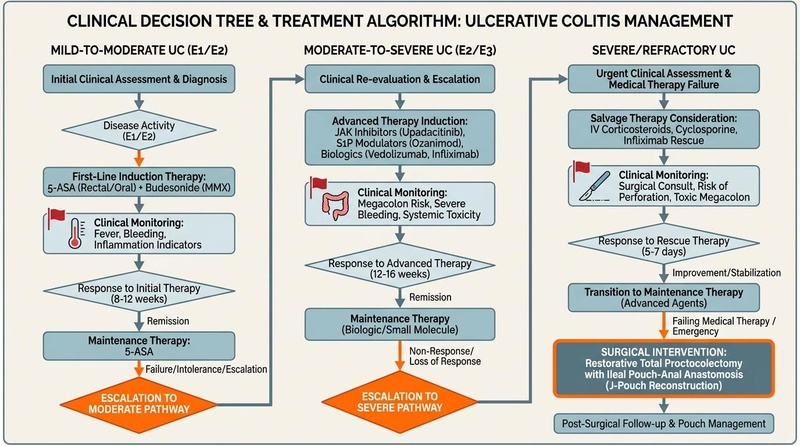
Figure 2: Clinical decision tree and therapeutic escalation algorithm for mild, moderate, and severe Ulcerative Colitis, outlining progression criteria and surgical interventions.
¶ Diet and Nutritional Adjuncts
While dietary therapy alone cannot induce mucosal healing in moderate-to-severe disease, structured nutritional adjuncts support symptom management and maintain mucosal barrier integrity:
¶ Flare Nutrition (Low-FODMAP Diet)
During active inflammation, mucosal enzyme expression is impaired. A strict, short-term (2–4 weeks) Low-FODMAP diet (eliminating Fermentable Oligosaccharides, Disaccharides, Monosaccharides, and Polyols) reduces colonic luminal osmotic load and limits excessive bacterial fermentation[18]. This significantly improves functional symptoms such as abdominal bloating, cramping, and stool frequency in patients with overlapping functional bowel patterns[19].
¶ Maintenance Nutrition (Mediterranean Diet)
In clinical remission, a Mediterranean-style diet high in extra virgin olive oil, wild-caught fish, and diverse soluble fibers is recommended. This pattern increases the abundance of short-chain fatty acid (SCFA)-producing bacteria (such as Faecalibacterium prausnitzii). SCFAs, specifically butyrate, serve as the primary energetic fuel for colonic epithelial cells, promoting tight junction protein synthesis (claudin-1, occludin) and strengthening the colonic barrier[18:1].
¶ Specific Carbohydrate Diet (SCD) and Crohn's Disease Exclusion Diet (CDED)
- Specific Carbohydrate Diet (SCD): Restricts complex carbohydrates (disaccharides and polysaccharides) to limit dysbiotic bacterial overgrowth. Though highly popular in patient communities, clinical trial data show superior efficacy in Crohn's disease over UC.
- Crohn's Disease Exclusion Diet (CDED): Combines partial enteral nutrition (PEN) with the exclusion of dietary emulsifiers, gluten, dairy, and red meat. Its therapeutic efficacy is validated for Crohn's disease, with emerging, less robust evidence supporting its use in pediatric extensive ulcerative colitis.
¶ Evidence-Based Phytotherapy: Curcumin
Oral administration of enhanced-bioavailability curcumin (e.g., 2–3 g/day of standardized curcuminoids combined with piperine, or phospholipid formulations) has demonstrated high-quality clinical efficacy in randomized trials. Curcumin inhibits nuclear factor-kappa B (NF-κB) transcription, downregulating the synthesis of mucosal TNF-α and IL-1β. When combined with standard mesalamine, curcumin significantly increases clinical and endoscopic remission rates in mild-to-moderate active colitis compared to mesalamine alone[14:3][17:3].
¶ Colorectal Cancer Surveillance
Chronic mucosal inflammation drives a step-wise progression from normal mucosa to low-grade dysplasia, high-grade dysplasia, and invasive adenocarcinoma.
¶ Risk Assessment
The lifetime risk of colorectal cancer (CRC) in ulcerative colitis increases exponentially with three primary factors[1:11][9:7]:
- Anatomical Extent: Pancolitis (E3) carries the highest risk (up to an 8% cumulative risk after 20 years), whereas isolated proctitis (E1) carries no excess risk over the general population.
- Disease Duration: Risk escalation typically begins after 8 years of active disease.
- Concomitant Primary Sclerosing Cholangitis (PSC): PSC is an independent driver of colonic carcinogenesis, increasing the risk of dysplasia more than 4-fold. Concomitant PSC mandates annual surveillance colonoscopies starting immediately from the time of joint diagnosis, regardless of disease activity or colonic extent[13:1][14:4]. Note that successful liver transplantation is associated with a dramatic long-term reduction in colonic dysplasia risk in these patients[11:1].
¶ Surveillance Protocols
- High-Definition Chromoendoscopy: The standard of care. Utilizes dye-spraying (Indigo Carmine or Methylene Blue) or virtual digital narrow-band imaging (NBI) / linked color imaging (LCI) to highlight subtle mucosal surface alterations (pit patterns)[20].
- Biopsy Protocols: Targeted biopsies of visible mucosal irregularities or non-polypoid lesions, combined with targeted endoscopic mucosal resection (EMR) for circumscribed dysplastic lesions. Random four-quadrant biopsies every 10 cm are reserved for settings where high-definition chromoendoscopy is unavailable.
¶ Surgical Intervention & Restorative J-Pouch
Total proctocolectomy is curative, eliminating all disease-bearing colonic and rectal mucosa while maintaining natural fecal continence.
¶ Indications
- Medically refractory moderate-to-severe disease (failing advanced biologics and small molecules).
- Acute severe colitis failing rescue therapy (IV steroids, Infliximab, or Cyclosporine)[17:4].
- Detection of flat high-grade dysplasia or multi-focal low-grade dysplasia.
- Emergency complications: Toxic megacolon, free bowel perforation, or life-threatening hemorrhage.
¶ Reconstructive Stages (Total Proctocolectomy with IPAA)
- 2-Stage Procedure: Consists of (1) total proctocolectomy and J-pouch construction from the terminal ileum with a temporary diverting loop ileostomy, followed by (2) ileostomy reversal 2–3 months later.
- 3-Stage Procedure: Performed in hemodynamically unstable, malnourished patients or those on high-dose corticosteroids (>20 mg/day Prednisone).
- Stage 1: Subtotal colectomy and end ileostomy (leaving the rectal stump intact).
- Stage 2: Completion proctectomy, J-pouch construction, and diverting loop ileostomy.
- Stage 3: Diverting ileostomy reversal.
¶ Post-Surgical Complications
- Pouchitis: Nonspecific inflammation of the ileal reservoir, occurring in up to 50% of patients within 5 years of IPAA. Presents with increased stool frequency, pelvic pressure, and watery discharge. First-line therapy is Ciprofloxacin (500 mg twice daily) or Metronidazole (250 mg three times daily) for 14 days[1:12][14:5]. Recurrent pouchitis is prevented using high-dose multi-strain probiotics (De Simone Formulation)[14:6].
- Cuffitis: Inflammation of the retained 1–2 cm rectal cuff. Treated with topical Mesalamine suppositories or hydrocortisone foam.
- Crohn's of the Pouch: De novo Crohn's-like inflammation of the small intestine proximal to the pouch, requiring standard biologic therapy.
- Female Fertility: Pelvic dissection during open proctocolectomy can induce fallopian tube adhesions, reducing natural conception rates. Utilizing minimally invasive (laparoscopic or robotic) surgical techniques significantly reduces adhesion formation and preserves natural fertility profiles[1:13][8:2].
¶ Pregnancy and Lactation
Successful pregnancy outcomes are highly dependent on achieving robust disease control prior to conception.
¶ Pre-Conception and Disease State
Conception must be planned during a period of sustained, steroid-free clinical and endoscopic remission (minimum 3–6 months). Active disease at conception is the single strongest predictor of adverse pregnancy outcomes, including preterm delivery, intrauterine growth restriction (IUGR), and pregnancy loss[15:1][12:2].
¶ Medication Safety Profile
- Safe to Continue:
- 5-ASA (Mesalamine): Fully compatible. Avoid older formulations containing dibutyl phthalate (DBP) coatings (such as older Asacol formulations) due to potential fetal phthalate exposure.
- Anti-TNF Biologics (Infliximab, Adalimumab): Active placental transport occurs during the third trimester. To limit fetal drug exposure, these biologics can be temporarily held between weeks 30 and 32 of pregnancy, provided the patient is in stable remission and has low flare risks[21][12:3].
- Anti-integrins and Anti-IL-12/23 (Vedolizumab, Ustekinumab): Demonstrated safe safety profile; continued throughout gestation[15:2][22].
- Absolute Contraindications:
- Methotrexate: Teratogenic (causes neural tube defects and fetal death). Discontinue at least 3 months prior to conception in both female and male patients.
- JAK Inhibitors (Upadacitinib, Tofacitinib): Contraindicated due to embryo-fetal toxicity observed in preclinical animal models[2:11][5:4].
- S1P Modulators (Ozanimod, Etrasimod): Contraindicated; high risk of teratogenicity and vascular developmental defects[7:4].
¶ Mode of Delivery
Vaginal delivery is preferred for the majority of patients with stable ulcerative colitis. Cesarean section is strongly indicated for patients with a functioning J-pouch (to protect the anal sphincter and prevent pelvic floor denervation) and those with active perianal disease[1:14][8:3][12:4].
¶ Coping and Personalizing for Life Stages
Disease management must be customized to address the distinct physiological and psychosocial realities of each patient population:
¶ Young Adults (Ages 18–35)
Young adults face significant challenges regarding body image, academic progression, early career establishment, and sexual health. The transition from pediatric to adult care requires proactive self-management training. Clinicians must address sexual well-being, pelvic floor physical therapy post-surgery, and early fertility planning, emphasizing the safety of advanced biologics during pregnancy to prevent therapeutic non-adherence due to unfounded fear of medication teratogenicity[15:3][12:5].
¶ Middle-Aged Adults (Ages 36–64)
In midlife, the cumulative duration of disease begins to dictate colorectal cancer surveillance intervals. Long-term metabolic management is key; repeated steroid courses can accelerate metabolic dysfunction, necessitating early screening for insulin resistance, lipid anomalies, and fatty liver disease[23][24]. Surveillance strategies must incorporate rigorous chromoendoscopy protocols to detect pre-neoplastic changes.
¶ Older Adults (Ages 65+)
Older-onset ulcerative colitis presents unique therapeutic challenges. Systemic corticosteroids carry disproportionate risks of acute delirium, osteoporotic fractures, severe hyperglycemia, and opportunistic infections in older individuals.
- JAK Inhibitors: Must be used with extreme caution due to baseline cardiovascular risk factors and the age-associated risk of venous thromboembolism (VTE)[2:12].
- Preferred Selection: Gut-selective biologics (Vedolizumab) are preferred first-line advanced therapies in older patients to minimize systemic infectious risks and avoid complex drug-drug interactions[16:4].
¶ Flare Action Plans & Emergency Escalation
Having a structured, preemptive plan enables rapid clinical rescue and prevents progression to acute severe colitis.
¶ Early Patient-Led Self-Management
For patients in clinical remission who experience mild symptoms of a flare (reappearance of trace blood in stool, increased stool frequency to 3–4 bowel movements per day):
- Rectal Therapy Optimization: Immediately initiate or double the dose of rectal Mesalamine (e.g., 1 g suppository daily at bedtime, or 4 g enema daily). Local topical therapy maximizes mucosal concentration and frequently aborts distal flares within 48–72 hours[1:15][9:8].
- Budesonide MMX Initiation: For patients already on maximum oral 5-ASA, initiate oral Budesonide MMX 9 mg/day for 8 weeks to provide continuous colonic anti-inflammatory coverage with minimal systemic toxicity.
- Biochemical Verification: Perform a stool collection for Fecal Calprotectin (FC) to objectively confirm active mucosal inflammation and rule out overlapping functional irritable bowel symptoms (IBS).
¶ Systemic Corticosteroid Thresholds
If symptoms do not stabilize within 3–5 days of local optimization, or if the patient develops >6 bloody bowel movements per day:
- Contact the clinical gastroenterology team immediately to initiate oral Prednisone (starting at 40 mg/day with a structured taper).
- Scheduled routine biochemical checks (CBC, CRP, electrolytes) must be performed during the steroid induction phase.
¶ Absolute Red Flags
Patients must proceed immediately to emergency clinical evaluation if they exhibit any of the following signs of a systemic crisis or toxic megacolon[17:5]:
- High Fever (>38.5°C / 101.3°F) with systemic chills.
- Resting Tachycardia (>100 beats per minute) or acute hemodynamic instability.
- Severe, Continuous Abdominal Pain accompanied by clinical abdominal rigidity, rebound tenderness, or prominent abdominal distension.
- Massive, Continuous Rectal Hemorrhage causing orthostatic dizziness, extreme fatigue, or syncope.
¶ Safety, Toxicology, and Clinical Monitoring
Therapeutic protocols require strict baseline and longitudinal monitoring to mitigate infectious and hematological toxicity:
¶ Screenings Prior to Advanced Therapy Start
- Infection Screening: Perform QuantiFERON-TB Gold (or T-SPOT) to rule out latent tuberculosis, and obtain serologies for Hepatitis B (HBsAg, anti-HBs, anti-HBc) and Varicella Zoster Virus (VZV). Ensure VZV vaccination is completed if IgG is negative prior to initiating JAK inhibitors (due to high herpes zoster reactivation risk)[2:13].
- Baseline Labs: CBC (monitor for baseline cytopenias), Comprehensive Metabolic Panel (renal function and LFTs), and Lipid Profile (specifically for S1P modulators and JAK inhibitors which can cause dose-dependent hyperlipidemia)[2:14][7:5].
¶ Clinical Monitoring Pathway
┌────────────────────────────────────────────────────────┐
│               UPADACITIBIN / BIOLOGIC START            │
│  - Screening: QuantiFERON Gold, VZV, HBV, Lipid Profile│
│  - Record baseline Fecal Calprotectin & CBC            │
└───────────────────────────┬────────────────────────────┘
                            │
                            ▼
┌────────────────────────────────────────────────────────┐
│                WEEK 4 BIOCHEMICAL CHECK                │
│  - Measure CBC (monitor for lymphopenia/anemia)        │
│  - Evaluate LFTs & fasting lipid panel                 │
│  - Check hs-CRP (confirm systemic downward trend)      │
└───────────────────────────┬────────────────────────────┘
                            │
                            ▼
┌────────────────────────────────────────────────────────┐
│                   MONTH 3 SURVEILLANCE                 │
│  - Repeat Fecal Calprotectin (FC target <100 µg/g)     │
│  - Evaluate clinical response (stool frequency <3/day)  │
│  - Confirm complete resolution of rectal bleeding      │
└───────────────────────────┬────────────────────────────┘
                            │
                            ▼
┌────────────────────────────────────────────────────────┐
│                   MONTH 12 ENDOSCOPY                   │
│  - Perform surveillance Sigmoidoscopy                  │
│  - Confirm Mayo Endoscopic Score of 0 or 1             │
│  - Screen for dysplasia in long-standing pancolitis    │
└────────────────────────────────────────────────────────┘
¶ Practical FAQ
What is the "backwash ileitis" in ulcerative colitis?
Backwash ileitis is a term used to describe superficial, mild inflammation of the terminal ileum that occurs in approximately 10–20% of patients with extensive pancolitis (E3). It is not a sign of Crohn's disease, but rather a benign consequence of an incompetent ileocecal valve allowing highly alkaline, inflammatory colonic contents to reflux back into the distal ileum.
How does the risk of colorectal cancer change over time in UC?
The risk of colorectal cancer in patients with extensive ulcerative colitis increases progressively with disease duration. The risk is estimated at approximately 2% after 10 years, 8% after 20 years, and up to 18% after 30 years of active pancolitis. This mandate highlights the necessity of initiating annual surveillance colonoscopies with chromoendoscopy and targeted biopsies after 8 years of disease duration[1:16][9:9].
Can probiotics be used to maintain remission in active UC?
Yes, but only in mild-to-moderate disease. High-potency, multi-strain probiotic formulations (such as the De Simone Formulation or VSL#3) have been shown in randomized controlled trials to be as effective as low-dose oral mesalamine for maintaining clinical remission in mild-to-moderate UC and are highly effective for preventing recurrent flare-ups of chronic pouchitis[14:7]. They are not effective for induction in moderate-to-severe disease.
Why is rectal therapy necessary if I am already taking oral mesalamine?
Oral mesalamine formulations release the active drug in the distal ileum or proximal colon. However, by the time the stool reaches the rectum, the concentration of active 5-ASA is often insufficient. Concomitant rectal mesalamine suppositories or enemas deliver extremely high local drug concentrations directly to the rectal mucosa, accelerating mucosal healing and clinical remission compared to oral mesalamine alone[1:17][9:10].
¶ Methods
This clinical monograph was prepared by conducting a comprehensive synthesis of clinical consensus statements (such as the ECCO Guidelines on Therapeutics in Ulcerative Colitis, AGA guidelines, and BSG 2025 guidelines), multi-center Phase 3 clinical trial data, and longitudinal cohorts up to July 2026. Evidence quality was assessed using the GRADE framework.
¶ References
¶ Update Log
- 2026-07-07: Comprehensive expansion of the clinical monograph. Integrated BSG 2025 and ECCO 2026 guidelines, detailed mucosal-only Ulcerative Colitis pathology, Mayo Endoscopic Subscore staging, oral JAK1 inhibitors, pregnancy and lactation clinical consensus, colorectal cancer surveillance, and restorative J-pouch surgical pathways. Added custom infobox pathology diagram and clinical treatment algorithm infographic.
Adamina M, Kienle P, Chaparro M. ECCO Guidelines on Therapeutics in Ulcerative Colitis: Surgical Treatment. Journal of Crohn's & colitis. 2026. https://pubmed.ncbi.nlm.nih.gov/42381162/ ↩︎ ↩︎ ↩︎ ↩︎ ↩︎ ↩︎ ↩︎ ↩︎ ↩︎ ↩︎ ↩︎ ↩︎ ↩︎ ↩︎ ↩︎ ↩︎ ↩︎ ↩︎
Zulfiqar O, Ali T, Mohayy Ud Din G. Oral Small-Molecule Therapies Versus Biologic Agents in Moderate-to-Severe Ulcerative Colitis: A Systematic Review of Pivotal Phase 3 Trials. Cureus. 2026. https://pubmed.ncbi.nlm.nih.gov/42344814/ ↩︎ ↩︎ ↩︎ ↩︎ ↩︎ ↩︎ ↩︎ ↩︎ ↩︎ ↩︎ ↩︎ ↩︎ ↩︎ ↩︎ ↩︎
Diao J, Cao H, Zhou J. Pathological reprogramming of innate immune cells drives resistance to biologics in inflammatory bowel diseases. Autoimmunity reviews. 2026. https://pubmed.ncbi.nlm.nih.gov/42190856/ ↩︎
Gordon M, Sinopoulou V, Akobeng AK. Biologic drugs for induction and maintenance of remission in Crohn's disease: a network meta-analysis. The Cochrane database of systematic reviews. 2026. https://pubmed.ncbi.nlm.nih.gov/42333672/ ↩︎ ↩︎
Denton KH, Slaughter JC, Bennett A. Patient Perspectives of Intestinal Ultrasound in IBD: A Quantitative Evaluation of Satisfaction and Diagnostic Preference. Digestive diseases and sciences. 2026. https://pubmed.ncbi.nlm.nih.gov/42348050/ ↩︎ ↩︎ ↩︎ ↩︎ ↩︎
Alsaeid M, Abu Hawi O, Bessissow T. IBD and Immune-Mediated Inflammatory Diseases: What Is the Optimal Management? Journal of clinical medicine. 2026. https://pubmed.ncbi.nlm.nih.gov/42355576/ ↩︎ ↩︎ ↩︎ ↩︎
Alla D, Appala S, Meyur S. Safety and efficacy of etrasimod in ulcerative colitis: Evidence from a meta-analysis. Medicine. 2026. https://pubmed.ncbi.nlm.nih.gov/42332476/ ↩︎ ↩︎ ↩︎ ↩︎ ↩︎ ↩︎
Adamina M, Kienle P, Chaparro M, et al. ECCO Guidelines on Therapeutics in Ulcerative Colitis: Surgical Treatment. Journal of Crohn's & colitis. 2026. https://pubmed.ncbi.nlm.nih.gov/42381162/ ↩︎ ↩︎ ↩︎ ↩︎
Butler TD, Segal JP. Guideline review: 2025 British Society of Gastroenterology guidelines on inflammatory bowel disease in adults - Part 2: ulcerative colitis. Frontline gastroenterology. 2025. https://pubmed.ncbi.nlm.nih.gov/42273203/ ↩︎ ↩︎ ↩︎ ↩︎ ↩︎ ↩︎ ↩︎ ↩︎ ↩︎ ↩︎ ↩︎
Williams J, Gurram B. Advanced therapies in management of pediatric inflammatory bowel disease. Current opinion in pediatrics. 2026. https://pubmed.ncbi.nlm.nih.gov/42361097/ ↩︎
Huo BL, Zhao AL, Liu W. Dual biologics or combination therapy with small molecules in pediatric inflammatory bowel disease: a systematic review and meta-analysis. World journal of pediatrics. 2026. https://pubmed.ncbi.nlm.nih.gov/42387245/ ↩︎ ↩︎
Mahadevan U, Seow CH, Barnes EL, et al. Global Consensus Statement on the Management of Pregnancy in Inflammatory Bowel Disease. Journal of Crohn's & colitis. 2025. https://pubmed.ncbi.nlm.nih.gov/40914850/ ↩︎ ↩︎ ↩︎ ↩︎ ↩︎ ↩︎
Clayton MW, Dierkhising RA, Gores GJ. Gallbladder neoplasia is associated with a higher incidence of cholangiocarcinoma in patients with primary sclerosing cholangitis. Canadian liver journal. 2026. https://pubmed.ncbi.nlm.nih.gov/42404986/ ↩︎ ↩︎
Rosali MI, V Thanga Velu DP, Mokhtar MH. Specificity vs. Synergy Between Single-Strain and Multi-Strain Probiotics for Ulcerative Colitis Treatment: A Review of the Literature. Biomedicines. 2026. https://pubmed.ncbi.nlm.nih.gov/42351814/ ↩︎ ↩︎ ↩︎ ↩︎ ↩︎ ↩︎ ↩︎ ↩︎
Gerbier E, Abolhassani N, Dupuis M. Use of medications to treat inflammatory bowel diseases before and during pregnancy in Switzerland between 2012 and 2019: an observational study using the claims-based MAMA cohort. BMC gastroenterology. 2026. https://pubmed.ncbi.nlm.nih.gov/42277663/ ↩︎ ↩︎ ↩︎ ↩︎
Jairath V, Armuzzi A, Agboton C. A decade of clinical data with vedolizumab: the past, present, and future. Therapeutic advances in gastroenterology. 2026. https://pubmed.ncbi.nlm.nih.gov/42205859/ ↩︎ ↩︎ ↩︎ ↩︎ ↩︎
Ordás I, Caballol B, Giordano A, et al. Position statement of the Spanish Working Group on Crohn's Disease and Ulcerative Colitis (GETECCU) on the diagnosis and management of acute severe ulcerative colitis. Gastroenterologia y hepatologia. 2026. https://pubmed.ncbi.nlm.nih.gov/42248446/ ↩︎ ↩︎ ↩︎ ↩︎ ↩︎ ↩︎
Limketkai BN, Shin A, Manitius N. Dietary Therapies for Gastrointestinal Disorders. Nutrients. 2026. https://pubmed.ncbi.nlm.nih.gov/42280430/ ↩︎ ↩︎
Patel RD, Keyashian K, Nazarian M. Update on Novel Biologic Therapies for Crohn Disease and the Impact of Imaging on Clinical Decision Making. Radiographics. 2026. https://pubmed.ncbi.nlm.nih.gov/42207683/ ↩︎
Gabbiadini R, Franchellucci G, Minini F, et al. Virtual chromoendoscopy with linked color imaging versus dye-chromoendoscopy in the surveillance of patients with long-standing colonic inflammatory bowel disease. Journal of Crohn's & colitis. 2026. https://pubmed.ncbi.nlm.nih.gov/42315966/ ↩︎
Sheahan A, Bozzi L, Voss EA. Tumor Necrosis Factor Inhibitor Treatment and Persistence Patterns in the Peripregnancy Period in Patients With Inflammatory Autoimmune Diseases. ACR open rheumatology. 2026. https://pubmed.ncbi.nlm.nih.gov/42051077/ ↩︎
Rabinowitz LG, Gade A, Deyhim T, et al. Safety and use of IBD therapies during pregnancy and lactation. Expert review of gastroenterology & hepatology. 2026. https://pubmed.ncbi.nlm.nih.gov/41520241/ ↩︎
Karaskova E, Friedecky D, Kleparnik D. Cardiovascular risk in inflammatory bowel disease: focus on lipids and visceral adipose tissue. Frontiers in endocrinology. 2026. https://pubmed.ncbi.nlm.nih.gov/42404342/ ↩︎
Desai A, Habib H, Wahbeh L. Glucagon-Like Peptide-1 Receptor Agonists in Inflammatory Bowel Disease: A Narrative Review. Gastro hep advances. 2026. https://pubmed.ncbi.nlm.nih.gov/42405289/ ↩︎