¶ Cerebrolysin
| Composition | Porcine brain-derived peptide mixture |
| Molecular Weight | < 10 kDa (peptides) |
| Category | Neuropeptide, Neurotrophic Factor Mimetic |
| Half-life | ~2-6 hours (individual peptides) |
| Admin | Intramuscular (IM), Intravenous (IV) |
| FDA Status | Approved in many countries, Investigational (Phase 2) in US |
| CAS | 12656-62-1 (Cerebroprotein Hydrolysate) |
Cerebrolysin is a complex neuropeptide preparation derived from porcine brain tissue, widely recognized for its neuroprotective and neurorestorative properties. It is a multi-modal agent that mimics the actions of endogenous neurotrophic factors, making it a therapeutic option for conditions such as ischemic stroke, traumatic brain injury (TBI), and various forms of dementia. Approved in over 50 countries, Cerebrolysin supports neuronal survival, promotes neuroplasticity, and enhances cognitive function, although its use in Western medicine is less common due to regulatory differences.
¶ At a glance
Aliases
- Also known as: Cerebroprotein Hydrolysate (porcine)
- Composition: A mixture of low-molecular-weight peptides and free amino acids.
- Category: Neuropeptide, Neurotrophic factor mimetic, Neuroprotector, Neurorestorer
Key points
- Strongest benefit: Demonstrated efficacy in improving functional recovery and neurological outcomes in patients with acute ischemic stroke and moderate-to-severe traumatic brain injury (TBI) when administered early in treatment protocols [1][2].
- Notable effect: Meta-analyses indicate positive effects on cognitive function and global clinical status in patients with vascular dementia and mild-to-moderate Alzheimer's disease [3][4].
- Key limitation: While widely used internationally, Cerebrolysin lacks FDA approval in the United States, and some Cochrane reviews have found mixed results or noted increased non-fatal adverse events in stroke patients [5].
- Main safety concern: Generally well-tolerated with injection-site reactions being most common. Rare allergic reactions due to its animal origin are possible.
What people use it for
- Main goals: Improving recovery after stroke, mitigating the effects of traumatic brain injury, enhancing cognitive function in dementia, and supporting neurorecovery.
- Evidence quality (overall): Moderate – Strong clinical signal from numerous international trials and meta-analyses, but some inconsistency in specific outcome measures and lack of FDA approval.
¶ Legal & regulatory status
⚠️ CRITICAL INFORMATION
Regulatory classification
- FDA status: Unapproved / Investigational (Phase 2). Cerebrolysin is not approved by the U.S. Food and Drug Administration (FDA) for any indication. It has undergone Phase 2 trials for Alzheimer's disease in the U.S. but is not an approved drug [6].
- Approved indications: Approved in over 50 countries, including many in Europe and Asia, for the treatment of ischemic stroke, traumatic brain injury, and various forms of dementia (e.g., Alzheimer's, vascular dementia) [6:1].
- Prescription requirement: Generally requires a prescription in countries where it is approved.
- DEA schedule: Not a controlled substance.
Geographic legal status
- United States: Not approved for human use by the FDA. Availability is limited to research or off-label use in some clinical settings.
- European Union & Asia: Widely approved and prescribed for neurological disorders.
Sports and competition
- WADA status: Not listed as banned in the current WADA Prohibited List. However, athletes should exercise caution as substances not explicitly listed but similar in chemical structure or biological effect to prohibited substances may still be considered prohibited under Section S0 (Non-Approved Substances) [7].
¶ What is Cerebrolysin?
Cerebrolysin is a standardized, enzymatically treated porcine (pig brain) protein hydrolysate. This manufacturing process breaks down larger brain proteins into a mixture of low-molecular-weight peptides and free amino acids, with a molecular weight generally less than 10 kDa. It is not a single peptide but a complex biological mixture.
Relationship to endogenous peptides
Cerebrolysin acts as a neurotrophic factor mimetic, meaning its constituent peptides mimic the actions of naturally occurring neurotrophic factors like Brain-Derived Neurotrophic Factor (BDNF), Glial Cell Line-Derived Neurotrophic Factor (GDNF), and Ciliary Neurotrophic Factor (CNTF) [8]. It provides a direct supply of these neurotrophic-like peptides to the brain.
Development history
Cerebrolysin has been in clinical use for decades, with its development dating back to the mid-20th century. Its complex composition and multi-target mechanism of action distinguish it from single-molecule pharmaceutical drugs.
Key pharmacological property
Cerebrolysin exhibits a multi-modal neuroprotective and neurorestorative action. Its key pharmacological properties include promoting neuronal survival, enhancing synaptic plasticity, stimulating neurogenesis, and reducing inflammation and oxidative stress in the brain [9].
¶ What are Cerebrolysin's main benefits?
Cerebrolysin's therapeutic effects are primarily observed in neurological conditions characterized by neuronal damage and cognitive impairment.
¶ 1. Acute Ischemic Stroke Recovery
- Outcome: Improved functional recovery and neurological deficit scores.
- Direction of effect:
Medium Improvement (Moderate increase, positive for health) - Magnitude: Clinically significant improvements in motor function and global outcomes.
- Population studied: Patients with acute ischemic stroke, typically administered within 24-72 hours of symptom onset.
- Evidence quality: Moderate. Large-scale trials and meta-analyses have shown benefits in functional recovery, particularly when treatment is initiated early and combined with rehabilitation [1:1][10]. However, some Cochrane reviews indicate no significant benefits for mortality or severe disability [5:1].
¶ 2. Traumatic Brain Injury (TBI)
- Outcome: Enhanced cognitive recovery and improved multidimensional outcomes.
- Direction of effect:
Medium Improvement (Moderate increase, positive for health) - Magnitude: Significant improvements in global outcome scales (e.g., GCS, GOSE) and neuropsychological tests.
- Population studied: Patients with moderate-to-severe TBI.
- Evidence quality: Moderate. Prospective meta-analyses of the CAPTAIN trial series confirmed that Cerebrolysin, when added to standard care, significantly improves outcomes in TBI patients [2:1][11].
¶ 3. Dementia and Cognitive Decline (Alzheimer's and Vascular Dementia)
- Outcome: Improvement in cognitive function (MMSE, ADAS-cog) and global clinical function (CIBIC-plus).
- Direction of effect:
Small Improvement (Small increase, positive for health) - Magnitude: Modest but consistent improvements, particularly in mild-to-moderate cases.
- Population studied: Patients with vascular dementia and mild-to-moderate Alzheimer's disease.
- Evidence quality: Low to Moderate. Meta-analyses suggest positive effects, but the supporting trials are often small or short-duration, and some reviews do not recommend it for routine clinical use without further robust evidence [3:1][4:1].
¶ Evidence summary table (human outcomes)
| Outcome / Goal | Effect* | Consistency** | Evidence quality | Trials*** | Notes (population, duration, dose) |
|---|---|---|---|---|---|
| Acute Ischemic Stroke (Functional Recovery) | High | Moderate | 14 RCTs (meta-analysis) | Improved neurological recovery and functional independence with early administration [10:1]. | |
| Traumatic Brain Injury (Global Outcomes) | High | Moderate | Prospective meta-analysis | Significant improvement in multidimensional outcomes in moderate-to-severe TBI [11:1]. | |
| Vascular Dementia (Cognition/Global Function) | Moderate | Low | 6 RCTs (meta-analysis) | Positive effects on cognitive and global function, but small sample sizes [4:2]. | |
| Alzheimer's Disease (Cognition/Global Function) | High | Moderate | 6 RCTs (meta-analysis) | Consistent significant benefits on CIBIC-plus and ADAS-cog in mild-to-moderate AD [3:2]. | |
| Depression (Add-on therapy) | Low | Very low | Scoping review / small trials | May support depression in specific contexts, e.g., with eating disorders [12][13]. |
¶ How does Cerebrolysin work?
Cerebrolysin's mechanism of action is multifaceted, involving a complex interplay of neurotrophic, neuroprotective, and neuromodulatory effects. Its diverse peptide components allow it to interact with various cellular pathways that are critical for neuronal health and function.
¶ 1. Neurotrophic Factor Mimicry and Receptor Activation
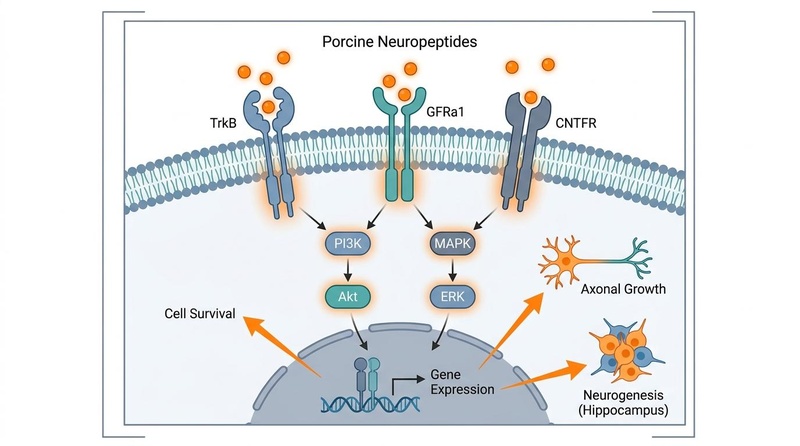
Cerebrolysin contains peptides that structurally and functionally resemble endogenous neurotrophic factors such as BDNF (Brain-Derived Neurotrophic Factor) and NGF (Nerve Growth Factor). These peptides can bind to their respective receptors, primarily TrkB (for BDNF-like effects) and TrkA (for NGF-like effects), as well as GFRα1 (for GDNF-like effects) and CNTFR [14][15].
¶ 2. Activation of Intracellular Survival Pathways
Binding to TrkB and other receptors initiates crucial intracellular signaling cascades, most notably the PI3K/Akt pathway and the MAPK/ERK pathway [14:1][15:1].
- PI3K/Akt Pathway: This pathway is a central regulator of cell survival. Its activation by Cerebrolysin leads to the phosphorylation and inactivation of pro-apoptotic proteins (like BAD), preventing mitochondrial cytochrome c release and blocking programmed cell death (apoptosis) [16]. This is critical for neuronal survival in ischemic conditions or after injury.
- MAPK/ERK Pathway: Involved in cell proliferation, differentiation, and synaptic plasticity. Activation by Cerebrolysin supports neuronal growth, strengthens synaptic connections, and enhances long-term potentiation (LTP), which is the cellular basis of learning and memory [14:2].
¶ 3. Neuroprotection against Excitotoxicity and Oxidative Stress
Cerebrolysin protects neurons from various insults:
- Anti-excitotoxic effects: It reduces glutamate-induced excitotoxicity, a major mechanism of neuronal damage in stroke and TBI, by stabilizing calcium homeostasis [17].
- Antioxidant effects: It inhibits free radical formation and upregulates endogenous antioxidant enzymes (like Superoxide Dismutase - SOD), thereby mitigating oxidative stress [18].
¶ 4. Enhanced Neurogenesis and Synaptogenesis
Beyond protecting existing neurons, Cerebrolysin promotes the formation of new neurons (neurogenesis) and new synaptic connections (synaptogenesis) [19]. It fosters the proliferation and differentiation of neural progenitor cells, particularly in the dentate gyrus of the hippocampus, a region vital for learning and memory [20].
Pharmacokinetics
Cerebrolysin is a mixture of peptides, and thus its pharmacokinetics are complex. Individual peptides within the mixture have varying half-lives, generally ranging from 2.5 to 6 hours [21][22]. The overall clearance is influenced by a saturable renal filtration mechanism, meaning higher doses can extend its effective presence. Oral administration is generally ineffective due to rapid degradation by gastric enzymes [16:1].
¶ Effects on different systems
¶ Brain & mental health (cognition, mood, neuroprotection)
Cerebrolysin's primary effects are on the central nervous system.
- Cognition: Studies consistently show improvements in various cognitive domains, including memory, attention, and executive function, in patients with stroke, TBI, and dementia [3:3][4:3].
- Mood: Emerging evidence suggests Cerebrolysin may have antidepressant and anxiolytic effects, particularly in the context of neurological recovery or as an adjunctive therapy in psychiatric disorders [12:1][13:1].
- Neuroprotection: It protects neurons from damage caused by ischemia, excitotoxicity, and oxidative stress, limiting secondary brain injury after acute events [17:1].
¶ Administration, reconstitution, and storage
¶ Routes of administration
Cerebrolysin is typically administered via injection.
- Intramuscular (IM) Injection: Doses up to 5 mL can be administered intramuscularly. This route is often preferred for smaller doses or maintenance phases [23][24].
- Intravenous (IV) Injection/Infusion: Doses ranging from 10 mL up to 50 mL (or even 60 mL in some acute settings) are administered intravenously, either as a slow IV push or diluted in 100-250 mL of physiological saline and infused over 30-60 minutes [23:1][25]. IV administration is preferred for higher doses and acute conditions.
- Subcutaneous (SubQ) Injection: While some online sources and anecdotal reports mention subcutaneous administration, and some practitioners reportedly use it [26], it is explicitly stated by many reputable sources and prescribing information that Cerebrolysin should NOT be administered subcutaneously [27][28]. The reasons cited include potential for insufficient therapeutic concentrations via this route and safety concerns. Therefore, IM and IV are the recommended and medically recognized routes.
¶ Reconstitution
Cerebrolysin is typically supplied as a sterile aqueous solution in ampoules, eliminating the need for reconstitution.
¶ Storage requirements
- Ampoules: Store at room temperature (below 25°C or 30°C, depending on regional guidelines) and protect from light. Do not freeze.
- Opened Ampoules: Any unused solution in an opened ampoule should be discarded immediately.
- Diluted solution (for IV infusion): Must be used immediately after preparation.
¶ Handling and safety
- Sterile Technique: Strict aseptic technique is required for all injections to prevent infection.
- Disposal: Dispose of used needles and ampoules in appropriate sharps containers.
- Degradation: Check ampoules for cloudiness or particles before use; discard if present.
¶ Dosage and protocols
Note: Dosing regimens for Cerebrolysin are well-established in countries where it is approved. The following protocols are derived from clinical practice guidelines and research studies.
¶ Standard Dosing in Studies (Evidence-Based)
- Acute Ischemic Stroke: 10–60 mL/day (often 30–50 mL/day) administered intravenously for 10–21 days, typically initiated within 24–72 hours of stroke onset [25:1][29][30].
- Traumatic Brain Injury (TBI): 10–60 mL/day (often 50 mL/day) intravenously for 10–20 days [25:2][2:2].
- Dementia (Alzheimer's, Vascular Dementia): 5–30 mL/day (often 10–30 mL/day) intravenously or intramuscularly for 10–20 days per cycle, with cycles repeated several times a year (e.g., 2–4 cycles annually) [31][32]. For maintenance, lower doses (e.g., 5-10 mL IM) may be used between cycles.
¶ Cycling and timing protocols
- Duration of Course: Typically 10 to 21 consecutive days of daily administration.
- Repeat Cycles: For chronic conditions like dementia, repeat courses are common after a break period (e.g., 3-6 months).
- Infusion Rate: IV infusions should be slow, over 15-60 minutes, to avoid adverse reactions.
- Timing: No specific timing (e.g., morning vs. evening) is generally mandated, but consistency is important.
¶ Dose escalation
Dosages are typically adjusted based on the severity of the neurological condition and patient response, under medical supervision. Higher doses are generally used for acute, severe conditions like stroke or TBI, while lower doses may be sufficient for chronic cognitive support.
¶ Special populations
- Severe Renal Impairment: Cerebrolysin is generally contraindicated in patients with severe renal insufficiency due to potential for accumulation, although this is not always explicitly stated in all prescribing information [29:1].
- Pregnancy/Breastfeeding: Safety in these populations has not been established; generally contraindicated.
¶ Safety and side effects
Cerebrolysin has a long history of clinical use and is generally considered to have a favorable safety profile.
¶ Common side effects
- Injection site reactions: Local pain, redness, or irritation at the injection site (especially with IM injections) [33].
- Headache, dizziness, nausea: These are reported infrequently.
- Feeling of warmth/sweating: Can occur, particularly with rapid IV administration.
¶ Less common / serious concerns
- Allergic reactions: Rare, but possible due to its animal (porcine) origin. Symptoms can include rash, itching, or, very rarely, anaphylaxis [33:1].
- Agitation/Excitation: Infrequent reports of agitation, insomnia, or mild confusion, especially in susceptible individuals or with higher doses.
- Drug interactions: No clinically significant drug interactions have been widely reported with commonly used medications for neurological conditions, including cholinesterase inhibitors or recombinant tissue-type plasminogen activator (tPA) [33:2]. However, caution is advised when co-administering with antidepressants or MAO inhibitors.
¶ Who should be especially cautious or avoid it
- Known hypersensitivity: Individuals with a known allergy to porcine proteins or any component of Cerebrolysin.
- Severe renal impairment: As mentioned in dosing, use with caution or contraindication depending on guidelines.
- Epileptic seizures: While not a strict contraindication, patients with a history of seizures should be monitored as Cerebrolysin may, in rare cases, lower the seizure threshold [23:2].
- Pregnancy and breastfeeding: Due to lack of sufficient safety data, it is generally contraindicated.
¶ Drug and supplement interactions
Cerebrolysin's complex nature means it generally does not have predictable pharmacokinetic interactions in the same way as single-molecule drugs.
Pharmacodynamic interactions (additive / opposing effects)
- Antidepressants / MAO Inhibitors: Concurrent administration of Cerebrolysin with some antidepressants (e.g., MAO inhibitors) should be done with caution, as it may potentiate their effects. This requires careful monitoring [23:3].
- Vitamins / Vasodilators: Cerebrolysin can be co-administered with vitamins and drugs that improve cardiac circulation, but it should not be mixed in the same infusion solution with lipid solutions or solutions that alter its pH [23:4].
Monitoring recommendations
- Neurological status: Regular assessment of neurological function, cognitive status, and functional independence is recommended during treatment courses.
- Injection site: Monitor for any signs of local irritation or infection.
- Allergic reactions: Patients should be monitored for signs of hypersensitivity, especially during initial administrations.
¶ Combining Cerebrolysin with other peptides and supplements ("stacks")
While Cerebrolysin is often used as a standalone therapy, in some contexts, it might be combined with other agents, though formal clinical trials on such combinations are rare.
Common combinations
- Standard Stroke/TBI Care: Cerebrolysin is typically used as an add-on to standard rehabilitation and acute care protocols for stroke and TBI, not as a replacement [2:3].
- Cognitive Support Supplements: Anecdotal reports suggest combining with other nootropics or cognitive enhancers, but there is no strong evidence to support synergistic effects or established safety for such combinations.
Evidence level
- Formal combination trials: Very limited for Cerebrolysin with other peptides or supplements outside of standard medical treatments. Most rationale for stacking is mechanistic or anecdotal.
- Potential risks of combining: Unknown safety profiles, additive side effects, and lack of clear efficacy data.
¶ Cost considerations
Cerebrolysin is primarily available as a pharmaceutical product in countries where it is approved.
Typical costs
- Pharmaceutical grade: Costs vary significantly by country, dosage, and treatment duration. A typical course of treatment can range from several hundred to over a thousand dollars (USD equivalent), depending on the regimen.
- Research chemical grade: Less applicable as it is a complex biological extract, not a synthetic peptide typically sold by research chemical vendors. Purity and authenticity concerns are high if sourced outside legitimate pharmaceutical channels.
Value assessment
- For approved indications like stroke and TBI, the value proposition is based on demonstrated clinical efficacy in improving recovery.
- For off-label or less supported uses (e.g., pure cognitive enhancement in healthy individuals), the cost-benefit ratio becomes less favorable due to higher costs and uncertain benefits.
¶ Practical questions (FAQ)
¶ How quickly does Cerebrolysin work?
Many patients and clinicians report noticeable effects, particularly in acute settings like stroke, within days of starting treatment. Cognitive improvements in dementia may take several weeks or repeat cycles to become evident.
¶ Can Cerebrolysin be taken orally?
Due to its peptide nature, Cerebrolysin is rapidly degraded by digestive enzymes, making oral administration ineffective. It must be administered via injection (IM or IV) to reach therapeutic concentrations.
¶ Is Cerebrolysin safe for long-term use?
Long-term safety data is primarily from studies in chronic neurological conditions like dementia, where it has been used in repeated cycles over several months or years with a generally good safety profile. However, ongoing medical supervision is always recommended.
¶ Why is Cerebrolysin not approved in the United States?
The lack of FDA approval is often attributed to the complexity of its composition (a mixture rather than a single molecule), the challenges of conducting large, multi-center trials that meet FDA standards, and differences in regulatory philosophies between regions.
¶ Can Cerebrolysin enhance cognitive function in healthy individuals?
While some anecdotal reports exist, there is limited high-quality clinical evidence to support Cerebrolysin's use for cognitive enhancement in healthy individuals. Its primary efficacy is demonstrated in populations with existing neurological deficits.
¶ References
Heiss, W. D., et al. (2016). Cerebrolysin and Recovery After Stroke (CARS): A Randomized, Double-Blind, Placebo-Controlled Trial. Stroke, 47(5), 1360–1367. https://www.ahajournals.org/doi/10.1161/strokeaha.115.009416 ↩︎ ↩︎
Muresanu, D. F., et al. (2020). Efficacy and safety of cerebrolysin in neurorecovery after moderate-severe traumatic brain injury: results from the CAPTAIN II trial. Neurological Sciences, 41(3), 665–674. https://link.springer.com/article/10.1007/s10072-019-04181-y ↩︎ ↩︎ ↩︎ ↩︎
Gauthier, S., et al. (2015). Cerebrolysin in Mild-to-Moderate Alzheimer's Disease: A Meta-Analysis of Randomized Controlled Clinical Trials. Dementia and Geriatric Cognitive Disorders, 39(5-6), 332–341. https://karger.com/dem/article/39/5-6/332/98339/Cerebrolysin-in-Mild-to-Moderate-Alzheimer-s ↩︎ ↩︎ ↩︎ ↩︎
Chen, N., & Yang, M. (2013). Cerebrolysin for vascular dementia. Cochrane Database of Systematic Reviews, (1). https://pmc.ncbi.nlm.nih.gov/articles/PMC6844361/ ↩︎ ↩︎ ↩︎ ↩︎
Ziganshina, L. E., & Abakumova, T. (2023). Cerebrolysin for acute ischaemic stroke. Cochrane Database of Systematic Reviews, (10). https://pmc.ncbi.nlm.nih.gov/articles/PMC10565895/ ↩︎ ↩︎
Alzheimer's Drug Discovery Foundation Cognitive Vitality. (2016). Cerebrolysin & Your Brain. https://www.alzdiscovery.org/cognitive-vitality/ratings/cerebrolysin ↩︎ ↩︎
WADA Prohibited List. (n.d.). World Anti-Doping Agency. Retrieved from https://www.wada-ama.org/en/prohibited-list ↩︎
PeptideInsight. (n.d.). Cerebrolysin: Research Evidence & Safety Profile. Retrieved from https://peptideinsight.com/en/peptides/cerebrolysin ↩︎
Real Peptides. (2026). Cerebrolysin Neuroprotection Complete Guide. Retrieved from https://www.realpeptides.co/cerebrolysin-neuroprotection-complete-guide-2026/ ↩︎
Cureus. (2025). Safety and Efficacy of Cerebrolysin for Neurorecovery After Acute Ischemic Stroke: A Systematic Review and Meta-Analysis of 14 Randomized Controlled Trials. Cureus, 17(4): e12465088. https://pmc.ncbi.nlm.nih.gov/articles/PMC12465088/ ↩︎ ↩︎
Vester, J. C., et al. (2021). Cerebrolysin after moderate to severe traumatic brain injury: prospective meta-analysis of the CAPTAIN trial series. Neurological Sciences, 42(6), 2549–2559. https://pubmed.ncbi.nlm.nih.gov/33620612/ ↩︎ ↩︎
Florek, M., et al. (2025). Is Cerebrolysin Useful in Psychiatry Disorders?. Biomedicines, 13(4): 12292664. https://pmc.ncbi.nlm.nih.gov/articles/PMC12292664/ ↩︎ ↩︎
The Effect of Cerebrolysin on Anxiety, Depression, and Cognition in Moderate and Severe Traumatic Brain Injury Patients: A CAPTAIN II Retrospective Trial Analysis. (2022). PubMed. https://pubmed.ncbi.nlm.nih.gov/35630065/ ↩︎ ↩︎
Real Peptides. (n.d.). Cerebrolysin Science Explained — How It Works. Retrieved from https://www.realpeptides.co/cerebrolysin-science-explained-how-it-works/ ↩︎ ↩︎ ↩︎
Newtropin. (n.d.). Cerebrolysin: Peptide Mechanisms & Neurological Research. Retrieved from https://newtropin.com/peptides/cerebrolysin ↩︎ ↩︎
Real Peptides. (n.d.). What Does Cerebrolysin Actually Do? (Mechanism Explained). Retrieved from https://www.realpeptides.co/what-does-cerebrolysin-actually-do/ ↩︎ ↩︎
BiohackingHub. (2026). Cerebrolysin: Benefits, Dosage & Safety. Retrieved from https://westernhealthscreening.com/substances/cerebrolysin/ ↩︎ ↩︎
Real Peptides. (n.d.). Cerebrolysin Benefits — Brain Peptide Research. Retrieved from https://www.realpeptides.co/cerebrolysin-benefits-brain-peptide-research/ ↩︎
Chen, H., et al. (2007). Trophic factors counteract elevated FGF-2-induced inhibition of adult neurogenesis. Neurobiology of Aging, 28(10), 1541-1554. https://pubmed.ncbi.nlm.nih.gov/16904229/ ↩︎
Chen, H., et al. (2007). Trophic factors counteract elevated FGF-2-induced inhibition of adult neurogenesis. Neurobiology of Aging, 28(10), 1541-1554. https://pubmed.ncbi.nlm.nih.gov/16904229/ ↩︎
Real Peptides. (n.d.). Cerebrolysin Half Life — Pharmacokinetics Explained. Retrieved from https://www.realpeptides.co/cerebrolysin-half-life-pharmacokinetics-explained/ ↩︎
CalcMyPeptide. (n.d.). Cerebrolysin Dosing Guide — Half-Life, Reconstitution & Protocol. Retrieved from https://www.calcmypeptide.com/en/peptides/cerebrolysin ↩︎
MIMS Philippines. (n.d.). Cerebrolysin: Dosage & Side Effects. Retrieved from https://www.mims.com/philippines/drug/info/cerebrolysin?type=full ↩︎ ↩︎ ↩︎ ↩︎ ↩︎
Extrapharma. (n.d.). CEREBROLYSIN® Instructions. Retrieved from https://extrapharma.net/instructions/cerebrolysin-instructions/ ↩︎
Vinmec. (n.d.). What is the effect of Cerebrolysin 10ml? Retrieved from https://www.vinmec.com/eng/blog/what-are-the-uses-of-cerebrolysin-10ml-en ↩︎ ↩︎ ↩︎
r/Cerebrolysin. (2024). Doctor prescribed me Cerebrolysin Subcutaneous. Retrieved from https://www.reddit.com/r/Cerebrolysin/comments/1dahhlm/doctor_prescribed_me_cerebrolysin_subcutaneous/ ↩︎
PeptideWiki.co. (n.d.). Cerebrolysin Dosage Guide: Neuropeptide Protocols, Clinical Evidence & Cycling for Brain Health. Retrieved from https://peptidewiki.co/guides/dosage-guides/cerebrolysin-dosage-guide ↩︎
Peptides Insider. (n.d.). Cerebrolysin Dosage & Administration. Retrieved from https://peptidesinsider.com/peptides/cerebrolysin/dosage ↩︎
Cerebrolysin. (2023). Cerebrolysin Treatment Handbook. Retrieved from https://www.cerebrolysin.com/wp-content/uploads/2023/11/Cerebrolysin_TreatmentHandbook_2023_SCREEN_nocomments.pdf ↩︎ ↩︎
Clinch, J., et al. (2025). Safety and feasibility of cerebrolysin in treatment of primary intracerebral hemorrhage (CLINCH)—a prospective, randomized, open-label, blinded endpoint pilot trial. Frontiers in Neurology, 16. https://www.frontiersin.org/journals/neurology/articles/10.3389/fneur.2025.1602956/ ↩︎
DrOracle.ai. (n.d.). What is the recommended dosage of cerebrolysin (neuroprotective peptide) for treating memory problems?. Retrieved from https://www.droracle.ai/articles/412334/what-is-the-recommended-dosage-of-cerebrolysin-neuroprotective-peptide ↩︎
PeptideDeck. (n.d.). Cerebrolysin (Cerebrolysin: Benefits, Dosage & Side Effects Guide) - Complete Research Guide. Retrieved from https://www.peptidedeck.com/peptides/cerebrolysin ↩︎
Muresanu, D. F., et al. (2012). Safety profile of Cerebrolysin: clinical experience from dementia and stroke trials. Journal of Tunceli University, 17(1), 105–112. https://pubmed.ncbi.nlm.nih.gov/22514795/ ↩︎ ↩︎ ↩︎