¶ Cortagen

| Sequence | Ala-Glu-Asp-Pro (AEDP) |
| Formula | C17H26N4O9 |
| Molar Mass | 430.41 g/mol |
| Category | Synthetic Bioregulator, Tetrapeptide |
| Half-life | Undetermined; short peptides generally have rapid clearance, but epigenetic effects can be prolonged. |
| Admin | Subcutaneous, Intramuscular, Oral (research) |
| FDA Status | Unapproved (Research Chemical / Dietary Supplement) |
| CAS | N/A |
Cortagen (L-alanyl-L-glutamyl-L-aspartyl-L-proline) is a synthetic tetrapeptide bioregulator from the Khavinson peptide family. Derived from the natural brain cortex extract Cortexin, Cortagen is studied for its ability to epigenetically modulate gene expression, supporting central nervous system function and adrenal cortex homeostasis [1][2][3]. It is primarily investigated for enhancing stress resilience, promoting neural repair, and balancing cortisol production.
¶ At a glance
Aliases
- Also known as: AEDP, Ala-Glu-Asp-Pro
- Amino acid sequence: Ala-Glu-Asp-Pro
- Sequence length: Tetrapeptide (4 amino acids)
- Category: Synthetic Bioregulator, Epigenetic Modulator
Key points (high-level summary)
- In elderly human lymphocytes, Cortagen induces deheterochromatinization, activating ribosomal genes and restoring protein synthesis without compromising chromosomal integrity [1:1][2:1].
- Animal studies show Cortagen accelerates peripheral nerve regeneration and protects against brain ischemia [4][5].
- Cortagen can modulate macrophage immune function, stimulating lymphocyte-activating factors in aging mice [6].
- Human data on Cortagen for specific clinical indications is primarily based on clinical observations from Russian research, which is not widely recognized in Western clinical practice [1:2], [2:2].
What people use it for
- Main goals: Stress resilience, adrenal support, nerve repair, cognitive function, anti-aging (epigenetic).
- Evidence quality (overall): Low certainty (primarily animal studies and limited human cellular/observational data).
¶ Legal & regulatory status
⚠️ CRITICAL INFORMATION
Cortagen, like many short-chain peptides, exists in a regulatory gray area, particularly in Western countries.
Regulatory classification
- FDA status: Unapproved. Cortagen is not approved by the U.S. FDA for any medical use in humans. It is generally classified as a "research chemical" or marketed as a "dietary supplement," but its therapeutic claims would render it an unapproved new drug if sold for medical purposes.
- Approved indications (if any): None.
- Prescription requirement: Not available as a prescription drug. Available via research chemical suppliers or supplement vendors.
- DEA schedule: Not scheduled.
Geographic legal status
- United States: Unapproved for human therapeutic use. Regulatory status as a dietary supplement is ambiguous. Not on the FDA's 503A Bulks List, precluding compounding by 503A pharmacies.
- European Union: Similar to the US, not approved for medical use. Regulations vary by member state regarding its sale as a research chemical or supplement.
- Russia: Extensive research and clinical use from the St. Petersburg Institute of Bioregulation and Gerontology; however, this is not recognized by Western regulatory bodies.
Sports and competition
- WADA status: Prohibited. Cortagen falls under Section S0 (Non-Approved Substances) of the World Anti-Doping Agency Prohibited List, which bans pharmacological substances without current governmental regulatory health authority approval for human therapeutic use. Athletes should avoid Cortagen.
Source quality considerations
- Research Chemical Grade: The purity and content of products sold as "research chemicals" can vary widely. Third-party testing is crucial to verify the identity and purity of the peptide.
- Counterfeit Concerns: Due to its unapproved status, counterfeit products or those containing undisclosed substances are a risk.
¶ What is Cortagen?
Cortagen is a synthetic tetrapeptide composed of four amino acids: Alanine, Glutamate, Aspartate, and Proline (Ala-Glu-Asp-Pro). It was developed based on the amino acid analysis of Cortexin, a natural peptide complex derived from the brain cortex of calves, and is part of the extensive research conducted by the St. Petersburg Institute of Bioregulation and Gerontology [3:1][7].
- Definition: Cortagen is designed to mimic the bio-regulatory functions of endogenous peptides involved in brain and adrenal activity. Its short sequence makes it relatively resistant to enzymatic degradation compared to larger proteins, potentially allowing for oral or peripheral administration with some efficacy [8].
- Development history: Synthesized by Professor Vladimir Khavinson's team, Cortagen was initially investigated for its potential in nerve tissue regeneration and restoration of central nervous system function, particularly in contexts of aging and stress [4:1].
- Key pharmacological property: Cortagen primarily functions as an epigenetic modulator, influencing gene expression by interacting with DNA and chromatin structures.
¶ What are Cortagen's main benefits?
Cortagen is primarily investigated for its adaptogenic and restorative effects on the neuroendocrine and immune systems, largely through epigenetic mechanisms.
¶ 1. Epigenetic Rejuvenation & Gene Activation
In studies involving elderly human lymphocytes, Cortagen has been shown to induce deheterochromatinization, a process where densely packed DNA (heterochromatin) is "unrolled" or decondensed. This action reactivates ribosomal genes, which are often silenced with age, thereby restoring the cell's capacity for protein synthesis and metabolism. This occurs without decondensing pericentromeric structural heterochromatin, preserving chromosomal integrity [1:3][2:3][3:2].
¶ 2. Neuroprotection & Nerve Regeneration
Preclinical studies, particularly in rats, highlight Cortagen's role in neural tissue repair. It has been shown to significantly accelerate the growth rate of regenerating sciatic nerve fibers (by 27%) and increase electrical conduction velocity (by 40%) following injury [4:2][5:1]. It also demonstrates neuroprotective effects in models of chronic cerebral ischemia, accelerating behavioral recovery and preventing oxidative stress [8:1][9].
¶ 3. Adrenal Cortex Support & Stress Resilience
Cortagen contributes to normalizing the function of the adrenal cortex, which is crucial for managing the body's response to stress via the Hypothalamic-Pituitary-Adrenal (HPA) axis. By influencing gene expression in adrenal and neural tissues, it helps balance corticosteroid production, potentially enhancing resilience to emotional and physical stressors and supporting recovery from chronic stress-induced fatigue [10][11].
¶ 4. Antioxidant & Anti-inflammatory Action
Cortagen has been observed to mitigate oxidative stress by decreasing lipid peroxidation products and reducing protein oxidative modifications in serum and cerebral cortex in animal models. This protective effect helps maintain cellular integrity and function during acute oxidative challenges [11:1]. It also helps balance pro- and anti-inflammatory pathways within the nervous and immune systems [12][13][6:1].
¶ 5. Immunomodulation
In aging animal models, Cortagen has demonstrated the ability to modulate immune function. It can stimulate the production of lymphocyte-activating factors by macrophages in older mice, suggesting a homeostatic immunomodulating action that helps normalize immune responses that may decline with age [6:2].
¶ Evidence summary table (human outcomes)
| Outcome / Goal | Effect* | Consistency** | Evidence quality | Trials*** | Notes (population, duration, dose) |
|---|---|---|---|---|---|
| Epigenetic modification (lymphocytes) | High | Low | 3 in vitro studies | Elderly human lymphocytes (75-88 years); deheterochromatinization, ribosome gene activation [1:4][2:4][3:3] | |
| Nerve regeneration (post-injury) | N/A | Very low | N/A | No direct human trials, primarily animal data [4:3][5:2] | |
| Stress resilience / Adrenal function | N/A | Very low | N/A | Limited human observational data from Russian clinics; no Western RCTs [10:1] | |
| Antioxidant / Anti-inflammatory | N/A | Very low | N/A | Primarily animal models; no human RCTs [8:2][11:2] | |
| Immunomodulation | N/A | Very low | N/A | Primarily animal models; no human RCTs [6:3] |
- *Effect: Number of arrows (1-3) indicates magnitude. Direction: ↑ (increase), ↓ (decrease), = (no effect), ? (unclear). Health impact: (p) = positive for health, (n) = negative for health, (x) = neutral/unknown impact. Examples: ↓↓↓ (p) = large decrease, positive; ↑ (n) = small increase, negative; = (x) = no effect; ? = unclear.
- IMPORTANT: If using the compact renderer encoding (<effect ...>), do NOT include the text arrows or parentheses next to it. Just use the tag.
- **Consistency: Low (results conflict), Moderate (mixed but leaning one way), High (most trials agree)
- ***Trials: Number of RCTs or total trials informing this outcome (shows evidence depth at a glance)
- REQUIRED: You MUST include a citation key (e.g.
[^1]) in the "Notes" column for every single row. If you claim a result, you must link the specific Meta-Analysis or Key RCT that proves it.
¶ How does Cortagen work?
The core mechanism of Cortagen involves its role as an epigenetic bioregulator. Instead of directly stimulating or inhibiting receptors like many drugs, Cortagen appears to interact with genomic DNA and chromatin structures within the cell nucleus.
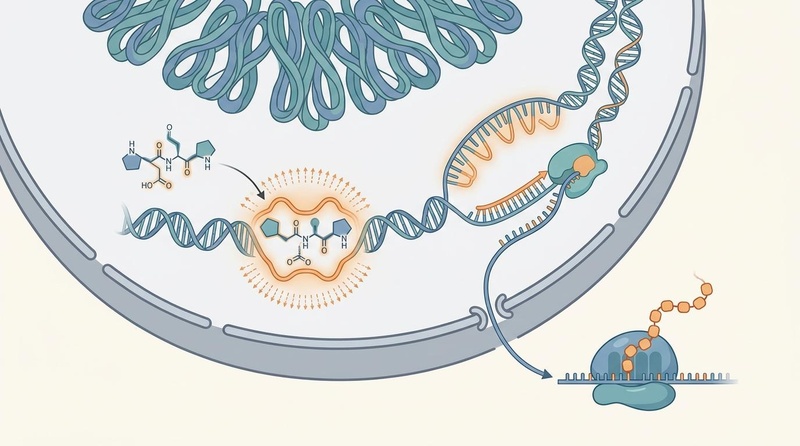
Conceptual diagram of Cortagen's (AEDP) regulatory mechanism: chromatin decondensation and nuclear transcription are physically separated from cytoplasmic translation, featuring a clean editorial palette with subtle orange emphasis. No chemical structures are depicted.
- Primary targets: DNA, chromatin, and gene transcription machinery. Cortagen specifically influences the "packaging" of DNA [1:5].
- Core mechanisms:
- Deheterochromatinization: In aged or stressed cells, segments of DNA can become tightly condensed into heterochromatin, silencing important genes. Cortagen promotes the "unrolling" or decondensation of these regions, making genes accessible for transcription and protein synthesis [1:6][2:5][3:4]. This process restores the cell's ability to produce essential proteins that may have been downregulated due to aging or stress.
- Gene Expression Modulation: Microarray analysis in mouse hearts revealed that Cortagen significantly alters the expression of numerous genes (over 110 identified), including those involved in cardiovascular protection and cellular longevity, such as heat shock protein Hsc70 [10:2].
- HPA Axis Stabilization: By modulating gene expression in hypothalamic structures, Cortagen influences the synthesis of neuromodulators like Interleukin-2 (IL-2), which helps stabilize the HPA axis. This contributes to its adaptogenic effects and improved stress response [12:1].
- Evidence source:
- Human data: Mechanistic in vitro studies on human lymphocytes demonstrate direct epigenetic effects on chromatin and ribosomal gene activity [1:7][2:6].
- Animal / in vitro data: Extensive studies in rats and mice provide insights into neuroprotective, antioxidant, immunomodulatory, and gene expression effects [8:3][4:4][5:3][9:1][10:3][11:3][12:2][13:1][6:4].
- Pharmacokinetics:
- Half-life: Specific human pharmacokinetic data for Cortagen is limited. As a tetrapeptide, it is generally expected to have a relatively short systemic half-life due to rapid enzymatic degradation. However, its epigenetic effects, once initiated, may have longer-lasting cellular consequences.
- Bioavailability by route: While injections (subcutaneous, intramuscular) are commonly used in research, some sources suggest oral administration may have efficacy, possibly due to the proline residue providing resistance to peptidase degradation [7:1]. Intranasal administration is also explored for brain-targeting effects.
- Metabolism/degradation: Likely metabolized by peptidases into individual amino acids.
- Major PK issues: The primary challenge for short peptides is ensuring sufficient stability and concentration at target tissues, especially with oral administration.
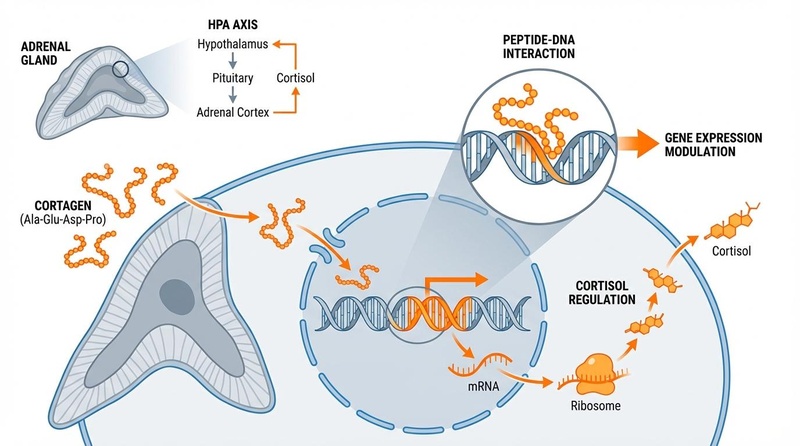
Cortagen's impact on adrenal function involves modulating the HPA axis, contributing to balanced cortisol production and enhancing the body's adaptive response to stress.
¶ Effects on different systems
¶ Brain & mental health (cognition, mood, neuroprotection)
Cortagen has shown neuroprotective benefits in animal models of brain ischemia, accelerating behavioral recovery and preventing excessive lipid peroxidation [8:4][9:2]. It also promotes the regeneration of injured peripheral nerves, such as the sciatic nerve, significantly increasing growth rate and conduction velocity [4:5][5:4]. Studies in mice indicate that Cortagen can stimulate locomotor and exploratory activity without inducing anxiety-related behaviors, distinguishing it from traditional psychostimulants [14]. These effects are attributed to its epigenetic influence on gene expression in neural tissues.
¶ Endocrine system (adrenal function, HPA axis)
Cortagen is known for its ability to support the adrenal cortex and normalize HPA axis function. It helps regulate corticosteroid production, assisting the body in adapting to stress [10:4]. Its modulatory effects on hypothalamic IL-2 gene expression suggest a role in stabilizing neuroendocrine feedback loops [12:3].
¶ Immune function and inflammation
In aging animal models, Cortagen has demonstrated immunomodulatory properties. It can enhance the production of lymphocyte-activating factors by macrophages, particularly in older mice where these functions may be diminished. It helps balance immune responses and may contribute to systemic adaptogenesis [6:5][15]. Its antioxidant effects also indirectly support immune health by reducing cellular damage [11:4].
¶ Cardiovascular health
Microarray analysis in mouse hearts revealed that Cortagen alters the expression of genes related to cardiovascular protection, including the upregulation of heat shock protein Hsc70 [10:5]. This suggests potential benefits for cardiac health, though direct human cardiovascular outcome data is scarce.
¶ Comparative Analysis: Cortagen vs. Cortexin vs. Pinealon
To understand Cortagen's clinical positioning, it is useful to compare it with related peptide bioregulators: Cortexin (its natural progenitor) and Pinealon (a closely related synthetic tripeptide).
| Feature | Cortagen (AEDP) | Cortexin | Pinealon (EDR) |
|---|---|---|---|
| Structure | Synthetic Tetrapeptide (Ala-Glu-Asp-Pro) [7:2] | Natural Polypeptide Complex (Bovine extract) [8:5] | Synthetic Tripeptide (Glu-Asp-Arg) |
| Origin | Designed based on amino acid analysis of Cortexin [7:3][8:6] | Extracted from young bovine brain cortex [8:7] | Synthesized based on cerebral cortex analysis |
| Primary Target | Adrenal cortex, central nervous system, and HPA axis [1:8][8:8][10:6] | Broad brain tissues, neurons, and synapses [8:9] | Brain cortex, neurons, and cognitive pathways |
| Core Mechanism | Deheterochromatinization, HPA-axis gene expression [1:9][2:7][10:7] | Broad neurotrophic, metabolic, and synaptic modulation [8:10] | Epigenetic modulation of neuronal gene expression |
| Clinical Position | Stress resilience, adrenal fatigue, peripheral nerve repair [4:6][5:5][10:8] | Stroke, traumatic brain injury, cognitive impairment [8:11] | Memory enhancement, focus, neurodegeneration prevention |
| Form & Purity | Pure, single-molecule synthetic peptide (100% defined) [7:4] | Complex mixture of neuropeptides and amino acids [8:12] | Pure, single-molecule synthetic peptide (100% defined) |
| Immunogenicity | Extremely low risk due to simple, short structure [7:5] | Low risk, but higher than synthetic short peptides due to animal origin | Extremely low risk due to short, simple structure |
¶ Cortagen vs. Cortexin
While Cortexin is a complex natural extract containing a wide array of active neuropeptides, Cortagen is a single, defined synthetic tetrapeptide designed to mimic Cortexin's key active component [7:6][8:13]. In comparative studies on brain ischemia, both drugs demonstrated significant neuroprotective efficacy, accelerating behavioral recovery and restoring individual behavior patterns [8:14]. However, Cortagen offers advantages in terms of precise dosing, lack of batch-to-batch variation, and a reduced theoretical risk of immunogenic or allergic reactions sometimes associated with animal-derived extracts [7:7].
¶ Cortagen vs. Pinealon
Both Cortagen and Pinealon are short, synthetic Khavinson bioregulators designed for neurological health, but they have distinct structural compositions and primary target tissues. Cortagen is a tetrapeptide (AEDP) that uniquely acts on both the nervous system and the adrenal glands, making it highly suited for stress management, HPA axis regulation, and peripheral nerve repair [4:7][5:6][10:9]. Pinealon, on the other hand, is a tripeptide (Glu-Asp-Arg / EDR) that more selectively targets the brain cortex, making it the preferred choice for cognitive performance, memory retention, and protection against brain-specific age-associated cognitive decline.
¶ Administration, reconstitution, and storage
Administering peptides requires careful attention to sterile technique and proper handling.
¶ Reconstitution
Cortagen typically comes as a lyophilized (freeze-dried) powder in vials.
- Diluent: Bacteriostatic water (BW) is generally preferred for reconstitution to prevent bacterial growth and extend shelf life. Saline (0.9% NaCl) can also be used but results in a shorter shelf life.
- Reconstitution procedure:
- Obtain a sterile insulin syringe (e.g., 1 mL / 100 units) and bacteriostatic water.
- Inject the desired volume of BW into the Cortagen vial, aiming the stream at the side of the vial, not directly onto the powder.
- Gently swirl (do not shake) the vial to dissolve the peptide. Shaking can damage the peptide structure.
- Allow the peptide to fully dissolve. This may take a few minutes. The solution should be clear.
Example reconstitution calculations:
| Vial strength | Diluent volume | Final concentration | Example: 1 mg dose | Example: 2 mg dose |
|---|---|---|---|---|
| 10 mg | 2 mL | 5 mg/mL (5000 mcg/mL) | 0.2 mL (20 units) | 0.4 mL (40 units) |
| 20 mg | 2 mL | 10 mg/mL (10000 mcg/mL) | 0.1 mL (10 units) | 0.2 mL (20 units) |
Note: 100 units on an insulin syringe = 1 mL
¶ Storage requirements
- Lyophilized (powder): Store at -20°C (freezer) or 2–8°C (refrigerator) away from light. Shelf life can be several years.
- Reconstituted (solution): Store at 2–8°C (refrigerator). Protect from light. Use within 2-4 weeks. Avoid freezing reconstituted solutions, as it can degrade the peptide.
- During travel: Use ice packs and insulated containers to maintain refrigeration.
¶ Handling and safety
- Sterile technique: Always use sterile needles, syringes, and bacteriostatic water. Swab vial tops and injection sites with alcohol.
- Sharps disposal: Dispose of used needles and syringes in a designated sharps container.
- Signs of degradation: Discard if the reconstituted solution appears cloudy, discolored, or contains particles.
¶ Dosage and protocols
Dosage protocols for Cortagen are largely derived from Russian research and clinical observations, as it is not an FDA-approved drug in Western countries.
¶ Standard dosing in studies (evidence-based)
- Typical dose range: Studies have used doses such as 10 mcg/kg intramuscularly in animal models [4:8]. Human observational data often suggests 1-2 mg per day for 10 days for injectable forms [7:8].
- Common dosing schedules: For injectable forms, typically once daily for a course of 10-30 days. Oral forms may be used daily for longer durations.
- Study durations: Courses often last 10-30 days, with repetitions every 3-6 months.
¶ Community/anecdotal protocols (NOT evidence-based)
- Common off-label dosing patterns: Online communities may suggest varying doses and administration routes (e.g., intranasal). These protocols are experimental and lack rigorous scientific validation.
- Rationale claimed: Users often cite anecdotal benefits for stress reduction, cognitive enhancement, and anti-aging.
- Evidence level: Anecdotal only; no formal RCT support.
- Risks of deviating from studied protocols: Unknown safety profile, potential for lack of efficacy, and increased risk of adverse effects due to unregulated sourcing or inappropriate dosing.
¶ Cycling and timing protocols
- Cycling recommendations: Due to its bioregulatory nature, Cortagen is often used in cycles (e.g., 10-day course followed by a break of several months) rather than continuous use, to allow the body to establish its normalized functions.
- Timing considerations: Typically administered daily, without specific timing requirements relative to food or sleep, though individual protocols may vary.
¶ Special populations
- Pregnant/breastfeeding: Generally contraindicated due to a lack of safety data in these populations.
- Children and adolescents: Not recommended due to insufficient safety and efficacy data.
- Individuals with specific conditions: Use with caution in those with active adrenal tumors or other endocrine disorders, and only under specialist supervision.
¶ Safety and side effects
Cortagen is generally considered to have a favorable safety profile, particularly in the context of peptide bioregulators. However, the available safety data is predominantly from Russian research and animal studies, which may not fully translate to all human populations or long-term use scenarios.
¶ Common side effects
- Injection site reactions: With subcutaneous or intramuscular administration, mild and transient redness, swelling, or pain at the injection site may occur.
- Systemic effects: Some users report mild, transient fatigue, particularly at the beginning of a course.
¶ Less common / serious concerns
- No systemic toxicity has been widely reported in long-term animal studies or human observations from the St. Petersburg Institute.
- As with any unapproved substance, the purity and quality of products from unregulated sources are a significant concern, posing risks of contamination or incorrect dosage.
¶ Who should be especially cautious or avoid it
- Pregnant or breastfeeding individuals: Lack of safety data.
- Individuals with active adrenal tumors: Unless under strict medical supervision.
- Athletes: Prohibited by WADA.
- Individuals sourcing from unregulated suppliers: High risk of impure or contaminated products.
¶ Drug and supplement interactions
Specific formal drug-drug interaction studies for Cortagen are limited, given its regulatory status. However, based on its proposed mechanisms of action (epigenetic modulation, HPA axis regulation, immunomodulation), some general considerations apply.
¶ Pharmacodynamic interactions (additive / opposing effects)
- Corticosteroids: Cortagen's role in normalizing adrenal function and cortisol balance could theoretically interact with exogenous corticosteroid medications. Close monitoring would be advisable.
- Immunomodulators: Due to its effects on immune factors like IL-2, Cortagen could interact with other immunomodulatory drugs.
- Neurotropic agents: Given its neuroprotective and adaptogenic effects, it might have additive effects with other substances influencing the central nervous system, though this is largely speculative.
¶ Monitoring recommendations
- If used, monitoring of adrenal function markers (e.g., cortisol levels) and general health indicators would be prudent, especially if combined with other medications affecting these systems.
¶ Combining Cortagen with other peptides and supplements ("stacks")
While not formally studied in clinical trials, Cortagen is sometimes combined with other peptides or supplements in experimental "stacks" within research or biohacking communities, based on theoretical synergistic effects.
¶ Common combinations
- Other Khavinson Bioregulators: Often used alongside other peptides from the Khavinson family, such as Epitalon (for pineal gland/longevity) or Pinealon (for brain cortex/cognition), based on the concept of systemic bioregulation.
- Adaptogens: Sometimes combined with herbal adaptogens (e.g., Ashwagandha, Rhodiola) for enhanced stress resilience, though scientific evidence for these combinations is lacking.
¶ Evidence level
- Most "stacks" are based on anecdotal reports, theoretical complementarity, or very limited preclinical data. Formal combination trials are rare.
- Caution: Combining multiple unapproved research chemicals carries increased risks due to unknown interactions, additive side effects, and sourcing complexities.
¶ Safety considerations
- The primary risk is the lack of clinical data for such combinations. Side effects could be amplified, or unexpected interactions could occur.
- Source purity and appropriate dosing become even more critical when combining multiple unregulated substances.
¶ Cost considerations
Cortagen is not an FDA-approved drug, so its cost is not covered by insurance. It is purchased as a research chemical or dietary supplement, typically from specialized vendors.
¶ Typical costs
- Research chemical grade: Prices vary significantly by vendor, purity, and vial size (e.g., 10 mg or 20 mg vials). A single vial might range from $50 to $150+, with monthly costs depending on the protocol.
- Cost varies by:
- Source and purity testing: Higher-purity, third-party tested products generally cost more.
- Vial size and concentration: Larger vials or higher concentrations might offer better per-milligram value.
¶ Cost-benefit considerations
- For unapproved substances like Cortagen, the decision to use involves weighing the upfront financial cost against uncertain benefits, especially given the limited human clinical trial data.
- Alternative options: For stress resilience or neuroprotection, there are many thoroughly researched and FDA-approved interventions or lifestyle modifications that might offer more predictable outcomes and established safety profiles.
¶ Practical questions (FAQ)
¶ References
Lezhava, T., Jokhadze, T., Monaselidze, J., Buadze, T., Gaiozishvili, M., Sigua, T., Khujadze, I., Gogidze, K., Mikaia, N., & Chigvinadze, N. (2023). Epigenetic modification under the influence of peptide bioregulators on the "old" chromatin. Georgian Medical News, (4), 101-105. https://pubmed.ncbi.nlm.nih.gov/37042594/ ↩︎ ↩︎ ↩︎ ↩︎ ↩︎ ↩︎ ↩︎ ↩︎ ↩︎ ↩︎
Khavinson, V. Kh., Lezhava, T. A., & Malinin, V. V. (2004). Effects of short peptides on lymphocyte chromatin in senile subjects. Bulletin of Experimental Biology and Medicine, 137, 78–81. https://pubmed.ncbi.nlm.nih.gov/15085253/ ↩︎ ↩︎ ↩︎ ↩︎ ↩︎ ↩︎ ↩︎ ↩︎
Lezhava, T., Jokhadze, T., & Monaselidze, J. (2020). Epigenetic modification under the influence of peptide bioregulators on "aged" heterochromatin. Georgian Medical News, (2), 97-101. https://pubmed.ncbi.nlm.nih.gov/33526740/ ↩︎ ↩︎ ↩︎ ↩︎ ↩︎
Turchaninova, L. N., Kolosova, L. I., Malinin, V. V., Moiseeva, A. B., Nozdrachev, A. D., & Khavinson, V. Kh. (2000). Effect of tetrapeptide cortagen on regeneration of sciatic nerve. Bulletin of Experimental Biology and Medicine, 130(4), 382-383. https://pubmed.ncbi.nlm.nih.gov/11276314/ ↩︎ ↩︎ ↩︎ ↩︎ ↩︎ ↩︎ ↩︎ ↩︎ ↩︎
Kolosova, L. I., Moiseeva, A. B., & Turchaninova, L. N. (2002). The delayed effect of cortagen on the restoration of injured nerve function. Doklady Biological Sciences, 383, 171-172. https://pubmed.ncbi.nlm.nih.gov/12134478/ ↩︎ ↩︎ ↩︎ ↩︎ ↩︎ ↩︎ ↩︎
Gumen, A. V., Kozinets, I. A., Shanin, S. N., Malinin, V. V., & Rybakina, E. G. (2006). Production of lymphocyte-activating factors by mouse macrophages during aging and under the effect of short peptides. Bulletin of Experimental Biology and Medicine, 142(3), 360-362. https://pubmed.ncbi.nlm.nih.gov/17426849/ ↩︎ ↩︎ ↩︎ ↩︎ ↩︎ ↩︎
Khavinson, V., Linkova, N., & Diatlova, A. (2020). Peptide Regulation of Cell Differentiation. Stem Cell Reviews and Reports, 16(2), 273-286. https://pubmed.ncbi.nlm.nih.gov/31808038/ ↩︎ ↩︎ ↩︎ ↩︎ ↩︎ ↩︎ ↩︎ ↩︎ ↩︎
Zarubina, I. V., & Shabanov, P. D. (2011). Cortexin and cortagen as correcting agents in functional and metabolic disorders in the brain in chronic ischemia. Eksperimental'naia i Klinicheskaia Farmakologiia, 74(3), 16-19. https://pubmed.ncbi.nlm.nih.gov/21476278/ ↩︎ ↩︎ ↩︎ ↩︎ ↩︎ ↩︎ ↩︎ ↩︎ ↩︎ ↩︎ ↩︎ ↩︎ ↩︎ ↩︎ ↩︎
Zarubina, I. V., & Shabanov, P. D. (2016). Neuroprotective Effects of Peptides during Ischemic Preconditioning. Bulletin of Experimental Biology and Medicine, 160(3), 323-326. https://pubmed.ncbi.nlm.nih.gov/26902350/ ↩︎ ↩︎ ↩︎
Anisimov, S. V., Khavinson, V. Kh., & Anisimov, V. N. (2004). Elucidation of the effect of brain cortex tetrapeptide Cortagen on gene expression in mouse heart by microarray. Neuro Endocrinology Letters, 25(1-2), 87-93. https://pubmed.ncbi.nlm.nih.gov/15159690/ ↩︎ ↩︎ ↩︎ ↩︎ ↩︎ ↩︎ ↩︎ ↩︎ ↩︎ ↩︎
Kozina, L. S. (2007). Effects of bioactive tetrapeptides on free-radical processes. Bulletin of Experimental Biology and Medicine, 143(6), 744-746. https://pubmed.ncbi.nlm.nih.gov/18239817/ ↩︎ ↩︎ ↩︎ ↩︎ ↩︎
Kazakova, T. B., Barabanova, S. V., Novikova, N. S., Glushikhina, M. S., Khavinson, V. Kh., Malinin, V. V., & Korneva, E. A. (2005). Synthesis of IL-2 mRNA in cells of rat hypothalamic structures after injection of short peptides. Bulletin of Experimental Biology and Medicine, 139(6), 661-663. https://pubmed.ncbi.nlm.nih.gov/16224591/ ↩︎ ↩︎ ↩︎ ↩︎
Kazakova, T. B., Barabanova, S. V., & Khavinson, V. Kh. (2002). In vitro effect of short peptides on expression of interleukin-2 gene in splenocytes. Bulletin of Experimental Biology and Medicine, 133(5), 441-443. https://pubmed.ncbi.nlm.nih.gov/12447482/ ↩︎ ↩︎
Adriani, W., et al. (2009). Modulatory effects of cortexin and cortagen on locomotor activity and anxiety-related behavior in mice. The Open Neuropsychopharmacology Journal, 2, 22-29. https://doi.org/10.2174/1874196700902010022 ↩︎
Kuznik, B. I., Pateiuk, A. V., Baranchugova, L. M., & Rusaeva, N. S. (2008). Effects of epithalon and cortagene on immunity and hemostasis in neonatally hypophysectomized chicken and old birds. Advances in Gerontology, 21(3), 384-388. https://pubmed.ncbi.nlm.nih.gov/19432169/ ↩︎