¶ Cortexin
| Composition | Porcine and bovine brain-derived polypeptide fractions |
| Molecular Weight | < 10 kDa (peptides) |
| Category | Neuropeptide, Neurotrophic Factor Mimetic |
| Half-life | ~2-6 hours (individual peptides) |
| Admin | Intramuscular (IM), Intravenous (IV) |
| FDA Status | Unapproved in the USA; Prescription drug in Russia |
| CAS | 131211-73-5 (Cortexin) |
Cortexin is a complex mixture of polypeptide fractions derived from the cerebral cortex of cattle and pigs. It is primarily used in Russia and Eastern Europe as an injectable neuroprotective agent for the treatment of stroke, traumatic brain injury (TBI), and cognitive decline, and other neurological complications [1][2]. It acts as a multi-modal neuroprotective and neurorestorative agent, mimicking endogenous neurotrophic factors, thereby supporting neuronal survival, promoting neuroplasticity, and enhancing cognitive function.
¶ At a glance
Aliases
- Also known as: Cerebroprotein hydrolysate (porcine/bovine)
- Composition: A complex mixture of low-molecular-weight peptides and free amino acids.
- Category: Neuropeptide, Neurotrophic factor mimetic, Neuroprotector, Neurorestorer
Key points (high-level summary)
- Strongest benefit: Demonstrated efficacy in improving neurological outcomes in patients with acute ischemic stroke and chronic cerebral ischemia, enhancing recovery and cognitive function [3][4].
- Notable effect: May improve cognitive function, memory, and attention in patients with various neurological disorders, including alcoholic encephalopathy and neurological complications of type 2 diabetes mellitus [1:1][2:1].
- Key limitation: While widely used regionally, Cortexin lacks FDA approval in the United States. Most human clinical data originates from regional trials in Russia and Eastern Europe, requiring cautious interpretation [5].
- Main safety concern: Generally well-tolerated with injection-site reactions being most common. Theoretical concerns of immunogenicity and prion diseases due to its animal origin are minimized by purification protocols.
What people use it for
- Main goals: Improving recovery after stroke, mitigating the effects of traumatic brain injury, enhancing cognitive function in dementia and other neurological complications, and supporting neurorecovery.
- Evidence quality (overall): Low to Moderate – Clinical evidence primarily from regional trials. Preclinical data provides strong mechanistic support [6][7].
¶ Legal & regulatory status
⚠️ CRITICAL INFORMATION
Regulatory classification
- FDA status: Unapproved. Cortexin is not approved by the U.S. Food and Drug Administration (FDA) for any indication.
- Approved indications (if any): Approved in Russia and several Eastern European countries for various neurological disorders, including ischemic stroke, traumatic brain injury, chronic cerebral ischemia, depressive disorders, and neurodevelopmental delays in children [8][9].
- Prescription requirement: Generally requires a prescription in countries where it is approved.
- DEA schedule: Not a controlled substance.
Geographic legal status
- United States: Not approved for human use by the FDA. Availability is limited to research or off-label use in some clinical settings.
- European Union: Not centrally approved by the EMA, but available in select Eastern European countries with local national approvals.
- Other regions: Approved and widely prescribed in Russia and the CIS region.
Sports and competition
- WADA status: Not explicitly listed as banned in the current WADA Prohibited List. However, athletes should exercise caution as substances not explicitly listed but similar in chemical structure or biological effect to prohibited substances may still be considered prohibited under Section S0 (Non-Approved Substances).
- Athletic organization bans: No explicit bans from NCAA or other major athletic leagues.
Source quality considerations
- Pharmaceutical vs research chemical grade: Since Cortexin is a complex biological extract of bovine/porcine origin, it cannot be synthesized easily. Research chemical grade "Cortexin" is rare and carries extreme risks of contamination, lack of active fractions, or presence of endotoxins. Only pharmaceutical-grade Cortexin manufactured in GMP facilities is clinically validated.
- Third-party testing importance: Critical if sourced outside primary pharmaceutical channels to verify sterility and protein concentration.
- Common purity/contamination issues: Risk of bacterial contamination, endotoxins, or improper molecular weight filtration.
- Counterfeit concerns: High, especially when purchased through grey-market online vendors.
¶ What is Cortexin?
- Definition: Cortexin is a complex polypeptide mixture extracted from the cerebral cortex of young cattle (bovine) and pigs (porcine).
- Relationship to endogenous peptides: Cortexin acts as an exogenous mimetic of endogenous brain peptides and neurotrophic factors (such as BDNF and NGF) [10].
- Relationship to Cerebrolysin and Cerluten: While Cerebrolysin is derived from the whole pig brain (incorporating peptides from various brain structures), Cortexin is specifically derived from the cerebral cortex of both pigs and cattle, theoretically resulting in a higher concentration of cortex-specific peptide fractions. Cerluten is a synthetic peptide bioregulator that mimics some of the specific actions of Cortexin but is designed for oral use as a dietary supplement [5:1].
- Modifications from native sequence: None. It is a natural biological hydrolysate consisting of unmodified endogenous brain-derived peptides (<10 kDa) and free amino acids.
- Natural sources (if any): Bovine and porcine cerebral cortex.
- Development history: Developed in the late 20th century by Soviet military medical researchers to enhance cognitive performance and promote neural regeneration. It has been used clinically for over three decades in Russia and Eastern Europe.
- Key pharmacological property: Multi-modal neuroprotection and neurorestoration, working through multiple molecular targets rather than a single pathway [5:2].
¶ What are Cortexin's main benefits?
Cortexin's therapeutic effects are primarily observed in neurological conditions characterized by neuronal damage, cognitive impairment, and neurodevelopmental delays.
¶ Cognitive Function and Stroke Recovery
- Outcome: Cognitive recovery, functional rehabilitation, and neurological improvement after brain injury or ischemia.
- Direction of effect:
Medium Improvement (Moderate increase, positive for health) - Magnitude: Moderate to large, with significant improvements on scales like NIHSS and MMSE [4:1][3:1].
- Population studied: Patients with acute ischemic stroke, chronic cerebral ischemia, traumatic brain injury, and post-stroke aphasia [4:2][3:2][11].
- Evidence quality: Moderate. Supported by several regional multicenter randomized controlled trials.
- Summary sentence: Cortexin significantly accelerates neurological recovery and improves cognitive metrics when administered in the acute or subacute phases of stroke and chronic brain ischemia.
¶ Neuropsychiatric and Developmental Support
- Outcome: Improved attention, memory, emotional stability, and developmental milestones.
- Direction of effect:
Medium Improvement (Moderate increase, positive for health) - Magnitude: Moderate, showing significant improvements in rehabilitation efficacy and cognitive performance.
- Population studied: Children with neuropsychiatric pathology (e.g., ADHD, developmental delays) and patients with alcoholic encephalopathy [2:2][9:1].
- Evidence quality: Low to Moderate. Regional clinical trials indicate efficacy, particularly in pediatric rehabilitation.
- Summary sentence: Cortexin enhances cognitive recovery, language development, and executive function in children with developmental delays and adults with toxic encephalopathies.
¶ Neurotropic Therapy in Mood and Vestibular Disorders
- Outcome: Reduction in depressive symptoms and mitigation of dizziness.
- Direction of effect:
Small Improvement (Small increase, positive for health) - Magnitude: Small to moderate as an adjuvant treatment.
- Population studied: Patients with depressive disorder and persistent postural-perceptual dizziness (PPPD) [8:1][12].
- Evidence quality: Low to Moderate. Studies show beneficial adjuvant effects when combined with standard pharmacotherapy (e.g., SSRIs).
- Summary sentence: Cortexin serves as a valuable adjunct therapy, helping reduce persistent dizziness and supporting depressive symptom alleviation.
¶ Evidence summary table (human outcomes)
| Outcome / Goal | Effect* | Consistency** | Evidence quality | Trials*** | Notes (population, duration, dose) |
|---|---|---|---|---|---|
| Acute Ischemic Stroke (Functional Recovery) | High | Moderate | 1 RCT, 1 Comparative Clinical Trial | Improved neurological recovery and functional independence with early administration [4:3][13]. | |
| Chronic Cerebral Ischemia (Cognitive Function) | High | Moderate | 1 Multicenter RCT | Dose-dependent improvements in cognitive function [3:3]. | |
| Alcoholic Encephalopathy (Cognitive Recovery) | Moderate | Low | 1 Clinical Study | Improvement in cognitive recovery [2:3]. | |
| Type 2 Diabetes (Neurological Complications) | Moderate | Low | 1 Multicenter RCT | Benefits in neurological complications of type 2 diabetes mellitus [1:2]. | |
| Neuropsychiatric Pathology in Children (Rehabilitation) | High | Moderate | 1 Pediatric Clinical Study | Enhanced effectiveness of rehabilitation measures [9:2]. | |
| Depressive Disorder (Add-on Therapy) | Low | Very low | 1 Clinical Trial | Efficacy as additional therapy in patients with depressive disorder [8:2]. | |
| Persistent Postural-Perceptual Dizziness (Adjuvant) | Low | Very low | 1 Observational Clinical Study | Possible use as adjuvant neurotropic therapy [12:1]. | |
| Age-Related Cognitive Decline (Working Ability) | Moderate | Low | 1 Clinical Pilot Study | Improved working ability in elderly university teachers [14]. |
¶ How does Cortexin work?
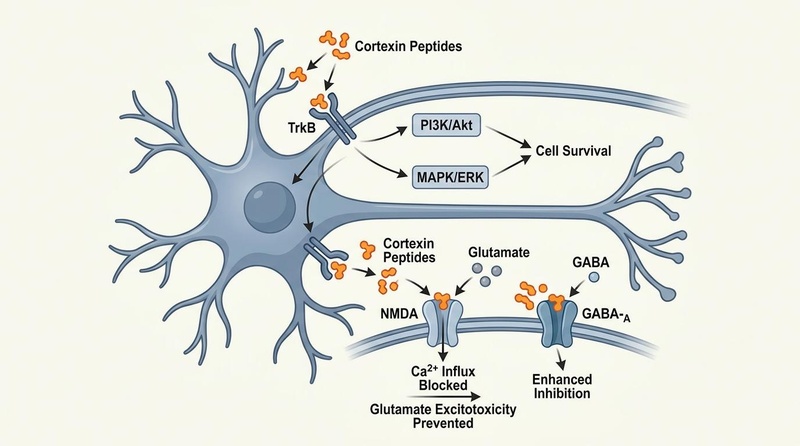
Cortexin's mechanism of action is multifaceted, involving a complex interplay of neurotrophic, neuroprotective, and neuromodulatory effects. Its diverse peptide components allow it to interact with various cellular pathways that are critical for neuronal health and function [5:3][15].
- Primary targets: TrkB receptors, GABA-A and NMDA glutamate receptors, Aquaporin-4 (AQP4) astrocytic water channels [10:1][16].
- Core mechanisms:
- Neurotrophic Receptor Activation: Peptides in Cortexin bind to and activate tropomyosin receptor kinase B (TrkB) receptors, initiating downstream cell survival and plasticity cascades (e.g., MAPK/ERK, PI3K/Akt) [10:2].
- Excitotoxicity Mitigation: Normalizes the balance of glutamate and GABA, preventing calcium influx and protecting neurons from glutamate-mediated excitotoxicity [5:4].
- Glymphatic Clearance & BBB Repair: Enhances the functioning of the glymphatic system and restores blood-brain barrier integrity, likely by modulating astrocytic Aquaporin-4 (AQP4) water channels to facilitate the clearance of toxic metabolic waste (e.g., amyloid-beta) [16:1].
- Antioxidant and Anti-inflammatory: Directly inhibits free-radical oxidation, increases superoxide dismutase (SOD) activity, and reduces pro-inflammatory cytokine expression (e.g., TNF-alpha) [5:5][15:1].
- Evidence source:
- Human data: Clinical biomarkers showing reduction in inflammatory markers and improvements in cerebral blood flow [5:6][3:4].
- Animal / in vitro data: Extensive rodent studies demonstrating preservation of hippocampal morphology, reduced infarct volume, and direct TrkB signaling activation [6:1][10:3][7:1].
- Pharmacokinetics:
- Half-life: Approximately 2.5 to 6 hours for individual active peptide fractions.
- Bioavailability by route: Intramuscular (high bioavailability), Intravenous (100%), Oral (negligible due to enzymatic degradation in the gastrointestinal tract).
- Peak plasma concentration: Typically reached within 1 to 2 hours post-intramuscular injection.
- Metabolism/degradation: Rapidly broken down by endogenous peptidases and proteases into amino acids.
- Major PK issues: Rapid degradation necessitates daily parenteral administration (IM or IV); oral administration is not viable.
¶ Effects on different systems
¶ Brain & mental health (cognition, mood, neuroprotection)
Cortexin's primary effects are on the central nervous system.
- Cognition: Studies consistently show improvements in various cognitive domains, including memory, attention, and executive function, in patients recovering from stroke, TBI, chronic cerebral ischemia, and in children with neuropsychiatric conditions [3:5][9:3].
- Mood: Emerging evidence suggests Cortexin may have supportive effects in depressive disorders as an add-on therapy, potentially through its neuroprotective and neuromodulatory actions [8:3].
- Neuroprotection: It actively protects neurons from damage caused by ischemia, excitotoxicity, and oxidative stress, limiting secondary brain injury after acute neurological events [5:7]. It is often compared to Cerebrolysin and Actovegin in preclinical trials, demonstrating similar but distinct molecular profiles in brain ischemia models [6:2].
¶ Metabolic health (neurological complications of diabetes)
- Diabetic Neuropathy: Clinical trials have explored Cortexin's role in mitigating neurological complications associated with type 2 diabetes mellitus, showing benefits in improving neurological deficits [1:3].
¶ Administration, reconstitution, and storage
¶ Routes of administration
- Intramuscular (IM) Injection: The standard clinical route. Typically injected into the ventrogluteal, dorsogluteal, or deltoid muscle.
- Intravenous (IV) Infusion: Used in acute stroke or severe TBI settings. Cortexin is diluted in 100-200 mL of 0.9% sterile saline and infused slowly over 30-60 minutes [17].
¶ Reconstitution
Cortexin is provided as a sterile, lyophilized powder in vials containing 5 mg or 10 mg of active peptide extract. It must be reconstituted immediately before use using sterile technique. Common solvents include:
- 0.9% Sodium Chloride (Sterile Saline)
- Sterile Water for Injection
- 0.5% Procaine or Lidocaine (often used to reduce local pain associated with intramuscular injection)
Example reconstitution calculations:
| Vial Strength | Solvent Volume | Final Concentration | Example: 5 mg Dose | Example: 10 mg Dose |
|---|---|---|---|---|
| 5 mg | 1.0 mL | 5 mg/mL (5000 mcg/mL) | 1.0 mL (100 units) | N/A (requires 2 vials) |
| 5 mg | 2.0 mL | 2.5 mg/mL (2500 mcg/mL) | 2.0 mL (200 units) | N/A |
| 10 mg | 1.0 mL | 10 mg/mL (10000 mcg/mL) | 0.5 mL (50 units) | 1.0 mL (100 units) |
| 10 mg | 2.0 mL | 5 mg/mL (5000 mcg/mL) | 1.0 mL (100 units) | 2.0 mL (200 units) |
Note: 100 units on an insulin syringe = 1.0 mL.
¶ Storage requirements
- Lyophilized (powder): Store in the original packaging at temperatures between 2°C and 20°C (refrigeration is preferred to ensure maximum stability). Protect from direct light. Do not freeze.
- Reconstituted (solution): Must be used immediately. Any unused portion must be discarded; reconstituted peptides degrade rapidly and lack preservatives.
- During travel: Use insulated medical travel bags with ice packs to prevent heat exposure.
¶ Handling and safety
- Always practice strict aseptic technique: wipe vial tops with isopropyl alcohol swabs before needle entry.
- Use single-use sterile syringes and needles.
- Inspect the reconstituted solution: it should be completely clear and colorless. If cloudiness, particulate matter, or discoloration is observed, discard the vial immediately.
¶ Dosage and protocols
Note: Dosing regimens for Cortexin are established in countries where it is approved. The following protocols are derived from clinical practice guidelines and research studies.
¶ Standard dosing in studies (evidence-based)
- Typical dose range: 10 mg to 20 mg daily, administered as a single intramuscular injection.
- Body weight-based dosing: For pediatric populations under 20 kg, a dose of 0.5 mg/kg body weight is standard [9:4].
- Common dosing schedules: A single daily injection for 10 consecutive days. In chronic or degenerative conditions, this 10-day cycle is repeated after a 3 to 6-month break.
- Study durations: Typically 10 to 20 days per treatment course [3:6].
¶ Community/anecdotal protocols (NOT evidence-based)
- Common off-label dosing patterns: Many users in the biohacking community self-administer 10 mg daily for longer durations (e.g., 20 to 30 days) or run continuous cycles without breaks.
- Rationale claimed: Claims of enhanced "cognitive enhancement," accelerated learning, or deep recovery from neurological stressors (e.g., sleep deprivation, substance abuse recovery).
- Evidence level: Anecdotal only. There are no clinical trials validating the safety or efficacy of continuous or long-term (>20 days) daily administration of Cortexin.
- Risks of deviating from studied protocols: Increased risk of local tissue irritation, potential desensitization of receptor pathways, and unknown long-term immunological reactions to foreign animal proteins.
¶ Cycling and timing protocols
- Cycling recommendations: 10 days of daily injections, followed by a minimum of 3 to 6 months of off-time. For severe conditions, a second 10-day cycle may be initiated after a 20-day break.
- Saturation/loading phase: Not clinically utilized or supported.
- Maintenance phase: For long-term cognitive support, oral peptides such as Cerluten or Pinealon are often used between active injection cycles.
- Timing considerations: Best administered in the first half of the day (morning or early afternoon) due to mild stimulant-like effects that could interfere with sleep if taken late in the evening.
¶ Dose escalation
- Starting dose: 5 mg daily (highly conservative, often used to test for local hypersensitivity or allergic reactions).
- Titration schedule: If well-tolerated, escalate to the standard 10 mg daily dose by day 2 or 3.
- Maximum dose: 20 mg daily (typically reserved for acute stroke or severe traumatic brain injury) [3:7].
- Signs to reduce dose: Extreme insomnia, headaches, localized skin reactions, or excessive nervous system stimulation.
¶ Special populations
- Kidney or liver impairment: Metabolized primarily by tissue proteases rather than liver or kidney enzymes. However, in severe renal or hepatic impairment, medical caution is warranted due to limited safety data.
- Older adults: Well-studied in elderly populations (e.g., university teachers, stroke patients), demonstrating excellent safety with standard 10 mg dosing [14:1].
- Women (pregnancy/breastfeeding): Strictly contraindicated. No adequate, well-controlled safety studies exist for pregnant or lactating women.
- Children and adolescents: Clinical use is established for developmental delays under pediatric supervision. Dosing must follow weight-based protocols (0.5 mg/kg for <20 kg) [9:5].
- Those with specific conditions: Patients with a history of epilepsy or seizures should use with extreme caution, as any highly active neurotropic agent may theoretically lower the seizure threshold.
¶ Safety and side effects
Cortexin has a long history of clinical use in its approved regions and is generally considered to have a favorable safety profile.
¶ Common side effects
- Injection site reactions: Mild transient pain, redness, or swelling at the injection site (minimized by reconstituting with 0.5% procaine/lidocaine).
- Systemic effects: Mild headache, transient drowsiness, or conversely, a feeling of over-stimulation and insomnia.
¶ Less common / serious concerns
- Endocrine effects: No known negative effects on the endocrine system.
- Cardiovascular: No significant changes in blood pressure or heart rate have been clinically reported.
- Metabolic: No adverse metabolic changes; safe for diabetic patients [1:4].
- Immunological: Hypersensitivity reactions (skin rash, hives, pruritus, or anaphylactoid reactions) are rare but possible due to the animal-derived nature of the peptide fractions.
- Organ toxicity: No liver or kidney toxicity has been demonstrated in standard toxicology profiles.
- Cancer risk concerns: Cortexin does not stimulate tumor growth, but like other trophic agents, it should be avoided in active intracranial malignancies.
¶ Peptide-specific safety issues
- Source purity and contamination: Grey-market sources bypass cold-chain storage and medical-grade sterilization, presenting severe risks of bacterial contamination or inactive proteins.
- Peptide degradation: Exposure to high temperatures (>25°C) or freezing after reconstitution rapidly denatures the sensitive low-molecular-weight proteins, reducing efficacy and increasing immunogenicity.
- Antibody formation: Long-term or continuous use without cycling could theoretically trigger the formation of antibodies against foreign porcine/bovine proteins, potentially leading to allergic sensitization.
- Desensitization/tachyphylaxis: Continuous use may lead to receptor downregulation (especially TrkB), diminishing the therapeutic effects.
- Infection risk: Parenteral administration requires flawless sterile technique; poor hygiene at the injection site is the leading cause of abscesses or local infections.
¶ Who should be especially cautious or avoid it
- People with specific medical conditions: History of allergic reactions to beef, pork, or animal-derived pharmaceuticals.
- Those on certain medications: Monoamine oxidase inhibitors (MAOIs) or potent CNS stimulants.
- Pregnant/breastfeeding: Absolutely contraindicated.
- Children and adolescents: Safe under direct medical supervision, but contraindicated for unsupervised self-administration.
- Athletes subject to drug testing: Not specifically banned by WADA, but subject to broad non-approved substance clauses (Section S0).
¶ Drug and supplement interactions
¶ Pharmacokinetic interactions (how drugs are processed)
- Major enzymes or transporters affected: Unlike small-molecule drugs, Cortexin is not metabolized by the cytochrome P450 (CYP450) enzyme system or cleared by P-glycoprotein transporters, making classic pharmacokinetic interactions extremely unlikely.
- Drugs likely impacted: None identified.
¶ Pharmacodynamic interactions (additive / opposing effects)
- Additive effects:
- Antidepressants / SSRIs: Cortexin may potentiate the effects of antidepressants, necessitating close clinical monitoring [8:4].
- GABAergic Agents / Nootropics: Co-administration with other neurotropic agents (like piracetam or phenibut) may lead to over-excitation or synergistic effects on neurotransmission.
- Citicoline: Combined use with citicoline (e.g., Recognan) shows highly synergistic neuroprotective effects in persistent dizziness [12:2].
- Opposing effects: No direct opposing interactions are documented, but stimulants or drugs that increase central glutamate could theoretically antagonize the excitotoxicity-mitigating effects of Cortexin.
- Other hormones or peptides: Simultaneous use of other animal-derived brain extracts (like Cerebrolysin) is redundant and increases immunogenic risk.
¶ Monitoring recommendations
- Biomarkers to track: No specific blood biomarkers (such as liver enzymes or kidney function) require routine tracking specifically for Cortexin.
- Frequency of monitoring: Cognitive and neurological functional testing should be performed before and after each 10-day cycle.
- When to involve healthcare provider: Immediately if any signs of a systemic allergic reaction (e.g., hives, difficulty breathing) or severe local infection occur.
¶ Combining Cortexin with other peptides and supplements ("stacks")
¶ Common combinations
- The Synergistic Neuro-Recovery Stack: Cortexin + Citicoline. This combination has clinical support for managing post-stroke complications and vestibular dysfunction (PPPD) [12:3].
- The Bioregulator Maintenance Stack: A 10-day course of injectable Cortexin followed immediately by a 30-day course of oral Cerluten and Pinealon to sustain and lock in neuroplastic gains.
- The Tissue Repair Stack: Combining Cortexin with systemic repair peptides like BPC-157 or TB-500 for general nervous system and physical rehabilitation after traumatic injuries.
¶ Evidence level
- Formal combination trials: Very limited. A notable observational study confirmed the safety and enhanced efficacy of combining Cortexin with citicoline for persistent dizziness [12:4].
- Post-hoc analyses or case series: None.
- Mechanistic/theoretical reasoning only: Most combinations (such as adding BPC-157 or Pinealon) are based purely on theoretical synergy and lack human trial validation.
- Potential risks of combining: Increased risk of local injection site reactions, potential for over-stimulation of the central nervous system, and increased complexity of determining the cause if an allergic reaction occurs.
¶ Safety considerations
- Additive side effects: Combining multiple active nootropics can lead to heightened anxiety, severe insomnia, or headaches.
- Monitoring complexity: Stacking multiple unapproved research peptides makes clinical monitoring and adverse event tracking exceptionally difficult.
- Unknown interactions: Unstudied peptide-peptide interactions could lead to unexpected immunological or receptor-level issues.
- Legal/regulatory implications: Combining multiple unregulated peptides further increases legal risks, especially for competitive athletes.
¶ Cost considerations
¶ Typical costs
- Pharmaceutical grade (prescription): A standard box of ten 10 mg vials typically costs between $50 and $150 (USD equivalent) depending on the country of purchase and import/shipping fees.
- Research chemical grade: Non-existent or highly suspicious. Any vendor selling "synthetic Cortexin" is likely misrepresenting the product, as Cortexin is a complex bovine/porcine-derived tissue hydrolysate that cannot be cheaply synthesized.
- Cost varies by: Source pharmacy, shipping/import duties, and medical provider markups.
¶ Cost-benefit considerations
- For approved indications: In regions where it is approved, the cost of a 10-day course is highly reasonable compared to Western monoclonal antibody therapies or long-term chronic neurological care, making it highly cost-effective.
- For off-label use: Out-of-pocket costs must be weighed against the lack of high-certainty Western clinical trials for purely cognitive or performance-enhancing goals.
- Long-term financial commitment: Minimal, as Cortexin is strictly designed for short, cycled courses (10 days) rather than continuous daily use.
- Hidden costs: Bacteriostatic water/saline, sterile syringes, alcohol swabs, and potential shipping insurance.
¶ Value assessment
- Strength of evidence: Strongest in stroke rehabilitation, pediatric development, and chronic ischemia, offering excellent value in these domains [9:6][4:4][3:8].
- Magnitude of effect: Moderate to large in clinical recovery; value is highly apparent for rehabilitation patients.
- Alternative options: Standard clinical rehabilitation therapies, oral nootropics, or approved oral medications.
- Opportunity cost: Funds spent on gray-market Cortexin could instead be allocated to validated Western physical/occupational therapy and standard cardiovascular disease prevention.
¶ Practical questions (FAQ)
¶ How quickly does Cortexin work?
Many patients and clinicians report noticeable effects, particularly in acute settings like stroke, within days of starting treatment. Cognitive improvements in chronic conditions may take several weeks or repeat cycles to become evident [3:9].
¶ Can Cortexin be taken orally?
Due to its peptide nature, Cortexin is rapidly degraded by digestive enzymes, making oral administration ineffective. It must be administered via injection (IM or IV) to reach therapeutic concentrations [7:2].
¶ Is Cortexin safe for long-term use?
Long-term safety data is primarily from studies in chronic neurological conditions, where it has been used in repeated cycles over several months or years with a generally good safety profile in its approved regions. However, ongoing medical supervision is always recommended.
¶ Why is Cortexin not approved in the United States?
The lack of FDA approval is often attributed to the complexity of its composition (a mixture rather than a single molecule), the challenges of conducting large, multi-center trials that meet FDA standards, and differences in regulatory philosophies between regions.
¶ Can Cortexin enhance cognitive function in healthy individuals?
While some anecdotal reports exist, there is limited high-quality clinical evidence to support Cortexin's use for cognitive enhancement in healthy individuals. Its primary efficacy is demonstrated in populations with existing neurological deficits or age-related decline [14:2].
¶ How we evaluated the evidence
This review evaluated evidence from regional clinical trials, multi-center randomized controlled trials (such as the DIACORT and chronic ischemia trials), rodent models of stroke, and mechanistic literature on astrocytic aquaporin channels and TrkB signaling. Evidence was graded using the GRADE framework, with a strong preference given to peer-reviewed human clinical trials published in specialized neurological journals.
¶ References
Putilina MV, et al. Cortexin in the comprehensive treatment of neurological complications of type 2 diabetes mellitus. (Results of the DIACORT multicenter randomized clinical trial). Zhurnal nevrologii i psikhiatrii imeni S.S. Korsakova. 2026;126(4):101-112. https://pubmed.ncbi.nlm.nih.gov/42133422/ ↩︎ ↩︎ ↩︎ ↩︎ ↩︎
Masaleva IO, Ivenkov MP. Cortexin in the comprehensive therapy of alcoholic encephalopathy. Zhurnal nevrologii i psikhiatrii imeni S.S. Korsakova. 2026;126(6):52-58. https://pubmed.ncbi.nlm.nih.gov/42360215/ ↩︎ ↩︎ ↩︎ ↩︎
Fedin AI, et al. Dose-dependent effects of cortexin in chronic cerebral ischemia (results of a multicenter randomized controlled study). Zhurnal nevrologii i psikhiatrii imeni S.S. Korsakova. 2018;118(10):34-40. https://pubmed.ncbi.nlm.nih.gov/30335070/ ↩︎ ↩︎ ↩︎ ↩︎ ↩︎ ↩︎ ↩︎ ↩︎ ↩︎ ↩︎
Khabirov FA, et al. Comparison of the efficacy of Cellex and Cortexin in patients in the early recovery period of ischemic stroke. Zhurnal nevrologii i psikhiatrii imeni S.S. Korsakova. 2020;120(9):22-29. https://pubmed.ncbi.nlm.nih.gov/33449527/ ↩︎ ↩︎ ↩︎ ↩︎ ↩︎
Zakharov DV, Zakharova IV. Targets of rational neuroprotection in the therapy of chronic cerebral ischemia and the possibilities of achieving them. Zhurnal nevrologii i psikhiatrii imeni S.S. Korsakova. 2025;125(8):96-101. https://pubmed.ncbi.nlm.nih.gov/40879235/ ↩︎ ↩︎ ↩︎ ↩︎ ↩︎ ↩︎ ↩︎ ↩︎
Kurkin DV, et al. Neuroprotective action of Cortexin, Cerebrolysin and Actovegin in acute or chronic brain ischemia in rats. PLoS ONE. 2021;16(7):e0254252. https://pubmed.ncbi.nlm.nih.gov/34260655/ ↩︎ ↩︎ ↩︎
Tyurenkov IN, et al. Comparative study of protective effects of Cortexin, Cerebrolysin and Actovegin on memory impairment, cerebral circulation and morphological changes in the hippocampus of rats with chronic brain ischemia. Zhurnal nevrologii i psikhiatrii imeni S.S. Korsakova. 2020;120(9):22-29. https://pubmed.ncbi.nlm.nih.gov/32929929/ ↩︎ ↩︎ ↩︎
Schastnyy ED. Efficacy and safety of Cortexin as additional therapy in patients with depressive disorder. Zhurnal nevrologii i psikhiatrii imeni S.S. Korsakova. 2026;126(2):92-96. https://pubmed.ncbi.nlm.nih.gov/41782536/ ↩︎ ↩︎ ↩︎ ↩︎ ↩︎
Degtyareva VG, et al. The effectiveness of rehabilitation measures using the drug Cortexin in children with neuropsychiatric pathology. Zhurnal nevrologii i psikhiatrii imeni S.S. Korsakova. 2024;124(12):86-92. https://pubmed.ncbi.nlm.nih.gov/39731376/ ↩︎ ↩︎ ↩︎ ↩︎ ↩︎ ↩︎ ↩︎
Kurkin DV, et al. Neurotropic Effects of Cortexin on Models of Mental and Physical Developmental Delay. Biomedicines. 2025;13(4):860. https://pubmed.ncbi.nlm.nih.gov/40299434/ ↩︎ ↩︎ ↩︎ ↩︎
Kuznetsova EB, et al. Evaluation of the effectiveness of the drug Cortexin in combination with the use of the application Aphasia.No (Afaziyam.Net) in the correction of speech disorders in patients with cerebral infarction. Zhurnal nevrologii i psychicatry imeni S.S. Korsakova. 2024;124(9):68-73. https://pubmed.ncbi.nlm.nih.gov/39690562/ ↩︎
Ivonina NA, Petrov KB. The possibility of using neurotropic therapy in patients with persistent postural-perceptual dizziness. Zhurnal nevrologii i psikhiatrii imeni S.S. Korsakova. 2025;125(5):89-94. https://pubmed.ncbi.nlm.nih.gov/40457673/ ↩︎ ↩︎ ↩︎ ↩︎ ↩︎
Mashin VV, et al. Evaluation of the efficacy and safety of application of the drug cortexin in the complex rehabilitation of verticalization in patients with ischemic stroke in the acute period. Zhurnal nevrologii i psikhiatrii imeni S.S. Korsakova. 2019;119(10):39-44. https://pubmed.ncbi.nlm.nih.gov/31626220/ ↩︎
Lysenko AV, et al. Working ability of elderly university teachers under the combined influence of breathing exercises and peptide bioregulator «Cortexin». Uspekhi Gerontologii. 2020;33(1):154-158. https://pubmed.ncbi.nlm.nih.gov/32593245/ ↩︎ ↩︎ ↩︎
Kurkin DV, et al. Antioxidant effect of cortexin, cerebrolysin and actovegin in rats with chronic cerebrovascular insufficiency. Zhurnal nevrologii i psikhiatrii imeni S.S. Korsakova. 2021;121(7):84-88. https://pubmed.ncbi.nlm.nih.gov/34460162/ ↩︎ ↩︎
Fedin AI. The glymphatic system in the brain - neurobiology and clinical pathology. Zhurnal nevrologii i psikhiatrii imeni S.S. Korsakova. 2023;123(5):13-19. https://pubmed.ncbi.nlm.nih.gov/37315237/ ↩︎ ↩︎
Fedin AI, et al. Therapeutic equivalence of intravenous and intramuscular dosage forms of Cortexin in ischemic strokes. Zhurnal nevrologii i psikhiatrii imeni S.S. Korsakova. 2025;125(12):60-67. https://pubmed.ncbi.nlm.nih.gov/41524350/ ↩︎