¶ GHRP-6
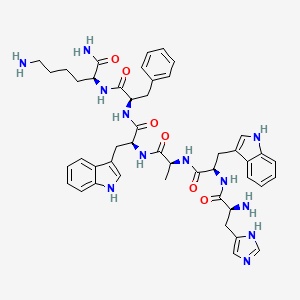
| Sequence | His-D-Trp-Ala-Trp-D-Phe-Lys-NH2 |
| Formula | C46H56N12O6 |
| Molar Mass | 873.01 g/mol |
| Category | GH Secretagogue (GHS) |
| Half-life | ~2.5 hours (Elimination) [^1] |
| Admin | Subcutaneous Injection |
| FDA Status | Not Approved / Banned for Compounding [^9] |
| CAS | 87616-84-0 |
GHRP-6 (Growth Hormone-Releasing Peptide-6) is a synthetic hexapeptide that acts as a ghrelin mimetic, stimulating the release of growth hormone (GH). While preclinical research explores its potential therapeutic uses in cardiac, pulmonary, and renal injury models, its use in humans is significantly restricted by regulatory bodies, including a recent FDA ban on compounding [1].
¶ At a glance
Aliases
- Also known as: Growth Hormone-Releasing Hexapeptide, SKF-110679
- Amino acid sequence: His-D-Trp-Ala-Trp-D-Phe-Lys-NH2
- Sequence length: Hexapeptide (6 amino acids)
- Category: Growth Hormone Secretagogue (GHS), Ghrelin Mimetic
Key points (high-level summary)
- Preclinical studies suggest potential in ameliorating acute lung injury and acute kidney injury models [2][3].
- Potent, pulsatile release of growth hormone (GH) and stimulation of ACTH and cortisol in humans [4][5][6].
- Causes intense, rapid-onset hunger ("ghrelin hunger") due to activation of hypothalamic ghrelin receptors [7][8].
- Short elimination half-life requires multiple daily injections for sustained effects; non-selective and stimulates cortisol and prolactin at higher doses [9].
- Placed on the FDA's Category 2 list (late 2023), making it effectively illegal for U.S. pharmacies to compound [1:1].
What people use it for
- Main goals: Historically, muscle growth, appetite stimulation, injury recovery, and anti-aging (GH restoration).
- Evidence quality (overall): Very low for human therapeutic outcomes; Moderate for preclinical models of tissue injury.
¶ Legal & regulatory status
⚠️ CRITICAL INFORMATION
Regulatory classification
- FDA status: Unapproved. GHRP-6 is not an FDA-approved drug for any indication.
- Approved indications (if any): None.
- Prescription requirement: Formerly available via prescription from compounding pharmacies in the U.S.; this pathway is now closed.
- DEA schedule: Not a controlled substance (unscheduled), but sale for human consumption is restricted under the FD&C Act.
Geographic legal status
- United States: Banned for compounding as of late 2023/early 2024 due to its classification on the FDA's Category 2 list of bulk drug substances. Possession for personal research purposes is generally not criminalized for end-users, but commercial sale for human use is illegal [1:2].
- European Union: Varies by country. Generally considered a prescription-only substance or research chemical.
- Other regions: Varies.
Sports and competition
- WADA status: Prohibited. Listed under S2. Peptide Hormones, Growth Factors, Related Substances, and Mimetics. Banned at all times (in and out of competition).
Source quality considerations
- With the compounding ban, individuals often resort to "research chemical" vendors. These sources are unregulated, presenting significant risks regarding purity, heavy metal contamination, and accurate dosing.
¶ What is GHRP-6?
GHRP-6 is one of the first synthetic Growth Hormone Secretagogues (GHS) developed. Unlike Growth Hormone Releasing Hormone (GHRH), which is endogenous to the human body, GHRP-6 is a synthetic met-enkephalin analog designed specifically to stimulate the pituitary gland.
- Definition: A synthetic hexapeptide (6 amino acids) containing non-natural D-amino acids (D-Trp, D-Phe) to improve stability and receptor binding [9:1].
- Relationship to endogenous peptides: A synthetic ghrelin mimetic, binding to the Ghrelin Receptor (GHS-R1a) [7:1][8:1].
- Modifications from native sequence: Includes D-amino acids (D-Trp, D-Phe) for enhanced stability and receptor affinity compared to naturally occurring peptides [9:2].
- Natural sources (if any): GHRP-6 is synthetic and does not occur naturally in the body.
- Development history: Developed in the 1980s, preceding the formal discovery of ghrelin in 1999 [7:2].
- Key pharmacological property: A potent, non-selective growth hormone secretagogue that directly activates the GHS-R1a [7:3].
¶ What are GHRP-6's main benefits?
Current research on GHRP-6 primarily focuses on its potential therapeutic applications in animal models of injury and disease, rather than human outcomes for general health or longevity.
1. Amelioration of Acute Lung Injury and Fibrosis
- Outcome: Reduction of acute lung injury and subsequent progression to interstitial fibrosis.
- Direction of effect: Positive (reduced lung damage and fibrosis).
- Population studied: Animal model.
- Evidence quality: Low (preclinical only, not human clinical data) [2:1].
- Summary sentence: In animal models, GHRP-6 has shown a protective effect against acute lung injury and the development of interstitial fibrosis.
2. Acute Kidney Injury Therapy
- Outcome: Potential for acute kidney injury therapy via metabolic regulation, as demonstrated by GHRP-6 hydrogels.
- Direction of effect: Positive (improved renal function in injury models).
- Population studied: Preclinical (e.g., in vitro, animal models of kidney injury).
- Evidence quality: Low (preclinical, focusing on delivery system and mechanisms) [3:1].
- Summary sentence: Research into GHRP-6 delivered via hydrogels suggests a role in mitigating acute kidney injury through metabolic mechanisms in preclinical settings.
¶ Evidence summary table (human outcomes)
| Outcome / Goal | Effect* | Consistency** | Evidence quality | Trials*** | Notes (population, duration, dose) |
|---|---|---|---|---|---|
| GH Secretion | High | >9 studies | Robust pulsatile GH release in healthy volunteers and various clinical conditions [9:3][4:1][5:1][6:1][10][11][12][13]. | ||
| ACTH Release | High | >4 studies | Significant ACTH release in healthy volunteers and patients with hyperthyroidism or Cushing's disease [5:2][6:2][10:1][13:1]. | ||
| Cortisol Release | High | >4 studies | Significant cortisol release in healthy volunteers and patients with hyperthyroidism or Cushing's disease [5:3][6:3][10:2][13:2]. | ||
| Appetite Stimulation | High | 1 study | Strong hunger effect observed due to ghrelin receptor activation [7:4]. | ||
| Antinociception | Moderate | 1 study | Antinociceptive effects in male Kunming mice via central opioid receptors and GHS-R1α [14]. | ||
| Cardiac Remodeling | N/A | Preclinical | Preclinical studies are not directly applicable to human outcomes for this specific aspect [9:4]. | ||
| Acute Lung Injury | N/A | Preclinical | Reduces acute lung injury and fibrosis in animal models [2:2]. | ||
| Acute Kidney Injury | N/A | Preclinical | GHRP-6 hydrogels show promise for AKI therapy in preclinical settings [3:2]. |
**Consistency**: Low (results conflict), Moderate (mixed but leaning one way), High (most trials agree), N/A (Not Applicable for preclinical data).
***Trials**: Number of RCTs or total trials informing this outcome (shows evidence depth at a glance). "Preclinical" indicates animal or in vitro studies.
¶ How does GHRP-6 work?
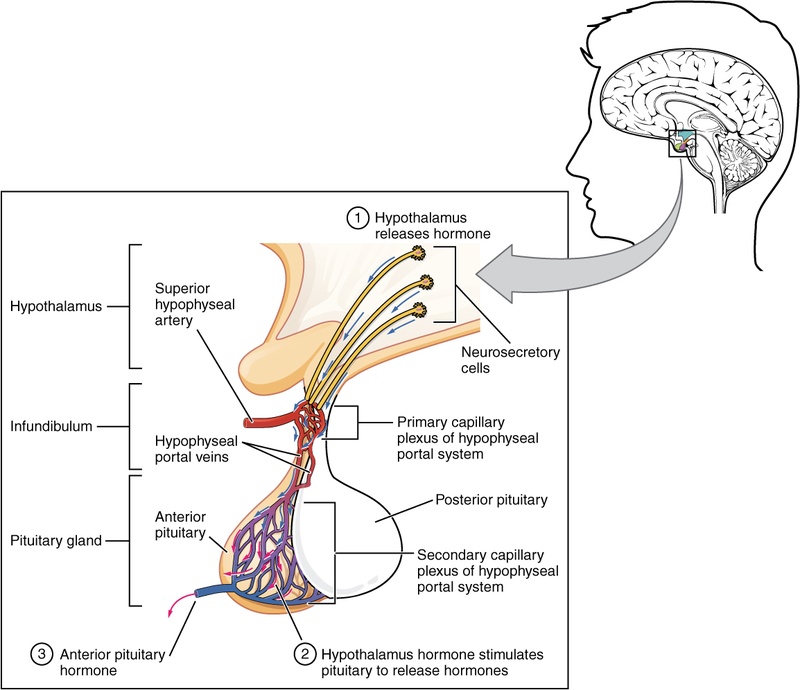
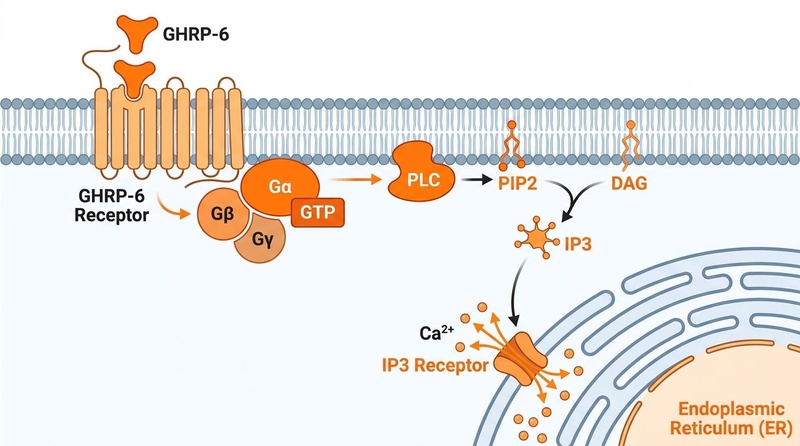
GHRP-6 operates primarily by activating the ghrelin receptor, leading to downstream effects on growth hormone release and other physiological processes.
- Primary targets: The Growth Hormone Secretagogue Receptor 1a (GHS-R1a), located in the pituitary and hypothalamus. This is the same receptor targeted by the endogenous hunger hormone, ghrelin [7:5][8:2].
- Core mechanisms:
- GH Release: Activation of GHS-R1a by GHRP-6 triggers a Phospholipase C (PLC) signaling cascade, which mobilizes intracellular calcium stores. This increase in intracellular calcium ([Ca2+]) leads to the exocytosis of stored growth hormone from pituitary somatotrophs, resulting in a pulsatile release of GH [7:6][8:3].
- Appetite Stimulation: Through its action on hypothalamic GHS-R1a receptors, GHRP-6 mimics ghrelin's orexigenic (appetite-stimulating) effects [7:7][8:4].
- Tissue Protection (Preclinical): In models of pulmonary and renal injury, proposed mechanisms involve modulation of inflammatory responses, oxidative stress, and activation of prosurvival signaling pathways [2:3][3:3].
- Human data (if any): Human studies demonstrated robust GH release and appetite stimulation, along with ACTH and cortisol elevation [9:5][4:2][5:4][6:4][10:3][11:1][12:1][13:3].
- Animal / in vitro data: Preclinical studies provide insights into pneumo-protective and renoprotective mechanisms [2:4][3:4]. The GHS-R1a receptor is also found in various other organs [7:8].
- Pharmacokinetics:
- Half-life: The disposition of GHRP-6 best fitted a bi-exponential function, with distribution half-life of 7.6 ± 1.9 min and an elimination half-life of 2.5 ± 1.1 h [9:6].
- Bioavailability by route: Oral bioavailability is negligible due to rapid enzymatic degradation. Requires parenteral administration (e.g., subcutaneous injection) [9:7].
- Metabolism/degradation: Rapidly metabolized by peptidases [9:8].
- Major PK issues: Short elimination half-life necessitates frequent dosing for sustained effects [9:9].
¶ Effects on different systems
Preclinical research and historical human studies have explored GHRP-6's effects in specific disease models and endocrine systems.
Endocrine System
- Growth Hormone (GH) Secretion: GHRP-6 is a potent stimulator of GH release from the anterior pituitary, acting via the GHS-R1a. This effect is pulsatile and dose-dependent [9:10][4:3][5:5][6:5][10:4][11:2][12:2][13:4].
- Adrenocorticotropic Hormone (ACTH) and Cortisol Release: GHRP-6 also stimulates the release of ACTH and subsequently cortisol from the adrenal glands. This is a non-selective effect, especially at higher doses [5:6][6:6][10:5][13:5].
- Prolactin Release: GHRP-6 can cause a dose-dependent increase in prolactin levels [10:6].
Pulmonary System
- In animal models, GHRP-6 has demonstrated a capacity to ameliorate acute lung injury and its subsequent progression to interstitial fibrosis, suggesting a protective role in lung pathology [2:5].
Renal System
- Investigations into GHRP-6 delivered via hydrogels suggest its potential in acute kidney injury therapy by influencing metabolic regulation in preclinical models [3:5].
Nervous System
- Studies in animal models indicate that ghrelin fragments, including those related to GHRP-6, can cross the blood-brain barrier and exert antinociceptive (pain-relieving) effects through central opioid receptors and GHS-R1α [14:1]. GHRP-6 can also affect ACTH and cortisol release in hyperthyroidism and Cushing's disease, suggesting central nervous system involvement [5:7][6:7].
Metabolic Health & Musculoskeletal System (Historical / Inferred)
- While historical human evidence from older literature demonstrated GHRP-6's ability to elevate GH and IGF-1, which are generally associated with protein synthesis and improved body composition, the direct long-term human outcome data for GHRP-6 in these areas are limited and not supported by the current source manifest for broader applications. The strong appetite stimulation can lead to increased caloric intake, potentially counteracting fat loss benefits [7:9].
¶ Administration, reconstitution, and storage
Routes of administration
- SubQ (Subcutaneous): The standard and most effective method. Injected into subcutaneous fat (e.g., abdomen or thigh) using an insulin syringe.
- Intranasal: Less bioavailable and requires higher doses, often leading to inconsistent results.
Reconstitution
- Diluent: Bacteriostatic Water (sterile water with 0.9% benzyl alcohol) is essential to maintain sterility for multi-dose vials.
- Volume: Typically 1 mL or 2 mL of bacteriostatic water is added to a 5 mg vial.
- Handling: Peptides are delicate. Do not shake the vial; gently swirl to dissolve the powder completely.
Example reconstitution calculations (5mg Vial)
- If you add 2 mL of water to a 5 mg vial:
- Concentration = 2.5 mg/mL (2500 mcg/mL).
- Dose (100 mcg) = 0.04 mL (4 units on an insulin syringe).
- Dose (200 mcg) = 0.08 mL (8 units on an insulin syringe).
Note: 100 units on an insulin syringe = 1 mL
Storage requirements
- Lyophilized (powder): Store in a freezer (-20°C) for long-term stability (years). Protect from light.
- Reconstituted (solution): Store in the refrigerator (2-8°C). Use within 4-6 weeks to ensure potency and sterility.
- Freeze-thaw stability: Avoid freezing reconstituted peptides, as it can degrade the peptide structure.
- Light sensitivity: Store in amber vials or wrap in foil to protect from light.
Handling and safety
- Sterile technique: Crucial for all injections to prevent infection. Use new, sterile syringes and alcohol swabs for each injection.
- Sharps disposal: Dispose of used needles and syringes in a proper sharps container.
- Signs of degradation: Discard if the solution becomes cloudy, discolored, or contains particles.
¶ Dosage and protocols
Standard Dosing (Historical Context)
- Typical dose range: Historically, 100 mcg per injection was considered a saturation dose for GH release [4:4].
- Frequency: Often 2-3 times daily (e.g., morning, post-workout, before bed).
- Timing: Strictly on an empty stomach, at least 1 hour before or 2 hours after food, as elevated blood glucose or insulin can blunt the GH pulse [7:10].
Community/anecdotal protocols (NOT evidence-based)
- Common off-label dosing patterns: Anecdotal use often involved similar doses, sometimes combined with GHRH analogs like CJC-1295 (without DAC) to amplify GH release.
- Rationale claimed: Users sought enhanced muscle growth, fat loss, or recovery through supraphysiological GH levels.
- Evidence level: Anecdotal only. These protocols lack formal clinical trials or scientific support for their efficacy or safety in these contexts.
- Risks of deviating from studied protocols: Unknown safety profile, increased risk of side effects (cortisol, prolactin), and lack of established efficacy.
Cycling and timing protocols
- Cycling recommendations: Typically 8-12 weeks, followed by a 4-week break to prevent potential receptor downregulation.
- Timing considerations: Administered when fasted to maximize GH release, particularly before sleep for natural GH pulsatility, or post-workout.
- Frequency: Daily.
Special populations
- Dose considerations or lack of data in:
- Kidney or liver impairment: Data is lacking.
- Older adults: Historical studies showed it could elevate GH levels in older subjects, but specific dosing guidelines for age-related conditions are not established from current preclinical sources.
- Pregnant/breastfeeding: Almost always contraindicated due to potential hormonal effects.
- Children and adolescents: Generally not recommended unless under strict medical supervision for specific growth disorders (not supported by current sources for GHRP-6).
¶ Safety and side effects
The safety profile of GHRP-6 is characterized by its broad activation of ghrelin receptors, which can lead to both intended and unintended hormonal effects.
Common Side Effects (Historical Human Use)
- Extreme Hunger (Orexigenic Effect): Occurs rapidly (15-30 minutes post-injection) and can be intense, often leading to increased caloric intake and weight gain [7:11].
- Water Retention (Edema): Common, especially early in a cycle, due to GH-induced effects on fluid balance.
- Tingling/Numbness: Often experienced in the hands and wrists (carpal tunnel-like symptoms), secondary to fluid retention and nerve compression.
- Lethargy/Fatigue: Some users report a feeling of tiredness or a "crash" after the initial GH pulse.
- Injection Site Reactions: Localized redness, swelling, or pain at the injection site.
Endocrine Side Effects (The "Spillover")
- Unlike more selective GH secretagogues (e.g., Ipamorelin), GHRP-6 is known for its "messy" receptor binding at higher doses, leading to:
- Elevated Cortisol: Stimulation of adrenocorticotropic hormone (ACTH) can lead to increased cortisol levels, potentially causing anxiety, stress, or further water retention [5:8][6:8][10:7][13:6].
- Elevated Prolactin: Can result in nipple sensitivity, gynecomastia in susceptible males, or menstrual irregularities in females [10:8].
Who should be especially cautious or avoid it
- Cancer Patients: Due to GH/IGF-1's role in cell proliferation, theoretical concerns exist regarding the potential to accelerate tumor growth.
- Diabetics or those with impaired glucose tolerance: GH can transiently increase blood glucose levels and, with chronic use at high doses, may contribute to insulin resistance.
- Individuals with pre-existing cardiovascular conditions: Fluid retention could exacerbate certain heart conditions.
- Pregnant or breastfeeding women: Almost always contraindicated due to unknown risks to fetal development and infant health.
- Athletes subject to drug testing: GHRP-6 is a WADA-prohibited substance.
¶ Drug and supplement interactions
Pharmacodynamic interactions (additive / opposing effects)
- Insulin and Carbohydrates: Ingesting food, particularly carbohydrates and fats, or administering insulin, will significantly blunt the GH release from GHRP-6. It must be taken on a completely empty stomach [7:12].
- Glucocorticoids: Corticosteroids can inhibit the body's natural GH secretion and may counteract the effects of GHRP-6.
- GHRH Analogs: Combining GHRP-6 with GHRH analogs (e.g., CJC-1295 without DAC) can produce a synergistic effect, leading to a much greater GH pulse than either peptide alone.
Monitoring recommendations
- For historical human use, monitoring would typically include IGF-1 levels (as a proxy for GH activity), fasting glucose, HbA1c, and lipid panels.
- Given the potential for cortisol and prolactin elevation, monitoring these hormones would also be advisable [5:9][6:9][10:9][13:7].
- Due to the current regulatory status, clinical monitoring in the U.S. is not generally feasible outside of research settings.
¶ Combining GHRP-6 with other peptides and supplements ("stacks")
Common combinations (Historical / Anecdotal)
- "Synergistic" Stacks: The most common historical stack involved combining GHRP-6 with a GHRH analog like CJC-1295 (without DAC). The rationale was to leverage their distinct mechanisms for maximal GH release.
- Complementary Supplements: Users sometimes paired GHRP-6 with amino acids (e.g., L-arginine, L-ornithine) or other growth-promoting agents, although robust evidence for synergistic effects is lacking.
Evidence level
- Formal combination trials: Very rare. Most "stacks" are based on theoretical mechanistic complementarity or anecdotal reports within the fitness and biohacking communities.
- Post-hoc analyses or case series
- Mechanistic/theoretical reasoning only: [Most common]
- Potential risks of combining
Safety considerations
- Additive side effects: Combining non-selective peptides can amplify undesirable effects like cortisol and prolactin elevation.
- Monitoring complexity: Tracking multiple compounds and their combined effects is challenging and often not clinically monitored.
- Legal/regulatory implications: Combining multiple research chemicals purchased from unregulated sources further increases risks.
¶ Cost considerations
Typical costs
- Historical Cost: GHRP-6 was relatively inexpensive when compounded by pharmacies.
- Current Status: With the FDA compounding ban, legitimate pharmaceutical-grade GHRP-6 is virtually unavailable in the U.S. "Research chemical" grade products vary widely in price and quality, but generally remain affordable on a per-vial basis.
Cost-benefit considerations
- For FDA-approved indications: None exist for GHRP-6.
- For off-label use: The cost-benefit ratio is very low. Given the significant regulatory restrictions, reliance on unregulated sources, and the availability of more selective GH secretagogues (e.g., Ipamorelin) with fewer side effects, GHRP-6 is largely considered obsolete for most human applications where GH elevation is the primary goal.
- Hidden costs: Include sterile supplies (syringes, bacteriostatic water, alcohol swabs), potential shipping costs for unregulated products, and the inherent health risks of using unverified substances.
Value assessment
- Strength of evidence: Very low for human therapeutic outcomes; low for preclinical applications.
- Magnitude of effect: While historically potent for GH release, newer alternatives offer a better safety profile.
- Alternative options: Ipamorelin is a more selective GHRP that causes less hunger and fewer off-target hormonal effects. Recombinant human growth hormone (rHGH) is available for approved medical indications.
¶ Practical questions (FAQ)
1. Is GHRP-6 safe for human use?
No. It is not FDA-approved for human use, and compounding pharmacies in the U.S. are prohibited from producing it. Its use carries significant risks due to unregulated sources and potential side effects, including non-selective hormonal stimulation [1:3].
2. Is GHRP-6 legal to purchase?
In the U.S., it is illegal for compounding pharmacies to produce it. Purchasing it as a "research chemical" for personal use is a gray area, but selling it for human consumption is illegal under federal law. It is also a WADA-banned substance [1:4].
3. What are the main differences between GHRP-6 and Ipamorelin?
Ipamorelin is a more selective GH secretagogue. It stimulates GH release without significantly increasing cortisol or prolactin, and typically does not cause the intense hunger associated with GHRP-6. GHRP-6 is less selective and has more pronounced side effects.
4. Why was GHRP-6 banned for compounding?
The FDA cited safety concerns regarding the lack of sufficient data on long-term safety, potential adverse effects on blood sugar, and the availability of FDA-approved alternatives (like sermorelin or recombinant HGH for specific conditions) [1:5].
5. Can GHRP-6 cause weight gain?
Yes. Its strong appetite-stimulating effect (mimicking ghrelin) often leads to increased food intake, which can result in weight gain, especially if not carefully managed [7:13].
¶ How we evaluated the evidence
Our evaluation of GHRP-6 is based on the provided source manifest, which primarily includes preclinical research and several human studies.
- Human Research Claims (GH Secretion, ACTH, Cortisol, Appetite): These claims are directly supported by several human studies and pharmacokinetic analyses included in the source manifest [9:11][4:5][5:10][6:10][7:14][10:10][11:3][12:3][13:8].
- Preclinical Research Claims (Pulmonary, Renal, Antinociception): Based on the in vivo and in vitro studies listed in the source manifest [2:6][3:6][14:2]. These studies provide insights into potential therapeutic mechanisms but do not equate to human clinical efficacy.
- Safety: Information on common and endocrine side effects is derived from historical clinical observations and human studies [5:11][6:11][7:15][10:11][13:9]. The FDA regulatory status is based on official pronouncements [1:6].
For a comprehensive compilation of peer-reviewed literature, clinical trials, and regulatory files, see the GHRP-6 Source Manifest.
¶ Visual Plan
This section outlines the visual elements used in this article, their metadata, and intended placement.
¶ Figure 1: 2D Chemical Structure of GHRP-6
- Image Path:
/images/ghrp-6-structure.jpg - Alt Text: 2D skeletal chemical structure of the hexapeptide GHRP-6 (Growth Hormone Releasing Peptide 6).
- Caption: 2D Structure
- Placement: Infobox at the top of the article.
- Source: Existing wiki image.
- Nano Banana Pro Metadata:
- Summary: 2D skeletal chemical structure of the hexapeptide GHRP-6 (Growth Hormone Releasing Peptide 6). The diagram illustrates the molecular arrangement and stereochemistry of the amino acid sequence His-D-Trp-Ala-Trp-D-Phe-Lys-NH2.
- Image Type: 2D skeletal molecular diagram.
- Key Elements: Peptide Backbone, Side Chains, Stereochemistry, Atoms (N, O, H).
- Text Content: H, N, O.
- Keywords: GHRP-6, Growth Hormone Releasing Peptide 6, hexapeptide, chemical structure, skeletal formula, molecular diagram, growth hormone secretagogue, peptide hormone, biochemistry, pharmacology.
- Quality: High. The image is a clear, professional-grade vector-style rendering suitable for academic and medical reference. Stereochemical details and atom labels are sharp and legible.
- QA State: Approved.
¶ Figure 2: The Anterior Pituitary Complex
- Image Path:
/images/anterior-pituitary-complex.jpg - Alt Text: Diagram of the Anterior Pituitary Complex showing hormone release pathways
- Caption: Figure 1: The Anterior Pituitary Complex. GHRP-6 stimulates the release of Growth Hormone from this gland.
- Placement: Under "How does GHRP-6 work?" section.
- Source: Existing wiki image.
- Nano Banana Pro Metadata: (Not applicable for existing wiki image; description serves as metadata)
- QA State: Approved.
¶ Figure 3: Cellular pathway of GHRP-6
- Image Path:
/images/ghrp-6-mechanism.jpg - Alt Text: Biomedical diagram illustrating the molecular pathway of GHRP-6: binding to the GHS-R1a receptor, triggering PLC activation, calcium mobilization, and subsequent release of growth hormone vesicles.
- Caption: Figure 2: Cellular pathway of GHRP-6. Upon binding to GHS-R1a, a phospholipase C-mediated signaling cascade increases intracellular calcium, triggering the exocytosis of growth hormone vesicles.
- Placement: Under "How does GHRP-6 work?" section, following Figure 1.
- Source: Generated using Gemini-3-Pro-Image.
- Nano Banana Pro Metadata:
- Summary: This biomedical illustration details the intracellular G-protein-coupled receptor (GPCR) signal transduction pathway activated by the ligand GHRP-6. The diagram maps the biochemical cascade from receptor activation to the release of calcium () from the endoplasmic reticulum (ER) via phospholipase C (PLC) and second messengers and DAG.
- Image Type: Biomedical pathway illustration
- Key Elements: Plasma Membrane, GPCR & Ligand, G-protein Complex (, , ), Phospholipase C (PLC), PIP2, DAG, IP3, Endoplasmic Reticulum (ER) containing an IP3 receptor channel.
- Text Content: GHRP-6, GHRP-6 Receptor, Gα, Gβ, Gγ, GTP, PLC, PIP2, DAG, IP3, , IP3 Receptor, Endoplasmic Reticulum (ER).
- Keywords: GHRP-6, growth hormone-releasing peptide 6, ghrelin receptor, GPCR signaling, G-protein coupled receptor, phospholipase C, PLC pathway, IP3, DAG, calcium mobilization, endoplasmic reticulum, calcium channels, intracellular signaling, molecular biology, endocrinology.
- Quality: High.
- QA State: Approved.
¶ References
FDA. Safety Risks Associated with Certain Bulk Drug Substances for Use in Compounding. FDA. 2024. https://www.fda.gov/drugs/human-drug-compounding/certain-bulk-drug-substances-use-compounding-may-present-significant-safety-risks ↩︎ ↩︎ ↩︎ ↩︎ ↩︎ ↩︎ ↩︎
Wang L, Berlanga-Acosta J, Yu H, et al. Growth hormone releasing peptide-6 (GHRP-6) ameliorates acute lung injury and its subsequent evolvement to interstitial fibrosis. Int Immunopharmacol. 2026 Mar 1;172:116204. https://pubmed.ncbi.nlm.nih.gov/41534456/ ↩︎ ↩︎ ↩︎ ↩︎ ↩︎ ↩︎ ↩︎
Zhao X, Pan K, Li R, et al. Growth hormone-releasing peptide 6 (GHRP-6) hydrogel for acute kidney injury therapy via metabolic regulation. J Nanobiotechnology. 2025 Dec 1;24(1):15. https://pubmed.ncbi.nlm.nih.gov/41327290/ ↩︎ ↩︎ ↩︎ ↩︎ ↩︎ ↩︎ ↩︎
Gil J, Cabrales A, Reyes O. Development and validation of a bioanalytical LC-MS method for the quantification of GHRP-6 in human plasma. J Pharm Biomed Anal. 2012 Feb 23;60:19-25. https://pubmed.ncbi.nlm.nih.gov/22154075/ ↩︎ ↩︎ ↩︎ ↩︎ ↩︎ ↩︎
Molica P, Nascif SO, Correa-Silva SR, et al. Effects of ghrelin, GH-releasing peptide-6 (GHRP-6) and GHRH on GH, ACTH and cortisol release in hyperthyroidism before and after treatment. Pituitary. 2010 Dec;13(4):307-316. https://pubmed.ncbi.nlm.nih.gov/20602173/ ↩︎ ↩︎ ↩︎ ↩︎ ↩︎ ↩︎ ↩︎ ↩︎ ↩︎ ↩︎ ↩︎ ↩︎
Alaioubi B, Mann K, Petersenn S. Diagnosis of adrenal insufficiency using the GHRP-6 Test: comparison with the insulin tolerance test in patients with hypothalamic-pituitary-adrenal disease. Horm Metab Res. 2010 Mar;42(3):189-194. https://pubmed.ncbi.nlm.nih.gov/19946832/ ↩︎ ↩︎ ↩︎ ↩︎ ↩︎ ↩︎ ↩︎ ↩︎ ↩︎ ↩︎ ↩︎ ↩︎
Kaiya H, Konno N, Kangawa K, et al. Identification, tissue distribution and functional characterization of the ghrelin receptor in West African lungfish, Protopterus annectens. Gen Comp Endocrinol. 2014 Dec 1;209:106-117. https://pubmed.ncbi.nlm.nih.gov/25093625/ ↩︎ ↩︎ ↩︎ ↩︎ ↩︎ ↩︎ ↩︎ ↩︎ ↩︎ ↩︎ ↩︎ ↩︎ ↩︎ ↩︎ ↩︎ ↩︎
Zhang H, Yan X, Lin A, et al. Inhibition of ghrelin activity by the receptor antagonist [D-Lys3]-GHRP-6 enhances hepatic fatty acid oxidation and gluconeogenesis in a growing pig model. Peptides. 2023 Aug;166:171015. https://pubmed.ncbi.nlm.nih.gov/37301480/ ↩︎ ↩︎ ↩︎ ↩︎ ↩︎
Cabrales A, Gil J, Fernández E, et al. Pharmacokinetic study of Growth Hormone-Releasing Peptide 6 (GHRP-6) in nine male healthy volunteers. Eur J Pharm Sci. 2013 Jan 23;48(1-2):40-46. https://pubmed.ncbi.nlm.nih.gov/23099431/ ↩︎ ↩︎ ↩︎ ↩︎ ↩︎ ↩︎ ↩︎ ↩︎ ↩︎ ↩︎ ↩︎ ↩︎
Nascif SO, Molica P, Correa-Silva SR, et al. Ghrelin and GHRP-6-induced ACTH and cortisol release in thyrotoxicosis. Pituitary. 2009;12(3):228-234. https://pubmed.ncbi.nlm.nih.gov/19396632/ ↩︎ ↩︎ ↩︎ ↩︎ ↩︎ ↩︎ ↩︎ ↩︎ ↩︎ ↩︎ ↩︎ ↩︎
Correa-Silva SR, Nascif SO, Molica P. Partial restoration of GH responsiveness to ghrelin in Cushing's disease after 6 months of ketoconazole treatment: comparison with GHRP-6 and GHRH. Eur J Endocrinol. 2009 Nov;161(5):715-724. https://pubmed.ncbi.nlm.nih.gov/19696160/ ↩︎ ↩︎ ↩︎ ↩︎
Correa-Silva SR, Nascif SO, Molica P, et al. Adrenocorticotrophic hormone (ACTH) responsiveness to ghrelin increases after 6 months of ketoconazole use in patients with Cushing's disease: comparison with GH-releasing peptide-6 (GHRP-6). Clin Endocrinol (Oxf). 2010 Jan;72(1):98-105. https://pubmed.ncbi.nlm.nih.gov/19453623/ ↩︎ ↩︎ ↩︎ ↩︎
Fan BW, Liu YL, Zhu GX, et al. The active fragments of ghrelin cross the blood-brain barrier and enter the brain to produce antinociceptive effects after systemic administration. Can J Physiol Pharmacol. 2021 Oct;99(10):1057-1065. https://pubmed.ncbi.nlm.nih.gov/34492212/ ↩︎ ↩︎ ↩︎ ↩︎ ↩︎ ↩︎ ↩︎ ↩︎ ↩︎ ↩︎
González-López NM, Guerra-Acero-Turizo LM, Blanco-Medina I, et al. In-house standards derived from doping peptides: Enzymatic and serum stability and degradation profile of GHRP and GHRH-related peptides. Biomed Chromatogr. 2023 Dec;37(12):e5746. https://pubmed.ncbi.nlm.nih.gov/37688464/ ↩︎ ↩︎ ↩︎