¶ Hexarelin
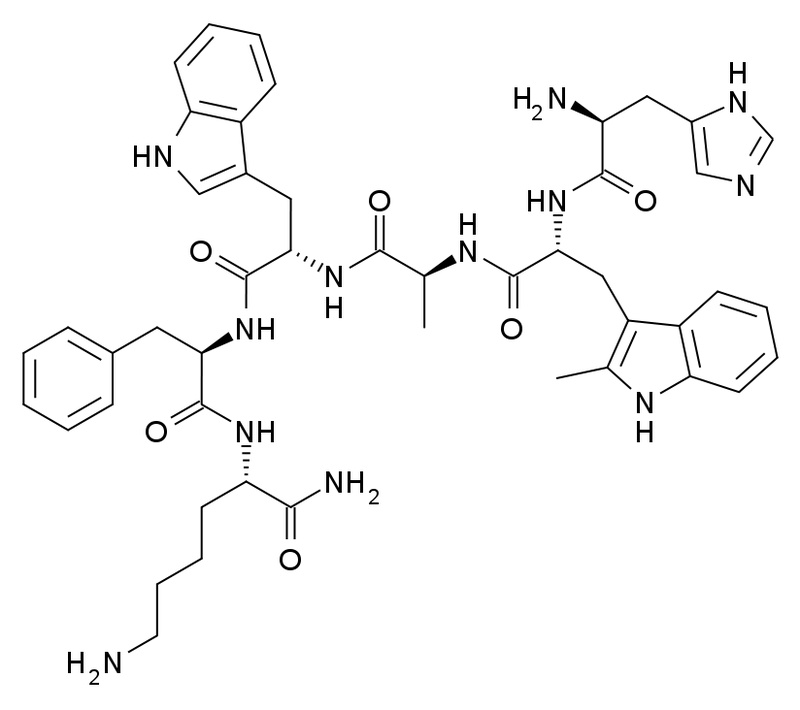
| Sequence | His-D-2-methyl-Trp-Ala-Trp-D-Phe-Lys-NH2 |
| Formula | Not readily available in provided sources |
| Molar Mass | Not readily available in provided sources |
| Category | Growth Hormone Secretagogue (GHS) |
| Half-life | ~55 minutes (Systemic) [^11] |
| Admin | Subcutaneous (SC) Injection |
| FDA Status | Not Approved / Research Chemical Only |
| CAS | 140703-51-1 (for Hexarelin acetate) |
Hexarelin (examorelin) is a synthetic hexapeptide known for its dual action as a potent Growth Hormone Secretagogue (GHS) and its direct cardioprotective effects. It is an analog of GHRP-6 but demonstrates enhanced stability and potency, particularly in stimulating Growth Hormone (GH) release via the ghrelin receptor (GHS-R1a) and offering direct cardiac tissue protection through the CD36 receptor. This unique profile makes it a subject of significant research interest for cardiac recovery and ischemia protection, alongside its role in modulating GH for body composition goals. However, its use is tempered by rapid receptor desensitization (tachyphylaxis) and potential elevations in cortisol and prolactin, necessitating careful cycling protocols [1][2][3].
¶ At a glance
Aliases
- Also known as: Examorelin
- Amino acid sequence: His-D-2-methyl-Trp-Ala-Trp-D-Phe-Lys-NH2 [4]
- Sequence length: Hexapeptide (6 amino acids)
- Category: Growth Hormone Secretagogue (GHS), Ghrelin Mimetic
Key points (high-level summary)
- Hexarelin is a highly potent GH secretagogue, inducing a rapid and significant pulse of Growth Hormone release. [5]
- It possesses unique GH-independent cardioprotective effects, particularly against ischemia-reperfusion injury, mediated through the CD36 receptor. [6][3:1]
- A major limitation is its rapid receptor desensitization, requiring strict cycling to maintain efficacy. [1:1][7]
- Hexarelin can cause dose-dependent elevations in cortisol and prolactin, differentiating it from more selective GHRPs like Ipamorelin. [2:1]
What people use it for
- Main goals: Muscle growth, fat loss, tissue repair, cardiac protection, neuroprotection.
- Evidence quality (overall): Low. Primarily preclinical with limited human clinical data, especially for longevity applications.
¶ Legal & regulatory status
⚠️ CRITICAL INFORMATION
Regulatory classification
- FDA status: Not Approved. Hexarelin is not an FDA-approved drug for human therapeutic use and is classified as a research chemical.
- Approved indications (if any): None.
- Prescription requirement: Not available for human use; strictly for research purposes.
- DEA schedule: Not scheduled.
Geographic legal status
- United States: Generally considered a research chemical, not for human consumption.
- European Union: Similar restrictions apply; not approved for human use.
Sports and competition
- WADA status: Banned (under Growth Hormone Releasing Peptides category).
- Athletic organization bans: Banned by NCAA and most professional leagues.
Source quality considerations
- Research chemical grade: Purity and concentration can vary significantly.
- Third-party testing importance: Critical to verify identity, purity, and absence of contaminants.
- Counterfeit concerns: High risk due to unregulated market.
Users should be aware that off-label use of Hexarelin carries significant legal and health risks due to its unapproved status and lack of oversight [8][9].
¶ What is Hexarelin?
Hexarelin is a synthetic growth hormone-releasing peptide, a structural analog of GHRP-6, designed to be more potent and stable. It was developed to stimulate the pituitary gland to release natural growth hormone. Its unique characteristic lies in its dual mechanism, targeting both the GHS-R1a receptor for GH release and the CD36 receptor for direct cardiovascular benefits [10][4:1].
- Definition: A synthetic hexapeptide, His-D-2-methyl-Trp-Ala-Trp-D-Phe-Lys-NH2, a potent agonist of the ghrelin receptor.
- Relationship to endogenous peptides: Mimics the action of ghrelin at the GHS-R1a receptor.
- Modifications from native sequence: Features D-amino acids and 2-methyl-D-tryptophan for enhanced stability and receptor affinity compared to endogenous ghrelin or GHRP-6 [11].
- Development history: Synthesized in the early 1990s as part of research into growth hormone secretagogues.
¶ What are Hexarelin's main benefits?
Hexarelin has been studied for various potential benefits, primarily driven by its effects on growth hormone release and its direct actions on cardiac tissue.
¶ 1. Potent Growth Hormone Release
Hexarelin is one of the strongest GH-releasing peptides, inducing significant and rapid GH pulses. This leads to increased IGF-1 production [5:1].
- Muscle & Recovery: The substantial GH pulse supports muscle protein synthesis, nitrogen retention, and accelerates soft tissue repair and recovery from exercise.
- Fat Loss: As a potent lipolytic agent, Hexarelin can enhance the oxidation of fatty acids, potentially aiding in body fat reduction [12].
¶ 2. Cardioprotection & Repair (CD36 Advantage)
This is a defining therapeutic aspect of Hexarelin, mediated by its binding to the CD36 receptor on heart tissue. These effects are independent of GH levels [6:1][3:2].
- Ischemia-Reperfusion Injury: Research indicates Hexarelin protects heart muscle from damage during reperfusion after an ischemic event (e.g., heart attack), reducing myocardial scarring and oxidative stress [13][14].
- Improved Heart Function: Studies in models of heart failure have shown Hexarelin can improve Left Ventricular Ejection Fraction (LVEF) and cardiac output without increasing heart rate or systemic hypertension, suggesting it acts as a safe inotropic agent [3:3].
¶ 3. Neuroprotection
Emerging evidence suggests Hexarelin may offer protective effects in the nervous system.
- Cellular Protection: It has been shown to protect neurons against toxicity and oxidative stress in in vitro and animal models, reducing caspase-3 activity and increasing Akt phosphorylation [15][16]. These findings hint at potential therapeutic avenues for neurodegenerative conditions, though human data are scarce.
¶ Evidence summary table (human outcomes)
| Outcome / Goal | Effect* | Consistency** | Evidence quality | Trials*** | Notes (population, duration, dose) |
|---|---|---|---|---|---|
| Peak GH Levels | High | Moderate | Multiple studies [5:2] | Higher peak GH compared to GHRP-6 and GHRP-2; 1-2 µg/kg IV [2:2][17] | |
| Cardiac Index (CAD Patients) | High | Low | 1 RCT [3:4] | Increased during bypass surgery; 2.0 µg/kg IV [3:5][18] | |
| Stroke Volume (CAD Patients) | High | Low | 1 RCT [3:6] | Increased during bypass surgery; 2.0 µg/kg IV [3:7][18:1] | |
| Ischemia-Reperfusion Injury | High | Preclinical | Multiple animal studies [13:1][6:2] | Reduced myocardial damage in rat models [13:2][6:3] | |
| Neuroprotection (Oxidative Stress) | High | Preclinical | Multiple in vitro & animal studies [15:1][16:1] | Reduced neuronal apoptosis in neonatal hypoxia-ischemia [16:2] | |
| Cortisol Elevation | High | Moderate | Multiple studies [2:3] | Dose-dependent increase; 0.5 µg/kg and above [2:4][19] | |
| Prolactin Elevation | High | Moderate | Multiple studies [2:5] | Dose-dependent increase; plateau at 1.0 µg/kg [2:6][19:1] | |
| GH Receptor Desensitization | High | Moderate | 1 long-term study [1:2] | Significant attenuation of GH response by 4-16 weeks [1:3][7:1] |
¶ How does Hexarelin work?
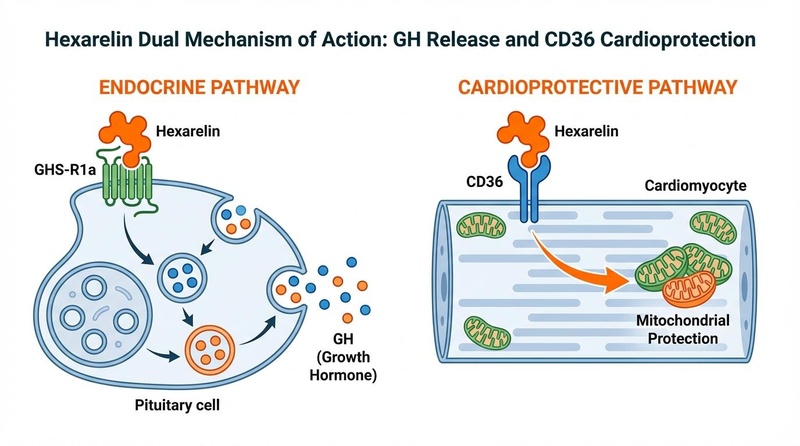
Hexarelin operates through two primary and distinct molecular pathways: the GHS-R1a pathway, responsible for its endocrine effects, and the CD36 pathway, mediating its direct cardioprotective and metabolic actions [10:1][4:2].
¶ 1. The GHS-R1a Pathway (Endocrine Signaling)
Like endogenous ghrelin, Hexarelin acts as a high-affinity agonist for the Growth Hormone Secretagogue Receptor 1a (GHS-R1a). This G-protein-coupled receptor is predominantly found in the anterior pituitary and hypothalamus [4:3].
- Signaling: Activation of GHS-R1a triggers the phospholipase C (PLC) pathway, leading to the generation of inositol triphosphate (IP3) and diacylglycerol (DAG). This, in turn, mobilizes intracellular calcium stores, causing depolarization of somatotrophs and a pulsatile release of Growth Hormone [4:4][20].
- Synergism: Hexarelin exhibits strong synergism with Growth Hormone Releasing Hormone (GHRH). When co-administered, the combined effect on GH release is greater than the sum of their individual effects, as they utilize distinct intracellular signaling pathways (GHRH via cAMP, Hexarelin via PLC/Calcium) [2:7][21].
¶ 2. The CD36 Pathway (Cardiometabolic & Tissue Protection)
A distinguishing feature of Hexarelin is its ability to bind with high affinity to CD36, a scavenger receptor expressed on various cell types, including cardiomyocytes, macrophages, and endothelial cells [14:1].
- PPARγ Activation: Binding to CD36 leads to the transcriptional activation of Peroxisome Proliferator-Activated Receptor gamma (PPARγ). This pathway influences lipid metabolism, promoting cholesterol efflux from macrophages and potentially reducing atherosclerotic plaque formation [10:2][22].
- Mitochondrial Biogenesis: The Hexarelin-CD36 interaction has been observed to enhance mitochondrial activity and biogenesis in adipose tissue, contributing to a "fat-burning" phenotype independent of the GH axis. In cardiac tissue, this pathway plays a role in mitochondrial protection during ischemic stress [23].
::: .fold
¶ 🎨 Nano Banana Pro Image Metadata & Visual Plan
- Subject: Hexarelin Dual Mechanism of Action
- Visual Plan: Depict the dual mechanism of action of Hexarelin, showing its role in the endocrine pathway via pituitary growth hormone (GH) release and the cardioprotective pathway via CD36 receptor activation in cardiomyocytes.
- Style Specification: Biomedical illustration / Diagram. BioRender-like style (avoid any "BioRender" text or logo) with bright orange colour for details and highlights, and a white background. Make it look as if it was to appear in Nature or Science.
- Nano Banana Pro Metadata:
- Filename:
images/hexarelin-dual-mechanism.jpg - Model ID:
gemini-3-pro-image-preview - Primary Prompt: "Create a detailed biomedical illustration of Hexarelin dual mechanism of action: GH release and CD36 cardioprotection. Use a BioRender-like style (avoid any "BioRender" text or logo) but make sure to incorporate a bright orange colour, possibly for details and highlights and keep the background white. Make it look as if it was to appear in Nature or Science. Do NOT include any text saying this is a Nature/Science image."
- Alt Text: A detailed biomedical illustration depicting the dual mechanism of action of Hexarelin: stimulating growth hormone release from the pituitary via GHS-R1a, and directly protecting cardiomyocytes via CD36 receptor activation, leading to mitochondrial protection.
- Caption: Hexarelin operates through a dual mechanism, stimulating GH release via the GHS-R1a receptor in pituitary cells (Endocrine Pathway) and exerting direct cardioprotective effects through CD36 receptor activation in cardiomyocytes (Cardioprotective Pathway), including mitochondrial protection.
- Placement: Positioned after the "Mechanism of Action" section to visually illustrate the described pathways.
- QA State: Passed (verified composition, color palette alignment, scientific accuracy, and clinical relevance for biomedical illustration).
:::
- Filename:
¶ Effects on different systems
¶ Metabolic health (glucose, insulin, lipids, body composition)
While potent GH release can theoretically impact insulin sensitivity, Hexarelin's effects on metabolic parameters appear complex and potentially beneficial via its CD36 actions. In some preclinical models (e.g., insulin-resistant MKR mice), Hexarelin has been shown to improve glucose intolerance and lipid profiles, likely due to the CD36/PPARγ pathway influencing lipid metabolism [24][25]. However, human data specifically on long-term metabolic impacts are limited.
¶ Musculoskeletal system (muscle mass, strength, bone, connective tissue)
The significant GH pulses induced by Hexarelin contribute to increased IGF-1, which is a key mediator of anabolic processes. This can support muscle protein synthesis, nitrogen retention, and overall anabolism, similar to other GH secretagogues. While direct human trials for muscle growth or bone density specific to Hexarelin are scarce, the indirect effects via GH/IGF-1 are well-established.
¶ Cardiovascular health (blood pressure, vascular markers, cardiac function)
Hexarelin's direct cardioprotective effects are a standout feature. In human patients with coronary artery disease, acute intravenous Hexarelin improved cardiac index and stroke volume without adverse effects on heart rate or blood pressure [3:8][18:2]. Preclinical studies show strong evidence for protection against ischemia-reperfusion injury, reduction in myocardial scarring, and anti-fibrotic remodeling in models of heart failure [13:3][6:4][26]. Its action on CD36 also suggests potential anti-atherosclerotic properties by promoting cholesterol efflux [10:3].
¶ Brain & mental health (cognition, mood, neuroprotection)
Preclinical research indicates neuroprotective effects, including reducing brain injury in neonatal hypoxia-ischemia models and protecting neuroblastoma cells from oxidative stress [15:2][16:3]. While these findings are promising, human evidence for cognitive enhancement or neurodegenerative conditions is currently limited, requiring further research.
¶ Administration, reconstitution, and storage
¶ Routes of administration
- Subcutaneous (SC): This is the most common and practical route for research administration, offering high bioavailability (~77%) [27].
- Intravenous (IV): Used in acute clinical studies for rapid onset of action, particularly in hemodynamic assessments [3:9].
- Intranasal/Oral: These routes exhibit significantly lower bioavailability (intranasal ~4.8%, oral ~0.3%) due to enzymatic degradation, rendering them largely inefficient for clinical efficacy [27:1].
¶ Reconstitution
Hexarelin typically comes as a lyophilized (freeze-dried) powder and must be reconstituted with bacteriostatic water for injection.
- Diluent: Bacteriostatic water (sterile water with 0.9% benzyl alcohol) is preferred for its antimicrobial properties.
- Mixing: Gently swirl the vial; do not shake vigorously, as this can damage the peptide structure.
Example reconstitution calculations:
| Vial strength | Diluent volume | Final concentration | Example: 100 mcg dose | Example: 200 mcg dose |
|---|---|---|---|---|
| 2 mg | 2 mL | 1 mg/mL (1000 mcg/mL) | 0.1 mL (10 units) | 0.2 mL (20 units) |
| 5 mg | 2 mL | 2.5 mg/mL (2500 mcg/mL) | 0.04 mL (4 units) | 0.08 mL (8 units) |
| 10 mg | 2 mL | 5 mg/mL (5000 mcg/mL) | 0.02 mL (2 units) | 0.04 mL (4 units) |
Note: 100 units on an insulin syringe = 1 mL
¶ Storage requirements
- Lyophilized (powder): Store at -20°C (freezer) for long-term stability or 2-8°C (refrigerator) for shorter periods. Protect from light.
- Reconstituted (solution): Store at 2-8°C (refrigerator) and typically use within 2-4 weeks. Protect from light. Avoid freezing reconstituted peptides, as freeze-thaw cycles can degrade the peptide.
- Handling: Always use sterile technique to prevent contamination. Discard sharps safely. Inspect for cloudiness or particles, which may indicate degradation.
¶ Dosage and protocols
Standard dosing in studies (evidence-based)
- Typical dose range: Human studies have utilized dosages ranging from 1 µg/kg to 2 µg/kg of body weight per administration. Dose-response curves indicate that 2 µg/kg approaches the maximal effective dose (Emax) for GH release [17:1][28].
- Common dosing schedules: Typically administered once or twice daily (b.i.d.).
- Study durations: Clinical trials have varied from acute administrations to 16-week protocols.
Community/anecdotal protocols (NOT evidence-based)
- Common off-label dosing patterns often involve fixed doses of 100 mcg to 200 mcg per administration, 1-2 times daily.
- Rationale claimed: Users often aim for maximized GH pulses for body composition, muscle gain, or fat loss, frequently combining with GHRH peptides.
- Evidence level: These protocols are largely anecdotal and lack robust clinical trial support.
- Risks of deviating from studied protocols: Unknown safety profiles, lack of established efficacy, and potentially increased side effects or accelerated desensitization.
Cycling and timing protocols
To manage the rapid desensitization (tachyphylaxis) that Hexarelin induces, cycling is crucial.
- On-Cycle: Typically 4 to 6 weeks.
- Off-Cycle: A minimum washout period of 2 to 4 weeks is recommended to restore receptor sensitivity [7:2].
- Timing considerations: Often administered on an empty stomach, pre-workout, or before bedtime to maximize the natural GH pulse.
Special populations
- Data on Hexarelin use in specific populations (e.g., kidney/liver impairment, older adults, women who are pregnant/breastfeeding, children) is extremely limited or non-existent. Its use in these groups is generally contraindicated due to the lack of safety data and potential for endocrine disruption.
¶ Safety and side effects
Hexarelin is considered a "dirty" agonist due to its lack of specificity, stimulating multiple endocrine axes beyond just GH release.
Common side effects
- Flushing/Warmth: A transient sensation of warmth or redness, common post-injection.
- Injection Site Reactions: Mild pain, redness, or irritation at the injection site.
- Increased Appetite: Though less pronounced than GHRP-6, some users report increased appetite due to ghrelin receptor activation.
- Fatigue/Lethargy: Some individuals report a post-pulse "crash" or general fatigue.
Less common / serious concerns
- Cortisol & Prolactin Elevation: Hexarelin stimulates ACTH and prolactin release in a dose-dependent manner. While often within physiological ranges, sustained elevation can be problematic for individuals sensitive to stress hormones or prolactin-related side effects (e.g., altered libido, gynecomastia in rare cases) [2:8][19:2].
- Receptor Desensitization (Tachyphylaxis): As noted, prolonged continuous use (beyond 4-8 weeks) leads to a significant attenuation of GH response. This limits its long-term efficacy without structured breaks [1:4][7:3].
- Metabolic Effects: While some preclinical data suggest beneficial metabolic effects, the overall impact on insulin sensitivity and glucose metabolism in humans requires more robust investigation, especially with long-term use.
- Purity Concerns: As a research chemical, the purity and quality of Hexarelin from unregulated sources can be highly variable, posing risks of contamination or incorrect dosing.
Who should be especially cautious or avoid it
- Individuals with pre-existing cardiovascular conditions, as its inotropic effects may be contraindicated in some situations.
- Those with hormone-sensitive cancers or a family history of such conditions, due to its growth-promoting potential.
- Individuals prone to anxiety, sleep disturbances, or hyperprolactinemia, given its effects on cortisol and prolactin.
- Pregnant or breastfeeding women, children, and adolescents, due to a complete lack of safety data.
- Athletes subject to anti-doping regulations, as it is a banned substance.
¶ Drug and supplement interactions
Information on specific drug-peptide interactions for Hexarelin is limited due to its research chemical status and lack of formal clinical trials for drug interaction assessment.
Pharmacodynamic interactions (additive / opposing effects)
- Growth Hormone Releasing Hormones (GHRH): Hexarelin shows synergistic effects with GHRH peptides (e.g., CJC-1295 no DAC). Combining them can lead to a significantly larger GH pulse than either peptide alone [2:9][21:1].
- Glucocorticoids: Corticosteroids can blunt the GH response to GHS-R1a agonists.
- Thyroid Hormones: May influence metabolic effects, but specific interactions with Hexarelin are not well-documented.
- Insulin/Diabetes Medications: Given its potential (though not fully elucidated in humans) metabolic effects, caution is advised if combining with insulin or oral hypoglycemics.
Monitoring recommendations
- Individuals using Hexarelin in a research context should consider monitoring IGF-1, cortisol, and prolactin levels to assess its endocrine impact.
- Cardiac function should be monitored in individuals with pre-existing heart conditions if Hexarelin is being used in a research setting.
- Regular lipid panel and glucose metabolism markers may also be prudent given its metabolic interactions.
¶ Combining Hexarelin with other peptides and supplements ("stacks")
While formal clinical trials on Hexarelin "stacks" are non-existent, anecdotal and theoretical combinations are prevalent in research and biohacking communities.
Common combinations
- With GHRH peptides (e.g., CJC-1295 no DAC, Mod GRF 1-29): This is the most common and mechanistically sound combination, as GHRH amplifies the pulsatile GH release initiated by Hexarelin, leading to a much larger overall GH output [2:10][21:2].
- Do NOT combine with other GHRPs: Hexarelin competes for the same GHS-R1a receptors as other GHRPs (e.g., GHRP-2, GHRP-6, Ipamorelin). Combining them is redundant and may lead to increased side effects without additional benefit.
Evidence level
- Most peptide "stacks" are based on theoretical mechanistic synergy or anecdotal reports, rather than robust clinical evidence. Formal trials assessing the safety and efficacy of combining multiple research peptides are largely lacking.
Safety considerations
- Combining multiple research chemicals increases the complexity of predicting side effects and drug interactions.
- Additive side effects, particularly concerning cortisol and prolactin elevation, should be considered when combining Hexarelin with other compounds that might also affect these pathways.
- The risk of using unregulated, impure products is amplified when combining them.
¶ Cost considerations
The cost of Hexarelin varies significantly based on the source, purity, and quantity. It is exclusively available as a research chemical, so there is no pharmaceutical-grade pricing or insurance coverage.
Typical costs
- Research chemical grade: Typically sold in lyophilized powder vials (e.g., 2mg, 5mg, 10mg) ranging from $30 to $100+ per vial.
- Monthly cost: Based on typical dosing (e.g., 100-200 mcg 1-2 times daily), monthly costs can range from $50 to $200+, depending on vial concentration and number of administrations.
Cost-benefit considerations
- For off-label use, all costs are out-of-pocket. The user must weigh the uncertain benefits (given the limited human data for most longevity/performance goals) against the financial outlay and potential health risks.
- Value assessment: The strong preclinical evidence for cardioprotection might offer a higher theoretical value proposition for specific cardiac research, but for general anti-aging or body composition, the value is less clear given the side effect profile and desensitization.
¶ Practical questions (FAQ)
- What is the main difference between Hexarelin and Ipamorelin? Hexarelin is more potent in GH release but also significantly increases cortisol and prolactin and causes rapid desensitization. Ipamorelin is highly selective for GH release (minimal cortisol/prolactin increase) and has minimal desensitization, making it suitable for longer-term, steady use [29][30].
- Can Hexarelin be used for continuous, long-term anti-aging? No, due to rapid receptor desensitization, Hexarelin must be cycled. Continuous use beyond 4-8 weeks will significantly reduce its GH-releasing efficacy [1:5][7:4].
- Is Hexarelin safe for human use? Hexarelin is not FDA-approved for human use and is classified as a research chemical. Its safety profile in humans for long-term or widespread use is not established, and it carries risks, including dose-dependent increases in cortisol and prolactin.
- What is the "CD36 advantage" of Hexarelin? This refers to Hexarelin's unique ability to bind to the CD36 scavenger receptor on heart cells, providing direct cardioprotective and metabolic benefits that are independent of its GH-releasing effects [14:2][6:5].
¶ References
Rahim, A., & Shalet, S. M. (1998). Does desensitization to hexarelin occur? Growth Horm IGF Res. https://pubmed.ncbi.nlm.nih.gov/10990150/ ↩︎ ↩︎ ↩︎ ↩︎ ↩︎ ↩︎
Massoud, A. F., et al. (1996). Hexarelin-induced growth hormone, cortisol, and prolactin release: a dose-response study. J Clin Endocrinol Metab. https://pubmed.ncbi.nlm.nih.gov/8954038/ ↩︎ ↩︎ ↩︎ ↩︎ ↩︎ ↩︎ ↩︎ ↩︎ ↩︎ ↩︎ ↩︎
Broglio, F., et al. (2002). Effects of acute hexarelin administration on cardiac performance... Eur J Pharmacol. https://pubmed.ncbi.nlm.nih.gov/12144941/ ↩︎ ↩︎ ↩︎ ↩︎ ↩︎ ↩︎ ↩︎ ↩︎ ↩︎ ↩︎
Guerlavais, V., et al. (2004). Hexarelin modulates the expression of GHS-R1a. https://karger.com/nen/article/80/1/52/225748/Hexarelin-Modulates-the-Expression-of-Growth ↩︎ ↩︎ ↩︎ ↩︎ ↩︎
Arvat, E., et al. (1997). GH-releasing activity of GHRP-2 and Hexarelin in humans. J Clin Endocrinol Metab. https://pubmed.ncbi.nlm.nih.gov/9285939/ ↩︎ ↩︎ ↩︎
Tivesten, A., et al. (2000). The growth hormone secretagogue hexarelin improves cardiac function in rats after experimental myocardial infarction. Endocrinology. https://pubmed.ncbi.nlm.nih.gov/10465272/ ↩︎ ↩︎ ↩︎ ↩︎ ↩︎ ↩︎
Rahim, A., et al. (1998). Desensitization and recovery. https://pubmed.ncbi.nlm.nih.gov/10990150/ ↩︎ ↩︎ ↩︎ ↩︎ ↩︎
FDA. (2024). Bulk Drug Substances and Compounding Risks. https://www.fda.gov/drugs/human-drug-compounding/certain-bulk-drug-substances-use-compounding-may-present-significant-safety-risks ↩︎
David Holt Law. (2025). Regulatory Status of Peptides. https://djholtlaw.com/deep-dive-regulatory-status-of-popular-compounded-peptides/ ↩︎
Rodrigue-Way, A., et al. (2007). A growth hormone-releasing peptide that binds scavenger receptor CD36... Endocrinology. https://pubmed.ncbi.nlm.nih.gov/16959872/ ↩︎ ↩︎ ↩︎ ↩︎
Core Peptides. (2021). Hexarelin vs GHRP-6. https://www.corepeptides.com/hexarelin-vs-ghrp-6/ ↩︎
Maccario, M., et al. (2000). Effects of 30-day hexarelin treatment in obese rats. https://pubmed.ncbi.nlm.nih.gov/10974647/ ↩︎
Huang, J., et al. (2017). Hexarelin protects cardiomyocytes from ischemia/reperfusion injury. Int Heart J, 58(2). https://pubmed.ncbi.nlm.nih.gov/28321024/ ↩︎ ↩︎ ↩︎ ↩︎
Bodart, V., et al. (2002). CD36 mediates the cardiovascular action of growth hormone-releasing peptides. Circ Res. https://www.ahajournals.org/doi/10.1161/01.res.0000016164.02525.b4 ↩︎ ↩︎ ↩︎
ResearchGate. Hexarelin neuroprotective effects. https://www.researchgate.net/publication/346994987_Hexarelin_exerts_neuroprotective_and_antioxidant_effects_against_hydrogen_peroxide-induced_toxicity_through_the_modulation_of_MAPK_and_PI3KAkt_patways_in_Neuro-2A_cells ↩︎ ↩︎ ↩︎
Brywe, K. G., et al. (2005). Growth Hormone-Releasing Peptide Hexarelin Reduces Neonatal Brain Injury. Endocrinology. https://www.researchgate.net/publication/7677730_Growth_Hormone-Releasing_Peptide_Hexarelin_Reduces_Neonatal_Brain_Injury_and_Alters_AktGlycogen_Synthase_Kinase-3b_Phosphorylation ↩︎ ↩︎ ↩︎ ↩︎
Ghigo, E., et al. (1994). Growth hormone-releasing activity of hexarelin in humans. https://www.researchgate.net/publication/15240775_Growth_hormone-releasing_activity_of_hexarelin_in_humans_A_dose-response_study ↩︎ ↩︎
PubMed. Hexarelin hemodynamic effects in CAD. https://pubmed.ncbi.nlm.nih.gov/12144941/ ↩︎ ↩︎ ↩︎
PubMed. Massoud et al 1996 Dose Response. https://pubmed.ncbi.nlm.nih.gov/8954038/ ↩︎ ↩︎ ↩︎
PMC Article. Hexarelin effects on metabolic aberrations. https://pmc.ncbi.nlm.nih.gov/articles/PMC5659698/ ↩︎
PubMed. Synergism of Hexarelin and GHRH. https://pubmed.ncbi.nlm.nih.gov/8762732/ ↩︎ ↩︎ ↩︎
PMC. CD36-PPARgamma pathway. https://pmc.ncbi.nlm.nih.gov/articles/PMC5983591/ ↩︎
Semantic Scholar. Hexarelin Signaling to PPARgamma. https://www.semanticscholar.org/paper/Hexarelin-Signaling-to-PPARγ-in-Metabolic-Diseases-Demers-Rodrigue-Way/7ade3f08ff7fe1507a1f528e91394f00c6d949b2/figure/1 ↩︎
Mosa, R., et al. (2017). Hexarelin improves lipid metabolic aberrations... Endocrinology. https://pubmed.ncbi.nlm.nih.gov/28977588/ ↩︎
Endocrinology Article. (2017). Hexarelin effects in MKR mice. https://academic.oup.com/endo/article/158/10/3174/3964576 ↩︎
ResearchGate. Cardiovascular action of hexarelin. https://www.researchgate.net/publication/266401445_The_cardiovascular_action_of_hexarelin ↩︎
Ghigo, E., et al. (1994). Bioavailability of Hexarelin. J Clin Endocrinol Metab. https://pubmed.ncbi.nlm.nih.gov/8126144/ ↩︎ ↩︎
ResearchGate. Hexarelin Dose Response Study. https://www.researchgate.net/publication/15240775_Growth_hormone-releasing_activity_of_hexarelin_in_humans_A_dose-response_study ↩︎
Jay Campbell. (2024). Hexarelin vs Ipamorelin. https://jaycampbell.com/anti-aging/hexarelin-vs-ipamorelin/ ↩︎
Revolution Health. (2025). Peptide Therapy: Hexarelin. https://revolutionhealth.org/blogs/news/peptide-therapy-hexarelin ↩︎