¶ KPV
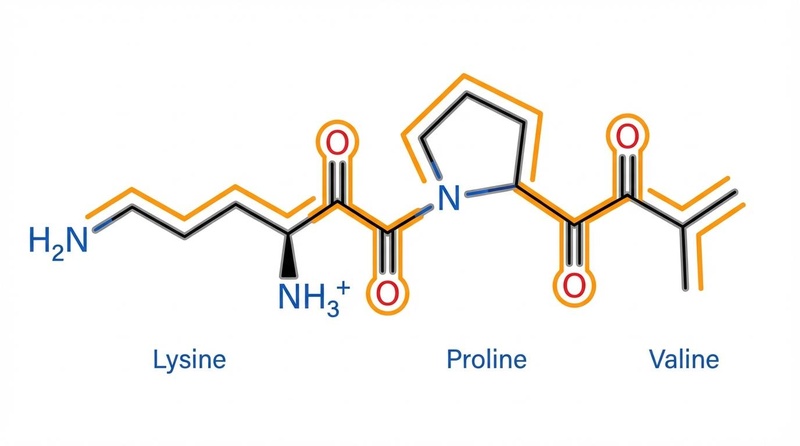
| Sequence | Lys-Pro-Val |
| Category | Anti-inflammatory, Antimicrobial Peptide |
| Half-life | Short (minutes) in plasma |
| Admin | Oral, Topical, Subcutaneous |
| FDA Status | Category 2 (Prohibited for Compounding) |
KPV (Lysine-Proline-Valine) is a naturally occurring tripeptide fragment derived from the C-terminal of alpha-melanocyte-stimulating hormone (α-MSH). It is primarily recognized for its potent anti-inflammatory and antimicrobial properties, notably targeting inflamed tissues through the PepT1 transporter and demonstrating efficacy in conditions like Inflammatory Bowel Disease and various skin ailments. Human clinical evidence for pure KPV is limited, with most data derived from preclinical studies and trials involving its derivatives.
¶ At a glance
Aliases
- Also known as: Lysine-Proline-Valine
Key points
- Strongest benefit: Targeted inflammation control, particularly in gut conditions like ulcerative colitis, and direct antimicrobial action against Candida albicans and Staphylococcus aureus [1][2][3].
- Notable effect: Promising utility in skin conditions such as psoriasis, eczema, and wound healing, leveraging its anti-inflammatory and regenerative properties [4].
- Key limitation: Human clinical trials for pure KPV are scarce, leading to an "evidence-limited" status. Its FDA Category 2 classification significantly restricts its availability through compounding pharmacies in the US [5].
- Safety concern: Prohibited by the World Anti-Doping Agency (WADA) due to its association with peptide hormones; athletes should avoid use [6].
What people use it for
- Main goals: Active inflammation management (e.g., gut-related inflammation), dermatological conditions (psoriasis, eczema, acne), and as an antimicrobial agent.
- Evidence quality (overall): Evidence-limited – Strong preclinical data, but limited high-quality human randomized controlled trials (RCTs).
¶ Legal & regulatory status
⚠️ CRITICAL INFORMATION
Regulatory classification
- FDA status: Unapproved / Category 2. As of September 29, 2023, the FDA placed KPV on the "Category 2 Bulk Drug Substances" list. This prohibits compounding pharmacies from preparing KPV products due to insufficient human safety data [5:1]. It is not an FDA-approved drug for any indication.
- Prescription requirement: KPV is not legally available for human use as a compounded drug in the US. It is often sold as a "research chemical" explicitly labeled "not for human consumption."
Geographic legal status
- United States: Prohibited for compounding in 503A pharmacies. Availability is limited to research-grade vendors, which are not intended for human consumption.
- European Union: Regulatory status varies by country; generally, it is not an approved medicinal product.
Sports and competition
- WADA status: Prohibited. KPV is likely classified under S2 (Peptide Hormones, Growth Factors, Related Substances, and Mimetics) of the WADA Prohibited List due to its derivation from α-MSH. It is banned at all times (both in-competition and out-of-competition) for athletes subject to anti-doping testing [6:1].
Source quality considerations
- Due to its regulatory status, pharmaceutical-grade KPV is largely inaccessible. Most available KPV is from gray-market "research chemical" suppliers.
- These sources often lack stringent third-party testing for purity, potency, and contaminants (e.g., heavy metals, endotoxins), posing significant risks to users.
¶ What is KPV?
KPV (Lysine-Proline-Valine) is a synthetic tripeptide consisting of three amino acids: Lysine, Proline, and Valine. It is a specific fragment of the endogenous neuropeptide α-melanocyte-stimulating hormone (α-MSH). While α-MSH is known for its role in pigmentation, KPV selectively retains the anti-inflammatory and antimicrobial properties without stimulating melanocortin-1 receptors (MC1R) responsible for tanning.
Relationship to endogenous peptides
KPV is a C-terminal fragment of α-MSH, which is part of the larger proopiomelanocortin (POMC) precursor protein. It functions as an endogenous anti-inflammatory agent, mimicking specific beneficial actions of α-MSH but through distinct cellular pathways.
Key pharmacological property
KPV's primary pharmacological properties are its anti-inflammatory action via NF-κB pathway inhibition and its direct antimicrobial activity against various pathogens, including fungi and bacteria. Its ability to be selectively transported into inflamed cells via the PepT1 transporter enhances its therapeutic specificity.
¶ What are KPV's main benefits?
1. Gut Health & Inflammatory Bowel Disease (IBD)
KPV demonstrates significant potential in managing gut inflammation, particularly in conditions like Ulcerative Colitis (UC).
- Outcome: Reduction in gut inflammation, accelerated mucosal healing, and prevention of disease-associated weight loss in animal models of colitis [1:1][2:1].
- Direction of effect: ↓↓↓ (p) Large decrease in inflammation, positive for health.
- Magnitude: Large; significant histological and clinical improvements in animal studies.
- Population studied: Primarily murine models of induced colitis.
- Evidence quality: Moderate; strong preclinical evidence, but human data specifically for pure KPV in IBD is limited.
- Summary sentence: KPV targets inflamed colonic cells via the PepT1 transporter, reducing pro-inflammatory cytokines and promoting healing in animal models of IBD.
2. Antimicrobial & Antifungal Action
KPV exhibits direct killing effects against several pathogens, making it unique among therapeutic peptides.
- Outcome: Eradication of Candida albicans in human vulvovaginal candidiasis (VVC) and bactericidal activity against Staphylococcus aureus (including MRSA) in vitro [3:1][7].
- Direction of effect: ↓↓↓ (p) Large decrease in microbial load, positive for health.
- Magnitude: Large; high cure rates in human trials for derivatives, significant kill rates in vitro.
- Population studied: Human females with VVC (for CZEN-002), in vitro cell cultures.
- Evidence quality: Moderate (for derivatives in human VVC); Low (for pure KPV in vitro).
- Summary sentence: A KPV derivative has shown high efficacy in treating human candidiasis, and pure KPV displays direct bactericidal action against common skin pathogens.
3. Skin Conditions (Psoriasis, Eczema, Wound Healing, Acne)
Topical KPV shows promise for inflammatory skin disorders and enhancing skin repair.
- Outcome: Rapid reduction in erythema, scaling, and pruritus in a human psoriasis case study; accelerated wound closure in in vitro epithelial models; theoretical utility for acne due to anti-C. acnes activity [4:1][8].
- Direction of effect: ↓↓ (p) Moderate decrease in skin inflammation, positive for health.
- Magnitude: Moderate; notable improvements in case reports and in vitro.
- Population studied: Human case study (psoriasis), in vitro cell cultures.
- Evidence quality: Very low; primarily anecdotal and preclinical.
- Summary sentence: KPV's anti-inflammatory and antimicrobial actions suggest benefits for various skin conditions, including psoriasis, wound healing, and acne, though human evidence is limited.
¶ Evidence summary table (human outcomes)
| Outcome / Goal | Effect* | Consistency** | Evidence quality | Trials*** | Notes (population, duration, dose) |
|---|---|---|---|---|---|
| Vaginal Candidiasis | High | High | 1 Phase I/II | CZEN-002 (KPV dimer) topical gel, 88.2% clinical cure rate in women over 5 days [3:2] | |
| Psoriasis Symptoms | Low | Very low | 1 Case Study | Topical KPV (1 mg BID) showed marked reduction in erythema, scaling, and pruritus [4:2] | |
| Ulcerative Colitis | Unclear | Very low | None (human) | Robust animal evidence of mucosal healing and anti-inflammatory effects [1:2][2:2] | |
| Staphylococcus aureus (in vitro) | High | Low | None (human) | 95% kill rate of S. aureus (MRSA/MSSA) at 1 µM within 2 hours in vitro [7:1] |
- *Effect: Number of arrows (1-3) indicates magnitude. Direction: ↑ (increase), ↓ (decrease), = (no effect), ? (unclear). Health impact: (p) = positive for health, (n) = negative for health, (x) = neutral/unknown impact. Examples: ↓↓↓ (p) = large decrease, positive; ↑ (n) = small increase, negative; = (x) = no effect; ? = unclear.
- **Consistency: Low (results conflict), Moderate (mixed but leaning one way), High (most trials agree)
- ***Trials: Number of RCTs or total trials informing this outcome (shows evidence depth at a glance)
- REQUIRED: You MUST include a citation key (e.g.
[^1]) in the "Notes" column for every single row. If you claim a result, you must link the specific Meta-Analysis or Key RCT that proves it.
¶ How does KPV work?
KPV exerts its anti-inflammatory and antimicrobial effects through distinct, yet complementary, mechanisms at the cellular level. Its ability to selectively target inflamed tissues is a key feature of its therapeutic potential.
Primary targets: PepT1 transporter, NF-κB pathway, microbial cell membranes.
Core mechanisms:
- PepT1 "Homing" Mechanism: KPV is a substrate for the proton-coupled oligopeptide transporter PepT1 (SLC15A1) [1:3]. This transporter is normally expressed in the small intestine but becomes significantly upregulated in colonic epithelial cells and macrophages during inflammation (e.g., in IBD) [9]. This upregulation allows KPV to be preferentially absorbed by inflamed cells, enhancing its local concentration and therapeutic effect while minimizing systemic exposure.
- NF-κB Inhibition: Once inside the cell, KPV acts as a potent inhibitor of the Nuclear Factor-kappa B (NF-κB) pathway, a master regulator of inflammatory gene expression [1:4][10]. KPV has been shown to translocate to the nucleus and competitively block the interaction between Importin-α3 and the p65 subunit of NF-κB, preventing its nuclear entry [10:1]. This prevents the transcription of pro-inflammatory cytokines such as TNF-α, IL-6, and IL-1β, thereby reducing the inflammatory cascade.
- Antimicrobial Action: KPV's antimicrobial effects are distinct and appear to involve direct disruption of microbial cell membranes [7:2]. It can permeabilize the membranes of fungal cells like Candida albicans and bacterial cells such as Staphylococcus aureus, leading to leakage of intracellular contents and cell death.
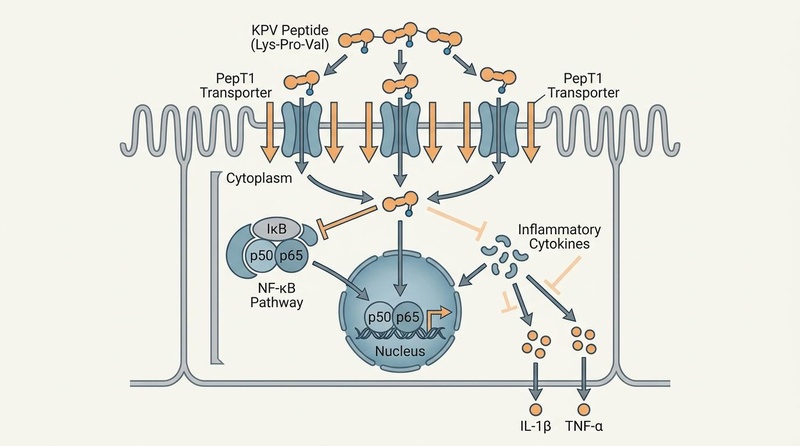
Figure 1: Mechanism of KPV uptake and anti-inflammatory signaling. In inflamed states, gut epithelial cells upregulate PepT1. KPV uses PepT1 to enter the cytoplasm, where it blocks NF-κB activation and subsequent inflammatory cytokine release.
Pharmacokinetics:
- Half-life: Pure KPV has a very short half-life (minutes) in plasma due to rapid enzymatic degradation by peptidases [11].
- Bioavailability by route:
- Oral: Typically low for pure peptides due to degradation in the gastrointestinal tract. However, the PepT1-mediated uptake in inflamed gut tissues can partially "rescue" its efficacy, especially when formulated for delayed or targeted release (e.g., hyaluronic acid-functionalized nanoparticles) [2:3].
- Subcutaneous (SubQ) / Intramuscular (IM): Offers more direct systemic availability, but still subject to rapid degradation.
- Topical: Can penetrate the dermis due to its small size and lipophilicity, allowing for local anti-inflammatory effects in skin conditions [4:3][12].
- Major PK issues: Rapid degradation in biological fluids necessitates protective formulations (e.g., encapsulation) or frequent administration for sustained effects.
¶ Effects on different systems
Skin, hair, and appearance
KPV's anti-inflammatory and regenerative properties make it a candidate for various dermatological applications. It has been shown to protect keratinocytes from fine dust-induced apoptosis and inflammation by regulating oxidative stress and modulating the MAPK/NF-κB pathway [8:1].
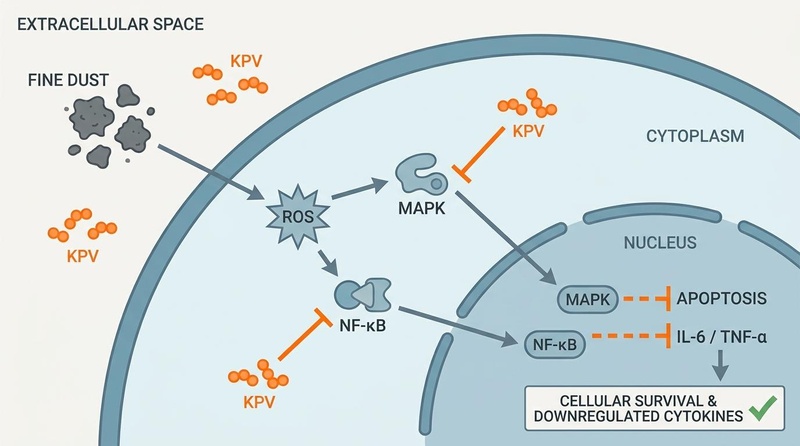
Figure 2: KPV Protective Pathway in Skin Keratinocytes. Under fine-dust exposure, KPV enters keratinocytes to suppress ROS generation and inhibit MAPK/NF-κB pathways, preventing cellular apoptosis and chronic inflammatory cytokine release.
- Psoriasis and Eczema: Topical application may reduce symptoms like scaling, redness, and itching by downregulating local inflammation, potentially offering an alternative to corticosteroids without skin-thinning side effects [4:4].
- Wound Healing: In vitro studies suggest KPV can accelerate the restitution of wounded epithelial monolayers, likely by modulating fibroblast activity and reducing inflammatory responses that hinder repair [13].
- Acne: Its bactericidal activity against Cutibacterium acnes and Staphylococcus aureus, coupled with its anti-inflammatory effects, supports its theoretical use in managing inflammatory acne lesions [7:3].
Immune function and inflammation
The core of KPV's action is its ability to modulate immune responses and reduce inflammation.
- Cytokine Modulation: By inhibiting the NF-κB pathway, KPV directly reduces the production of key pro-inflammatory cytokines (TNF-α, IL-6, IL-1β), which are central drivers of chronic inflammatory diseases [1:5].
- Oxidative Stress Reduction: KPV has been shown to inhibit reactive oxygen species (ROS) production, which plays a critical role in activating pro-inflammatory pathways and inducing cell death [8:2].
- Targeted Action: The PepT1-mediated delivery system allows KPV to concentrate its anti-inflammatory effects precisely where inflammation is highest, such as in the gut lumen during IBD [1:6].
¶ Administration, reconstitution, and storage
¶ Reconstitution
KPV, typically supplied as a lyophilized powder, requires reconstitution with bacteriostatic water for injectable or topical applications.
| Vial strength | Diluent volume | Final concentration | Example: 250 mcg dose | Example: 500 mcg dose |
|---|---|---|---|---|
| 2 mg | 2 mL | 1 mg/mL (1000 mcg/mL) | 0.25 mL (25 units) | 0.5 mL (50 units) |
| 5 mg | 2 mL | 2.5 mg/mL (2500 mcg/mL) | 0.1 mL (10 units) | 0.2 mL (20 units) |
| 10 mg | 2 mL | 5 mg/mL (5000 mcg/mL) | 0.05 mL (5 units) | 0.1 mL (10 units) |
Note: 100 units on an insulin syringe = 1 mL
Storage requirements
- Lyophilized (powder): Store at -20°C (freezer) or 2–8°C (refrigerator) away from light. Shelf life typically extends for several months to years.
- Reconstituted (solution): Store at 2–8°C (refrigerator) and use within 2-4 weeks. Protect from light.
- Freeze-thaw stability: Generally, avoid freezing reconstituted peptides, as it can compromise their integrity and potency.
Handling and safety
- Sterile technique: Always use sterile syringes, needles, and bacteriostatic water for reconstitution and injection to prevent contamination and infection.
- Sharps disposal: Dispose of all needles and syringes in a designated sharps container.
- Signs of degradation: Discard if the reconstituted solution appears cloudy, contains particles, or changes color.
¶ Dosage and protocols
Note: The following dosages are primarily derived from preclinical research and anecdotal reports for a research chemical not approved for human use. These are for informational purposes only and do not constitute medical advice.
Standard dosing in studies (evidence-based from animal models/derivatives)
- Oral (Gut Health): 200–500 mcg daily, often in enteric-coated capsules or liquid formulations designed for colonic release. Best taken on an empty stomach to optimize PepT1 transport [1:7].
- Topical (Skin/Acne): 1% – 2% concentration in a cream or gel, applied 1–2 times daily to affected areas [4:5].
- Injectable (Systemic): 200–500 mcg subcutaneously (SQ) daily for systemic inflammation.
Cycling and timing protocols
- Cycling recommendations: Typical peptide cycling involves an 8–12 week "on" period followed by a 4-week "off" period to mitigate potential tolerance, although receptor downregulation is less a concern with KPV than with hormonal peptides.
- Timing considerations: Oral KPV is often recommended on an empty stomach to maximize absorption via peptide transporters.
Dose escalation
- Starting dose: Conservative starting points (e.g., lower end of the range) are advisable.
- Titration schedule: Any increase in dosage should be gradual and monitored for efficacy and side effects.
- Maximum dose: No established maximum human dose exists; dosages are derived from preclinical studies or anecdotal reports, which carry inherent risks.
Special populations
- Pregnancy/Breastfeeding: No safety data available. Strictly contraindicated.
- Children and adolescents: No data available; contraindicated outside of specific research.
- Kidney or liver impairment: No specific dosing adjustments are established; caution is advised due to unknown metabolic pathways.
¶ Safety and side effects
Common side effects
- Injection site reactions: Mild redness, swelling, or stinging at the site of subcutaneous injection (common with many peptides).
- No pigmentation: Unlike α-MSH or Melanotan II, KPV does not bind to MC1R and therefore does not cause skin tanning or darkening of moles [7:4].
- Local irritation: Topical application has generally been well-tolerated, with no reports of severe irritation in case studies or derivative trials.
Less common / serious concerns
- Systemic safety: High doses in animal models have shown no evidence of organ toxicity or significant changes in blood chemistry.
- Immunogenicity: While KPV is a small, naturally derived peptide, the FDA's Category 2 classification cited concerns regarding potential immunogenicity and peptide-related impurities from compounding, though direct evidence of adverse immune reactions is not widely reported in academic literature for pure KPV.
- Contaminated products: The primary safety concern for users obtaining KPV from research chemical vendors is the risk of impurities, contaminants, or incorrect dosing due to lack of stringent quality control.
Who should be especially cautious or avoid it
- Pregnant or breastfeeding individuals: Strictly contraindicated due to lack of safety data.
- Individuals with active systemic infections: While KPV has antimicrobial properties, it is not a substitute for conventional antibiotics in treating serious, life-threatening infections and should not be used without medical supervision.
- Athletes subject to doping control: KPV is prohibited by WADA due to its classification as a peptide hormone-related substance [6:2].
- Anyone relying on non-pharmaceutical grade sources: The risks associated with unregulated research chemicals are substantial.
¶ Drug and supplement interactions
Information on specific drug and supplement interactions with KPV is limited due to the lack of extensive human clinical trials. However, theoretical interactions based on its mechanism of action can be considered.
Pharmacodynamic interactions (additive / opposing effects)
- Immunosuppressants / Anti-inflammatories: Given KPV's potent anti-inflammatory effects, it may have additive or synergistic effects with other anti-inflammatory drugs or supplements. This could potentially enhance therapeutic outcomes but also increase the risk of over-suppressing immune responses if not carefully monitored.
- Antimicrobials / Antifungals: KPV's direct antimicrobial properties may complement the action of conventional antibiotics or antifungals, particularly in localized infections.
Monitoring recommendations
- For individuals using KPV, especially in combination with other agents, monitoring inflammatory markers (e.g., CRP, ESR) or specific disease activity indices (e.g., IBD activity scores, skin lesion severity) would be prudent.
- Given the limited human safety data, it is advisable to consult with a healthcare professional before combining KPV with any prescription medications or other potent supplements.
¶ Cost considerations
The cost of KPV varies significantly based on its source (research chemical vendors vs. potential compounded forms in regions where permitted), purity, and quantity.
Typical costs
- Research chemical grade: KPV is typically sold as a lyophilized powder in quantities ranging from 2 mg to 10 mg per vial. Prices can range from $30 to $100+ per vial, with monthly costs depending on the daily dose and vial potency.
- Hidden costs: Additional costs include bacteriostatic water, sterile syringes, needles, alcohol swabs, and potentially third-party purity testing.
Cost-benefit considerations
- For off-label use, the cost-benefit ratio is uncertain due to the limited human clinical evidence and regulatory restrictions. Users must weigh the financial outlay against unproven efficacy and potential safety risks from unregulated sources.
- Value assessment: While preclinical data is compelling, the lack of robust human trials for pure KPV means its value proposition for human application remains speculative compared to interventions with established efficacy and safety profiles.
¶ Practical questions (FAQ)
Q: Can KPV be used for general anti-aging?
A: While KPV has anti-inflammatory properties, a key hallmark of aging, there is no direct evidence or clinical trials supporting its use as a general anti-aging intervention. Its primary benefits appear to be in specific inflammatory and antimicrobial contexts.
Q: Is KPV safe to take with other medications?
A: Due to limited human data, specific drug interaction information is scarce. It is crucial to consult a healthcare professional before combining KPV with any prescription medications, especially those affecting immune function or inflammation.
Q: Why is KPV difficult to obtain legally?
A: The FDA's classification of KPV as a Category 2 bulk drug substance (meaning insufficient human safety data) has largely prohibited its compounding in US pharmacies, limiting its availability to research chemical vendors.
Q: Does KPV cause any unwanted cosmetic side effects like skin darkening?
A: No, KPV does not bind to the melanocortin-1 receptor (MC1R) like its parent hormone α-MSH or peptides like Melanotan II. Therefore, it does not cause skin tanning or darkening of moles [7:5].
Q: How quickly can one expect to see effects from KPV?
A: In preclinical models and anecdotal reports, effects on inflammation or wound healing can sometimes be observed within days to weeks. However, individual responses can vary significantly, and the absence of high-quality human trials means expectations should be managed cautiously.
¶ References
Dalmasso, G., et al. (2008). PepT1-mediated tripeptide KPV uptake reduces intestinal inflammation. Gastroenterology, 134(1), 166-178. https://pubmed.ncbi.nlm.nih.gov/18061177/ ↩︎ ↩︎ ↩︎ ↩︎ ↩︎ ↩︎ ↩︎ ↩︎
Xiao, B., et al. (2017). Orally Targeted Delivery of Tripeptide KPV via Hyaluronic Acid-Functionalized Nanoparticles Efficiently Alleviates Ulcerative Colitis. Molecular Therapy, 25(7), 1628-1640. https://pubmed.ncbi.nlm.nih.gov/28143741/ ↩︎ ↩︎ ↩︎ ↩︎
Zengen Inc. (2007). Zengen reports positive phase I/II trial results of its peptide CZEN 002. EurekAlert!. https://www.eurekalert.org/news-releases/796451 ↩︎ ↩︎ ↩︎
Lipton, J. M. (2005). Method for treating dermatitis. US Patent 6,894,028. https://patents.google.com/patent/US6894028B2/en ↩︎ ↩︎ ↩︎ ↩︎ ↩︎ ↩︎
FDA. (2023). Bulk Drug Substances Used in Compounding Under Section 503A. https://www.fda.gov/drugs/human-drug-compounding/bulk-drug-substances-used-compounding-under-section-503a-federal-food-drug-and-cosmetic-act ↩︎ ↩︎
WADA. (2024). The Prohibited List. https://www.wada-ama.org/en/prohibited-list ↩︎ ↩︎ ↩︎
Cutuli, M. A., et al. (2000). Antimicrobial effects of alpha-MSH peptides. Journal of Leukocyte Biology, 67(2), 233-239. https://pubmed.ncbi.nlm.nih.gov/10670585/ ↩︎ ↩︎ ↩︎ ↩︎ ↩︎ ↩︎
Sung, J., et al. (2025). Lysine-Proline-Valine peptide mitigates fine dust-induced keratinocyte apoptosis and inflammation by regulating oxidative stress and modulating the MAPK/NF-κB pathway. Tissue & Cell, 95, 102837. https://pubmed.ncbi.nlm.nih.gov/40073467/ ↩︎ ↩︎ ↩︎
Wu, Y., et al. (2019). A PepT1 mediated medicinal nano-system for targeted delivery of cyclosporine A to alleviate acute severe ulcerative colitis. Biomaterials Science, 7(10), 4153-4166. https://pubmed.ncbi.nlm.nih.gov/31408067/ ↩︎
Landy, J., et al. (2012). Inhibition of cellular and systemic inflammation cues in human bronchial epithelial cells by melanocortin-related peptides: mechanism of KPV action and a role for MC3R agonists. Journal of Molecular Medicine, 90(11), 1297-1307. https://pubmed.ncbi.nlm.nih.gov/22837805/ ↩︎ ↩︎
Pawar, K., et al. (2015). Stability-indicating HPLC assay for lysine-proline-valine (KPV) in aqueous solutions and skin homogenates. Biomedical Chromatography, 29(5), 785-791. https://pubmed.ncbi.nlm.nih.gov/25298219/ ↩︎
Pawar, K., et al. (2017). Transdermal Iontophoretic Delivery of Lysine-Proline-Valine (KPV) Peptide Across Microporated Human Skin. Journal of Pharmaceutical Sciences, 106(7), 1774-1782. https://pubmed.ncbi.nlm.nih.gov/28343991/ ↩︎
Landy, J., et al. (2012). KPV peptide suppresses NF-kappaB in airway epithelium. Journal of Molecular Medicine. https://pubmed.ncbi.nlm.nih.gov/22526830/ ↩︎