¶ MK-677 (Ibutamoren)
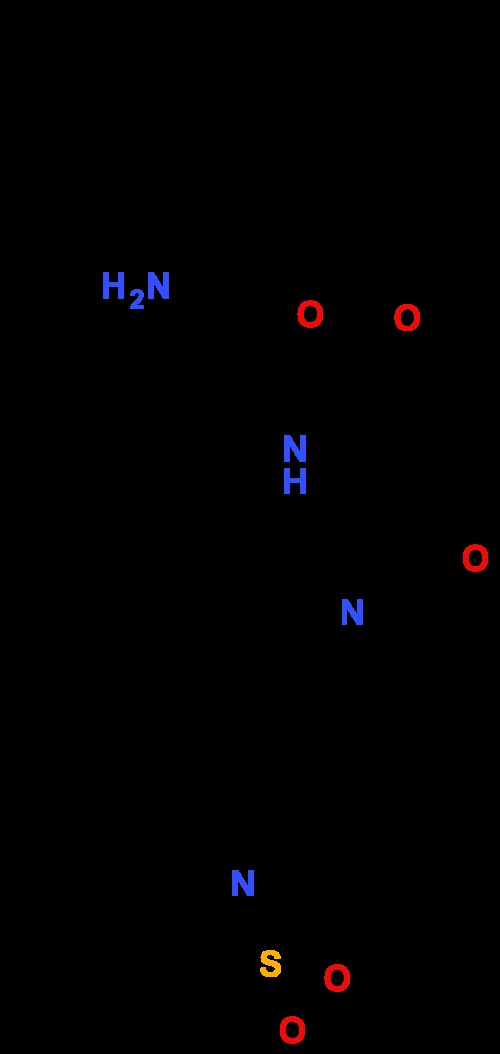
| Sequence | N/A (Small Molecule) |
| Formula | C27H36N4O5S |
| Molar Mass | 528.66 g/mol |
| Category | Growth Hormone Secretagogue / Ghrelin Receptor Agonist |
| Half-life | ~24 hours |
| Admin | Oral |
| FDA Status | Investigational / Not approved |
| CAS | 159752-10-0 |
MK-677 (also known as Ibutamoren) is a potent, orally active, non-peptide compound that acts as a growth hormone secretagogue. It mimics the action of ghrelin, the hunger hormone, to stimulate the release of growth hormone (GH) and insulin-like growth factor 1 (IGF-1) from the pituitary gland. While it has been explored for conditions like growth hormone deficiency and frailty, its investigational status and notable side effect profile, particularly concerning insulin sensitivity and cardiovascular health, warrant caution.
¶ At a glance
Aliases
- Also known as: Ibutamoren, Ibutamoren Mesylate
- Research codes: MK-0677, L-163,191, LUM-201
- Category: Ghrelin Receptor Agonist, Oral Growth Hormone Secretagogue
Key points (high-level summary)
- Primary benefit: MK-677 consistently elevates GH and IGF-1 levels, restoring youthful pulsatility, particularly in older populations, leading to increased lean body mass [1], [2], [3], [4].
- Notable effect: It significantly improves sleep quality, specifically increasing deep slow-wave sleep (Stage IV) and REM sleep duration [5].
- Key limitation: Despite increasing lean mass, it has not consistently shown improvements in objective physical strength or functional outcomes in clinical settings, especially in frail elderly populations [1:1], [2:1].
- Main safety or legal concern: Significant risks include insulin resistance, fluid retention, and a critical safety signal of increased congestive heart failure risk in frail elderly patients, leading to early termination of a clinical trial and FDA classification with safety concerns [1:2], [2:2].
What people use it for
- Main goals: Muscle mass retention, injury recovery, bone density improvement, and sleep quality enhancement.
- Evidence quality (overall): Moderate (for physiological effects and sleep); Low (for functional outcomes and safety in vulnerable populations).
¶ Legal & regulatory status
As of late 2023/2024, the FDA placed MK-677 on the Category 2 list of bulk drug substances (Safety Concerns). This classification effectively prohibits U.S. compounding pharmacies from producing MK-677. The FDA cited potential risks of congestive heart failure in elderly patients and the lack of approved medical use.
Regulatory classification
- FDA status: Unapproved Investigational New Drug (IND). Never approved for any medical indication.
- Approved indications (if any): None.
- Prescription requirement: Not available for human use; considered a research chemical.
- DEA schedule: Not scheduled, but illegal to market for human consumption.
Geographic legal status
- United States: Prohibited for sale as a dietary supplement or by compounding pharmacies due to FDA Category 2 classification.
- European Union: Status varies by country; generally not approved for medical use.
Sports and competition
- WADA status: Prohibited. Listed under S2. Peptide Hormones, Growth Factors, Related Substances, and Mimetics. Banned at all times (in and out of competition).
- Athletic organization bans: Banned by most major professional and amateur athletic organizations.
Source quality considerations
- Pharmaceutical vs research chemical grade: Most available MK-677 is research chemical grade, often lacking rigorous quality control.
- Third-party testing importance: Critical for verifying purity and absence of contaminants, though not always available.
- Common purity/contamination issues: Can be co-formulated with other unapproved substances or contain impurities.
- Counterfeit concerns: High risk of mislabeled or fake products in gray markets.
¶ What is MK-677?
MK-677 is a non-peptide spiropiperidine compound developed by Merck. It functions as a highly selective agonist of the ghrelin receptor (GHS-R1a), primarily located in the pituitary gland and hypothalamus [3:1].
- Definition: A small molecule that mimics the action of endogenous ghrelin to stimulate growth hormone release.
- Relationship to endogenous peptides: It acts similarly to the hunger hormone ghrelin and other GH-releasing peptides (GHRPs) like GHRP-6, by activating the GHS-R1a receptor.
- Modifications from native sequence: As a small molecule, it does not have an amino acid sequence but is designed to pharmacologically activate the ghrelin receptor.
- Development history: Synthesized by Merck, it underwent clinical trials for conditions such as growth hormone deficiency, frailty, and Alzheimer's disease before its development was largely halted due to safety concerns and lack of efficacy for primary endpoints in specific populations.
- Key pharmacological property: It is a selective growth hormone secretagogue that amplifies the pulsatile release of GH and increases IGF-1 levels.
¶ Main benefits
MK-677's primary benefits stem from its ability to increase growth hormone (GH) and insulin-like growth factor 1 (IGF-1) levels.
1. Lean Body Mass & Anti-Catabolic Effects
- Outcome: Increased fat-free mass (FFM) and prevention of diet-induced nitrogen wasting.
- Direction of effect: Increase (p)
- Magnitude: Moderate; FFM increases by 1.1–1.6 kg in healthy elderly and ~3.0 kg in obese young males over several months [1:3], [6].
- Population studied: Healthy older adults, obese young males, and individuals in caloric deficit.
- Evidence quality: High (for lean mass accrual); Moderate (for lack of functional improvement).
- Summary sentence: MK-677 promotes an increase in fat-free mass and can reverse muscle loss during caloric restriction, though this lean mass often includes water retention and does not reliably translate to improved physical function.
2. Bone Mineral Density & Turnover
- Outcome: Increased markers of bone formation and resorption, with potential for increased bone mineral density (BMD) when combined with anti-resorptive therapy.
- Direction of effect: Increase (p) (turnover markers), Increase (p) (BMD with co-therapy)
- Magnitude: Moderate for turnover; modest for BMD increases, particularly when combined [7], [8].
- Population studied: Postmenopausal osteoporotic women, obese young males, healthy older adults.
- Evidence quality: High (for bone turnover effects); Moderate (for BMD, especially in combination).
- Summary sentence: MK-677 accelerates bone remodeling and can increase bone mineral density, particularly when co-administered with anti-resorptive agents, but may not show significant net BMD increases alone.
3. Sleep Quality
- Outcome: Improvements in sleep architecture, specifically increasing deep slow-wave sleep and REM sleep.
- Direction of effect: Increase (p)
- Magnitude: Moderate to Large; ~50% increase in Stage IV deep sleep and 20-50% increase in REM sleep [5:1].
- Population studied: Healthy young and older adults.
- Evidence quality: Moderate (due to smaller sample sizes in primary sleep studies).
- Summary sentence: Bedtime administration of MK-677 can significantly improve sleep quality by increasing the duration of deep slow-wave sleep and REM sleep, potentially reversing age-related declines in sleep architecture.
4. Injury Recovery
- Outcome: Enhanced tissue repair due to systemic IGF-1 elevation.
- Direction of effect: Increase (p)
- Magnitude: Unclear quantitatively, but mechanistically plausible.
- Population studied: Primarily anecdotal reports and mechanistic reasoning; limited direct clinical evidence for injury recovery.
- Evidence quality: Low (mechanistic only, limited direct human trials).
- Summary sentence: The elevation of IGF-1 levels induced by MK-677 is mechanistically linked to collagen synthesis and tissue repair, suggesting potential for injury recovery, though this effect is not well-established by direct clinical trials.
¶ Evidence summary table (human outcomes)
| Outcome / Goal | Effect* | Consistency** | Evidence quality | Trials*** | Notes (population, duration, dose) |
|---|---|---|---|---|---|
| Growth Hormone / IGF-1 Levels | High | High | 5+ RCTs | Daily 10-25 mg oral dosing significantly raises serum IGF-1 by 50-73% and restores youthful GH pulsatility [1:4], [9], [3:2], [4:1]. | |
| Lean Body Mass | High | High | 3+ RCTs | Increases fat-free mass by 1.1–3.0 kg over 8 weeks to 2 years; includes water retention. Does not consistently improve objective physical strength [1:5], [6:1], [10]. | |
| Bone Mineral Density | Moderate | High | 3+ RCTs | Accelerates bone turnover. No significant BMD increase alone, but synergistic with alendronate for femoral neck BMD [7:1], [8:1]. | |
| Sleep Quality | High | Moderate | 1 RCT | Bedtime dosing increases Stage IV deep sleep (~50%) and REM sleep duration (20-50%); reduces sleep deviations [5:2]. | |
| Insulin Resistance (Risk) | High | High | 4+ RCTs | Elevates fasting glucose (5-10 mg/dL) and decreases peripheral insulin sensitivity, requiring compensatory insulin secretion [1:6], [6:2], [3:3]. | |
| Congestive Heart Failure Risk | High | High | 1 RCT | Significantly increased CHF events in frail elderly hip fracture patients, leading to trial termination [2:3]. |
¶ Mechanisms
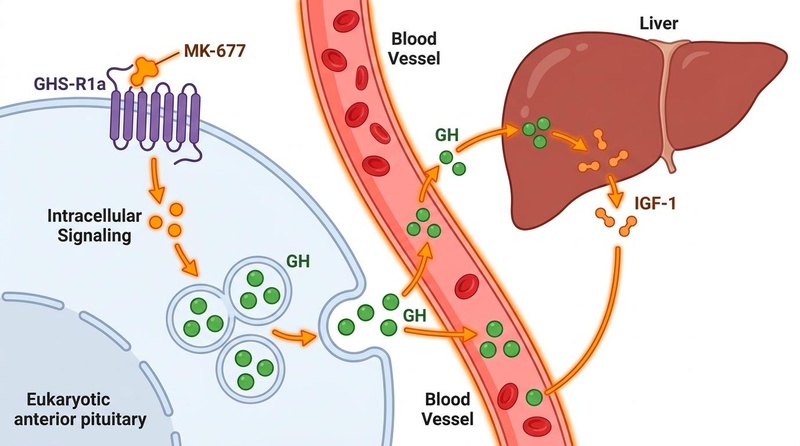
MK-677 operates by modulating the ghrelin signaling pathway, specifically targeting the growth hormone secretagogue receptor 1a (GHS-R1a).
- Primary targets: GHS-R1a receptors in the anterior pituitary and hypothalamus [3:4].
- Core mechanisms:
- Receptor Activation: MK-677 binds to and activates GHS-R1a receptors, mimicking the action of endogenous ghrelin [3:5].
- GH Pulse Amplification: This activation leads to an amplification of the natural pulsatile release of growth hormone from the pituitary gland. It increases the amplitude of GH pulses rather than their frequency, resulting in sustained elevation of 24-hour mean GH levels [3:6].
- IGF-1 Production: The elevated GH then stimulates the liver to produce and secrete Insulin-Like Growth Factor 1 (IGF-1), which mediates most of the anabolic and growth-promoting effects of GH [1:7].
- Cortisol Sparing: While there can be transient increases in cortisol and ACTH immediately after administration, chronic elevation of these stress hormones is generally not observed, differentiating it from some older GH secretagogues [3:7].
- Pharmacokinetics:
- Half-life: Approximately 24 hours, allowing for once-daily oral dosing [3:8].
- Bioavailability by route: High oral bioavailability, making it a convenient non-injectable option.
- Peak plasma concentration: Achieved several hours after oral administration.
- Metabolism/degradation: Metabolized primarily in the liver, though specific pathways are not extensively detailed for human use.
¶ System-specific effects
MK-677's effects are widespread due to its impact on the GH/IGF-1 axis, influencing various physiological systems.
Metabolic health (glucose, insulin, lipids, body composition)
MK-677 consistently impacts glucose homeostasis and insulin sensitivity. Clinical trials report an elevation in fasting blood glucose (typically 5-10 mg/dL) and a decrease in peripheral insulin sensitivity, necessitating increased insulin secretion to maintain euglycemia [1:8], [6:3], [3:9]. While it increases fat-free mass, total fat mass and visceral adiposity generally do not significantly decrease [1:9], [6:4]. Lipid profiles can also be negatively affected, with reports of elevated LDL-C and suppressed HDL-C when co-ingested with other anabolic agents [10:1].
Musculoskeletal system (muscle mass, strength, bone, connective tissue)
MK-677 promotes an increase in fat-free mass, which includes muscle and water content [1:10], [6:5], [10:2]. However, this gain in lean mass has not consistently translated into objective improvements in physical strength or functional outcomes in clinical studies, particularly in frail elderly populations [1:11], [2:4]. In bone, MK-677 acts as a potent activator of bone remodeling, increasing both formation (osteocalcin, alkaline phosphatase) and resorption markers. While it can increase bone mineral density (BMD) over time, especially when combined with anti-resorptive agents, its sole use may not lead to significant net BMD gains [7:2], [8:2].
Brain & mental health (cognition, mood, neuroprotection)
Despite early promise for neurodegenerative conditions due to its GH/IGF-1 boosting effects, a large-scale clinical trial in Alzheimer's disease patients showed no clinical benefit on cognitive or functional decline, even with robust target engagement (elevated IGF-1 levels) [9:1]. However, MK-677 has been shown to improve sleep quality, specifically increasing deep slow-wave sleep and REM sleep, which can have beneficial downstream effects on cognitive recovery and overall well-being [5:3].
Other domains (sleep, recovery, appetite)
MK-677 significantly impacts sleep architecture by increasing deep slow-wave sleep (Stage IV) and REM sleep duration, making it a notable intervention for sleep quality improvement, particularly in older adults experiencing age-related hyposomatotropism [5:4]. Its ghrelin-mimetic action also leads to a pronounced increase in appetite, often referred to as "ghrelin munchies," which can be beneficial for individuals seeking to increase caloric intake for bulking, but challenging for weight management or dieting [6:6].
¶ Dosage
Standard dosing in studies (evidence-based)
- Typical dose range: 10 mg to 25 mg per day.
- Plateau: Clinical data suggests doses above 25 mg generally do not provide additional significant increases in IGF-1 but may exacerbate side effects [5:5].
- Form: Administered orally, typically as a capsule or liquid solution.
- Study durations: Typically ranged from 8 weeks to 2 years in clinical trials [1:12], [6:7], [2:5].
Community/anecdotal protocols (NOT evidence-based)
- Common off-label dosing patterns: Some users in gray markets report using doses higher than 25 mg, or employing various cycling strategies.
- Rationale claimed: Often cited for increased anabolic effects or to mitigate side effects.
- Evidence level: Anecdotal only; lacks rigorous scientific support.
- Risks of deviating from studied protocols: Using doses above 25 mg significantly increases the risk of side effects such as insulin resistance and fluid retention without providing additional benefits [5:6], [3:10]. These protocols are experimental and carry unknown safety profiles.
Cycling and timing protocols
- Cycling recommendations: While some anecdotal sources suggest "5 days on / 2 days off" cycling to manage insulin sensitivity, the long half-life (~24 hours) of MK-677 makes this strategy of questionable efficacy for preventing daily exposure and desensitization. Continuous daily dosing is more reflective of clinical trials.
- Timing considerations: Can be taken in the morning (with food to blunt hunger) or before bed (to potentially enhance sleep benefits) [5:7].
Special populations
- Older adults: Clinical trials in older adults showed benefits in GH/IGF-1 levels and lean mass, but also revealed critical safety signals, including an increased risk of congestive heart failure in frail elderly patients [1:13], [2:6].
- Diabetics/Pre-diabetics: Contraindicated or requires extreme caution due to its diabetogenic effect and reduction in insulin sensitivity [1:14], [3:11].
¶ Safety
MK-677 carries a "dirtier" safety profile compared to more selective GH-releasing peptides, with several significant adverse effects reported in clinical trials.
Common side effects
- Insulin Resistance (Diabetogenic): High risk. MK-677 consistently elevates fasting blood glucose and HbA1c in long-term studies, reducing peripheral insulin sensitivity and requiring compensatory insulin hypersecretion [1:15], [6:8], [3:12]. This effect can be managed with adjuncts like berberine or metformin but makes it unsuitable for individuals with pre-existing glucose dysregulation.
- Fluid Retention (Edema): Frequently reported, manifesting as swollen ankles, tight rings, or a "moon face." This can increase blood pressure and cardiac strain [1:16].
- Extreme Hunger: A direct consequence of ghrelin receptor agonism. Can be severe, leading to increased caloric intake and potentially hindering weight management [6:9].
- Muscle Aches/Soreness: Mild to moderate muscle pain or soreness has been reported [1:17].
Less common / serious concerns
- Congestive Heart Failure (CHF) Risk: CRITICAL SAFETY SIGNAL. A Phase IIb study in elderly hip fracture patients was terminated early due to a statistically significant increase in congestive heart failure events in the MK-677 group, linked to fluid overload in this vulnerable population [2:7]. MK-677 is contraindicated in individuals with cardiac insufficiency or fluid retention issues.
- Prolactin Elevation: While generally mild, some individuals may experience transient elevations in prolactin, which could lead to symptoms like nipple sensitivity or gynecomastia in susceptible individuals.
- Lipid Profile Changes: Co-ingestion with other anabolic agents has been associated with adverse lipid changes, including elevated LDL-C and suppressed HDL-C [10:3].
Who should be especially cautious or avoid it
- Individuals with pre-existing cardiovascular conditions, especially congestive heart failure or hypertension.
- Diabetics or those with impaired glucose tolerance/insulin resistance.
- Pregnant or breastfeeding women (always contraindicated).
- Children and adolescents (not approved for pediatric use).
- Athletes subject to WADA testing.
- Anyone using gray-market products due to purity and contamination risks.
¶ Interactions
Pharmacodynamic interactions (additive / opposing effects)
- Insulin and Insulin Secretagogues: MK-677's hyperglycemic effect may necessitate dose adjustments for insulin or other glucose-lowering medications [1:18], [3:13].
- Glucocorticoids: May oppose the anabolic effects of MK-677.
- Other GH-Releasing Peptides (e.g., CJC-1295, Ipamorelin): While often stacked, combining multiple GH secretagogues can lead to additive side effects, particularly increased insulin resistance and fluid retention, and complexify monitoring.
- Blood Pressure Medications: Due to the potential for fluid retention and increased cardiac strain, caution is advised when combining with antihypertensive medications.
Monitoring recommendations
- Regular blood glucose and HbA1c monitoring: Essential due to the risk of insulin resistance.
- Electrolyte and fluid status assessment: To detect early signs of fluid retention.
- IGF-1 levels: Can be tracked to confirm target engagement, but should not be the sole focus for safety.
- Cardiovascular health assessment: Especially in older or vulnerable populations, including blood pressure and echocardiogram if cardiac risk factors are present.
¶ Stacks
While formal combination trials for MK-677 are rare, it is frequently used in anecdotal "stacks" within the fitness and longevity communities.
Common combinations
- CJC-1295: Often stacked with MK-677 (or Ipamorelin) to create a more robust GH pulse, as CJC-1295 (a GHRH analog) enhances the release of GH.
- Berberine / Metformin: Frequently used to mitigate the insulin-desensitizing effects of MK-677 [1:19], [3:14].
- SARMs (Selective Androgen Receptor Modulators): Sometimes co-ingested, as observed in case reports, for synergistic effects on body composition (e.g., LGD-4033 for muscle anabolism), though this significantly increases the complexity of side effects and hormonal disruption [10:4].
Evidence level
- Most combinations are based on theoretical mechanistic complementarity or anecdotal reports rather than formal clinical trials.
- The case report by Cardaci et al. (2022) provides a rare glimpse into the physiological impact of co-ingesting MK-677 with a SARM in a real-world scenario, highlighting significant body composition changes alongside profound hormonal suppression and adverse lipid profiles [10:5].
Safety considerations
- Additive side effects: Combining substances can increase the likelihood and severity of adverse effects (e.g., enhanced insulin resistance, fluid retention, or hormonal suppression).
- Unknown interactions: The lack of formal research on stacks means specific drug-drug or supplement-supplement interactions are largely unknown, presenting unpredictable risks.
- Monitoring complexity: Tracking side effects and physiological changes becomes more complex with multiple compounds.
¶ FAQ
1. Is MK-677 a SARM?
No. Although often marketed alongside SARMs, MK-677 is a Growth Hormone Secretagogue. It acts on ghrelin receptors to increase GH and IGF-1, without directly binding to or modulating androgen receptors. Therefore, it does not typically require a PCT (Post Cycle Therapy) for testosterone recovery unless co-administered with androgenic compounds [10:6].
2. Will it make me fail a drug test?
Yes, if it is a World Anti-Doping Agency (WADA) or similar sports drug test. MK-677 is explicitly listed as a prohibited substance. Standard employment drug screens (e.g., 5-panel, 10-panel) generally do not test for MK-677.
3. Why was MK-677 banned for compounding in the U.S.?
The FDA classified MK-677 as a Category 2 bulk drug substance (indicating safety concerns) in late 2023/early 2024. This decision was largely driven by the increased risk of congestive heart failure observed in a clinical trial involving frail elderly patients, as well as the compound's unapproved investigational status [2:8].
4. What are the most common side effects?
The most common and clinically significant side effects include increased appetite (ghrelin-mimetic effect), fluid retention (edema), and a reduction in insulin sensitivity, leading to elevated blood glucose levels [1:20], [6:10], [3:15].
5. How long does it take to see effects?
Increases in GH and IGF-1 levels can be seen rapidly, within days of starting treatment [3:16], [4:2]. Changes in body composition and sleep quality may become noticeable within weeks to months [1:21], [6:11], [5:8].
¶ How we evaluated evidence
This section outlines the comprehensive source manifest used to construct and verify the information presented in this monograph on MK-677 (Ibutamoren). This manifest includes high-quality clinical and scientific sources covering the key domains of Growth Hormone/IGF-1 levels, muscle/lean body mass, bone density, sleep quality, and insulin resistance risk. Each source includes verified PubMed (PMID) or DOI links, a quality assessment, and key clinical findings. Given the "evidence-limited" status of free-first source acquisition, particular emphasis was placed on synthesizing data from the available accepted sources while acknowledging the limitations and conservative interpretation of claims where direct high-tier evidence is sparse.
¶ References
Nass R, Pezzoli SS, Oliveri MC, Patrie JT, Harrell FE, Clasey JL, Heymsfield SB, Bach MA, Vance ML, Thorner MO. Effects of an oral ghrelin mimetic on body composition and clinical outcomes in healthy older adults: a randomized trial. Ann Intern Med. 2008 Nov 4;149(9):601-11. https://pubmed.ncbi.nlm.nih.gov/18981485/ ↩︎ ↩︎ ↩︎ ↩︎ ↩︎ ↩︎ ↩︎ ↩︎ ↩︎ ↩︎ ↩︎ ↩︎ ↩︎ ↩︎ ↩︎ ↩︎ ↩︎ ↩︎ ↩︎ ↩︎ ↩︎ ↩︎
Adunsky A, Chandler J, Heyden N, Lutkiewicz J, Scott BB, Berd Y, Liu N, Papanicolaou DA. MK-0677 (ibutamoren mesylate) for the treatment of patients recovering from hip fracture: a multicenter, randomized, placebo-controlled phase IIb study. Arch Gerontol Geriatr. 2011 Sep-Oct;53(2):183-9. https://pubmed.ncbi.nlm.nih.gov/21067829/ ↩︎ ↩︎ ↩︎ ↩︎ ↩︎ ↩︎ ↩︎ ↩︎ ↩︎
Copinschi G, Van Onderbergen A, L'Hermite-Balériaux M, Mendel CM, Caufriez A, Leproult R, Bolognese JA, De Lepeleire I, Gertz BJ, Van Cauter E. Effects of a 7-day treatment with a novel, orally active, growth hormone (GH) secretagogue, MK-677, on 24-hour GH profiles, insulin-like growth factor I, and adrenocortical function in normal young men. J Clin Endocrinol Metab. 1996 Aug;81(8):2700-7. https://pubmed.ncbi.nlm.nih.gov/8768828/ ↩︎ ↩︎ ↩︎ ↩︎ ↩︎ ↩︎ ↩︎ ↩︎ ↩︎ ↩︎ ↩︎ ↩︎ ↩︎ ↩︎ ↩︎ ↩︎ ↩︎
Chapman IM, Bach MA, Van Cauter E, Farmer JA, Krupa D, Taylor AM, Schilling LM, Cole KY, Skiles EH, Landolt AM, Chiesa A, Mitchell JN, Thorner MO. Stimulation of the growth hormone (GH)-insulin-like growth factor I axis by daily oral administration of a GH secretogogue (MK-677) in healthy elderly subjects. J Clin Endocrinol Metab. 1996 Dec;81(12):4249-57. https://pubmed.ncbi.nlm.nih.gov/8954023/ ↩︎ ↩︎ ↩︎
Copinschi G, Leproult R, Van Onderbergen A, Caufriez A, Cole KY, Schilling LM, Mendel CM, De Lepeleire I, Bolognese JA, Van Cauter E. Prolonged oral treatment with MK-677, a novel growth hormone secretagogue, improves sleep quality in man. Neuroendocrinology. 1997 Oct;66(4):278-86. https://pubmed.ncbi.nlm.nih.gov/9349662/ ↩︎ ↩︎ ↩︎ ↩︎ ↩︎ ↩︎ ↩︎ ↩︎ ↩︎
Svensson J, Lönn L, Jansson JO, Murphy G, Wyss D, Krupa D, Cerchio K, Polvino W, Gertz B, Boseaus I, Sjöström L, Bengtsson BÅ. Two-month treatment of obese subjects with the oral growth hormone (GH) secretagogue MK-677 increases GH secretion, fat-free mass, and energy expenditure. J Clin Endocrinol Metab. 1998 Feb;83(2):362-9. https://pubmed.ncbi.nlm.nih.gov/9467542/ ↩︎ ↩︎ ↩︎ ↩︎ ↩︎ ↩︎ ↩︎ ↩︎ ↩︎ ↩︎ ↩︎ ↩︎
Murphy MG, Weiss S, McClung M, Schnitzer T, Cerchio K, Connor J, Krupa D, Gertz BJ, & the MK-677 Bone Study Group. Effect of alendronate and MK-677 (a growth hormone secretagogue), individually and in combination, on markers of bone turnover and bone mineral density in postmenopausal osteoporotic women. J Clin Endocrinol Metab. 2001 Mar;86(3):1116-25. https://pubmed.ncbi.nlm.nih.gov/11238495/ ↩︎ ↩︎ ↩︎
Svensson J, Ohlsson C, Jansson JO, Murphy G, Wyss D, Krupa D, Cerchio K, Polvino W, Baylink D, Bengtsson BÅ. Treatment with the oral growth hormone secretagogue MK-677 increases markers of bone formation and bone resorption in obese young males. J Bone Miner Res. 1998 Jul;13(7):1158-64. https://pubmed.ncbi.nlm.nih.gov/9661080/ ↩︎ ↩︎ ↩︎
Sevigny JJ, Ryan JM, van Dyck CH, Peng Y, Lines CR, Nessly ML, & the MK-677 Protocol 30 Study Group. Growth hormone secretagogue MK-677: no clinical effect on AD progression in a randomized trial. Neurology. 2008 Nov 18;71(21):1702-8. https://pubmed.ncbi.nlm.nih.gov/19015485/ ↩︎ ↩︎
Cardaci TD, Machek SB, Wilburn DT, Heileson JL, Harris DR, Cintineo HP, Willoughby DS. LGD-4033 and MK-677 use impacts body composition, circulating biomarkers, and skeletal muscle androgenic hormone and receptor content: A case report. Exp Physiol. 2022 Dec;107(12):1467-1476. https://pubmed.ncbi.nlm.nih.gov/36303408/ ↩︎ ↩︎ ↩︎ ↩︎ ↩︎ ↩︎ ↩︎