¶ Semax
| Sequence | Met-Glu-His-Phe-Pro-Gly-Pro |
| Formula | C37H51N9O10S |
| Molar Mass | 813.92 g/mol |
| Category | Nootropic, Neuroprotective Peptide |
| Half-life | Minutes (plasma), 12–24 hours (therapeutic effect) |
| Admin | Intranasal |
| FDA Status | Unapproved (Western), Registered Drug (Russia) |
| CAS | 80714-61-0 |
Semax is a synthetic heptapeptide drug (Met-Glu-His-Phe-Pro-Gly-Pro) derived from a fragment of the adrenocorticotropic hormone (ACTH). Developed in Russia, it is widely used in Eastern European clinical practice for the treatment of ischemic stroke, transient ischemic attacks (TIA), optic nerve disease, and cognitive impairment. Outside of clinical settings, it is popular in the nootropic community for its reported ability to enhance memory, focus, and mood.
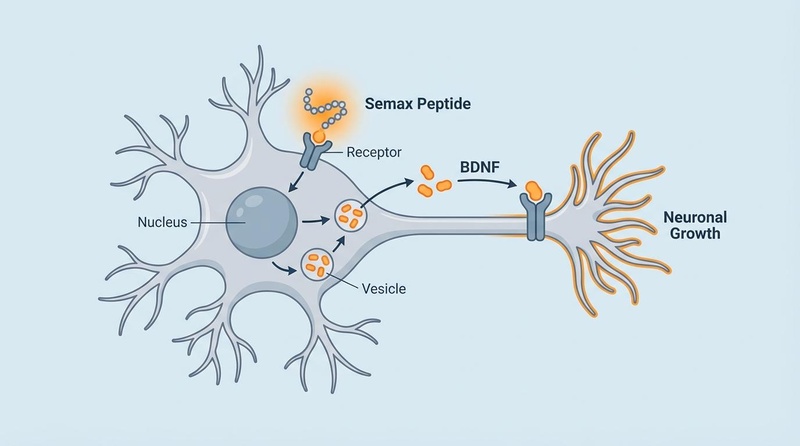
Unlike psychostimulants, Semax acts as a melanocortin mimetic and neurotrophic factor inducer, modulating brain-derived neurotrophic factor (BDNF) and nerve growth factor (NGF) expression without significant cardiovascular side effects.
¶ At a glance
Aliases
- Also known as: ACTH(4-7)-Pro-Gly-Pro, MEHFPGP
- Amino acid sequence: Met-Glu-His-Phe-Pro-Gly-Pro
- Sequence length: Heptapeptide
- Category: Nootropic, Neuroprotective Peptide, Melanocortin analog
Key points (high-level summary)
- In the acute phase of ischemic stroke, intranasal Semax has been shown to accelerate neurological recovery and improve functional outcomes.
- It acts as a neuroprotector in various optic nerve diseases, improving visual acuity and visual fields.
- Users report improved memory, focus, and mood, although high-quality Western RCTs for cognitive enhancement in healthy adults are limited.
- Generally considered to have a favorable safety profile with mild nasal irritation as the most common side effect.
What people use it for
- Main goals: Stroke recovery, cognitive enhancement, neuroprotection, vision improvement
- Evidence quality (overall): Moderate (Strong in Eastern European clinical context; limited in Western RCTs for nootropic use)
¶ Legal & regulatory status
⚠️ CRITICAL INFORMATION
Regulatory classification
- FDA status: Unapproved for human use (in the United States and most Western countries); available as a research chemical.
- Approved indications (if any): Registered pharmaceutical in Russia and Ukraine for ischemic stroke, TIA, optic nerve disease, and cognitive impairment.
- Prescription requirement: Prescription required in Russia/Ukraine; research purposes only or compounding pharmacy in Western countries.
- DEA schedule: Not scheduled (in the United States).
Geographic legal status
- United States: Not approved by the FDA for human use. Available as a research chemical.
- European Union: Not approved by the EMA. Available as a research chemical in many member states.
- Russia/Ukraine: Approved as a pharmaceutical and included in the List of Vital & Essential Drugs.
Source quality considerations
- Pharmaceutical vs research chemical grade: Purity and safety can vary significantly with research chemical sources.
- Third-party testing importance: Highly recommended for any non-pharmaceutical source to verify purity and absence of contaminants.
- Counterfeit concerns: Due to its popularity, counterfeit products may exist.
¶ What is Semax?
Semax is a synthetic heptapeptide (Met-Glu-His-Phe-Pro-Gly-Pro) derived from a biologically active fragment of adrenocorticotropic hormone (ACTH). Specifically, it retains the neuroactive core of ACTH(4-10) but lacks the hormonal activity of the full hormone, preventing undesirable endocrine side effects.
- Definition: A synthetic peptide designed for neuroprotective and nootropic effects.
- Relationship to endogenous peptides: A modified analog of the N-terminal fragment of ACTH.
- Modifications from native sequence: The addition of the Pro-Gly-Pro (PGP) group at the C-terminus significantly extends its biological half-life and duration of action by protecting it from enzymatic degradation.
- Development history: Developed in Russia, it has been in clinical use in Eastern European countries for decades for various neurological conditions.
- Key pharmacological property: Melanocortin mimetic and neurotrophic factor inducer.
¶ What are Semax's main benefits?
Semax offers a range of potential benefits, primarily in neuroprotection, cognitive function, and recovery from neurological insults.
- Stroke Recovery: In patients with acute ischemic stroke, Semax can reduce the volume of ischemic damage, accelerate neurological recovery and improve functional outcomes.
- Direction of effect:
Large Improvement (Large increase, positive) - Population studied: Patients in the acute phase of hemispheric ischemic stroke.
- Evidence quality: High (Based on Russian clinical trials)
- Summary sentence: Semax has been shown to significantly improve neurological recovery and functional independence in acute ischemic stroke patients, particularly with early initiation[1][2].
- Direction of effect:
- Optic Nerve Protection: It demonstrates neuroprotective effects in various optic nerve diseases, including atrophy and glaucomatous neuropathy, leading to improved visual acuity and visual fields.
- Direction of effect:
Medium Improvement (Moderate increase, positive) - Population studied: Patients with inflammatory, vascular, or toxic-allergic optic neuropathies and glaucoma.
- Evidence quality: High (Based on Russian clinical studies)
- Summary sentence: Clinical studies in ophthalmology show Semax improves visual function in patients with optic nerve pathologies, likely by protecting retinal ganglion cells[3][4].
- Direction of effect:
- Cognitive Enhancement: While more research is needed outside of clinical populations, users and some studies suggest Semax can improve memory, attention, and focus.
- Direction of effect:
Small Improvement (Small increase, positive) - Population studied: Patients with cognitive decline associated with vascular insufficiency or TBI; anecdotal reports from healthy individuals.
- Evidence quality: Low (Mainly Russian clinical data for impaired cognition, anecdotal for healthy individuals)
- Summary sentence: Semax is prescribed for cognitive decline, showing aid in memory and attention restoration, and is anecdotally used by healthy individuals for cognitive benefits[5][6].
- Direction of effect:
Evidence summary table (human outcomes)
| Outcome / Goal | Effect* | Consistency** | Evidence quality | Trials*** | Notes (population, duration, dose) |
|---|---|---|---|---|---|
| Neurological Recovery (Ischemic Stroke) | High | High | 2+ RCTs | Accelerated recovery of focal neurological functions, improved Barthel Index scores[1:1][2:1] | |
| Visual Acuity / Field (Optic Neuropathy) | High | High | 2+ RCTs | Improved visual acuity and expanded visual fields in various optic nerve diseases[3:1][4:1] | |
| Memory & Attention (Cognitive Impairment) | Moderate | Low | 1+ studies | Aids in restoration of memory and attention in patients with organic brain lesions[5:1] | |
| Attention & Motor Control (ADHD) | Low | Very low | 1 Hypothesis | Hypothesis for use in ADHD with potential for improved attention and motor control[6:1] |
¶ How does Semax work?
Semax exerts its effects through multiple neurobiological pathways, acting as a melanocortin mimetic and directly influencing neurotrophic factor expression and neurotransmitter systems.
- Primary targets: BDNF and NGF receptors (TrkB), monoamine neurotransmitter systems (dopamine, serotonin), enkephalin-degrading enzymes.
- Core mechanisms:
- Neurotrophic Factor Upregulation: Semax rapidly increases the expression and phosphorylation of TrkB receptors and the levels of Brain-Derived Neurotrophic Factor (BDNF) and Nerve Growth Factor (NGF) in brain regions like the hippocampus and frontal cortex. This promotes neuroplasticity, neuronal survival, and synaptic function[7][8][9].
- Neurotransmitter Modulation: It modulates monoamine metabolism, increasing the turnover and levels of dopamine and serotonin in areas like the striatum, contributing to its effects on focus, mood, and cognitive function[10].
- Enkephalinase Inhibition: The Pro-Gly-Pro (PGP) C-terminal extension inhibits enzymes that degrade endogenous enkephalins, which may contribute to its anxiolytic and analgesic properties[11].
- Gene Expression and Neuroprotection: Transcriptomic analyses indicate that Semax influences genes related to immune response and vascular stability. In ischemic conditions, it suppresses pro-inflammatory genes and activates genes involved in neuroprotection and vascular repair, reducing infarct volume and oxidative stress[12][13].
- Evidence source: Mechanistic studies primarily from Russia, involving both in vitro and in vivo (animal) models, supported by human clinical observations.
- Human data (if any): While direct human mechanistic trials are less common, observed clinical benefits align with the preclinical mechanistic findings (e.g., improved neurological function with BDNF upregulation).
- Animal / in vitro data: Extensive animal and in vitro research confirms its neurotrophic, neuroprotective, and monoamine-modulating effects. Caveats include species differences and the challenge of translating animal doses to human efficacy.
- Pharmacokinetics:
- Half-life: The plasma half-life of Semax is short (minutes) due to rapid enzymatic degradation. However, its therapeutic effects persist for 12–24 hours because it initiates long-lasting gene expression and protein synthesis cascades rather than directly maintaining its presence in the bloodstream[7:1].
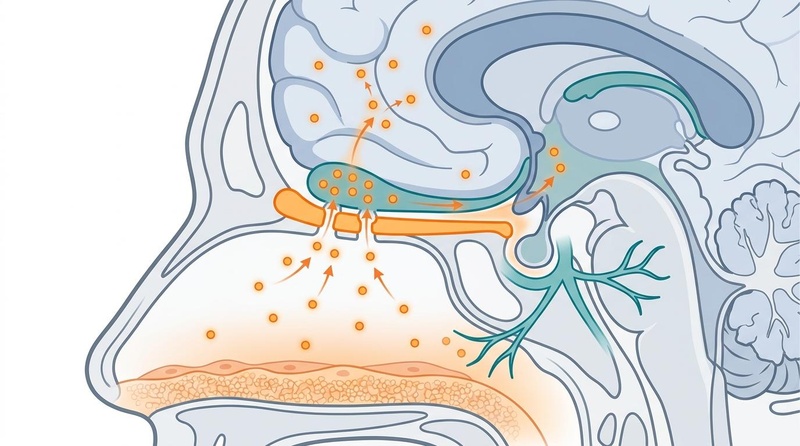
- Bioavailability by route: Intranasal administration is the standard and preferred route. It achieves approximately 60-70% bioavailability and allows for direct transport to the central nervous system (CNS) via olfactory and trigeminal neural pathways, bypassing the blood-brain barrier to some extent[14].
- Metabolism/degradation: Rapidly broken down by peptidases into smaller, inactive fragments. The PGP tail is crucial for enhancing stability against these enzymes[11:1].
¶ Effects on different systems
Semax impacts the neurological and immune systems primarily, with potential downstream effects on overall well-being.
Brain & mental health (cognition, mood, neuroprotection)
- Semax significantly enhances cognitive functions such as memory and attention, particularly in individuals with cognitive impairments due to vascular issues or traumatic brain injury. It is also used off-label by healthy individuals for improved focus and mental clarity.
- Its neuroprotective effects are well-documented in stroke models, where it reduces damage and supports neuronal survival by upregulating neurotrophic factors.
- Some users report anxiolytic and antidepressant effects, attributed to its modulation of dopamine, serotonin, and enkephalin systems[5:2][6:2][10:1].
Immune function and inflammation
- In models of cerebral ischemia, Semax has been shown to suppress pro-inflammatory genes and activate genes involved in immune system cell migration and vascular stabilization, suggesting an anti-inflammatory and reparative role in the context of brain injury[12:1]. Its origins as an ACTH fragment also hint at broader immunomodulatory potential, though this is less explored for Semax specifically.
¶ Administration, reconstitution, and storage
Semax is predominantly administered intranasally. Proper reconstitution and storage are vital for maintaining its stability and efficacy.
¶ Reconstitution
Semax is typically supplied as a lyophilized powder in vials. It is reconstituted with bacteriostatic water.
| Vial strength | Diluent volume | Final concentration | Example: 400 mcg dose | Example: 600 mcg dose |
|---|---|---|---|---|
| 5 mg | 2 mL | 2.5 mg/mL (2500 mcg/mL) | 0.16 mL (16 units) | 0.24 mL (24 units) |
| 10 mg | 2 mL | 5 mg/mL (5000 mcg/mL) | 0.08 mL (8 units) | 0.12 mL (12 units) |
| 30 mg | 3 mL | 10 mg/mL (10000 mcg/mL) | 0.04 mL (4 units) | 0.06 mL (6 units) |
Note: 100 units on an insulin syringe = 1 mL. Gently swirl to dissolve; do not shake vigorously.
Storage requirements
- Lyophilized (powder): Store at -20°C (freezer) or 2–8°C (refrigerator), protected from light. Shelf life typically extends for several months to years.
- Reconstituted (solution): Store at 2–8°C (refrigerator) and use within 14-28 days.
- Light sensitivity: Peptides are generally light-sensitive; keep vials in their original packaging or protected from direct light.
- Freeze-thaw stability: Avoid freezing reconstituted solutions as it can degrade the peptide.
Handling and safety
- Sterile technique: Always use sterile water and aseptic technique during reconstitution to prevent contamination.
- Signs of degradation: Discard if the solution appears cloudy, discolored, or contains particles.
¶ Dosage and protocols
Semax dosing varies significantly between its clinical use in Eastern Europe and its off-label use in nootropic communities.
Standard dosing in studies (evidence-based)
- Ischemic Stroke (Acute): Typically 1% solution (10 mg/mL). 3–4 drops per nostril, 3–4 times daily (total 12–18 mg/day) for 10 days[1:2].
- Optic Nerve/Cognitive Impairment (Clinical): Typically 0.1% solution (1 mg/mL). 2–3 drops per nostril, 2–3 times daily (total 600–900 mcg/day) for 7–10 days[3:2][5:3].
- Administration: Intranasal is the standard route, often using metered nasal spray bottles or drops.
Community/anecdotal protocols (NOT evidence-based)
- Cognitive Enhancement (Nootropic): Common doses range from 200 mcg to 1000 mcg (1 mg) per day, administered intranasally in one or two divided doses (morning and early afternoon).
- Cycling: Often used in cycles of 10–14 days, followed by a break of similar duration, to maximize perceived efficacy and prevent tolerance.
- Risks of deviating from studied protocols: Higher doses or prolonged use outside of established clinical guidelines may lead to unknown safety profiles and lack of confirmed efficacy.
Cycling and timing protocols
- Cycling recommendations: Typical cycles are 5-14 days on, followed by an off-period. This is primarily based on anecdotal user reports rather than formal pharmacokinetic or pharmacodynamic studies for long-term use.
- Timing considerations: Due to its dopaminergic modulation, morning administration is preferred to avoid potential sleep interference. Doses can be split into morning and early afternoon if needed.
Special populations
- Pregnancy/Breastfeeding: Generally contraindicated due to lack of safety data.
- Children and Adolescents: Used clinically for ADHD in Russia[6:3], but data for general cognitive enhancement is limited.
- Individuals with acute psychosis or convulsions: Contraindicated based on clinical data.
¶ Safety and side effects
Semax is generally well-tolerated, especially at lower, nootropic-range doses, with a more favorable safety profile compared to many traditional psychostimulants or anxiolytics.
Common side effects
- Local irritation: Mild irritation or dryness of the nasal mucosa is the most frequently reported side effect due to intranasal administration.
Less common / serious concerns
- Semax does not typically cause the cardiovascular stress (e.g., increased heart rate, blood pressure) associated with traditional stimulants.
- No reports of tolerance, physical dependence, or withdrawal symptoms have been found in clinical studies[5:4].
- Contraindications: Pregnancy, lactation, and a history of acute psychosis or convulsions are generally considered contraindications.
Who should be especially cautious or avoid it
- Pregnant or breastfeeding women: Lack of safety data.
- Individuals with acute psychotic states or a history of convulsions: Due to potential neurological effects.
- Individuals taking intranasal vasoconstrictors: These should be avoided as they can impair Semax absorption.
¶ Drug and supplement interactions
Information on specific drug-drug interactions for Semax is limited, but theoretical considerations exist based on its mechanism of action.
Pharmacodynamic interactions (additive / opposing effects)
- Dopaminergic agents: May potentiate the effects of other dopaminergic stimulants or medications due to its influence on dopamine metabolism.
- Anxiolytics/Antidepressants: While not well-studied in combination, it may have additive or modulating effects with other medications that influence mood and anxiety, especially those affecting serotonin and noradrenaline.
- Intranasal vasoconstrictors: Should be avoided when administering Semax intranasally, as they can reduce local blood flow and impair absorption.
Monitoring recommendations
- For individuals using Semax, especially off-label, it is advisable to monitor for any unusual neurological or psychological symptoms. Regular health check-ups and discussions with a healthcare provider are recommended, particularly if combining with other medications or supplements.
¶ Combining Semax with other peptides and supplements ("stacks")
In the nootropic and biohacking communities, Semax is sometimes combined with other substances, often with limited formal research to support these "stacks."
Common combinations
- Peptides: Occasionally combined with other nootropic peptides like Selank for enhanced anxiolytic effects or other neuroprotective peptides like Cerebrolysin.
- Nootropics: Users may combine it with traditional nootropics (e.g., racetams, choline sources) for synergistic cognitive effects.
Evidence level
- Formal combination trials specifically evaluating Semax "stacks" are very rare. Most rationale is based on theoretical mechanistic complementarity or anecdotal user experiences.
- Potential risks of combining: Unknown synergistic or antagonistic side effects, altered pharmacokinetics, and increased risk of adverse reactions due to the lack of formal study.
Safety considerations
- Additive side effects: Combining substances can increase the likelihood or severity of side effects.
- Unknown interactions: The safety and efficacy of most combinations are not scientifically established.
- Purity and legal issues: The risks associated with sourcing individual research chemicals are compounded when multiple such substances are used together.
¶ Cost considerations
The cost of Semax can vary significantly based on its source, purity, and concentration.
Typical costs
- Research chemical grade: Typically purchased in lyophilized powder form (e.g., 5mg, 10mg, 30mg vials) from online vendors. Costs can range from $30 to $100+ per vial, with monthly costs depending on dosing.
- Pharmaceutical grade (Russia/Ukraine): Available by prescription in specific countries, with costs potentially covered by national healthcare systems or out-of-pocket, which can be significantly different.
Cost-benefit considerations
- For FDA-approved indications in Russia/Ukraine: Medical necessity and insurance coverage are relevant.
- For off-label use: All costs are typically out-of-pocket. The high cost must be weighed against the uncertain benefits and potential risks, especially given the limited high-quality Western human data for nootropic purposes.
- Hidden costs: Include reconstitution supplies (bacteriostatic water, syringes, alcohol swabs) and potential costs for third-party purity testing.
¶ Practical questions (FAQ)
¶ How quickly does Semax work?
Users often report subjective effects like improved focus and mental clarity within 15-30 minutes of intranasal administration. However, the neurotrophic effects (e.g., BDNF upregulation) involve gene expression changes and may take longer to manifest as measurable functional improvements, especially in clinical settings.
¶ Is Semax addictive or does it cause withdrawal?
Clinical studies and user reports suggest that Semax does not lead to physical dependence, tolerance, or withdrawal symptoms, distinguishing it from traditional anxiolytics or stimulants.
¶ Can Semax be taken orally?
While theoretically possible, oral bioavailability is expected to be very poor due to rapid degradation by digestive enzymes. Intranasal administration is the established and most effective route for Semax to reach the brain.
¶ Is Semax similar to Selank?
Semax and Selank are both synthetic peptides developed in Russia with nootropic properties, but they have distinct primary effects. Semax is more focused on cognitive enhancement and neuroprotection, particularly with BDNF upregulation, while Selank is primarily an anxiolytic with strong anti-anxiety and immunomodulatory effects. They are sometimes "stacked" for combined benefits.
¶ References
Gusev E.I., Skvortsova V.I., Miasoedov N.F., Nezavibat'ko V.N., Zhuravleva E.Iu., Vanichkin A.V. Effectiveness of semax in acute period of hemispheric ischemic stroke (a clinical and electrophysiological study). Zhurnal Nevrologii i Psikhiatrii imeni S.S. Korsakova. 2001;101(11):35-40. https://pubmed.ncbi.nlm.nih.gov/11517472/ ↩︎ ↩︎ ↩︎
Ivanova N.E., et al. The efficacy of semax in the treatment of patients at different stages of ischemic stroke. Zhurnal Nevrologii i Psikhiatrii imeni S.S. Korsakova. 2018;118(5):48-54. https://pubmed.ncbi.nlm.nih.gov/29798983/ ↩︎ ↩︎
Polunin G.S., Nurieva S.M., Baiandin D.L., Sheremet N.L., Andreeva L.A. Evaluation of therapeutic effect of new Russian drug semax in optic nerve disease. Vestnik Oftalmologii. 2000;116(1):15-8. https://pubmed.ncbi.nlm.nih.gov/12575570/ ↩︎ ↩︎ ↩︎
Kurysheva N.I., et al. Semax in the treatment of glaucomatous optic neuropathy in patients with normalized ophthalmic tone. Vestnik Oftalmologii. 2001;117(2):19-22. https://pubmed.ncbi.nlm.nih.gov/11569188/ ↩︎ ↩︎
Koroleva S.V., Myasoedov N.F. Semax as a Universal Drug for Therapy and Research. Biology Bulletin. 2018;45:589–600. https://link.springer.com/article/10.1134/S1062359018060055 ↩︎ ↩︎ ↩︎ ↩︎ ↩︎
Tsai S.J. Semax, an analogue of adrenocorticotropin (4-10), is a potential agent for the treatment of attention-deficit hyperactivity disorder and Rett syndrome. Medical Hypotheses. 2007;68(5):1144-6. https://pubmed.ncbi.nlm.nih.gov/16996699/ ↩︎ ↩︎ ↩︎ ↩︎
Dolotov O.V., Karpenko E.A., Inozemtseva L.S., Seredenina L.A., Levitskaya N.G., Rozyczka J., Dubynina E.V., Novosadova E.V., Grivennikov I.A., Alfeeva L.Y., Kamensky A.A., Myasoedov N.F., Engele J. The heptapeptide SEMAX stimulates BDNF Expression in Different Areas of the Rat Brain in vivo. Brain Research. 2006;1117(1):54-60. https://pubmed.ncbi.nlm.nih.gov/16996037/ ↩︎ ↩︎
Dmitrieva V.G., Povarova O.V., Skvortsova V.I., Limborska S.A., Myasoedov N.F., Dergunova L.V. Semax and Pro-Gly-Pro Activate the Transcription of Neurotrophins and Their Receptor Genes after Cerebral Ischemia. Cellular and Molecular Neurobiology. 2010;30(3):419-24. https://pubmed.ncbi.nlm.nih.gov/19633950/ ↩︎
Agapova T.Y., Agniullin Y.V., Silachev D.N., Shadrina M.I., Slominskii P.A., Shram S.I., Limborskaya S.A., Myasoedov N.F. Effect of semax on the temporary dynamics of brain-derived neurotrophic factor and nerve growth factor gene expression in the rat hippocampus and frontal cortex. Molecular Genetics, Microbiology and Virology. 2008;23(3):142–146. https://pubmed.ncbi.nlm.nih.gov/18756821/ ↩︎
Eremin K.O., Kudrin V.S., Grivennikov I.A., Sadovnikov V.B., Bakharev V.N., Myasoedov N.F., Rayevsky K.S. Semax, an ACTH(4-10) analogue with neuroprotective properties: effects on dopamine and serotonin metabolism in the rat striatum. Neurochemical Research. 2005;30(10):1251-8. https://pubmed.ncbi.nlm.nih.gov/16362768/ ↩︎ ↩︎
Manchenko D.M., Glazova N.Y., Levitskaya N.G., Andreeva L.A., Kamenskii A.A., Myasoedov N.F. The Nootropic and Analgesic Effects of Semax Given via Different Routes. Neuroscience and Behavioral Physiology. 2010;40(6):637-41. https://pubmed.ncbi.nlm.nih.gov/20552309/ ↩︎ ↩︎
Medvedeva E.V., Dmitrieva V.G., Povarova O.V., Limborska S.A., Skvortsova V.I., Myasoedov N.F., Dergunova L.V. The peptide semax affects the expression of genes related to the immune and vascular systems in rat brain focal ischemia: genome-wide transcriptional analysis. BMC Genomics. 2014;15(1):302. https://pmc.ncbi.nlm.nih.gov/articles/PMC3987924/ ↩︎ ↩︎
Filippenkov I.B., Shpetko Y.Y., Ales D.A. Genes That Associated with Action of ACTH-like Peptides with Neuroprotective Potential in Rat Brain Regions with Different Degrees of Ischemic Damage. International journal of molecular sciences. 2025;26(13):5307. https://pubmed.ncbi.nlm.nih.gov/40650034/ ↩︎
Shevchenko K.V., Nagaev I.Y., Alfeeva L.Y., Andreeva L.A., Kamenskii A.A., Levitskaia N.G., Shevchenko V.P., Grivennikov I.A., Miasoedov N.F. Kinetics of Semax penetration into the brain and blood of rats after its intranasal administration. Russian Journal of Bioorganic Chemistry. 2006;32(1):57-62. https://pubmed.ncbi.nlm.nih.gov/16523722/ ↩︎