¶ Semax
Semax is a synthetic heptapeptide drug (Met-Glu-His-Phe-Pro-Gly-Pro) derived from a fragment of the adrenocorticotropic hormone (ACTH). Developed in Russia, it is widely used in Eastern European clinical practice for the treatment of ischemic stroke, transient ischemic attacks (TIA), optic nerve disease, and cognitive impairment. Outside of clinical settings, it is popular in the nootropic community for its reported ability to enhance memory, focus, and mood.
Unlike psychostimulants, Semax acts as a melanocortin mimetic and neurotrophic factor inducer, modulating brain-derived neurotrophic factor (BDNF) and nerve growth factor (NGF) expression without significant cardiovascular side effects.
¶ Chemical Structure and Classification
Semax consists of the N-terminal fragment of ACTH (amino acids 4–7: Met-Glu-His-Phe) coupled to a C-terminal tripeptide (Pro-Gly-Pro).
- Sequence: Met-Glu-His-Phe-Pro-Gly-Pro (MEHFPGP)
- ACTH Origin: The Met-Glu-His-Phe fragment is the neuroactive core of ACTH(4-10), known to influence learning and memory but lacking the hormonal (corticotropic) activity of the full hormone.
- Stability: The addition of the Pro-Gly-Pro (PGP) group at the C-terminus protects the peptide from rapid enzymatic degradation, significantly extending its biological half-life and duration of action compared to natural ACTH fragments[1][2].
¶ Structural Variants
- N-Acetyl Semax: Acetylation of the N-terminus to improve stability.
- N-Acetyl Semax Amidate: Features both N-terminal acetylation and C-terminal amidation, purportedly increasing lipophilicity and blood-brain barrier permeability, though clinical data on this variant is limited compared to the parent peptide.
¶ Mechanism of Action
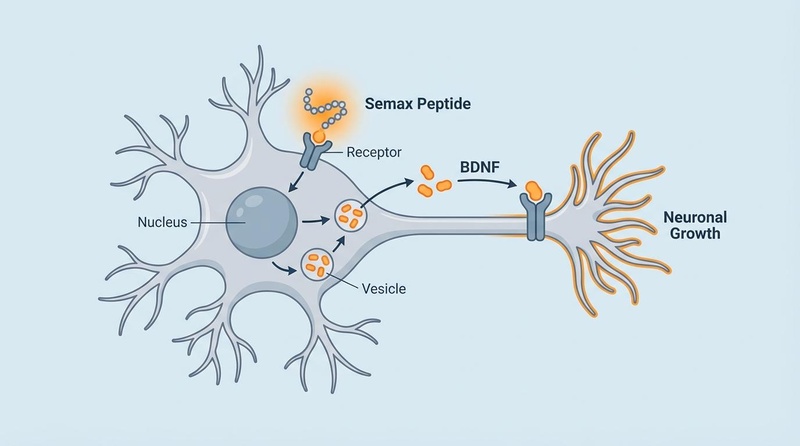
Semax exhibits pleiotropic neuroprotective and nootropic effects through several distinct mechanisms.
¶ Neurotrophic Factor Upregulation
A primary mechanism is the rapid and sustained upregulation of neurotrophins.
- BDNF and NGF: Administration of Semax leads to a rapid increase in Brain-Derived Neurotrophic Factor (BDNF) and Nerve Growth Factor (NGF) levels in the hippocampus, frontal cortex, and retina[3][4].
- TrkB Activation: It increases the expression and phosphorylation of TrkB receptors (the primary receptor for BDNF), facilitating synaptic plasticity and neuronal survival[5].
¶ Neurotransmitter Modulation
Semax modulates the metabolism of monoamines involved in cognition and mood.
- Dopamine and Serotonin: It increases the turnover and levels of dopamine and serotonin in the striatum and other brain regions, which may underlie its effects on focus and mood[6].
- Enkephalinase Inhibition: The peptide inhibits enzymes that degrade enkephalins, potentially contributing to analgesic and anxiolytic effects[1:1].
¶ Gene Expression and Neuroprotection
Transcriptome analysis reveals that Semax affects the expression of genes related to the immune response and vascular system.
- Ischemia Protection: In models of stroke, it suppresses pro-inflammatory genes and activates genes involved in neurotransmission and vascular stabilization, reducing infarct volume and reperfusion injury[7].
- Oxidative Stress: It helps maintain the activity of endogenous antioxidant enzymes (SOD, catalase) during hypoxia[8].
¶ Clinical Indications
In Russia and Ukraine, Semax is a registered pharmaceutical included in the List of Vital & Essential Drugs.
¶ Ischemic Stroke and TIA
Semax is indicated for the acute treatment and rehabilitation of ischemic stroke. Clinical trials have demonstrated that high-dose intranasal administration (1% solution) can: