¶ TB-500
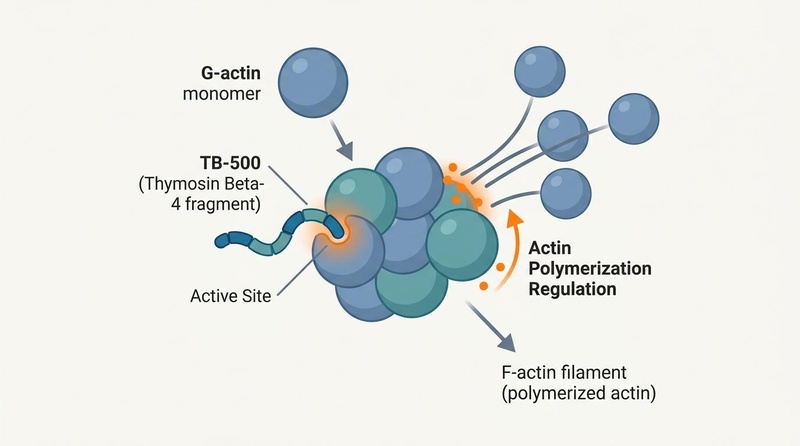
| Sequence | Ac-LKKTETQ (N-Acetyl-Leu-Lys-Lys-Thr-Glu-Thr-Gln) |
| Formula | C₃₈H₆₈N₁₀O₁₄ |
| Molar Mass | 889.02 g/mol |
| Category | Regenerative Peptide |
| Half-life | 1.8-2.1 hours (Thymosin Beta-4) [^1] |
| Admin | Subcutaneous |
| FDA Status | Prohibited for Compounding (Category 2) |
| CAS | 885340-08-9 |
TB-500 is a synthetic peptide fragment derived from the naturally occurring protein Thymosin Beta-4 (Tβ4). It is primarily investigated for its potential to accelerate wound healing, repair damaged tissues, and reduce inflammation.
¶ At a glance
Aliases
- Also known as: Thymosin Beta-4 Fragment, Fequesetide
- Amino acid sequence: Ac-LKKTETQ (N-Acetyl-Leu-Lys-Lys-Thr-Glu-Thr-Gln)
- Sequence length: Heptapeptide (7 amino acids)
- Category: Regenerative peptide, actin-modulating peptide
Key points (high-level summary)
- Tissue Repair: TB-500 promotes regeneration in various tissues, including skin, muscle, and heart, by enhancing cell migration and angiogenesis.
- Anti-Inflammatory: It exhibits anti-inflammatory properties, potentially aiding in injury recovery and reducing fibrosis.
- Regulatory Status: In the United States, TB-500 is classified as a Category 2 bulk drug substance by the FDA, prohibiting its compounding.
- Doping Concern: It is a prohibited substance by the World Anti-Doping Agency (WADA) due to its performance-enhancing potential.
What people use it for
- Main goals: Accelerate wound healing, improve recovery from musculoskeletal injuries (e.g., tendonitis, muscle tears), enhance flexibility, and support cardiac repair.
- Evidence quality (overall): Moderate for preclinical wound healing and cardiac repair; Low for human musculoskeletal injuries.
¶ Legal & regulatory status
CRITICAL INFORMATION
FDA Status (United States): As of late 2023/early 2024, the FDA has categorized Thymosin Beta-4 and its fragments (including TB-500) as a Category 2 bulk drug substance (Safety Concerns). This classification effectively bans the compounding of TB-500 by U.S. pharmacies, significantly limiting legitimate access.
Regulatory classification
- FDA status: Unapproved; Prohibited for Compounding (Category 2)
- Approved indications (if any): None for human use.
- Prescription requirement: Not available for human use in the U.S. as a compounded drug. Research chemical only.
Geographic legal status
- United States: Compounding prohibited by FDA.
- European Union: Varies by country; generally not approved for human use.
Sports and competition
- WADA status: Banned (S2. Peptide Hormones, Growth Factors, Related Substances, and Mimetics). Prohibited at all times, in and out of competition[1].
Source quality considerations
- Research Chemical Grade: Most available TB-500 is sold as a "research chemical," which may lack pharmaceutical-grade purity, rigorous quality control, and may contain impurities[2][3].
- Third-party testing importance: Due to the unregulated market, third-party testing for purity and identity is crucial for any research use.
- Counterfeit concerns: The market for unregulated peptides is prone to counterfeit products.
¶ What is TB-500?
TB-500 is a synthetic peptide fragment (Ac-LKKTETQ) of the naturally occurring 43-amino acid protein Thymosin Beta-4 (Tβ4). Tβ4 is an essential component of the cellular cytoskeleton, found in high concentrations in various tissues and bodily fluids, particularly in platelets and white blood cells. TB-500 is designed to mimic the active actin-binding domain of Tβ4, allowing it to exert similar regenerative and anti-inflammatory effects.
- Definition: A heptapeptide (7 amino acids) derived from Thymosin Beta-4, specifically the N-terminal acetylated 17-23 fragment (Ac-N-Acetyl-Leu-Lys-Lys-Thr-Glu-Thr-Gln).
- Relationship to endogenous peptides: Mimics the active domain of endogenous Thymosin Beta-4.
- Modifications from native sequence: N-terminal acetylation for stability and improved systemic activity[2:1][3:1].
- Natural sources (if any): Derived from the natural protein Thymosin Beta-4, which is endogenously produced.
- Development history: Identified and developed based on the known regenerative properties of Thymosin Beta-4.
- Key pharmacological property: Primarily acts as an actin-modulating peptide, influencing cell migration, differentiation, and tissue repair.
¶ What are TB-500's main benefits?
TB-500 is associated with a range of regenerative and anti-inflammatory benefits, primarily observed in preclinical models and early human trials for specific indications.
- Wound Healing & Skin Repair: Accelerates healing of skin wounds, corneal injuries, and various soft tissue damage (e.g., tendons, ligaments).
- Cardiac Recovery: In animal models, it has shown promise in reducing infarct size and improving heart function after myocardial injury.
- Anti-Inflammatory Effects: Modulates inflammatory responses, which can contribute to tissue protection and healing.
- Hair Growth: Anecdotal reports suggest it may promote hair growth, though human evidence is limited.
Evidence summary table (human outcomes)
| Outcome / Goal | Effect* | Consistency** | Evidence quality | Trials*** | Notes (population, duration, dose) |
|---|---|---|---|---|---|
| Venous Stasis Ulcer Healing | High | Moderate | 2 RCTs | Topical 0.03% Tβ4 gel accelerated healing[4][5] | |
| Neurotrophic Keratopathy Healing | High | Moderate | 1 RCT | Topical 0.1% Tβ4 eye drops showed significant healing[6] | |
| Dry Eye Syndrome (Ocular Discomfort) | High | Moderate | 2 RCTs | Reduced ocular discomfort and corneal staining[7][8] | |
| Musculoskeletal Injury Recovery | Low | Very low | 0 RCTs | Anecdotal reports; limited human data; animal studies are promising[9] | |
| Cardiac Repair post-MI | Low | Very low | 0 RCTs | Promising preclinical data; large-scale human trials ongoing or needed[10][11] |
¶ How does TB-500 work?
TB-500's mechanism of action is intricately linked to its role as an actin-modulating peptide, influencing cellular structure, motility, and the regenerative capacity of tissues.
- Primary targets: G-actin monomers, promoting their sequestration and regulating their polymerization into F-actin.
- Core mechanisms:
- Actin Dynamics Modulation: By binding to G-actin, TB-500 maintains a pool of available actin monomers, which are critical for cell migration, differentiation, and the formation of new cellular structures essential for tissue repair and wound closure[12].
- Angiogenesis Promotion: It stimulates the formation of new blood vessels (angiogenesis) by enhancing endothelial cell migration and increasing the expression of pro-angiogenic factors like Vascular Endothelial Growth Factor (VEGF), thus improving blood supply to damaged areas[13].
- Inflammation Reduction: TB-500 exhibits anti-inflammatory effects by downregulating inflammatory cytokines and reducing the infiltration of inflammatory cells at injury sites, which can help prevent excessive scar tissue formation[14].
- Cell Protection and Survival: It has been shown to protect cells from apoptosis (programmed cell death) and promote cell survival in ischemic conditions, particularly in cardiac tissue[9:1][15].
- Evidence source: Primarily derived from in vitro and animal studies, with some human mechanistic data from clinical trials.
- Pharmacokinetics:
- Half-life: The full-length Thymosin Beta-4 has a plasma half-life of approximately 1.8-2.1 hours in humans after intravenous administration[16]. Specific pharmacokinetic data for the TB-500 fragment (Ac-LKKTETQ) in humans is less extensively published but is generally considered to be short, necessitating frequent dosing.
- Bioavailability by route: Primarily administered via subcutaneous injection for systemic effects. Oral bioavailability is generally poor due to peptide degradation in the gastrointestinal tract.
- Metabolism/degradation: Metabolized by proteases.
- Major PK issues: Rapid degradation necessitates frequent dosing to maintain therapeutic levels.
¶ Effects on different systems
Musculoskeletal system (muscle mass, strength, bone, connective tissue)
- Tissue Repair: Preclinical studies indicate that TB-500 can accelerate the repair of muscle fibers, tendons, and ligaments by promoting cell migration and extracellular matrix remodeling[9:2][17].
- Flexibility: Anecdotal reports suggest improved flexibility, possibly due to enhanced tissue repair and reduced inflammation in connective tissues.
- Human Evidence: Direct human clinical evidence for musculoskeletal injury repair is limited, with most current usage based on preclinical data and anecdotal reports.
Cardiovascular health (blood pressure, vascular markers, cardiac function)
- Cardiac Repair: Animal models of myocardial infarction consistently show that Tβ4 administration can reduce infarct size, promote angiogenesis, activate epicardial progenitor cells, and improve ventricular function[10:1][11:1].
- Human Evidence: Large-scale human trials are needed to confirm these regenerative effects in patients with ischemic heart disease.
Skin, hair, and appearance
- Wound Healing: Clinical trials have demonstrated the efficacy of topical Tβ4 in accelerating the healing of venous stasis ulcers and pressure ulcers, promoting keratinocyte migration and collagen deposition[4:1][5:1].
- Hair Growth: While not extensively studied in humans, some preclinical research and anecdotal user reports suggest a role for Tβ4 in promoting hair follicle development and growth.
Immune function and inflammation
- Anti-Inflammatory: Tβ4 and its fragments have demonstrated anti-inflammatory properties, reducing inflammatory cytokine expression and immune cell infiltration at injury sites[14:1]. This can contribute to a more favorable healing environment and reduce fibrosis.
¶ Administration, reconstitution, and storage
Note: No FDA-approved dosing or administration guidelines exist for TB-500. The following reflects historical research protocols and anecdotal community usage.
Example reconstitution calculations:
| Vial strength | Diluent volume | Final concentration | Example: 250 mcg dose | Example: 500 mcg dose |
|---|---|---|---|---|
| 2 mg | 1 mL | 2 mg/mL (2000 mcg/mL) | 0.125 mL (12.5 units) | 0.25 mL (25 units) |
| 5 mg | 1 mL | 5 mg/mL (5000 mcg/mL) | 0.05 mL (5 units) | 0.1 mL (10 units) |
| 10 mg | 2 mL | 5 mg/mL (5000 mcg/mL) | 0.05 mL (5 units) | 0.1 mL (10 units) |
Note: 100 units on an insulin syringe = 1 mL
Reconstitution
- Diluent: Bacteriostatic water (BW) is typically used for reconstitution.
- Process: Inject the diluent slowly into the vial, aiming for the glass wall rather than directly onto the lyophilized powder. Gently swirl the vial (do not shake) until the powder is fully dissolved.
- Concentration: The final concentration depends on the amount of diluent added (see table above).
Storage requirements
- Lyophilized (powder): Store at -20°C (freezer) for long-term storage, or 2–8°C (refrigerator) for shorter periods (e.g., several months). Protect from light.
- Reconstituted (solution): Store at 2–8°C (refrigerator) and use within 2-4 weeks. Protect from light.
- Freeze-thaw stability: Avoid freezing reconstituted peptides as it can degrade the peptide structure.
- Light sensitivity: Store in amber vials or wrap in foil to protect from light.
Handling and safety
- Sterile technique: Always use sterile needles, syringes, and bacteriostatic water. Clean injection sites with alcohol swabs to minimize infection risk.
- Sharps disposal: Dispose of used needles and syringes in a designated sharps container.
- Signs of degradation: Discard if the reconstituted solution appears cloudy, discolored, or contains visible particles.
¶ Dosage and protocols
Note: The following dosing information is derived from historical research protocols and extensive anecdotal reports within the peptide community. There are no FDA-approved dosing guidelines for TB-500.
Standard dosing in studies (evidence-based for Tβ4)
- Topical Tβ4 (RGN-137): Clinical trials for wound healing used a 0.03% Tβ4 gel applied topically[4:2].
- Topical Tβ4 (RGN-259): Clinical trials for dry eye used 0.1% Tβ4 ophthalmic solution 5 times daily[6:1].
- Intravenous Tβ4 (RGN-352): Phase 1 safety studies in healthy volunteers administered up to 1260 mg daily for 14 days, demonstrating good tolerability[16:1].
Community/anecdotal protocols (NOT evidence-based for TB-500 fragment)
- Loading Phase: Typically 2 mg to 5 mg per week, often split into 2-3 doses (e.g., 2.5 mg twice a week) for 4–6 weeks. The goal is to rapidly saturate tissues.
- Maintenance Phase: A lower dose of 1 mg to 2 mg per month, or 1 mg once or twice a week, is sometimes used for ongoing support or injury prevention.
- Duration: Cycles often range from 4-8 weeks, with breaks taken thereafter.
Route
- Subcutaneous injection is the standard and most effective method for systemic delivery of TB-500.
Dose escalation
- Starting dose: A conservative starting point might be 2 mg per week, split.
- Titration schedule: Doses may be gradually increased based on individual response and tolerance, up to the commonly reported 5 mg per week in anecdotal use.
- Maximum dose: Clinical trial data for full-length Tβ4 shows high tolerability even at significant doses (up to 1260 mg daily intravenously[16:2]), but this does not directly translate to the unregulated TB-500 fragment. Anecdotal maximums typically do not exceed 5-10 mg per week.
- Signs to reduce dose: Any adverse reactions or discomfort should prompt a dose reduction or discontinuation.
Special populations
- Lack of data: There is limited to no data on TB-500 use in specific populations such as kidney or liver impairment, older adults, pregnant/breastfeeding women (generally contraindicated due to lack of safety data), children, or adolescents.
¶ Safety and side effects
General profile
- Tolerability: In clinical trials, the full-length Thymosin Beta-4 has generally been well-tolerated with no significant dose-limiting toxicities reported, even at high doses[16:3]. The safety profile of the TB-500 fragment specifically in humans is less rigorously studied in formal trials.
Common side effects
- Injection site reactions: Redness, swelling, pain, or bruising at the injection site are common but usually mild and transient.
- Temporary lethargy/fatigue: Some users report a transient feeling of tiredness or a "head rush" immediately after injection.
Less common / serious concerns
- Theoretical Cancer Risk: Because Tβ4 promotes cell migration, growth, and angiogenesis, processes also utilized by tumors, there is a theoretical concern that it could accelerate the growth of existing cancers. It is generally contraindicated for individuals with active malignancy or a history of cancer[18].
- Immunogenicity: As a peptide, there is a potential for antibody formation, especially with long-term use. The FDA's Category 2 classification for compounding is partly based on concerns regarding immunogenicity and the risk of adverse immune responses to unregulated injectable peptides.
Who should be especially cautious or avoid it
- Individuals with cancer: Absolutely contraindicated due to theoretical risks of promoting tumor growth.
- Pregnant or breastfeeding women: Contraindicated due to lack of safety data.
- Children and adolescents: Not recommended due to lack of safety data and unestablished medical need.
- Athletes: Prohibited by WADA.
¶ Drug and supplement interactions
Pharmacodynamic interactions (additive / opposing effects)
- Growth Factors: Caution should be exercised when combining TB-500 with other growth factors or peptides that significantly influence cell proliferation or angiogenesis, due to potential additive effects on cell growth pathways.
- Anti-Inflammatories: May have additive anti-inflammatory effects with NSAIDs or other anti-inflammatory agents, though this is not formally studied.
Monitoring recommendations
- General Health Monitoring: Standard blood work and health monitoring are advisable for any off-label peptide use.
- Cancer Screening: Individuals with a history of cancer or at high risk should consult with a healthcare provider and consider appropriate screening before considering TB-500.
¶ Combining TB-500 with other peptides and supplements ("stacks")
TB-500 is often combined with other peptides in anecdotal use, particularly for injury recovery.
Common combinations
- BPC-157 + TB-500 ("Wolverine Stack"): This is a popular combination for injury recovery. BPC-157 is often used for localized tissue repair and gut healing, while TB-500 is used for more systemic effects, flexibility, and overall tissue regeneration. The rationale is that their mechanisms are complementary.
- Rationale: The combination is theorized to provide both localized and systemic regenerative effects, targeting multiple pathways involved in healing.
Evidence level
- Mechanistic/Theoretical Reasoning Only: There are no formal human clinical trials studying the safety or efficacy of combining TB-500 with other peptides. Most "stacking" protocols are based on anecdotal reports and theoretical mechanistic synergies.
- Potential risks of combining: Increased complexity in monitoring side effects, unknown drug-drug interactions, and the additive risks associated with using multiple unregulated research chemicals.
¶ Cost considerations
Peptides, including TB-500, can represent a significant financial commitment, especially given their unregulated status and lack of insurance coverage for non-approved uses.
Typical costs
- Research chemical grade: TB-500 is typically sold as a lyophilized powder in vials (e.g., 2mg, 5mg, 10mg) for "research use only." Costs vary widely by supplier, purity, and quantity, but can range from $30-$100+ per vial.
- Monthly cost: Based on typical anecdotal dosing (e.g., 5mg/week), monthly costs can range from $100-$400+, not including diluents, syringes, or ancillary supplies.
- Cost varies by: Supplier reputation, third-party testing, vial size, and current market demand.
Cost-benefit considerations
- For off-label use: All costs are out-of-pocket. Users must weigh the significant financial outlay against the uncertain benefits and potential risks, as efficacy in humans for many claimed uses is not supported by robust clinical evidence.
- Long-term financial commitment: Chronic use or repeated cycles can lead to substantial long-term costs.
- Hidden costs: Includes bacteriostatic water, insulin syringes, alcohol swabs, and potential costs for blood tests to monitor general health if desired.
Value assessment
- Strength of evidence: Given the low level of human clinical evidence for many of TB-500's claimed benefits (especially for musculoskeletal injuries), the value proposition for off-label use is speculative. Strong preclinical data exists, but translation to humans is not guaranteed.
- Alternative options: For many claimed benefits, there are FDA-approved interventions or well-researched supplements with stronger evidence and often lower costs.
¶ Practical questions (FAQ)
What is the difference between TB-500 and Thymosin Beta-4 (Tβ4)?
TB-500 is a synthetic, N-acetylated fragment (Ac-LKKTETQ) of the larger, naturally occurring 43-amino acid protein Thymosin Beta-4 (Tβ4). TB-500 is designed to retain the key actin-modulating and regenerative properties of Tβ4 in a smaller, more bioavailable form.
Is TB-500 safe to use?
While full-length Tβ4 has shown a good safety profile in clinical trials, the TB-500 fragment itself has not undergone the same rigorous human clinical development. The FDA has concerns about the safety and quality of compounded Tβ4 and its fragments, leading to its ban for compounding in the U.S. Theoretical risks, particularly for individuals with cancer, exist.
Will TB-500 show up on a drug test?
Yes, TB-500 is on the World Anti-Doping Agency (WADA) Prohibited List and can be detected in anti-doping tests. Athletes should avoid its use.
Can TB-500 be taken orally?
Oral bioavailability of peptides like TB-500 is generally very poor due to enzymatic degradation in the digestive tract. Subcutaneous injection is the primary route of administration for systemic effects.
How long does it take to see effects from TB-500?
Anecdotal reports vary, but some users report noticing effects on flexibility and minor injury recovery within a few weeks. More significant tissue repair and regeneration would likely require longer durations, consistent with the biological processes involved.
¶ How we evaluated the evidence
- Wound Healing & Ocular Efficacy: We primarily relied on published Phase II and III clinical trials involving the full-length Thymosin Beta-4 (Tβ4) (e.g., RGN-137, RGN-259). This evidence, though for Tβ4, provides the highest quality human data available for its regenerative properties.
- Cardiac & Musculoskeletal Efficacy: For these areas, evidence is largely derived from preclinical (animal) studies. We explicitly grade these as "Low" or "Very Low" for human application due to the known challenges in translating animal findings to human clinical outcomes.
- Safety & Regulatory Status: We integrated data from Tβ4 clinical trials for general tolerability. Critically, we incorporated the most recent FDA 2023/2024 Category 2 determination, which highlights significant regulatory concerns regarding compounding of TB-500 and its fragments, irrespective of historical trial data for the full-length peptide.
- Doping Status: The clear listing on the WADA Prohibited List is a definitive piece of regulatory information that must be communicated.
¶ References
World Anti-Doping Agency. (2024). The Prohibited List. Retrieved from https://www.wada-ama.org/en/prohibited-list ↩︎
Esposito, S., et al. (2012). Synthesis and characterization of the N-terminal acetylated 17-23 fragment of thymosin beta4 identified in TB-500, a product suspected to possess doping potential. Analytical and Bioanalytical Chemistry, 404(1), 183-194. https://pubmed.ncbi.nlm.nih.gov/22962027/ ↩︎ ↩︎
Ho, E. N., et al. (2012). Doping control analysis of TB-500, a synthetic version of an active region of thymosin beta4, in equine urine and plasma. Journal of Chromatography A, 1262, 175-182. https://pubmed.ncbi.nlm.nih.gov/23083651/ ↩︎ ↩︎
Guarnera, G., et al. (2010). The effect of thymosin beta4 treatment of venous ulcers: a phase II study. International Wound Journal, 7(6), 501-510. https://pubmed.ncbi.nlm.nih.gov/20536470/ ↩︎ ↩︎ ↩︎
Treadwell, T., et al. (2012). Topical Thymosin beta-4 (RGN-137) gel for treatment of venous stasis ulcers: A phase II study. Wounds: A Compendium of Clinical Research and Practice, 24(9), 241-250. https://pubmed.ncbi.nlm.nih.gov/25875249/ ↩︎ ↩︎
Dun, L., et al. (2023). 0.1% RGN-259 Ophthalmic Solution Promotes Healing and Improves Comfort in Neurotrophic Keratopathy Patients. Journal of Clinical Medicine, 12(2), 438. https://pubmed.ncbi.nlm.nih.gov/36675496/ ↩︎ ↩︎
Sosne, G., et al. (2015). Thymosin beta4 ophthalmic solution for dry eye: a randomized, placebo-controlled, Phase II clinical trial. Clinical Ophthalmology, 9, 1067-1073. https://pubmed.ncbi.nlm.nih.gov/26056426/ ↩︎
Sosne, G., et al. (2018). Safety and efficacy of RGN-259 ophthalmic solution for dry eye: Results of a Phase II/III trial. The Ocular Surface, 16(3), 329-335. https://pubmed.ncbi.nlm.nih.gov/29679654/ ↩︎
Spurney, C. F., et al. (2010). Thymosin beta4 improves cardiac function and prevents fibrosis in a mouse model of Duchenne muscular dystrophy. PLoS One, 5(2), e9077. https://pubmed.ncbi.nlm.nih.gov/20174457/ ↩︎ ↩︎ ↩︎
Srivastava, D., et al. (2007). Thymosin beta4: a therapeutic peptide for the heart. Annals of the New York Academy of Sciences, 1112, 153-157. https://pubmed.ncbi.nlm.nih.gov/17928290/ ↩︎ ↩︎
Smart, N., et al. (2011). De novo cardiomyocytes from the adult mammalian epicardium. Nature, 474(7351), 370-374. https://pubmed.ncbi.nlm.nih.gov/21654748/ ↩︎ ↩︎
Goldstein, A. L., et al. (2005). Thymosin beta4: actin-sequestering protein moonlights to repair injured tissues. Trends in Molecular Medicine, 11(9), 421-429. https://pubmed.ncbi.nlm.nih.gov/16099184/ ↩︎
Smart, N., et al. (2007). Thymosin beta4 and angiogenesis: modes of action and therapeutic potential. Angiogenesis, 10(4), 229-241. https://pubmed.ncbi.nlm.nih.gov/17653856/ ↩︎
Young, J. D., et al. (1999). Thymosin beta 4 sulfoxide is an anti-inflammatory agent. Nature Medicine, 5(12), 1424-1427. https://pubmed.ncbi.nlm.nih.gov/10581254/ ↩︎ ↩︎
Xiong, Y., et al. (2012). Neuroprotective and neurorestorative effects of thymosin beta4 treatment initiated 6 hours post TBI. Journal of Neurosurgery, 116(3), 633-642. https://pubmed.ncbi.nlm.nih.gov/22324419/ ↩︎
Crockford, D., et al. (2010). A randomized, placebo-controlled, single and multiple dose study of intravenous thymosin beta4 in healthy volunteers. Annals of the New York Academy of Sciences, 1194, 252-259. https://pubmed.ncbi.nlm.nih.gov/20536472/ ↩︎ ↩︎ ↩︎ ↩︎
Malinda, K. M., et al. (1999). Thymosin beta4 accelerates wound healing. Journal of Investigative Dermatology, 113(3), 364-368. https://pubmed.ncbi.nlm.nih.gov/10469335/ ↩︎
Moon, E. Y., et al. (2010). Thymosin beta-4 is a novel hypoxia responsive protein. Experimental Cell Research, 316(18), 3058-3068. https://pubmed.ncbi.nlm.nih.gov/20831872/ ↩︎