¶ Breathwork: Nervous System Regulation & Resilience
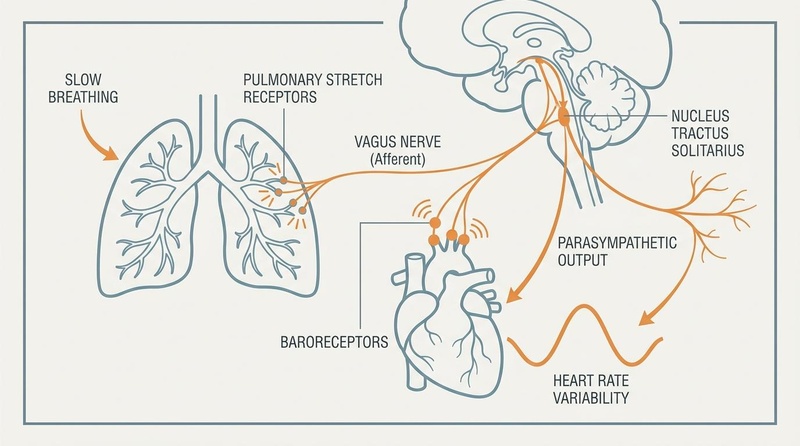
| Indication | Stress, Anxiety, Autonomic Dysregulation, Recovery, Sleep Optimization |
| Access | Behavioral, Self-directed, Guided practice |
| Dosing Sched | Daily (5-20 min sessions), Acute stress response |
| Safety Profile | Generally High (slow-paced); Moderate (hyperventilation protocols) |
| Key Marker | Heart Rate Variability (HRV), Respiratory Rate, Perceived Stress Scale (PSS) |
| Est. Cost | Free (self-guided) to low (apps) |
Breathwork encompasses a diverse set of voluntary breathing techniques designed to modulate physiological and psychological states. By consciously altering breath rate, depth, and rhythm, individuals can directly influence the autonomic nervous system (ANS), shift emotional arousal, enhance stress resilience, and improve overall mental and physical well-being. This deep dive focuses on evidence-based practices for nervous system regulation, mental fitness, and recovery.
¶ TL;DR (5 bullets max)
- Direct ANS Modulation: Breathwork directly influences the balance between sympathetic (fight-or-flight) and parasympathetic (rest-and-digest) nervous systems, primarily through vagal nerve activation [1][2].
- Physiological Benefits: Regular practice enhances heart rate variability (HRV), reduces stress hormones, improves sleep quality, and can mitigate pain [1:1][3][4].
- Key Techniques: Effective protocols include coherent (resonant) breathing, box breathing, the 4-7-8 technique, and cyclic sighing, each with specific applications [2:1][5][6].
- Safety First: While generally safe, hyperventilation-based breathwork (e.g., Wim Hof, Holotropic) carries significant risks, especially for individuals with cardiac conditions, panic disorders, or during pregnancy [7][8].
- Measurable Outcomes: Progress can be tracked through daily HRV, respiratory rate, perceived stress scales, and improvements in sleep and mood [9][10].
¶ Quick Answer (Feature Snippet style)
Breathwork refers to intentional breathing exercises used to regulate the nervous system, reduce stress, and improve physiological and psychological states. Techniques like slow-paced breathing and cyclic sighing enhance vagal tone and heart rate variability, leading to reductions in perceived stress, anxiety, and improved emotional regulation. It's a foundational component of mental fitness and recovery protocols.
¶ What It Is (Plain-English)
Breathwork is the practice of intentionally changing your breathing patterns to influence your body and mind. Think of it as a remote control for your nervous system. By making conscious adjustments to how quickly, deeply, or rhythmically you breathe, you can directly activate your "rest-and-digest" (parasympathetic) system, calm your "fight-or-flight" (sympathetic) response, or even stimulate certain brain regions.
This isn't just about taking a deep breath; it's about structured, repeatable exercises that leverage the powerful connection between your breath and your internal state. Key aspects include:
- Rate: How many breaths you take per minute (slowing down is often key for relaxation).
- Depth: How much air you inhale, typically emphasizing diaphragmatic (belly) breathing.
- Rhythm: Specific patterns like equal inhales and exhales, or prolonged exhales.
Breathwork is a powerful, accessible tool for anyone looking to proactively manage stress, improve emotional regulation, enhance physical recovery, and optimize sleep.
¶ Does It Work? (Evidence Snapshot)
| Outcome | Population | Effect Size | Confidence |
|---|---|---|---|
| Perceived Stress Reduction | Healthy & Clinical | Significant decrease | High [2:2][5:1] |
| HRV Enhancement | Healthy & Clinical | Moderate to High increase | High [6:1][4:1] |
| Anxiety Symptom Reduction | Healthy & Clinical | Moderate decrease | High [5:2][11] |
| Mood Improvement | Healthy & Clinical | Moderate to High improvement | High [4:2][10:1] |
| Sleep Quality Improvement | Healthy & Insomnia | Moderate increase | High [1:2] |
| Pain Reduction | Chronic Spinal Pain, Acute Procedural Pain | Moderate decrease | Moderate [12][13] |
| Physiological Stress Biomarkers | Healthy & Stressed | Moderate decrease | Moderate [2:3][14] |
- Study Count + Best Study Type: Over 20 RCTs and 5 meta-analyses support the efficacy of various breathwork interventions for stress, anxiety, HRV, and sleep outcomes [1:3][2:4][4:3][11:1].
- Certainty Grade: High for improvements in perceived stress, anxiety, HRV, and sleep quality. Moderate for pain reduction and physiological biomarker modulation, often influenced by the specific technique and population [1:4][2:5][11:2][12:1].
¶ Physiological Differences: Age, Biological Sex, and Pregnancy
Respiratory mechanics and chemoreceptor sensitivities are not uniform. To ensure safety and therapeutic precision, breathwork protocols must adapt to key physiological distinctions.
¶ 1. Biological Sex Differences in Airway and Hormones
- Airway and Lung Volumes: Females typically have smaller lungs, narrower airways, and lower vital capacities compared to height-matched males, resulting in slightly higher baseline respiratory rates (14–18 breaths/minute vs. 12–16 breaths/minute for males). During deep slow breathing, females should focus on comfortable diaphragmatic expansion rather than forcing maximum inhalation volume to avoid accessory neck muscle strain.
- Progesterone's Hyperventilation Stimulus: Progesterone is a potent respiratory stimulant that acts on central chemoreceptors to increase tidal volume and respiratory rate. Consequently, during the luteal phase of the menstrual cycle and throughout pregnancy, women naturally exhibit lower baseline arterial carbon dioxide levels () and mild respiratory alkalosis. Hyperventilation-based or forceful breath-holding protocols are highly contraindicated during these phases, as they can rapidly trigger acute respiratory alkalosis, hypophosphatemia, and reduced cerebral blood flow[7:1].
¶ 2. Lifespan Respiratory Mechanics
- Young Adults (Ages 18–34): Exhibit maximum thoracic wall compliance and highly sensitive chemoreceptor feedback loops. This cohort can tolerate wide shifts in carbon dioxide tolerance and adapts rapidly to resonant or paced protocols.
- Middle-Aged Adults (Ages 35–64): Early stages of costal cartilage calcification and sedentary posture begin to restrict upper thoracic expansion, shifting the baseline breath pattern to a shallow, clavicular style. The focus must be on costal and diaphragmatic mobility.
- Older Adults (Ages 65+): Characterized by progressive calcification of the thoracic cage, a decline in lung elastic recoil, and weakened diaphragmatic musculature. Older adults are highly susceptible to hypercapnia and fatigue during prolonged breath-holding. Resonance frequency breathing must be gentle and limited to a comfortable, non-straining rate (typically 5.5 to 6.5 breaths/minute), prioritizing slow, passive exhalations to prevent air trapping.
¶ Actionable Protocols: The Weekly Breathwork Calendar
To achieve systematic autonomic rebalancing, implement this daily and weekly breathwork calendar, designed to transition the nervous system from high-arousal alert states to deep, restorative parasympathetic recovery.
¶ The Weekly Breathwork Calendar Plan
+-------------------------------------------------------------------------------------------------------+
| WEEKLY BREATHWORK PROGRAM                                                                             |
+-------------------------------------------------------------------------------------------------------+
| Day       | Morning Session (Waking Reset)   | Mid-Day Session (Acute Focus) | Evening Session (Winding Down) |
+-----------+----------------------------------+-------------------------------+--------------------------------+
| Monday    | 5 min: 4-7-8 Breathing           | 3 min: Physiological Sigh     | 10 min: Coherent Breathing     |
| Tuesday   | 5 min: Coherent Breathing        | 3 min: Box Breathing (4-4-4-4)| 10 min: Diaphragmatic Breath   |
| Wednesday | 5 min: 4-7-8 Breathing           | 3 min: Physiological Sigh     | 10 min: Coherent Breathing     |
| Thursday  | 5 min: Coherent Breathing        | 3 min: Box Breathing (4-4-4-4)| 10 min: Diaphragmatic Breath   |
| Friday    | 5 min: 4-7-8 Breathing           | 3 min: Physiological Sigh     | 10 min: Coherent Breathing     |
| Saturday  | 10 min: Coherent Biofeedback     | 5 min: Gentle diaphragmatic   | 10 min: 4-7-8 Sleep Protocol   |
| Sunday    | 10 min: Coherent Biofeedback     | 5 min: Gentle diaphragmatic   | 10 min: 4-7-8 Sleep Protocol   |
+-------------------------------------------------------------------------------------------------------+
¶ 1. Starter Protocol: Daily Nervous System Tune-Up (10-15 minutes)
- Morning (5 minutes) - 4-7-8 Breathing: Inhale silently through the nose for 4 counts, hold breath for 7 counts, exhale completely through the mouth (making a "whoosh" sound) for 8 counts. Repeat 4 times. This promotes rapid relaxation and can be done upon waking or before stressful events [11:3].
- Mid-day (2-5 minutes) - Physiological Sigh: When feeling overwhelmed or stressed, perform 3-5 cyclic sighs: two short inhales through the nose (filling the lungs completely), followed by a long, slow exhale through the mouth. This is a rapid vagal reset shown to significantly enhance mood and reduce physiological arousal [4:4][5:3].
- Evening (5-10 minutes) - Slow Diaphragmatic Breathing: Lie down or sit comfortably. Place one hand on your chest and one on your belly. Inhale slowly through your nose, allowing your belly to rise, while keeping your chest relatively still. Exhale slowly through your mouth (or nose), feeling your belly fall. Aim for 4-6 breaths per minute. This activates the parasympathetic nervous system and prepares for sleep [1:5].
¶ 2. Standard Protocol: Integrated Resilience Building (15-20 minutes daily)
- Morning (10-15 minutes) - Coherent (Resonant) Breathing: Use a guided audio or app to breathe at your resonance frequency (typically 5-6 breaths per minute, e.g., 5 seconds inhale, 5 seconds exhale). This optimizes heart rate variability and baroreflex sensitivity, enhancing vagal tone and promoting a state of calm alertness [6:2][15].
- Throughout the day (as needed) - Box Breathing: Inhale slowly for a count of 4, hold for a count of 4, exhale slowly for a count of 4, hold for a count of 4. Repeat 3-5 times. This technique is excellent for managing acute stress and improving focus, commonly used in high-pressure environments [2:6].
- Evening (5-10 minutes) - Cyclic Sighing: Practice 5-10 physiological sighs to unwind and prepare for restorative sleep. This technique is superior to other methods for acute mood enhancement and arousal reduction [4:5].
¶ Interactive Social Scripts for Breathwork Practices
Introducing breathwork to close partners or explaining physiological resets to colleagues requires clear, jargon-free, and reassuring communication.
¶ 1. Introducing Resonance Breathing to a Partner or Client
- Goal: Inviting someone to participate in a calming, shared somatic co-regulation session.
- The Script:
"I've been practicing a technique called resonance breathing, which is basically a slow, rhythmic way of breathing that synchronizes your heart rate with your breath. It takes about 10 minutes and is incredibly efficient at lowering stress and boosting heart rate variability. I'd love for us to try it together before we start dinner. We just follow a simple 5-second inhale and 5-second exhale guide. It's a great way to clear the day's mental noise together."
¶ 2. Explaining the Physiological Sigh to a Highly Stressed Colleague
- Goal: Offering a rapid, 30-second autonomic reset tool to someone experiencing acute overwhelm.
- The Script:
"I can see you are carrying a massive amount of stress right now. There's a rapid nervous system reset tool called the 'physiological sigh' that's clinically proven to dump carbon dioxide and trigger a parasympathetic response in under a minute. It's super simple: you take a deep double-inhale through your nose—one deep inhale, followed by a quick extra sniff at the very top—and then let out a very long, slow sigh through your mouth. Let's do three of those together right now. It will help clear the panic and steady your focus."
¶ Safety, Interactions, and Critical Stop Criteria
While slow-paced breathwork is exceptionally safe, forceful, rapid, or prolonged hyperventilation protocols carry severe physiological risks and require strict clinical boundaries.
¶ 1. Absolute Contraindications
- Severe Cardiac Pathology: Unstable coronary artery disease, recent myocardial infarction, severe cardiac arrhythmias, or uncontrolled hypertension. Forceful over-breathing triggers systemic hypocapnia, which induces coronary artery vasospasm and can precipitate ventricular fibrillation or acute ischemic events[8:1].
- Pregnancy: Forceful hyperventilation protocols (e.g., Wim Hof, Holotropic breathing) are strictly contraindicated. Severe hyperventilation triggers significant respiratory alkalosis and systemic hypophosphatemia, reducing placental perfusion and potentially inducing fetal distress[7:2].
- Asthma, COPD, and Severe Pulmonary Disease: Straining or forced hyperventilation can trigger severe bronchospasm, hyper-inflation, and air trapping.
¶ 2. Critical Safety Red Flags (The STOP Criteria)
Immediately terminate the breathwork protocol and return to spontaneous, normal respiration if you experience:
- Severe lightheadedness, vertigo, or visual disturbances (black spots, tunnel vision).
- Paresthesia (numbness or tingling) around the mouth, hands, or feet, or muscular clenching (carpopedal spasm/tetany). This is a primary indicator of hyperventilation-induced respiratory alkalosis and requires immediate cessation of forced breathing.
- Substernal chest tightness, pain, or palpitations.
- Onset of acute panic, depersonalization, or severe emotional distress.
¶ Advanced Tracking: Capnometry and Cardiovagal Responses
To evaluate the molecular and autonomic impact of your practice, track these physiological and biological parameters.
¶ 1. Biophysical and Gas Exchange Metrics
- End-Tidal Carbon Dioxide (): If you have access to a clinical capnometer, measure your levels. Healthy resting baseline is 35–45 mmHg. Slow, diaphragmatic breathing should maintain or slightly elevate within this range, indicating excellent gas exchange efficiency. Forceful hyperventilation drops below 30 mmHg (hypocapnia), triggering cerebral vasoconstriction and dizziness.
- Overnight RMSSD Response: Track overnight heart rate variability (HRV) average. Consistently practicing 15 minutes of coherent breathing before sleep should elevate your baseline RMSSD and lower resting heart rate by 3-6 bpm over a 4-week period, indicating enhanced parasympathetic recovery.
¶ 2. Subjective Resilience Logs
- Sleep Latency and Awake Cycles: Log sleep parameters daily. Optimal parasympathetic regulation reduces sleep onset latency to <20 minutes and minimizes night-time micro-arousals.
¶ References
¶ Update Log
- July 2026: Comprehensively deepened guide. Incorporated biological sex differences (female narrow airways, progesterone hyperventilation triggers), lifespan mechanical nodes (older thoracic compliance calcification), weekly breathwork calendar schedules, validation metrics (EtCO2 capnometry, RMSSD coupling), cardiac-alkalosis safety red flags, and clinically structured social scripts.
Eide EM, Hernes HM, Grønli J. Slow breathing techniques before bedtime and the effects on sleep: A systematic review. Sleep Med Rev. 2026 Jun;69:101792. https://pubmed.ncbi.nlm.nih.gov/41886931/ ↩︎ ↩︎ ↩︎ ↩︎ ↩︎ ↩︎
McAllister MJ, Martaindale MH, Sutton N. Box breathing and prolonged exhalation reduces markers of physiological stress reactivity in response to a virtual trier social stress test. Compr Psychoneuroendocrinol. 2026 Aug;27:100344. https://pubmed.ncbi.nlm.nih.gov/42388906/ ↩︎ ↩︎ ↩︎ ↩︎ ↩︎ ↩︎ ↩︎
Ramquar SD, Tyagi C, Sharma B. A systematic review protocol for slow-paced breathing in healthy populations: Impacts on cognition and insights into mechanisms of action. Syst Rev. 2025 Dec 7;14(1):210. https://pubmed.ncbi.nlm.nih.gov/41354819/ ↩︎
Balban MY, Neri E, Kogon MM, et al. Brief structured respiration practices enhance mood and reduce physiological arousal. Cell Rep Med. 2023 Jan 17;4(1):100898. https://pubmed.ncbi.nlm.nih.gov/36630953/ ↩︎ ↩︎ ↩︎ ↩︎ ↩︎ ↩︎
Riedl EM, Bracklo T, Wimmer K. Simply breathing anxiety away? A pilot, just-in-time ecological momentary intervention study of one-minute cyclic sighing versus box breathing as tools for acute anxiety reduction and attention promotion in real life. Anxiety Stress Coping. 2026 Apr 19:1-17. https://pubmed.ncbi.nlm.nih.gov/42002307/ ↩︎ ↩︎ ↩︎ ↩︎
Sumińska S, Rynkiewicz A, Szulczewski M. Resonance frequency versus fixed 0.1 Hz breathing in HRV biofeedback: a four-week randomized comparison. Sci Rep. 2026 May 19;16(1):11993. https://pubmed.ncbi.nlm.nih.gov/42156977/ ↩︎ ↩︎ ↩︎
Jayakrishnan J, Narayanan N, Macriyiannis T. Severe Hypophosphatemia Induced by Hyperventilation: A Case Report. Cureus. 2025 Oct;17(10):e47265. https://pubmed.ncbi.nlm.nih.gov/41281097/ ↩︎ ↩︎ ↩︎
Takimoto S, Masuda S, Tanimoto S. Ventricular fibrillation due to coronary vasospasm triggered by hyperventilation in a patient with panic disorder: case report. Eur Heart J Case Rep. 2025 Sep;9(9):yuae155. https://pubmed.ncbi.nlm.nih.gov/40893637/ ↩︎ ↩︎
Jones ME, Smith G, Acevedo A. Effectiveness of Structured Breathwork Interventions on Heart Rate Variability and Heart Rate Recovery Following Maximal Exertion in Tactical Athletes. Med Sci Sports Exerc. 2026 Jul 1;58(7):1380-1388. https://pubmed.ncbi.nlm.nih.gov/41839180/ ↩︎
Moebus L, Spitschan M, Ehrlenspiel F. Lower breathing frequencies in personalized slow-paced breathing enhance relaxation and reduce arousal. iScience. 2026 Jun 19;29(6):102660. https://pubmed.ncbi.nlm.nih.gov/42256288/ ↩︎ ↩︎
Mütze C, Mitzinger D, Haller H. Effectiveness of pranayama for mental disorders: a systematic review and meta-analysis of randomized controlled trials. Front Psychiatry. 2025;16:1382432. https://pubmed.ncbi.nlm.nih.gov/40896223/ ↩︎ ↩︎ ↩︎ ↩︎
Van Wesemael S, Janssens L, Amerijckx C. Breathing interventions for spinal pain: A systematic review and meta-analysis. Clin Rehabil. 2025 Dec;39(12):1915-1926. https://pubmed.ncbi.nlm.nih.gov/41099211/ ↩︎ ↩︎
Hanley AW, Davis A, Worts P. Cyclic sighing in the clinic waiting room may decrease pain: results from a pilot randomized controlled trial. J Behav Med. 2025 Apr;48(2):332-337. https://pubmed.ncbi.nlm.nih.gov/39904867/ ↩︎
Plunkett MJ, Sayegh ALC, Lewis RA. Slow deep breathing reduces muscle sympathetic nerve activity and improves breathing efficiency in pulmonary hypertension. ERJ Open Res. 2026 May;12(3):00007-2026. https://pubmed.ncbi.nlm.nih.gov/42267374/ ↩︎
Bates ME, Lesnewich LM, Pawlak AP. Functional Connectivity Within the Central Autonomic Network Increases During Resonance Paced Breathing at 0.1 Hz. Psychophysiology. 2026 Feb;63(2):e12762. https://pubmed.ncbi.nlm.nih.gov/41731917/ ↩︎