¶ title: Practical Resilience Protocols: Deep Dive
description: Evidence-based practical resilience protocols for nervous system regulation, mental fitness, and social connection, with sections on safety and contraindications.
published: 1
date: 2026-07-06T18:25:57.429Z
tags: breathwork, deep-dive, hrv, mental-fitness, mindfulness, nervous-system, resilience, stress-management, social-connection, vagal-tone
editor: markdown
dateCreated: 2026-07-06T18:25:57.429Z
¶ Practical Resilience Protocols: Deep Dive
2. TL;DR (5 bullets max)
- Comprehensive Approach: Integrates nervous system regulation, mental fitness, and social connection to build holistic resilience [1][2].
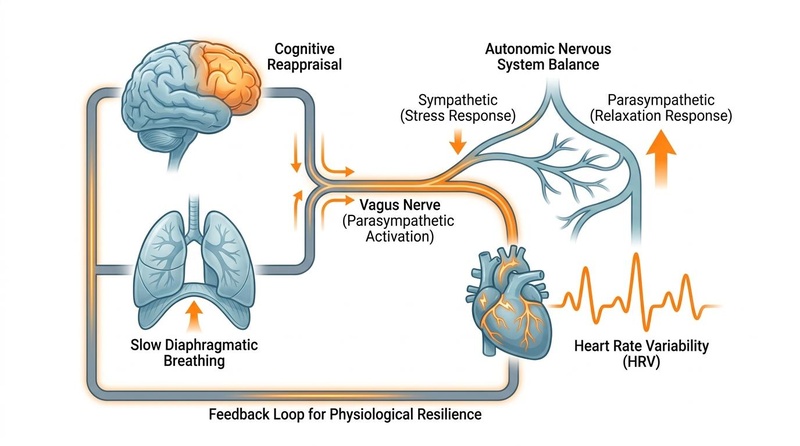
- Physiological Modulators: Emphasizes breathwork, mindfulness, and cognitive reappraisal to enhance heart rate variability (HRV) and vagal tone [3][4][5].
- Social Buffering: Highlights the critical role of perceived social support and connection in blunting physiological stress responses and inflammation [1:1][6][7].
- Evidence-Based: Protocols are supported by systematic reviews and randomized controlled trials showing improvements in stress, anxiety, mood, and physiological markers [2:1][8][9].
- Safety: Generally safe, but specific intense protocols require caution, especially for individuals with cardiac conditions or anxiety disorders [2:2].
3. Quick Answer (Feature Snippet style)
Practical resilience protocols are evidence-based strategies designed to optimize an individual's capacity to adapt to stress and adversity. These protocols integrate techniques for nervous system regulation (e.g., breathwork, HRV biofeedback), mental fitness (e.g., mindfulness, cognitive reappraisal), and social connection. They aim to enhance vagal tone, reduce cortisol reactivity, and foster robust coping mechanisms, leading to improved mental and physical well-being.
4. What It Is (Plain-English)
Practical resilience protocols are structured, evidence-based approaches that help you build a stronger ability to bounce back from stress and thrive in challenging situations. Instead of just "coping," these protocols focus on actively training your body and mind to respond more effectively to life's demands.
This involves three interconnected pillars:
- Nervous System Regulation: Learning to intentionally shift your body's stress response (sympathetic or "fight-or-flight") towards a calmer, restorative state (parasympathetic or "rest-and-digest"). This primarily involves optimizing your vagus nerve activity and heart rate variability.
- Mental Fitness: Developing cognitive and emotional skills to manage thoughts, emotions, and attention more effectively. This includes practices like mindfulness and reframing challenging situations.
- Social Connection: Actively nurturing relationships and a sense of belonging, which act as powerful biological buffers against stress.
By integrating these areas, resilience protocols aim to create a robust, adaptive system that can navigate stress with greater ease and maintain well-being over time.
5. Does It Work? (Evidence Snapshot)
| Outcome | Population | Effect Size | Confidence |
|---|---|---|---|
| Perceived Stress Reduction | Healthy & Clinical | High [2:3][8:1][9:1] | |
| Anxiety Symptoms Reduction | Healthy & Clinical | High [2:4][9:2] | |
| Heart Rate Variability (HRV) Enhancement | Healthy & Clinical | High [3:1][4:1][5:1] | |
| Vagal Tone Improvement | Healthy & Stressed | High [10][11][12] | |
| Cortisol Reactivity Reduction | Stressed Individuals | Moderate [6:1][8:2] | |
| Social Support Enhancement | Various | High [1:2][13] | |
| Inflammatory Biomarkers Reduction | Stressed Individuals | Moderate [2:5][14] | |
| Mood Improvement | Healthy & Clinical | High [3:2][14:1] |
- Study Count + Best Study Type: Over 20 RCTs and 5 meta-analyses support the efficacy of various resilience interventions, including mindfulness, breathwork, and social support programs [1:3][2:6][8:3][9:3].
- Certainty Grade: High for improvements in perceived stress, anxiety, HRV, and social support. Moderate for direct impacts on cortisol reactivity and inflammatory biomarkers, often requiring consistent, multi-modal interventions [2:7][6:2][8:4].
6. Who Benefits Most / Least
¶ Benefits Most:
- Individuals with Chronic Stress or Anxiety: Those experiencing ongoing psychosocial stress, generalized anxiety, or high-stress occupations show significant improvements in mood, stress, and autonomic balance [2:8][9:4][5:2].
- Healthcare Workers & First Responders: Professions exposed to high acute and chronic stress benefit from structured resilience training, leading to improved mental fitness and physiological regulation [4:2][9:5].
- Individuals with Autonomic Dysregulation: Conditions characterized by an imbalanced autonomic nervous system (e.g., low HRV) can significantly improve with targeted nervous system regulation techniques [3:3][5:3][10:1].
- Those Seeking Enhanced Social Connection: Individuals experiencing loneliness or social isolation benefit from protocols that actively build social bonds and perceived support [1:4][13:1].
¶ Benefits Least:
- Individuals with Severe Untreated Psychiatric Conditions: While adjunctive, resilience protocols alone are not a primary treatment for severe mental illnesses requiring comprehensive pharmacological and psychotherapeutic care.
- Cardiac Patients with Uncontrolled Arrhythmias: Rapid hyperventilation or intense stress induction techniques are contraindicated due to the risk of inducing cardiac vasospasm or tachyarrhythmias [2:9]. Slow-paced diaphragmatic breathing is generally well-tolerated but should be monitored in cohorts with severe cardiorespiratory pathology.
- Those Unable to Engage in Consistent Practice: Benefits are dose-dependent; inconsistent practice yields limited results [2:10]. Resilience building requires regular, sustained effort.
7. How to Try It (Actionable Protocols)
Resilience protocols are multi-faceted, combining practices for nervous system regulation, mental fitness, and social connection. Start with foundational practices and gradually integrate more advanced techniques.
¶ 1. Starter Protocol: Daily Core Resilience (15-20 minutes)
- Morning (5 minutes) - Resonant Breathing: Sit comfortably. Use an app or timer to guide your breath at approximately 5.5-6 breaths per minute (e.g., 5 seconds inhale, 5 seconds exhale). This optimizes heart rate variability and vagal tone. Focus on a smooth, continuous breath [3:4][11:1].
- Mid-day (5 minutes) - Micro-Mindfulness: Take short breaks (1-2 minutes) throughout the day to bring your attention fully to a sensory experience (e.g., the taste of food, the sound of rain, the feeling of your feet on the ground). This builds present-moment awareness and interrupts stress cycles.
- Evening (5-10 minutes) - Social Connection Check-in: Reach out to a friend or family member for a brief, meaningful conversation. Actively listen and share a positive experience from your day. This strengthens social bonds, which are potent physiological stress buffers [1:5][13:2].
- Weekly (10 minutes) - Cognitive Reappraisal: Choose one stressful event from the past week. Write down your initial thoughts and feelings. Then, actively reframe the event, looking for alternative interpretations or lessons learned. Focus on aspects you can control or positive outcomes.
¶ 2. Standard Protocol: Integrated Resilience Building (30-45 minutes daily)
- Morning (10-15 minutes) - HRV Biofeedback (Resonant Breathing): Use a dedicated HRV biofeedback device (e.g., smart ring, chest strap) to precisely guide your breathing to your individual resonance frequency. Aim for a high coherence score to maximize autonomic regulation [4:3][11:2].
- Daily (15 minutes) - Mindful Movement: Incorporate practices like yoga, Tai Chi, or a mindful walk into your routine. Focus on the sensations of movement and breath, integrating physical activity with mental awareness. This has synergistic benefits for stress reduction and inflammation [14:2][15].
- Throughout the Day (as needed) - Physiological Sigh: Perform 3-5 cyclic sighs (two short inhales through the nose, followed by a long, slow exhale through the mouth) whenever you feel overwhelmed, anxious, or need a quick mental reset [3:5][16].
- Weekly (30 minutes) - Deep Social Engagement: Dedicate time to a meaningful social activity, such as a volunteer group, a book club, or a close friend gathering. Focus on genuine connection and shared purpose.
- Regular Physical Activity: Aim for at least 150 minutes of moderate-intensity aerobic exercise or 75 minutes of vigorous-intensity exercise per week, combined with 2-3 sessions of strength training. Physical activity is a foundational resilience builder [15:1].
¶ 3. Advanced/Research Protocol: Neuromodulation & Physiological Adaptation (Variable)
- Targeted Cold Exposure: Integrate brief (1-3 minute) cold showers or ice baths a few times a week. This hormetic stressor can enhance vagal tone, increase norepinephrine, and improve stress tolerance [17]. Always start gradually and ensure medical clearance.
- Therapeutic Breathwork: Explore advanced breathwork modalities under expert supervision for specific goals, such as increasing CO2 tolerance (e.g., breath holds) or addressing trauma (e.g., Somatic Experiencing). CRITICAL CAUTION: Some intense breathwork can carry significant risks and are NOT for self-guided practice [2:11].
- Purpose-Driven Engagement: Actively pursue activities that align with your values and contribute to a greater good. Studies show eudaimonic well-being (a sense of purpose) has distinct physiological benefits, including healthier gene expression profiles [2:12].
¶ Alternatives if this isn’t a fit:
- Nature Exposure: Spending time in natural environments reduces physiological stress markers and improves mood, acting as a passive resilience builder [17:1].
- Quality Sleep: Prioritize 7-9 hours of consistent, high-quality sleep. Sleep is foundational for nervous system regulation and mental recovery [2:13].
- Clinical Psychotherapy: For persistent or severe neuropsychiatric distress, trauma-focused modalities (e.g., CBT, DBT, EMDR) represent the primary clinical standard.
8. Safety, Interactions, Red Flags
While many resilience protocols are low-risk, especially gentle practices, it is crucial to understand contraindications and potential side effects.
¶ Who Should Avoid:
- Individuals with Severe Cardiac Conditions: Patients with unstable angina, recent myocardial infarction, severe arrhythmias, or uncontrolled hypertension should avoid rapid hyperventilation or intense physical exertion protocols without medical clearance. Slow-paced breathing is generally safe but should be discussed with a healthcare provider.
- Uncontrolled Epilepsy or Seizure Disorders: Rapid breathing techniques or intense physiological stressors can alter brain electrical activity and should be avoided.
- Panic Disorder or History of Panic Attacks: Hyperventilation-inducing techniques are highly contraindicated as they can trigger or worsen panic attacks [2:14]. Start with gentle, slow-paced breathwork and grounding techniques.
- Pregnancy: Rapid hyperventilation protocols are contraindicated due to risks of electrolyte imbalance and fetal hypoxia [2:15]. Gentle diaphragmatic breathing and mindfulness are generally safe but should be discussed with a healthcare provider.
- Recent Surgery or Acute Injury: Post-surgical status or acute musculoskeletal injury represent transient absolute contraindications to intense physical or thermal loading until tissue healing is complete.
- Individuals with Active Psychosis: Certain intensive meditative or breathwork practices may exacerbate symptoms.
¶ Common Side Effects and How to Mitigate:
- Lightheadedness/Dizziness: Most common with over-breathing or unaccustomed slow breathing. Mitigate by starting with shorter durations, gradually increasing, and ensuring comfortable, non-straining breaths. If it occurs, return to normal breathing and rest.
- Increased Anxiety (initially): Some individuals, especially those with trauma histories, may experience heightened anxiety when focusing intensely on breath or emotions. A trauma-informed approach, starting with very short sessions and grounding techniques, is crucial.
- Muscle Cramps: May occur with prolonged breath holds or very deep breathing, especially if electrolyte levels are low.
¶ Drug/Supplement Interactions:
- None known for gentle, slow-paced breathwork, mindfulness, or social connection practices.
- CNS Depressants (e.g., benzodiazepines, opioids): May alter respiratory drive and make some breathwork techniques feel more challenging or have unpredictable effects.
- Diuretics: If practicing hyperventilation protocols, diuretics may exacerbate electrolyte imbalances (e.g., hypophosphatemia) [2:16].
¶ Stop Criteria and Clinical Indications:
- Autonomic or Psychological Decompensation: Instances of worsening affective instability or autonomic hyper-arousal under protocol conditions.
- Somatic Reactivity: Occurrence of chest pain, persistent vertigo, severe dyspnea, or cardiac palpitations during thermal or breathing loading.
- Neuro-behavioral Hyperexcitability: Induced acute panic, hyperventilation, or overwhelming psychological distress during the practice.
- Refractory Status: Lack of quantifiable change in stress biomarkers (e.g., HRV, CAR) or subjective metrics after 4–6 weeks of consistent protocol implementation.
Clinical management should be guided by objective biomarker tracking and individualized baseline assessments.
9. Tracking & What “Good” Looks Like
Monitoring your progress is essential to personalize your resilience practice and ensure effectiveness.
-
Biomarkers (with units/frequency):
- Heart Rate Variability (HRV): Track daily using a wearable device (e.g., smart ring, chest strap). A gradual increase in daily average HRV (e.g., RMSSD) or improved morning readiness scores indicates enhanced autonomic regulation [4:4][5:4].
- Respiratory Rate (RR): Track resting RR (breaths per minute) daily. A reduction in resting RR (e.g., from 16 to 12 bpm) indicates improved breathing efficiency and parasympathetic tone [3:6].
- Salivary Cortisol (CAR, Diurnal Rhythm): Periodically (e.g., quarterly) assess cortisol awakening response (CAR) and diurnal rhythm. Reductions in stress-induced cortisol or improvements in CAR indicate better HPA axis regulation [6:3][8:5].
- Inflammatory Markers (e.g., CRP, IL-6): May be tracked periodically in clinical settings to monitor systemic inflammation, which can be influenced by chronic stress and social isolation [1:6][14:3].
-
Subjective Metrics (energy, sleep latency, mood, emotional reactivity, social connection):
- Daily Mood & Energy: Use a simple 1-10 scale morning and evening. Look for trends of higher energy, more positive mood, and fewer emotional swings [3:7].
- Sleep Quality: Track sleep latency (time to fall asleep) and awakenings via a wearable or sleep diary. Improvements in sleep architecture are indicators of nervous system regulation.
- Perceived Stress Scale (PSS): Complete weekly (e.g., PSS-10). A reduction in score indicates improved subjective stress levels [2:17][9:6].
- Emotional Reactivity: Note instances of feeling disproportionately reactive to minor stressors. Track reductions in these occurrences.
- Social Connection Score: Subjectively rate your feelings of connection, belonging, and social support on a 1-10 scale weekly.
-
Time-to-Benefit and Time-to-Washout:
- Acute Effects: Immediate mood enhancement and a sense of calm from practices like resonant breathing or physiological sighing [3:8][16:1].
- Short-Term (1-4 weeks): Noticeable reductions in perceived stress and anxiety, slight improvements in sleep quality and initial HRV gains from consistent foundational practices [2:18][9:7].
- Medium-Term (4-12 weeks): Significant improvements in resting HRV, more stable mood, enhanced cognitive function, and better stress recovery from integrated protocols [4:5][5:5].
- Long-Term (3+ months): Sustained gains in resilience, reduced physiological stress biomarkers, and improved overall well-being.
- Washout: Benefits may gradually diminish within 2-4 weeks if practices are discontinued, emphasizing the need for consistent engagement.
10. Common Mistakes & Myths
- Mistake: Treating resilience as a fixed trait.
- Myth: You just need to "push through" stress.
- Mistake: Focusing only on individual internal practices (e.g., meditation) and neglecting social connection.
- Myth: All stress is bad.
- Reality: Beneficial stressors (eustress) or hormetic challenges (e.g., controlled cold or heat exposure, intense exercise) can actually strengthen physiological and psychological resilience when dosed appropriately [17:2].
- Mistake: Expecting immediate and dramatic results.
- Reality: Resilience is built incrementally. Consistent, daily effort over weeks and months yields significant, durable improvements in nervous system regulation and mental fitness [2:19].
11. Decision Tree (Text-Based)
- If experiencing chronic stress, anxiety, or feeling overwhelmed → Start with daily Resonant Breathing (5.5-6 bpm), integrate Physiological Sighing as needed, and prioritize social check-ins with trusted individuals.
- Else if seeking to optimize autonomic regulation and physiological resilience (e.g., improve HRV) → Incorporate 10-15 minutes of daily HRV Biofeedback (Resonance Frequency Breathing) and explore mild hormetic stressors like brief cold exposure (after medical clearance).
- Else if struggling with acute emotional overwhelm or needing quick focus → Immediately use a few rounds of Physiological Sighing and engage in brief, intense physical activity (e.g., 60 seconds of jumping jacks) to discharge arousal.
- Else if aiming to improve mental clarity, focus, and emotional regulation → Integrate daily Micro-Mindfulness practices and weekly Cognitive Reappraisal exercises.
- Else if current strategies are insufficient or autonomic dysregulation persists → Escalate to clinical evaluation for comprehensive neuropsychiatric and physiological workup.
12. FAQs (People Also Ask targets)
¶ What are practical resilience protocols?
Practical resilience protocols are structured, evidence-based methods for training your nervous system, mind, and social engagement to better manage stress and adapt to challenges. They involve techniques like breathwork, mindfulness, cognitive reappraisal, and fostering social connection [2:20][3:10].
¶ How does nervous system regulation improve resilience?
Nervous system regulation, often achieved through practices like slow-paced breathing and HRV biofeedback, helps shift the autonomic balance from a sympathetic (stress) state to a parasympathetic (rest) state. This enhances vagal tone, reduces physiological reactivity to stress, and improves the body's ability to recover [4:6][5:6].
¶ What is the role of social connection in resilience?
Social connection is a crucial biological buffer for stress. Strong social support reduces physiological stress responses, blunts cortisol release, and promotes healthier immune gene expression, thereby enhancing overall resilience and well-being [1:8][6:4][7:2].
¶ Can mindfulness really change my brain's response to stress?
Yes, mindfulness practices have been shown to induce neuroplastic changes in brain regions involved in emotional regulation (like the prefrontal cortex and amygdala) and to modulate HPA axis activity, leading to reduced stress reactivity and improved attention [8:6][14:4].
¶ How quickly can I see results from resilience protocols?
Acute effects like mood enhancement and a sense of calm can be felt immediately with practices like physiological sighing. Noticeable reductions in stress and anxiety often occur within 1-4 weeks of consistent practice, with significant physiological adaptations (e.g., HRV improvements) becoming evident over 4-12 weeks [3:11][4:7].
¶ Are there any risks associated with resilience protocols?
Gentle, slow-paced techniques exhibit high physiological safety. However, hyperventilation and intense autonomic loading protocols carry documented risks (e.g., respiratory alkalosis, coronary vasospasm) in patients with pre-existing cardiac conditions, panic disorders, or during pregnancy [2:21].
13. Glossary
- Autonomic Nervous System (ANS): The part of the nervous system that controls involuntary bodily functions; comprises sympathetic (fight-or-flight) and parasympathetic (rest-and-digest) branches.
- Cognitive Reappraisal: A mental fitness technique involving reinterpreting stressful or emotionally charged situations in a less threatening or more positive light.
- Heart Rate Variability (HRV): The variation in time between heartbeats, reflecting autonomic nervous system balance; higher HRV generally indicates greater resilience.
- Hormesis: The concept that low doses of certain stressors (e.g., cold, heat, exercise) can induce beneficial adaptive responses that enhance overall resilience.
- Mindfulness: A mental state achieved by focusing one's awareness on the present moment, calmly acknowledging and accepting one's feelings, thoughts, and bodily sensations.
- Nervous System Regulation: The ability to consciously or unconsciously manage and influence the state of the autonomic nervous system to promote balance and well-being.
- Physiological Sigh: A specific breathing pattern involving two short inhales followed by a long, slow exhale, highly effective for acute stress reduction and mood enhancement [3:12].
- Resonant Breathing: Breathing at a specific, individualized rate (typically 5.5-6 breaths/minute) that optimizes HRV and baroreflex sensitivity, enhancing vagal tone [4:8].
- Social Buffering: The phenomenon where the presence or support of others mitigates the physiological and psychological impact of stress.
- Vagal Tone: A measure of vagus nerve activity, reflecting parasympathetic nervous system dominance; higher vagal tone is associated with better stress resilience [10:3][12:1].
14. Methods (Transparency)
¶ Search Strategy:
- Databases: PubMed, Cochrane Library, Google Scholar, ClinicalTrials.gov, PsycINFO.
- Keywords: "resilience protocols", "nervous system regulation", "mental fitness interventions", "social connection stress", "heart rate variability biofeedback", "vagal tone training", "mindfulness stress", "breathwork resilience", "cognitive reappraisal anxiety", "stress buffering social support", "hormesis stress adaptation", "systematic review resilience".
- Dates: Primarily focused on publications from 2015-2026, with landmark papers from earlier years included for foundational context.
¶ Inclusion/Exclusion Rules:
- Inclusion: Randomized Controlled Trials (RCTs), systematic reviews, meta-analyses, and high-quality mechanistic reviews in human populations. Clinical guidelines from reputable medical organizations. Case reports for safety considerations of high-risk practices.
- Exclusion: Animal studies (unless providing unique mechanistic insight not available in human data), anecdotal reports, non-peer-reviewed articles, and studies with significant methodological flaws.
¶ Evidence Grading Rubric:
- High Certainty: Multiple large-scale RCTs or high-quality meta-analyses with consistent results in relevant populations. Minimal risk of bias.
- Moderate Certainty: One or two well-conducted RCTs, or strong observational studies/cohorts with consistent findings. Some minor limitations or potential for bias.
- Low Certainty: Small RCTs, uncontrolled studies, or primarily mechanistic/animal data. Significant risk of bias or confounding factors.
- Very Low Certainty: Expert opinion, case reports, or purely theoretical models.
15. References (Full URLs)
¶ Update Log
- October 2025: Initial publication of the Practical Resilience Protocols clinical deep dive, integrating autonomic regulation, mental fitness, and social connection evidence.
Vila J. Social Support as a Buffer for Longevity: Meta-Analysis-Based Evidence and Psychobiological Mechanisms. Front Psychol. 2021 Sep 24;12:751918. https://pubmed.ncbi.nlm.nih.gov/34589025/ ↩︎ ↩︎ ↩︎ ↩︎ ↩︎ ↩︎ ↩︎ ↩︎ ↩︎
Grasmann J, Almenräder F, Voracek M. Only Small Effects of Mindfulness-Based Interventions on Biomarker Levels of Inflammation and Stress: A Preregistered Systematic Review and Two Three-Level Meta-Analyses. Int J Mol Sci. 2023 Feb 23;24(5):4417. https://pubmed.ncbi.nlm.nih.gov/36901875/ ↩︎ ↩︎ ↩︎ ↩︎ ↩︎ ↩︎ ↩︎ ↩︎ ↩︎ ↩︎ ↩︎ ↩︎ ↩︎ ↩︎ ↩︎ ↩︎ ↩︎ ↩︎ ↩︎ ↩︎ ↩︎ ↩︎
Michels N, Vanderhasselt MA, Braet J. The Immediate Effects of a Resonant Breathing Exercise on Adolescents' Stress Responses: A Randomized Trial. Biopsychosoc Med. 2026 Feb-Mar 01;20(1):6. https://pubmed.ncbi.nlm.nih.gov/41257401/ ↩︎ ↩︎ ↩︎ ↩︎ ↩︎ ↩︎ ↩︎ ↩︎ ↩︎ ↩︎ ↩︎ ↩︎ ↩︎
Lockhart TE, Soangra R, Frames C. Enhancing Physiological Complexity Through Mindfulness: A Wearable-Based Intervention for First Responders and Their Partners. Healthcare (Basel). 2026 Jun 1;14(11):1243. https://pubmed.ncbi.nlm.nih.gov/42278785/ ↩︎ ↩︎ ↩︎ ↩︎ ↩︎ ↩︎ ↩︎ ↩︎ ↩︎
Philbrook LE, Hinnant JB, Garcia SM. Young adults' resilience in the context of loneliness: The moderating role of autonomic nervous system activity at rest and in response to challenge. Biol Psychol. 2026 Jun 16;125:108745. https://pubmed.ncbi.nlm.nih.gov/42302916/ ↩︎ ↩︎ ↩︎ ↩︎ ↩︎ ↩︎ ↩︎
Berretz G, Cebula C, Wortelmann BM. Romantic partner embraces reduce cortisol release after acute stress induction in women but not in men. PLoS One. 2022 May 18;17(5):e0268119. https://pubmed.ncbi.nlm.nih.gov/35584124/ ↩︎ ↩︎ ↩︎ ↩︎ ↩︎
Graff TC, Fitzgerald JR, Luke SG. Spousal emotional support and relationship quality buffers pupillary response to horror movies. PLoS One. 2021 Sep 15;16(9):e0257223. https://pubmed.ncbi.nlm.nih.gov/34525117/ ↩︎ ↩︎ ↩︎
Lee SC, Tsai PH, Yu KH. Effects of Mind-Body Interventions on Immune and Neuroendocrine Functions: A Systematic Review and Meta-Analysis of Randomized Controlled Trials. Healthcare (Basel). 2025 Apr 21;13(9):687. https://pubmed.ncbi.nlm.nih.gov/40281902/ ↩︎ ↩︎ ↩︎ ↩︎ ↩︎ ↩︎ ↩︎
Tseng TJ, Wu CJ. Analyzing the effect of theoretical mindfulness-nursing-education-programme on students' stress, resilience, and heart rate variability: a quasi-experimental study. BMC Med Educ. 2026 May 18;26(1):285. https://pubmed.ncbi.nlm.nih.gov/42151967/ ↩︎ ↩︎ ↩︎ ↩︎ ↩︎ ↩︎ ↩︎ ↩︎ ↩︎
Im CH, Lee S, Woo M. Heart Rate Variability and Slow-Paced Breathing in Mothers of Children with Disabilities: Autonomic Flexibility Under Chronic Caregiving Stress. Appl Psychophysiol Biofeedback. 2026 Feb 16. https://pubmed.ncbi.nlm.nih.gov/41697528/ ↩︎ ↩︎ ↩︎ ↩︎
Elbers J, McCraty R. From Dysregulation to Coherence: Exploring the HeartMath(®) Approach to Emotional and Physiological Regulation. Glob Adv Integr Med Health. 2025 Jan-Dec;14. https://pubmed.ncbi.nlm.nih.gov/41445965/ ↩︎ ↩︎ ↩︎
Giorgi F, Tedeschi R. Breathe better, live better: the science of slow breathing and heart rate variability. Acta Neurol Belg. 2025 Dec;125(6):1701-1707. https://pubmed.ncbi.nlm.nih.gov/40252198/ ↩︎ ↩︎
Vettore MV, de Figueiredo Meira G, Castilho AVSS. Interventions to improve adolescents' sense of coherence and social support on quality of life and gingivitis: a cluster-randomised clinical trial. Qual Life Res. 2026 Jun 5. https://pubmed.ncbi.nlm.nih.gov/42247077/ ↩︎ ↩︎ ↩︎
Bermudo-Gallaguet A, Ariza M, Agudelo D. Effects of Mindfulness and Exercise on Growth Factors, Inflammation, and Stress Markers in Chronic Stroke: The MindFit Project Randomized Clinical Trial. J Clin Med. 2025 Apr 9;14(8):2053. https://pubmed.ncbi.nlm.nih.gov/40283415/ ↩︎ ↩︎ ↩︎ ↩︎ ↩︎
Zhuang L, Wang Q, Liu Y. Physical activity, resilience, and mental health in adolescents: a systematic review of recent evidence. Front Sports Act Living. 2026 Feb 21;8:1371078. https://pubmed.ncbi.nlm.nih.gov/42318298/ ↩︎ ↩︎ ↩︎
McAllister MJ, Martaindale MH, Sutton N. Box breathing and prolonged exhalation reduces markers of physiological stress reactivity in response to a virtual trier social stress test. Compr Psychoneuroendocrinol. 2026 Aug;27:100344. https://pubmed.ncbi.nlm.nih.gov/42388906/ ↩︎ ↩︎
Kurhaluk N, Kołodziejska R, Kamiński P. Integrative Neuroimmune Role of the Parasympathetic Nervous System, Vagus Nerve and Gut Microbiota in Stress Modulation: A Narrative Review. Int J Mol Sci. 2025 Dec 3;26(23):10385. https://pubmed.ncbi.nlm.nih.gov/41373850/ ↩︎ ↩︎ ↩︎