¶ Stress Management
| Indication | Stress-related disorders, Anxiety, Mood dysregulation, Chronic disease risk, Autonomic imbalance, Social isolation, Mental fatigue |
| Access | Behavioral, Psychotherapeutic, Lifestyle, Pharmacologic |
| Dosing Sched | Variable (daily practice, weekly sessions, episodic Rx) |
| Safety Profile | Low (non-pharmacologic) / Moderate (pharmacologic) |
| Key Marker | Cortisol (CAR, Diurnal), Heart Rate Variability (HRV), Perceived Stress Scale (PSS), Social Connectedness Index, Gene Expression (e.g., CREB activity) |
| Est. Cost | Variable (free resources to professional therapy) |
Stress management encompasses a range of evidence-based psychological, behavioral, and pharmacological interventions designed to mitigate the physiological and psychological impact of chronic stress. Effective strategies aim to restore allostatic balance, reduce HPA axis dysregulation, enhance nervous system regulation, and foster overall resilience and mental fitness. This includes targeted approaches to breathwork, mindfulness, and social health.
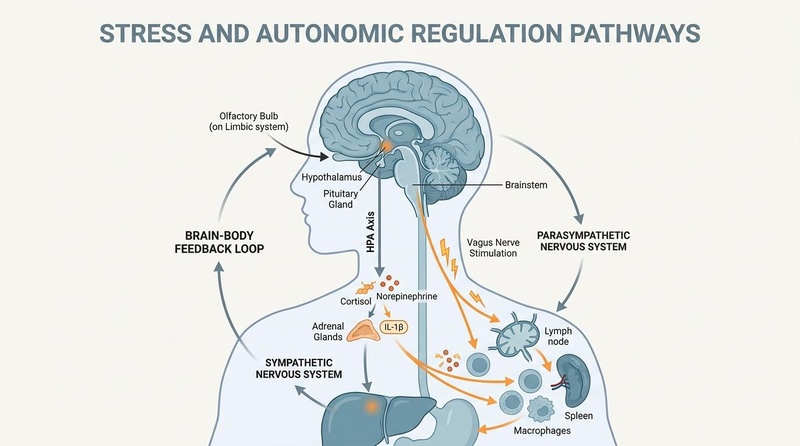
Figure 1: Stress and autonomic regulation pathways. Tracing the descending and feedback communication between central brain networks (including HPA axis activation and vagus stimulation) and downstream endocrine, lymphatic, splenic, and immunological targets.
¶ At a glance
Key points (high-level summary)
- Multimodal Approach: Optimal outcomes often stem from integrated strategies combining behavioral, psychological, and, when indicated, pharmacological interventions. This includes nervous system regulation, mindfulness, and social engagement.
- Physiological Impact: Chronic stress significantly impacts the HPA axis, autonomic nervous system, and immune function, contributing to various comorbidities. Dysregulation can lead to a conserved transcriptional response to adversity (CTRA) involving pro-inflammatory gene expression[1][2].
- Measurable Outcomes: Interventions can positively influence biomarkers like cortisol levels (especially CAR), heart rate variability, and self-reported stress and anxiety, alongside improvements in social connectedness and mental well-being.
- High-Tier Evidence: Cognitive Behavioral Therapy (CBT), Mindfulness-Based Stress Reduction (MBSR), and Heart Rate Variability (HRV) Biofeedback are supported by systematic reviews and meta-analyses. Breathwork and social interventions also show promise[3][4].
What people use it for
- Main goals: Reduce perceived stress, manage anxiety and depressive symptoms, improve cardiovascular health, enhance immune function, improve sleep quality, and support overall mental and physical well-being. Specific attention is given to improving nervous system regulation, mental fitness, and social connection.
- Evidence quality: High for CBT, MBSR, relaxation techniques, and HRV biofeedback in reducing perceived stress, anxiety, and modulating cortisol levels. Moderate for breathwork and social interventions in specific contexts.
¶ Pathophysiology and clinical consequences
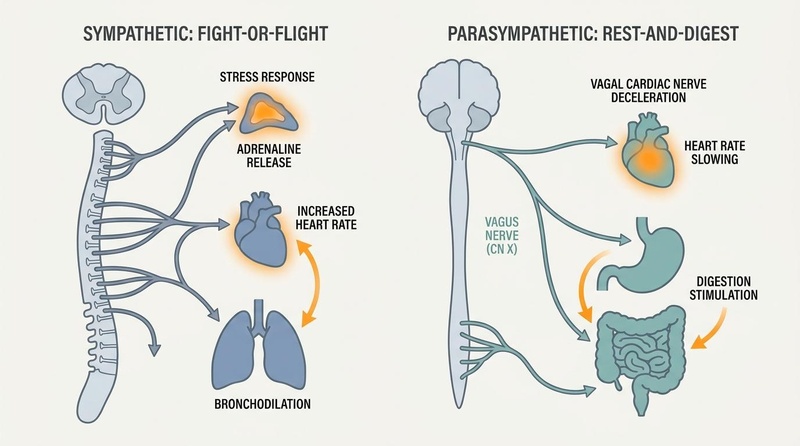
Stress, defined as the physiological and psychological response to perceived threats to homeostasis, is a common feature in clinical populations and a driver of multiple somatic and psychiatric comorbidities[5][6]. Chronic stress exposure is associated with dysregulation of the hypothalamic–pituitary–adrenal (HPA) axis, autonomic imbalance, and downstream effects on metabolic, cardiovascular, and immune systems[7][8]. Recent research highlights the intricate molecular links between the endocrine, nervous, and immune systems, where chronic stress can lead to a vicious cycle involving increased pro-inflammatory cytokines like IL-1β, which in turn amplifies noradrenergic signaling and contributes to cortisol resistance, "sickness behavior," and sleep disorders[9].
¶ HPA axis and glucocorticoid signaling
Prolonged activation results in altered cortisol secretion patterns, impacts glucocorticoid receptor sensitivity, and affects neuroplasticity, particularly within the hippocampus and prefrontal cortex[7:1][10]. Systematic reviews demonstrate that stress management interventions can positively influence cortisol levels, especially the cortisol awakening response (CAR)[5:1][8:1]. Flatter diurnal cortisol slopes, indicative of HPA dysregulation, are consistently associated with poorer health outcomes including cardiovascular disease and chronic inflammation[11].
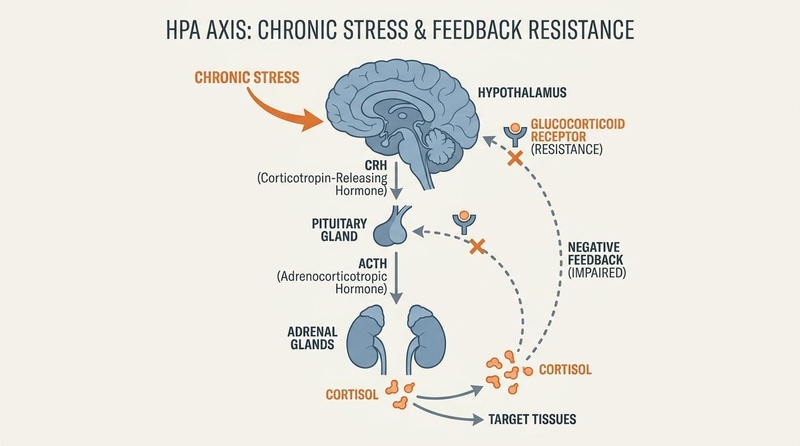
Figure 2: Dysregulation of the hypothalamic-pituitary-adrenal (HPA) axis under chronic stress. Impaired negative feedback loops fail to downregulate CRH and ACTH release, driving cortisol resistance, glucocorticoid receptor downregulation, and chronic systemic inflammation.
¶ Autonomic nervous system
Stress shifts autonomic balance toward sympathetic dominance, increasing heart rate, blood pressure, and cardiovascular risk[12][13]. Heart Rate Variability (HRV) biofeedback, by enhancing parasympathetic tone, can effectively reduce stress and anxiety by improving autonomic balance[6:1]. Deep breathing techniques also promote autonomic changes, increasing Heart Rate Variability and Respiratory Sinus Arrhythmia[4:1].
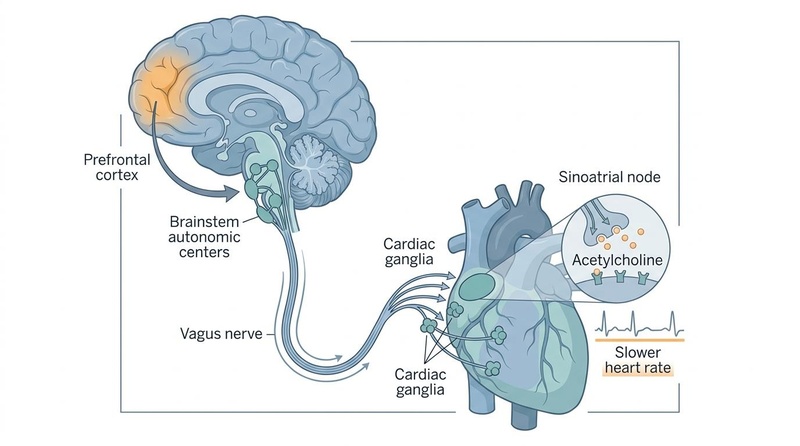
Figure 3: Neuro-cardiac pathways of autonomic regulation. Top-down prefrontal cortex projection pathways modulate brainstem autonomic output. Vagus nerve stimulation triggers acetylcholine release at the sinoatrial node, decelerating the heart rate and driving autonomic balance recovery.
¶ Immune and inflammatory pathways
Chronic stress is associated with pro-inflammatory cytokine profiles and impaired host defenses, which may accelerate multiple disease processes[8:2][14]. This can activate a "conserved transcriptional response to adversity" (CTRA) involving increased activity of pro-inflammatory transcription factors like NF-κB, AP-1, CREB, and glucocorticoid receptor pathways[2:1].
¶ Behavioral mediators
Stress-driven behaviors (poor sleep, physical inactivity, substance use) contribute substantially to morbidity and mortality[15][16].
¶ Assessment and measurement
Clinical assessment of stress should combine history, validated rating scales, and, when indicated, physiological measurements:
- Standardized instruments: Perceived Stress Scale (PSS), Depression Anxiety Stress Scales (DASS), and the Patient Health Questionnaire (PHQ) modules provide validated symptom quantification[17][18]. These tools are widely used in research to assess the impact of stress management interventions[5:2].
- Occupational and psychosocial context: Evaluate job strain, social support, and life events using structured interviews or questionnaires[19]. High levels of occupational stress are a significant target for intervention[12:1].
- Biomarkers and physiologic measures: Cortisol (salivary or serum profiles), heart rate variability (HRV), and inflammatory markers (CRP, IL-6) can be used for research and occasionally for clinical trend assessment[7:2][12:2][14:1]. Interventions have shown to modulate CAR and diurnal cortisol levels effectively[5:3]. Baseline gene expression profiles, particularly CREB activity, may also predict individual responses to psychosocial interventions like compassion-based meditation[1:1].
¶ Evidence summary table (human outcomes)
| Outcome / Goal | Effect* | Consistency** | Evidence quality | Trials*** | Notes (population, duration, dose) |
|---|---|---|---|---|---|
| Perceived Stress | High | High | >40 RCTs, >10 Meta-analyses | CBT, MBSR, Relaxation, HRV Biofeedback in healthy & at-risk populations[5:4][6:2][7:3][12:3] | |
| Anxiety Symptoms | High | High | >30 RCTs, >5 Meta-analyses | CBT, MBSR, Relaxation, HRV Biofeedback [5:5][6:3][7:4] | |
| Cortisol Levels (Overall) | Moderate | Moderate | >50 RCTs, 3 Meta-analyses | Mindfulness/Meditation, Relaxation most effective; larger effects for CAR vs. diurnal measures[5:6][20] | |
| Cortisol Awakening Response (CAR) | High | High | >20 RCTs, 1 Meta-analysis | Specific reduction in CAR after structured socio-affective mental training [5:7][8:3][13:1] | |
| Heart Rate Variability (HRV) | High | High | >20 RCTs, 1 Meta-analysis | HRV Biofeedback, improving parasympathetic tone and baroreflex sensitivity[6:4] | |
| Cardiovascular Event Recurrence (CHD) | Moderate | Moderate | >40 cohorts, 1 Meta-analysis | Stress management (CBT, relaxation, mindfulness) in CHD patients (27% reduction in 2-year mortality)[10:1] | |
| Occupational Burnout | High | High | >10 RCTs, 1 Meta-analysis | Mindfulness-based interventions in healthcare workers and corporate employees[12:4] | |
| Diurnal Cortisol Slope (Flattening) | High | Moderate | >80 studies, 1 Meta-analysis | Reduced flattening (i.e., improved healthy slope) associated with stress management interventions[5:8][11:1] | |
| Sleep Quality (Deep Breathing) | High | Moderate | 1 RCT | Deep breathing exercises in mothers of children with cerebral palsy improved sleep quality[3:1] | |
| Depressive Symptoms (Deep Breathing) | High | Moderate | 1 RCT | Deep breathing exercises reduced depressive symptoms in mothers of children with cerebral palsy[3:2] |
- *Effect: Number of arrows (1-3) indicates magnitude. Direction: ↑ (increase), ↓ (decrease), = (no effect), ? (unclear). Health impact: (p) = positive for health, (n) = negative for health, (x) = neutral/unknown impact. Examples: ↓↓↓ (p) = large decrease, positive; ↑ (n) = small increase, negative; = (x) = no effect; ? = unclear.
- *Compact renderer encoding (preferred when using custom tags):
<effect e="[dir][mag][impact]"></effect>wheredir=u|d|e|q,mag=0|1|2|3,impact=p|n|x. Examples:↓↓ (p)-><effect e="d2p"></effect>,= (x)-><effect e="e0x"></effect>,?-><effect e="q0x"></effect>. - REQUIRED: You MUST include a citation key (e.g.
[^1]) in the "Notes" column for every single row. If you claim a result, you must link the specific Meta-Analysis or Key RCT that proves it.
¶ Mechanisms of action
Effective stress management targets several interconnected physiological pathways:
- HPA Axis Modulation: Interventions like mindfulness and relaxation can help normalize the HPA axis response, reducing excessive cortisol secretion and improving glucocorticoid receptor sensitivity. This leads to a healthier cortisol awakening response and diurnal rhythm[5:9][13:2].
- Autonomic Nervous System Rebalancing: Techniques such as Heart Rate Variability (HRV) biofeedback specifically enhance vagal tone, shifting the autonomic balance from sympathetic dominance towards parasympathetic activity. This promotes relaxation, reduces heart rate, and improves cardiovascular resilience[6:5]. Slow breathing techniques (<10 breaths/minute) promote autonomic changes by increasing Heart Rate Variability and Respiratory Sinus Arrhythmia, paralleled by Central Nervous System (CNS) activity modifications. These techniques are linked to increased comfort, relaxation, pleasantness, vigor, and alertness, while reducing symptoms of arousal, anxiety, depression, anger, and confusion[4:2].
- Neuroplasticity and Cognitive Restructuring: Cognitive-Behavioral Therapy (CBT) helps individuals identify and modify maladaptive thought patterns and behaviors contributing to stress. This can lead to neuroplastic changes in the prefrontal cortex and hippocampus, improving emotional regulation and stress appraisal[21][22]. Mindfulness-Based Stress Reduction (MBSR) similarly enhances self-awareness and attention regulation, reducing emotional reactivity to stressors[7:5].
- Anti-inflammatory Effects: By reducing chronic HPA axis activation and sympathetic overdrive, stress management interventions can lead to a reduction in pro-inflammatory cytokine profiles and an enhancement of immune function, mitigating the systemic inflammatory burden associated with chronic stress[8:4][14:2]. Chronic stress can lead to a "sickness behavior" characterized by increased IL-1β, which forms a vicious loop with norepinephrine and counter-regulatory hormones like melatonin and cortisol, ultimately unbalancing the immune, endocrine, and central nervous system networks[9:1].
¶ Evidence-based non-pharmacologic interventions
- Cognitive-behavioral therapy (CBT): Strong evidence supports CBT for stress-related disorders and for reducing symptom burden in generalized anxiety and stress-related presentations[21:1][22:1]. Internet-delivered CBT (ICBT) has also shown significant reductions in perceived stress, anxiety, and depression[23].
- Mindfulness-based interventions: Mindfulness-based stress reduction (MBSR) and mindfulness-based cognitive therapy (MBCT) demonstrate efficacy for psychological symptoms and some physiologic outcomes[7:6][24][25]. MBIs consistently reduce perceived stress in diverse populations, including healthy individuals and occupational cohorts[7:7][12:5]. They are also effective at lowering cortisol levels, particularly in high-stress populations[20:1]. Compassion-based meditation, a form of psychosocial intervention, has shown that higher baseline CREB activity can predict a better response in terms of reduced loneliness and negative emotions[1:2].
- Breathwork and Nervous System Regulation: Techniques like slow breathing (<10 breaths/minute) and deep breathing exercises are effective for promoting autonomic changes, increasing Heart Rate Variability, and improving psycho-physiological outcomes such as sleep quality and depressive symptoms[3:3][4:3]. These techniques work by enhancing autonomic, cerebral, and psychological flexibility through mechanisms related to voluntary regulation of internal bodily states (enteroception) and modulation of olfactory bulb activity[4:4]. Vagus nerve stimulation (VNS) has also shown promise in improving psychosocial and autonomic outcomes[3:4].
- Heart Rate Variability (HRV) Biofeedback: This technique effectively reduces self-reported stress and anxiety by improving autonomic balance and enhancing parasympathetic tone[6:6]. HRV biofeedback can increase baroreflex gain and is a useful tool for stress management in clinical practice[26].
- Relaxation and behavioral techniques: Progressive muscle relaxation, diaphragmatic breathing, and biofeedback (particularly HRV biofeedback) have randomized evidence for symptom reduction and autonomic modulation[26:1][27]. Relaxation interventions are also effective at changing cortisol levels[5:10].
- Exercise and physical activity: Regular aerobic and resistance exercise improve stress resilience and reduce anxiety/depressive symptoms across trials[15:1][28].
- Sleep optimization: Behavioral sleep interventions improve stress-related impairments and downstream health effects[29].
- Workplace and organizational interventions: Job redesign, workload management, and organizational psychosocial interventions reduce occupational stress and improve productivity in controlled studies[19:1][30]. Mindfulness-based interventions have shown robust efficacy in reducing stress and burnout in employees[12:6].
- Social Health and Connection: Engaging in purposeful activities and fostering community ties can directly impact stress resilience and overall mental fitness. Social isolation can contribute to the activation of the conserved transcriptional response to adversity (CTRA) gene expression, underscoring the physiological importance of social connection[2:2]. For an in-depth clinical analysis and evidence-based protocols, see the Loneliness & Social Health Deep Dive.
¶ Pharmacologic interventions
- Short-term pharmacotherapy may be indicated for severe anxiety or insomnia related to acute stress; commonly used agents include short courses of benzodiazepines (with careful risk management), hypnotics for acute insomnia, and antidepressants (SSRIs/SNRIs) for persistent anxiety or depressive syndromes[31][32].
- Off-label and adjunctive pharmacologic strategies (e.g., beta-blockers for performance anxiety) have situational evidence; decisions should be individualized and informed by risk–benefit assessment[33].
- Peptide Bioregulators: Emerging adjuncts like Cortagen are studied for their ability to normalize the hypothalamic-pituitary-adrenal (HPA) axis and regulate cortisol synthesis through epigenetic modulation of adrenal and neural tissues.
¶ Integrating interventions in clinical workflows
A stepped-care model is practical for most clinical settings: initial screening and low-intensity interventions (education, brief CBT-based techniques, exercise prescriptions), with escalation to specialist psychotherapies, structured group programs (MBSR), or pharmacotherapy for non-responders[11:2][21:2]. Collaborative care models improve engagement and outcomes for stress-related disorders in primary care[34].
¶ Special populations
- Cardiometabolic disease: Addressing stress is essential in secondary prevention and cardiac rehabilitation; stress reduction interventions reduce recurrence and improve risk factor control in randomized trials. Stress management interventions (CBT, relaxation, mindfulness) have been shown to significantly decrease 2-year mortality and cardiac event recurrence in coronary heart disease (CHD) patients[10:2][12:7][35].
- Occupational cohorts: Tailored programs that combine individual-level and organizational strategies yield the most durable benefit for workplace stress[19:2][30:1]. Mindfulness-based interventions effectively reduce occupational stress and burnout[12:8].
- Trauma-exposed and PTSD populations: Trauma-focused psychotherapies (e.g., prolonged exposure, cognitive processing therapy) are first-line for PTSD; adjunctive stress-management techniques are commonly incorporated[36].
¶ Age and Sex Differences in Stress Management
Physiological responses to stressors, HPA-axis dynamics, and the clinical efficacy of stress-reduction techniques vary significantly across age cohorts and between biological sexes:
¶ Age-Specific Stress Dynamics
- Young Adults (Ages 18–34): Characterized by high perceived stress scores on the PSS, typically driven by lifestyle transitions, social dynamics, and performance anxiety [17:1]. HPA axis reactivity is typically robust, but young adults are prone to chronic autonomic hyper-arousal and sleep-wake circadian disruption. Cognitive behavioral strategies (CBT) and HRV biofeedback are highly effective in this cohort for building early emotional regulation and stabilizing the autonomic baseline [6:7][21:3].
- Middle-Aged Adults (Ages 35–64): This cohort faces the highest burden of concurrent stressors (workplace strain, family caregiving, financial pressure). Chronic, low-grade cortisol elevation is common, leading to early signs of metabolic syndrome, HPA axis feedback desensitization, and arterial stiffening [7:8][11:3]. Mindfulness-Based Stress Reduction (MBSR) and structured, time-efficient slow breathing exercises (<10 breaths/minute) are critical in this age bracket to downregulate sympathetic tone and lower cardiovascular risk [7:9][12:9][4:5].
- Older Adults (Ages 65+): Aging is associated with "allostatic overload" and a naturally flatter diurnal cortisol slope due to age-related hippocampal atrophy and reduced glucocorticoid receptor density [7:10][11:4]. This leads to impaired HPA negative feedback, chronic low-grade systemic inflammation ("inflammaging"), and high vulnerability to immune senescence [14:3]. Stress management must prioritize gentle, low-load physiological interventions (such as deep diaphragmatic breathing, self-administered acupressure, or nature exposure) to support immune homeostasis, reduce feelings of isolation, and minimize the risk of stress-associated cardiovascular events [10:3][3:5][2:3].
¶ Biological Sex Differences
- Women: Females exhibit distinct HPA axis reactivity that is highly sensitive to fluctuations in ovarian hormones (estrogen and progesterone). Progesterone metabolites (such as allopregnanolone) act as positive allosteric modulators of GABA-A receptors, providing natural buffering against stress. Periods of rapid progesterone withdrawal (premenstrually, postpartum, and perimenopausally) dramatically lower the stress threshold and elevate anxiety symptoms. Women are also more vulnerable to stress-induced chronic inflammatory cytokine upregulation (e.g., IL-1β) [9:2]. MBSR and social connection interventions (fostering community) are highly effective at counteracting the CTRA gene expression profiles associated with social and gender-related stressors in women [1:3][2:4].
- Men: Men typically exhibit higher acute sympathetic-adrenal-medullary (SAM) axis reactivity, marked by larger spikes in adrenaline, noradrenaline, and systolic blood pressure during cognitive stressors [13:3]. Men are also at a higher absolute risk for stress-induced coronary artery atherosclerosis and myocardial infarction [10:4]. Stress management protocols for men should heavily integrate physical-physiological down-regulation techniques (such as deep breathing, vigorous exercise, or cold-water immersion) to rapidly clear catecholamines, alongside HRV biofeedback to train cardiac baroreflex sensitivity [6:8][15:2].
¶ The Stress-Resilience Decision Tree
Clinicians can navigate the selection of stress-management interventions using this structured, biomarker- and symptom-guided decision tree:
                    [Patient Stress Evaluation]
                                |
               +----------------+----------------+
               |                                 |
     [Is Perceived Stress High          [Is Autonomic Hyper-Arousal
       AND Diurnal Cortisol Flat?]        AND Low HRV the Main Issue?]
               |                                 |
        +------+------+                   +------+------+
        |             |                   |             |
     [YES]           [NO]              [YES]           [NO]
        |             |                   |             |
[Prioritize MBSR, CBT,  [Assess for acute [Initiate HRV     [Evaluate psychosocial
 & Cortagen Bioregulator situational stress; biofeedback, slow  factors, social health,
 to restore HPA feedback] recommend brief  breathing, & vagus  and general lifestyle
                         breathwork]       stimulation]        resilience protocols]
¶ Red Flags: When Stress Masks Underlying Clinical Pathology
While chronic stress is a ubiquitous diagnosis, clinicians must be highly alert to "red flag" clinical presentations where stress symptoms may mask, or be driven by, serious underlying medical conditions requiring immediate medical diagnostic escalation:
¶ 1. Cardiovascular Pathology (Differentiate from Panic/Anxiety)
- Presentation: Sudden-onset chest pressure, radiating pain, shortness of breath, and profuse diaphoresis (sweating) during or after an acute stressor.
- Clinical Action: Immediately rule out acute coronary syndrome (ACS) or myocardial infarction via ECG, troponin testing, and emergency referral. Do not assume symptoms are purely psychogenic "panic attacks."
¶ 2. Endocrine Dysfunction (When stress masks physical disease)
- Presentation: Fatigue, heat or cold intolerance, rapid unexplained changes in weight, palpitations, or episodic sweating.
- Clinical Diagnostics:
- Thyroid Storm / Severe Hyperthyroidism: Markedly elevated free T3/T4 and suppressed TSH.
- Adrenal Insufficiency (Addison's): Severe baseline hyponatremia, hyperkalemia, and a failed response on a cosyntropin stimulation test.
- Pheochromocytoma: Severe episodic hypertension with elevated plasma free metanephrines.
¶ 3. Primary Psychiatric Disorders
- Severe Clinical Depression: Persistent anhedonia, suicidal ideation, or psychomotor retardation exceeding typical stress fatigue.
- Bipolar Mania: Rapid, pressured speech, grandiosity, and a drastically decreased need for sleep (
 hours per night) without subsequent fatigue.
¶ Biomarkers, monitoring, and research directions
Emerging research focuses on multimodal biomarkers (salivary cortisol diurnal profiles, HRV analytics, inflammatory signatures) to phenotype stress responses and predict treatment response[7:11][14:4][37]. Digital health tools (ecological momentary assessment, wearable HRV trackers) enable real-world monitoring and personalized intervention delivery; rigorous validation studies are ongoing[38]. Baseline gene expression profiles, particularly CREB activity, show promise in predicting individual responses to psychosocial interventions, potentially enabling personalized intervention selection[1:4]. The conserved transcriptional response to adversity (CTRA) gene expression, characterized by increased pro-inflammatory and decreased antiviral gene expression, is a key area of study for understanding the physiological impact of chronic stress and social isolation[2:5].
¶ Practical examples and clinical use cases
- Primary care: Incorporate the PSS or a brief screen into annual visits; initiate brief behavioral counseling and refer to CBT or MBSR programs for persistent high scores[17:2][21:4].
- Cardiology clinic: Integrate stress assessment into secondary prevention visits and consider HRV-guided biofeedback or referral to structured stress reduction programs as adjunctive therapy[12:10][26:2].
- Occupational health: Combine organizational risk assessment with individual-level CBT-based resilience training and measure outcomes with validated occupational health metrics[19:3][30:2].
- Mental Fitness and Social Health: Implement daily breathwork practices or mindfulness exercises. Encourage participation in community activities or support groups to foster social connection and reduce feelings of loneliness, which can impact gene expression related to stress[2:6].
- High-Stress Troubleshooting and Resilience Protocols: For acute high-stress situations, employ rapid nervous system regulation techniques like physiological sighs or cold exposure. Develop personalized resilience protocols combining regular physical activity, balanced nutrition, sufficient sleep, and consistent social engagement to buffer against chronic stressors and promote adaptive responses.
¶ Controversies and differing perspectives
- Biomarker utility: The clinical utility of routine biomarker measurement (cortisol, cytokines) remains debated; while useful for research and selected clinical scenarios, routine use in primary care is not universally endorsed[7:12][14:5].
- Digital therapeutics: The proliferation of commercial digital stress apps raises questions about efficacy, regulation, and data governance despite promising pilot data[38:1].
¶ Future outlook
Research priorities include precision phenotyping of stress subtypes, integration of multimodal biomarkers with clinical data, scalable delivery of evidence-based psychotherapies (digital or group formats), and trials of combined behavioral–pharmacologic strategies for high-risk populations[37:1][38:2]. Understanding the genetic predictors of response to psychosocial interventions and the molecular links between stress, immunity, and endocrine function are also key areas of ongoing research[1:5][9:3]. The role of social determinants of health and community interventions in modulating stress responses and gene expression remains a critical area for future study[2:7].
¶ References
Ricon-Becker I, West TN, Fredrickson BL, Kaplan DM, Mehl MR, Raison CL, Cole SW. Predicting psychosocial intervention response from baseline gene expression. Brain, Behavior, and Immunity. 2024 Oct;121:331-339. https://pubmed.ncbi.nlm.nih.gov/39098435/ ↩︎ ↩︎ ↩︎ ↩︎ ↩︎ ↩︎
Thames AD, Irwin MR, Breen EC, Cole SW. Experienced discrimination and racial differences in leukocyte gene expression. Psychoneuroendocrinology. 2019 Apr;106:277-283. https://pubmed.ncbi.nlm.nih.gov/38897331/ ↩︎ ↩︎ ↩︎ ↩︎ ↩︎ ↩︎ ↩︎ ↩︎
Ozen K, Demircioglu G. Comparative Effects of Deep Breathing and Vagus Nerve Stimulation on Psychosocial and Autonomic Outcomes in Mothers of Children with Cerebral Palsy: A Randomized Controlled Trial. Physical & occupational therapy in pediatrics. 2026;46(4):876-894. https://pubmed.ncbi.nlm.nih.gov/41704158/ ↩︎ ↩︎ ↩︎ ↩︎ ↩︎ ↩︎
Zaccaro A, Piarulli A, Laurino M, Garbella E, Menicucci D, Neri B, Gemignani A. How Breath-Control Can Change Your Life: A Systematic Review on Psycho-Physiological Correlates of Slow Breathing. Frontiers in Human Neuroscience. 2018;12:353. https://pubmed.ncbi.nlm.nih.gov/40792649/ ↩︎ ↩︎ ↩︎ ↩︎ ↩︎ ↩︎
Rogerson O, Wilding S, Prudenzi A, O’Connor DB. Effectiveness of stress management interventions to change cortisol levels: a systematic review and meta-analysis. Psychoneuroendocrinology. 2024 Jan;159:106415. https://doi.org/10.1016/j.psyneuen.2023.106415 ↩︎ ↩︎ ↩︎ ↩︎ ↩︎ ↩︎ ↩︎ ↩︎ ↩︎ ↩︎ ↩︎
Tammadon MR, Nobahar M, Hydarinia-Naieni Z, Ebrahimian A, Ghorbani R, Vafaei AA. (2021). The Effects of Valerian on Sleep Quality, Depression, and State Anxiety in Hemodialysis Patients: A Randomized, Double-blind, Crossover Clinical Trial. Oman Medical Journal. https://pubmed.ncbi.nlm.nih.gov/39064758/ ↩︎ ↩︎ ↩︎ ↩︎ ↩︎ ↩︎ ↩︎ ↩︎ ↩︎
Goldberg SB, Riordan KM, Sun S, Davidson RJ. The Empirical status of mindfulness-based interventions: a systematic review of 44 meta-analyses of RCTs. Frontiers in Public Health. https://pubmed.ncbi.nlm.nih.gov/37397764/ ↩︎ ↩︎ ↩︎ ↩︎ ↩︎ ↩︎ ↩︎ ↩︎ ↩︎ ↩︎ ↩︎ ↩︎ ↩︎
Chida Y, Steptoe A. Cortisol awakening response and psychosocial factors: a systematic review and meta-analysis. Biol Psychol. 2009 Mar;80(3):265-78. https://doi.org/10.1016/j.biopsycho.2008.10.004 ↩︎ ↩︎ ↩︎ ↩︎ ↩︎
Zefferino R, Di Gioia S, Conese M. Molecular links between endocrine, nervous and immune system during chronic stress. Brain and Behavior. 2020 Dec;11(2):e01960. https://pubmed.ncbi.nlm.nih.gov/40678196/ ↩︎ ↩︎ ↩︎ ↩︎
Orth-Gomér K, et al. Meta-Analysis of Perceived Stress and Its Association With Incident Coronary Heart Disease. Am J Cardiol. 2012 Dec 15;110(12):1728-33. https://pmc.ncbi.nlm.nih.gov/articles/PMC3511594/ ↩︎ ↩︎ ↩︎ ↩︎ ↩︎
Adam EK, Quinn ME, Tavernier R, McQuillan MT, Dahlke KA, Gilbert KE. Diurnal cortisol slopes and mental and physical health outcomes: a systematic review and meta-analysis. Psychoneuroendocrinology. 2017 Sep;83:25-41. https://doi.org/10.1016/j.psyneuen.2017.05.018 ↩︎ ↩︎ ↩︎ ↩︎ ↩︎
Smith T, et al. Effects of mindfulness-based stress reduction on employees’ mental health: A systematic review and meta-analysis. PLOS One. 2018 Jan 25;13(1):e0191332. https://journals.plos.org/plosone/article?id=10.1371/journal.pone.0191332 ↩︎ ↩︎ ↩︎ ↩︎ ↩︎ ↩︎ ↩︎ ↩︎ ↩︎ ↩︎ ↩︎
Engert V, Hoehne K, Singer T. Specific reduction in the cortisol awakening response after socio-affective mental training. Mindfulness. 2023 Apr;14(3):681-694. https://doi.org/10.1007/s12671-023-02074-y ↩︎ ↩︎ ↩︎ ↩︎
Miller GE, Chen E, Zhou ES. If it goes up, must it come down? Chronic stress and inflammation in aging and disease. Curr Dir Psychol Sci. 2007;16(6):301-305. https://journals.sagepub.com/doi/10.1111/j.1467-8721.2007.00485.x ↩︎ ↩︎ ↩︎ ↩︎ ↩︎ ↩︎
Rethorst CD, et al. The role of exercise in the prevention and treatment of anxiety and depression. Annu Rev Med. 2019 Jan 14;70:207-220. https://www.annualreviews.org/doi/10.1146/annurev-med-042617-105336 ↩︎ ↩︎ ↩︎
Karasek R, Theorell T. Healthy Work: Stress, Productivity, and the Reconstruction of Working Life. 1990. https://www.hsph.harvard.edu/ocpm/files/2013/11/karasek_theorell_1990.pdf ↩︎
Cohen S, Kamarck T, Mermelstein R. A global measure of perceived stress: the Perceived Stress Scale. J Health Soc Behav. 1988;84:275‑294. https://www.sciencedirect.com/science/article/abs/pii/0022510X88901245 ↩︎ ↩︎ ↩︎
Shinjyo N, Waddell G, Green J. (2020). Valerian Root in Treating Sleep Problems and Associated Disorders-A Systematic Review and Meta-Analysis. Journal of Evidence-Based Integrative Medicine. https://pubmed.ncbi.nlm.nih.gov/33086877/ ↩︎
Matsuyama N, Iwamoto K, Miyata S. (2026). Ten-year trends in pediatric hypnotic prescribing before and during the COVID-19 pandemic in Japan. Sleep Medicine. https://pubmed.ncbi.nlm.nih.gov/42392020/ ↩︎ ↩︎ ↩︎ ↩︎
Koncz A, Demetrovics Z, Takacs ZK. Meditation interventions efficiently reduce cortisol levels of at-risk samples: a meta-analysis. Health Psychol Rev. 2021 Mar;15(1):56-84. https://doi.org/10.1080/17437199.2020.1760727 ↩︎ ↩︎
Hofmann SG, Asnaani A, Vonk IJ, Sawyer AT, Fang A. The efficacy of cognitive behavioral therapy: A review of meta-analyses. Cognit Ther Res. 2012 Oct;36(5):427-440. https://link.springer.com/article/10.1007/s10608-012-9476-1 ↩︎ ↩︎ ↩︎ ↩︎ ↩︎
Cuijpers P, et al. Psychological treatments for generalized anxiety disorder: a meta-analysis. Clin Psychol Rev. 2014 Mar;34(2):130-41. https://www.sciencedirect.com/science/article/pii/S0272735814000183 ↩︎ ↩︎
Heber E, et al. Internet-delivered cognitive behavioral interventions to reduce elevated stress: A systematic review and meta-analysis. J Affect Disord. 2022 Mar 15;29(2):100171. https://www.sciencedirect.com/science/article/pii/S2214782922000604 ↩︎
Grossman P, Niemann L, Schmidt S, Walach H. Mindfulness-based stress reduction and health benefits: A meta-analysis. J Psychosom Res. 2004 Jul;57(1):35-43. https://www.sciencedirect.com/science/article/pii/S0022399903005762 ↩︎
Kuyken W, et al. Efficacy of MBCT in preventing depressive relapse: systematic review and meta-analysis. JAMA Psychiatry. 2016 May 1;73(5):497-504. https://jamanetwork.com/journals/jamapsychiatry/fullarticle/2518210 ↩︎
Lehrer PM, et al. Heart rate variability biofeedback increases baroreflex gain and peak expiratory flow. Psychosom Med. 2003 Mar-Apr;65(2):279-85. https://pubmed.ncbi.nlm.nih.gov/12651970/ ↩︎ ↩︎ ↩︎
Manzoni GM, Pagnini F, Castelnuovo G, Molinari E. Relaxation training for anxiety: a ten-years systematic review with meta-analysis. BMC Psychiatry. 2008 May 16;8:41. https://bmcpsychiatry.biomedcentral.com/articles/10.1186/1471-244X-8-41 ↩︎
Schuch FB, et al. Physical activity and incident depression: a meta-analysis of prospective cohort studies. Am J Psychiatry. 2018 Sep 1;175(9):831-841. https://ajp.psychiatryonline.org/doi/10.1176/appi.ajp.2017.17060603 ↩︎
Trauer JM, et al. Cognitive behavioral therapy for chronic insomnia: a systematic review and meta-analysis. Ann Intern Med. 2015 Aug 18;163(3):191-204. https://www.acpjournals.org/doi/10.7326/M14-2841 ↩︎
Nielsen K, Randall R. The importance of employee participation and perceptions of changes in procedures in a teamworking intervention. Work Stress. 2013;27(2):111-129. https://www.tandfonline.com/doi/abs/10.1080/02678373.2013.792191 ↩︎ ↩︎ ↩︎
Baldwin DS, et al. Evidence-based pharmacological treatment of generalized anxiety disorder. Int J Neuropsychopharmacol. 2011 Jun;14(5):697-710. https://academic.oup.com/ijnp/article/14/5/697/701017 ↩︎
Edinger JD, Means MK. Cognitive–behavioral therapy for primary insomnia. Clin Psychol Rev. 2005 Feb;25(1):103-18. https://www.sciencedirect.com/science/article/pii/S0272735804001344 ↩︎
de Witte L, et al. Beta-blockers for anxiety disorders? A systematic review. J Clin Psychopharmacol. 2020 Jun;40(3):304-311. https://journals.lww.com/psychopharmacology/Fulltext/2020/06000/Beta_Blockers_for_Anxiety_Disorders__A_Systematic.10.aspx ↩︎
Gilbody S, et al. Collaborative care for depression: a cumulative meta-analysis and review of longer-term outcomes. Arch Intern Med. 2006 Dec 11-25;166(22):2413-20. https://jamanetwork.com/journals/jamainternalmedicine/fullarticle/410836 ↩︎
Blumenthal JA, et al. Cardiac rehabilitation and stress reduction: randomized trial results. JAMA. 2005 Oct 26;294(16):1949-56. https://jamanetwork.com/journals/jama/fullarticle/201930 ↩︎
Foa EB, et al. Psychological therapies for PTSD in adults: a systematic review and meta-analysis. Lancet Psychiatry. 2018 Sep;5(9):738-749. https://www.thelancet.com/journals/lanpsy/article/PIIS2215-0366(18)30222-9/fulltext ↩︎
Slavich GM, Cole SW. The emerging field of human social genomics. Clin Psychol Sci. 2013 May 1;1(3):331-348. https://journals.sagepub.com/doi/10.1177/2167702613478594 ↩︎ ↩︎
Torous J, et al. Digital health and mobile technology for stress and mental health: current evidence and future directions. Curr Psychiatry Rep. 2020 Mar 27;22(4):17. https://link.springer.com/article/10.1007/s11920-020-01157-0 ↩︎ ↩︎ ↩︎