¶ Acarbose: Benefits, Dosage, & Side Effects
| Type | Drug (Alpha-Glucosidase Inhibitor) |
| Active Cmpd | Acarbose |
| Source | Microbial fermentation (*Actinoplanes utahensis*) |
| Dose Range | 25–100 mg per meal |
| Half-life | ~2 hours (plasma), acts locally in gut |
| Main Benefit | Glucose Control, Longevity (Mice) |
| Absorption | Very Low (<2%) |
⸻
Acarbose is a prescription medication traditionally used to treat Type 2 Diabetes, but it has emerged as one of the most robust "geroprotectors" (anti-aging drugs) in scientific literature. In the prestigious NIA Interventions Testing Program (ITP), Acarbose consistently extends median lifespan in mice, particularly males, by mimicking aspects of caloric restriction and remodeling the gut microbiome.
⸻
¶ At a glance
Aliases
- Brand names: Precose, Glucobay
- Class: Alpha-glucosidase inhibitor, Carbo-blocker
- Category: Prescription drug, Geroprotector
Key points
- Robust Mouse Longevity: Acarbose extends median lifespan by ~22% in male mice and ~5% in female mice in the NIA Interventions Testing Program (ITP).
- Mechanism: It blocks the digestion of carbohydrates in the small intestine, "flattening" glucose spikes and feeding beneficial gut bacteria (increasing SCFA production).
- Synergy: When combined with Rapamycin, it produces the largest median lifespan extension ever seen in the ITP (37% in males).
- Side Effects: High rates of gastrointestinal issues (flatulence, bloating, diarrhea) due to carbohydrate fermentation in the colon; these often subside over time.
What people use it for
- Main goals: Longevity (off-label), postprandial glucose control, weight management.
- Evidence quality: High for mouse longevity and human diabetes control; Low/Indirect for human longevity.
⸻
¶ What is Acarbose?
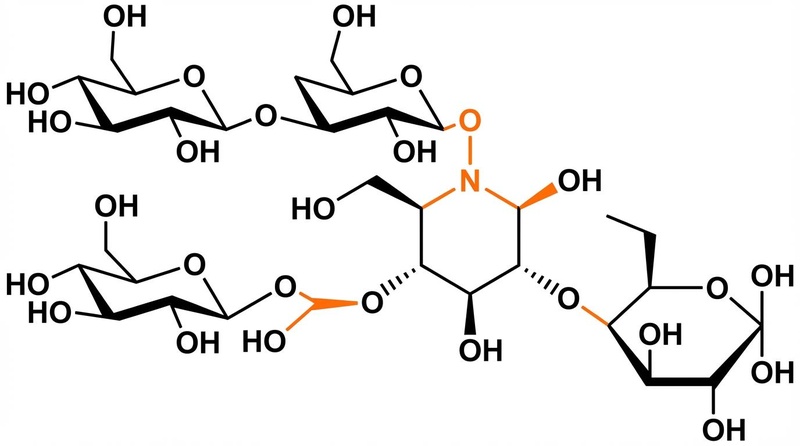
Acarbose is a complex oligosaccharide originally isolated from the fermentation broth of the bacterium Actinoplanes utahensis. It acts as a competitive inhibitor of alpha-glucosidases, enzymes in the brush border of the small intestine responsible for breaking down complex carbohydrates (starches) into absorbable glucose.
Unlike most drugs that are absorbed into the bloodstream to reach their targets, Acarbose works primarily inside the gut lumen. Less than 2% of the drug is absorbed systemically.
- Regulatory Status: Prescription drug (FDA-approved for Type 2 Diabetes).
- Key Property: "Starch blocker" that converts dietary carbohydrates into a prebiotic fuel source for the microbiome.
⸻
¶ What are Acarbose's main benefits?
¶ 1. Lifespan Extension (Murine Data)
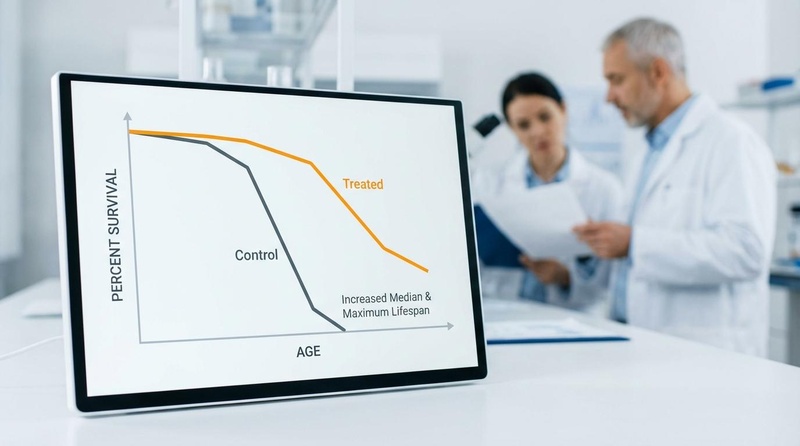
Acarbose is a "star player" in the NIA Interventions Testing Program (ITP), considered the gold standard for longevity research.
- Outcome: Significant extension of median and maximum lifespan.
- Sex Differences: The effect is strongly sexually dimorphic. Male mice see a ~22% increase in median lifespan, while females see a smaller ~5% increase.
- Synergy: The combination of Acarbose + Rapamycin extended male median lifespan by 37%, surpassing either drug alone.
- Evidence Quality: High (Multiple independent replications).
¶ 2. Glucose Control & Metabolic Health
In humans, Acarbose effectively reduces postprandial (after-meal) hyperglycemia.
- Mechanism: By delaying carbohydrate digestion, it prevents sharp spikes in blood glucose and insulin. Lower lifetime insulin exposure is a key theoretical driver of longevity.
- Outcome: Reduction in HbA1c and postprandial glucose excursions.
- Evidence Quality: High (Standard of care for decades).
¶ 3. Cardiovascular Protection
The STOP-NIDDM trial provided compelling human evidence for disease prevention beyond simple glucose control.
- Outcome: Acarbose reduced the risk of cardiovascular events by 49% and myocardial infarction (heart attack) by 91% in pre-diabetic patients.
- Evidence Quality: Moderate (Single large trial, strong effect size).
¶ 4. Cancer Risk Reduction
Observational studies suggest Acarbose users have lower rates of certain cancers.
- Outcome: A nationwide cohort study showed a 27% reduction in colorectal cancer risk among diabetics taking Acarbose.
- Mechanism: Likely due to increased production of butyrate (a short-chain fatty acid) in the colon, which has anti-carcinogenic properties.
- Evidence Quality: Low (Observational data).
⸻
¶ Evidence summary table
| Outcome / Goal | Effect | Consistency | Evidence quality | Trials/Source | Notes |
|---|---|---|---|---|---|
| Lifespan Extension (Male Mice) | High | High | NIA ITP | ~22% median increase; consistent across 3 sites [1][2] | |
| Lifespan Extension (Female Mice) | High | High | NIA ITP | ~5% median increase; much smaller than males [1:1][2:1] | |
| Postprandial Glucose Control | High | High | Multiple RCTs | Standard clinical use for T2D | |
| CV Event Reduction | Moderate | Moderate | STOP-NIDDM | 49% reduction in CV events in pre-diabetics [3] | |
| Colorectal Cancer Risk | Moderate | Low | Observational | 27% risk reduction in large cohort study [4] | |
| Weight Loss | High | Moderate | Multiple RCTs | Modest effect (0.5–1.2 kg); "weight negative" [5] |
⸻
¶ How does Acarbose work?
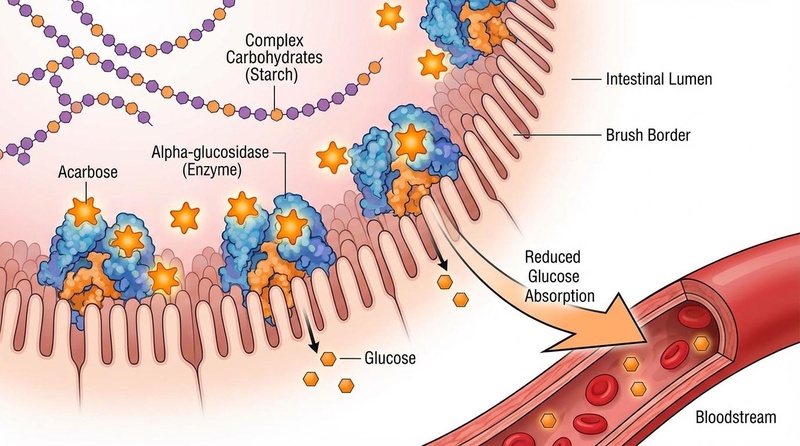
Acarbose operates through two distinct but connected mechanisms that contribute to its geroprotective effects.
¶ 1. Alpha-Glucosidase Inhibition (The "Peak Blunter")
Acarbose blocks enzymes (glucoamylase, sucrase, maltase) lining the small intestine. This delays the digestion of starch and sucrose.
- Result: Instead of a rapid spike in blood glucose (and insulin) after a meal, the glucose enters the bloodstream slowly over hours.
- Longevity Link: Reduced insulin and IGF-1 signaling is a conserved mechanism of aging. By lowering the demand for insulin, Acarbose mimics aspects of a low-glycemic diet or caloric restriction.
¶ 2. Microbiome Remodeling (The "Prebiotic Effect")
Because starch is not digested in the small intestine, it travels to the colon intact. There, it acts as a prebiotic fiber.