¶ Acetyl-L-Carnitine (ALCAR)
| Type | Amino Acid Derivative |
| Active Cmpd | Acetyl-L-Carnitine |
| Source | Endogenous, Red Meat, Supplements |
| Dose Range | 500-1,500 mg/day |
| Half-life | ~4 hours |
| Main Benefit | Mitochondrial support, cognitive enhancement |
| Absorption | High |
Acetyl-L-Carnitine (ALCAR) is an acetylated form of L-carnitine, a naturally occurring amino acid derivative. Recognized for its exceptional ability to cross the blood-brain barrier, ALCAR plays a pivotal role in mitochondrial energy production and the synthesis of key neurotransmitters, making it a focus in cognitive and neurological health.
¶ At a glance
Aliases
- Also known as: ALCAR, Acetylcarnitine
- Chemical / botanical name: Acetyl-L-Carnitine
- Category: Amino acid derivative
Key points (high-level summary)
- In populations with mild cognitive impairment or early Alzheimer's disease, ALCAR consistently improves cognitive performance and may slow decline.
- ALCAR demonstrates antidepressant effects, particularly in older adults and those with dysthymia, with comparable efficacy to some antidepressants and fewer side effects.
- It significantly reduces pain and supports nerve regeneration in various forms of peripheral neuropathy, especially diabetic neuropathy.
- ALCAR has been shown to improve sperm motility and concentration in men with idiopathic oligoasthenoteratozoospermia.
- Caution is advised in patients on warfarin due to potential additive anticoagulant effects, and ALCAR has been shown to worsen taxane-induced neuropathy.
What people use it for
- Main goals: Cognitive function, mood support, nerve pain relief, male fertility
- Evidence quality (overall): Moderate to High for specific indications, Low for broad cognitive enhancement in healthy individuals.
What is Acetyl-L-Carnitine?
Acetyl-L-Carnitine (ALCAR) is a naturally occurring compound synthesized in the human body, primarily in the liver and kidneys, from the amino acids lysine and methionine. It is also found in red meat and available as a dietary supplement. ALCAR is unique from L-carnitine due to its acetyl group, which allows it to readily cross the blood-brain barrier. This property enables ALCAR to perform dual functions: facilitating the transport of fatty acids into mitochondria for energy production and donating an acetyl group for acetylcholine synthesis. In many regions, ALCAR is regulated as a dietary supplement. Its key pharmacological property is its ability to support mitochondrial bioenergetics and cholinergic neurotransmission.
What are Acetyl-L-Carnitine’s main benefits?
ALCAR offers a range of potential benefits, particularly in areas related to neurological and metabolic health, supported by a growing body of clinical evidence.
- Cognitive Function: ALCAR has shown efficacy in improving cognitive performance, attention, and memory in individuals with mild cognitive impairment (MCI) and early-stage Alzheimer's disease, as demonstrated in meta-analyses. It may also help prevent cognitive deterioration in these populations [1].
- Mood Regulation: Several systematic reviews and meta-analyses suggest that ALCAR possesses antidepressant properties, especially in older adults and those with depressive symptoms. It has been found to be as effective as some conventional antidepressants, often with a more favorable side effect profile [2].
- Peripheral Neuropathic Pain: ALCAR is effective in reducing pain and improving nerve function in patients suffering from various peripheral neuropathies, including diabetic neuropathy and chemotherapy-induced neuropathy, although some research indicates it may worsen taxane-induced neuropathy in specific contexts [3][4].
- Male Fertility: Studies indicate that a combination of L-carnitine and ALCAR can significantly improve sperm motility, concentration, and overall pregnancy outcomes in men with idiopathic oligoasthenoteratozoospermia [5].
Evidence summary table (human outcomes)
| Outcome / Goal | Effect* | Consistency** | Evidence quality | Trials*** | Notes (population, duration, dose) |
|---|---|---|---|---|---|
| Cognitive decline (MCI/early AD) | High | High | 21 RCTs | 1.5-3.0 g/day for 3-12 months in MCI/Alzheimer's [1:1] | |
| Depressive symptoms | High | High | 9 RCTs | Significant reduction vs placebo, esp. in older adults [2:1] | |
| Peripheral neuropathic pain | Moderate | Moderate | 4 RCTs | 1.20 VAS score reduction in PNP patients [3:1][4:1] | |
| Sperm motility (idiopathic OAT) | High | High | 10+ studies | Combined LC/ALCAR improves motility and concentration [5:1] |
- *Effect: Number of arrows (1-3) indicates magnitude. Direction: ↑ (increase), ↓ (decrease), = (no effect), ? (unclear). Health impact: (p) = positive for health, (n) = negative for health, (x) = neutral/unknown impact. Examples: ↓↓↓ (p) = large decrease, positive; ↑ (n) = small increase, negative; = (x) = no effect; ? = unclear.
- **Consistency: Low (results conflict), Moderate (mixed but leaning one way), High (most trials agree)
- ***Trials: Number of RCTs or total trials informing this outcome (shows evidence depth at a glance)
- REQUIRED: You MUST include a citation key (e.g.
[^1]) in the "Notes" column for every single row. If you claim a result, you must link the specific Meta-Analysis or Key RCT that proves it.
LongeviData outcomes widget (required)
How does Acetyl-L-Carnitine work?
ALCAR exerts its diverse physiological effects through several interconnected mechanisms, primarily centered on mitochondrial function, neurotransmitter synthesis, and neuroprotection.
- Primary targets: Mitochondria, choline acetyltransferase (ChAT), nerve growth factor (NGF) receptors.
- Core mechanisms:
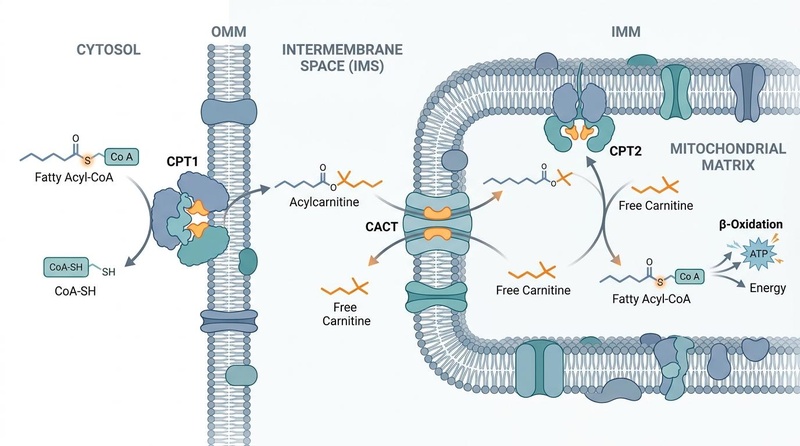
- Mitochondrial Bioenergetics: ALCAR facilitates the transport of long-chain fatty acids into the mitochondrial matrix by forming acylcarnitine, where they undergo beta-oxidation to produce ATP. This process is crucial for tissues with high energy demands, such as neurons [6].
- Acetylcholine Synthesis: The acetyl group from ALCAR can be donated to coenzyme A (CoA) to form acetyl-CoA, a vital precursor for the synthesis of acetylcholine (ACh). ACh is a key neurotransmitter involved in memory, learning, and attention. By increasing acetyl-CoA availability, ALCAR supports cholinergic neurotransmission [6:1].
- Membrane Stability and Neuroprotection: ALCAR contributes to the stability and repair of neuronal cell membranes by providing acetyl groups for phospholipid synthesis. It may also enhance nerve growth factor (NGF) production and receptor activity, promoting nerve regeneration and neuronal survival [6:2].
- Evidence source: Mechanistic studies and animal/in vitro data confirm these roles. Human biomarker studies have also shown changes consistent with these mechanisms.
- Pharmacokinetics basics: ALCAR is well-absorbed orally and readily crosses the blood-brain barrier. It has a relatively short half-life of approximately 4 hours, necessitating divided doses for sustained effects.
Effects on different systems
Acetyl-L-Carnitine's impact extends across multiple physiological systems, particularly benefiting brain, nerve, and reproductive health.
Brain & mental health (cognition, mood, sleep)
ALCAR significantly supports cognitive function by enhancing acetylcholine synthesis, which is critical for memory and learning. This is particularly beneficial in conditions like mild cognitive impairment and early Alzheimer's disease, where cholinergic deficits are prominent [1:2]. Its ability to improve mitochondrial energy production in neurons further supports overall brain health. Furthermore, ALCAR has demonstrated antidepressant effects by modulating neurotransmitter systems, making it a therapeutic option for depressive symptoms, especially in older adults [2:2].
Neurological health (nerve pain)
ALCAR exhibits neuroprotective and analgesic properties, making it effective in managing various forms of peripheral neuropathic pain. It promotes nerve fiber regeneration and improves nerve conduction velocity, providing relief from pain and discomfort associated with conditions like diabetic neuropathy and chemotherapy-induced neuropathy [3:2][4:2]. However, it is important to note specific contexts, such as taxane-induced neuropathy, where its use has been found to worsen symptoms [7].
Male reproductive health
In the context of male fertility, ALCAR, often in combination with L-carnitine, has shown to improve sperm parameters. It contributes to increased sperm motility and concentration, as well as enhanced pregnancy rates in men diagnosed with idiopathic oligoasthenoteratozoospermia. This effect is thought to be mediated through improved mitochondrial function in sperm and antioxidant properties [5:2].
Dosage and how to take it
Acetyl-L-Carnitine is generally well-tolerated, with typical dosing strategies designed to optimize its therapeutic effects.
Standard dosing in studies
- Typical daily dose range: 500–1,500 mg per day.
- Common dosing schedules: Usually divided into two or three doses, often taken with meals to improve absorption and minimize gastrointestinal upset.
- Study durations: Clinical trials have ranged from a few weeks to several months, with longer durations often showing more pronounced and sustained benefits, particularly for cognitive and neuropathic conditions.
Forms and bioavailability
- Common forms: ALCAR is primarily available as a hydrochloride salt in capsule or powder form.
- Bioavailability: ALCAR has high oral bioavailability and readily crosses the blood-brain barrier, making it an efficient delivery system for both L-carnitine and acetyl groups to the brain.
- With or without food: While it can be taken on an empty stomach, taking it with food can reduce the likelihood of mild gastrointestinal side effects.
Special populations
- Dose considerations or lack of data in:
- Kidney or liver impairment: Individuals with severe kidney disease (especially those on dialysis) may have altered carnitine metabolism. Dosing adjustments or medical supervision may be necessary.
- Older adults: Often the target population for cognitive and mood benefits, standard doses are generally well-tolerated.
- Children and adolescents: Insufficient research to recommend routine use; medical guidance is essential if considered.
- Pregnancy and breastfeeding: Lack of sufficient safety data; generally not recommended.
Safety and side effects
Acetyl-L-Carnitine is considered generally safe for most individuals when used at recommended dosages. Clinical trials typically report a safety profile comparable to placebo, with adverse events being mild and transient.
Common side effects
- Mild gastrointestinal upset (nausea, heartburn, stomach pain, diarrhea)
- Headache
- Insomnia or restlessness (especially with high doses or late-day administration)
- A "fishy" body odor (less common with ALCAR than with L-carnitine, and typically at very high doses, indicating excess TMAO production).
- Frequency and dose-relationship: These side effects are usually dose-dependent, becoming more apparent at the higher end of the dosage spectrum (>1,500 mg/day).
Less common / serious concerns
- Increased neuropathic pain: A significant concern has emerged regarding ALCAR's use in chemotherapy-induced peripheral neuropathy. A randomized controlled trial found that ALCAR (3,000 mg/day) increased the severity of taxane-induced neuropathy in breast cancer patients, an effect that persisted long-term [7:1]. Therefore, it is not recommended for this specific indication.
- Thyroid interactions: L-carnitine (and by extension, ALCAR) may antagonize thyroid hormone action at a peripheral level by inhibiting T3 and T4 entry into cell nuclei [8]. While this could be beneficial in hyperthyroidism, it warrants caution in individuals with hypothyroidism or those on thyroid replacement therapy.
Who should be especially cautious or avoid it
- Individuals on warfarin or other anticoagulant medications due to potential additive anticoagulant effects [9].
- Patients undergoing taxane-based chemotherapy due to the risk of worsening neuropathy [7:2].
- Individuals with hypothyroidism or those taking thyroid hormone replacement therapy, due to potential interference with thyroid hormone action [8:1].
- Those with a history of seizures, as carnitine compounds have rarely been associated with increased seizure activity.
LongeviData safety widget (required)
Drug and supplement interactions
ALCAR can interact with certain medications and other supplements, necessitating careful consideration, especially in clinical populations.
Pharmacokinetic interactions (how drugs are processed)
- Thyroid hormones: L-carnitine, and by extension ALCAR, has been shown to act as a peripheral antagonist to thyroid hormone action by inhibiting the entry of T3 and T4 into cell nuclei [8:2]. This interaction is particularly relevant for individuals with hypothyroidism or those on thyroid hormone replacement therapy, as ALCAR could potentially reduce the effectiveness of their medication. Monitoring of thyroid function tests may be warranted.
Pharmacodynamic interactions (additive / opposing effects)
- Anticoagulants (e.g., Warfarin): There are reports suggesting that L-carnitine may enhance the effects of anticoagulant medications like warfarin, potentially increasing the risk of bleeding or bruising [9:1]. While the evidence is not universally consistent, caution is advised. Patients on anticoagulants should consult their physician before taking ALCAR and monitor their INR (International Normalized Ratio) closely if combining these agents.
- Taxane-based chemotherapies (e.g., Paclitaxel): Crucially, ALCAR has been found to worsen chemotherapy-induced peripheral neuropathy (CIPN) in patients receiving taxanes [7:3]. This is a significant contraindication for this specific population.
Combining Acetyl-L-Carnitine with other supplements (“stacks”)
ALCAR is often combined with other supplements to leverage synergistic effects, particularly for mitochondrial and cognitive support.
- Alpha-Lipoic Acid (ALA): Research by Bruce Ames and colleagues demonstrated a powerful synergy between ALCAR and Alpha-Lipoic Acid in aged rats. This combination significantly improved mitochondrial function, reversed mitochondrial decay, decreased oxidative stress, and enhanced memory and energy levels in animal models [10][11][12]. This stack is popular for targeting age-related cellular decline and boosting overall metabolic and cognitive vigor. The rationale is that ALCAR helps transport fatty acids for energy, while ALA, a potent antioxidant, helps regenerate other antioxidants and protect mitochondria from oxidative damage.
- Omega-3 Fatty Acids (DHA): For comprehensive brain health, ALCAR is often combined with DHA, an essential omega-3 fatty acid crucial for neuronal membrane structure and function. This combination can support neuroplasticity and overall cognitive performance.
Practical questions (FAQ)
-
How long does it take for ALCAR to work?
The timeline for effects varies. For acute cognitive benefits or energy, some individuals report feeling effects within hours or days. For neuropathic pain relief or more substantial cognitive improvements in clinical conditions, benefits are typically observed after weeks to months of consistent supplementation (e.g., 4-24 weeks in studies) [3:3][1:3]. -
Can I take ALCAR long term?
ALCAR is generally considered safe for long-term use at recommended dosages. Many clinical trials for cognitive decline and neuropathy have lasted several months to over a year, with a good safety profile. However, long-term use should always be discussed with a healthcare professional, especially if other medications are being taken or underlying health conditions exist. -
Is ALCAR useful if I am otherwise healthy?
While ALCAR is widely used in nootropic communities for perceived cognitive enhancement and energy boosting in healthy individuals, robust, large-scale, Tier 1 evidence (e.g., systematic reviews or meta-analyses in healthy populations) is currently lacking to definitively support these broad claims. Most high-quality evidence focuses on clinical populations with cognitive impairment or specific neurological conditions. -
Does ALCAR cause a "fishy" odor?
A "fishy" body odor is a potential side effect of carnitine supplementation, indicating the accumulation of trimethylamine (TMA) which is then converted to trimethylamine N-oxide (TMAO). While less common with ALCAR than with L-carnitine due to differences in metabolism and absorption, it can occur at very high doses or in individuals with specific gut microbiome compositions. If this occurs, reducing the dose or discontinuing use is recommended.
How we evaluated the evidence
Our evaluation of Acetyl-L-Carnitine's efficacy and safety is based on a rigorous assessment of the available scientific literature, adhering to the "Pyramid of Evidence" hierarchy.
- Study types prioritized: We prioritized evidence from systematic reviews and meta-analyses of randomized controlled trials (RCTs) as the highest tier of evidence. Individual RCTs, large cohort studies, and well-designed mechanistic studies were also considered.
- How you graded evidence quality:
- High: Multiple high-quality RCTs or meta-analyses with consistent, robust results, low risk of bias, and adequate sample sizes.
- Moderate: Some RCTs with minor limitations, or mixed but generally consistent results from otherwise high-quality studies.
- Low: Few RCTs, significant limitations in study design, small sample sizes, or inconsistent results.
- Very low: Primarily observational studies, case reports, animal, or in vitro data; or trials with serious methodological flaws.
- Sample size, risk of bias, consistency, directness, effect size: These factors were critically assessed for each study and outcome to determine the overall strength of the evidence. We noted when results were statistically significant but potentially not clinically meaningful.
- Update frequency: This page will be updated periodically as new high-quality systematic reviews, meta-analyses, or large-scale RCTs become available, particularly concerning human outcomes and safety profiles.
¶ References
Montgomery, S. A., Thal, L. J., & Amrein, R. (2003). Meta-analysis of double blind randomized controlled clinical trials of acetyl-L-carnitine versus placebo in the treatment of mild cognitive impairment and mild Alzheimer's disease. International Clinical Psychopharmacology, 18(2), 61–71. https://pubmed.ncbi.nlm.nih.gov/12598816/ ↩︎ ↩︎ ↩︎ ↩︎
Veronese, N., Stubbs, B., Solmi, M., Ajnakina, O., Carvalho, A. F., & Maggi, S. (2018). Acetyl-L-carnitine supplementation and the treatment of depressive symptoms: a systematic review and meta-analysis. Psychosomatic Medicine, 80(2), 154–159. https://pubmed.ncbi.nlm.nih.gov/29076953/ ↩︎ ↩︎ ↩︎
Li, S., Li, Q., Li, Y., Li, L., Tian, H., & Sun, X. (2015). Acetyl-L-carnitine in the treatment of peripheral neuropathic pain: a systematic review and meta-analysis of randomized controlled trials. PLoS One, 10(3), e0119479. https://doi.org/10.1371/journal.pone.0119479 ↩︎ ↩︎ ↩︎ ↩︎
Di Stefano, G., Di Lionardo, A., Galosi, E., Truini, A., & Cruccu, G. (2019). Acetyl-L-carnitine in painful peripheral neuropathy: a systematic review. Journal of Pain Research, 12, 1341–1351. https://doi.org/10.2147/JPR.S190231 ↩︎ ↩︎ ↩︎
Zhang, X., Cui, Y., & Dong, L. (2020). The efficacy of combined l-carnitine and l-acetyl carnitine in men with idiopathic oligoasthenoteratozoospermia: A systematic review and meta-analysis. Andrologia, 52(2), e13470. https://doi.org/10.1111/and.13470 ↩︎ ↩︎ ↩︎
Ferreira, G. C., & McKenna, M. C. (2017). L-Carnitine and Acetyl-L-carnitine Roles and Neuroprotection in Developing Brain. Neurochemical Research, 42(6), 1661–1675. https://doi.org/10.1007/s11064-017-2288-7 ↩︎ ↩︎ ↩︎
Hershman, D. L., Crew, K. D., D'Andrea, G., Shao, T., Wang, A., Horne, M. K., ... & Green, S. (2013). Randomized double-blind placebo-controlled trial of acetyl-L-carnitine for the prevention of taxane-induced neuropathy in women undergoing adjuvant breast cancer therapy. Journal of Clinical Oncology, 31(20), 2603–2609. https://doi.org/10.1200/JCO.2012.44.8738 ↩︎ ↩︎ ↩︎ ↩︎
Benvenga, S., Ruggeri, R. M., Russo, A., Lapa, D., Campenni, A., & Trimarchi, F. (2004). Effects of carnitine on thyroid hormone action. Annals of the New York Academy of Sciences, 1033, 149–157. https://doi.org/10.1196/annals.1320.015 ↩︎ ↩︎ ↩︎
Bachmann, F., & Hoffmann, T. (2004). Interaction of food supplement L-carnitine with oral anticoagulant acenocoumarol. Thrombosis and Haemostasis, 92(03), 701-702. https://pubmed.ncbi.nlm.nih.gov/15340883/ ↩︎ ↩︎
Hagen, T. M., Liu, J., Lykkesfeldt, J., Wehr, C. M., Ingersoll, R. T., Vinarsky, V., Bartholomew, J. C., & Ames, B. N. (2002). Feeding acetyl-L-carnitine and lipoic acid to old rats significantly improves metabolic function while decreasing oxidative stress. Proceedings of the National Academy of Sciences, 99(23), 15321–15326. https://www.pnas.org/doi/abs/10.1073/pnas.261708898 ↩︎
Liu, J., Head, E., Gharib, A. M., Cotman, C. W., & Ames, B. N. (2002). Memory loss in old rats is associated with brain mitochondrial decay and RNA/DNA oxidation: Partial reversal by feeding acetyl-L-carnitine and/or R-alpha-lipoic acid. Proceedings of the National Academy of Sciences, 99(4), 2356–2361. https://www.pnas.org/doi/full/10.1073/pnas.261709299 ↩︎
Ames, B. N. (2004). The mitochondrial decay theory of aging: role in Alzheimer's disease and other age-associated diseases. Annals of the New York Academy of Sciences, 1019, 10–23. https://pubmed.ncbi.nlm.nih.gov/15288923/ ↩︎