¶ Bifidobacterium
| Type | Probiotic / Postbiotic |
| Active Cmpd | Viable Bacteria / Heat-inactivated cells |
| Source | Human Gut Microbiome |
| Dose Range | 10⁹ – 5×10¹⁰ CFU/cells |
| Half-life | Transient colonization (days) |
| Main Benefit | Gut-brain axis, Metabolic health, IBS |
| Absorption | Mucosal adhesion / interaction |
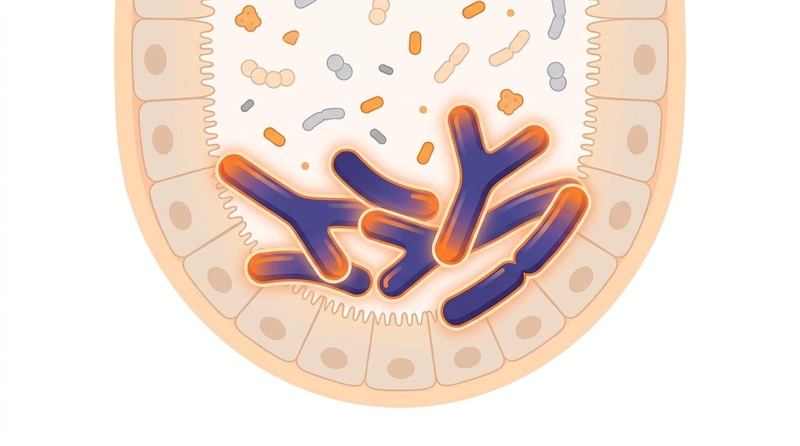
Bifidobacterium is a foundational genus of anaerobic, Gram-positive bacteria that dominate the human gut microbiome from infancy. Clinical evidence supports its use for managing irritable bowel syndrome (IBS), metabolic syndrome, and stress-related psychiatric comorbidities, with emerging research highlighting its role as a key biomarker of longevity and healthy aging.
¶ At a glance
¶ Aliases
- Also known as: Bifidobacteria, Bifidus
- Category: Probiotic (live bacteria) or Postbiotic (heat-inactivated bacteria)
¶ Key points
- Targeted Clinical Efficacy: Specific strains (e.g., B. longum NCC3001, B. bifidum MIMBb75) demonstrate high-quality evidence for alleviating depression scores and global IBS symptoms [1][2].
- Metabolic Support: Recent 2024–2025 meta-analyses confirm significant reductions in body fat mass, waist circumference, and liver inflammation markers in adults with obesity and NAFLD [3][4][5].
- Longevity Link: Centenarians harbor a uniquely high prevalence (up to 92%) and diversity of Bifidobacterium species, suggesting a protective role against age-related systemic inflammation (inflammaging) [6][7].
- Epigenetic Aging: Randomized controlled trials indicate that specific strains like B. longum BB536, when combined with lifestyle interventions, can modulate DNA methylation-based aging biomarkers [8].
- High Safety Profile: Generally regarded as safe (GRAS), with no evidence of producing neurotoxic D-lactate, thus debunking "brain fog" concerns associated with other probiotics [9][10].
¶ What people use it for
- Main goals: IBS symptom relief, mood support (psychobiotics), weight management, metabolic health, and immune resilience.
- Evidence quality (overall): Moderate (High for specific strains and outcomes like IBS; Low for general "longevity" interventions in humans).
¶ What is Bifidobacterium?
Bifidobacterium is one of the most widely researched genera of probiotic bacteria. Unlike Lactobacillus, which primarily resides in the small intestine, Bifidobacterium strictly colonizes the large intestine (colon), where it plays a critical role in fermenting complex carbohydrates and regulating the host immune system [11][12].
- Definition: A genus of Gram-positive, non-spore-forming, strictly anaerobic bacteria belonging to the Actinobacteria phylum [12:1].
- Natural sources: Primarily the human and mammalian gut; certain strains are found in fermented dairy, though true colonization often requires human-derived clinical strains.
- Regulatory status: Generally Recognized As Safe (GRAS) by the U.S. FDA and maintaining Qualified Presumption of Safety (QPS) status by the EFSA [13][14].
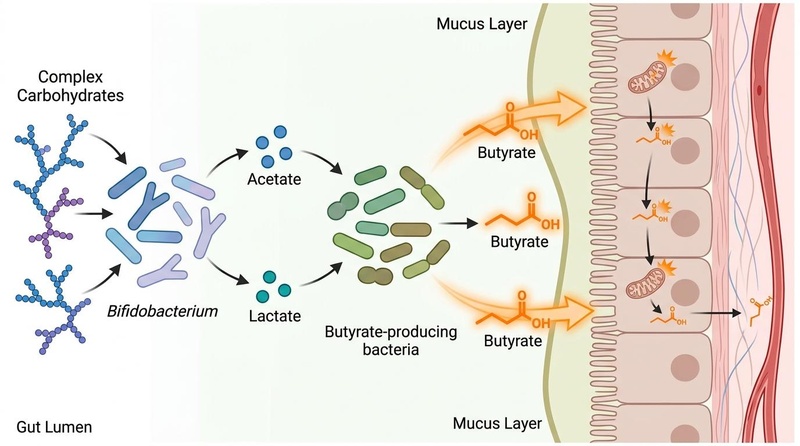
- Key property: A "bifid shunt" metabolic pathway that efficiently converts complex prebiotics into acetate and lactate, providing the primary substrate for host butyrate production [11:1][12:2].
¶ What are Bifidobacterium’s main benefits?
Bifidobacterium interventions represent a targeted, pathway-specific therapy rather than a general digestive aid.
- Irritable Bowel Syndrome (IBS): Alleviates pain, bloating, and urgency. Responder rates for specific strains like B. bifidum MIMBb75 can reach 57%, significantly outperforming placebo [1:1][15].
- Mental Health & Mood (Psychobiotics): Reduces depression and anxiety scores while altering brain activity in the amygdala to dampen responses to negative emotional stimuli [2:1][16].
- Metabolic Syndrome & Obesity: Modestly but significantly reduces body fat mass (MD = −0.64 kg), BMI, and fasting blood glucose through SCFA-mediated metabolic regulation [3:1][4:1].
- Longevity: Preservation of Bifidobacterium diversity in extreme age is linked to reduced "inflammaging" and maintained metabolic homeostasis (Dysbiosis) [6:1][17].
¶ Evidence summary table (human outcomes)
| Outcome / Goal | Effect* | Consistency | Evidence quality | Trials | Notes (population, duration, dose) |
|---|---|---|---|---|---|
| IBS Symptom Relief | High | Moderate to High | >20 RCTs | 10⁹–10¹⁰ cells/day for 4–8 weeks; strain-specific (MIMBb75)[1:2][18] | |
| Depression Scores | Moderate | Moderate | 5+ RCTs | Reduced HAD scale scores in IBS/stress patients (B. longum NCC3001)[2:2][16:1] | |
| Body Fat Reduction | High | Moderate | 21 RCTs | Reduced fat mass and visceral fat in overweight adults (B. breve B-3)[19][3:2] | |
| NAFLD Markers | Moderate | Moderate | 24 RCTs | Reduced LDL, Triglycerides, and hs-CRP; modest liver enzyme impact[5:1] | |
| Pediatric Immunity | High | Moderate | 10+ RCTs | Reduced respiratory infection incidence and diarrhea in children[20][21][22] | |
| Epigenetic Aging | Low | Low to Moderate | 1 RCT | Modulated DNA methylation clocks in exploratory trial (BB536)[8:1] | |
| Stroke Recovery | Moderate | Low to Moderate | 9 RCTs | Improved neurological (GCS/NIHSS) and nutritional markers in SIS patients[23][24] | |
| Cyclist Performance | Moderate | Low to Moderate | 3 RCTs | Improved exogenous carbohydrate oxidation and barrier integrity[25][26] |
*Effect: Number of arrows (1-3) indicates magnitude. Direction: ↑ (increase), ↓ (decrease), = (no effect). Health impact: (p) = positive. Examples: ↓↓ (p) = moderate decrease, positive.
¶ How does Bifidobacterium work?
The clinical efficacy of Bifidobacterium is driven by interconnected biochemical mechanisms at the mucosal interface:
- Acetate-Butyrate Cross-Feeding: Bifidobacterium ferments prebiotics into acetate and lactate. These act as primary substrates for butyrate-producing bacteria (e.g., Faecalibacterium prausnitzii), which nourish colonocytes and seal the gut barrier [20:1][12:3][4:2].
- Aryl Hydrocarbon Receptor (AhR) Activation: Strains like B. infantis utilize tryptophan to synthesize indole derivatives (e.g., indole-3-lactic acid). These ligands activate host AhR, upregulating IL-22 and antimicrobial peptides to protect against systemic endotoxemia [27][28].
- HPA Axis Regulation: By limiting systemic lipopolysaccharide (LPS) exposure and altering vagal afferent signaling, Bifidobacterium attenuates the cortisol response to stress and modulates amygdala reactivity [29][30].
- Neurotrophic Signaling: Specific strains like B. bifidum TMC3115 have been shown in preclinical models to promote synaptic development in the hippocampus via the IL-6/JAK2/STAT3 signaling pathway, suggesting potential for neuroprotection [31].
¶ Effects on different systems
¶ Longevity and Healthy Aging
Aging is typically associated with a decline in Bifidobacterium abundance. However, centenarians (aged 100+) and semi-supercentenarians (105+) maintain a uniquely high diversity and prevalence (up to 92%) of these bacteria [6:2]. Recent exploratory research into Bifidobacterium longum BB536 suggests that regular consumption may influence DNA methylation-based aging biomarkers, potentially decelerating biological aging when combined with exercise and dietary guidance [8:2].
¶ Metabolic Health (Obesity & NAFLD)
Meta-analyses involving over 1,600 patients demonstrate that Bifidobacterium-containing protocols significantly reduce systemic inflammation markers (hs-CRP, TNF-α, IL-6) and improve lipid profiles (LDL and Triglycerides) in metabolic disorders [4:3][5:2]. B. breve B-3 specifically targets visceral fat reduction through the modulation of adiponectin and GLP-1 levels [19:1][32].
¶ Brain and Mental Health (Psychobiotics)
The gut-brain axis modulation by Bifidobacterium is particularly robust. Randomized trials of B. longum NCC3001 show a significant reduction in depression scores and a dampenened neural response to negative emotional stimuli in the amygdala and fronto-limbic regions [2:3][30:1]. Emerging research highlights the potential of strains like B. bifidum TMC3115 in supporting hippocampal synaptic plasticity [31:1].
¶ Sports Performance and Endurance
High-intensity exercise can induce "leaky gut" due to gastrointestinal ischemia. In competitive road cyclists, multi-strain probiotics including B. bifidum significantly reduce fecal zonulin levels (a marker of barrier breakdown) and improve the oxidation of orally ingested carbohydrates during endurance efforts, sparing intramuscular glycogen [25:1][26:1].
¶ Dosage and how to take it
¶ Standard dosing in studies
- IBS & Mood: 1 × 10⁹ to 1 × 10¹⁰ CFU/cells per day. Higher doses are not always more effective; for B. infantis 35624, 10⁸ CFU was found to be the optimal target [33][18:1].
- Metabolic Health: 20 billion to 50 billion CFU/day (e.g., B. breve B-3) for a minimum of 12 weeks [19:2][34].
- Pediatric Use: 4 × 10⁹ to 1.8 × 10¹⁰ CFU/day is used for stable microbiome restoration in infants [35][22:1].
¶ Forms and bioavailability
- Probiotics (Live): Requires enteric coating or acid-resistant capsules to survive stomach transit.
- Postbiotics (Heat-Inactivated): Clinically validated to be as effective as live bacteria for IBS relief (e.g., HI-MIMBb75), offering superior shelf-stability [36][18:2].
- Prebiotic Synergy: Co-administration with Galacto-oligosaccharides (GOS) at 1.3–2.0 g/day significantly amplifies the colonization and metabolic output of native Bifidobacterium [29:1][10:1].
¶ Safety and side effects
- Common side effects: Mild, transient gas and bloating during the first 3–5 days of use as the microbiome adjusts [37].
- D-Lactic Acidosis: Bifidobacterium species produce only L-lactate and are biochemically incapable of producing D-lactate. They do not cause the "brain fog" or metabolic acidosis associated with certain Lactobacillus overgrowth cases [9:1][10:2].
- Who should be cautious: Severely immunocompromised patients (e.g., HIV/AIDS, active chemotherapy) or those with artificial heart valves should avoid live probiotics due to the rare risk of opportunistic bacteremia [37:1].
¶ Drug and supplement interactions
- Antibiotics: Broad-spectrum antibiotics universally kill both pathogenic and probiotic bacteria. Bifidobacterium should be taken 2–3 hours apart from antibiotic doses to maintain viability [37:2].
- Metformin: Metformin has been shown to increase the relative abundance of Bifidobacterium and Akkermansia, potentially synergizing with probiotic supplementation to improve insulin sensitivity.
¶ Practical questions (FAQ)
- How long does it take for Bifidobacterium to work?
Clinical trials for IBS and mood typically report significant results after 4 to 8 weeks of continuous daily use [1:3][2:4]. - Do I need to cycle probiotics?
While some practitioners suggest rotating strains to mimic dietary diversity, clinical trials often focus on sustained 3–6 month protocols for chronic conditions like metabolic syndrome or IBS [38]. - Is it better to take live or heat-killed Bifidobacterium?
For IBS, both forms are equally effective. Heat-killed (postbiotics) may be preferable for those with compromised immune systems or when shelf-stability is a concern [18:3][39].
¶ How we evaluated the evidence
Our evidence grading prioritizes:
- High: Multiple multicenter RCTs or meta-analyses (e.g., IBS symptom relief, metabolic markers).
- Moderate: Single high-quality RCTs or consistent smaller studies (e.g., mood/depression, NAFLD).
- Low: Pilot studies, animal models, or observational data (e.g., longevity interventions, sports performance).
¶ References
Guglielmetti, S., et al. (2011). Randomised clinical trial: Bifidobacterium bifidum MIMBb75 significantly alleviates irritable bowel syndrome. Alimentary Pharmacology & Therapeutics, 33(10), 1123-1132. https://doi.org/10.1111/j.1365-2036.2011.04633.x ↩︎ ↩︎ ↩︎ ↩︎
Pinto-Sanchez, M. I., et al. (2017). Probiotic Bifidobacterium longum NCC3001 Reduces Depression Scores and Alters Brain Activity. Gastroenterology, 153(2), 448-459.e8. https://doi.org/10.1053/j.gastro.2017.05.003 ↩︎ ↩︎ ↩︎ ↩︎ ↩︎
Taylor & Francis (2024). Meta-analysis of Bifidobacterium intervention on obesity-related anthropometric outcomes. https://www.tandfonline.com/doi/full/10.1080/27697061.2024.2320192 ↩︎ ↩︎ ↩︎
National Center for Biotechnology Information (PMC) (2024). Probiotics for weight management: A meta-analysis of randomized controlled trials. https://pmc.ncbi.nlm.nih.gov/articles/PMC12509062/ ↩︎ ↩︎ ↩︎ ↩︎
International Journal of Molecular Sciences (2025). Gut Microbiota and Liver Health: Meta-Analysis of Bifidobacterium-Containing Probiotics in NAFLD Management. https://pubmed.ncbi.nlm.nih.gov/40649724/ ↩︎ ↩︎ ↩︎
National Center for Biotechnology Information (PMC) (2024). Composition of fecal Bifidobacterium species in centenarians. https://pmc.ncbi.nlm.nih.gov/articles/PMC11315853/ ↩︎ ↩︎ ↩︎
Bifidobacterium and longevity: Research on centenarians. (2024). Frontiers in Bioengineering and Biotechnology. https://pmc.ncbi.nlm.nih.gov/articles/PMC11315853/ ↩︎
Hirayama, S., et al. (2024). Short-term responsiveness of DNA methylation-based aging biomarkers to a multimodal intervention comprising exercise and dietary guidance involving daily consumption of yogurt containing Bifidobacterium longum BB536: an exploratory randomized controlled trial. Journal of Clinical Biochemistry and Nutrition. https://pubmed.ncbi.nlm.nih.gov/42377118/ ↩︎ ↩︎ ↩︎
International Scientific Association for Probiotics and Prebiotics (ISAPP) / PMC (2018). Response to Rao et al.: Brain fogginess and the D-lactic acidosis controversy. https://isappscience.org/brain-fogginess-probiotics-not-the-cause/ ↩︎ ↩︎
MDPI Nutrients (2023). Bifidobacterium: Mechanism of Action in Modulating Immune Responses. https://www.mdpi.com/2072-6643/15/3/709 ↩︎ ↩︎ ↩︎
MyGeneFood / Body of Harmony / MindBodyGreen (2023). Bifidobacterium vs Lactobacillus comparison. https://www.mygenefood.com/blog/bifidobacterium-vs-lactobacillus-strains/ ↩︎ ↩︎
National Center for Biotechnology Information (PMC) (2016). Probiotic strains of Lactobacillus and Bifidobacterium genera. https://pmc.ncbi.nlm.nih.gov/articles/PMC4818210/ ↩︎ ↩︎ ↩︎ ↩︎
EFSA Panel on Biological Hazards. (2013). Scientific Opinion on the maintenance of the list of QPS biological agents. https://pmc.ncbi.nlm.nih.gov/articles/PMC11687494/ ↩︎
Bifidobacterium as Probiotics: Mechanisms and Safety. (2024). Frontiers in Microbiology. https://pmc.ncbi.nlm.nih.gov/articles/PMC11977362/ ↩︎
Guglielmetti, S., et al. (2011). Randomised clinical trial: Bifidobacterium bifidum MIMBb75 significantly alleviates IBS. Alimentary Pharmacology & Therapeutics. https://pubmed.ncbi.nlm.nih.gov/21418261/ ↩︎
Pinto-Sanchez, M. I., et al. (2017). Probiotic Bifidobacterium longum NCC3001 study in patients with IBS. Gastroenterology. https://www.researchgate.net/publication/316751614_Probiotic_Bifidobacterium_longum_NCC3001_Reduces_Depression_Scores_and_Alters_Brain_Activity_A_Pilot_Study_in_Patients_With_Irritable_Bowel_Syndrome ↩︎ ↩︎
Current Issues in Intestinal Microbiology (2024). Bifidobacterium and Longevity. https://d-nb.info/1346468982/34 ↩︎
Andresen, V., et al. (2020). Heat-inactivated Bifidobacterium bifidum MIMBb75 in the treatment of IBS. The Lancet Gastroenterology & Hepatology, 5(7), 658-666. https://doi.org/10.1016/S2468-1253(20)30056-X ↩︎ ↩︎ ↩︎ ↩︎
Minami, J., et al. (2015). Oral administration of Bifidobacterium breve B-3 modifies metabolic functions in adults with obese tendencies in a randomised controlled trial. Journal of Nutritional Science, 4, e17. https://doi.org/10.1017/jns.2015.5 ↩︎ ↩︎ ↩︎
Mageswary, U., et al. (2025). Clinical benefits of Bifidobacterium infantis YLGB-1496 in modulating gut microbiota and immunity in young children. Frontiers in Nutrition, 12. https://doi.org/10.3389/fnut.2025.1713135 ↩︎ ↩︎
NutraIngredients (2026). Bifidobacterium probiotic strain may fine-tune immune responses in children. https://www.nutraingredients.com/Article/2026/01/15/bifidobacterium-probiotic-strain-may-fine-tune-immune-responses-in-children/ ↩︎
Szajewska H, Hojsak I. (2020). Health benefits of Lactobacillus rhamnosus GG and Bifidobacterium animalis subspecies lactis BB-12 in children. Postgraduate Medicine, 132(5), 441-451. https://pubmed.ncbi.nlm.nih.gov/32059116/ ↩︎ ↩︎
Frontiers in Microbiology (2025). Bifidobacterium compound preparations for severe ischemic stroke: A systematic review and meta-analysis. https://www.frontiersin.org/journals/microbiology/articles/10.3389/fmicb.2025.1577898/full ↩︎
National Center for Biotechnology Information (PMC) (2024). Bifidobacterium longum ES1 and HT-ES1 for Irritable Bowel Syndrome. https://pmc.ncbi.nlm.nih.gov/articles/PMC11028008/ ↩︎
American Journal of Physiology: Endocrinology and Metabolism (2020). Probiotic supplementation increases carbohydrate metabolism in trained male cyclists. https://journals.physiology.org/doi/full/10.1152/ajpendo.00452.2019 ↩︎ ↩︎
National Center for Biotechnology Information (PMC) (2022). Effects of probiotic supplementation on cyclists' aerobic capacity and gut permeability. https://pmc.ncbi.nlm.nih.gov/articles/PMC9566127/ ↩︎ ↩︎
Li, J., et al. (2025). From microbiota to metabolomics: how Bifidobacterium infantis YLGB-1496 shields neonates from necrotizing enterocolitis. Food & Function. https://doi.org/10.1039/d5fo03645c ↩︎
Food Navigator Asia (2025). B. breve B-3 and B. longum BB536 for metabolic health. https://www.foodnavigator-asia.com/News/Promotional-features/b-breve-b-3-and-b-longum-bb536-for-metabolic-health/ ↩︎
Frontiers in Nutrition (2024). Galacto-oligosaccharides increase Bifidobacterium in healthy women. Clinical trial NCT05762965. https://www.frontiersin.org/journals/nutrition/articles/10.3389/fnut.2024.1440319/full ↩︎ ↩︎
Gut Microbiota for Health (2017). Probiotics can reduce depression scores alter brain activity in humans with IBS. https://www.gutmicrobiotaforhealth.com/new-study-shows-probiotics-can-reduce-depression-scores-alter-brain-activity-humans-ibs/ ↩︎ ↩︎
Wang, Y., et al. (2024). Bifidobacterium bifidum TMC3115-RAW264.7 cell conditioned mediums promote the synaptic development of primary hippocampal neuron via activating IL-6/JAK2/STAT3 signaling pathway. Brain Research. https://pubmed.ncbi.nlm.nih.gov/42385959/ ↩︎ ↩︎
Morinaga Milk (2024). Efficacy of Bifidobacterium breve B-3. https://morinagamilk-ingredients.com/probiotics/b3/efficacy.html ↩︎
Weill Cornell Medical College / American Journal of Gastroenterology (2006). Efficacy of encapsulated probiotic Bifidobacterium infantis 35624 in women with IBS. https://vivo.weill.cornell.edu/display/pubid16863564 ↩︎
Minami, J., et al. (2018). Effects of Bifidobacterium breve B-3 on body fat reductions in pre-obese adults: a randomized, double-blind, placebo-controlled trial. Bioscience of Microbiota, Food and Health, 37(3), 67-75. https://pubmed.ncbi.nlm.nih.gov/30094122/ ↩︎
mSphere (2025). Re-establishing B. infantis EVC001 in exclusively breastfed infants. https://journals.asm.org/doi/10.1128/msphere.00518-25 ↩︎
Heat-inactivated Bifidobacterium bifidum MIMBb75 (SYN-HI-001) in the treatment of irritable bowel syndrome. (2020). The Lancet Gastroenterology & Hepatology. https://doi.org/10.1016/S2468-1253(20)30056-X ↩︎
WebMD / RxList / Medscape (Current). Bifidobacterium: Side effects, contraindications, and drug interactions. https://www.webmd.com/vitamins/ai/ingredientmono-1666/bifidobacterium-bifidum ↩︎ ↩︎ ↩︎
Lifestyle Matrix (2024). Key Considerations for Rotating Probiotics. https://www.lifestylematrix.com/blog/post/key-considerations-for-rotating-probiotics ↩︎
EurekAlert (2020). Heat-killed probiotic bacteria significantly improve IBS symptoms. https://www.eurekalert.org/news-releases/545584 ↩︎