¶ Biotin
| Type | Water-soluble Vitamin (B7) |
| Active Cmpd | D-Biotin |
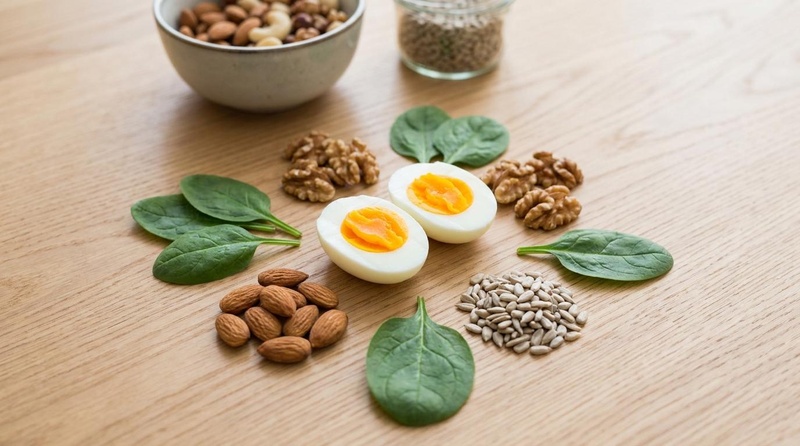
| Source | Egg yolks, liver, gut bacteria |
| Dose Range | 30 mcg – 10 mg |
| Half-life | ~110 minutes (dose-dependent) |
| Main Benefit | Metabolism & Keratin synthesis |
| Absorption | High (active transport) |
Biotin (Vitamin B7) is an essential water-soluble micronutrient that acts as a mandatory coenzyme for five human carboxylases involved in energy metabolism and fatty acid synthesis. While it is widely popularized for hair and nail growth, robust human clinical evidence supports these cosmetic benefits primarily in cases of documented deficiency, with limited proven efficacy for healthy individuals.
¶ At a glance
Aliases
- Also known as: Vitamin B7, Vitamin H, Coenzyme R
- Chemical / botanical name: Hexahydro-2-oxo-1H-thieno[3,4-d]imidazole-4-valeric acid
- Category: Vitamin (B-complex)
Key points (high-level summary)
- In individuals with documented biotin deficiency or brittle nail syndrome, supplementation significantly improves nail thickness and hardness [1].
- There is no high-quality evidence that biotin supplementation increases hair growth or thickness in healthy adults without an underlying deficiency [2][3].
- High-dose biotin (300 mg/day) failed to demonstrate clinical benefit in reversing disability in patients with progressive multiple sclerosis (SPI2 trial) [4][5].
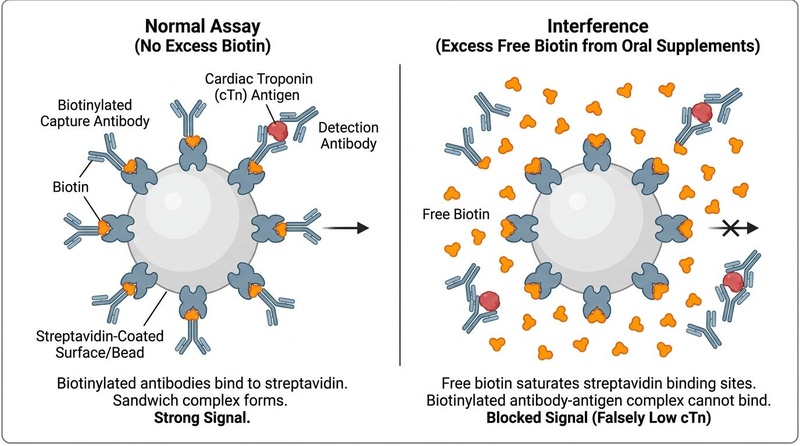
- Critical Safety Concern: Biotin supplements interfere with streptavidin-based laboratory assays, potentially causing life-threatening misdiagnoses (e.g., falsely low troponin) [6][7].
What people use it for
- Main goals: Nail strengthening, hair growth, metabolic support, glycemic control.
- Evidence quality (overall): Low to Moderate (High for deficiency states, Low for cosmetic use in healthy individuals).
¶ What is Biotin?
Biotin is a small, sulfur-containing molecule that is indispensable for human life. Unlike many other vitamins, biotin is not only obtained from the diet but is also synthesized by commensal bacteria in the large intestine, although the extent to which this contributes to human requirements remains a subject of active research [8][9].
- Definition: A water-soluble B-vitamin that functions as a cofactor for enzymes transferring CO2 groups.
- Natural sources: Concentrated in egg yolks, organ meats (liver, kidney), nuts (almonds, walnuts), seeds, and certain vegetables like sweet potatoes [7:1].
- Traditional / historical use: Historically identified as "Vitamin H" (from the German Haar und Haut for hair and skin) due to the dramatic skin and coat changes seen in animals fed raw egg whites (which contain the biotin-binding protein avidin).
- Current regulatory status: Dietary supplement (GRAS) in most jurisdictions; also used in pharmaceutical-grade high doses for specific metabolic disorders.
- Key pharmacological property: Essential enzymatic cofactor for carboxylase enzymes.
¶ What are Biotin’s main benefits?
Biotin’s primary physiological role is metabolic, but it is most frequently supplemented for its downstream effects on keratinized tissues.
-
Outcome: Brittle Nail Syndrome
-
Direction of effect: Decrease (brittleness) / Increase (thickness)
-
Magnitude: Moderate (25% increase in nail plate thickness reported) [1:1][10]
-
Population studied: Adults with brittle, splitting, or soft nails.
-
Evidence quality: Moderate
-
Summary sentence: Clinical trials have consistently shown that biotin improves nail firmness and reduces splitting in patients with brittle nails.
-
Outcome: Hair Loss (Alopecia)
-
Direction of effect: No consistent effect (in healthy individuals)
-
Magnitude: Small to None
-
Population studied: Healthy adults and those with various forms of alopecia.
-
Evidence quality: Low
-
Summary sentence: Systematic reviews indicate that while biotin is vital for hair health, supplementation does not improve hair growth in people who are not biotin-deficient [2:1][3:1].
-
Outcome: Glycemic Control in Type 2 Diabetes
-
Direction of effect: Decrease (Fasting blood glucose)
-
Magnitude: Small
-
Population studied: Patients with Type 2 Diabetes Mellitus.
-
Evidence quality: Low
-
Summary sentence: Meta-analyses suggest a minor reduction in fasting blood glucose and triglycerides, but no significant impact on HbA1c or insulin levels [11][12].
¶ Evidence summary table (human outcomes)
| Outcome / Goal | Effect* | Consistency** | Evidence quality | Trials*** | Notes (population, duration, dose) |
|---|---|---|---|---|---|
| Brittle Nail Thickness | Moderate | Moderate | 4 Trials | 2.5 mg/day for 6–15 months in adults with brittle nails [1:2][10:1] | |
| Hair Growth (Healthy) | High | Low | 18+ Studies | Lack of benefit in healthy adults; benefit restricted to deficiency cases [2:2][3:2] | |
| Glycemic Control (FBG) | Moderate | Low | Meta-analysis | Modest reduction in fasting glucose in T2D patients [11:1][12:1] | |
| Progressive MS Recovery | High | High | 2 Large RCTs | 300 mg/day failed to improve disability outcomes in Phase 3 SPI2 trial [4:1][5:1] | |
| Marginal Deficiency (Pregnancy) | High | Moderate | Observation | Rapid biotin catabolism in pregnancy; 1/3 to 1/2 of women show marginal deficiency [13][14] |
Biotin doses as low as 5 mg can cause significant interference with streptavidin-biotin immunoassays. This leads to falsely low Troponin (hiding heart attacks) and falsely low TSH with falsely high T4 (mimicking Graves' disease) [^9][^10]. Stop biotin at least 72 hours before any blood test.
¶ How does Biotin work?
Biotin acts as a "CO2 carrier," facilitating the transfer of carboxyl groups in metabolic reactions. It is covalently attached to five essential carboxylase enzymes via the enzyme holocarboxylase synthetase (HCS) [8:1][15].
- Primary targets: Pyruvate carboxylase (PC), Acetyl-CoA carboxylase (ACC1/2), Propionyl-CoA carboxylase (PCC), and 3-Methylcrotonyl-CoA carboxylase (MCC).
- Core mechanisms:
- Metabolic Hub: Regulates the Citric Acid (TCA) cycle, gluconeogenesis, and fatty acid synthesis.
- Keratin Synthesis: Though the exact mechanism is unclear, biotin is involved in the protein synthesis pathways required for keratin production in hair and nails [2:3].
- Epigenetic Regulation: Biotin can be covalently attached to histones (biotinylation), which plays a role in gene expression and DNA repair [8:2][7:2].
- Evidence source:
- Human data: Well-established coenzyme function; biomarkers of deficiency (e.g., 3-hydroxyisovaleric acid) used to track status.
- Pharmacokinetics: Rapidly absorbed via the sodium-dependent multivitamin transporter (SMVT) in the small intestine. Peak plasma levels occur within 1–2 hours. Excretion is primarily renal [16][17].
¶ Effects on different systems
¶ Metabolic health
Biotin is a key regulator of glucose and lipid metabolism. In diabetic populations, it may enhance insulin sensitivity and stimulate glucokinase, an enzyme involved in glucose utilization. However, clinical meta-analyses show that while lipids (triglycerides, VLDL) and fasting glucose may improve slightly, long-term markers like HbA1c often remain unchanged [11:2][12:2].
¶ Hair, Skin, and Nails
The association between biotin and skin health is rooted in "Vitamin H" history. True deficiency causes periorificial dermatitis and alopecia. In brittle nail syndrome, biotin supplementation has been shown via electron microscopy to increase the thickness and smoothness of the nail plate [1:3].
¶ Neurological health
High-dose biotin was explored in progressive Multiple Sclerosis (MS) under the hypothesis that it would provide demyelinated axons with more ATP and promote remyelination via fatty acid synthesis. Despite promising pilot data, large-scale Phase 3 trials (SPI2) showed no clinical benefit over placebo for disability reversal [4:2][5:2].
¶ Pregnancy and Lactation
Biotin requirements increase significantly during pregnancy. Approximately 33% to 50% of pregnant women develop marginal biotin deficiency (indicated by increased urinary 3-hydroxyisovaleric acid), which has raised concerns due to the potent teratogenic effects of biotin deficiency observed in animal models [13:1][14:1].
¶ Dosage and how to take it
¶ Standard dosing in studies
- Adequate Intake (AI): 30 mcg/day for adults (minimum required to prevent deficiency) [7:3].
- Cosmetic use (nails): 2.5 mg (2,500 mcg) daily is the most common dose used in brittle nail studies [1:4].
- Cosmetic use (hair): Often sold in doses of 5 mg to 10 mg (5,000–10,000 mcg), though efficacy at this level for healthy people is unproven.
- Clinical metabolic support: 5–15 mg/day in conjunction with other B-vitamins or chromium.
¶ Forms and bioavailability
- Common forms: D-Biotin (natural and synthetic), Magnesium Biotinate.
- Magnesium Biotinate: A novel, highly soluble form (40x more soluble than D-Biotin) that may offer superior absorption and bioavailability [16:1][17:1].
- With or without food: Can be taken with or without food; however, raw egg whites should be avoided as they contain avidin, which prevents biotin absorption [7:4].
¶ Special populations
- Pregnancy: Increased requirements; marginal deficiency is common.
- Biotinidase Deficiency: A rare genetic disorder requiring lifelong high-dose supplementation (5–20 mg/day) to prevent severe neurological damage [18][15:1].
¶ Safety and side effects
Biotin is considered exceptionally non-toxic, with no established Tolerable Upper Intake Level (UL).
¶ Common side effects
- Generally well-tolerated.
- Rare reports of digestive upset or skin rashes at extremely high doses.
¶ The Laboratory Interference Danger
The most significant "side effect" is not biological but diagnostic. Many laboratory tests use a biotin-streptavidin binding system. High circulating biotin (from supplements) binds to the test reagents, causing:
- Falsely Low: Cardiac Troponin (leading to missed heart attacks), TSH, Progesterone, Testosterone, Vitamin B12 [6:1][7:5].
- Falsely High: Free T4, Free T3, Cortisol [19].
¶ Who should be especially cautious
- Patients scheduled for blood work (must stop 72+ hours prior).
- Patients with symptoms of a heart attack (inform EMS if taking biotin).
¶ Drug and supplement interactions
¶ Pharmacokinetic interactions
- Anticonvulsants: Long-term use of carbamazepine, phenytoin, or phenobarbital can lower biotin levels by competing for absorption and increasing renal clearance [18:1].
- Smoking: Accelerates biotin catabolism, particularly in women [7:6].
¶ Pharmacodynamic interactions
- Lipoic Acid: May compete for the same transport mechanism (SMVT), potentially lowering the uptake of either when taken together in high doses [8:3].
- Raw Egg Whites: Avidin binds biotin with near-irreversible affinity, inducing deficiency if consumed in large quantities regularly.
¶ Combining Biotin with other supplements (“stacks”)
- For Nails: Often combined with Collagen or Silica.
- For Glycemic Control: Often stacked with Chromium Picolinate, which may have a synergistic effect on insulin sensitivity [12:3].
- For Hair: Combined with Zinc, Iron, and Vitamin D, though addressing an underlying iron or Vitamin D deficiency is typically more effective for hair loss than biotin alone.
¶ Practical questions (FAQ)
-
How long does it take for biotin to work for nails?
Clinical studies typically show results after 3 to 6 months of daily 2.5 mg supplementation, corresponding to the time required for a new nail to grow out [1:5]. -
Can biotin cause acne?
There is anecdotal evidence ("the biotin breakout"), possibly due to competition with Vitamin B5 (pantothenic acid) for absorption, but this is not well-supported by clinical literature. -
Does biotin help with weight loss?
While involved in fatty acid metabolism, there is no evidence that biotin supplementation promotes weight loss in humans. -
Is biotin useful if I am healthy?
Unless you are pregnant, a heavy smoker, or have brittle nails, the benefit of supplementing beyond the Recommended Daily Intake is likely negligible. -
Is "Magnesium Biotinate" better than regular Biotin?
Early research suggests it has significantly higher solubility and better tissue distribution (liver/brain) in animal models, but human clinical outcomes comparing the two are sparse [16:2][17:2].
¶ How we evaluated the evidence
- Study types prioritized: Systematic reviews (Cochrane, PubMed), meta-analyses, and Phase 3 randomized controlled trials (e.g., SPI2).
- Evidence Grading:
- High: Consistent results from multiple high-quality RCTs (e.g., MS data, Laboratory interference).
- Moderate: Small RCTs or consistent evidence in specific subgroups (e.g., Brittle nails).
- Low: Case series, small pilot studies, or inconsistent results (e.g., Hair growth in non-deficient adults, Glycemic control).
¶ References
Lipner, S. R., & Scher, R. K. (2018). Biotin for the treatment of nail disease: what is the evidence? The Journal of dermatological treatment. https://pubmed.ncbi.nlm.nih.gov/29057689/ ↩︎ ↩︎ ↩︎ ↩︎ ↩︎ ↩︎
Yelich, A., et al. (2024). Biotin for Hair Loss: Teasing Out the Evidence. The Journal of clinical and aesthetic dermatology. https://pubmed.ncbi.nlm.nih.gov/39148962/ ↩︎ ↩︎ ↩︎ ↩︎
Patel, D. P., et al. (2017). A Review of the Use of Biotin for Hair Loss. Skin appendage disorders. https://pubmed.ncbi.nlm.nih.gov/28879195/ ↩︎ ↩︎ ↩︎
Cree, B. A. C., et al. (2020). Safety and efficacy of MD1003 (high-dose biotin) in patients with progressive multiple sclerosis (SPI2). The Lancet Neurology. https://pubmed.ncbi.nlm.nih.gov/33222767/ ↩︎ ↩︎ ↩︎
Peyro Saint Paul, L., et al. (2016). Pharmacokinetics and pharmacodynamics of MD1003 (high-dose biotin) in the treatment of progressive multiple sclerosis. Expert opinion on drug metabolism & toxicology. https://pubmed.ncbi.nlm.nih.gov/26699811/ ↩︎ ↩︎ ↩︎
Samarasinghe, S., et al. (2017). BIOTIN INTERFERENCE WITH ROUTINE CLINICAL IMMUNOASSAYS. Endocrine practice. https://pubmed.ncbi.nlm.nih.gov/28534685/ ↩︎ ↩︎
NIH Office of Dietary Supplements. (2022). Biotin Fact Sheet for Health Professionals. https://ods.od.nih.gov/factsheets/Biotin-HealthProfessional/ ↩︎ ↩︎ ↩︎ ↩︎ ↩︎ ↩︎ ↩︎
Karachaliou, C. E., et al. (2024). Biotin Homeostasis and Human Disorders: Recent Findings and Perspectives. International Journal of Molecular Sciences. https://pmc.ncbi.nlm.nih.gov/articles/PMC11203980/ ↩︎ ↩︎ ↩︎ ↩︎
Belzer, C., et al. (2022). Impairment of gut microbial biotin metabolism and host biotin status in severe obesity. Gut. https://pubmed.ncbi.nlm.nih.gov/35017197/ ↩︎
Hochman, L. G., et al. (1993). Brittle nails: response to daily biotin supplementation. Cutis. https://pubmed.ncbi.nlm.nih.gov/8477615/ ↩︎ ↩︎
Zhang, Y., et al. (2022). Influence of biotin intervention on glycemic control and lipid profile in patients with type 2 diabetes mellitus: A systematic review and meta-analysis. Frontiers in nutrition. https://pubmed.ncbi.nlm.nih.gov/36386951/ ↩︎ ↩︎ ↩︎
Dias, P., et al. (2025). Biological properties of vitamins of the B-complex, part 2 - vitamins B(6) and B(7) (biotin, vitamin H). Nutrition research reviews. https://pubmed.ncbi.nlm.nih.gov/40443009/ ↩︎ ↩︎ ↩︎ ↩︎
Perry, C. A., et al. (2014). Pregnancy and Lactation Alter Biomarkers of Biotin Metabolism in Women Consuming a Controlled Diet. The Journal of Nutrition. https://pmc.ncbi.nlm.nih.gov/articles/PMC4230210/ ↩︎ ↩︎
Mock, D. M. (2014). Adequate intake of biotin in pregnancy: why bother? Journal of Nutrition. https://pubmed.ncbi.nlm.nih.gov/25320191/ ↩︎ ↩︎
Wolf, B. (2012). Biotinidase deficiency: “if you have to have an inherited metabolic disease, this is the one to have.” Genetics in Medicine. https://pubmed.ncbi.nlm.nih.gov/22241090/ ↩︎ ↩︎
Ojalvo, S. P., et al. (2019). Pharmacokinetics of a Novel Form of Biotin, Magnesium Biotinate, in Healthy Subjects. Current Developments in Nutrition. https://pmc.ncbi.nlm.nih.gov/articles/PMC6574044/ ↩︎ ↩︎ ↩︎
Nutrition21. (2021). Toxicologic evaluation of a novel, highly soluble biotin salt, magnesium biotinate. Food and Chemical Toxicology. https://doi.org/10.1016/j.fct.2021.112442 ↩︎ ↩︎ ↩︎
Zempleni, J., et al. (2009). Biotin and biotinidase deficiency. Expert review of endocrinology & metabolism. https://pmc.ncbi.nlm.nih.gov/articles/PMC2726758/ ↩︎ ↩︎
FDA. (2019). Biotin Interference with Troponin Lab Tests. https://www.fda.gov/medical-devices/in-vitro-diagnostics/biotin-interference-troponin-lab-tests-assays-subject-biotin-interference ↩︎