¶ Brahmi (Bacopa monnieri)
| Type | Adaptogenic Herb |
| Active Cmpd | Bacosides (A & B) |
| Source | Bacopa monnieri plant |
| Dose Range | 300–600 mg/day |
| Half-life | ~12–16 hours (active saponins) |
| Main Benefit | Memory retention & working memory |
| Absorption | Variable (lipid-soluble, requires fat) |
Brahmi (Bacopa monnieri) is a premier Ayurvedic adaptogenic herb and nootropic widely utilized to support memory consolidation, cognitive longevity, and stress resilience. Backed by a growing body of high-quality human evidence—including multiple systematic reviews and network meta-analyses—Brahmi is recognized for its ability to significantly enhance working memory, attention, and neuroprotective pathways in both young healthy populations and older adults experiencing age-related cognitive decline [1][2][3].
¶ At a glance
¶ Aliases
- Also known as: Water hyssop, herb of grace, thyme-leaved gratiola, Indian pennywort (note: frequently confused with Centella asiatica, which is also called Gotu Kola and occasionally referred to as Brahmi in North India) [3:1].
- Chemical / botanical name: Bacopa monnieri (L.) Wettst. [3:2].
- Category: Botanical adaptogen, triterpenoid saponin source, nootropic herb [4].
¶ Key points
- Primary Benefit: High-dose Bacopa monnieri (≥600 mg/day) significantly improves working memory and short-term memory performance in healthy adults, showing superior efficacy compared to standard doses and Ginkgo biloba [1:1].
- Secondary Benefit: Standard doses (300 mg/day) enhance delayed memory recall, rate of verbal learning, and speed of visual information processing after chronic administration [1:2][5][6].
- Key Limitations: Nootropic effects are cumulative and gradual; statistical significance is typically reached only after 8 to 12 weeks of consistent daily supplementation due to the time-dependent nature of structural synaptic remodeling [6:1][4:1].
- Main Safety Concern: Generally well-tolerated, but standard doses frequently trigger mild, dose-dependent gastrointestinal side effects (nausea, abdominal cramps, increased bowel motility) due to its cholinergic properties [3:3][7][8].
¶ What people use it for
- Main goals: Working memory enhancement, accelerated learning, long-term memory preservation, sustained focus, stress reduction, and pediatric or adult attention support [1:3][3:4][9].
- Evidence quality: Moderate to High for cognitive and memory domains, supported by multiple double-blind, randomized controlled trials (RCTs) and systematic meta-analyses [1:4][4:2].
¶ What is Brahmi?
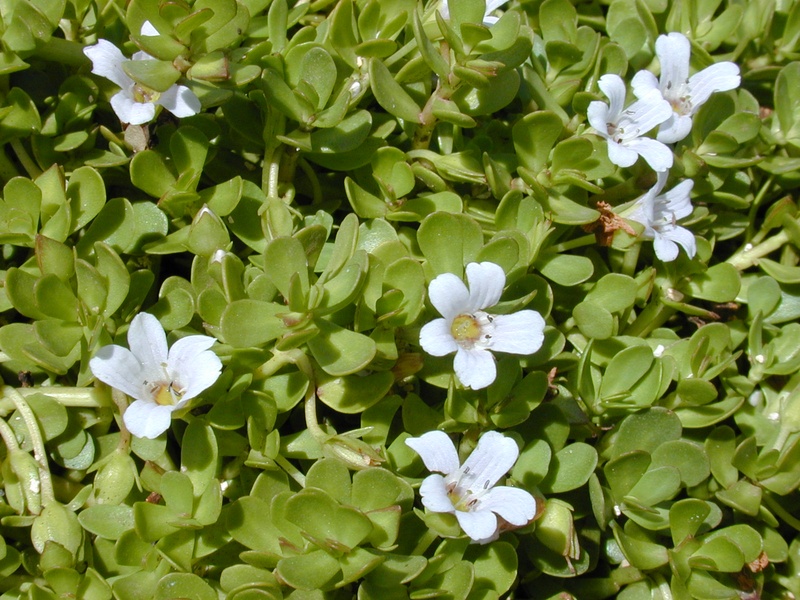
Bacopa monnieri is a non-aromatic, perennial creeping succulent herb that thrives in wet, tropical environments, marshes, and wetlands throughout India, Southeast Asia, Australia, and the Americas [3:5]. In classical Ayurvedic medicine, Brahmi is categorized as a Medhya Rasayana—a specialized class of rejuvenative herbs formulated to nourish the intellect, promote longevity, and restore neurological equilibrium [2:1][3:6].
The primary bioactive compounds responsible for Brahmi's pharmacological effects are triterpenoid saponins known as bacosides (specifically Bacosides A and B, Bacopasides I–V, and Bacosaponins) [10][3:7]. These compounds are lipid-soluble and cross the blood-brain barrier to modulate synaptic signaling, neurotransmitter metabolism, and endogenous antioxidant defenses [10:1][4:3].
From a modern regulatory perspective, Brahmi is widely available over-the-counter as a dietary supplement in the United States, Canada, and Europe [4:4]. Standardized extracts are typically formulated to contain 20% to 55% active bacosides to ensure therapeutic consistency, contrasting with unstandardized whole-herb powders which exhibit high botanical variability [3:8][4:5].
¶ What are Brahmi’s main benefits?
¶ Working and Short-Term Memory
In a rigorous 2026 network meta-analysis of 29 RCTs (n=2107) conducted by Tiemtad et al., high-dose Brahmi (≥600 mg/day) emerged as a premier natural nootropic for working memory [1:5]. The analysis demonstrated that high-dose Brahmi significantly outperformed standard-dose Brahmi (300 to <600 mg/day), Ginkgo biloba (at both high and low doses), and placebo in working and short-term memory domains, achieving a Surface Under the Cumulative Ranking Curve (SUCRA) score of 100% [1:6].
¶ Memory Acquisition, Consolidation, and Retrieval
At a standard dose of 300 mg/day, multiple double-blind RCTs have confirmed significant improvements in delayed recall, verbal learning rate, and memory consolidation in both healthy young volunteers and elderly cohorts [5:1][6:2][8:1]. These trials demonstrate that while acute (single-dose) administration does not alter cognitive outcomes, chronic administration over 12 weeks results in a marked decrease in the rate of forgetting (improved memory retention) and reduced proactive interference [5:2][8:2][4:6].
¶ Stress and Anxiety Reduction
Brahmi serves as an adaptogen by modulating the hypothalamic-pituitary-adrenal (HPA) axis [2:2]. Clinical studies show that 300–600 mg/day of standardized extract significantly decreases cortisol levels, blunts acute physiological responses to multi-tasking stress, and lowers self-reported anxiety scores by up to 20% [7:1][11].
¶ Attention and Executive Function
Sustained attention, selective focus, and executive cognitive control are positively impacted by chronic Brahmi intake [4:7]. Systematic reviews of pediatric and adolescent populations demonstrate that standardized extracts (e.g., 225 mg/day) significantly reduce hyperactivity, impulsivity, and attention deficits in children diagnosed with ADHD, exhibiting high tolerability and clinical efficacy [12][9:1].
¶ Evidence summary table (human outcomes)
| Outcome / Goal | Effect* | Consistency** | Evidence quality | Trials*** | Notes (population, duration, dose) |
|---|---|---|---|---|---|
| Working Memory (High-Dose) | High | High | 29 RCTs | High-dose (≥600 mg/day) evaluated in network meta-analysis in healthy adults [1:7]. | |
| Delayed Recall & Retention | High | High | Multiple RCTs | 300 mg/day for 12 weeks in healthy and older adults; reduces rate of forgetting [5:3][6:3][8:3]. | |
| Stress & Anxiety Reduction | High | Moderate | 5 RCTs | 300–600 mg/day for 12 weeks; lowers salivary cortisol and anxiety scores [7:2][11:1]. | |
| Sustained Attention | Moderate | Moderate | 6 RCTs | 300 mg/day; improves choice reaction times and Stroop test performance [5:4][7:3][4:8]. | |
| Pediatric ADHD Symptoms | Moderate | Moderate | 4 Trials | 225 mg/day for 16 weeks; reduces hyperactivity, inattention, and impulsivity [12:1][9:2]. | |
| Cognitive Symptoms (Schizophrenia) | Low | Low | Systematic Review | Adjunctive treatment; alters glutamatergic and GABAergic transmission [13]. | |
| Dementia & Alzheimer's Support | Moderate | Low | Systematic Review | 300–450 mg/day; supports cognitive scores and delayed memory recall [14]. |
- Effect: Compact renderer encoding:
<effect e="[dir][mag][impact]"></effect>wheredir=u(up) |d(down) |e(equal) |q(unclear);mag=0(none) |1(small) |2(moderate) |3(large);impact=p(positive) |n(negative) |x(neutral). - Consistency: Low (results conflict), Moderate (mixed but leaning one way), High (most trials agree).
- *Trials: Number of RCTs or total trials informing this outcome.
¶ How does Brahmi work?
                       +-----------------------------------+
                       |    Bacosides (Active Saponins)    |
                       +-----------------+-----------------+
                                         |
                       +-----------------+-----------------+
                       |     Crosses Blood-Brain Barrier   |
                       +-----------------+-----------------+
                                         |
         +-------------------------------+-------------------------------+
         |                               |                               |
+--------v--------+             +--------v--------+             +--------v--------+
|   Cholinergic   |             |   Neuroplastic  |             |   Antioxidant   |
|   Upregulation  |             |   & Synaptic    |             |   & Protection  |
+--------+--------+             +--------+--------+             +--------+--------+
         |                               |                               |
         | Acetylcholinesterase          | Upregulates BDNF &            | Activates Nrf2;
         | Inhibition                    | Dendritic Branching           | Enhances SOD, CAT,
         |                               | (Hippocampus)                 | and Glutathione
         v                               v                               v
+--------v--------+             +--------v--------+             +--------v--------+
| Improved Memory |             | Structural      |             | Mitigated       |
| Acquisition &   |             | Synaptogenesis  |             | Neuro-          |
| Retention       |             | & Consolidation |             | inflammation    |
+-----------------+             +-----------------+             +-----------------+
¶ Primary Targets
Brahmi's molecular targets include the acetylcholinesterase (AChE) enzyme, Brain-Derived Neurotrophic Factor (BDNF), the serotonin transporter (SERT), GABA-A receptors, and the Nrf2-ARE antioxidant pathway [10:2][3:9][4:9].
¶ Core Mechanisms
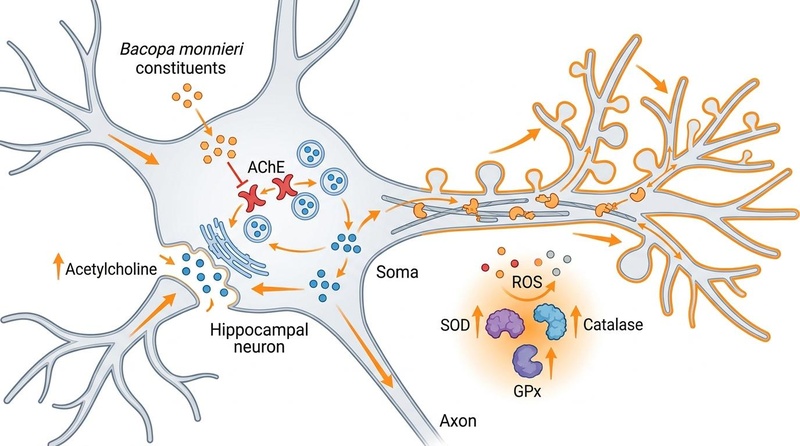
- Enhancement of Cholinergic Transmission: Bacosides inhibit acetylcholinesterase, the enzyme responsible for degrading acetylcholine [13:1][10:3]. By increasing acetylcholine availability in the synaptic cleft of the cerebral cortex and hippocampus, Brahmi facilitates synaptic transmission, improving the initial stages of memory acquisition and processing speed [10:4][4:10].
- Synaptic Plasticity and Dendritic Branching: Bacosides promote structural neuroplasticity by upregulating the transcription of BDNF and activating cAMP response element-binding protein (CREB) [10:5][15]. This leads to a marked increase in dendritic branching, length, and spine density in hippocampal pyramidal neurons [10:6][4:11]. Because this structural synaptogenesis is a physical, time-dependent process, it explains why cognitive enhancements in human trials require 8 to 12 weeks to manifest [6:4][4:12].
- Nrf2 Activation and Endogenous Antioxidant Upregulation: Brahmi activates the Nuclear Factor Erythroid 2-Related Factor 2 (Nrf2) pathway, leading to the upregulation of endogenous antioxidant defense systems, including superoxide dismutase (SOD), catalase (CAT), and glutathione peroxidase (GPx) [13:2][10:7]. This reduces lipid peroxidation and shields delicate synaptic membranes from reactive oxygen species (ROS) [13:3][10:8].
- Mitigation of Neuroinflammation: Bacosides suppress microglial overactivation and downregulate pro-inflammatory cytokines such as Tumor Necrosis Factor-alpha (TNF-α) and Interleukin-6 (IL-6) [10:9][15:1]. This suppresses chronic, low-grade neuroinflammation—a key driver of cellular aging and neurodegeneration [10:10][3:10].
¶ Pharmacokinetics
- Absorption: Bacosides are lipophilic and cross the blood-brain barrier via passive diffusion [4:13]. However, their large molecular size and poor water solubility result in low baseline oral bioavailability [3:11][4:14].
- Transporters: Active compounds are substrates for P-glycoprotein, which can limit net brain accumulation through efflux [4:15].
- Half-life: The elimination half-life of major active bacosides ranges from 12 to 16 hours, supporting twice-daily or single-daily dosing protocols to maintain stable therapeutic concentrations [4:16].
- Formulation Influence: Co-ingestion with dietary lipids significantly enhances intestinal micelle formation and subsequent lymphatic absorption, bypassing first-pass hepatic metabolism [4:17].
¶ Effects on different systems
¶ Brain & Mental Health
The nervous system is the primary target of Brahmi supplementation.
- Cognition: Chronic administration enhances short-term, working, and delayed spatial memory [1:8][6:5]. High-dose administration (≥600 mg/day) selectively optimizes the working memory network [1:9].
- Anxiety & Mood: By upregulating GABAergic signaling and modulating serotonin transporter activity, Brahmi dampens central nervous system hyperarousal, mitigating generalized anxiety and enhancing mood stability [7:4][4:18].
- Sleep Quality: In a 2026 meta-analysis by Baune et al., node-resolved data on Ayurvedic dravyas indicated that Brahmi supports general sleep quality and parasympathetic tone, likely due to GABA-A receptor modulation and systemic cortisol reduction [2:3].
¶ Cardiovascular Health
Brahmi exhibits cardioprotective and vasoactive properties.
- Vascular Relaxation: It stimulates endothelial nitric oxide synthase (eNOS), increasing nitric oxide production and facilitating endothelium-dependent vasodilation, which may support healthy arterial blood pressure [3:12].
- Resting Heart Rate: Standardized doses (300 mg/day) have been clinically shown to produce a mild, non-pathological reduction in resting heart rate in older adults [7:5]. This bradycardic effect is driven by increased vagal/parasympathetic tone and direct interaction with cardiac muscarinic receptors [7:6].
¶ Gut & Digestion
Brahmi has dual, dose-dependent effects on gastrointestinal function.
- Spasmolytic Effects: Bacosides exert a relaxant effect on intestinal smooth muscle via calcium channel antagonism, traditionally utilized to soothe irritable bowel symptoms [3:13].
- Cholinergic Stimulation: Upregulated acetylcholine levels stimulate muscarinic receptors in the gut, increasing peristalsis and gastric secretions [3:14][4:19]. While beneficial for constipation, this can cause mild cramping, nausea, or diarrhea in sensitive individuals or at higher dosages [3:15][7:7].
¶ Metabolic & Immune Health
Systemic biomarkers are modulated by Brahmi's anti-inflammatory and antioxidant profile.
- Oxidative Stress: It significantly lowers circulating malondialdehyde (MDA) levels and prevents the oxidation of systemic LDL cholesterol [13:4][10:11].
- Cytokine Modulation: It downregulates systemic markers of chronic inflammation, protecting pancreatic beta-cells and vascular endothelium from cytokine-mediated damage [13:5][10:12].
¶ Neurodevelopmental & Endocrine Domains
- Neurodevelopmental Potential: Systematic reviews suggest that Brahmi’s molecular properties—specifically its ability to mitigate mitochondrial dysfunction, balance glutamate/GABA ratios, and reduce neuroinflammation—align with the pathological targets of Autism Spectrum Disorder (ASD), warranting targeted clinical trials in this area [15:2].
- Thyroid Regulation: Preclinical models indicate that Bacopa monnieri can stimulate the release of thyroid hormone T4 (thyroxine) directly from the thyroid gland, which may influence systemic metabolic rate [3:16].
¶ Dosage and how to take it
¶ Standard Dosing in Studies
- Daily Dose Range (Standard Extract): 300 to 450 mg of extracts standardized to 20%–55% bacosides [1:10][4:20].
- High-Dose Protocol: 600 to 900 mg/day of standardized extracts (evaluated for maximal working memory benefits in healthy adults) [1:11].
- Pediatric Dose: 225 mg/day of standardized extract [12:2][9:3].
- Whole-Herb Powder: 1,000 to 3,000 mg/day (often used in traditional Ayurvedic preparations but lacks standardized potency) [3:17].
- Dosing Schedule: Usually administered as a single daily dose in the morning, or split into two equal doses (e.g., morning and lunch) [4:21].
¶ Forms & Bioavailability
Standardized extracts are highly preferred over raw powders due to batch-to-batch consistency.
- Key Commercial Extracts:
- KeenMind (CDRI 08): The most clinically researched extract, utilized in major clinical trials confirming memory consolidation [5:5][6:6].
- Bacognize: Standardized extract shown to improve cognitive performance in medical students and elderly populations [4:22].
- BacoMind: Standardized full-spectrum extract containing multiple active bacopasides [4:23].
- Administration with Food: Bacosides are lipid-soluble. To optimize gastrointestinal absorption and minimize local gastric irritation, Brahmi must always be consumed with a fat-containing meal (e.g., alongside healthy fats, eggs, avocado, or yogurt) [4:24].
¶ Special Populations
- Older Adults: Clinical trials in elderly populations confirm that 300 mg/day is highly effective and safe [7:8][8:4].
- Children & Adolescents: Clinical trials in pediatric cohorts (including those with ADHD) utilized 225 mg/day of standardized extracts for up to 16 weeks, demonstrating safety and high tolerability [12:3][9:4].
- Renal or Hepatic Impairment: Clinical data are sparse. Those with severe liver or kidney dysfunction should exercise caution due to altered drug clearance pathways.
- Pregnancy & Breastfeeding: Due to a lack of clinical safety trials, Brahmi should be avoided during pregnancy and lactation.
¶ Safety and side effects
¶ Common Side Effects
Gastrointestinal distress is the most common adverse reaction, reported by approximately 5% to 15% of participants in clinical trials [7:9][8:5]. Symptoms are typically mild and transient:
- Nausea and stomach upset [7:10]
- Increased bowel motility and diarrhea [7:11]
- Abdominal cramps [7:12]
- Dry mouth and transient fatigue [8:6]
These side effects are direct consequences of Brahmi's cholinergic activity in the gut and can be minimized by split-dosing or taking the supplement strictly with meals [4:25].
¶ Less Common & Serious Concerns
- Bradycardia: Due to its ability to increase vagal parasympathetic tone, Brahmi can cause a mild reduction in resting heart rate [7:13]. It should be avoided by individuals with pre-existing pathological bradycardia or heart block [7:14][4:26].
- Thyroid Upregulation: Because preclinical models demonstrate thyroid-stimulating properties, those with hyperthyroidism or Graves' disease should exercise caution [3:18].
¶ Absolute Contraindications
- Pre-existing pathological bradycardia
- Untreated hyperthyroidism
- Gastrointestinal tract obstructions
- Active pregnancy or lactation
¶ Drug and supplement interactions
¶ Pharmacokinetic Interactions (CYP450 Pathway)
In vitro and animal assays indicate that standardized Bacopa monnieri extracts are moderate inhibitors of several major Cytochrome P450 enzymes, particularly:
Clinical Relevance: Co-administration can increase the plasma concentration and prolong the half-life of drugs metabolized by these pathways, including certain tricyclic antidepressants, beta-blockers, selective serotonin reuptake inhibitors (SSRIs), and calcium channel blockers.
¶ Pharmacodynamic Interactions
- Cholinergic Medications (Cholinesterase Inhibitors): Because Brahmi inhibits acetylcholinesterase, combining it with drugs such as Donepezil, Rivastigmine, or Galantamine can lead to additive cholinergic effects, increasing the risk of adverse events like excessive salivation, muscle weakness, and bradycardia [10:13][4:31].
- Anticholinergic Medications: Brahmi directly opposes the efficacy of anticholinergic drugs (such as atropine, benztropine, and diphenhydramine) [4:32].
- Sedatives and GABA-A Agonists: Additive sedative effects can occur when Brahmi is combined with central nervous system depressants, including benzodiazepines, barbiturates, or alcohol [4:33].
- Thyroid Hormone Therapy: May act synergistically with exogenous thyroid hormones (e.g., levothyroxine), potentially increasing free T4 levels [3:19].
¶ Combining Brahmi with other supplements ("stacks")
¶ The "Acetylcholine Synthesis & Preservation" Stack
- Components: Brahmi (300 mg) + Alpha-GPC (300 mg) or Citicoline (250 mg).
- Rationale: Choline donors (Alpha-GPC/Citicoline) increase the raw synthesis of acetylcholine, while Brahmi preserves it by inhibiting acetylcholinesterase [10:14][4:34].
- Evidence Level: Theoretical and mechanistic synergy; no formal human combination trials have been published.
¶ The "Classic Ayurvedic Medhya" Stack
- Components: Brahmi (300 mg) + Gotu Kola (Centella asiatica) (500 mg).
- Rationale: Highly popular in traditional medicine. Modern metabolomic analyses indicate that both herbs exert complementary neuroprotective profiles, supporting synaptic density via separate but overlapping cell signaling pathways [3:20].
- Evidence Level: Traditional use and supportive preclinical comparison models.
¶ The "Adaptogenic Resilience" Stack
- Components: Brahmi (300 mg) + Ashwagandha (Withania somnifera) (300–600 mg).
- Rationale: Ashwagandha provides rapid, powerful systemic cortisol control and GABAergic relaxation, while Brahmi supports long-term structural neuroplasticity and memory consolidation [2:4].
- Evidence Level: Supported by systematic reviews analyzing Ayurvedic dravyas for dual cognition and anxiety management [2:5].
¶ Practical questions (FAQ)
¶ How long does it take for Brahmi to work?
Unlike caffeine, L-Theanine, or synthetic stimulants, Brahmi does not produce immediate or acute cognitive benefits [4:35]. Clinical trials show that statistical significance in memory consolidation, verbal learning, and delayed recall is achieved only after 8 to 12 weeks of daily, consistent dosing [5:6][6:7][8:7]. This delay is due to the time required for physical synaptogenesis and dendritic spine growth in the hippocampus [10:15][4:36].
¶ Can I take Brahmi long-term?
Human clinical trials have rigorously demonstrated the safety and tolerability of standardized extracts for up to 12 to 16 weeks of continuous use [1:12][7:15][8:8]. Long-term safety beyond 6 months has not been evaluated in placebo-controlled RCTs, although its traditional history indicates high safety. To prevent potential receptor desensitization or cumulative GI irritation, many practitioners recommend a cycling protocol, such as taking Brahmi for 12 weeks followed by a 2-week washout period.
¶ Will Brahmi make me sleepy or fatigued?
Brahmi modulates GABAergic and serotonergic transmission, which can exert a calming, anxiolytic effect [7:16][4:37]. In sensitive individuals, this can be perceived as mild drowsiness or lethargy. If daytime fatigue occurs, it is recommended to split the dose, take it with the evening meal, or stack it with a clean stimulant like green tea.
¶ What is the difference between Brahmi and Gotu Kola?
In certain regions of India, both Bacopa monnieri and Centella asiatica (Gotu Kola) are referred to as "Brahmi," which causes widespread commercial confusion. However, they are entirely different botanical species. Bacopa monnieri is a water-loving succulent and the canonical "Brahmi" backed by clinical evidence for memory and working memory [1:13][4:38]. Centella asiatica is Gotu Kola, more commonly used for systemic circulation, collagen synthesis, and milder cognitive support.
¶ Can I take Brahmi on an empty stomach?
No. Consuming Brahmi on an empty stomach significantly reduces the absorption of its active fat-soluble bacosides and sharply increases the likelihood of gastrointestinal side effects such as nausea, abdominal cramps, and diarrhea [4:39]. It should always be taken alongside a meal containing dietary fats [4:40].
¶ How we evaluated the evidence
Our analysis is structured around the Progressive Disclosure philosophy, prioritizing clinical evidence based on a strict pyramid of scientific authority:
- Tier 1 (Gold Standard): Double-blind, randomized controlled trials (RCTs), systematic reviews, and network meta-analyses (such as Tiemtad et al., 2026 and Baune et al., 2026) published in high-impact, peer-reviewed journals [1:14][2:6].
- Tier 2 (High Authority): Controlled human cohort studies, established clinical guidelines, and node-resolved traditional monographs [2:7].
- Tier 3 (Supporting): Preclinical in vivo animal models and in vitro cellular assays (used exclusively to elucidate molecular mechanisms and pharmacokinetics, clearly distinguished from human outcomes) [10:16][15:3].
Efficacy ratings and GRADE assessments are determined by evaluating sample sizes, risk of bias, consistency of results across trials, and the clinical significance of measured outcomes. This page is updated dynamically as new systematic reviews or multi-center clinical trials are published.
¶ References
Tiemtad P, et al. Comparative effects of Bacopa monnieri and Ginkgo biloba on cognitive functions: A systematic review and network meta-analysis. Phytomedicine. 2026. https://pubmed.ncbi.nlm.nih.gov/41678913/ ↩︎ ↩︎ ↩︎ ↩︎ ↩︎ ↩︎ ↩︎ ↩︎ ↩︎ ↩︎ ↩︎ ↩︎ ↩︎ ↩︎ ↩︎
Baune BT, et al. Ayurvedic Dravya-Based Herbal Products for Cognition, Stress, Sleep, and Psychiatric Symptoms: A Node-Resolved Systematic Review and Meta-Analysis. Journal of Integrative and Complementary Medicine. 2026. https://pubmed.ncbi.nlm.nih.gov/42359794/ ↩︎ ↩︎ ↩︎ ↩︎ ↩︎ ↩︎ ↩︎ ↩︎
Brimson JM, et al. The effectiveness of Bacopa monnieri (Linn.) Wettst. as a nootropic, neuroprotective, or antidepressant supplement: analysis of the available clinical data. Scientific Reports. 2021. https://pubmed.ncbi.nlm.nih.gov/33436817/ ↩︎ ↩︎ ↩︎ ↩︎ ↩︎ ↩︎ ↩︎ ↩︎ ↩︎ ↩︎ ↩︎ ↩︎ ↩︎ ↩︎ ↩︎ ↩︎ ↩︎ ↩︎ ↩︎ ↩︎ ↩︎
Kongkeaw C, et al. Meta-analysis of randomized controlled trials on cognitive effects of Bacopa monnieri extract. Journal of Ethnopharmacology. 2014. https://pubmed.ncbi.nlm.nih.gov/24252493/ ↩︎ ↩︎ ↩︎ ↩︎ ↩︎ ↩︎ ↩︎ ↩︎ ↩︎ ↩︎ ↩︎ ↩︎ ↩︎ ↩︎ ↩︎ ↩︎ ↩︎ ↩︎ ↩︎ ↩︎ ↩︎ ↩︎ ↩︎ ↩︎ ↩︎ ↩︎ ↩︎ ↩︎ ↩︎ ↩︎ ↩︎ ↩︎ ↩︎ ↩︎ ↩︎ ↩︎ ↩︎ ↩︎ ↩︎ ↩︎ ↩︎
Stough C, et al. The chronic effects of an extract of Bacopa monniera (Brahmi) on cognitive function in healthy human subjects. Psychopharmacology. 2001. https://pubmed.ncbi.nlm.nih.gov/11498727/ ↩︎ ↩︎ ↩︎ ↩︎ ↩︎ ↩︎ ↩︎
Roodenrys S, et al. Chronic effects of Brahmi (Bacopa monnieri) on human memory. Neuropsychopharmacology. 2002. https://pubmed.ncbi.nlm.nih.gov/12093601/ ↩︎ ↩︎ ↩︎ ↩︎ ↩︎ ↩︎ ↩︎ ↩︎
Calabrese C, et al. Effects of a standardized Bacopa monnieri extract on cognitive performance, anxiety, and depression in the elderly: a randomized, double-blind, placebo-controlled trial. Journal of Alternative and Complementary Medicine. 2008. https://pubmed.ncbi.nlm.nih.gov/18611150/ ↩︎ ↩︎ ↩︎ ↩︎ ↩︎ ↩︎ ↩︎ ↩︎ ↩︎ ↩︎ ↩︎ ↩︎ ↩︎ ↩︎ ↩︎ ↩︎ ↩︎
Morgan A, et al. Does Bacopa monnieri improve memory performance in older persons? Results of a randomized, placebo-controlled, double-blind trial. Journal of Alternative and Complementary Medicine. 2010. https://pubmed.ncbi.nlm.nih.gov/20590480/ ↩︎ ↩︎ ↩︎ ↩︎ ↩︎ ↩︎ ↩︎ ↩︎ ↩︎
Kean JD, et al. A systematic review of the Ayurvedic medicinal herb Bacopa monnieri in child and adolescent populations. Complementary Therapies in Medicine. 2016. https://pubmed.ncbi.nlm.nih.gov/27912958/ ↩︎ ↩︎ ↩︎ ↩︎ ↩︎
Shalini VT, et al. Neuroprotection with Bacopa monnieri-A review of experimental evidence. Molecular Biology Reports. 2021. https://pubmed.ncbi.nlm.nih.gov/33675463/ ↩︎ ↩︎ ↩︎ ↩︎ ↩︎ ↩︎ ↩︎ ↩︎ ↩︎ ↩︎ ↩︎ ↩︎ ↩︎ ↩︎ ↩︎ ↩︎ ↩︎
Benson S, et al. An acute, double-blind, placebo-controlled cross-over study of 320 mg and 640 mg doses of Bacopa monnieri (CDRI 08) on multitasking stress reactivity and mood. Phytotherapy Research. 2014. https://pubmed.ncbi.nlm.nih.gov/23788517/ ↩︎ ↩︎
Kean JD, et al. Systematic Overview of Bacopa monnieri (L.) Wettst. Dominant Poly-Herbal Formulas in Children and Adolescents. Medicines. 2017. https://pubmed.ncbi.nlm.nih.gov/29165401/ ↩︎ ↩︎ ↩︎ ↩︎
Ayilara GO, et al. Effectiveness of Bacopa Monnieri (Brahmi) in the management of schizophrenia: a systematic review. Nutritional Neuroscience. 2025. https://pubmed.ncbi.nlm.nih.gov/39498770/ ↩︎ ↩︎ ↩︎ ↩︎ ↩︎ ↩︎
Basheer A, et al. Use of Bacopa monnieri in the Treatment of Dementia Due to Alzheimer Disease: Systematic Review of Randomized Controlled Trials. Interactive Journal of Medical Research. 2022. https://pubmed.ncbi.nlm.nih.gov/35612544/ ↩︎
Indika NR, et al. Exploring the therapeutic potential of Bacopa monnieri in autism spectrum disorder: A comprehensive review. Fitoterapia. 2025. https://pubmed.ncbi.nlm.nih.gov/40769392/ ↩︎ ↩︎ ↩︎ ↩︎