¶ Elecampane (Inula helenium): Benefits, Dosage, & Side Effects
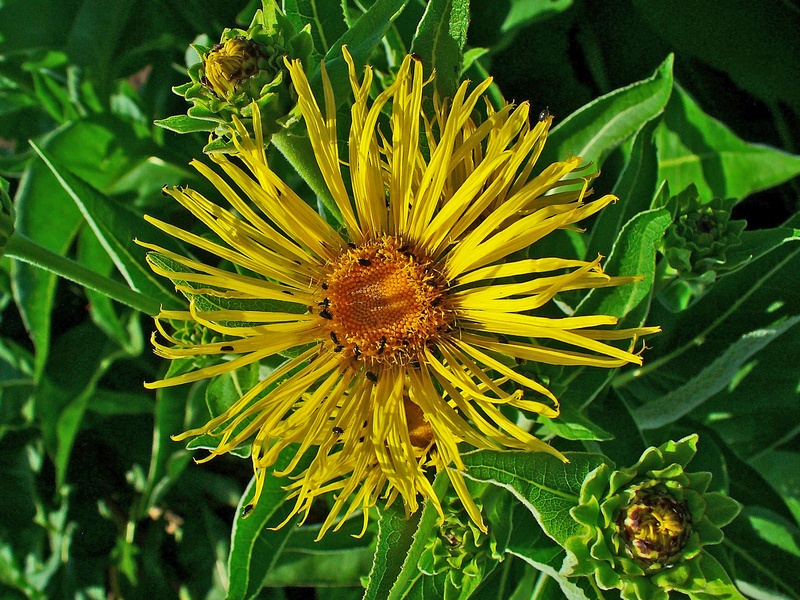
| Type | Herbal Supplement |
| Active Cmpd | Alantolactone, Inulin |
| Source | Root / Rhizome |
| Dose Range | 1–2 g (dried root) |
| Half-life | Unknown |
| Main Benefit | Respiratory Health |
| Absorption | Variable |
Elecampane (Inula helenium) is a traditional herbal remedy primarily used to support respiratory health and soothe coughs. While clinical evidence for the herb in isolation is limited, it remains a staple in Western herbal medicine for bronchitis and digestive stagnation due to its rich content of soothing inulin and antimicrobial sesquiterpene lactones.
¶ At a glance
Aliases
- Also known as: Horseheal, Elf Dock, Scabwort, Yellow Starwort.
- Botanical name: Inula helenium L.
- Category: Botanical (Root), Respiratory Tonic, Bitter.
Key points
- Strongest benefit: Historically validated and clinically supported (in combination formulas) for relieving acute cough and soothing irritated airways.
- Secondary effects: Acts as a prebiotic digestive aid due to high inulin content and possesses antimicrobial properties in laboratory studies.
- Key limitation: Nearly all human clinical data comes from multi-herb formulas, making it difficult to isolate elecampane's specific contribution.
- Safety concern: Potential for allergic reactions in individuals sensitive to the Asteraceae (ragweed) family.
What people use it for
- Main goals: Relief from bronchitis/cough, expelling mucus (expectorant), and improving digestion.
- Evidence quality: Low (for isolated herb) to Moderate (for multi-herb preparations).
¶ What is Elecampane?
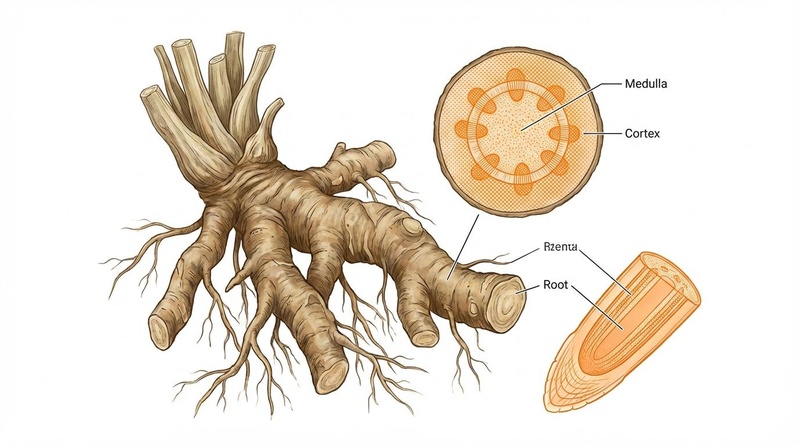
Elecampane is a large, yellow-flowering perennial plant native to Europe and Asia, now naturalized in parts of North America. It belongs to the Asteraceae family, the same botanical family as sunflowers and ragweed.
- Definition: A medicinal herb whose roots and rhizomes are harvested for their therapeutic compounds.
- Natural sources: The root of the Inula helenium plant.
- Traditional use: Used for centuries in Greek, Roman, and Traditional Chinese Medicine (TCM) as an expectorant for "damp" lung conditions, a digestive tonic, and even as a flavoring for absinthe and vermouth.
- Key pharmacological property: "Antimicrobial expectorant and prebiotic" — it helps clear mucus while fighting pathogens and feeding gut flora.
The root is distinctively aromatic with a bitter and pungent taste. It is one of the richest natural sources of inulin, a starchy polysaccharide that soothes mucous membranes and acts as a prebiotic fiber.
¶ What are Elecampane’s main benefits?
¶ Respiratory Health (Cough & Bronchitis)
Elecampane is most famous for its ability to treat respiratory ailments. Traditional herbalists classify it as a warming expectorant, meaning it helps loosen and expel mucus from the lungs.
- Outcome: Reduction in cough frequency and severity; improvement in "productive" coughs.
- Evidence: A 2021 randomized, double-blind, placebo-controlled trial in 106 children found that a cough syrup containing elecampane (alongside other herbs like Malva sylvestris) significantly reduced night-time and day-time cough compared to placebo[1].
- Mechanism: Sesquiterpene lactones (like alantolactone) have shown anti-inflammatory activity in human respiratory cells, potentially calming airway inflammation[2][3].
- Summary: Likely effective for soothing coughs and bronchitis, though modern evidence primarily comes from combination formulas.
¶ Digestive Health & Antimicrobial Activity
The root contains up to 44% inulin, a potent prebiotic that feeds beneficial gut bacteria (specifically Bifidobacteria and Lactobacilli). Additionally, the bitter compounds stimulate digestion.
- Outcome: Improved gut flora balance; potential antimicrobial effects against pathogens.
- Evidence: In vitro (test tube) studies demonstrate that elecampane extracts have significant antibacterial and antifungal activity, particularly against Staphylococcus aureus and Candida species[4][5].
- Note: While promising, these antimicrobial effects have not yet been validated in human clinical trials for treating infections.
¶ Anti-Inflammatory & Antioxidant Effects
Preclinical research suggests elecampane has broad anti-inflammatory properties.
- Outcome: Reduction of inflammatory markers (like NF-κB and TNF-α).
- Evidence: Animal and cell studies show that alantolactone can inhibit inflammation in various tissues, suggesting potential utility in conditions characterized by chronic inflammation[6].
- Status: Very Low certainty for clinical application, as this is currently limited to preclinical research.
¶ Evidence summary table (human outcomes)
| Outcome / Goal | Effect | Consistency | Evidence quality | Trials | Notes |
|---|---|---|---|---|---|
| Cough Relief (Pediatric) | Moderate | Moderate | 1 RCT | Tested as part of a multi-herb syrup ("KalobaTUSS")[1:1] | |
| Digestive Health | ↔ / ? | Low | Very Low | 0 RCTs | Based on inulin content and traditional use; no direct trials |
| Antimicrobial | Low | Very Low | 0 RCTs | Strong in vitro data; no human infection trials |
¶ How does Elecampane work?
Elecampane’s effects are driven by two main groups of bioactive compounds: sesquiterpene lactones and polysaccharides.
¶ 1. Sesquiterpene Lactones (Alantolactone & Isoalantolactone)
These volatile compounds give the root its bitter taste and antimicrobial properties.
- Anti-inflammatory: They inhibit the NF-κB signaling pathway, a master regulator of inflammation. This helps reduce the production of inflammatory cytokines in respiratory and digestive tissues[2:1][6:1].
- Antimicrobial: They disrupt the cell membranes of bacteria and fungi, preventing their growth. This supports the traditional use of elecampane for bacterial bronchitis and intestinal parasites[4:1].
¶ 2. Inulin (Polysaccharide)
Elecampane root is one of the highest natural sources of inulin.