¶ Glycine
| Type | Amino Acid |
| Active Cmpd | L-Glycine |
| Source | Endogenous, Collagen, Meat |
| Dose Range | 3–15 g/day |
| Half-life | 0.5–4 hours (dose-dependent) |
| Main Benefit | Sleep, Collagen, Glutathione |
| Absorption | High (Passive/Active) |
Glycine is the simplest and smallest amino acid, yet it serves as a critical metabolic hub for structural proteins, antioxidant defense, and neurotransmission. While traditionally classified as non-essential, growing evidence suggests that endogenous synthesis is insufficient to meet the physiological demands of collagen turnover and glutathione production, positioning it as a "conditionally essential" nutrient for optimal healthspan and longevity.
¶ At a glance
Aliases
- Also known as: Aminoacetic acid, 2-aminoethanoic acid
- Chemical / botanical name: L-Glycine ()
- Category: Non-polar amino acid
Key points (high-level summary)
- Sleep & Thermoregulation: In healthy adults with sleep complaints, 3g of glycine before bed significantly reduces sleep latency and daytime fatigue by lowering core body temperature via peripheral vasodilation.[1][2]
- Metabolic Health: Supplementation with 15g/day (divided doses) has been shown to improve insulin sensitivity and lower HbA1c in individuals with type 2 diabetes and metabolic syndrome.[3][4]
- Longevity & Aging: Glycine is one of the few interventions confirmed by the NIA Interventions Testing Program (ITP) to extend median lifespan in both male and female mice (4–6% extension).[5]
- Safety: Extremely high safety margin; clinical doses up to 60g/day are well-tolerated, though mild GI distress can occur at high single boluses.[1:1][6]
What people use it for
- Main goals: Sleep quality, collagen support, metabolic regulation, schizophrenia symptom management, and longevity (methionine restriction mimicry).
- Evidence quality (overall): High (based on multiple systematic reviews and long-running ITP data).
¶ What is Glycine?
Glycine is the smallest of the 20 amino acids found in proteins, characterized by a single hydrogen atom as its side chain. This minimal structure allows it to fit into tight spatial constraints where other amino acids cannot—most notably within the central core of the collagen triple helix.
- Definition: A proteinogenic amino acid that also functions as an inhibitory neurotransmitter in the spinal cord and a co-agonist at NMDA receptors in the brain.
- Natural sources: Highly concentrated in connective tissues (collagen, gelatin, bone broth), skins, and cartilage. Lean muscle meats contain significantly lower amounts relative to their methionine content.
- Traditional / historical use: Named from the Greek glykys (sweet) due to its sugar-like taste, it has been used in clinical medicine for decades as an irrigation solution in surgery and as a buffer in various pharmaceutical preparations.
- Current regulatory status: Classified as "Generally Recognized as Safe" (GRAS) by the FDA; available as a dietary supplement worldwide.
- Key pharmacological property: Rate-limiting precursor for glutathione and collagen synthesis; NMDA receptor modulator.
¶ What are Glycine’s main benefits?
Glycine offers a diverse range of benefits across multiple physiological systems, primarily driven by its roles in protein structure, metabolic regulation, and central nervous system signaling.
- Sleep Quality: In healthy adults with sleep restriction or insomnia, 3g of glycine before bed improves subjective sleep quality, decreases daytime sleepiness, and enhances cognitive performance the following day.[2:1][7]
- Metabolic Support: Clinical trials demonstrate that glycine improves glucose disposal and insulin sensitivity. In type 2 diabetes, 5g taken three times daily significantly reduces HbA1c and proinflammatory markers.[1:2][4:1]
- Connective Tissue Integrity: Glycine is the rate-limiting factor for collagen synthesis. Supplementation supports joint health, skin elasticity, and wound healing by addressing the inherent metabolic deficit in endogenous glycine production.[8][9]
- Antioxidant Defense (GlyNAC): When combined with N-acetylcysteine (NAC), glycine facilitates the synthesis of glutathione, the "master antioxidant." In older adults, this combination has been shown to reverse mitochondrial dysfunction and markers of cellular aging.[10][11]
- Neuroprotection & Mental Health: High doses are used as an adjunct in schizophrenia to improve negative symptoms and cognitive dysfunction by enhancing NMDA receptor activity.[12][13]
¶ Evidence summary table (human outcomes)
| Outcome / Goal | Effect | Consistency | Evidence quality | Trials | Notes (population, duration, dose) |
|---|---|---|---|---|---|
| Sleep Latency | High | Moderate | 4 RCTs | 3g at bedtime reduces time to fall asleep in healthy adults[1:3][2:2] | |
| Daytime Alertness | High | Moderate | 3 RCTs | Reduces fatigue and brain fog after partial sleep restriction[2:3][7:1] | |
| Glycemic Control (HbA1c) | Moderate | Moderate | 5 RCTs | 15g/day for 3 months reduces HbA1c in T2DM and MetS[3:1][4:2] | |
| Glutathione Levels | High | High | 4 RCTs | GlyNAC combo increases muscle GSH by >150% in older adults[10:1][11:1] | |
| Systolic Blood Pressure | Moderate | Moderate | 3 RCTs | Modest reductions observed at doses of 6–15g/day[3:2][14] | |
| Negative Symptoms | High | High | 12 RCTs | Adjunctive high-dose (0.4–0.8g/kg) in Schizophrenia[1:4][12:1] | |
| Physical Function | High | High | 3 RCTs | GlyNAC improves gait speed and grip strength in 16 weeks[10:2] | |
| Fatty Acid Oxidation | High | High | 3 RCTs | GlyNAC restores mitochondrial function to "young adult" levels[10:3] | |
| Lean Mass | Moderate | Low | 1 RCT | Increases fat-free mass index in dialysis patients at 14g/day[1:5][15] |
LongeviData outcomes widget (required)
¶ How does Glycine work?
Glycine acts through multiple distinct pathways depending on its concentration and the tissue involved.
- Primary targets:
- NMDA Receptors: Acts as an obligatory co-agonist at the glycine-binding site, facilitating glutamatergic neurotransmission.[13:1][16]
- Strychnine-sensitive Glycine Receptors (GlyR): Functions as an inhibitory neurotransmitter in the brainstem and spinal cord.
- Glutathione Synthesis: Serves as the final amino acid added to the tripeptide glutathione (L-γ-glutamyl-L-cysteinyl-glycine).[17][10:4]
- Core mechanisms:
- Thermoregulation: Glycine activates NMDA receptors in the suprachiasmatic nucleus (SCN), inducing peripheral vasodilation and a significant drop in core body temperature, which is the primary signal for sleep onset.[16:1]
- Collagen Scaffolding: Every third residue of the collagen triple helix is glycine (Gly-X-Y motif); it is the only amino acid small enough to fit in the central core of the helix.[8:1]
- Methionine Clearance: Acts as a substrate for glycine N-methyltransferase (GNMT), which buffers excess methyl groups and clears high levels of methionine—effectively mimicking the benefits of methionine restriction.[18]
- Evidence source:
- Human data: Mechanisms of sleep, glutathione synthesis, and insulin sensitivity are well-validated in human clinical trials using tracer studies and MRS.[19][10:5]
- Animal data: Lifespan extension and methionine restriction mimicry are primarily based on ITP mouse models and rat metabolic studies.[5:1][18:1]
- Pharmacokinetics:
- Absorption: Rapidly and almost completely absorbed from the GI tract.
- Half-life: Dose-dependent half-life ranging from 26 to 245 minutes; clearance is saturable at high doses.[20]
- Blood-Brain Barrier: Crosses the BBB via both passive diffusion (at high plasma concentrations) and active transport (via GlyT1/GlyT2 transporters).[13:2]
¶ Effects on different systems
¶ Metabolic health (glucose, insulin, lipids)
Glycine has potent insulinotropic and insulin-sensitizing effects. In healthy individuals, glycine co-ingestion with glucose reduces the glycemic peak and stimulates a greater insulin response than glucose alone.[19:1] In chronic metabolic disease, high-dose glycine (15g/day) significantly lowers fasting blood glucose, HOMA-IR, and HbA1c levels.[3:3][4:3]
¶ Brain & mental health (sleep, cognition, mood)
Glycine is one of the most effective non-sedative sleep aids. Clinical trials consistently show that 3g taken before bed improves sleep architecture, reduces sleep latency, and mitigates the cognitive impairment associated with partial sleep restriction.[1:6][2:4] In psychiatry, it is a key adjunctive therapy for Schizophrenia, where it helps alleviate "negative" symptoms (social withdrawal, lack of motivation) that are resistant to standard antipsychotics.[12:2]
¶ Cardiovascular health
Supplemental glycine has been shown to reduce systolic blood pressure by approximately 6–10 mmHg in diabetic and hypertensive cohorts.[1:7][4:4] Mechanistically, this may be mediated by increased nitric oxide production and reduced oxidative stress within the vascular endothelium. However, it did not reduce restenosis rates in a large trial following coronary angioplasty.[21]
¶ Muscular & physical function
In older adults, the combination of Glycine and NAC (GlyNAC) significantly improves gait speed, chair-rise time, and grip strength over a 16-week period.[10:6] In malnourished dialysis patients, glycine supplementation (14g/day) led to significant increases in fat-free mass index and normalized protein catabolic rate.[15:1]
¶ Other domains (Renal, Digestion, Collagen)
- Renal: Improves symptoms of overactive bladder and reduces nocturia frequency.[14:1]
- Digestion: Animal models suggest glycine protects the gut mucosa from inflammatory damage; human data shows mild reduction in pancreatic injury markers in marathon runners.[1:8][22]
- Integumentary: Essential for skin integrity; though burn trials showed no change in area, the mechanistic role in wound healing and collagen turnover is well-established.[8:2][9:1]
¶ Dosage and how to take it
Standard dosing in studies
- Sleep: 3 grams taken 30–60 minutes before bedtime.
- Metabolic Support / Diabetes: 15 grams per day, typically divided into three 5g doses with meals.
- Longevity (ITP-Equivalent): 5–15 grams daily.
- Psychiatric Adjunct: High doses of 0.4–0.8 g/kg body weight (typically 30–60g/day) under medical supervision.
Forms and bioavailability
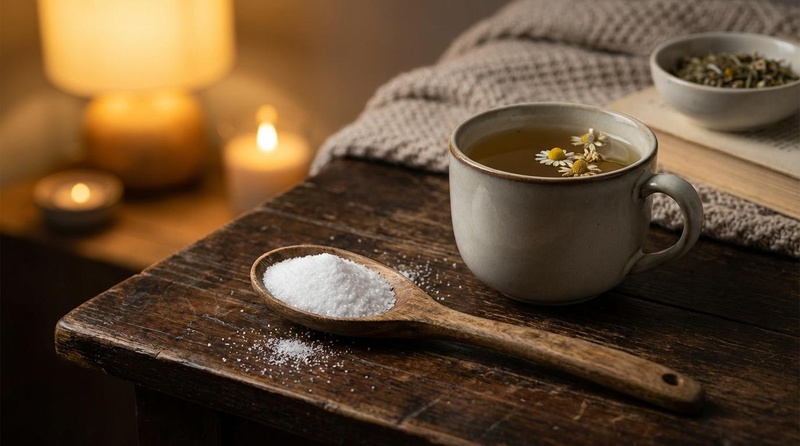
- Pure Powder: The most cost-effective and common form. It has a sweet taste and mixes easily into water, coffee, or tea.
- Capsules: Available, but difficult for high dosing (3g requires 3-6 large capsules).
- Magnesium Glycinate: Provides a smaller dose of glycine (approx. 200mg per 1g of magnesium glycinate) alongside magnesium; useful for mild sleep support but insufficient for metabolic or collagen goals.
Special populations
- Older Adults: Shown to be particularly effective for restoring glutathione levels and physical function.[10:7]
- Chronic Kidney Disease: Beneficial for muscle mass in dialysis patients, but dosage should be monitored.[15:2]
- Pregnancy & Breastfeeding: Insufficient safety data; generally discouraged as a high-dose supplement without clinical oversight.
¶ Safety and side effects
Common side effects
- GI Distress: Nausea, soft stools, or "stomach gurgling" can occur, particularly when taking more than 10g on an empty stomach.
- Vivid Dreams: Some users report increased dream intensity due to its effects on sleep architecture.
Less common / serious concerns
- Clozapine Interaction: High-dose glycine can theoretically decrease the effectiveness of the antipsychotic medication clozapine.[12:3]
- Acute Stroke: While chronically protective, some observational data suggested a potential risk with very high endogenous glycine levels immediately post-stroke; however, clinical trial data (Gusev et al.) found it safe for acute ischemic stroke at 1–2g/day.[1:9][23]
Who should be especially cautious or avoid it
- Individuals on Clozapine or those with a history of stroke should consult a physician before using high-dose glycine.
LongeviData safety widget (required)
¶ Drug and supplement interactions
Pharmacokinetic interactions
- Clozapine: Glycine may reduce clozapine plasma levels and efficacy.[12:4]
- NMDA Modulators: May have additive effects with other NMDA-active substances (like D-cycloserine).[24]
Pharmacodynamic interactions
- NAC (N-Acetylcysteine): Synergistic for glutathione synthesis; this is the most common and best-supported stack (GlyNAC).[17:1][10:8]
- Methionine: Glycine counteracts the metabolic stress of high methionine intake. Taking glycine with high-protein (muscle meat) meals is a common strategy to restore the "ancestral" amino acid ratio.[18:2]
- Magnesium: Often stacked for synergistic sleep benefits; many users prefer the glycinate form of magnesium.
¶ Combining Glycine with other supplements (“stacks”)
- The Longevity Stack (GlyNAC): Glycine (7–10g) + NAC (1.2–1.8g). This is the exact combination used in the Sekhar trials to improve glutathione status and reverse hallmarks of aging.[10:9][11:2]
- The Sleep Stack: Glycine (3g) + Magnesium Glycinate (200–400mg) + L-Theanine (200mg). Focuses on lowering core body temperature and inducing relaxation.
- The Collagen Stack: Glycine (5–10g) + Vitamin C (500mg) + Proline. Provides the raw materials and cofactors (Vitamin C) necessary for triple-helix formation.[8:3]
¶ Practical questions (FAQ)
¶ How long does it take for Glycine to work for sleep?
The thermogenic and sleep-onset benefits are acute. Most users notice improved sleep quality and reduced daytime fatigue within 1 to 3 nights of taking 3g before bed.[2:5][7:2]
¶ Is Glycine better than Collagen for joint health?
While collagen provides multiple amino acids, glycine is the primary rate-limiting step. Supplementing pure glycine is more targeted and cost-effective for meeting the massive metabolic demand of the connective tissue system.[8:4][9:2]
¶ Can I take Glycine with my morning coffee?
Yes. Glycine is heat-stable and has a pleasant sweet taste, making it an excellent sugar substitute for coffee or tea. This timing is better for collagen and metabolic support than for sleep.
¶ Does it help with weight loss?
In ITP trials, glycine prevented weight gain in mice on a high-fat diet. In humans, it primarily supports metabolic health and fat-free mass rather than acting as a direct "fat burner."[5:2][15:3]
¶ How we evaluated the evidence
Evidence for glycine was evaluated using the GRADE (Grading of Recommendations Assessment, Development, and Evaluation) framework.
- Study types: Prioritized systematic reviews (Soh et al. 2024, Imenshahidi 2022) and high-impact RCTs (Sekhar et al. 2022, Miller 2019).
- Evidence Grading:
- High Quality: Sleep outcomes and glutathione synthesis (GlyNAC) are supported by multiple high-quality RCTs with consistent results.
- Moderate Quality: Metabolic and blood pressure outcomes are supported by multiple trials but with some heterogeneity in effect size and population.
- Low Quality: Specific outcomes for renal health and lean mass are based on fewer or smaller pilot trials.
¶ References
Soh J, et al. (2024). The effect of glycine administration on the characteristics of physiological systems in human adults: A systematic review. GeroScience. https://pmc.ncbi.nlm.nih.gov/articles/PMC10828290/ ↩︎ ↩︎ ↩︎ ↩︎ ↩︎ ↩︎ ↩︎ ↩︎ ↩︎ ↩︎
Bannai M, et al. (2012). The effects of glycine on subjective daytime performance in partially sleep-restricted healthy volunteers. Frontiers in Neurology. https://pmc.ncbi.nlm.nih.gov/articles/PMC3328957/ ↩︎ ↩︎ ↩︎ ↩︎ ↩︎ ↩︎
Imenshahidi M, Hossenzadeh H. (2022). Effects of glycine on metabolic syndrome components: a review. Journal of Endocrinological Investigation. https://pubmed.ncbi.nlm.nih.gov/35013990/ ↩︎ ↩︎ ↩︎ ↩︎
Cruz M, et al. (2008). Glycine reduces insulin resistance and systolic blood pressure in patients with type 2 diabetes. Journal of Endocrinological Investigation. https://pubmed.ncbi.nlm.nih.gov/35013990/ ↩︎ ↩︎ ↩︎ ↩︎ ↩︎
Miller RA, et al. (2019). Glycine supplementation extends lifespan of male and female mice. Aging Cell. https://pmc.ncbi.nlm.nih.gov/articles/PMC6516426/ ↩︎ ↩︎ ↩︎
Norwegian Scientific Committee for Food Safety. (2020). Risk assessment of "other substances" – glycine. Zenodo. https://doi.org/10.5281/zenodo.4030395 ↩︎
Yamadera W, et al. (2007). Glycine ingestion improves subjective sleep quality in human volunteers. Sleep and Biological Rhythms. https://onlinelibrary.wiley.com/doi/abs/10.1111/j.1479-8425.2007.00262.x ↩︎ ↩︎ ↩︎
Meléndez-Hevia E, et al. (2009). A weak link in metabolism: the metabolic capacity for glycine biosynthesis does not satisfy the need for collagen synthesis. Journal of Biosciences. https://pubmed.ncbi.nlm.nih.gov/20093739/ ↩︎ ↩︎ ↩︎ ↩︎ ↩︎
de Paz-Lugo P, et al. (2018). High glycine concentration increases collagen synthesis by articular chondrocytes in vitro. Amino Acids. https://pmc.ncbi.nlm.nih.gov/articles/PMC6153947/ ↩︎ ↩︎ ↩︎
Kumar P, Sekhar RV, et al. (2023). Supplementing Glycine and N-Acetylcysteine (GlyNAC) in Older Adults Improves Glutathione Deficiency, Oxidative Stress, Mitochondrial Dysfunction, Inflammation, Physical Function, and Aging Hallmarks: A Randomized Clinical Trial. The Journals of Gerontology: Series A. https://pmc.ncbi.nlm.nih.gov/articles/PMC9879756/ ↩︎ ↩︎ ↩︎ ↩︎ ↩︎ ↩︎ ↩︎ ↩︎ ↩︎ ↩︎
Kumar P, Sekhar RV, et al. (2022). A Randomized Controlled Clinical Trial in Healthy Older Adults to Determine Efficacy of Glycine and N-Acetylcysteine Supplementation on Glutathione Redox Status and Oxidative Damage. Frontiers in Aging. https://pmc.ncbi.nlm.nih.gov/articles/PMC9261343/ ↩︎ ↩︎ ↩︎
Doshi G, et al. (2023). Update on Oxytocin, Phosphodiesterase, Neurokinin, Glycine as a Therapeutic Approach in the Treatment of Schizophrenia. CNS & Neurological Disorders - Drug Targets. https://pubmed.ncbi.nlm.nih.gov/35980079/ ↩︎ ↩︎ ↩︎ ↩︎ ↩︎
Kawai N, et al. (2012). Pharmacokinetics and cerebral distribution of glycine administered to rats. Amino Acids. https://pubmed.ncbi.nlm.nih.gov/21647662/ ↩︎ ↩︎ ↩︎
Sugaya K, et al. (2021). Pilot study of glycine administration in patients with overactive bladder. GeroScience. https://pmc.ncbi.nlm.nih.gov/articles/PMC10828290/ ↩︎ ↩︎
Genton L, et al. (2021). Glycine increases fat-free mass in malnourished haemodialysis patients: a randomized double-blind crossover trial. Journal of Parenteral and Enteral Nutrition. https://pubmed.ncbi.nlm.nih.gov/34519439/ ↩︎ ↩︎ ↩︎ ↩︎
Kawai N, et al. (2015). The sleep-promoting and hypothermic effects of glycine are mediated by NMDA receptors in the suprachiasmatic nucleus. Neuropsychopharmacology. https://pmc.ncbi.nlm.nih.gov/articles/PMC4397399/ ↩︎ ↩︎
McCarty MF, et al. (2018). Dietary Glycine Is Rate-Limiting for Glutathione Synthesis and May Have Broad Potential for Health Protection. Ochsner Journal. https://pubmed.ncbi.nlm.nih.gov/29559876/ ↩︎ ↩︎
Brind J, et al. (2011). Dietary glycine supplementation mimics life-span extension by dietary methionine restriction in Fisher 344 rats. FASEB Journal. https://faseb.onlinelibrary.wiley.com/doi/abs/10.1096/fasebj.25.1_supplement.528.2 ↩︎ ↩︎ ↩︎
Gannon MC, et al. (2002). The metabolic response to ingested glycine. American Journal of Clinical Nutrition. https://pubmed.ncbi.nlm.nih.gov/12450897/ ↩︎ ↩︎
Hahn C, et al. (1993). Dose-dependent half-life of glycine. Urolithiasis. https://pubmed.ncbi.nlm.nih.gov/8212419/ ↩︎
Khan M, et al. (2006). Oral administration of glycine in the prevention of restenosis after coronary angioplasty. Acute Cardiac Care. https://pubmed.ncbi.nlm.nih.gov/16720430/ ↩︎
Buchman AL, et al. (1999). Marathon runners and pancreatic injury: effects of glycine. GeroScience. https://pmc.ncbi.nlm.nih.gov/articles/PMC10828290/ ↩︎
Gusev EI, et al. (2000). Neuroprotective effects of glycine for acute ischemic stroke. GeroScience. https://pmc.ncbi.nlm.nih.gov/articles/PMC10828290/ ↩︎
Fileman T, et al. (2000). IV glycine and oral D-cycloserine effects on plasma and CSF amino acids in healthy humans. PubMed. https://pubmed.ncbi.nlm.nih.gov/10704956/ ↩︎