¶ Huperzine A
| Type | Sesquiterpene alkaloid |
| Active Cmpd | (-)-Huperzine A |
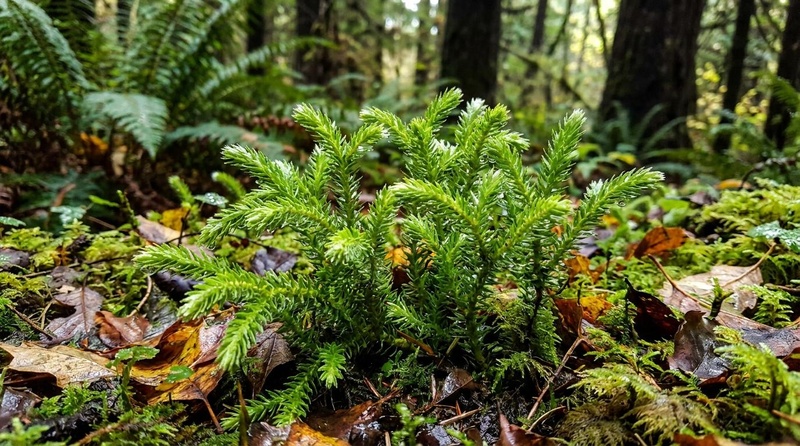
| Source | Huperzia serrata |
| Dose Range | 50–200 mcg (healthy), 400–800 mcg (clinical) |
| Half-life | 10–14 hours (terminal) |
| Main Benefit | Cognitive enhancement & neuroprotection |
| Absorption | High (~94% bioavailability) |
Huperzine A is a potent, selective, and reversible acetylcholinesterase (AChE) inhibitor and NMDA receptor antagonist derived from the Chinese club moss (Huperzia serrata). It is widely utilized for its ability to enhance acetylcholine levels, supporting memory consolidation and neuroprotection in both neurodegenerative clinical populations experiencing cognitive decline and healthy individuals seeking cognitive optimization.
¶ At a glance
Aliases
- Also known as: Selagine, HupA
- Chemical / botanical name: (1R,9S,13E)-1-amino-13-ethylidene-11-methyl-6-azatricyclo[7.3.1.02,7]trideca-2,4,10-trien-5-one; Huperzia serrata (Thunb. ex Murray) Trev.
- Category: Botanical alkaloid; Sesquiterpene alkaloid
Key points
- Strongest support: Statistically significant and clinically meaningful improvements in cognitive function and activities of daily living in patients with Alzheimer’s disease [1][2].
- Neuroprotection: Offers multifaceted neuroprotective effects via NMDA receptor antagonism, mitochondrial support, and reduction of beta-amyloid toxicity [3][4].
- Limitation: Possesses a long terminal half-life (~12 hours), leading to systemic accumulation if taken daily without structured cycling in healthy individuals [5][6].
- Safety concern: Risk of cholinergic excess (SLUDGE syndrome) if overdosed or combined with other cholinesterase inhibitors [7][8].
What people use it for
- Main goals: Memory enhancement, focus, neuroprotection, Alzheimer’s symptom management. Refer to the Focus and Cognitive Performance Guide for context on where HupA fits in cognitive enhancement protocols.
- Evidence quality (overall): Moderate (High for Alzheimer's, Low/Moderate for healthy/nootropic use).
¶ What is Huperzine A?
Huperzine A is a naturally occurring alkaloid discovered in the 1980s by Chinese researchers investigating traditional medicinal herbs [9]. It belongs to the Lycopodium alkaloid family and is distinguished by its high potency and ability to cross the blood-brain barrier [5:1][10].
- Definition: A sesquiterpene alkaloid that acts as a powerful, centrally active reversible inhibitor of acetylcholinesterase [4:1].
- Natural sources: Found primarily in Huperzia serrata (Chinese club moss or firmoss), known as Qian Ceng Ta in Traditional Chinese Medicine. It is also found in other Huperzia species like H. elmeri, H. carinat, and H. aqualupian [11].
- Traditional / historical use: In TCM, Huperzia serrata has been used for centuries to treat inflammation, fever, schizophrenia, and memory loss [9:1][11:1].
- Current regulatory status: Classified as a dietary supplement in the United States and several other countries. In China, it was approved as a new drug for the treatment of Alzheimer's disease in 1994 [10:1][12].
- Key pharmacological property: "highly potent, blood-brain barrier-permeable, selective reversible acetylcholinesterase inhibitor" [5:2][4:2].
¶ What are Huperzine A’s main benefits?
Huperzine A is primarily valued for its effects on the cholinergic system and its broader neuroprotective capabilities.
- Cognition in Alzheimer’s Disease: Systematic reviews of Tier 1 evidence consistently show significant improvements in Mini-Mental State Examination (MMSE) and Alzheimer's Disease Assessment Scale-Cognitive subscale (ADAS-Cog) scores in patients with mild-to-moderate AD [1:1][13][14].
- Activities of Daily Living (ADL): Clinical trials demonstrate that Huperzine A improves the ability of AD patients to perform daily tasks, supporting functional independence [1:2][2:1].
- Vascular Dementia: Cochrane reviews and meta-analyses suggest potential cognitive benefits in vascular dementia, though trial sizes are smaller than for AD [15][13:1].
- Schizophrenia: Adjunctive treatment with Huperzine A has shown modest improvements in cognitive deficits and negative symptoms in patients with schizophrenia, though more high-quality evidence is needed [16].
- Neuroprotection & NMDA Antagonism: By acting as a non-competitive NMDA receptor antagonist, it helps prevent glutamate-induced excitotoxicity, a key pathway in neuronal death [17][18].
¶ Evidence summary table (human outcomes)
| Outcome / Goal | Effect* | Consistency** | Evidence quality | Trials*** | Notes (population, duration, dose) |
|---|---|---|---|---|---|
| Cognitive Function (Alzheimer's) | High | Moderate | 20+ RCTs | Significant MMSE/ADAS-Cog improvement at 300-800 mcg/day for 8-24 weeks [1:3][13:2][14:1] | |
| Activities of Daily Living (AD) | High | Moderate | 20+ RCTs | Improved ADL scale scores in patients with mild-to-moderate AD [1:4][2:2] | |
| Cognitive Deficits (Vasc. Dementia) | Moderate | Low/Moderate | 3-5 RCTs | Improvement in cognitive scores comparable to pharmaceutical standards [15:1][13:3] | |
| Cognitive Deficits (Schizophrenia) | Moderate | Low | 12 RCTs | Modest adjunctive benefit for cognitive and negative symptoms [16:1] | |
| Cognitive Recovery (TBI) | Low | Low | 1 RCT | Phase II pilot trial showed no significant difference vs placebo after 12 weeks [19] | |
| Cognitive Performance (MCI) | Moderate | Low | 10+ RCTs | Potential benefit in mild cognitive impairment; small study limitations [20] | |
| Cognitive Performance (Healthy) | Low | Very Low | Sparse | Lack of large-scale RCTs in healthy adults; high anecdotal use [6:1][13:4] |
- *Effect: ↑ (increase), ↓ (decrease), = (no effect), ? (unclear). Impact: (p) positive, (n) negative, (x) neutral.
- **Consistency: Low (results conflict), Moderate (mixed/leaning), High (consensus).
- ***Trials: Number of RCTs or total trials informing this outcome.
- REQUIRED: Row-level citations included in the "Notes" column.
¶ How does Huperzine A work?
Huperzine A's mechanism is multifaceted, extending beyond simple enzyme inhibition to include direct neuroprotection and cellular signaling modulation.
¶ Primary Mechanism: Reversible Acetylcholinesterase Inhibition
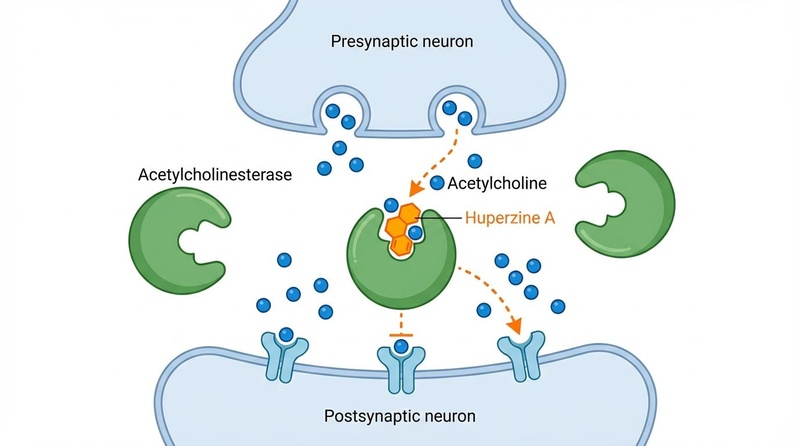
Huperzine A is a highly potent, selective, and reversible inhibitor of acetylcholinesterase (AChE). It binds to the active-site gorge of AChE with high affinity (IC50 ~82 nM), preventing the hydrolysis of acetylcholine [4:3][21].
- Selectivity: It shows higher selectivity for AChE over butyrylcholinesterase (BuChE), which reduces peripheral side effects compared to older inhibitors like tacrine [4:4].
- G4 Specificity: It has a strong affinity for the globular tetramer (G4) form of AChE, the dominant form in the human brain, which further enhances its central efficacy [10:2][3:1].
¶ NMDA Receptor Antagonism
Unlike many other AChE inhibitors, Huperzine A acts as a weak, non-competitive antagonist at the N-methyl-D-aspartate (NMDA) receptor [17:1]. This helps mitigate glutamate-induced excitotoxicity—the process of neuronal damage caused by excessive calcium influx—without the dissociative side effects of potent NMDA antagonists like ketamine [18:1].
¶ Neuroprotection and Amyloid Modulation
- Disruption of AChE-Aβ Complex: HupA hinders the interaction between AChE and amyloid-beta (Aβ) peptides, potentially slowing the aggregation of toxic plaques [3:2].
- APP Processing: It promotes the non-amyloidogenic pathway of amyloid precursor protein (APP) processing (via α-secretase) while downregulating β-secretase (BACE1), reducing Aβ production [12:1][3:3].
- Mitochondrial Support: Preclinical data suggests it protects mitochondrial membrane potential and reduces oxidative stress in neurons, directly addressing pathways associated with mitochondrial dysfunction [12:2][4:5].
¶ Pharmacokinetics basics
- Bioavailability: Highly bioavailable (~94% after oral administration) [5:3].
- Tmax: Reaches peak plasma concentration in approximately 58 minutes [5:4].
- BBB Penetration: Efficiently crosses the blood-brain barrier; approximately 20% of plasma concentration reaches the cerebrospinal fluid [10:3].
- Half-Life: Terminal elimination half-life is remarkably long, ranging from 10 to 14 hours [5:5][6:2]. This necessitates structured cycling to prevent accumulation.
¶ Effects on different systems
¶ Brain & mental health (cognition, mood, sleep)
The primary health domain for Huperzine A is neurocognitive function.
- Memory Consolidation: By maintaining high synaptic levels of acetylcholine, it supports the long-term potentiation (LTP) required for learning and memory recall [1:5][11:2].
- Executive Function: Clinical data in AD and vascular dementia show improvements in attention, focus, and sequential reasoning [1:6][15:2][2:3].
- Sleep & Dreaming: Users frequently report increased dream intensity and lucidity, likely due to elevated REM-stage acetylcholine; however, this can also lead to insomnia if taken too late in the day [6:3][11:3].
¶ Metabolic and Other Domains
- Insulin Signaling: Preclinical studies indicate HupA may improve insulin signaling pathways in the brain, potentially counteracting obesity-related cognitive impairments [22].
- Liver Health: Preliminary animal and in vitro data suggest potential hepatoprotective effects and reduction in nonalcoholic fatty liver disease (NAFLD) progression via senescence regulation [23].
- Diabetic Neuropathy: Rat models show HupA ameliorates cognitive deficits associated with streptozotocin-induced diabetes [24].
Note: Metabolic effects are primarily supported by preclinical data; human evidence in these domains is insufficient.
¶ Dosage and how to take it
Dosage must be precisely managed due to the compound's high potency and long half-life.
¶ Standard dosing in studies
- Alzheimer's Disease: 200–400 mcg twice daily (400–800 mcg/day total) [1:7][25][9:2].
- Cognitive Enhancement (Healthy): 50–100 mcg taken once daily. Doses exceeding 200 mcg/day significantly increase the risk of side effects without proportional benefit [6:4][11:4].
Mandatory Cycling Protocol
Because of its ~12-hour terminal half-life, Huperzine A can accumulate in the system, leading to receptor downregulation and tolerance. Healthy users must cycle the supplement:
- Block Method: 2–4 weeks of daily use followed by 1–2 weeks of complete cessation [6:5][11:5].
- Intermittent Method: Dosing only 2–3 times per week (e.g., every other day) [11:6].
- Clinical Note: Cycling is generally not recommended for Alzheimer’s patients, as the therapeutic goal is sustained AChE inhibition to buffer severe cholinergic deficits.
¶ Forms and bioavailability
- Source: Most supplements are standardized extracts of Huperzia serrata. Synthetic (-)-Huperzine A is also available and identical to the natural alkaloid.
- Administration: Water-soluble and highly bioavailable on an empty stomach. Taking it with food is generally fine but may slightly delay absorption [5:6][6:6].
¶ Special populations
- Older Adults: Require careful monitoring; pharmacokinetic studies suggest a one-compartment model in the elderly with potentially reduced clearance [26].
- Kidney/Liver Impairment: Caution is advised as these are primary routes of elimination and metabolism [7:1][2:4].
- Pregnancy and Breastfeeding: Strictly contraindicated due to a lack of human safety data and potential embryotoxicity in animal models [7:2][27].
¶ Safety and side effects
Huperzine A is generally well-tolerated at therapeutic doses, but its powerful cholinergic activity requires vigilance.
¶ Common side effects
Side effects are primarily cholinergic and dose-dependent:
- Gastrointestinal: Nausea, vomiting, diarrhea, abdominal cramps, and increased bowel motility [25:1][12:3].
- Neurological: Insomnia, vivid dreams, headaches, and dizziness [6:7][12:4].
- Secretory: Increased salivation, sweating, and nasal congestion [27:1][25:2].
¶ Less common / serious concerns
- Cardiovascular: Bradycardia (slow heart rate) and rare ECG abnormalities [27:2][2:5].
- Cholinergic Toxidrome (Overdose): Symptoms follow the "SLUDGE" mnemonic: Salivation, Lacrimation, Urination, Defecation, Gastrointestinal distress, Emesis. The medical antidote for severe toxicity is atropine [8:1].
¶ Who should be especially cautious or avoid it
- People with Bradycardia or Sick Sinus Syndrome: May dangerously lower heart rate [25:3][19:1].
- Asthma/COPD patients: Can increase bronchial secretions and induce bronchoconstriction [25:4].
- Peptic Ulcer patients: Increases gastric acid secretion, potentially worsening ulcers [25:5][19:2].
- Epilepsy: May lower the seizure threshold [25:6][2:6].
- Bowel/Urinary Blockage: Increased peristalsis and bladder tone can worsen physical obstructions [25:7].
¶ Drug and supplement interactions
¶ Pharmacodynamic interactions
- Acetylcholinesterase Inhibitors (Donepezil, Galantamine, Rivastigmine): Absolute contraindication. Combining these drastically increases the risk of cholinergic crisis [27:3][25:8].
- Beta-Blockers & Calcium Channel Blockers: Can have an additive effect in lowering heart rate, increasing the risk of severe bradycardia [27:4][6:8].
- Cholinergic Agonists: Synergistic effects with drugs like pilocarpine or bethanechol increase parasympathetic tone [25:9].
- Anticholinergic Drugs: Huperzine A antagonizes the effect of drugs used for drying secretions or treating overactive bladder [25:10].
- Dopamine D2 Blockers: May worsen extrapyramidal symptoms by altering the dopamine/acetylcholine balance [27:5].
¶ Pharmacokinetic interactions
- CYP1A2: Animal models suggest metabolism via CYP1A2. Drugs that induce or inhibit this enzyme could theoretically alter HupA levels, though human data are sparse [2:7][4:6].
¶ Combining Huperzine A with other supplements (“stacks”)
- Alpha-GPC / Citicoline: Frequently stacked with acetylcholine precursors like Alpha-GPC or Citicoline to provide the raw materials for ACh synthesis while HupA prevents its breakdown. Caution: This increases the risk of "cholinergic headache" and requires lower doses of each [6:9].
- Racetams: Users often combine HupA with Piracetam or Aniracetam to maximize cholinergic signaling, though high-level clinical combination trials are lacking [11:7].
- Caffeine: Often included in pre-workout blends for focus; however, the long half-life of HupA makes daily pre-workout use problematic for cycling [10:4].
¶ Practical FAQ
How long does it take for Huperzine A to work?
Can I take Huperzine A every day?
Is Huperzine A better than Donepezil?
Does it help with weight loss?
There is no clinical evidence that Huperzine A aids in weight loss. Preclinical studies suggest it might help with metabolic health, but it is not a primary weight loss agent [22:1].
¶ How we evaluated the evidence
Evidence for Huperzine A was graded based on a systematic review of PubMed, Cochrane, and clinical registry data.
- High certainty: Derived from multiple meta-analyses of randomized controlled trials (RCTs).
- Moderate certainty: From high-quality meta-analyses with some methodological heterogeneity or moderate-sized RCTs.
- Low/Very Low certainty: Based on single RCTs, preclinical models, or observational data.
We prioritized human meta-analyses for Alzheimer's disease and vascular dementia while clearly distinguishing between clinical results and off-label nootropic use in healthy populations.
¶ References
Yang, G., Wang, Y., Tian, J., & Liu, J.-P. (2013). Huperzine A for Alzheimer's disease: a systematic review and meta-analysis of randomized clinical trials. PLoS ONE, 8(9), e74916. https://pubmed.ncbi.nlm.nih.gov/24086396/ ↩︎ ↩︎ ↩︎ ↩︎ ↩︎ ↩︎ ↩︎ ↩︎ ↩︎
Wang, B. S., Wang, H., Wei, Z. H., et al. (2009). Efficacy and safety of natural acetylcholinesterase inhibitor huperzine A in the treatment of Alzheimer's disease: an updated meta-analysis. Journal of Neural Transmission, 116(4), 457-465. https://pubmed.ncbi.nlm.nih.gov/19221692/ ↩︎ ↩︎ ↩︎ ↩︎ ↩︎ ↩︎ ↩︎ ↩︎
Friedli, M. J., & Inestrosa, N. C. (2021). Huperzine A and Its Neuroprotective Molecular Signaling in Alzheimer's Disease. Molecules, 26(21), 6531. https://pmc.ncbi.nlm.nih.gov/articles/PMC8587556/ ↩︎ ↩︎ ↩︎ ↩︎
Wang, R., Yan, H., & Tang, X. C. (2006). Progress in studies of huperzine A, a natural cholinesterase inhibitor from Chinese herbal medicine. Acta Pharmacologica Sinica, 27(1), 1-26. https://pubmed.ncbi.nlm.nih.gov/16364207/ ↩︎ ↩︎ ↩︎ ↩︎ ↩︎ ↩︎ ↩︎
Li, Y. X., Zhang, R. Q., Li, C. R., & Jiang, X. H. (2007). Pharmacokinetics of huperzine A following oral administration to human volunteers. European Journal of Drug Metabolism and Pharmacokinetics, 32(4), 183-187. https://pubmed.ncbi.nlm.nih.gov/18348466/ ↩︎ ↩︎ ↩︎ ↩︎ ↩︎ ↩︎ ↩︎ ↩︎
NeuroEdge Formula. (2026). Huperzine A: Complete Evidence-Based Review, Dosing & Cycling Guide. https://neuroedgeformula.com/huperzine-a-complete-guide/ ↩︎ ↩︎ ↩︎ ↩︎ ↩︎ ↩︎ ↩︎ ↩︎ ↩︎ ↩︎ ↩︎ ↩︎ ↩︎
RIVM (National Institute for Public Health and the Environment). (2024). Risk assessment of Huperzia serrata and huperzine A in herbal preparations. Ministry of Health, Welfare and Sport (Netherlands). https://www.rivm.nl/bibliotheek/rapporten/2024-0028.pdf ↩︎ ↩︎ ↩︎
Felgenhauer, N., Zilker, T., Worek, F., & Eyer, P. (2000). Intoxication with huperzine A, a potent anticholinesterase found in the fir club moss. Journal of Toxicology: Clinical Toxicology, 38(7), 803-808. https://pubmed.ncbi.nlm.nih.gov/11192470/ ↩︎ ↩︎
Chu, Z., Sun, Q., Mao, M., et al. (2025). Pharmacology, phytochemistry, and traditional uses of Huperzia serrata (Thunb. ex Murray) Trev. Fitoterapia, 180, 106304. https://pubmed.ncbi.nlm.nih.gov/39571762/ ↩︎ ↩︎ ↩︎
Zhang, H. Y. (2012). New insights into huperzine A for the treatment of Alzheimer's disease. Acta Pharmacologica Sinica, 33(9), 1170–1175. https://pmc.ncbi.nlm.nih.gov/articles/PMC4003111/ ↩︎ ↩︎ ↩︎ ↩︎ ↩︎
Kim Thu, D., Vui, D. T., Ngoc Huyen, N. T. (2019). The use of Huperzia species for the treatment of Alzheimer's disease. Journal of Basic and Clinical Physiology and Pharmacology, 30(6). https://pubmed.ncbi.nlm.nih.gov/31778363/ ↩︎ ↩︎ ↩︎ ↩︎ ↩︎ ↩︎ ↩︎ ↩︎ ↩︎ ↩︎
Qian, Z. M., & Ke, Y. (2014). Huperzine A: Is it an Effective Disease-Modifying Drug for Alzheimer’s Disease? Frontiers in Aging Neuroscience, 6, 216. https://pmc.ncbi.nlm.nih.gov/articles/PMC4137276/ ↩︎ ↩︎ ↩︎ ↩︎ ↩︎
Xing, S. H., Zhu, C. C., Zhang, R., An L. (2014). Huperzine a in the treatment of Alzheimer's disease and vascular dementia: a meta-analysis. Evidence-Based Complementary and Alternative Medicine. https://pubmed.ncbi.nlm.nih.gov/24639880/ ↩︎ ↩︎ ↩︎ ↩︎ ↩︎ ↩︎
Zhang, Z., et al. (2002). Clinical efficacy and safety of huperzine Alpha in treatment of mild to moderate Alzheimer disease, a placebo-controlled, double-blind, randomized trial. Zhonghua Yi Xue Za Zhi. https://pubmed.ncbi.nlm.nih.gov/12181083/ ↩︎ ↩︎
Hao, Z., Liu, M., Liu, Z., & Lu, D. (2009). Huperzine A for vascular dementia. Cochrane Database of Systematic Reviews. https://www.cochranelibrary.com/cdsr/doi/10.1002/14651858.CD007365.pub2/full ↩︎ ↩︎ ↩︎
Zheng, W., Xiang, Y. Q., Li, X. B. (2016). Adjunctive huperzine A for cognitive deficits in schizophrenia: a systematic review and meta-analysis. Human Psychopharmacology, 31(4), 270-281. https://pubmed.ncbi.nlm.nih.gov/27302211/ ↩︎ ↩︎
Gordon, R. K., et al. (2001). The NMDA receptor ion channel: a site for binding of Huperzine A. Journal of Applied Toxicology, 21(S1), S47-S51. https://pubmed.ncbi.nlm.nih.gov/11920920/ ↩︎ ↩︎
Zhang, J. M., & Hu, G. Y. (2001). Huperzine A, a nootropic alkaloid, inhibits N-methyl-D-aspartate-induced current in rat dissociated hippocampal neurons. Neuroscience, 105(3), 663-669. https://pubmed.ncbi.nlm.nih.gov/11516831/ ↩︎ ↩︎
Zafonte, R. D., Fregni, F., Bergin, M. J. G., et al. (2020). Huperzine A for the treatment of cognitive, mood, and functional deficits after moderate and severe TBI (HUP-TBI): results of a Phase II randomized controlled pilot study. Brain Injury, 34(1), 34-41. https://pubmed.ncbi.nlm.nih.gov/31638455/ ↩︎ ↩︎ ↩︎
Huang, P., Li, B., Guo, Y. H. (2019). Efficacy and safety of huperzine A in treating patients with mild cognitive impairment: a systematic review and Meta-analysis. Zhongguo Zhong Yao Za Zhi, 44(7), 1296-1302. https://pubmed.ncbi.nlm.nih.gov/30989926/ ↩︎
Friedli, M. J., & Inestrosa, N. C. (2021). Huperzine A and Its Neuroprotective Molecular Signaling in Alzheimer's Disease. Molecules, 26(21), 6531. https://pmc.ncbi.nlm.nih.gov/articles/PMC8587556/ ↩︎
Wang, S., et al. (2019). Huperzine A ameliorates obesity-related cognitive performance impairments involving neuronal insulin signaling pathway in mice. PubMed. https://pubmed.ncbi.nlm.nih.gov/31213670/ ↩︎ ↩︎
Mao, M. Q., et al. (2018). Huperzine A attenuates nonalcoholic fatty liver disease by regulating hepatocyte senescence and apoptosis: an in vitro study. PMC, Article ID: PMC6025153. https://pmc.ncbi.nlm.nih.gov/articles/PMC6025153/ ↩︎
Mao, X. Y., et al. (2014). Huperzine A ameliorates cognitive deficits in streptozotocin-induced diabetic rats. PubMed. https://pubmed.ncbi.nlm.nih.gov/24857910/ ↩︎ ↩︎
WebMD. (n.d.). Huperzine A - Uses, Side Effects, and More. https://www.webmd.com/vitamins/ai/ingredientmono-764/huperzine-a ↩︎ ↩︎ ↩︎ ↩︎ ↩︎ ↩︎ ↩︎ ↩︎ ↩︎ ↩︎ ↩︎
Zhang, L., et al. (2016). Population pharmacokinetic modeling and simulation of huperzine A in elderly Chinese subjects. PubMed. https://pubmed.ncbi.nlm.nih.gov/27180987/ ↩︎
Memorial Sloan Kettering Cancer Center. (2022). Huperzia serrata. Integrative Medicine Assessment. https://www.mskcc.org/cancer-care/integrative-medicine/herbs/huperzia-serrata ↩︎ ↩︎ ↩︎ ↩︎ ↩︎ ↩︎