¶ L-Tyrosine
| Type | Amino acid |
| Active Cmpd | L-Tyrosine |
| Source | Dietary protein, endogenous synthesis from L-Phenylalanine |
| Dose Range | 500–2,000 mg (up to 150 mg/kg in stress trials) |
| Half-life | ~2–3 hours |
| Main Benefit | Preserves cognitive function under acute stress |
| Absorption | High (competed by other amino acids) |
L-Tyrosine is a non-essential amino acid that serves as the direct biochemical precursor to the catecholamine neurotransmitters dopamine, norepinephrine, and epinephrine, as well as thyroid hormones. Clinical evidence demonstrates robust efficacy for preserving executive function, working memory, and vigilance specifically during acute, exhausting physical or environmental stressors, although baseline cognitive effects in well-rested individuals are negligible.
¶ At a glance
Aliases
- Also known as: Tyrosine, L-tyrosina, 4-hydroxyphenylalanine
- Chemical / botanical name: (S)-2-amino-3-(4-hydroxyphenyl)propanoic acid
- Category: Amino acid derivative
Key points (high-level summary)
- Stress Buffering: In individuals subjected to acute environmental stressors (such as cold exposure, high altitude, or loud noise) or heavy cognitive multi-tasking, L-Tyrosine effectively prevents the decline in working memory and information processing speed.[1][2][3]
- Baseline Efficacy: Supplementation consistently fails to improve cognitive performance, motor speed, or focus in healthy, well-rested subjects who are not subjected to an acute stressor.[4][5][6]
- Physical Performance: While ineffective for whole-body endurance in temperate conditions, L-Tyrosine's effects under high-heat strain are mixed, potentially supporting cognitive vigilance but failing to consistently enhance physical tolerance.[7][8][9]
- Administration Rule: Must be taken on an empty stomach to avoid competition with other large neutral amino acids (LNAAs) for transport across the blood-brain barrier.[10]
- Safety Caution: High doses can trigger hypertensive crises if combined with Monoamine Oxidase Inhibitors (MAOIs) due to catecholamine accumulation.[10:1]
What people use it for
- Main goals: Cognitive preservation under environmental stress, sleep deprivation resilience, mental flexibility during intense workloads, thyroid precursor support.
- Evidence quality (overall): Moderate to High (for stress-induced cognitive preservation).
¶ What is L-Tyrosine?
L-Tyrosine is a conditionally essential amino acid, meaning that while the body can synthesize it endogenously from L-phenylalanine under normal physiological conditions, dietary intake becomes necessary when physiological demands exceed synthetic capacity.
- Definition: A large neutral amino acid (LNAA) that is both a critical structural component for protein synthesis and the primary raw material for catecholamine neurotransmitters (dopamine, norepinephrine, epinephrine) and thyroid hormones.
- Natural sources: Abundant in protein-rich foods, including parmesan cheese, turkey, chicken, eggs, cottage cheese, soy protein, spirulina, and various fish.
- Traditional / historical use: First isolated from the milk protein casein in 1846 by German chemist Justus von Liebig. It has been investigated for decades by military and aerospace research institutions as a tactical countermeasures tool for preserving operational cognitive endurance.
- Current regulatory status: Classified as Generally Recognized As Safe (GRAS) by the FDA and widely available worldwide as an over-the-counter dietary supplement.
- Key pharmacological property: Direct biochemical precursor for the rate-limiting synthesis of catecholamines and thyroid hormones (T3 and T4).
¶ What are L-Tyrosine’s main benefits?
The primary clinical utility of L-Tyrosine is cognitive preservation rather than cognitive enhancement. It acts as a biochemical "buffer" that prevents the exhaustion of neurotransmitter pools during high-demand or highly exhausting states.
¶ Cognitive Preservation under Acute Environmental Stress
- Outcome: Working memory, vigilance, and psychomotor speed during environmental challenges.
- Direction of effect: Prevents decline / Maintains baseline performance.
- Magnitude: Large protective effect.
- Population studied: Healthy young adults, military personnel, and pilots exposed to hypoxia, extreme cold, or noise.
- Evidence quality: High (supported by multiple placebo-controlled crossover RCTs).
- Summary sentence: L-Tyrosine acts as a biochemical buffer that prevents working memory and executive function deficits when the brain is exposed to acute stressors like extreme cold, high altitude, or loud noise.[1:1][2:1][11][3:1]
¶ Cognitive Performance during Sleep Deprivation
- Outcome: Psychomotor vigilance, logical reasoning, and executive control under fatigue.
- Direction of effect: Dampens cognitive decline.
- Magnitude: Moderate to large protective effect.
- Population studied: Sleep-deprived adults (awake for 24+ hours), military personnel, and night-shift workers.
- Evidence quality: Moderate (supported by multiple high-quality but smaller RCTs).
- Summary sentence: During prolonged wakefulness, a single dose of L-Tyrosine (150 mg/kg) helps preserve vigilance, psychomotor speed, and general executive function for up to several hours, reducing subjective fatigue.[12][10:2][13]
¶ Cognitive Flexibility and Task Switching (Unstressed States)
- Outcome: Cognitive control, task switching, and mental flexibility.
- Direction of effect: Small to moderate improvement.
- Magnitude: Small; highly dependent on baseline dopamine levels.
- Population studied: Healthy young and older adults under high mental workload.
- Evidence quality: Moderate (supported by placebo-controlled trials).
- Summary sentence: While L-Tyrosine does not enhance basic attention or focus in well-rested, unstressed individuals, it can modestly improve cognitive flexibility during complex multitasking or task-switching paradigms, especially in individuals with low baseline dopamine.[4:1][14][15]
¶ Exercise Capacity under Heat Stress
- Outcome: Time to exhaustion, subjective exercise tolerance, and cognitive vigilance in high heat.
- Direction of effect: Mixed / No consistent effect on physical endurance, but partial benefit for cognitive vigilance.
- Magnitude: Small to negligible; conflicting clinical results.
- Population studied: Physically active adults, cyclists, and soccer players exercising in hot environments (30–35°C).
- Evidence quality: Low (conflicting RCTs).
- Summary sentence: Early evidence suggested L-Tyrosine could extend exercise duration in high heat, but recent rigorous trials in soccer players and cyclists show no significant physical performance enhancement, though it may partially preserve cognitive vigilance under thermal strain.[16][17][8:1][9:1]
¶ Baseline Physical Endurance and Athletic Performance (Temperate Conditions)
- Outcome: Muscle strength, aerobic capacity, and time to exhaustion.
- Direction of effect: No effect.
- Magnitude: Neutral / None.
- Population studied: Healthy active adults and athletes in temperate environments.
- Evidence quality: Moderate to High (supported by a systematic review and meta-analysis).
- Summary sentence: In normal thermal conditions, L-Tyrosine supplementation does not improve muscle strength, aerobic power, or endurance, as metabolic pathways do not experience catecholamine depletion in these states.[7:1][10:3]
¶ Evidence summary table (human outcomes)
| Outcome / Goal | Effect* | Consistency** | Evidence quality | Trials*** | Notes (population, duration, dose) |
|---|---|---|---|---|---|
| Cognitive Preservation (Acute Stress) | High | High | 15+ RCTs | Prevents working memory and vigilance decline under cold, noise, and hypoxia stress. Single dose of 100–150 mg/kg.[1:2][2:2][11:1][3:2] | |
| Cognitive Preservation (Sleep Loss) | High | Moderate | 4 RCTs | Dampens executive function deficits during overnight sleep deprivation. Single dose of 150 mg/kg.[12:1][10:4][13:1] | |
| Cognitive Flexibility (Unstressed) | Moderate | Moderate | 6 RCTs | Modestly improves task-switching and cognitive control under high mental workload in young adults. Single dose of 2.0 g.[4:2][14:1][15:1] | |
| Endurance Performance (Normal Temp) | High | Moderate | Meta-Analysis | Ineffective for whole-body endurance performance (TTE or ETT) in physically active adults in normal temperatures.[7:2] | |
| Exercise Capacity (Heat Stress) | Low | Low | 5 RCTs | Highly conflicting. Some cycling trials show benefit, but recent team-sport sprint trials show no effect. Dose of 150–250 mg/kg.[16:1][17:1][8:2][9:2] | |
| ADHD Symptom Management | Low | Very Low | 2 Small Trials | Fails as a standalone treatment due to rapid development of tolerance within 2 weeks.[18][19] | |
| Stress-Induced Blood Pressure Elevation | Moderate | Moderate | 2 RCTs | Mitigates stress-induced rises in diastolic blood pressure under noise or military combat stress. Dose of 2.0 g or 100 mg/kg.[11:2][20] |
- *Effect: Number of arrows (1-3) indicates magnitude. Direction: ↑ (increase), ↓ (decrease), = (no effect), ? (unclear). Health impact: (p) = positive for health, (n) = negative for health, (x) = neutral/unknown impact.
- **Consistency: Low (results conflict), Moderate (mixed but leaning one way), High (most trials agree)
- ***Trials: Number of RCTs or total trials informing this outcome.
- REQUIRED: Citation key in "Notes" for every row.
¶ How does L-Tyrosine work?
L-Tyrosine works by increasing the available "raw material" pool for neurotransmitter synthesis precisely when the rate-limiting step of the pathway is upregulated by stress.
- Primary targets:
- LAT1 Transporter (SLC7A5): The gateway across the blood-brain barrier (BBB). L-Tyrosine competes directly with other Large Neutral Amino Acids (LNAAs) for transport via this carrier.[10:5]
- Tyrosine Hydroxylase (TH): The rate-limiting enzyme in catecholamine synthesis.
- Thyroid Peroxidase (TPO): The enzyme responsible for iodinating tyrosine residues within thyroglobulin to form thyroid hormones (T3 and T4).[10:6]
- Aromatic L-Amino Acid Decarboxylase (AADC): The enzyme downstream of TH that converts L-DOPA to dopamine.
- Core mechanisms:
- Neural Demand-Dependent Synthesis: Under resting conditions, Tyrosine Hydroxylase (TH) is nearly saturated (75–85%) by endogenous tyrosine and is inhibited by end-product feedback (dopamine). However, during acute stress, rapid neuronal firing stimulates TH phosphorylation (at Ser40/Ser31/Ser19 residues). Phosphorylated TH has a lower affinity for end-product feedback inhibition and a higher affinity for its substrate. In this "demand-activated" state, local tyrosine becomes the absolute rate-limiting bottleneck. Supplementing L-Tyrosine removes this bottleneck, allowing the brain to sustain catecholamine production rates during high demand.[4:3][10:7][6:1]
- Catecholamine Restoration: Restores depleted pools of dopamine and norepinephrine, which are critical for the prefrontal cortex (PFC) to maintain executive control, focus, and blood pressure regulation under pressure.
- Molecular & Structural Roles: At a molecular level, tyrosine is a vital component of several structural and enzymatic systems. For example, estrogen-related receptor alpha (ERRα)—an orphan nuclear receptor with tyrosine/phenylalanine-rich target homologies—interacts with nuclear β-catenin to regulate cell migration.[21] In immunological pathways, specific single-nucleotide variants in mitochondrial proteins like coenzyme Q6 (specifically where an aspartate residue is mutated to a tyrosine, known as ) can alter mitochondrial oxidative phosphorylation and reprogram macrophage metabolism in response to bacterial pathogens.[22] Furthermore, tyrosine phosphorylation is a primary mechanism of signal transduction across cell membranes via tyrosine receptor kinases. In oncology, multi-target tyrosine kinase inhibitors (such as anlotinib) are designed to block these pathways (specifically VEGFR, FGFR, PDGFR, and c-kit receptors) to inhibit angiogenesis and modulate the tumor immune microenvironment, showing synergy when combined with immune checkpoint inhibitors.[23]
- Pharmacokinetics basics:
- Tmax: Plasma levels peak approximately 60–120 minutes post-ingestion.[4:4]
- Half-life: Plasma half-life is approximately 2–3 hours.[10:8]
- Absorption: Highly bioavailable but severely inhibited by dietary protein. Taking tyrosine with protein provides no cognitive benefit as other amino acids (BCAAs, Phenylalanine) outcompete it for transport into the brain.[10:9]
¶ Effects on different systems
¶ Brain & Mental Health
L-Tyrosine's effects on the brain follow the Dopamine Inverted-U Hypothesis (Yerkes-Dodson Law of Dopamine). Optimal executive function in the prefrontal cortex occurs only within a narrow window of catecholamine activity.
- Stress Buffer: Under acute stress, dopamine and norepinephrine levels fall toward the left side of the curve (deficiency), leading to impaired focus. L-Tyrosine restores levels back to the optimal peak.[4:5][14:2]
- Genotype-Dependent Response: The COMT Val158Met (rs4680) polymorphism significantly modulates response. Individuals with the Val/Val genotype (high dopamine degradation) show the greatest cognitive benefit from tyrosine. Conversely, individuals with the Met/Met genotype (low dopamine degradation) may see no effect or even experience increased anxiety if tyrosine pushes them over the peak into hyper-arousal.[14:3]
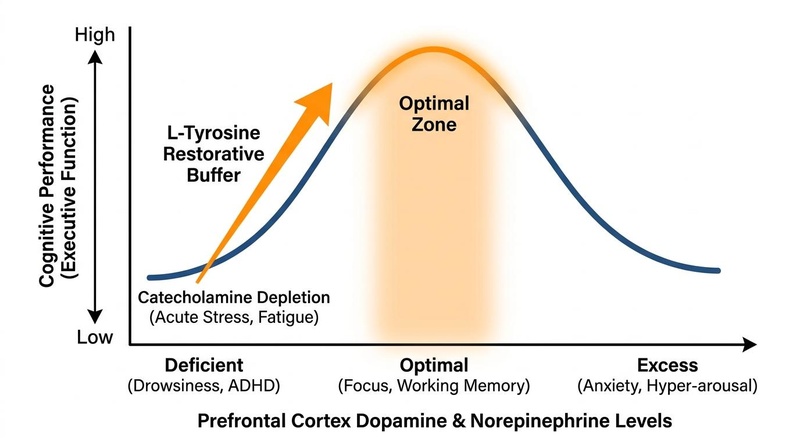
Figure 1: The Inverted-U relationship between prefrontal catecholamine levels and cognitive performance. L-Tyrosine acts as a buffer for the "deficient" side of the curve.
¶ Cardiovascular Health
While central catecholamines are its primary focus, L-Tyrosine has observed effects on peripheral sympathetic tone.
- Stress-Induced Blood Pressure: In studies of acute noise or environmental stress, L-Tyrosine has been shown to mitigate the stress-induced rise in diastolic blood pressure, suggesting it helps the brain regulate the sympathetic nervous system more efficiently under pressure.[11:3][20:1]
- Vascular Tone: In older adults, oral L-tyrosine supplementation has been shown to augment the vasoconstriction response to whole-body cooling, confirming functional catecholamine synthesis and physiological response modification in aging vasculature.[24]
¶ Hormonal Health
- Thyroid Support: As an obligate precursor to T4 and T3, tyrosine is essential for thyroid health. However, there is limited clinical evidence that supplemental tyrosine improves thyroid function in individuals with normal iodine levels and non-pathological thyroid states.[10:10]
¶ Dosage and how to take it
Dosage must be timed strategically to align with the "window of demand."
Standard dosing in studies
- Typical daily dose range: 500 mg to 2,000 mg taken as a single dose for cognitive task performance.[4:6][5:1]
- Extreme Stress Dosing: 100 mg to 150 mg/kg of body weight (e.g., 7.0–10.5 g for a 70 kg adult), often administered as a single large dose 60 minutes prior to the stressor or split during extended sleep deprivation.[1:3][2:3][12:2]
- Study durations: Most clinical evidence is based on acute, single-day administration. Long-term studies are extremely limited, with small ADHD trials (2–4 weeks) showing a rapid loss of efficacy due to tolerance.[18:1][19:1]
Forms and bioavailability
- Free-Form L-Tyrosine: The gold standard. Highly bioavailable and highly effective for increasing brain tyrosine levels.[25]
- N-Acetyl L-Tyrosine (NALT): Despite high solubility and common use in pre-workouts, human pharmacokinetic data shows NALT is poorly deacetylated in vivo. Following intravenous infusion, over 56% of NALT is excreted completely unchanged in the urine, and it fails to significantly elevate plasma tyrosine levels compared to free-form L-tyrosine. NALT is considered an inferior form for nootropic purposes.[25:1]
- In novel drug delivery research: Tyrosine derivatives such as fluorenylmethyloxycarbonyl-protected tyrosine (Fmoc-Tyrosine) are investigated for their self-assembling properties. Incorporating Fmoc-Tyrosine into calcium-alginate microcapsules has been shown to exploit the self-assembling and stacking properties of tyrosine's aromatic ring to form dense hybrid microcapsules, successfully extending quercetin drug/supplement release from 7 hours to 24 hours.[26]
- With or without food: MUST be taken on an empty stomach, at least 30–60 minutes prior to a stressful task. Co-ingestion with protein is highly discouraged because other large neutral amino acids (LNAAs) outcompete tyrosine for the LAT1 blood-brain barrier transporter, rendering the supplement ineffective.[10:11]
Special populations
- Kidney or Liver Impairment: Patients with renal or hepatic disease (e.g., tyrosinemia) should avoid L-tyrosine supplementation due to impaired amino acid clearance.
- Older Adults: Doses should be conservative as older adults may be more sensitive to peripheral pressor effects (blood pressure changes).[14:4][24:1]
- Children and Adolescents: Aside from small, short-term trials for ADHD, there is insufficient safety data to recommend L-tyrosine supplementation in pediatric populations.[19:2]
- Pregnancy and Breastfeeding: There is a total lack of safety data regarding high-dose L-tyrosine supplementation during pregnancy and lactation. Given its role as a precursor to catecholamines and thyroid hormones, it should be avoided.
¶ Safety and side effects
L-Tyrosine is Generally Recognized As Safe (GRAS) at typical supplemental doses.
Common side effects
- Side effects are rare at doses <2,000 mg. At higher stress doses (100–150 mg/kg), users may experience mild nausea, heartburn, heartburn, transient headache, or mild restlessness/anxiety.[4:7][5:2]
Less common / serious concerns
- Hypertensive Crisis: A significant risk if taken with MAOIs due to the potential for excessive tyramine/catecholamine accumulation.[10:12]
- Thyroid Stimulation: Theoretical risk of exacerbating hyperthyroidism or interfering with thyroid medications.[10:13]
Who should be especially cautious or avoid it
- MAOI Users: Absolutely contraindicated.
- Hyperthyroidism / Graves' Disease: Avoid unless under medical supervision.
- Levodopa (L-DOPA) Users: Tyrosine competes with L-DOPA for intestinal absorption and blood-brain barrier transport, reducing the therapeutic efficacy of Parkinson's medication.[10:14]
- Melanoma Patients: Supplementation is contraindicated in active melanoma because some melanoma cells rely on tyrosine for growth and melanin synthesis.
¶ Drug and supplement interactions
Pharmacokinetic interactions
- Levodopa (L-DOPA): Tyrosine competes with L-DOPA for absorption in the intestine and across the blood-brain barrier. Taking them together significantly reduces the efficacy of Parkinson's medication.[10:15]
Pharmacodynamic interactions
- Monoamine Oxidase Inhibitors (MAOIs): Combines to cause dangerous elevations in tyramine and catecholamines, risking a hypertensive crisis.[10:16]
- Thyroid Medications: May have additive effects with levothyroxine, increasing the risk of hyperthyroid symptoms.
- Stimulants: May increase the heart rate and anxiety-inducing effects of caffeine or prescription stimulants (synergistic dopamine/norepinephrine elevation).
¶ Combining L-Tyrosine with other supplements (“stacks”)
- Caffeine + L-Tyrosine: A classic tactical stack. Caffeine triggers catecholamine release, while L-Tyrosine replenishes the pools to prevent the "crash" and sustain focus.[13:2]
- L-Theanine + L-Tyrosine: Used to achieve a state of "relaxed focus"—Theanine reduces the jitteriness of stress/stimulants while Tyrosine preserves executive function.
- Cofactors: Ensuring adequate Vitamin B6 (P5P), Vitamin C, and Folate levels supports the enzymatic conversion of tyrosine into its active metabolites.
¶ Practical questions (FAQ)
Does L-Tyrosine help with ADHD?
Can I take L-Tyrosine every day?
Is it better than N-Acetyl L-Tyrosine (NALT)?
Yes. Human pharmacokinetic trials show that NALT is poorly converted to tyrosine and is largely excreted in the urine. Free-form L-Tyrosine is significantly more effective at increasing systemic and brain tyrosine levels.[25:2]
¶ How we evaluated the evidence
Evidence for L-Tyrosine was evaluated with a primary focus on Randomized Controlled Trials (RCTs) conducted in military and aerospace environments, as these represent the most rigorous stress-model data. GRADE assessments were applied to major human outcomes, prioritizing meta-analyses (Tier 1) and placebo-controlled crossover trials (Tier 2). Pharmacokinetic claims were verified against human tracer and mass-spectrometry studies.
¶ References
Banderet, L. E., & Lieberman, H. R. (1989). Treatment with tyrosine, a neurotransmitter precursor, reduces environmental stress in humans. Brain Research Bulletin. https://pubmed.ncbi.nlm.nih.gov/2736402/ ↩︎ ↩︎ ↩︎ ↩︎
Shurtleff, D., et al. (1994). Tyrosine reverses a cold-induced working memory deficit in humans. Pharmacology Biochemistry and Behavior. https://doi.org/10.1016/0091-3057(94)90299-b ↩︎ ↩︎ ↩︎ ↩︎
O'Brien, C., et al. (2007). Dietary tyrosine benefits cognitive and psychomotor performance during body cooling. Physiology & Behavior. https://doi.org/10.1016/j.physbeh.2006.09.029 ↩︎ ↩︎ ↩︎
Jongkees, B. J., et al. (2015). Effect of tyrosine supplementation on clinical and healthy populations under stress or cognitive demands—A review. Journal of Psychiatric Research. https://doi.org/10.1016/j.jpsychires.2015.08.014 ↩︎ ↩︎ ↩︎ ↩︎ ↩︎ ↩︎ ↩︎ ↩︎ ↩︎ ↩︎
Attipoe, S., et al. (2015). Tyrosine for Mitigating Stress and Enhancing Performance in Healthy Adult Humans, a Rapid Evidence Assessment of the Literature. Military Medicine. https://doi.org/10.7205/MILMED-D-14-00234 ↩︎ ↩︎ ↩︎ ↩︎
Hase, A., et al. (2015). Behavioral and cognitive effects of tyrosine intake in healthy human adults. Pharmacology Biochemistry and Behavior. https://doi.org/10.1016/j.pbb.2015.03.008 ↩︎ ↩︎
Solon-Júnior, L. J. F., et al. (2024). The effect of tyrosine supplementation on whole-body endurance performance in physically active population: A systematic review and meta-analysis. Journal of Sports Sciences. https://doi.org/10.1080/02640414.2024.2309434 ↩︎ ↩︎ ↩︎
Watson, P., et al. (2015). Tyrosine Ingestion and Its Effects on Cognitive and Physical Performance in the Heat. Medicine & Science in Sports & Exercise. https://pubmed.ncbi.nlm.nih.gov/26285023/ ↩︎ ↩︎ ↩︎
Donnan, K. J., et al. (2025). Tyrosine supplementation is ineffective in facilitating soccer players’ physical and cognitive performance during high-intensity intermittent exercise in hot conditions. PLOS ONE. https://pubmed.ncbi.nlm.nih.gov/39820592/ ↩︎ ↩︎ ↩︎
Luckose, F., et al. (2015). Effects of amino acid derivatives on physical, mental, and physiological activities. Critical Reviews in Food Science and Nutrition. https://doi.org/10.1080/10408398.2012.708368 ↩︎ ↩︎ ↩︎ ↩︎ ↩︎ ↩︎ ↩︎ ↩︎ ↩︎ ↩︎ ↩︎ ↩︎ ↩︎ ↩︎ ↩︎ ↩︎ ↩︎
Deijen, J. B., et al. (1999). Tyrosine improves cognitive performance and reduces blood pressure in cadets after one week of a combat training course. Brain Research Bulletin. https://doi.org/10.1016/S0361-9230(98)00163-4 ↩︎ ↩︎ ↩︎ ↩︎
Neri, D. F., et al. (1995). The effects of tyrosine on cognitive performance during extended wakefulness. Aviation, Space, and Environmental Medicine. https://pubmed.ncbi.nlm.nih.gov/7794222/ ↩︎ ↩︎ ↩︎
Vine, C. A. J., et al. (2025). Food for thought: dietary nootropics for the optimisation of military operators' cognitive performance. BMJ Military Health. https://doi.org/10.1136/military-2024-002706 ↩︎ ↩︎ ↩︎
Bloemendaal, M., et al. (2018). Neuro-Cognitive Effects of Acute Tyrosine Administration on Reactive and Proactive Response Inhibition in Healthy Older Adults. eNeuro. https://doi.org/10.1523/ENEURO.0035-17.2018 ↩︎ ↩︎ ↩︎ ↩︎ ↩︎ ↩︎
Thomas, J. R., et al. (1999). Tyrosine improves working memory in a multitasking environment. Pharmacology Biochemistry and Behavior. https://pubmed.ncbi.nlm.nih.gov/10576545/ ↩︎ ↩︎
Tumilty, L., et al. (2011). Oral tyrosine supplementation improves exercise capacity in the heat. European Journal of Applied Physiology. https://doi.org/10.1007/s00421-011-1919-6 ↩︎ ↩︎
Coull, N. A., et al. (2015). Effect of tyrosine ingestion on cognitive and physical performance utilising an intermittent soccer performance test (iSPT) in a warm environment. European Journal of Applied Physiology. https://doi.org/10.1007/s00421-014-3022-7 ↩︎ ↩︎
Reimherr, F. W., et al. (1987). An open trial of L-tyrosine in the treatment of attention deficit disorder, residual type. American Journal of Psychiatry. https://doi.org/10.1176/ajp.144.8.1071 ↩︎ ↩︎ ↩︎
Eisenberg, J., et al. (1988). Effect of tyrosine on attention deficit disorder with hyperactivity. The Journal of Clinical Psychiatry. https://pubmed.ncbi.nlm.nih.gov/3372583/ ↩︎ ↩︎ ↩︎ ↩︎
Deijen, J. B., & Orlebeke, J. F. (1994). Effect of tyrosine on cognitive function and blood pressure under stress. Brain Research Bulletin. https://doi.org/10.1016/0361-9230(94)90200-3 ↩︎ ↩︎
DeMatteo, R., Hartlein, T., & Zeng, S. (2026). Estrogen-related receptor alpha (ERRα) promotes gastrointestinal stromal tumor progression and epithelial-mesenchymal transition through Wnt/β-catenin. Research Square. https://pubmed.ncbi.nlm.nih.gov/42396531/ ↩︎
Lin, X., Todd, E. M., & Anaya, E. P. (2026). Single nucleotide variant in coenzyme Q6 reprograms macrophage metabolic remodeling in response to inflammatory signals. Research Square. https://pubmed.ncbi.nlm.nih.gov/42396475/ ↩︎
Ma, J., Wang, M., & Wang, K. (2026). Anlotinib Combined with Programmed Death-1/Programmed Death-Ligand 1 Inhibitor 9 Hydrochloride Suppresses Colorectal Cancer Progression by Inducing Neovascularization and Reprogramming the Tumor Immune Microenvironment in MSS Murine Model. ImmunoTargets and Therapy. https://pubmed.ncbi.nlm.nih.gov/42396187/ ↩︎
Lang, J. A., & Smaller, K. A. (2017). Oral l-tyrosine supplementation augments the vasoconstriction response to whole-body cooling in older adults. Experimental Physiology. https://doi.org/10.1113/EP086329 ↩︎ ↩︎
Magnusson, I., et al. (1989). N-acetyl-L-tyrosine and N-acetyl-L-cysteine as tyrosine and cysteine precursors during intravenous infusion in humans. Metabolism. https://pubmed.ncbi.nlm.nih.gov/2507882/ ↩︎ ↩︎ ↩︎
Asri, H., & Mert, S. (2026). Electrosprayed Alginate-Fmoc Amino Acid Microcapsules for Quercetin Loading and Release. ACS Omega. https://pubmed.ncbi.nlm.nih.gov/42396042/ ↩︎