¶ Lemon Balm
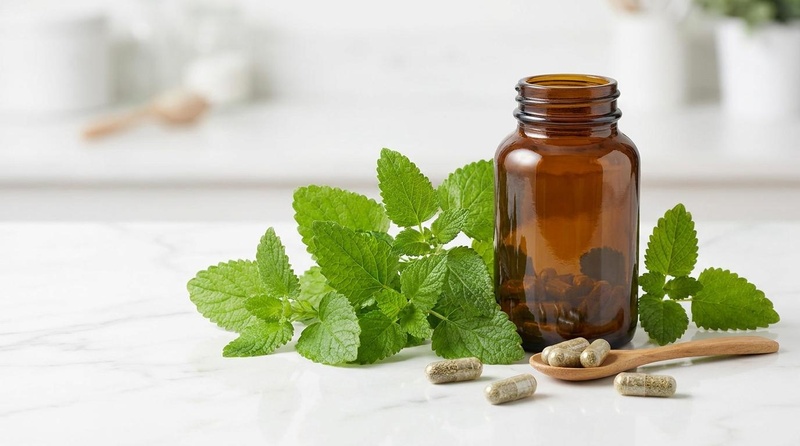
| Type | Herb / Botanical |
| Active Cmpd | Rosmarinic acid, Citral, Triterpenes |
| Source | Melissa officinalis L. |
| Dose Range | 300–1,600 mg (extract) |
| Half-life | ~1–2 hours (Rosmarinic acid) |
| Main Benefit | Anxiolysis, Sleep support, Lipid management |
| Absorption | Rapid; peaks in 1–3 hours |
Lemon Balm (Melissa officinalis) is a lemon-scented perennial herb in the mint family with robust clinical evidence for reducing acute anxiety, improving sleep quality, and managing metabolic health markers. Unlike many sedatives, moderate doses of Lemon Balm uniquely promote a state of "calm focus" by balancing GABAergic inhibition with cholinergic cognitive support.
¶ At a glance
Aliases
- Also known as: Melissa, Bee balm, Sweet balm, Common balm.
- Chemical / botanical name: Melissa officinalis L.
- Category: Botanical / Lamiaceae family.
Key points (high-level summary)
- Anxiety Reduction: High-quality meta-analyses demonstrate significant reductions in anxiety scores (SMD -0.98) across diverse populations [1].
- Sleep Quality: Effectively improves sleep latency and quality, especially when combined synergistically with Valerian root [2].
- Lipid Profile: 2024 meta-analysis confirms significant reductions in triglycerides (TG), total cholesterol (TC), and LDL-C [3].
- Cognitive Biphasic Effect: Doses of 300–600 mg enhance memory and calmness, while doses >900 mg may cause temporary sedation and reduced alertness [4].
- Thyroid Interaction: May inhibit Thyroid Stimulating Hormone (TSH) binding, requiring caution in hypothyroid patients [5].
What people use it for
- Main goals: Anxiety management, sleep optimization, cognitive enhancement (calm focus), cardiovascular health (lipid and BP control).
- Evidence quality (overall): Moderate to High.
¶ What is Lemon Balm?
Lemon Balm is a fragrant herb native to south-central Europe, the Mediterranean, and Central Asia, though it is now cultivated globally for its medicinal and aromatic properties.
- Definition: A perennial herbaceous plant in the mint family (Lamiaceae), characterized by its lemon-like scent and broad, heart-shaped leaves.
- Natural sources: Fresh or dried leaves of Melissa officinalis.
- Traditional / historical use: Utilized since antiquity (Dioscorides, Pliny the Elder) as a "cardiac tonic," carminative for digestive distress, and a "balm" for the nervous system.
- Current regulatory status: Generally Recognized As Safe (GRAS) by the FDA in the USA; widely available as a dietary supplement and over-the-counter herbal medicine in Europe and Asia.
- Key pharmacological property: GABAergic sedative and cholinergic modulator with antioxidant and PPAR-activating properties [5:1][6].
¶ What are Lemon Balm’s main benefits?
¶ 1. Neuropsychiatric (Anxiety & Sleep)
- Outcome: Subjective and objective anxiety, depression scores, and acute stress symptoms.
- Direction of effect: Decrease in anxiety, stress, and depressive symptoms.
- Magnitude: Moderate to Large. A 2021 systematic review and meta-analysis of randomized clinical trials found a large effect size (SMD -0.98) for anxiety reduction and significant improvements in depression scores [1:1].
- Population studied: Adults with mild-to-moderate anxiety, psychiatric patients, and healthy individuals under acute lab-induced stress [1:2][7][2:1].
- Evidence quality: High. Driven by multiple well-designed RCTs and systematic reviews.
- Summary sentence: Lemon Balm significantly reduces subjective anxiety and improves mood, providing acute stress relief within 60 minutes of ingestion.
¶ 2. Metabolic Health (Lipids & Glycemia)
- Outcome: Serum triglycerides (TG), LDL cholesterol (LDL-C), total cholesterol (TC), fasting blood glucose (FBG), and HbA1c.
- Direction of effect: Decrease in TG, LDL-C, TC, FBG, and HbA1c; no significant effect on HDL-C.
- Magnitude: Moderate.
- Population studied: Adults with borderline hyperlipidemia, type 2 diabetes (T2D), or metabolic syndrome [3:1][8][9][10].
- Evidence quality: High for lipids (based on a 2024 meta-analysis of 5 RCTs) and Moderate for glucose control (based on several diabetic RCTs) [3:2][8:1].
- Summary sentence: Regular intake of 700–4,000 mg of Lemon Balm extract for at least 8 weeks significantly improves the blood lipid profile by lowering triglycerides, total cholesterol, and LDL-C, while modestly reducing blood sugar levels in diabetic populations.
¶ 3. Cognitive Performance
- Outcome: Working memory performance, attention, accuracy, and speed of processing.
- Direction of effect: Increase in memory accuracy and calmness; biphasic effect on speed (speed decreases at higher doses).
- Magnitude: Small to Moderate.
- Population studied: Healthy young adults and older adults with mild cognitive impairment or Alzheimer's [4:1][11][5:2].
- Evidence quality: Moderate. Driven by multiple crossover RCTs.
- Summary sentence: Standardized Lemon Balm extract (300–600 mg) acutely improves memory performance and processing speed, though higher doses (>900 mg) trigger sedation.
¶ 4. Cardiovascular Support
- Outcome: Systolic blood pressure (SBP) and frequency of benign heart palpitations.
- Direction of effect: Decrease in blood pressure and palpitation episodes.
- Magnitude: Small to Moderate (SBP reductions ranging from -0.89 to -7.5 mmHg; significant decrease in subjective palpitation frequency).
- Population studied: Adults with borderline hypertension, patients with benign palpitations, and diabetic populations [12][13][14].
- Evidence quality: Moderate.
- Summary sentence: Lemon Balm modestly lowers systolic blood pressure and significantly reduces both the frequency and subjective distress of benign heart palpitations.
¶ Evidence summary table (human outcomes)
| Outcome / Goal | Effect* | Consistency** | Evidence quality | Trials*** | Notes (population, duration, dose) |
|---|---|---|---|---|---|
| Anxiety Reduction | High | High | 10+ RCTs | 300–600 mg extract significantly lowers anxiety scores [1:3][7:1][2:2] | |
| Sleep Quality | High | Moderate | 5+ RCTs | Improved latency and quality; synergistic with Valerian [2:3] | |
| LDL Cholesterol | Moderate | High | 5 RCTs | Significant reduction in hyperlipidemic/T2D adults over 8+ weeks [3:3][10:1] | |
| Triglycerides | Moderate | High | 5 RCTs | Significant reduction in hyperlipidemic/T2D adults over 8+ weeks [3:4][10:2] | |
| Total Cholesterol | High | High | 5 RCTs | Significant reduction in hyperlipidemic/T2D adults over 8+ weeks [3:5][10:3] | |
| HDL Cholesterol | High | High | 5 RCTs | No significant change observed across clinical trials [3:6] | |
| Systolic Blood Pressure | Moderate | Low | 3 RCTs | Modest reduction (WMD -0.89 to -7.5 mmHg) [12:1][13:1] | |
| HbA1c (in T2D) | Moderate | Moderate | 3 RCTs | Glycemic control and insulin sensitivity improvement [8:2][9:1] | |
| Memory Performance | Moderate | Moderate | 3+ RCTs | Acute improvement in working memory at 300–600 mg [4:2][11:1] | |
| Heart Palpitations | High | Moderate | 1 RCT | Reduced frequency and distress of benign palpitation episodes [14:1] |
- *Effect: Number of arrows (1-3) indicates magnitude. Direction: ↑ (increase), ↓ (decrease), = (no effect), ? (unclear). Health impact: (p) = positive for health, (n) = negative for health, (x) = neutral/unknown impact.
- **Consistency: High (most trials agree), Moderate (mixed but leaning one way), Low (conflicting results).
- ***Trials: Number of RCTs or total trials informing this outcome.
¶ How does Lemon Balm work?
Lemon Balm exerts its effects through a multi-target pharmacological profile involving neurotransmitters, metabolic enzymes, and antioxidant pathways.
- Primary targets: GABA transaminase (GABA-T), Acetylcholinesterase (AChE), and PPAR (Peroxisome Proliferator-Activated Receptors) α and γ.
- Core mechanisms:
- GABAergic Modulation: Rosmarinic acid, a primary active constituent of Lemon Balm, inhibits the enzyme GABA transaminase (GABA-T). Because GABA-T is responsible for degrading GABA (the brain's primary inhibitory neurotransmitter), its inhibition leads to increased synaptic GABA levels, promoting relaxation and anxiolysis [6:1].
- Cholinergic Support: Standardized extracts exhibit acetylcholinesterase (AChE) inhibitory properties and bind directly to human nicotinic and muscarinic receptors in the cerebral cortex. This maintains acetylcholine levels, supporting working memory, processing speed, and alertness [4:3][5:3].
- PPAR Activation: Lemon Balm extracts activate Peroxisome Proliferator-Activated Receptors (PPAR-α and PPAR-γ). This activation downregulates lipid-regulating enzymes, leading to improved lipid clearance and insulin sensitivity [3:7][15].
- Evidence source:
- Human data: Cognitive and mood benefits are validated by human EEG and psychometric trials showing increased alpha-wave activity and calm states [4:4][11:2]. Lipid and glucose outcomes are verified by blood biomarker analyses in clinical trials [3:8][8:3].
- Animal & In vitro data: Mechanisms of GABA-T inhibition, neurogenesis in the dentate gyrus, and PPAR signaling are primarily map out in bioassay-guided fractionation and rodent models [16][6:2].
- Pharmacokinetics: Rosmarinic acid is rapidly absorbed, with peak plasma concentrations occurring between 1 and 3 hours post-ingestion [17]. It has a relatively short half-life of 1–2 hours and is metabolized by phase I cytochrome P450 enzymes and phase II conjugation pathways, requiring split dosing for sustained effects [17:1].
¶ Effects on different systems
¶ Brain & Mental Health
The primary clinical application for Lemon Balm is neuropsychiatry. It is highly effective for acute anxiolysis, with effects appearing within 60 minutes of ingestion [4:5][7:2]. It uniquely provides a "calm focus" by improving memory and accuracy during stressful cognitive tasks [4:6]. For sleep, it acts as a gentle sedative, reducing nocturnal awakenings and improving overall sleep architecture without causing next-day grogginess [2:4].
¶ Metabolic Health
Lemon Balm serves as a supportive intervention for dyslipidemia and type 2 diabetes. High-quality meta-analyses show that Lemon Balm can reduce triglycerides, total cholesterol, and LDL cholesterol, though it does not significantly alter HDL-C [3:9]. It also improves glycemic control (fasting glucose and HbA1c), likely mediated by PPAR activation and potent antioxidant properties that reduce systemic oxidative stress [8:4][9:2][18].
¶ Cardiovascular Health
Beyond blood pressure reduction, Lemon Balm has a stabilizing effect on the heart. It significantly reduces the subjective frequency and psychiatric distress associated with benign palpitations [14:2]. It also exhibits mild cardioprotective properties by lowering systemic inflammatory markers and SBP [12:2][13:2][19].
¶ Body Weight and Composition
Studies on body weight and composition are primarily limited to animal models (such as high-fat diet rodent models), where Lemon Balm extracts limit weight gain and fat accumulation by activating PPAR pathways and reducing lipogenesis. However, human clinical trials have not demonstrated significant weight loss or fat mass reductions. Its metabolic benefits appear to be localized to glycemic control and lipid profiles rather than direct body composition modification [3:10][2:5].
¶ Gut & Digestion
In traditional and modern integrative medicine, Lemon Balm is used for its antispasmodic properties in the gastrointestinal tract. It is often utilized to manage functional dyspepsia, irritable bowel syndrome, and infantile colic, although large-scale adult meta-analyses in this domain are sparse compared to neuropsychiatric data [5:4].
¶ Other Domains
- Thyroid Health: Lemon Balm has been shown in vitro to inhibit Thyroid Stimulating Hormone (TSH) receptor binding, which may cause mild thyroid suppression. This necessitates caution in hypothyroid patients [5:5].
- Liver Safety: According to the NIH LiverTox database, Lemon Balm is not associated with ALT elevations or clinically apparent liver injury [15:1].
¶ Dosage and how to take it
¶ Standard dosing in studies
- Anxiety and Mood: 300 mg to 600 mg of standardized extract (standardized to 7–10% rosmarinic acid) taken once or twice daily.
- Sleep Support: 600 mg of extract or 1,200 mg of leaf powder taken 30–60 minutes before bedtime.
- Lipids and Metabolic Health: Typically requires higher doses, ranging from 1,000 mg to 3,000 mg of leaf powder or extract per day, split into 2–3 doses [3:11][10:4].
CLINICAL PROTOCOL SUMMARY
- For Acute Stress/Cognition: 300–600 mg of standardized extract (with breakfast).
- For Insomnia/Restlessness: 600 mg of extract 45 minutes before sleep.
- For Lipids/Glycemia: 1,000 mg of extract (or 3,000 mg powder) split into two doses with lunch and dinner.
¶ Forms and bioavailability
- Standardized Extracts: Preferred for clinical outcomes; often used in capsules (e.g., Cyracos® or Bluenesse®) to ensure consistent active compound delivery.
- Dried Leaf / Tea: 1.5 g to 4.5 g of leaf per cup, taken 1–3 times daily. Tea provides lower concentrations of rosmarinic acid than standardized extracts.
- Topical: 1% creams are used specifically for herpes simplex (cold sores), though this is a distinct application from oral supplementation.
¶ Special populations
- Thyroid Health: Due to its potential to block TSH receptor binding, those with hypothyroidism should avoid high doses [5:6].
- Liver or Kidney Impairment: No specific dose adjustments are established; however, its primary excretion is renal, requiring cautious use in severe renal disease.
- Pregnancy & Breastfeeding: Considered safe in culinary amounts; clinical safety data for high-dose extracts are insufficient (LactMed notes it is likely safe for breastfeeding at standard culinary/tea doses) [20].
¶ Safety and side effects
Lemon Balm is Generally Recognized As Safe (GRAS) by the FDA and has a very high safety profile.
¶ Common side effects
- Mild gastrointestinal upset (nausea, abdominal pain).
- Dizziness or headache (rare).
- Increased appetite.
- Lethargy or reduced alertness at high doses (>900 mg) [4:7][5:7].
¶ Less common / serious concerns
- Thyroid Suppression: Potential inhibition of TSH, which could exacerbate hypothyroidism or interfere with thyroid medications [5:8].
- Hepatotoxicity: LiverTox reports that Lemon Balm is not associated with ALT elevations or clinically apparent liver injury [15:2].
THYROID CONTRAINDICATION
Lemon Balm may inhibit TSH receptor binding and reduce thyroid hormone levels. Individuals with hypothyroidism or those taking levothyroxine should avoid high-dose extracts.
¶ Who should be especially cautious
- Individuals with hypothyroidism or Graves' disease.
- Patients scheduled for surgery (discontinue 2 weeks prior as it may potentiate anesthesia effects).
¶ Drug and supplement interactions
¶ Pharmacokinetic interactions (how drugs are processed)
- Cytochrome P450 (CYP450) and Phase II enzymes: In vitro evidence suggests that rosmarinic acid is a weak to moderate inhibitor of CYP2C19 and CYP2E1, as well as UDP-glucuronosyltransferases (UGTs) [17:2]. While clinical significance is typically low, it may theoretically increase blood levels of drugs metabolized by these specific enzymes.
- Thyroid Hormone: May interfere with the absorption and efficacy of levothyroxine by blocking TSH receptors and inhibiting peripheral conversion of T4 to T3 [5:9].
¶ Pharmacodynamic interactions (additive / opposing effects)
- CNS Depressants: May potentiate the sedative effects of alcohol, benzodiazepines (e.g., Xanax, Valium), barbiturates, and over-the-counter sleep aids (e.g., diphenhydramine).
- Antidiabetic Drugs: May have additive blood-glucose-lowering effects with Metformin, insulin, or sulfonylureas.
- Antihypertensives: May additively lower blood pressure.
¶ Combining Lemon Balm with other supplements (“stacks”)
- The Sleep Stack: Lemon Balm + Valerian Root. This is the most extensively studied herbal combination, demonstrating superior efficacy for insomnia compared to either herb alone [2:6].
- The Calm Focus Stack: Lemon Balm + L-Theanine. Combines GABAergic relaxation with alpha-wave stimulation for high-stress cognitive work.
- The Digestive Stack: Lemon Balm + Peppermint + Chamomile. Used synergistically for functional dyspepsia and GI spasms.
¶ Practical questions (FAQ)
How long does it take for Lemon Balm to work?
For acute anxiety and stress, effects are typically felt within 60–90 minutes. For metabolic benefits (lipids and glucose), consistent supplementation for 8–12 weeks is required to see significant changes in blood biomarkers.
Does Lemon Balm cause grogginess?
At doses of 300–600 mg, it typically does not cause daytime grogginess and can improve cognitive performance. However, doses exceeding 900 mg are more sedative and may result in temporary sluggishness.
Can I take Lemon Balm every day?
Yes. Clinical trials have safely used Lemon Balm daily for up to 4 months. There is no strong evidence of physical dependency or withdrawal, though periodic "cycling" (e.g., 5 days on, 2 days off) is often practiced to maintain sensitivity to its calming effects.
Is Lemon Balm safe for the liver?
Yes. Unlike some other herbs (e.g., Kava), Lemon Balm has a clean safety profile regarding the liver and is not linked to hepatotoxicity according to the NIH LiverTox database [15:3].
Does it help with cold sores?
Yes, but primarily when used topically as a 1% cream. Oral supplementation is not the primary route for treating herpes simplex outbreaks.
¶ How we evaluated evidence
Evidence for Lemon Balm was evaluated by prioritizing:
- Meta-analyses: Specifically the 2024 lipid meta-analysis [3:12], 2021 anxiety/depression meta-analysis [1:4], and 2020 cardiometabolic meta-analysis [12:3].
- High-Impact RCTs: Focusing on standardized extracts and clinical populations (T2D, hyperlipidemia, anxiety disorders).
- Safety Databases: LiverTox and LactMed for toxicology and pregnancy safety.
Evidence grading follows the GRADE framework:
- High: Multiple consistent meta-analyses or large RCTs.
- Moderate: Several RCTs with consistent results but some limitations in design or smaller sample sizes.
- Low: Mixed results or limited high-quality human trials.
¶ References
Ghazizadeh J, et al. (2021). The effects of lemon balm (Melissa officinalis L.) on depression and anxiety in clinical trials: A systematic review and meta-analysis. Phytotherapy Research. https://pubmed.ncbi.nlm.nih.gov/34449930/ ↩︎ ↩︎ ↩︎ ↩︎ ↩︎
Cases J, et al. (2011). Pilot trial of Melissa officinalis L. leaf extract in the treatment of volunteers suffering from mild-to-moderate anxiety disorders and sleep disturbances. Mediterranean Journal of Nutrition and Metabolism. https://pmc.ncbi.nlm.nih.gov/articles/PMC3230760/ ↩︎ ↩︎ ↩︎ ↩︎ ↩︎ ↩︎ ↩︎
Shahsavari K, et al. (2024). Effects of Melissa officinalis (lemon balm) consumption on serum lipid profile: a meta-analysis of randomized controlled trials. BMC Complementary Medicine and Therapies. https://pubmed.ncbi.nlm.nih.gov/38575930/ ↩︎ ↩︎ ↩︎ ↩︎ ↩︎ ↩︎ ↩︎ ↩︎ ↩︎ ↩︎ ↩︎ ↩︎ ↩︎
Kennedy DO, et al. (2003). Modulation of mood and cognitive performance following acute administration of single doses of Melissa officinalis (Lemon balm). Neuropsychopharmacology. https://pubmed.ncbi.nlm.nih.gov/12888775/ ↩︎ ↩︎ ↩︎ ↩︎ ↩︎ ↩︎ ↩︎ ↩︎
Shakeri A, et al. (2016). Melissa officinalis L. - A review of its traditional uses, phytochemistry and pharmacology. Journal of Ethnopharmacology. https://pubmed.ncbi.nlm.nih.gov/27167460/ ↩︎ ↩︎ ↩︎ ↩︎ ↩︎ ↩︎ ↩︎ ↩︎ ↩︎ ↩︎
Awad R, et al. (2009). Bioassay-guided fractionation of lemon balm using an in vitro measure of GABA transaminase activity. Phytotherapy Research. https://pubmed.ncbi.nlm.nih.gov/19165747/ ↩︎ ↩︎ ↩︎
Kennedy DO, et al. (2004). Attenuation of laboratory-induced stress in humans after acute administration of Melissa officinalis. Psychosomatic Medicine. https://pubmed.ncbi.nlm.nih.gov/15272110/ ↩︎ ↩︎ ↩︎
Asadi A, et al. (2019). The effects of a Melissa officinalis L. based product on metabolic parameters in patients with type 2 diabetes mellitus: A randomized double-blinded controlled clinical trial. Complementary Therapies in Medicine. https://pubmed.ncbi.nlm.nih.gov/30681971/ ↩︎ ↩︎ ↩︎ ↩︎ ↩︎
Haybar H, et al. (2018). Efficacy of Melissa officinalis L. (lemon balm) extract on glycemic control and cardiovascular risk factors in individuals with type 2 diabetes. Phytotherapy Research. https://pubmed.ncbi.nlm.nih.gov/30548118/ ↩︎ ↩︎ ↩︎
Jandaghi P, et al. (2016). Lemon balm: A promising herbal therapy for patients with borderline hyperlipidemia. Complementary Therapies in Medicine. https://pubmed.ncbi.nlm.nih.gov/27261994/ ↩︎ ↩︎ ↩︎ ↩︎ ↩︎
Scholey A, et al. (2014). Anti-stress effects of lemon balm-containing foods. Nutrients. https://pubmed.ncbi.nlm.nih.gov/25360512/ ↩︎ ↩︎ ↩︎
Heshmati J, et al. (2020). Effects of Melissa officinalis (Lemon Balm) on cardio-metabolic outcomes: A systematic review and meta-analysis. Phytotherapy Research. https://doi.org/10.1002/ptr.6744 ↩︎ ↩︎ ↩︎ ↩︎
Pooled Analysis (2021). Effects of Melissa officinalis L. (Lemon Balm) Extract Supplementation on Cardiovascular Risk Factors: A Pooled Analysis of Randomized Controlled Trials. Journal of Food and Nutrition Research. https://doi.org/10.12691/jfnr-9-7-5 ↩︎ ↩︎ ↩︎
Alijaniha F, et al. (2015). Heart palpitation relief with Melissa officinalis leaf extract: double blind, randomized, placebo controlled trial. Journal of Ethnopharmacology. https://pubmed.ncbi.nlm.nih.gov/25680840/ ↩︎ ↩︎ ↩︎
LiverTox (2024). Lemon Balm. National Institute of Diabetes and Digestive and Kidney Diseases. https://www.ncbi.nlm.nih.gov/books/NBK600583/ ↩︎ ↩︎ ↩︎ ↩︎
Yoo DY, et al. (2011). Effects of Melissa officinalis L. extract on neurogenesis associated with serum corticosterone and GABA. Neurochemical Research. https://pubmed.ncbi.nlm.nih.gov/21076869/ ↩︎
Noguchi-Shinohara M, et al. (2015). Pharmacokinetics, Safety and Tolerability of Melissa officinalis Extract which Contained Rosmarinic Acid. PLOS ONE. https://doi.org/10.1371/journal.pone.0126422 ↩︎ ↩︎ ↩︎
Miraj S, et al. (2017). Melissa officinalis L: A Review Study With an Antioxidant Prospective. Journal of Evidence-Based Complementary & Alternative Medicine. https://pubmed.ncbi.nlm.nih.gov/27620926/ ↩︎
Petrisor G, et al. (2022). Melissa officinalis: Composition, Pharmacological Effects and Derived Release Systems-A Review. International Journal of Molecular Sciences. https://pubmed.ncbi.nlm.nih.gov/35408950/ ↩︎
LactMed (2024). Lemon Balm. National Library of Medicine. https://www.ncbi.nlm.nih.gov/books/NBK501841/ ↩︎