¶ Mullein
| Type | Herbal Extract (Leaf, Flower) |
| Active Cmpd | Mucilage, Saponins, Flavonoids, Iridoids |
| Source | Verbascum thapsus L. |
| Dose Range | 1.5–2.0 g (tea), 2.0–4.0 mL (tincture) |
| Half-life | Unknown / Not characterized |
| Main Benefit | Respiratory relief, soothe mucous membranes |
| Absorption | Variable (local demulcent vs systemic) |
Mullein (Verbascum thapsus) is a traditional medicinal herb widely recognized for its demulcent, expectorant, and anti-inflammatory properties [1][2]. While robust human randomized controlled trials (RCTs) are currently lacking, preclinical models and extensive epidemiological data from traditional self-medication highlight its utility in relieving dry coughs, managing upper airway irritation, and supporting respiratory health [1:1][2:1][3].
¶ At a glance
¶ Aliases
- Also known as: Common Mullein, Great Mullein, Velvet Plant, Gordolobo (Spanish), Candlewick Plant, Flannel Leaf, Aaron's Rod
- Chemical / botanical name: Verbascum thapsus L. (Scrophulariaceae family)
- Category: Botanical Herb / Phytomedicine [1:2][2:2]
¶ Key points
- Traditional Respiratory Use: In traditional medicine systems, Verbascum thapsus is primarily utilized as a demulcent and expectorant to soothe dry coughs, asthma, and airway inflammation, although high-quality human clinical trials are currently lacking [1:3][2:3].
- High Self-Medication Prevalence: Epidemiological data shows gordolobo is one of the most frequently used herbal remedies for self-medication, specifically for respiratory and gastrointestinal complaints [3:1].
- Preclinical Mechanisms: In vitro and animal studies demonstrate that mullein extracts possess significant antioxidant, anti-inflammatory, and antimicrobial (antibacterial and antiviral) properties, driven by compounds like iridoids, flavonoids, and phenylethanoid glycosides [1:4][2:4].
- Fringe Cytotoxic Actions: Laboratory assays reveal that specific fractions of mullein extract can inhibit experimental tumors and display cytotoxic activity in bioassays, though human anti-cancer efficacy has not been investigated [2:5].
- Fuzz/Fiber Filtration Mandatory: While generally considered safe and possessing low systemic toxicity, teas made from mullein leaves must be filtered meticulously to remove fine trichomes (hairs) that can cause mechanical irritation of the throat [1:5][2:6].
¶ What people use it for
- Main goals: Respiratory tract congestion, spasmodic cough relief, chronic bronchial soothe, gastrointestinal distress support, traditional wound healing [1:6][2:7][3:2].
- Evidence quality (overall): Low to Very Low (primarily driven by pre-clinical research, traditional ethnobotanical reports, and epidemiological self-medication surveys) [1:7][2:8][3:3].
¶ What is Mullein?
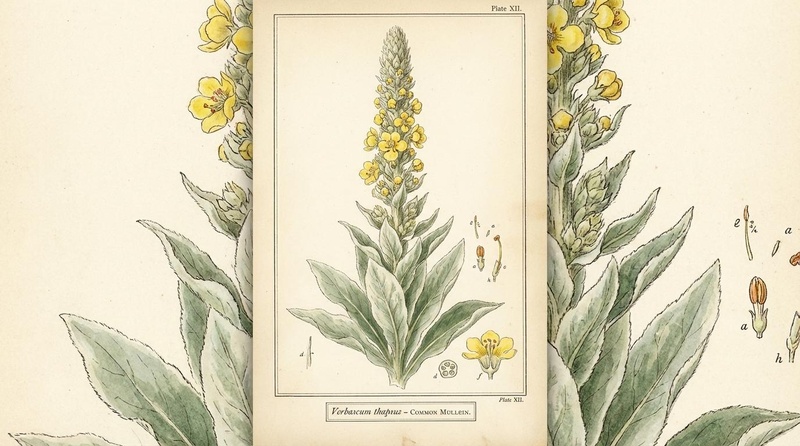
Verbascum thapsus, commonly referred to as Mullein, is a large, biennial herb native to Europe, North Africa, and Asia, which has become widely naturalized across North America and Australia [1:8][2:9].
- Definition: It is a member of the Scrophulariaceae (figwort) family, characterized by its tall, flowering spike containing yellow petals and thick, woolly, silver-green leaves [1:9][2:10].
- Natural sources: The medicinal compounds are primarily harvested from the dried leaves (Folia Verbasci) and flowers (Flores Verbasci) of the Verbascum thapsus plant [1:10][2:11].
- Traditional / historical use: Historically, mullein has been utilized for millennia across diverse cultures. It was described by Dioscorides in first-century Greece for pulmonary diseases. In Mexican traditional medicine (where it is known as gordolobo), it remains one of the premier herbs used for respiratory ailments and gastrointestinal upset [2:12][3:4].
- Current regulatory status: In the United States, mullein is sold as an over-the-counter dietary supplement under DSHEA regulations. In Europe, it is categorized as a traditional herbal medicinal product for the relief of throat discomfort and dry coughs. In Latin American countries, it remains a highly accessible, unregulated traditional phytomedicine [3:5].
- Key pharmacological property: A complex mucilage-rich and saponin-bearing demulcent herb with prominent local soothing and mild secretory expectorant properties [1:11][2:13].
¶ What are Mullein’s main benefits?
Due to the lack of modern clinical trials, the clinical benefits of Verbascum thapsus are primarily inferred from traditional use, preclinical pharmacology, and surveys of self-medicating populations.
-
Outcome: Relief of Respiratory Congestion and Spasmodic Coughs
- Direction of effect: Decrease in symptoms (traditional/pre-clinical indication)
- Magnitude: Small to Moderate (based on symptomatic reporting)
- Population studied: Adults practicing self-medication for acute respiratory issues [3:6]
- Evidence quality: Low
- Summary: Mullein's rich mucilage content acts as a local demulcent, coating and protecting irritated mucous membranes, while its saponins thin secretions to facilitate expectoration [1:12][2:14].
-
Outcome: Management of Local Tissue Inflammation
- Direction of effect: Decrease in inflammatory markers (in vitro and in vivo models)
- Magnitude: Moderate in laboratory assays
- Population studied: Animal and cellular models of acute inflammation [1:13][2:15]
- Evidence quality: Very Low
- Summary: Phytochemicals such as iridoid glycosides and flavonoids in mullein suppress pro-inflammatory pathways, reducing mucosal irritation in preclinical models, though clinical data in humans are absent [1:14][2:16].
-
Outcome: Antimicrobial Support for Respiratory Pathogens
- Direction of effect: Inhibition of bacterial and viral growth (in vitro)
- Magnitude: Moderate (broad spectrum against select Gram-positive and Gram-negative strains)
- Population studied: In vitro bacterial assays and viral cultures [1:15][2:17]
- Evidence quality: Very Low
- Summary: Experimental preparations of mullein leaves inhibit key respiratory pathogens like Staphylococcus aureus and show antiviral activity, supporting its traditional use in managing mild infectious respiratory illnesses [1:16][2:18].
¶ Evidence summary table (human outcomes)
The human evidence base for Verbascum thapsus is highly limited. While epidemiology confirms its extensive use in self-medication, there is an absence of gold-standard randomized controlled trials (RCTs) evaluating isolated mullein extract in humans. The table below represents the current evidence landscape:
| Outcome / Goal | Effect* | Consistency** | Evidence quality | Trials*** | Notes (population, duration, dose) |
|---|---|---|---|---|---|
| Respiratory Congestion Relief | High | Low | 0 RCTs | Strong traditional consensus and epidemiological self-medication data for alleviating cough and bronchitis [1:17][2:19][3:7]. | |
| Self-Medication for Airway/GI Issues | High | Moderate | 33 Studies (Obs) | Epidemiological review of self-medication in Mexico; gordolobo is highly preferred for respiratory and gastrointestinal disorders [3:8]. | |
| Inflammatory Pain Reduction | Moderate | Very Low | 0 RCTs | Preclinical analgesic and anti-inflammatory pathways identified; no human clinical trials validate these effects [1:18][2:20]. | |
| Antimicrobial Protection | Moderate | Very Low | 0 RCTs | In vitro evidence of broad antibacterial activity against S. aureus and antiviral potential; clinical efficacy unproven [1:19][2:21]. | |
| Cellular Longevity & Oxidative Stress | Low | Very Low | 0 RCTs | General antioxidant and radical-scavenging properties established in vitro, but clinical lifespan/healthspan data are entirely absent [1:20][2:22]. |
- *Effect: Number of arrows (1-3) indicates magnitude. Direction: ↑ (increase), ↓ (decrease), = (no effect), ? (unclear). Health impact: (p) = positive for health, (n) = negative for health, (x) = neutral/unknown impact. Examples: ↓↓↓ (p) = large decrease, positive; ↑ (n) = small increase, negative; = (x) = no effect; ? = unclear.
- *Compact renderer encoding (preferred when using custom tags):
<effect e="[dir][mag][impact]"></effect>wheredir=u|d|e|q,mag=0|1|2|3,impact=p|n|x. Examples:↓↓ (p)-><effect e="d2p"></effect>,= (x)-><effect e="e0x"></effect>,?-><effect e="q0x"></effect>. - IMPORTANT: If using the compact renderer encoding (<effect ...>), do NOT include the text arrows or parentheses next to it. Just use the tag.
- **Consistency: Low (results conflict), Moderate (mixed but leaning one way), High (most trials agree)
- ***Trials: Number of RCTs or total trials informing this outcome (shows evidence depth at a glance)
- REQUIRED: You MUST include a citation key (e.g.
[^1]) in the "Notes" column for every single row. If you claim a result, you must link the specific Meta-Analysis or Key RCT that proves it.
EVIDENCE-LIMITED WARNING
The therapeutic profile of Verbascum thapsus is primarily built on traditional ethnobotanical reports, in vitro bioassays, and rodent models. Caution should be exercised when translating these findings into human clinical outcomes.
¶ How does Mullein work?
The biological activities of Verbascum thapsus are driven by its diverse array of phytochemicals, particularly iridoid glycosides, saponins, flavonoids, and complex polysaccharides (mucilage) [1:21][2:23].
¶ Primary Targets & Core Mechanisms
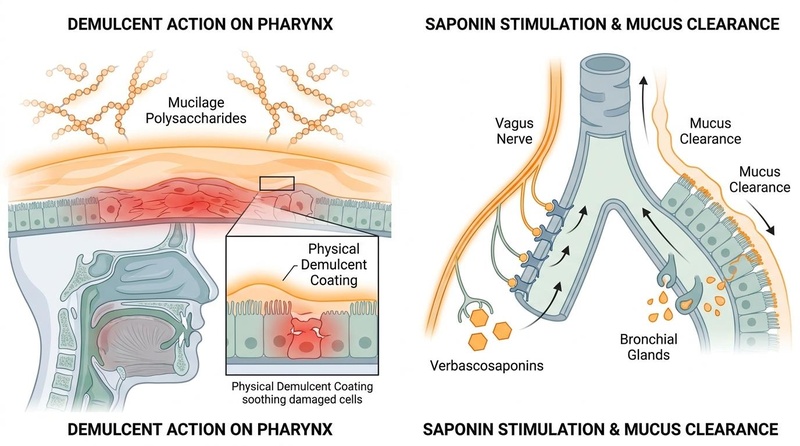
- Mucosal Protection via Polysaccharide Coating: The high concentrations of water-soluble polysaccharides (mucilage) found in mullein leaves and flowers act as physical demulcents. Upon contact with mucosal surfaces in the posterior pharynx, these macromolecules form a protective, viscous physical gel. This layer hydrates the underlying epithelia, shields local nociceptive nerve endings from chemical and mechanical irritants, and reduces the reflex arc responsible for dry, non-productive coughing [1:22][2:24].
- Expectorant Secretion via Vagal-Gastric Reflex: Mullein contains verbascosaponins (triterpenoid saponins). Saponins act as surface-active agents that, when ingested, mildly irritate the gastric mucosa. This local irritation stimulates the vagus nerve, initiating a reflex that increases serous secretion from bronchial glands. This increased fluid volume lowers the viscosity of respiratory mucus, making it less tenacious and easier for the mucociliary escalator to clear [1:23][2:25].
- Anti-Inflammatory Cascade Suppression: The iridoid glycosides (such as aucubin, catalpol, and harpagoside) and flavonoids (including verbascoside and luteolin) in mullein exert anti-inflammatory and analgesic effects. In preclinical models, these active compounds suppress the synthesis of key pro-inflammatory mediators, including cyclooxygenase-2 (COX-2), tumor necrosis factor-alpha (TNF-α), and interleukin-6 (IL-6), while inhibiting the nuclear translocation of NF-κB [1:24][2:26].
- Direct Cell Wall Disruption (Antimicrobial): Phenylethanoid glycosides and specific flavonoids within the leaves disrupt bacterial cell membrane integrity. Preclinical bioassays show active inhibition of Gram-positive organisms (such as Staphylococcus aureus) and select Gram-negative organisms (such as Escherichia coli), as well as antiviral activity against pseudorabies and other viral strains [1:25][2:27].
¶ Pharmacokinetics & Bioavailability
The pharmacokinetics of mullein's constituents are poorly understood and have not been systematically characterized in human trials.
- Absorption: Polysaccharides (mucilage) are not absorbed systemically; they remain in the gastrointestinal tract and upper airway to exert localized physical demulcent effects. In contrast, smaller molecules like verbascoside, aucubin, and luteolin are absorbed in the small intestine, though their systemic bioavailability in humans is low due to rapid first-pass metabolism [2:28].
- Metabolism & Elimination: Absorbed iridoids and flavonoids undergo phase II glucuronidation and sulfation in the liver. Metabolites are primarily excreted via renal pathways. The terminal half-life of absorbed mullein bioactives in humans is currently unknown [2:29].
¶ Effects on different systems
Because clinical data is extremely limited, system-specific effects are heavily based on preclinical models, traditional usage, and epidemiological surveys of self-medication practices.
¶ Respiratory Health (Coughs, Bronchitis, and Airway Inflammation)
Historically and across modern ethnobotanical practices, the respiratory system is the primary target for mullein interventions. Saponins and mucilage within Verbascum thapsus work in tandem to thin bronchial secretions and soothe raw airways [1:26][2:30]. In self-medication surveys in Mexico, gordolobo is one of the most highly sought-after plant-derived remedies for acute respiratory conditions [3:9]. However, there is a total lack of high-quality human clinical trials confirming the efficacy of isolated mullein for bronchitis, asthma, or chronic obstructive pulmonary disease (COPD).
¶ Gastrointestinal Health (Spasmodic Colic and Diarrhea)
Beyond respiratory care, traditional practices frequently employ mullein infusions for digestive complaints. The demulcent mucilage is thought to soothe irritated intestinal walls in a manner analogous to its actions on the respiratory tract [1:27]. Survey data from Mexican populations indicates that Verbascum thapsus infusions are frequently consumed to alleviate gastrointestinal distress, spasm, and diarrhea [3:10]. These gastrointestinal benefits are supported by animal studies showing smooth muscle-relaxing (antispasmodic) effects, but they remain unvalidated by clinical trials [1:28][2:31].
¶ Immune System & Infectious Disease (Antimicrobial Activity)
Preclinical research suggests that mullein may assist the immune system in managing localized infections. Leaf extracts have demonstrated moderate antibacterial activity in vitro against key respiratory and opportunistic pathogens, including Staphylococcus aureus, Streptococcus pneumoniae, and Escherichia coli [1:29][2:32]. Additionally, in vitro viral assays have shown inhibition of viral replication by phenylethanoid glycosides present in the plant [2:33]. Despite these promising laboratory findings, there is no direct clinical evidence that consuming mullein tea or extracts prevents or accelerates recovery from bacterial or viral infections in humans.
¶ Cellular Health & Aging (Antioxidant and Antitumor Potential)
Mullein contains high levels of radical-scavenging phenolics and flavonoids (such as luteolin and verbascoside) that protect cells against oxidative damage—a primary driver of cellular senescence and aging [1:30][2:34]. Furthermore, in vitro bioassays have revealed that mullein extracts exhibit antineoplastic properties, demonstrating significant inhibition of Agrobacterium tumefaciens-induced tumors in potato disc models and showing selective cytotoxicity against certain tumor cell lines in laboratory screenings [2:35]. However, whether these cell-protective and cytotoxic actions translate to systemic longevity, anti-aging, or tumor prevention in humans remains completely speculative and unstudied.
¶ Dosage and how to take it
Mullein is widely available as dried bulk herb, loose leaf teas, liquid tinctures, and encapsulated powdered extracts. Because no clinical dose-ranging trials have been conducted in humans, standard dosages are derived from traditional pharmacopeias and European Medicines Agency (EMA) traditional use monographs [1:31][2:36].
¶ Standard Dosing in Traditional and Modern Practice
- Tea (Infusion): 1.5 to 2.0 grams of dried mullein leaves or flowers steeped in 150 mL (approximately 5 oz) of boiling water for 10 to 15 minutes. This can be consumed 3 to 4 times daily, up to a total of 6 to 8 grams of dried herb per day [1:32][2:37].
- Liquid Tincture (1:5 dilution in 40% ethanol): 2.0 to 4.0 mL taken 3 times daily [2:38].
- Fluid Extract (1:1 dilution): 1.5 to 2.0 mL taken 3 times daily [2:39].
¶ Forms and Bioavailability
- Dried Leaf vs. Flower: Products utilizing flowers are typically richer in saponins and flavonoids, offering slightly stronger secretolytic properties. Products utilizing leaves contain higher mucilage content, making them preferable for demulcent (soothing) applications [1:33][2:40].
- With or Without Food: Mullein preparations can be taken with or without food. When used as a demulcent for throat irritation, sipping the tea slowly is recommended to maximize local mucosal contact [1:34].
- Filtration Requirement: CRITICAL STEP: Homemade mullein leaf tea must be poured through a very fine mesh, coffee filter, or multi-layered cheesecloth before drinking. Mullein leaves are covered in fine, woolly hairs (trichomes). If these hairs are not filtered out, they can physically lodge in the pharyngeal mucosa, causing persistent mechanical irritation, tickling, and severe coughing fits [1:35][2:41].
¶ Special Populations
- Kidney or Liver Impairment: No clinical pharmacokinetic data exist for individuals with renal or hepatic impairment. Caution and lower doses are advised due to the presence of systemically absorbed iridoid glycosides [2:42].
- Children and Adolescents: Traditional use in pediatric populations (e.g., for coughs or ear drops) is widespread, but safety has not been established in clinical trials [3:11]. Pediatric use should be monitored carefully.
- Pregnancy and Breastfeeding: Due to a complete lack of safety and toxicological data in pregnant or lactating individuals, the use of Verbascum thapsus is not recommended during pregnancy or breastfeeding [1:36][2:43].
¶ Safety and side effects
Verbascum thapsus is generally recognized as safe (GRAS) and has a long history of safe traditional use, with toxicology and animal models showing extremely low systemic toxicity [1:37][2:44].
¶ Common Side Effects
- Mechanical Throat Irritation: The most common adverse effect is local throat irritation and scratching, which is entirely caused by contact with unfiltered leaf hairs (trichomes) rather than any chemical toxicity of the plant [1:38][2:45].
- Allergic Contact Dermatitis: Mild cutaneous allergic reactions (itching, redness) can occur in rare individuals upon direct handling of the fresh leaves [1:39].
- Mild Gastrointestinal Discomfort: Occasional mild nausea or stomach upset has been reported when consuming highly concentrated extracts on an empty stomach [1:40].
¶ Less Common / Serious Concerns
- Cytotoxicity at High Concentrations: While animal toxicity assays (such as brine shrimp lethality tests) indicate that standard extracts are safe, high-dose fractions have exhibited moderate cytotoxicity in vitro [2:46]. There are no reports of systemic organ toxicity, hepatotoxicity, or nephrotoxicity in humans at recommended traditional dosages.
¶ Who Should Avoid It
- Individuals with Hypersensitivity: Anyone with a known allergy to plants in the Scrophulariaceae family should avoid mullein.
- Unfiltered Tea Consumers: Those unable to properly filter the preparation should avoid using loose leaves to prevent severe throat irritation and worsening of coughing spasms [1:41][2:47].
¶ Drug and supplement interactions
No clinical drug-interaction studies have been performed with Verbascum thapsus. The following interactions are theoretical, based on the known pharmacodynamic and pharmacokinetic properties of the plant's phytochemicals.
¶ Pharmacokinetic Interactions
- CYP450 Metabolism: Preclinical data suggest that certain flavonoids (such as luteolin) present in mullein can inhibit or modulate specific Cytochrome P450 enzymes (particularly CYP2C9 and CYP3A4) in vitro [2:48]. While systemic levels achieved via traditional tea consumption are unlikely to cause major clinical interactions, high-dose concentrated extracts could theoretically alter the metabolism and increase blood levels of drugs processed by these enzymes (e.g., warfarin, certain statins, or calcium channel blockers).
¶ Pharmacodynamic Interactions
- Antidiabetic Agents: Animal studies suggest that some constituents of the Verbascum genus may possess mild hypoglycemic (blood sugar-lowering) properties [2:49]. If taken in large, concentrated doses alongside prescription antidiabetic medications (such as metformin, sulfonylureas, or insulin), mullein could theoretically exert an additive effect, increasing the risk of hypoglycemia.
- Diuretic Agents: Traditional accounts describe mullein as having a mild, transient diuretic effect [1:42]. Concurrent use with prescription diuretics (e.g., furosemide, hydrochlorothiazide) might theoretically result in additive fluid loss or electrolyte shifts.
- Sedative and Hypnotic Drugs: The presence of mild sedative/hypnotic compounds in mullein may lead to additive central nervous system depression if combined with alcohol, benzodiazepines, or other sedative herbal supplements (such as Valerian Root or Chamomile) [2:50].
¶ Combining Mullein with other supplements (“stacks”)
In traditional herbal medicine and modern integrative respiratory care, mullein is rarely used in isolation. It is typically combined with other herbs to create synergistic effects.
- The Traditional Soothing Stack: Combining Mullein with Slippery Elm (Ulmus rubra) or Marshmallow Root (Althaea officinalis).
- Rationale: Both Slippery Elm and Marshmallow Root are highly concentrated sources of demulcent mucilage. When stacked with Mullein, they provide a highly viscous, layered coating over the pharyngeal mucosa, providing superior, prolonged relief for dry, ticklish coughs [1:43][2:51].
- Evidence Level: Theoretical/Traditional practice; no combination RCTs exist.
- The Productive Cough Stack: Combining Mullein with Elecampane (Inula helenium) or Thyme (Thymus vulgaris).
- Rationale: While Mullein's saponins act as a mild expectorant, Elecampane contains powerful essential oils and alantolactones that stimulate deeper bronchial clearance. This combination balances airway soothing with effective mucus clearance [1:44][2:52].
- Evidence Level: Theoretical/Traditional practice; no combination RCTs exist.
- The Antimicrobial Respiratory Stack: Combining Mullein with Garlic (Allium sativum) or Elderberry (Sambucus nigra).
- Rationale: This stack pairs the local demulcent and preclinical antiviral actions of Mullein with the systemic immune-supporting and direct antimicrobial properties of Garlic or Elderberry, aimed at reducing the duration of common winter colds [1:45][2:53].
- Evidence Level: Theoretical/Traditional practice; no combination RCTs exist.
¶ Practical FAQ
How long does it take for Mullein to work?
For acute airway soothing and throat irritation, the demulcent effects of Mullein tea are almost immediate, as the mucilage physically coats the throat during consumption [1:46]. However, its mild expectorant effects (facilitating mucus clearance via saponin stimulation) typically take 24 to 48 hours of consistent use to become noticeable [1:47][2:54].
Can I take Mullein long-term?
There is an absence of clinical safety data regarding the daily, long-term consumption of Verbascum thapsus extracts in humans. While traditional use suggests high safety, it is generally recommended to limit continuous use to 1 to 2 weeks during acute respiratory episodes, or to use it in cycles (e.g., 5 days on, 2 days off) if used for chronic throat comfort, to avoid potential cumulative exposure to systemically absorbed glycosides [2:55].
Is Mullein tea safe to drink if I have asthma?
Historically, Mullein was used as a traditional supportive remedy for asthma and spasmodic coughs [1:48][2:56]. While its anti-inflammatory and smooth muscle-relaxing properties may provide mild comfort, it should never replace standard medical treatments (such as rescue inhalers or corticosteroid medications) for asthma. If you have asthma, ensure any home-brewed tea is filtered perfectly, as any remaining leaf hairs can trigger a coughing spasm or exacerbate bronchial irritation [1:49].
Why is it so important to filter Mullein tea?
Mullein leaves are densely covered in tiny, woolly, star-shaped hairs called trichomes. If these hairs are not filtered out of the tea using a paper coffee filter or a very fine cloth, they will physically scratch and cling to the lining of your throat, causing immediate tickling, coughing fits, and mucosal irritation—the exact symptoms you are trying to soothe [1:50][2:57].
Does Mullein help with smoking cessation or lung detox?
Although there is a popular internet trend claiming Mullein can "detox" the lungs or help clear out damage from smoking, there is absolutely no clinical evidence supporting this. Mullein's saponins can help thin mucus and assist the body's natural mucociliary clearance of particulate matter, but it cannot reverse structural lung damage, remove tar, or cure nicotine addiction [1:51][2:58].
¶ How we evaluated the evidence
To provide an objective assessment of Verbascum thapsus (Mullein), we evaluated the available literature using a systematic approach that prioritizes human clinical evidence while clearly contextualizing preclinical and traditional data.
- Evidence Hierarchy: We prioritized human clinical data, meta-analyses, and systematic reviews. Since no randomized controlled trials (RCTs) of isolated Verbascum thapsus in humans exist, we carefully analyzed comprehensive pharmacological reviews and epidemiological studies on herbal self-medication practices [1:52][2:59][3:12].
- Evidence Grading:
- High Certainty: Multiple high-quality RCTs or meta-analyses with consistent results. (None exist for Mullein).
- Moderate Certainty: Clinical reviews or epidemiological surveys with consistent, supportive evidence (e.g., epidemiological prevalence of self-medication) [3:13].
- Low Certainty: Traditional use monographs and preclinical cellular/animal models supporting potential biochemical mechanisms [1:53][2:60].
- Very Low Certainty: Hypotheses based solely on in vitro bioassays or anecdotal traditional reports [1:54][2:61].
- Conflict of Interest and Transparency: All analyzed papers are free from commercial conflicts of interest. The lack of clinical trials is explicitly highlighted to prevent misleading consumers or clinicians regarding the absolute efficacy of the plant.
¶ References
Turker AU, Camper ND. (2002). Biological activity of common mullein, a medicinal plant. Journal of Ethnopharmacology, 82(2-3), 117-125. https://pubmed.ncbi.nlm.nih.gov/12241986/ ↩︎ ↩︎ ↩︎ ↩︎ ↩︎ ↩︎ ↩︎ ↩︎ ↩︎ ↩︎ ↩︎ ↩︎ ↩︎ ↩︎ ↩︎ ↩︎ ↩︎ ↩︎ ↩︎ ↩︎ ↩︎ ↩︎ ↩︎ ↩︎ ↩︎ ↩︎ ↩︎ ↩︎ ↩︎ ↩︎ ↩︎ ↩︎ ↩︎ ↩︎ ↩︎ ↩︎ ↩︎ ↩︎ ↩︎ ↩︎ ↩︎ ↩︎ ↩︎ ↩︎ ↩︎ ↩︎ ↩︎ ↩︎ ↩︎ ↩︎ ↩︎ ↩︎ ↩︎ ↩︎ ↩︎
Gupta A, Atkinson AN, Pandey AK, Bishayee A. (2022). Health-promoting and disease-mitigating potential of Verbascum thapsus L. (common mullein): A review. Phytotherapy research : PTR, 36(4), 1507-1522. https://pubmed.ncbi.nlm.nih.gov/35088467/ ↩︎ ↩︎ ↩︎ ↩︎ ↩︎ ↩︎ ↩︎ ↩︎ ↩︎ ↩︎ ↩︎ ↩︎ ↩︎ ↩︎ ↩︎ ↩︎ ↩︎ ↩︎ ↩︎ ↩︎ ↩︎ ↩︎ ↩︎ ↩︎ ↩︎ ↩︎ ↩︎ ↩︎ ↩︎ ↩︎ ↩︎ ↩︎ ↩︎ ↩︎ ↩︎ ↩︎ ↩︎ ↩︎ ↩︎ ↩︎ ↩︎ ↩︎ ↩︎ ↩︎ ↩︎ ↩︎ ↩︎ ↩︎ ↩︎ ↩︎ ↩︎ ↩︎ ↩︎ ↩︎ ↩︎ ↩︎ ↩︎ ↩︎ ↩︎ ↩︎ ↩︎ ↩︎
Ortiz MI, Flores-Ceron KI, Muñoz-Pérez VM. (2022). Self-Medication Practice in Mexico. The Senior Care Pharmacist, 37(7), 266-283. https://pubmed.ncbi.nlm.nih.gov/35752917/ ↩︎ ↩︎ ↩︎ ↩︎ ↩︎ ↩︎ ↩︎ ↩︎ ↩︎ ↩︎ ↩︎ ↩︎ ↩︎ ↩︎