¶ Nicotinamide Riboside
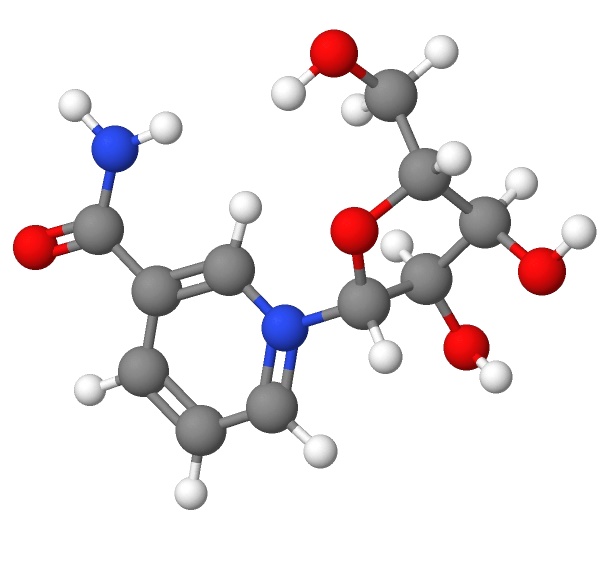
| Type | Vitamin B3 / Nucleoside |
| Active Cmpd | Nicotinamide Riboside |
| Source | Milk (trace), Yeast, Synthetic |
| Dose Range | 300 – 1,000 mg/day |
| Half-life | ~2.7 hours (plasma) |
| Main Benefit | Restores NAD+ Levels |
| Absorption | High (Oral) |
Nicotinamide Riboside (NR) is a potent precursor to Nicotinamide Adenine Dinucleotide (NAD+), a critical coenzyme for cellular energy production and DNA repair. While human trials consistently demonstrate its ability to double blood NAD+ levels, its clinical utility is currently most established in neuroprotection and rare aging disorders, with general metabolic and muscle benefits in healthy adults showing mixed or null results in large-scale meta-analyses.
¶ At a glance
Aliases
- Also known as: NR, Niagen (Patented Chloride form), Vitamin B3 precursor
- Chemical name: 1-(β-D-Ribofuranosyl)nicotinamide
- Category: Pyridine-nucleoside / Vitamin B3 derivative
Key points
- Verified NAD+ Elevation: Chronic oral supplementation (1,000 mg/day) consistently doubles whole-blood NAD+ levels in humans within 14 days[1][2][3].
- Clinical Neuroprotection: Demonstrates clinical efficacy in improving symptoms and slowing progression in Parkinson's disease, Glaucoma, and Ataxia Telangiectasia[4][5][6][7][8].
- Mixed Metabolic Outcomes: While NR is highly effective at raising NAD+, meta-analyses show no significant effect on insulin sensitivity, body weight, or muscle mass in healthy or obese adults[9][10][11][12].
- Gut-Microbiome Dependent: 2025 research indicates that gut bacteria rapidly convert oral NR into nicotinic acid, contributing significantly to systemic NAD+ levels via the Preiss-Handler pathway[3:1][13].
What people use it for
- Main goals: Restoring age-depleted NAD+ levels, neuroprotection (Parkinson's, Glaucoma), mitochondrial support, and management of rare aging disorders.
- Evidence quality (overall): Moderate to High (High for NAD+ elevation and safety; Moderate for neuroprotective outcomes; Low for metabolic/ergogenic benefits).
¶ What is Nicotinamide Riboside?
Nicotinamide Riboside (NR) is a unique form of Vitamin B3 that acts as a direct precursor to Nicotinamide Adenine Dinucleotide (NAD+), the "fuel" for cellular energy metabolism and sirtuin activation. Unlike niacin (nicotinic acid), NR does not cause skin flushing and utilizes a metabolic pathway that bypasses the rate-limiting enzyme NAMPT.
- Definition: A pyridine-nucleoside form of Vitamin B3 found in trace amounts in milk and yeast.
- Natural sources: Milk and dairy products contain trace amounts, though therapeutic supplemental doses (300–1,000 mg) far exceed dietary concentrations.
- Current regulatory status: In the United States, it holds FDA GRAS (Generally Recognized as Safe) status. It is approved as a "Novel Food" in the EU, UK, and Australia.
- Key pharmacological property: A potent sirtuin activator and mitochondrial enhancer mediated by systemic NAD+ restoration.
¶ What are Nicotinamide Riboside's main benefits?
Nicotinamide Riboside's primary value lies in its ability to effectively "rescue" failing cellular energy systems by replenishing NAD+ pools, particularly in the context of aging and neurodegeneration.
- Restoration of NAD+ Levels: Human clinical trials consistently show that 1,000 mg/day of NR doubles blood NAD+ concentrations within 14 days, maintaining these levels with chronic use[1:1][2:1][3:2].
- Neuroprotection: Evidence from the NADPARK and NR-SAFE trials demonstrates that NR crosses the blood-brain barrier, elevates cerebral NAD+ levels, and improves clinical scores in Parkinson's disease patients[4:1][5:1][6:1].
- Support for Rare Aging Disorders: NR has shown efficacy in stabilizing disease progression in conditions like Werner Syndrome (improving skin healing and arterial stiffness) and Ataxia Telangiectasia (improving motor coordination)[14][15][16].
- Anti-Inflammatory Effects: Supplemental NR may reduce circulating pro-inflammatory cytokines (such as IL-6 and TNF-α) and C-reactive protein (CRP) in older adults, potentially modulating "inflammaging"[17][18][19].
¶ Evidence summary table (human outcomes)
| Outcome / Goal | Effect* | Consistency | Evidence quality | Trials | Notes (population, duration, dose) |
|---|---|---|---|---|---|
| Circulatory NAD+ | High | High | >15 RCTs | Consistently increases whole-blood levels by ~100% at 1,000 mg/day[1:2][2:2][3:3]. | |
| Brain NAD+ | High | Moderate | 2 RCTs | Elevates cerebral NAD+ in Parkinson's disease patients (1,000 mg/day)[4:2][5:2]. | |
| Parkinson's Symptoms | Moderate | Moderate | 2 RCTs | Mild improvement in MDS-UPDRS scores; safe up to 3,000 mg/day[4:3][6:2]. | |
| Glaucoma Visual Function | High | Moderate | 1 RCT | Nicotinamide + Pyruvate improved visual field locations over 2.2 months[8:1]. | |
| Skeletal Muscle Function | High | High | Meta-analysis | No significant effect on muscle mass or strength in adults >60 (2025)[12:1][20]. | |
| Insulin Sensitivity | High | High | Meta-analysis | No improvement in glucose/lipid metabolism in obese cohorts[9:1][11:1][21]. | |
| Arterial Stiffness | Moderate | Moderate | 2 RCTs | Reductions in systolic BP and aortic stiffness in Stage 1 hypertension[22][19:1]. | |
| Werner Syndrome | Moderate | Moderate | 1 RCT | Improved skin ulcers and arterial stiffness in premature aging (2025)[14:1][16:1]. | |
| Ataxia Progression | Moderate | Low | 1 Trial | Improved SARA scores and eye movements in A-T patients[15:1][7:1]. | |
| ALS Progression | Low | Very Low | 1 Pilot | Slowed progression in combination with Pterostilbene (pilot trial)[23][24]. | |
| Body Weight | High | High | Meta-analysis | No significant effect on weight or fat mass in overweight/obese adults[25]. |
¶ How does Nicotinamide Riboside work?
¶ The ENT and NRK Pathways
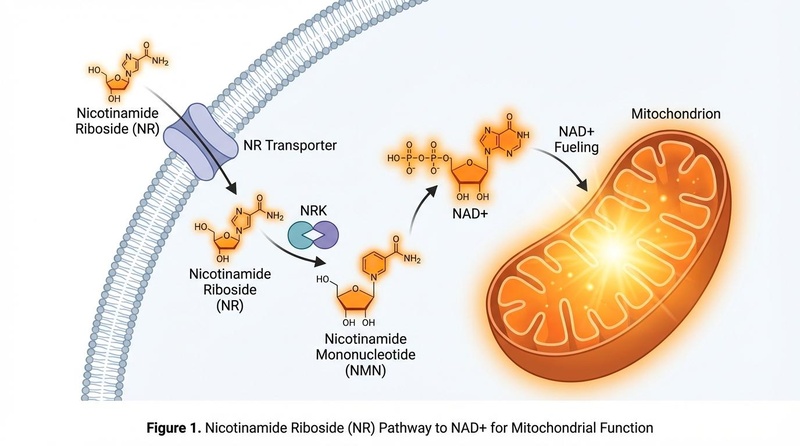
Nicotinamide Riboside enters mammalian cells directly via Equilibrative Nucleoside Transporters (ENTs), primarily ENT1, ENT2, and ENT4. Once inside the cell, it is phosphorylated by Nicotinamide Riboside Kinases (NRK1/2) to become Nicotinamide Mononucleotide (NMN), which is then adenylated into NAD+ by NMN Adenylyltransferases (NMNATs)[23:1][17:1][26].
¶ Gut Microbiome Conversion (The 2025 Discovery)
A landmark 2025 study published in Nature Metabolism revealed that the majority of oral NR is rapidly converted into Nicotinic Acid (NA) by gut microbiota (specifically via microbial deamidases) before absorption. This suggests that while NR can reach certain tissues like muscle intact, a significant portion of the systemic NAD+ boost is mediated by the Preiss-Handler pathway utilizing microbial-derived NA[3:4][13:1].
¶ NR vs. NMN: The Transport Debate
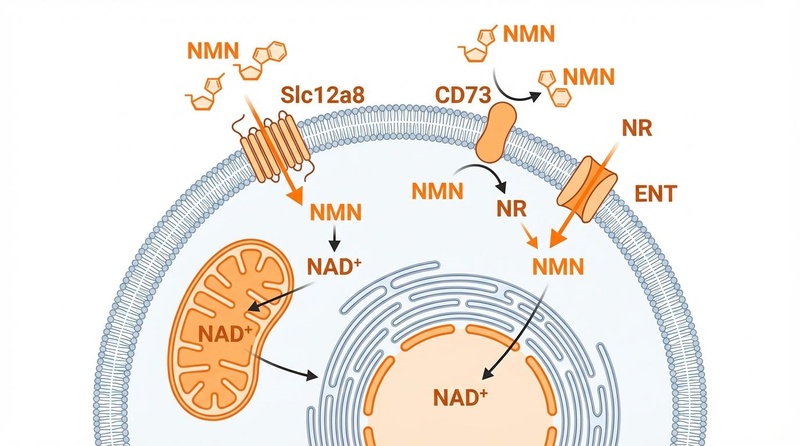
A persistent debate exists regarding the direct transport of NMN. While NMN was historically thought to require dephosphorylation into NR (by CD73) to enter cells, the discovery of the Slc12a8 transporter suggested direct NMN uptake in the gut. Head-to-head human data from 2025 confirms that both precursors are comparably effective at raising circulatory NAD+ levels, with both being partially metabolized by the microbiome[3:5][27][28].
¶ Pharmacokinetics and Stability
- Stability: Nicotinamide Riboside Chloride (NRCl) is the most studied form. It is highly sensitive to moisture and heat; in aqueous solution, it rapidly hydrolyzes into nicotinamide and ribose, rendering ready-to-drink NR beverages ineffective[4:4][14:2][29].
- NR Trioleate (NRTOCl): A novel hydrophobic form developed to maintain stability in liquid and oil-based formulations; it releases free NR upon partial digestion in the gut[4:5][29:1][30].
¶ Effects on different systems
¶ Neurological Health
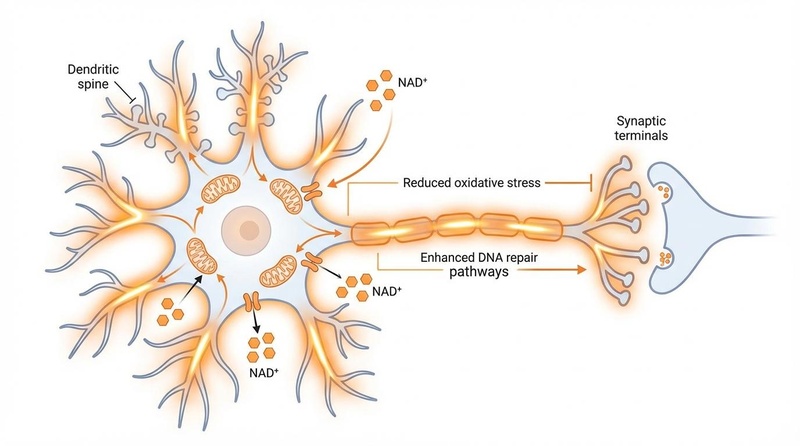
NR has demonstrated the strongest clinical signal in neuroprotection and brain health.
- Parkinson's Disease: The NADPARK trial showed that 1,000 mg/day NR increased cerebral NAD+ and was associated with reduced neuroinflammation and mild clinical improvement in MDS-UPDRS scores[4:6].
- Glaucoma: A Phase 2 RCT (2025) found that oral nicotinamide combined with pyruvate resulted in short-term improvement in visual function (improving visual field test locations) in patients with manifest glaucoma[8:2].
- Cognitive Resilience: While a 2025 RCT in Long COVID patients found no objective improvement in cognition, within-group improvements in fatigue and sleep were noted[31][32].
¶ Metabolic Health (Glucose & Obesity)
Despite promising mouse data, human RCTs and meta-analyses have consistently shown that high-dose NR (up to 2,000 mg/day) does not significantly improve insulin sensitivity, fasting glucose, or lipid profiles in obese or insulin-resistant individuals[29:2][9:2][11:2][21:1].
¶ Physical Performance & Skeletal Muscle
A 2025 systematic review and meta-analysis of 11 RCTs (Prokopidis et al.) concluded that NR and NMN supplementation does not preserve muscle mass or improve muscle function (grip strength, gait speed) in adults over age 60[12:2]. Short-term supplementation in healthy young men also failed to alter mitochondrial respiration or exercise performance[10:1][33].
¶ Cardiovascular Health
NR may reduce systolic blood pressure and aortic stiffness specifically in individuals with Stage 1 hypertension baseline levels[22:1][34]. A 2023 meta-analysis (Lei et al.) also indicated reductions in circulating C-reactive protein (CRP), a marker of systemic inflammation[19:2].
¶ Rare & Premature Aging Disorders
NR has shown efficacy in stabilizing rare genetic conditions:
- Werner Syndrome: Supplementation improved skin ulcer healing and reduced arterial stiffness (Chiba University, 2025)[14:3][16:2].
- Ataxia Telangiectasia: Long-term use (2 years) improved motor coordination and eye movement scores (SARA)[15:2][7:2].
¶ Dosage and how to take it
¶ Standard Dosing in Studies
- NAD+ Elevation: 1,000 mg per day (typically split into two 500 mg doses, morning and evening) is the standard protocol for doubling blood levels[1:3][2:3][35].
- Maintenance/General Health: Many commercial protocols use 300 mg per day, which produces a significant but smaller rise in NAD+.
- Maximum Studied: Doses up to 3,000 mg per day have been used in Parkinson's trials (NR-SAFE) for short durations without serious adverse events[5:3][6:3].
¶ Forms and Stability
- Nicotinamide Riboside Chloride (Niagen): The most stable and clinically studied form. It is a crystal salt used to prevent molecule degradation.
- Storage: Due to its sensitivity to moisture and heat, NR supplements should be stored in a cool, dry environment.
¶ Administration
- Timing: Can be taken with or without food. Taking it with a meal (particularly breakfast) may reduce the incidence of mild GI upset in sensitive individuals.
¶ Safety and side effects
Nicotinamide Riboside has an exceptional safety profile in humans.
¶ Common Side Effects
Side effects are generally mild and transient, occurring in a small percentage of users:
- Nausea or GI discomfort (dose-dependent).
- Transient headaches.
- No Flushing: Unlike niacin, NR does not cause skin flushing or the "prickly" sensation.
¶ Long-Term Safety
Safety has been monitored in clinical trials for up to 2 years at 1,000 mg/day, with no clinically significant changes in liver or kidney function biomarkers[15:3][7:3]. A 2024 systematic review (Gindri et al.) confirmed its overall safety across different clinical conditions[36].
¶ Who should be cautious
- Active Cancer: Due to the theoretical (not clinically proven) risk that boosting NAD+ could facilitate the rapid metabolism of cancer cells, clinical caution is often advised for patients with active malignancies.
¶ Drug and supplement interactions
¶ Pharmacokinetic Interactions
NR is not known to significantly inhibit or induce major CYP450 enzymes (like CYP3A4) at standard doses, suggesting a low risk for major drug-supplement metabolic interactions.
¶ Pharmacodynamic Interactions
- NAD+ Boosters: Combining NR with NMN or Nicotinamide may have additive effects on the total NAD+ pool, though the clinical benefit of combining precursors is unproven.
- CD38 Inhibitors: Combining NR with flavonoids like Apigenin (a CD38 inhibitor) may theoretically increase NAD+ levels further by reducing its consumption.
- Pyruvate: A Phase 2 trial showed that a combination of nicotinamide and pyruvate was safe and effective for neuroenhancement in glaucoma[8:3].
¶ Combining Nicotinamide Riboside with other supplements ("stacks")
- NR + Pterostilbene (or Resveratrol): A popular stack based on the hypothesis that sirtuins (activated by polyphenols) require NAD+ as a co-substrate. This combination was used in the EH301 trial for ALS[23:2][24:1].
- NR + Pyruvate: Used for neuroprotection in glaucoma[8:4].
- NR + Apigenin: Theoretical synergy to maximize NAD+ levels by inhibiting CD38 consumption.
¶ Practical FAQ
How long does it take for NR to work?
Biochemical effects (doubling blood NAD+) occur within 14 days. However, clinical effects on neuroprotection or vascular stiffness typically require 8 to 12 weeks of consistent supplementation.
Is NR better than NMN?
Both are highly effective NAD+ precursors. NR has a slightly more extensive clinical trial history in complex neurodegenerative diseases (Parkinson's, Werner Syndrome), while NMN has more data regarding human insulin sensitivity. They are comparably effective at raising blood levels[3:6].
Does NR help with weight loss?
Can I take NR if I am healthy?
While NR safely raises NAD+ in healthy adults, trials have not yet demonstrated clear functional benefits (like improved exercise performance or cognition) in individuals who are not already NAD+-depleted by age or disease.
¶ How we evaluated the evidence
Our assessment prioritized Tier 1 meta-analyses and registered randomized controlled trials (RCTs). We graded evidence based on:
- High: Multiple high-quality RCTs or meta-analyses with consistent results (e.g., NAD+ elevation, safety).
- Moderate: Several RCTs with small samples or minor inconsistencies (e.g., neuroprotection in PD, glaucoma).
- Low: Pilot studies, single-arm trials, or conflicting meta-analyses (e.g., ALS progression, ataxia).
- Very Low: Preclinical (animal/in vitro) data only.
¶ References
Airhart SE, et al. (2017). An open-label, non-randomized study of the pharmacokinetics of the nutritional supplement nicotinamide riboside (NR) and its effects on blood NAD+ levels in healthy volunteers. PLOS ONE. https://doi.org/10.1371/journal.pone.0186459 ↩︎ ↩︎ ↩︎ ↩︎
Martens CR, et al. (2018). Chronic nicotinamide riboside supplementation is well-tolerated and elevates NAD+ in healthy middle-aged and older adults. Nature Communications. https://doi.org/10.1038/s41467-018-03421-7 ↩︎ ↩︎ ↩︎ ↩︎
Christen S, et al. (2025). The differential impact of three different NAD+ boosters on circulatory NAD and microbial metabolism in humans. Nature Metabolism. https://doi.org/10.1038/s42255-025-01421-8 ↩︎ ↩︎ ↩︎ ↩︎ ↩︎ ↩︎ ↩︎
Brakedal B, et al. (2022). The NADPARK study: A randomized phase I trial of nicotinamide riboside supplementation in Parkinson's disease. Cell Metabolism. https://doi.org/10.1016/j.cmet.2022.02.001 ↩︎ ↩︎ ↩︎ ↩︎ ↩︎ ↩︎ ↩︎
Neuro-Central. (2023). NR-SAFE Trial Results. https://www.neuro-central.com/a-milestone-phase-i-randomized-double-blind-clinical-trial-demonstrates-high-dose-niagen-patented-nicotinamide-riboside-nr-supplementation-induces-a-potent-nad-response-and-is-associated-w/ ↩︎ ↩︎ ↩︎ ↩︎
NeurologyLive. (2023). Phase 1 NR-SAFE Trial Highlight Safety Profile. https://www.neurologylive.com/view/phase-1-nr-safe-trial-highlight-safety-profile-high-dose-nicotinamide-riboside-pd ↩︎ ↩︎ ↩︎ ↩︎
Presterud R, et al. (2023). Long-Term Nicotinamide Riboside Use Improves Coordination in Ataxia. PubMed. https://pubmed.ncbi.nlm.nih.gov/37899683/ ↩︎ ↩︎ ↩︎ ↩︎
Martucci A, et al. (2025). Next-Gen Neuroprotection in Glaucoma: Synergistic Molecules for Targeted Therapy. Journal of clinical medicine. https://pubmed.ncbi.nlm.nih.gov/40943905/ ↩︎ ↩︎ ↩︎ ↩︎ ↩︎
Dollerup OL, et al. (2018). RCT of nicotinamide riboside in obese men. PubMed. https://pubmed.ncbi.nlm.nih.gov/29992272/ ↩︎ ↩︎ ↩︎ ↩︎
Stocks B, et al. (2021). Nicotinamide riboside supplementation does not alter whole-body or skeletal muscle metabolic responses to exercise. J Physiol. https://doi.org/10.1113/JP280825 ↩︎ ↩︎
Zhong O, et al. (2022). Effects of NAD+ precursor supplementation on glucose and lipid metabolism in humans: a meta-analysis. Nutrition & Metabolism. https://pubmed.ncbi.nlm.nih.gov/35303905/ ↩︎ ↩︎ ↩︎
Prokopidis K, et al. (2025). The Effect of Nicotinamide Mononucleotide and Riboside on Skeletal Muscle Mass and Function: A Systematic Review and Meta-Analysis. Journal of Cachexia, Sarcopenia and Muscle. https://pubmed.ncbi.nlm.nih.gov/40275690/ ↩︎ ↩︎ ↩︎
Cuenoud B, et al. (2025). The microbiome at the centre of NAD+ supplementation. Nature Metabolism. https://doi.org/10.1038/s42255-025-01438-z ↩︎ ↩︎
Shoji N, et al. (2025). Nicotinamide riboside supplementation benefits in patients with Werner syndrome: A double-blind randomized crossover placebo-controlled trial. Aging Cell. https://doi.org/10.1111/acel.70093 ↩︎ ↩︎ ↩︎ ↩︎
BioSpace. (2023). NR Elevates NAD in Ataxia Telangiectasia. https://www.biospace.com/newly-published-phase-ii-clinical-study-demonstrates-that-supplementation-with-niagen-patented-nicotinamide-riboside-nr-elevates-nad-up-to-fourfold-improving-motor-coordination-and-eye-movement-in-ataxia-telangiectasia-at-patients ↩︎ ↩︎ ↩︎ ↩︎
ScienceDaily. (2025). Werner Syndrome Trial. https://www.sciencedaily.com/releases/2025/06/250609020625.htm ↩︎ ↩︎ ↩︎
Elhassan YS, et al. (2019). Nicotinamide Riboside Augments the Aged Human Skeletal Muscle NAD+ Metabolome and Induces Transcriptomic and Anti-inflammatory Signatures. Cell Reports. https://doi.org/10.1016/j.celrep.2019.07.043 ↩︎ ↩︎
Sohouli MH, et al. (2024). Changes in glucose metabolism, C-reactive protein, and liver enzymes following intake of NAD+ precursor supplementation: a systematic review and meta-regression analysis. Nutrition & Metabolism. https://doi.org/10.1186/s12986-024-00812-4 ↩︎
Lei L, et al. (2023). Effects of NAD+ precursors on blood pressure, C-reactive protein concentration and carotid intima-media thickness: A meta-analysis. European Journal of Clinical Investigation. https://pubmed.ncbi.nlm.nih.gov/37593976/ ↩︎ ↩︎ ↩︎
Wang JP, et al. (2025). Effects of Nicotinamide Mononucleotide Supplementation on Muscle and Liver Functions: A Systematic Review and Meta-analysis. Current Pharmaceutical Biotechnology. https://pubmed.ncbi.nlm.nih.gov/39185644/ ↩︎
Sohouli MH, et al. (2024). Changes in glucose metabolism, C-reactive protein, and liver enzymes following intake of NAD+ precursor supplementation. Nutrition & Metabolism. https://pubmed.ncbi.nlm.nih.gov/38915015/ ↩︎ ↩︎
ClinicalTrials.gov. (2019). Martens NR Blood Pressure Study. https://clinicaltrials.gov/study/NCT03821623 ↩︎ ↩︎
De la Rubia JE, et al. (2019). Efficacy and tolerability of EH301 for amyotrophic lateral sclerosis: a randomized, double-blind, placebo-controlled human pilot study. Amyotroph Lateral Scler Frontotemporal Degener. https://doi.org/10.1080/21678421.2018.1536152 ↩︎ ↩︎ ↩︎
NMN.com. (2021). Nicotinamide Riboside and Pterostilbene Effects on ALS. https://www.nmn.com/news/nicotinamide-riboside-pterostilbene-effects-als ↩︎ ↩︎
Baichuan Y, et al. (2023). The effects of NAD+ precursor supplementation on weight loss and related hormones: a systematic review and meta-regression analysis. Frontiers in Nutrition. https://pubmed.ncbi.nlm.nih.gov/37854354/ ↩︎ ↩︎
Remie CME, et al. (2020). Nicotinamide riboside supplementation alters body composition and skeletal muscle acetylcarnitine concentrations in healthy obese humans. Am J Clin Nutr. https://doi.org/10.1093/ajcn/nqaa134 ↩︎
Grozio A, et al. (2019). Slc12a8 is a nicotinamide mononucleotide transporter. Nature Metabolism. https://doi.org/10.1038/s42255-018-0009-4 ↩︎
Tru Niagen. (2024). Nicotinamide Riboside vs NMN: Debunking the NMN Science. https://www.truniagen.com/blogs/tru-niagen-labs/nicotinamide-riboside-vs-nmn-debunking-the-nmn-science ↩︎
Dollerup OL, et al. (2018). A randomized placebo-controlled clinical trial of nicotinamide riboside in obese men: safety, insulin-sensitivity, and lipid-mobilizing effects. The American Journal of Clinical Nutrition. https://doi.org/10.1093/ajcn/nqy132 ↩︎ ↩︎ ↩︎
Zarei A, et al. (2022). Synthesis, Stability, and Bioavailability of Nicotinamide Riboside Trioleate Chloride. Nutrients. https://doi.org/10.3390/nu14010145 ↩︎
News-Medical. (2025). Testing Nicotinamide Riboside for Long COVID. https://www.news-medical.net/news/20251114/Testing-nicotinamide-riboside-as-a-potential-aid-for-long-COVID-recovery.aspx ↩︎
ScienceDaily. (2025). Long COVID Trial Summary. https://www.sciencedaily.com/releases/2025/12/251211100629.htm ↩︎
Research Birmingham. (2021). Nicotinamide riboside supplementation does not alter metabolic responses. https://research.birmingham.ac.uk/en/publications/nicotinamide-riboside-supplementation-does-not-alter-whole-body-o/ ↩︎
AboutNAD. (2018). NR May Lower Blood Pressure. https://www.aboutnad.com/blogs/blog/early-clinical-research-shows-nr-may-lower-blood-pressure-to-support-cardiovascular-health ↩︎
Scientific Reports. (2019). Safety and Metabolism of NIAGEN. https://pmc.ncbi.nlm.nih.gov/articles/PMC8394119/ ↩︎
Gindri IM, et al. (2024). Evaluation of safety and effectiveness of NAD in different clinical conditions: a systematic review. American journal of physiology. https://pubmed.ncbi.nlm.nih.gov/37971292/ ↩︎