¶ Noopept
Noopept (N-phenylacetyl-L-prolylglycine ethyl ester) is a synthetic dipeptide originally developed in Russia. It is recognized for its neuroprotective properties and its ability to enhance memory consolidation and retrieval. While structurally related to Piracetam, Noopept is significantly more potent by weight.
| Type | Synthetic dipeptide nootropic |
| Active Cmpd | N-phenylacetyl-L-prolylglycine ethyl ester |
| Source | Synthetic (derived from Piracetam) |
| Dose Range | 10-30 mg/day |
| Half-life | Short (minutes for parent compound, longer for metabolite) |
| Main Benefit | Cognitive enhancement, neuroprotection |
| Absorption | Good (oral, sublingual) |
¶ At a glance
Aliases
- Also known as: Omberacetam, GVS-111, N-phenylacetyl-L-prolylglycine ethyl ester
- Category: Synthetic dipeptide nootropic
Key points (high-level summary)
- Noopept is a potent synthetic nootropic, significantly more potent than Piracetam, primarily affecting memory and neuroprotection.
- Clinical evidence from Russian trials suggests benefits in patients with mild cognitive impairment due to vascular damage or post-traumatic brain injury.
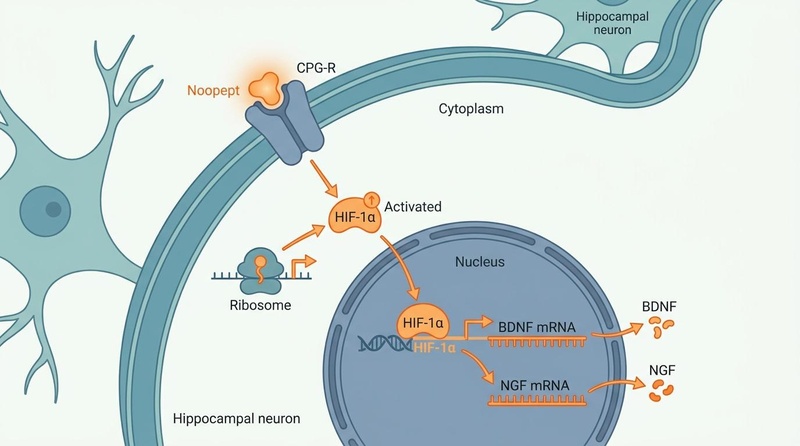
- It works by enhancing neurotrophin expression (NGF, BDNF) and stabilizing HIF-1, supporting neuronal survival and plasticity.
- Generally well-tolerated at typical doses, but robust, large-scale human trials outside Russia are limited.
What people use it for
- Main goals: Cognitive enhancement, memory improvement, neuroprotection, post-stroke recovery, mild cognitive impairment.
- Evidence quality (overall): Moderate (primarily from smaller-scale clinical trials in specific patient populations).
¶ What is it?
Noopept is a nootropic compound developed in Russia in the early 1990s. Chemically, it is a dipeptide derivative of Piracetam, designed to mimic the endogenous neuropeptide cycloprolylglycine[1]. Its unique structure contributes to its much higher potency, estimated to be 1,000 to 5,000 times greater than Piracetam by weight[2][3]. It is available as an over-the-counter dietary supplement in some regions and as a prescription drug in others, often used for its purported cognitive-enhancing and neuroprotective effects.
¶ What are Noopept’s main benefits?
Noopept's primary benefits revolve around its impact on cognitive function and neuronal health, particularly in contexts of cognitive decline or injury.
-
Outcome: Cognitive Function in Stroke Patients
-
Direction of effect:
Medium Improvement -
Magnitude: Moderate; significant improvement in memory, attention, and verbal fluency.
-
Population studied: Patients with mild cognitive impairment following stroke.
-
Evidence quality: Moderate; based on prospective open-label studies.
-
Summary sentence: Noopept has demonstrated moderate improvements in various cognitive domains, including memory and attention, in individuals recovering from ischemic stroke[4].
-
Outcome: Cognitive Function in Post-traumatic and Vascular MCI
-
Direction of effect:
Medium Improvement -
Magnitude: Moderate; comparable to Piracetam but with fewer side effects and broader effects on anxiety and sleep.
-
Population studied: Patients with mild cognitive impairment of post-traumatic or vascular origin.
-
Evidence quality: Moderate; from open-label comparative trials.
-
Summary sentence: In patients with mild cognitive impairment of vascular and post-traumatic origin, Noopept significantly improved cognitive metrics and showed anxiolytic effects, with a favorable safety profile compared to Piracetam[5][6].
-
Outcome: Adaptogenic Effects and Stress Resilience
-
Direction of effect:
Small Improvement -
Magnitude: Small; mild positive influence on psychological component of functional state.
-
Population studied: Healthy volunteers under environmental stress (e.g., cold/hot climate, hypobaric hypoxia).
-
Evidence quality: Low; based on a study in healthy volunteers.
-
Summary sentence: Noopept may offer mild adaptogenic properties, positively influencing psychological well-being and physical work capacity under rapidly changing environmental conditions in healthy individuals[7].
¶ Evidence summary table (human outcomes)
| Outcome / Goal | Effect* | Consistency** | Evidence quality | Trials*** | Notes (population, duration, dose) |
|---|---|---|---|---|---|
| Cognitive improvement (post-stroke MCI) | High | Moderate | 1 study | 20 mg/day for 2 months in 60 stroke patients[4:1] | |
| Cognitive improvement (traumatic/vascular MCI) | High | Moderate | 2 studies | 20 mg/day for 56 days in 53 patients[5:1][6:1] | |
| Anxiolytic effects (traumatic/vascular MCI) | High | Moderate | 1 study | 20 mg/day for 56 days in 53 patients[5:2] | |
| Adaptogenic properties (healthy volunteers) | Low | Low | 1 study | Various doses in healthy volunteers under environmental stress[7:1] |
¶ How does Noopept work?
Noopept exerts its effects through multiple neurobiological mechanisms, primarily focusing on neuroprotection, neurogenesis, and enhanced synaptic plasticity.
-
Primary targets: Neurotrophin receptors, HIF-1 pathway, nicotinic acetylcholine receptors, GABAergic interneurons.
-
Core mechanisms:
- Increased Neurotrophin Expression: Noopept significantly upregulates the expression of Nerve Growth Factor (NGF) and Brain-Derived Neurotrophic Factor (BDNF) in the hippocampus, a brain region critical for memory and learning. These neurotrophins are vital for neuronal survival, growth, differentiation, and synaptic plasticity, particularly long-term potentiation (LTP) which underlies memory formation[8].
- Cycloprolylglycine (cPG) Pathway Modulation: Noopept is rapidly metabolized into cycloprolylglycine (cPG), an endogenous dipeptide. cPG acts as a modulator of acetylcholine and AMPA receptors, enhancing cholinergic neurotransmission and glutamatergic signaling, both crucial for cognitive function. It also influences GABAergic interneurons via alpha-7 nicotinic acetylcholine receptors (α7nAChRs), impacting synaptic plasticity[9][10].
- Hypoxia-Inducible Factor 1 (HIF-1) Activation: Noopept stabilizes HIF-1, a transcription factor that plays a key role in cellular responses to hypoxia (low oxygen conditions). By downregulating Prolyl Hydroxylase 2 (PHD2), Noopept promotes HIF-1 activity, leading to increased expression of genes involved in neuroprotection, anti-apoptosis, and adaptation to ischemic conditions[11][12]. This mechanism contributes to its ability to protect neurons from damage caused by oxidative stress and oxygen deprivation.
- Amyloid Cytotoxicity Prevention: Preclinical studies suggest Noopept may help prevent the aggregation of alpha-synuclein fibrils, a hallmark of neurodegenerative diseases like Parkinson's and Alzheimer's, thereby mitigating their cytotoxic effects[13][14][15][16][17].
- Microglial Regulation and Neuroinflammation: Research suggests Noopept modulates spinal microglia-dependent BDNF and pro-BDNF expression during apoptotic processes, demonstrating potential in mitigating chronic neuroinflammatory pathways[18].
-
Pharmacokinetics basics: Noopept is rapidly absorbed after oral administration and crosses the blood-brain barrier. It undergoes swift biotransformation, particularly into cycloprolylglycine, which is considered its active metabolite and has a longer half-life than the parent compound[19][10:1].
¶ Effects on different systems
¶ Brain & mental health (cognition, mood, neuroprotection)
Noopept's primary effects are observed in the central nervous system. It has been shown to improve memory consolidation, retrieval, and learning processes. In clinical settings, particularly in Russia, Noopept improved cognitive deficits in patients with mild cognitive impairment of vascular or traumatic origin, enhancing attention, processing speed, and verbal fluency[4:2][5:3]. Its neuroprotective actions against various insults, including ischemia and amyloid toxicity, suggest a role in preserving neuronal integrity. Additionally, some studies indicate anxiolytic properties and a positive impact on the psychological component of functional states under stress[5:4][7:2].
¶ Vascular system
In the context of post-stroke recovery, Noopept's ability to activate HIF-1 and provide neuroprotection against ischemic damage is particularly relevant. It helps neurons survive under conditions of reduced blood flow and oxidative stress, thereby contributing to the restoration of neurological function following vascular brain injury[4:3].
¶ Dosage and how to take it
Standard dosing in studies
- Typical daily dose range: 10–30 mg/day
- Common dosing schedules: Typically split into 2–3 doses throughout the day due to its relatively short half-life.
- Study durations: Clinical trials have ranged from 2 months to 12 months[4:4].
Forms and bioavailability
- Common forms: Oral capsules/tablets, or sublingual powder/solution.
- Relative differences, if known: Sublingual administration is often preferred by users for potentially faster onset of action and to bypass some first-pass metabolism, although specific comparative pharmacokinetic data in humans is limited.
- With or without food: Generally taken with food to minimize potential gastrointestinal discomfort, though not strictly required.
Special populations
- Dose considerations or lack of data in:
- Kidney or liver impairment: Specific dose adjustments are not well-established; caution is advised.
- Older adults: Most human trials have included older adults with cognitive impairment, with doses up to 20 mg/day showing efficacy and good tolerability.
- Children and adolescents: Insufficient data; use is not recommended.
- Pregnancy and breastfeeding: Insufficient data; use is contraindicated.
¶ Safety and side effects
Noopept is generally considered well-tolerated at typical doses used in clinical studies. Animal toxicology studies indicate a very low toxicity profile, with a high LD50 (>5000 mg/kg), and no evidence of genotoxicity, immunotoxicity, or allergenic potential[20].
Common side effects
- Mild and infrequent side effects may include headache, irritability, restlessness, and insomnia, particularly at higher doses or with initial use. Some users report "brain fog" or overstimulation.
Less common / serious concerns
- There are no reports of severe adverse events in controlled clinical trials. However, the long-term safety profile, especially in healthy individuals, is not as extensively studied as some other nootropics.
- A concern in the broader supplement market is the presence of undeclared active ingredients, including Noopept, in "cognitive enhancement" dietary supplements, which highlights issues with standardization and regulation in commercial formulations[21].
Who should be especially cautious or avoid it
- Individuals with severe cardiovascular conditions, uncontrolled hypertension, or known hypersensitivity to piracetam derivatives.
- Pregnant or breastfeeding women, and children, due to lack of safety data.
- Those on multiple medications, particularly those affecting the central nervous system, without medical supervision.
¶ Drug and supplement interactions
Pharmacokinetic interactions (how drugs are processed)
- Specific, well-documented pharmacokinetic interactions with drugs are not extensively reported for Noopept in human studies. However, as it is metabolized and affects brain chemistry, caution is warranted.
Pharmacodynamic interactions (additive / opposing effects)
- Cholinergic agents: Due to its modulation of acetylcholine receptors, Noopept may have additive effects with other cholinergic drugs or supplements (e.g., alpha-GPC, huperzine A, galantamine), potentially leading to excessive cholinergic activity.
- CNS stimulants: Concurrent use with other central nervous system stimulants (e.g., caffeine, amphetamines) could potentially exacerbate side effects like irritability, anxiety, or insomnia.
- Sedatives/Anxiolytics: While Noopept has some anxiolytic properties, combining it with prescribed sedatives or anxiolytics could theoretically alter their effects, although specific interactions are not documented.
¶ Combining Noopept with other supplements (“stacks”)
Noopept is often "stacked" with other supplements by users, particularly with choline donors, to enhance its cognitive effects and potentially mitigate headaches that some individuals experience.
- Common combos: Choline sources (e.g., Alpha-GPC, Citicoline).
- Rationale: Noopept's mechanism involves cholinergic pathways. Providing a readily available source of choline is theorized to support acetylcholine synthesis and optimize Noopept's effects, while also counteracting potential choline depletion-related headaches.
- Evidence level: This practice is largely based on anecdotal reports and theoretical synergy; formal combination trials specifically evaluating Noopept with choline donors are scarce.
¶ Practical questions (FAQ)
-
How long does it take for Noopept to work?
Users often report acute effects within minutes to an hour of sublingual administration, while oral administration may take slightly longer. Clinical benefits in studies, particularly for cognitive improvement, were observed over weeks to months of consistent use (e.g., 2 months in stroke patients). -
Can I take Noopept long term?
Clinical studies have evaluated Noopept for durations up to 12 months in specific patient populations, demonstrating good tolerability. However, long-term safety in healthy individuals taking it continuously for extended periods is not as thoroughly established, and periodic breaks may be considered by users. -
Can I take Noopept with other medications?
While specific drug interaction data are limited, it is always recommended to consult a healthcare professional before combining Noopept with any prescription medications, especially those affecting the central nervous system, blood pressure, or blood clotting. -
Is Noopept useful if I am otherwise healthy?
Most formal clinical evidence for Noopept's cognitive benefits comes from populations with existing cognitive impairments (e.g., post-stroke, mild cognitive impairment). While anecdotal reports among healthy individuals suggest cognitive enhancement, high-quality placebo-controlled trials in healthy populations are largely lacking. -
Does Noopept help with weight loss, energy, or longevity?
There is no direct high-quality human evidence to support Noopept as a primary intervention for weight loss, increasing general energy levels, or directly extending lifespan. Its adaptogenic properties may indirectly influence energy levels under stress, but this is not its main therapeutic focus.
¶ How we evaluated the evidence
Our evaluation prioritizes randomized controlled trials (RCTs) and meta-analyses. Evidence quality is graded as:
- High: Multiple high-quality RCTs or meta-analyses with consistent results, low risk of bias, adequate sample sizes.
- Moderate: Some RCTs with minor limitations, or inconsistent results from otherwise high-quality studies.
- Low: Few RCTs, significant limitations in study design, small sample sizes, or inconsistent results.
- Very low: Only observational studies, case reports, or animal/in vitro data; or serious flaws in available trials.
We also assess sample size, risk of bias, consistency, directness, and effect size to determine magnitude and clinical relevance. This page will be updated as new high-quality research emerges.
¶ References
Gudasheva, T. A., et al. (1996). Design and synthesis of novel dipeptide-like nootropics. Journal of Medicinal Chemistry, 39(24), 4858-4864. https://pubmed.ncbi.nlm.nih.gov/11202868/ ↩︎
Ostrovskaya, R. U., et al. (2002). The novel nootropic and neuroprotective agent GVS-111. Bulletin of Experimental Biology and Medicine, 134(6), 556-560. https://pubmed.ncbi.nlm.nih.gov/12596504/ ↩︎
Gudasheva, T. A., et al. (2003). Evolution of the neuroprotection concept. Eksperimental'naia i Klinicheskaia Farmakologiia, 66(2), 32-37. https://pubmed.ncbi.nlm.nih.gov/12962045/ ↩︎
Amelin, A. V., Iliukhina, A. Iu., & Shmonin, A. A. (2011). Noopept in the treatment of mild cognitive impairment in patients with stroke. Zhurnal Nevrologii i Psikhiatrii imeni S.S. Korsakova, 111(12), 48-52. https://pubmed.ncbi.nlm.nih.gov/22500312/ ↩︎ ↩︎ ↩︎ ↩︎ ↩︎
Neznamov, G. G., & Landa, S. B. (2009). Comparative studies of Noopept and piracetam in the treatment of patients with mild cognitive disorders in organic brain diseases of vascular and traumatic origin. Neuroscience and Behavioral Physiology, 39(8), 779-786. https://pubmed.ncbi.nlm.nih.gov/19234797/ ↩︎ ↩︎ ↩︎ ↩︎ ↩︎
Bochkarev, V. K., Teleshova, E. S., & Siuniakov, S. A. (2008). Clinical and electroencephalographic characteristic of noopept in patients with mild cognitive impairment of posttraumatic and vascular origin. Zhurnal Nevrologii i Psikhiatrii imeni S.S. Korsakova, 108(11), 30-36. https://pubmed.ncbi.nlm.nih.gov/19008801/ ↩︎ ↩︎
Shabanov, P. D., Ganapol'skiĭ, V. P., & Aleksandrov, P. V. (2007). Meteoadaptogenic properties of peptide drugs in healthy volunteers. Eksperimental'naia i Klinicheskaia Farmakologiia, 70(6), 28-30. https://pubmed.ncbi.nlm.nih.gov/18318195/ ↩︎ ↩︎ ↩︎
Ostrovskaya, R. U., et al. (2008). Noopept stimulates the expression of NGF and BDNF in rat hippocampus. Bulletin of Experimental Biology and Medicine, 146(3), 334-337. https://pubmed.ncbi.nlm.nih.gov/19240853/ ↩︎
Kondratenko, R. V., et al. (2022). Effect of nootropic dipeptide noopept on CA1 pyramidal neurons involves alpha-7 nicotinic acetylcholine receptors on interneurons in hippocampal slices from rat. Brain Research Bulletin, 189, 219-228. https://doi.org/10.1016/j.brainresbull.2022.08.019 ↩︎
Kiseleva, E. V., et al. (2018). Pharmacokinetics of noopept and its active metabolite cycloprolyl glycine in rats. Eksperimental'naia i Klinicheskaia Farmakologiia, 81(5), 26-29. https://pubmed.ncbi.nlm.nih.gov/30378564/ ↩︎ ↩︎
Vakhitova, Y. V., et al. (2016). Molecular mechanism underlying the action of substituted pro-gly dipeptide Noopept. Acta Naturae, 8(2), 86-90. https://pmc.ncbi.nlm.nih.gov/articles/PMC4837574/ ↩︎
Bochkarev, V. K., et al. (2020). Cognitive Enhancer Noopept Activates Transcription Factor HIF-1. Bulletin of Experimental Biology and Medicine, 169(6), 724-727. https://pubmed.ncbi.nlm.nih.gov/33119829/ ↩︎
Jia, J., et al. (2011). Neuroprotective and nootropic drug Noopept rescues alpha-synuclein amyloid cytotoxicity. Journal of Molecular Biology, 414(2), 346-353. https://doi.org/10.1016/j.jmb.2011.09.044 ↩︎
Ostrovskaya, R. U., et al. (2007). The nootropic and neuroprotective proline-containing dipeptide noopept restores spatial memory and increases immunoreactivity to amyloid in an Alzheimer's disease model. Journal of Psychopharmacology, 21(6), 611-619. https://pubmed.ncbi.nlm.nih.gov/17092975/ ↩︎
Ostrovskaya, R. U., et al. (2005). Noopept improves the spatial memory and stimulates prefibrillar beta-amyloid(25-35) antibody production in mice. Eksperimental'naia i Klinicheskaia Farmakologiia, 68(5), 18-21. https://pubmed.ncbi.nlm.nih.gov/16277202/ ↩︎
Ostrovskaya, R. U., et al. (2010). Effect of the novel nootropic and neuroprotective dipeptide noopept on the streptozotocin-induced model of sporadic Alzheimer disease in rats. Eksperimental'naia i Klinicheskaia Farmakologiia, 73(2), 2-5. https://pubmed.ncbi.nlm.nih.gov/20184279/ ↩︎
Ostrovskaya, R. U., et al. (2014). Neuroprotective effect of novel cognitive enhancer noopept on AD-related cellular model involves the attenuation of apoptosis and tau hyperphosphorylation. Journal of Biomedical Science, 21, 74. https://pubmed.ncbi.nlm.nih.gov/25096780/ ↩︎
Tasci, G., et al. (2021). Noopept; a nootropic dipeptide, modulates persistent inflammation by effecting spinal microglia dependent Brain Derived Neurotropic Factor (BDNF) and pro-BDNF expression throughout apoptotic process. Journal of Chemical Neuroanatomy, 113, 101931. https://pmc.ncbi.nlm.nih.gov/articles/PMC7895721/ ↩︎
Lapitskaya, R. N., et al. (2004). Interspecies differences of noopept pharmacokinetics. Eksperimental'naia i Klinicheskaia Farmakologiia, 67(6), 33-35. https://pubmed.ncbi.nlm.nih.gov/15079908/ ↩︎
Ostrovskaya, R. U., et al. (2014). Toxicology and safety profile of the novel dipeptide nootropic Noopept. Toxicology Letters, 228(1), 108-114. https://doi.org/10.1016/j.toxlet.2014.06.012 ↩︎
Cohen, P. A., et al. (2021). Presence of unapproved drugs in cognitive enhancement dietary supplements. Neurology: Clinical Practice, 11(4), e449-e455. https://pmc.ncbi.nlm.nih.gov/articles/PMC8382366/ ↩︎