¶ Passionflower
| Type | Botanical (Herb) |
| Active Cmpd | Flavonoids (Vitexin), GABA |
| Source | Passiflora incarnata |
| Dose Range | 400–800 mg |
| Half-life | Unknown |
| Main Benefit | Anxiety & Sleep Support |
| Absorption | Moderate / Variable |
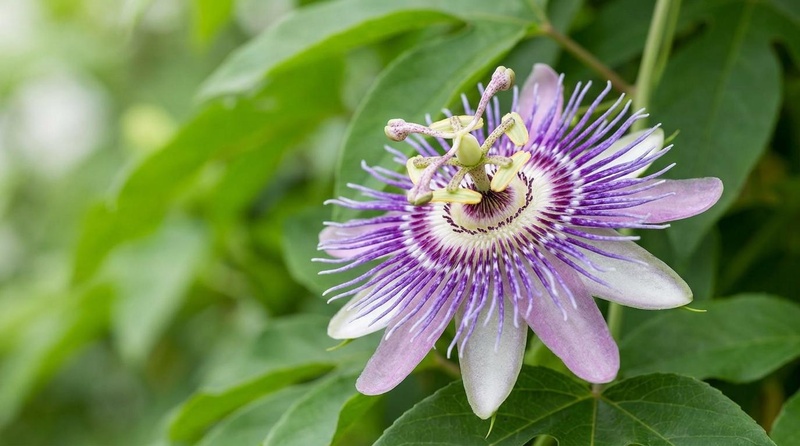
Passionflower (Passiflora incarnata) is a perennial climbing vine traditionally utilized as a gentle sedative and anxiolytic. Modern clinical evidence supports its efficacy in reducing generalized and preoperative anxiety and improving subjective and objective sleep quality, primarily through modulation of the GABAergic system [1][2].
¶ At a glance
Aliases
- Also known as: Passion flower, Maypop, Apricot vine
- Chemical / botanical name: Passiflora incarnata L.
- Category: Botanical sedative / Anxiolytic
Key points (high-level summary)
- In adults with generalized anxiety disorder (GAD), passionflower extract has shown comparable efficacy to pharmaceutical benzodiazepines (oxazepam) with fewer cognitive and job-performance side effects [3].
- It significantly improves subjective sleep quality and objective polysomnographic parameters (such as total sleep time) in individuals with mild-to-moderate insomnia [4][5].
- Emerging 2024 evidence indicates that standardized extracts (SIVI) at 600 mg daily significantly reduce perceived stress and night awakenings in stressed populations [6].
- Passionflower is generally well-tolerated but is contraindicated during pregnancy due to its potential to induce uterine contractions [7][8].
What people use it for
- Main goals: Anxiety reduction (generalized and acute), sleep induction, stress management, benzodiazepine tapering support.
- Evidence quality (overall): Moderate (High for anxiety, Moderate for sleep)
¶ What is Passionflower?
Passionflower (Passiflora incarnata) is a fast-growing vine native to the southeastern United States and South America. It is distinguished by its intricate, complex flowers characterized by a prominent corona of filaments and specialized reproductive structures.
- Definition: A botanical herb containing a complex profile of C-glycosylflavonoids (vitexin, isovitexin, orientin), dihydroxyflavones (chrysin), and GABA [9][10].
- Natural sources: The aerial parts (leaves, stems, and flowers) of Passiflora incarnata are the primary medicinal portions.
- Traditional / historical use: Historically used by Native American tribes (such as the Cherokee) as a calming tea and topical poultice; it was introduced to European medicine in the 19th century as a "nerve tonic" [8:1].
- Current regulatory status: Classified as a dietary supplement in the US (GRAS); recognized as a "traditional herbal medicinal product" by the European Medicines Agency (EMA) for the relief of mild symptoms of mental stress and to aid sleep [7:1][11].
- Key pharmacological property: GABAergic sedative and partial benzodiazepine-receptor agonist [12].
¶ What are Passionflower’s main benefits?
Passionflower's primary benefits center on the modulation of the central nervous system to induce relaxation and improve sleep architecture.
- Generalized Anxiety Disorder (GAD): Passionflower extract (45 drops/day) was found to be as effective as oxazepam (30 mg/day) in a double-blind RCT for managing GAD symptoms over 4 weeks. Crucially, the passionflower group reported significantly fewer impairments in job performance and cognitive function [3:1].
- Preoperative and Acute Anxiety: Single-dose administration (500 mg) approximately 60–90 minutes before surgical procedures (including dental extractions and ambulatory surgery) significantly reduces situational anxiety scores compared to placebo, with effects comparable to midazolam but without the typical memory-impairing side effects [13][14][15].
- Sleep Quality and Insomnia: In a polysomnography study, passionflower significantly increased total sleep time (TST) and reduced wakefulness after sleep onset in patients with primary insomnia [4:1]. In healthy adults with mild sleep fluctuations, passionflower tea significantly improved subjective sleep quality [1:1].
- Benzodiazepine Tapering: Real-world observational data suggest that passionflower (200–600 mg daily) can effectively serve as an adjunctive therapy to manage withdrawal symptoms and anxiety during a supervised benzodiazepine tapering protocol [16].
¶ Evidence summary table (human outcomes)
| Outcome / Goal | Effect* | Consistency** | Evidence quality | Trials*** | Notes (population, duration, dose) |
|---|---|---|---|---|---|
| Reduction in Generalized Anxiety | High | Moderate | 2 RCTs | [Comparable to oxazepam (30 mg) over 4 weeks; fewer cognitive side effects.][3:2][2:1] | |
| Reduction in Preoperative Anxiety | High | Moderate | 3 RCTs | [500 mg dose 60–90 min before surgery; effective in dental and ambulatory cases.][13:1][14:1][15:1] | |
| Improvement in Sleep Quality | Moderate | Moderate | 3 RCTs | [Improved subjective quality and objective sleep time in insomnia and healthy adults.][1:2][4:2][6:1] | |
| Reduction in Perceived Stress | Moderate | Moderate | 1 RCT | [600 mg daily (SIVI extract) for 30 days significantly reduced PSS scores.][6:2] | |
| Glycemic Control (P. edulis) | Moderate | Low | Meta-Analysis | [Passiflora edulis peel flour may modestly lower fasting glucose in metabolic syndrome.][17] |
- *Effect: ↑ (increase), ↓ (decrease), = (no effect), ? (unclear). Code:
<effect e="[dir][mag][impact]"></effect>. - **Consistency: Low (results conflict), Moderate (mixed but leaning one way), High (most trials agree)
- ***Trials: Number of RCTs or total trials informing this outcome.
¶ How does Passionflower work?
Passionflower exerts its calming effects primarily by enhancing the activity of Gamma-aminobutyric acid (GABA), the brain's principal inhibitory neurotransmitter.
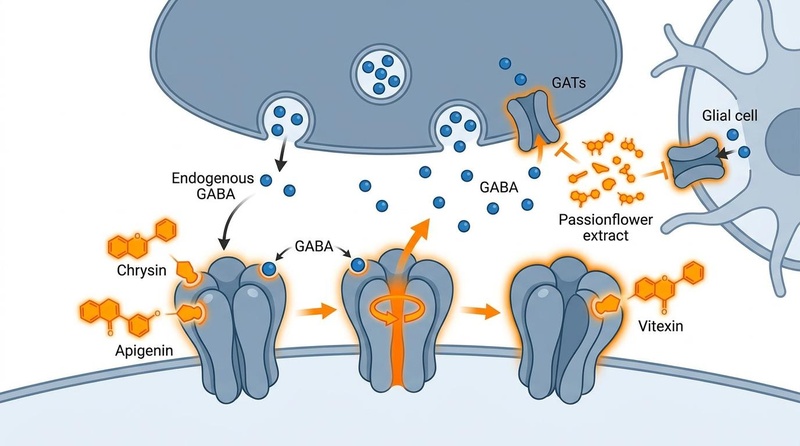
The GABAergic mechanisms of Passiflora incarnata: active flavonoids (such as chrysin and vitexin) act as partial agonists at the benzodiazepine binding site of the GABA-A receptor, while other constituents inhibit GABA reuptake.
- Primary targets: receptors (specifically the benzodiazepine binding site) and GABA transporters (GATs) [12:1][10:1].
- Core mechanisms:
- GABA-A Receptor Modulation: Flavonoids such as chrysin, apigenin, and vitexin act as partial agonists at the benzodiazepine site of the receptor, facilitating the opening of chloride channels and hyperpolarizing neurons [12:2][10:2].
- GABA Reuptake Inhibition: Passionflower extract inhibits the reuptake of -GABA into rat cortical synaptosomes, thereby increasing the concentration of GABA available in the synaptic cleft [12:3].
- Direct GABA Content: Research has identified that GABA itself is a prominent constituent in Passiflora extracts, contributing directly to the observed GABAergic currents in hippocampal neurons [9:1].
- Pharmacokinetics basics: Passionflower is orally bioavailable, although the specific absorption rates of its diverse flavonoids vary. Extracts are typically rapidly absorbed, with peak effects for acute anxiety observed within 60–90 minutes [13:2].
¶ Effects on different systems
¶ Brain & mental health (cognition, mood, sleep)
The most robust data for passionflower exists in the neuropsychiatric domain. It modulates the hypothalamic-pituitary-adrenal (HPA) axis and increases inhibitory neurotransmission, leading to reduced sympathetic "fight-or-flight" activity. Unlike pharmaceutical sedatives, it does not typically induce significant anterograde amnesia or daytime sleepiness [2:2][15:2].
¶ Metabolic health (Glycemic Control)
While the majority of passionflower research focuses on Passiflora incarnata, studies on Passiflora edulis (passion fruit) peel flour suggest potential benefits for metabolic health. A meta-analysis of human trials found that P. edulis peel flour supplementation may modestly improve glycemic control and reduce insulin resistance in patients with type 2 diabetes and metabolic syndrome [17:1].
¶ Oral & Antimicrobial Health
Passionflower constituents, particularly chrysin, exhibit potent antimicrobial properties. Recent 2026 research has demonstrated that chrysin possesses significant antifungal activity against Candida albicans biofilms both in vitro and in vivo. In murine models of oral candidiasis, chrysin reduced fungal burden and inflammatory cytokines (IL-6, TNF-α) to levels comparable to pharmaceutical fluconazole [18].
¶ Gut & digestion
Traditionally, passionflower is used for "nervous stomach" and gastrointestinal spasms of emotional origin. While clinical trials are limited in this domain, its antispasmodic effects are thought to be mediated by its musculotropic action and GABA-mediated relaxation of the enteric nervous system [8:2].
¶ Dosage and how to take it
¶ Standard dosing in studies
- For Anxiety (Chronic/General): 400 mg to 800 mg of standardized dry extract daily, often divided into two or three doses [16:1][19].
- For Sleep: 500 mg to 600 mg of extract, or 1 cup of passionflower tea (steeping 2 grams of dried aerial parts), taken 30–60 minutes before bedtime [1:3][4:3][6:3].
- For Acute/Preoperative Anxiety: A single dose of 500 mg standardized extract administered 90 minutes before the stressor [13:3].
¶ Forms and bioavailability
- Standardized Extracts: Look for extracts standardized to total flavonoid content (expressed as vitexin), typically ranging from 3.5% to 4% [10:3].
- Tinctures & Teas: Aqueous-ethanol tinctures (1:5 ratio, 2–4 mL) and herbal teas are traditional and effective forms, though the GABA and flavonoid concentrations can vary significantly based on extraction temperature [9:2].
- SIVI Extract: A specific standardized extract (SIVI) has been validated in 2024 for stress and sleep at a dose of 600 mg/day [6:4].
¶ Special populations
- Pregnancy & Breastfeeding: CONTRAINDICATED. Passionflower contains trace indole alkaloids (like harman and harmine) and other constituents that may stimulate uterine contractions [7:2][8:3].
- Surgery: Discontinue use at least 2 weeks before scheduled surgery to avoid synergistic effects with anesthetic agents [7:3].
¶ Safety and side effects
¶ Common side effects
Passionflower is generally recognized as safe (GRAS) and is exceptionally well-tolerated. Rare side effects may include:
- Mild drowsiness or dizziness.
- Confusion or ataxia (primarily at very high doses).
- Occasional gastrointestinal upset.
¶ Less common / serious concerns
- Hypersensitivity: Rare cases of allergic reactions (vasculitis or urticaria) have been reported, primarily in individuals with known sensitivities to the Passifloraceae family [8:4][11:1].
- Hepatotoxicity: No association with serum enzyme elevations or clinically apparent liver injury has been documented [20].
¶ Who should be especially cautious or avoid it
- Pregnant women: Should strictly avoid due to uterine stimulant risks.
- Operators of heavy machinery: Caution is advised if drowsiness occurs.
¶ Drug and supplement interactions
¶ Pharmacokinetic interactions
- CYP Enzymes: In vitro data suggest possible mild inhibition of certain CYP450 enzymes (e.g., CYP2D6 and CYP3A4), though clinical significance at standard doses appears low.
¶ Pharmacodynamic interactions (additive effects)
- CNS Depressants: Passionflower significantly potentiates the effects of alcohol, barbiturates, benzodiazepines, and other sedatives. Combining these can lead to excessive sedation and respiratory depression [7:4][11:2].
- Anticoagulants: There is a theoretical concern that passionflower may increase the risk of bleeding when taken with anticoagulants (like warfarin) or antiplatelet drugs, though this is primarily based on animal data and trace coumarin content [8:5].
- MAO Inhibitors: Though indole alkaloids are present only in trace amounts, caution is traditionally advised when combining with Monoamine Oxidase Inhibitors (MAOIs).
¶ Combining Passionflower with other supplements (“stacks”)
- The "Deep Sleep" Trio: Often combined with Valerian Root and Lemon Balm. This stack is synergistic, as Valerian inhibits GABA breakdown, while passionflower and lemon balm facilitate GABA receptor activation and reuptake inhibition [8:6].
- Daytime Calm Stack: Combined with L-Theanine and Magnesium Glycinate to manage situational stress without inducing heavy sedation.
¶ Practical questions (FAQ)
-
How long does it take for passionflower to work?
For acute anxiety, effects are typically felt within 60 to 90 minutes. For chronic stress and sleep improvement, 2 to 4 weeks of consistent use is usually required for maximum benefit [6:5]. -
Can I take passionflower every day?
Yes, clinical trials have studied daily use for up to 8 weeks with good safety profiles. However, many users prefer to use it "as needed" for situational stress. -
Does it cause a "hangover" effect?
Unlike benzodiazepines or Z-drugs, passionflower is rarely associated with next-day grogginess or cognitive "brain fog" at standard doses [3:3]. -
Is it safe for children?
Passionflower has been studied in children (often in combination with valerian) for restlessness and insomnia with a good safety profile, but professional guidance is recommended [21]. -
Is passionfruit the same as passionflower?
The medicinal herb is Passiflora incarnata (aerial parts). The common passionfruit is Passiflora edulis. While both contain some bioactive flavonoids, the concentration of GABAergic compounds is significantly higher in P. incarnata.
¶ How we evaluated the evidence
Evidence was graded using the GRADE (Grading of Recommendations Assessment, Development and Evaluation) framework.
- High Quality: Findings based on consistent results from multiple randomized controlled trials (RCTs) or meta-analyses (e.g., Generalized Anxiety).
- Moderate Quality: Findings based on several RCTs with minor limitations or slightly inconsistent results (e.g., Sleep Quality, Preoperative Anxiety).
- Low Quality: Findings based on observational studies, case reports, or emerging meta-analyses with small sample sizes (e.g., Glycemic Control).
¶ References
Ngan A, Conduit R. A double-blind, placebo-controlled investigation of the effects of Passiflora incarnata (passionflower) herbal tea on subjective sleep quality. Phytother Res. 2011. https://pubmed.ncbi.nlm.nih.gov/21294203/ ↩︎ ↩︎ ↩︎ ↩︎
Janda K, et al. Passiflora incarnata in Neuropsychiatric Disorders-A Systematic Review. Nutrients. 2020. https://pubmed.ncbi.nlm.nih.gov/33352740/ ↩︎ ↩︎ ↩︎
Akhondzadeh S, et al. Passionflower in the treatment of generalized anxiety: a pilot double-blind randomized controlled trial with oxazepam. J Clin Pharm Ther. 2001. https://pubmed.ncbi.nlm.nih.gov/11679026/ ↩︎ ↩︎ ↩︎ ↩︎
Lee J, et al. Effects of Passiflora incarnata Linnaeus on polysomnographic sleep parameters in subjects with insomnia disorder: a double-blind randomized placebo-controlled study. Int Clin Psychopharmacol. 2020. https://pubmed.ncbi.nlm.nih.gov/31714321/ ↩︎ ↩︎ ↩︎ ↩︎
Dantas LP, et al. Effects of passiflora incarnata and midazolam for control of anxiety in patients undergoing dental extraction. Med Oral Patol Oral Cir Bucal. 2017. https://pubmed.ncbi.nlm.nih.gov/27918731/ ↩︎
Harit MK, et al. Randomized, Double-Blind, Placebo-Controlled, Clinical Study of Passiflora incarnata in Participants With Stress and Sleep Problems. Cureus. 2024. https://pubmed.ncbi.nlm.nih.gov/38646244/ ↩︎ ↩︎ ↩︎ ↩︎ ↩︎ ↩︎
NCCIH. Passionflower. National Center for Complementary and Integrative Health. https://www.nccih.nih.gov/health/passionflower ↩︎ ↩︎ ↩︎ ↩︎ ↩︎
EMA Assessment Report. Passiflora incarnata L., herba. European Medicines Agency. 2014. https://www.ema.europa.eu/en/documents/herbal-report/final-assessment-report-passiflora-incarnata-l-herba_en.pdf ↩︎ ↩︎ ↩︎ ↩︎ ↩︎ ↩︎ ↩︎
Elsas SM, et al. Passiflora incarnata L. (Passionflower) extracts elicit GABA currents in hippocampal neurons in vitro. Phytomedicine. 2010. https://pmc.ncbi.nlm.nih.gov/articles/PMC2941540/ ↩︎ ↩︎ ↩︎
Di Salvo E, et al. Passiflora edulis Sims. cultivated in Sicily: chemical profile, antioxidant activity and antimicrobial potential of its passion fruit. Nat Prod Res. 2026. https://pubmed.ncbi.nlm.nih.gov/42269019/ ↩︎ ↩︎ ↩︎ ↩︎
Borrás S, et al. Medicinal Plants for Insomnia Related to Anxiety: An Updated Review. Planta Med. 2021. https://pubmed.ncbi.nlm.nih.gov/34116572/ ↩︎ ↩︎ ↩︎
Appel K, et al. Modulation of the γ-aminobutyric acid (GABA) system by Passiflora incarnata L. Phytother Res. 2011. https://pubmed.ncbi.nlm.nih.gov/21089181/ ↩︎ ↩︎ ↩︎ ↩︎
Movafegh A, et al. Preoperative oral Passiflora incarnata reduces anxiety in ambulatory surgery patients. Anesth Analg. 2008. https://pubmed.ncbi.nlm.nih.gov/18499602/ ↩︎ ↩︎ ↩︎ ↩︎
Aslanargun P, et al. Preoperative oral Passiflora incarnata reduces anxiety in patients undergoing surgery. Fertil Steril. 2012. https://pubmed.ncbi.nlm.nih.gov/22315050/ ↩︎ ↩︎
Sarris J, et al. Herbal medicine for depression, anxiety and insomnia: a review of psychopharmacology and clinical evidence. Eur Neuropsychopharmacol. 2011. https://pubmed.ncbi.nlm.nih.gov/21601431/ ↩︎ ↩︎ ↩︎
Gibbert J, et al. Add-On Treatment with Passiflora incarnata L., herba, during Benzodiazepine Tapering in Patients with Depression and Anxiety: A Real-World Study. Pharmaceuticals. 2023. https://pubmed.ncbi.nlm.nih.gov/36986525/ ↩︎ ↩︎
Sousa G, et al. Effectiveness of Passion Fruit Peel Flour (Passiflora edulis L.) versus Turmeric Flour (Curcuma longa L.) on Glycemic Control: Systematic Review and Meta-Analysis. Curr Diab Rev. 2020. https://pubmed.ncbi.nlm.nih.gov/31738145/ ↩︎ ↩︎
Wang X, Li C. Antifungal activity of chrysin against Candida albicans biofilms In vitro and In vivo. Biofouling. 2026. https://pubmed.ncbi.nlm.nih.gov/42366844/ ↩︎
Grundmann O, et al. Anxiolytic activity of a phytochemically characterized Passiflora incarnata extract is mediated via the GABAergic system. Planta Med. 2008. https://pubmed.ncbi.nlm.nih.gov/19006051/ ↩︎
Hou Y, et al. [Literature research of Passiflora incarnata and discussion of its traditional Chinese medicine properties]. Zhongguo Zhong Yao Za Zhi. 2021. https://pubmed.ncbi.nlm.nih.gov/33982503/ ↩︎
Krenn L. [Passion Flower (Passiflora incarnata L.)--a reliable herbal sedative]. Wien Med Wochenschr. 2002. https://pubmed.ncbi.nlm.nih.gov/12244887/ ↩︎